Video & Creative AI
Latest AI signals in this category
 © The Verge AI
Video & Creative AImusic
Suno Unveils v6 AI Music Model with Industry Support
Suno's release of its v6 AI music model marks a significant collaboration with the record industry, incorporating licensed data from major partners like Warner Music Group. This model introduces three variations, including a free 'mini' version, each designed to better understand and replicate musical genres. However, despite improvements, v6 struggles to capture the 'natural imperfections' of human music, often producing harmonically perfect outputs. Notably, v6 allows users to edit songs using plain language and supports prompts from images and videos, enhancing creative flexibility.
The Verge AI
 © NVIDIA Blog
Video & Creative AIvideo
NVIDIA Expands AI Tools for Media at IBC 2026
NVIDIA is making significant strides in the media and entertainment industry by expanding its AI capabilities at the IBC 2026 conference. The company introduced enhancements to its AI for Media suite, including tools like the Synthetic Video Detector and 3D Body Pose estimation, which offer real-time video authenticity checks and advanced motion tracking. These innovations are set to transform workflows in broadcasting, sports, and streaming by providing more accurate content verification and enhanced video effects. With these updates, NVIDIA is positioning itself as a leader in integrating AI into media production, offering new possibilities for content creation and distribution.
NVIDIA Blog
 © Google AI Blog
Video & Creative AIvideo
AI Recreates 70-Year Love Story in Film
The documentary 'Love, Rendered' demonstrates the transformative power of AI in capturing and preserving memories by recreating a 70-year love story. Directed by Liz Garbus and produced with Darren Aronofsky, the film employs AI models to restore and animate old photographs, effectively bringing Burt and Ethelle Shatz's relationship to life. This collaboration between Google DeepMind and Primordial Soup shows how technology can bridge the gap between past and present, offering a new way to connect with fading memories. The project uses AI as a tool for emotional storytelling, providing a fresh approach to memory preservation and reminiscence therapy.
Google AI Blog
 © The Verge AI
Video & Creative AIimage
OpenAI Launches ChatGPT Sketch for Image Creation
OpenAI's latest update to ChatGPT introduces Sketch, a feature that transforms user doodles into detailed AI-generated images. Users can draw directly within ChatGPT and guide the AI on how to interpret their sketches, making the process more interactive. The update also allows for direct annotations on images, enabling precise adjustments like changing colors. ChatGPT Images 2.5 enhances image quality with improved lighting and textures while significantly reducing generation latency. This development makes AI image creation more engaging and accessible, available on desktop, mobile, and web interfaces.
The Verge AI
 © The Verge AI
Video & Creative AIvideo
Adobe Enhances AI Tools in Premiere for Seamless Editing
Adobe is making a significant move to streamline video editing by integrating AI generators directly into Premiere's project timeline. This update allows editors to generate video, sound effects, and music without disrupting their workflow, thanks to a new Generative Media interface. By enabling access to multiple AI models like Adobe Firefly and Google Veo directly within the timeline, Adobe is simplifying the creative process. Additionally, new AI audio tools in beta can separate overlapping speakers and adjust audio levels automatically. This integration marks a shift towards more intuitive and efficient editing, reducing the need for external tools.
The Verge AI
Video & Creative AIimage
OpenAI Launches ChatGPT Images 2.5
OpenAI's release of ChatGPT Images 2.5 represents a notable advancement in personalized image generation. This update empowers users to transform their ideas, sketches, and reference photos into polished images that more accurately capture their creative vision. By focusing on personalization, OpenAI is enabling users to create images that align more closely with their artistic intent. This development is particularly beneficial for artists and designers who need tools that offer greater control over the final output. OpenAI is advancing its AI tools to better serve creative professionals, making this a significant step forward in the field.
OpenAI
 © The Verge AI
Video & Creative AImusic
Roland Enters AI Music with Melody Flip
Roland's new Melody Flip tool marks its entry into the generative AI music space, offering a plugin for digital audio workstations that generates musical ideas rather than complete tracks. With around 250 themed 'Palettes', users can create melodies, chord progressions, basslines, or drums, either from scratch or by building on a reference track. Unlike some competitors, Melody Flip focuses on providing creative sparks rather than polished songs, with outputs that require further development in a DAW. This move reflects Roland's attempt to innovate in the AI music domain, though it may not win over all music enthusiasts.
The Verge AI
 © The Verge AI
Video & Creative AIimage
AI Struggles with Realistic Food Imagery
AI-generated food images often appear unsettling due to the technical limitations of diffusion models, which struggle with creating thin, continuous structures like noodles and tendrils. These models start with noise and refine images, but can misinterpret the basic structure, leading to bizarre and unappetizing results. The lack of understanding of real-world objects means AI can only mimic appearances without grasping their context or purpose. This results in food images that trigger human disgust, as they often resemble non-food textures or contain unsettling patterns.
The Verge AI
 © TechCrunch AI
Video & Creative AIimage
AI Menus Face Criticism for Uncanny Aesthetics
AI-generated menus in restaurants are being criticized for their unnaturally perfect food illustrations, which often appear unsettling to customers. This issue arises from AI models trained on datasets that emphasize a pleasing aesthetic, resulting in homogenized and unrealistic images. The problem is exacerbated when AI-generated content is used in further training, leading to a degradation of quality known as 'convergence.' This situation highlights the broader implications of AI in content creation, where the balance between realism and aesthetic appeal remains a challenge. As AI continues to influence visual content, the discomfort with these images points to the need for more nuanced training data and model development.
TechCrunch AI
 © NVIDIA Blog
Video & Creative AIvideo
NBA 2K27 Launches with NVIDIA DLSS 5 on GeForce NOW
NVIDIA's GeForce NOW is expanding its game library with 28 new titles this month, headlined by NBA 2K27 featuring the advanced NVIDIA DLSS 5 technology. This collaboration with Visual Concepts and 2K brings a new level of realism to the game, enhancing lighting and material details to mimic real-world broadcast presentations. Players can stream NBA 2K27 with DLSS 5's lifelike visuals from the cloud, eliminating the need for downloads and storage management. This release marks a significant step in cloud gaming, offering high-fidelity experiences across various devices.
NVIDIA Blog
Video & Creative AIvideo
Playco Reduces Game Fixes by 50% with GPT-6 Astra
Playco has leveraged GPT-6 Astra to significantly streamline its game prototyping process, achieving a 50% reduction in manual fixes compared to earlier models. By building three themed game prototypes from a single grey box foundation, the company demonstrates the potential of advanced AI models in game development. This shift not only speeds up the prototyping phase but also enhances the efficiency and creativity of the development team. The use of GPT-6 Astra marks a notable improvement in AI-assisted game design, offering a glimpse into the future of more automated and innovative game creation processes.
OpenAI
 © Hugging Face Blog
Video & Creative AIimage
AI Model Trained to Paint Watercolours
A language model has been trained to paint watercolours using JavaScript and the p5.brush library, capturing the attention of over 1.5 million viewers. The project uses reinforcement learning to teach the model aesthetic preferences, allowing it to create unique, handmade-style paintings. This approach contrasts with the typical perfection of AI-generated images, offering a fresh perspective on AI's creative potential. The open-source nature of the project invites further exploration and replication by others interested in the intersection of AI and art. The model's ability to generate code that paints images reflects a deeper level of interaction between AI and artistic expression. By limiting the model to ten methods from the library, the project emphasizes creativity within constraints. This initiative not only highlights AI's evolving role in art but also encourages a broader dialogue about the future of AI-driven creativity.
Hugging Face Blog
 © TechCrunch AI
Video & Creative AIimage
Google Launches AI-Powered Design Tool in Workspace
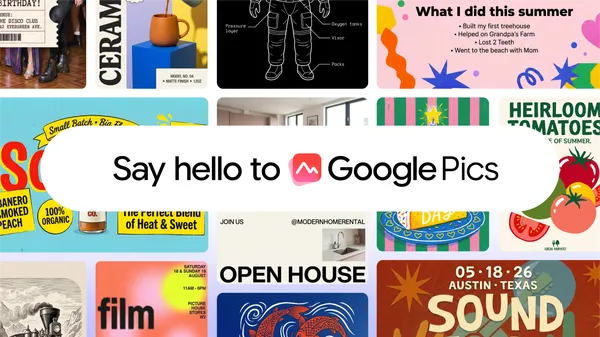
Google is stepping into the creative design arena with Google Pics, an AI-driven tool integrated into its Workspace suite. Unlike traditional design platforms like Canva, Google Pics leverages AI to generate images based on user prompts, rather than relying on pre-made templates or designs. This tool is powered by Google's Nano Banana image-generation model and offers features like object isolation, text modification, and collaborative editing. Initially available in Google Docs and Slides, it aims to streamline everyday design tasks for business and premium AI subscribers, marking a shift towards AI-assisted creativity in professional settings.
TechCrunch AI
 © Google AI Blog
Video & Creative AIimage
Google Pics Enhances Image Editing in Workspace
Google is introducing Google Pics, a new image creation and editing tool integrated into Google Workspace. Built on the Nano Banana model, Pics offers advanced features like object segmentation and in-image text editing, allowing users to make precise edits without starting from scratch. This tool is designed to streamline workflows by integrating directly into Workspace apps like Slides, Docs, and Drive, eliminating the need to switch between applications. With Google Pics, users can generate multiple image iterations from a single prompt, enhancing creativity and collaboration within familiar environments.
Google AI Blog
 © The Verge AI
Video & Creative AIimage
Google Pics Enhances AI Image Editing in Workspace
Google is stepping up its game in the creative design space with the introduction of Google Pics, a new suite of AI-powered tools for Workspace users. Built on the Gemini and Nano Banana AI models, Google Pics offers advanced image generation and editing capabilities, allowing users to manipulate images with precision through descriptive prompts. This tool aims to streamline the creation of professional-grade images for business purposes, reducing the reliance on third-party services like Canva. By integrating with Google Docs and Slides, Google Pics is set to enhance productivity and creativity within the Workspace ecosystem.
The Verge AI
 © The Verge AI
Video & Creative AIvideo
Nvidia's DLSS 5 Launches with NBA 2K27
Nvidia's DLSS 5 is officially launching, but its debut is limited to NBA 2K27 and requires the latest RTX 50-series GPUs. This AI-driven upscaling technology promises to enhance game realism by adjusting shadows and textures, though it has faced criticism for altering character appearances in demos. Despite Nvidia's claims of significant graphical breakthroughs, the technology demands substantial GPU power, with performance hits estimated at 50-60%. The release marks a cautious step forward, as DLSS 5's broader impact on gaming remains to be seen with more titles.
The Verge AI
 © The Rundown AI
Video & Creative AIvideo
Runway's Solaris previews no-code internet
Runway's Solaris is a bold vision for the future of the internet, where websites and apps are rendered as real-time video without any underlying code. By leveraging Runway's Gen-4.5 video model and a large language model, Solaris interprets user interactions to generate dynamic, interactive experiences. This approach could redefine web development by eliminating traditional coding, though challenges like text legibility and session drift remain. If successful, Solaris could open up new possibilities for web interfaces, making them more accessible and innovative.
The Rundown AI
 © WIRED AI
Video & Creative AIimage
Cara Faces Scraping Challenges, Develops Artist Protection Tool
Cara, a platform designed to protect artists from unauthorized AI training, has been under siege by scrapers, leading to significant data breaches. In an unexpected turn, one of the scrapers has joined forces with Cara's founder, Jingna Zhang, to develop Lantern, an open-source tool aimed at helping artists track and protect their work from being included in AI datasets. This collaboration seeks to empower artists with more control over their digital creations, addressing a critical gap in current legal protections. Despite the ongoing challenges, Cara remains committed to finding innovative solutions to safeguard its community and ensure artists can share their work without fear of exploitation.
WIRED AI
 © The Verge AI
Video & Creative AIwriting
Google's Gemini Notebook Integrates with Google Play Books
Google's Gemini Notebook has introduced a new 'Expert Intelligence' feature that allows users to interact with books purchased from Google Play Books. This integration enables users to ask questions, generate content like infographics and podcasts, and even view full texts within the app. With support from over 100,000 books and collaborations with authors like Michael Pollan and Kim Scott, this feature aims to enhance the note-taking experience by providing personalized insights and content creation tools. This move not only enriches user engagement but also opens new revenue streams for authors and publishers.
The Verge AI
 © Google DeepMind
Video & Creative AIvideo
Google DeepMind Launches Gemini Omni 1.1 Flash
Google DeepMind's release of Gemini Omni 1.1 Flash marks a significant step forward in generative video technology. This update introduces creative controls and capabilities that allow developers to extend scenes, specify keyframes, and upscale videos to 4K resolution. By analyzing up to 10 seconds of prior context, the model enhances visual consistency and narrative flow, making it ideal for professional use. The ability to generate lightweight previews quickly and cost-effectively further streamlines the creative process. This release empowers developers to create more polished and controllable generative video content.
Google DeepMind
 © The Verge AI
Video & Creative AIagents
Hugging Face unveils Microduck robot
Hugging Face's Pollen Robotics has introduced the Microduck, a charming AI robot that combines playful design with functional capabilities. Standing under 10 inches tall, this rollerskating duck can pick up objects, follow a laser pointer, and even sing with a unique voice generated for each unit. The open-source software allows users to customize and retrain the robot for new tasks, making it a versatile addition to any tech enthusiast's collection. With its blend of whimsy and utility, the Microduck represents a playful yet practical step forward in consumer robotics.
The Verge AI
 © TechCrunch AI
Video & Creative AIagents
Plaud Launches AI-Enabled Earphones with eSIM Case
Plaud is entering the AI-driven earphone market with its latest product, Plaud One, which features a unique eSIM-enabled case for remote AI interactions. While similar products are available, Plaud distinguishes itself with robust software capabilities that integrate seamlessly with tools like Gmail and Slack for automated tasks. The earphones offer substantial recording capabilities, capturing up to 25 hours of conversations when used with the case. This launch serves as a strategic test to assess market interest in AI-focused earphones, with limited quantities initially available. Plaud's move underscores the trend of embedding AI into everyday wearables, aiming to redefine how users interact with AI technology. Despite competition from companies like Anker and Viaim, Plaud's approach could set a new standard in the wearable tech space.
TechCrunch AI
 © The Verge AI
Video & Creative AIimage
Adobe Integrates AI Tools in Photoshop Update
Adobe's latest Photoshop update introduces a new interface that brings all AI tools together, making them more accessible to users. The 'AI Assisted Editor' view offers a consolidated toolbar featuring capabilities like prompt-based image editing and background removal. A standout addition is the 'markup' feature, which allows users to draw directly on images to guide AI adjustments, eliminating the need for text prompts. This update, powered by Adobe's Firefly Image 5 model, enhances the editing process by understanding the full context of images, making complex tasks like opening closed eyes or adding elements more intuitive and efficient.
The Verge AI
 © TechCrunch AI
Video & Creative AIvideo
Meta Launches Pocket App for AI Game Creation in US
Meta's new app, Pocket, is now available to U.S. users, allowing them to create and share interactive games using AI prompts. This app builds on Meta's acquisition of the Gizmo team and represents a step in their strategy to mainstream AI-creation tools. Pocket enables users to generate games that respond to touch and tilt, incorporate sound effects, and use personal media like photos and music. This launch is part of Meta's broader push to rapidly develop and release new AI-driven applications, leveraging AI to accelerate software development and innovation.
TechCrunch AI
 © The Verge AI
Video & Creative AImusic
Suno Studio 2.0 Adds MIDI and AI Chatbot
Suno Studio 2.0 is making strides towards becoming a full-fledged digital audio workstation with its latest update. The addition of MIDI support is a significant step, allowing users to transform MIDI data into audio and extend melodies. While it lacks third-party plugin support, its proprietary synth and built-in effects like reverb and compression offer a solid foundation. The integration of a chatbot that can handle tasks like cleaning up notes and suggesting vocal chains further automates the music production process. This update positions Suno Studio as a more comprehensive tool for music creators, though it still has room to grow in terms of plugin compatibility.
The Verge AI
 © The Verge AI
Video & Creative AIvideo
AI Film 'Cully Hill Boys' Blends Human Creativity
Cully Hill Boys, an AI-generated film by Higgsfield, illustrates the intersection of AI technology and human creativity in filmmaking. Drawing inspiration from directors like Edgar Wright and Guy Ritchie, the film employs AI to craft scenes while relying on a script by human screenwriter Tim Planagan. This combination results in a movie that feels more cohesive and traditionally produced than typical AI films. While AI tools contribute impressive visual and narrative elements, the human touch in storytelling and character development remains essential. Cully Hill Boys emerges as an intriguing experiment, highlighting the potential and limitations of AI in creative processes, rather than a mainstream breakthrough.
The Verge AI
 © The Verge AI
Video & Creative AIvideo
Roku Adds AI Channel from Startup Fairground
Roku has introduced a new channel featuring AI-generated content from the startup Fairground, marking a notable collaboration in the streaming space. Fairground aims to make a mark with AI-generated adaptations of classics like Robin Hood and Dracula. However, the content reveals the current challenges AI faces in matching the quality of traditional media, with noticeable gaps in visual and narrative coherence. This channel offers a unique viewing experience but highlights the disparity between AI-generated and conventional entertainment. Despite these limitations, Fairground's presence on Roku provides a platform to reach a broad audience, potentially shaping future integrations of AI in mainstream media.
The Verge AI
 © WIRED AI
Video & Creative AIvideo
AI Tool Analyzes Poker Tells at WSOP
ESPN's introduction of an AI tool to detect poker tells during the 2026 World Series of Poker has sparked debate among players and enthusiasts. Designed by an AI engineer from the US Air Force, the tool analyzes player movements and gestures to predict hand strength. However, its effectiveness is questioned due to limited data and the nuanced nature of tells that cameras might miss. While it adds an intriguing layer to broadcasts, its accuracy and impact on the game remain uncertain, highlighting the challenges of integrating AI into such a human-centric activity.
WIRED AI
 © The Verge AI
Video & Creative AIimage
Google Earth AI Deepfake Tool Shut Down After One Day
Google Earth briefly introduced an AI tool that allowed users to modify satellite images with text prompts, effectively enabling the creation of deepfakes of real-world locations. The tool was quickly withdrawn after concerns emerged about its potential for misuse, such as generating misleading images of sensitive areas. Despite Google's efforts to watermark these images and restrict harmful content, the tool's ability to bypass detection systems revealed significant risks. This incident highlights the ongoing challenge of ensuring that AI innovations are deployed responsibly and ethically.
The Verge AI
 © The Verge AI
Video & Creative AIimage
AI Image Generator in Google Earth Sparks Misuse Concerns
Google Earth briefly integrated an AI image generator, allowing users to create altered satellite images with just a text prompt. Despite Google's efforts to watermark these images, the tool was quickly identified as a potential source of misinformation. Demonstrations by Digital Digging's Henk van Ess showed how easily the feature could be misused, creating realistic yet false images like refugees near the Mexican border. Google has since rolled back the feature, highlighting the challenges of balancing innovation with the risk of spreading misinformation.
The Verge AI
 © WIRED AI
Video & Creative AIwriting
AI-Generated Melodramas Flood Social Media for Profit
AI-generated melodramas are taking over social media platform X, as creators exploit the platform's Creative Revenue Sharing program to earn money. These stories, often fabricated and presented as true, use familiar narrative structures to captivate audiences and drive engagement. While the content is relatively benign compared to other viral posts, it demonstrates the ease with which AI can generate engaging content. This trend prompts questions about the authenticity of online narratives and the evolving role of AI in content creation. The phenomenon shows a shift in how stories are consumed and monetized online, with AI playing a central role in this transformation.
WIRED AI
 © The Rundown AI
Video & Creative AIvideo
Black Forest Labs' FLUX 3 Powers Audi Robots
Black Forest Labs is pushing the boundaries of AI by deploying its visual intelligence model, FLUX 3, in the realm of robotics. Known for its ability to generate realistic video and audio, FLUX 3 is now being utilized to train and control robots on Audi's production lines. The FLUX-mimic variant, developed in collaboration with mimic robotics, can master new tasks in just 30 minutes, a significant reduction from the typical 30+ hours. This advancement signifies a major leap in the application of AI models, demonstrating their potential to transform industrial automation by making processes more efficient and adaptable.
The Rundown AI
© The Rundown AIVideo & Creative AIvideo
Black Forest Labs' FLUX 3 powers Audi robots
Black Forest Labs is pushing the boundaries of AI by extending its FLUX 3 model from creating realistic video content to controlling robots on Audi's production lines. This evolution sees FLUX 3's capabilities being adapted into a variant called FLUX-mimic, which can learn factory tasks in just 30 minutes of demonstration data, a significant reduction from the usual 30 hours. This advancement is a testament to the growing synergy between AI-generated visual content and practical robotics applications. By reducing training time, FLUX 3 is set to transform manufacturing processes, making them more efficient and adaptable. The move signifies a new era where AI not only creates but also interacts with the physical world, offering a glimpse into the future of industrial automation.
The Rundown AI
 © TechCrunch AI
Video & Creative AIwriting
Meta Tests AI Storytelling App for Bedtime Stories
Meta is piloting StoryKit, an AI-powered app designed to create personalized children's stories, allowing parents to generate tales without writing a word. The app lets users craft stories by selecting characters and settings, and embedding values like kindness or courage. While it offers convenience for busy parents, it raises questions about the impact of AI-generated content on traditional storytelling and human creativity. StoryKit is currently being tested in select countries, with safety filters in place and no social features, targeting users over 18.
TechCrunch AI
 © The Verge AI
Video & Creative AIvideo
Neill Blomkamp's AI Film 'Nightborne' Faces Criticism
Neill Blomkamp's latest project, 'Nightborne', a 13-minute AI-generated short film, has sparked debate over the capabilities of generative AI in filmmaking. Created using ByteDance's Seedance 2.0, the film attempts to showcase AI's potential in storytelling but falls short in delivering a compelling narrative. Despite contributions from real concept artists and actors, the film's reliance on AI-generated content results in a disjointed experience, highlighting the current limitations of text-to-video technology. While Blomkamp aims to explore full-length features in this format, 'Nightborne' serves as a reminder of the challenges AI faces in capturing authentic human emotion and storytelling depth.
The Verge AI
 © The Verge AI
Video & Creative AIimage
Adobe's Indigo App Adds Generative AI Features
Adobe's Indigo camera app, initially designed for a natural SLR-like photography experience, is now embracing generative AI with its new AI Playground update. This update introduces features like generative filter effects, object removal, and chatbot feedback, enhancing the app's editing capabilities. Interestingly, Adobe is using Google's Nano Banana AI model rather than its own Firefly models for this experiment. While the update marks a shift from Indigo's original focus, it opens up new creative possibilities for users, albeit with ongoing considerations around AI transparency and responsible use.
The Verge AI
 © TechCrunch AI
Video & Creative AIimage
Adobe's AI Camera App Critiques Photos
Adobe's Project Indigo app is pushing the boundaries of AI in photography by offering features that critique photos and suggest edits using large language models. This experimental iOS app now provides detailed feedback on elements like framing, lighting, and emotional impact, aiming to teach users photography skills. Unlike traditional prompt-based editing, these features offer more deterministic outputs through simple buttons. While still in testing and limited to select users, these tools could redefine how photographers interact with their images, making advanced editing more accessible and educational.
TechCrunch AI
 © The Verge AI
Video & Creative AImusic
AI Music Surprises with 'Semiramis' Dream'
1010Benja's track 'Semiramis' Dream' offers a fresh perspective on AI-generated music, proving it can be more than just algorithmic output. By leveraging Suno's generative AI, Benja has crafted a song that captivates with its dynamic jungle beat and his own compelling vocals. The AI's role is cleverly woven into the fabric of the music, making it difficult to distinguish from human elements. This track challenges the stereotype of AI music as monotonous, showing that when used creatively, AI can complement and elevate artistic expression. Benja's approach demonstrates that AI tools can be harnessed to push the boundaries of music production, rather than simply replace human creativity.
The Verge AI
 © TechCrunch AI
Video & Creative AIvideo
Google Vids Adds AI Avatars and Gemini Omni
Google is transforming its Vids platform into a comprehensive AI video creation tool by introducing digital avatars and the Gemini Omni model. Users can now create personalized avatars from selfies and voice recordings, enhancing the platform's appeal beyond workplace presentations. The integration of Gemini Omni allows for video creation using text prompts and images, offering features like background swaps and lighting adjustments. This move positions Google Vids as a competitor to other AI video tools, expanding its utility for business and personal use. The avatars are securely tied to users' Google accounts, ensuring privacy and authenticity.
TechCrunch AI
 © TechCrunch AI
Video & Creative AIvideo
Roblox unveils AI game-creation tool for mobile
Roblox is transforming game creation with its new AI-powered 'Build' feature, which allows users to design games on mobile devices using simple text prompts. This tool enables users to create basic games without needing programming skills, potentially opening up game development to a wider audience. However, the ease of creation raises concerns about an influx of low-quality games, prompting Roblox to implement a ranking system based on player retention to maintain quality. This initiative is part of Roblox's broader AI strategy, which includes developing AI agents for playtesting and analytics to enhance the game creation process for all skill levels.
TechCrunch AI
 © Google AI Blog
Video & Creative AIvideo
Google Vids Enhances Video Creation with AI Tools
Google Vids is making video creation more accessible with the introduction of Gemini Omni and personal avatars. Gemini Omni simplifies the editing process by allowing users to generate and refine videos using simple text prompts and image references. Meanwhile, personal avatars enable users to star in videos without needing to be camera-ready, using digital avatars that mimic their appearance and voice. These updates are available to Google AI Pro and Ultra subscribers, as well as Google Workspace business customers, marking a significant step in democratizing video production with AI.
Google AI Blog
 © TechCrunch AI
Video & Creative AIimage
Google Images Redesign Adds AI Image Creation
Google Images is undergoing a significant transformation, adopting a Pinterest-like design that emphasizes discovery and inspiration. This redesign introduces a dynamic gallery tailored to user interests, encouraging longer engagement on Google's platform. Notably, Google is integrating AI image generation directly into its search engine, allowing users to create custom visuals using the Nano Banana model. This move not only enhances user experience but also keeps users within Google's ecosystem, potentially boosting ad revenue. The changes are rolling out in the U.S. over the coming weeks, marking a shift in how users interact with image search.
TechCrunch AI
 © The Verge AI
Video & Creative AImusic
Spotify Introduces AI Chatbot for Music Exploration
Spotify is enhancing its platform with a new AI chatbot feature for Premium subscribers, allowing users to explore music, podcasts, and audiobooks through conversational interactions. This feature, currently in beta, leverages users' listening history to provide personalized recommendations and insights, making it more interactive than previous playlist tools. By integrating this AI capability, Spotify aims to offer a more personalized and engaging experience, addressing user feedback about its algorithm. The rollout is gradual, targeting users in the US, Ireland, and Sweden, and is available on both iOS and Android devices.
The Verge AI
 © TechCrunch AI
Video & Creative AImusic
Spotify Introduces AI Music Assistant for Premium Users
Spotify is enhancing its user experience by introducing an AI-driven music assistant for Premium users, allowing interactive conversations to select music and audio content. This feature, available in the U.S., Ireland, and Sweden, lets users engage with the app through typed or spoken interactions, offering a more personalized listening experience. While still in beta, the assistant can discuss users' listening history and provide insights into music and podcasts. This move signifies Spotify's ongoing commitment to integrating AI to enrich its vast catalog of music, podcasts, and audiobooks.
TechCrunch AI
 © WIRED AI
Video & Creative AIimage
Dataland Opens as First AI Art Museum
Dataland, co-founded by artist Refik Anadol, has opened in Los Angeles as the world's first museum dedicated to AI art. The gallery's debut exhibit, Machine Dreams: Rainforest, uses AI to create immersive experiences that respond to visitors' movements and biometric data. Anadol's work challenges the perception of AI art by emphasizing ethical data sourcing and environmental responsibility. This innovative approach aims to redefine AI art, offering a sensory experience that feels alive and interactive, moving beyond the typical generative art stereotypes.
WIRED AI
 © The Verge Creator Economy
Video & Creative AIvideo
Character.AI Launches Interactive Microdrama Series
Character.AI is expanding its platform with the launch of c.ai Series, a new venture into short-form, episodic videos that blend animation and generative AI. These microdramas, which include titles like Last Summer and Eden Fall, offer viewers the unique ability to interact with characters post-episode, adding a layer of engagement not seen in traditional microdrama apps. By integrating AI into the production process, Character.AI aims to maintain visual consistency and storytelling quality, setting its offerings apart from the typical low-budget live-action microdramas. This move positions Character.AI as a broader storytelling platform, tapping into the growing microdrama market while leveraging its existing user base's interest in interactive content.
The Verge Creator Economy
 © TechCrunch AI
Video & Creative AIvideo
Google Photos introduces AI 'Video Remix' tool
Google Photos has unveiled a new 'Video Remix' feature, leveraging the Gemini Omni model to transform videos with ease. This tool allows users to apply cinematic effects, change backgrounds, and add artistic styles to their clips, all within the app. By integrating AI-powered video editing, Google aims to keep users within its ecosystem, offering a simple alternative to more complex editing software. The feature is available to select Google AI Plus, Pro, and Ultra subscribers across several countries, marking another step in Google's expansion of generative AI tools in consumer apps.
TechCrunch AI
 © Microsoft Research
Video & Creative AIimage
Microsoft Introduces Flint for AI-Driven Chart Creation
Microsoft Research has unveiled Flint, a new visualization language designed to streamline AI-driven chart creation. Flint allows AI agents to generate polished charts from simple, human-editable specifications, reducing the need for verbose and error-prone low-level parameters. By leveraging semantic data types, Flint automatically optimizes chart settings, making it easier for AI models to produce reliable visualizations. This open-source tool supports multiple backends like Vega-Lite and Chart.js, offering flexibility in rendering while maintaining a consistent chart intent. Flint's introduction marks a significant step towards more efficient AI-assisted data visualization.
Microsoft Research
 © TechCrunch AI
Video & Creative AIimage
Meta's Muse Image AI Sparks Privacy Concerns
Meta's latest AI tool, Muse Image, is causing a stir due to its capability to alter public Instagram photos without user consent. While it offers creative possibilities like generating custom ads and experimenting with interior design, the feature allowing manipulation of others' images has raised privacy alarms. Users can opt-out, but the default setting permits the use of their images, reminiscent of previous privacy challenges Meta has encountered. This release underscores the ongoing challenge of balancing innovative AI applications with the need to protect user privacy.
TechCrunch AI
 © The Verge Creator Economy
Video & Creative AIvideo
X Launches New Video Tools to Combat Content Theft
X is taking a significant step to promote original content by launching new video editing tools within its iOS app. These tools include features like a green screen and multi-language captions, aiming to reduce the prevalence of recycled content on the platform. By providing creators with these capabilities, X hopes to encourage more unique video uploads and curb the trend of top accounts reposting old viral videos. This move is part of X's broader strategy to reward originality and ensure that content creators who produce fresh material gain more visibility and engagement.
The Verge Creator Economy
 © WIRED AI
Video & Creative AIvideo
AI Deepfakes Transform Sports Fandom
The viral AI-generated video of Erling Haaland demonstrates a shift in sports fandom where athletes are transformed into digital personas. This change shows how AI can create and perpetuate fan-driven content, merging reality with fiction. Fans are no longer just observers but active creators in shaping the athlete's public image, as evidenced by Haaland's meme popularity in China. This evolution in fandom suggests a new model of celebrity where AI-generated content can maintain and enhance an athlete's presence without their direct input. The phenomenon reveals a new dynamic in the celebrity economy, where the audience's engagement drives the narrative forward. As AI continues to evolve, it will likely play an even greater role in how fans interact with and perceive their favorite sports figures.
WIRED AI
 © The Verge AI
Video & Creative AIwriting
Fanfiction Community Battles AI-Generated Content
The fanfiction community is facing a challenge as it tries to identify AI-generated content, with new tools claiming to detect works created using AI like Anthropic's Claude. An anonymous tool has emerged, asserting it can spot AI-generated text on Archive of Our Own by identifying specific coding artifacts. However, the tool's reliability is questionable, leading to public shaming of authors whose works are flagged. This situation has sparked a debate within the community, with some members viewing any AI use as a betrayal of creative integrity. While the tool's effectiveness is limited, it highlights the growing tension between human creativity and AI in fanfiction spaces. The ongoing controversy reveals the difficulties in distinguishing AI-generated content and the importance of transparency in creative communities.
The Verge AI
 © TechCrunch AI
Video & Creative AIvideo
Meta launches AI-powered gaming app Pocket
Meta has quietly stepped into the gaming arena with Pocket, an app designed to let users craft interactive experiences through AI prompts. This initiative follows Meta's acquisition of the team behind Gizmo, a similar platform, earlier this year. Pocket enables users to create and share 'gizmos', which are small interactive apps and games, while also offering a feed to explore others' creations. Although Meta hasn't officially announced the app, its availability on Google Play and the App Store suggests it's in a trial phase. This move is part of Meta's broader strategy to bring AI creation tools into everyday use, expanding its influence in the creative tech space.
TechCrunch AI
 © The Verge AI
Video & Creative AIvideo
Google NotebookLM Adds TikTok-Style AI Video Summaries
Google's NotebookLM is introducing a novel feature that transforms research notes into TikTok-style AI videos. This new capability, available to Google AI Ultra and Pro subscribers, allows users to create 60-second vertical clips complete with AI-generated images and narration. The feature aims to make research more engaging and accessible, exemplified by a video summarizing Australia's war on emus with creative visuals. While currently limited to English and premium users, this tool could soon be available to a broader audience, potentially changing how users interact with and present their research findings.
The Verge AI
 © The Verge AI
Video & Creative AIvideo
Netflix Uses AI-Generated Gene Wilder Voice in Show
Netflix is venturing into new territory by employing an AI-generated voice of Gene Wilder for its upcoming reality show, Wonka’s The Golden Ticket. This collaboration with ElevenLabs, sanctioned by Wilder's family, showcases the innovative use of AI in reviving iconic voices for modern audiences. The show is part of Netflix's ongoing collaboration with the Roald Dahl company and follows the success of its Squid Game reality adaptation. By integrating AI-generated voices, Netflix is exploring new ways to enhance viewer experience while navigating the ethical considerations of using AI in media.
The Verge AI
 © TechCrunch AI
Video & Creative AIwriting
Riverside Expands into Newsletter Publishing
Riverside, known for its video and podcast recording tools, is branching into newsletter publishing by offering an AI tool that converts existing content into newsletters. This move allows users to leverage their already rich spoken content, making it easier to create newsletters without starting from scratch. The platform also introduces AI features for drafting recordings and enhancing video quality, aiming to streamline content creation for its users. This expansion reflects a broader trend of platforms diversifying their offerings to capture more of the content creation market.
TechCrunch AI
 © NVIDIA Blog
Video & Creative AIvideo
NVIDIA Enhances Vision AI with Synthetic Data Workflows
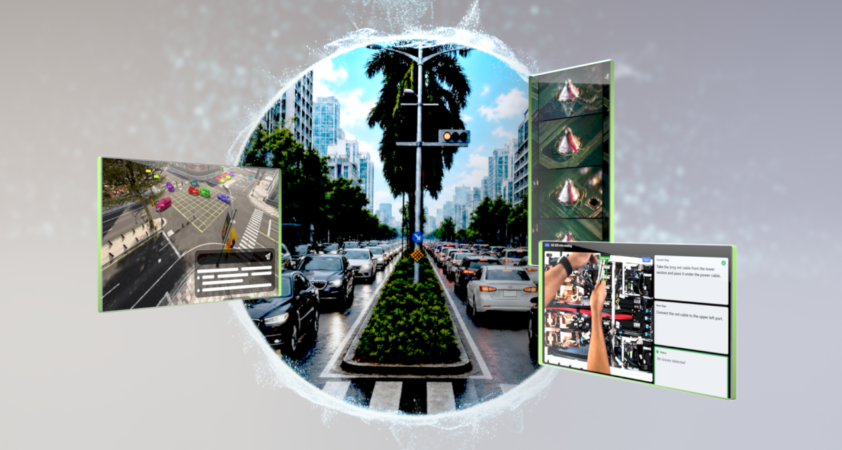
NVIDIA is advancing the capabilities of vision AI agents by integrating synthetic data generation and fine-tuning workflows through its Omniverse platform. By leveraging OpenUSD and NVIDIA Metropolis, developers can now create more accurate and adaptable AI models for real-world applications like manufacturing and smart cities. This approach addresses common challenges such as data gaps and complex deployment processes, enabling faster and more efficient development of AI agents. The integration of synthetic data has already shown significant improvements in precision and recall, reducing the time and resources needed for model training.
NVIDIA Blog
 © TechCrunch AI
Video & Creative AIimage
Gemini's AI Image Generation Now Free in U.S.
Google's Gemini app has expanded its personalized AI image generation feature to all eligible U.S. users for free, previously limited to paid subscribers. This feature, powered by Nano Banana, allows users to generate images based on their personal preferences without specifying them in prompts. By leveraging data from Google services like Gmail and Google Photos, Gemini can create tailored illustrations, even using actual user photos. This move democratizes access to advanced AI tools, making personalized image creation more accessible to a broader audience.
TechCrunch AI
 © MIT News AI
Video & Creative AIimage
MIT Exhibition Explores AI in Aesthetic Judgment
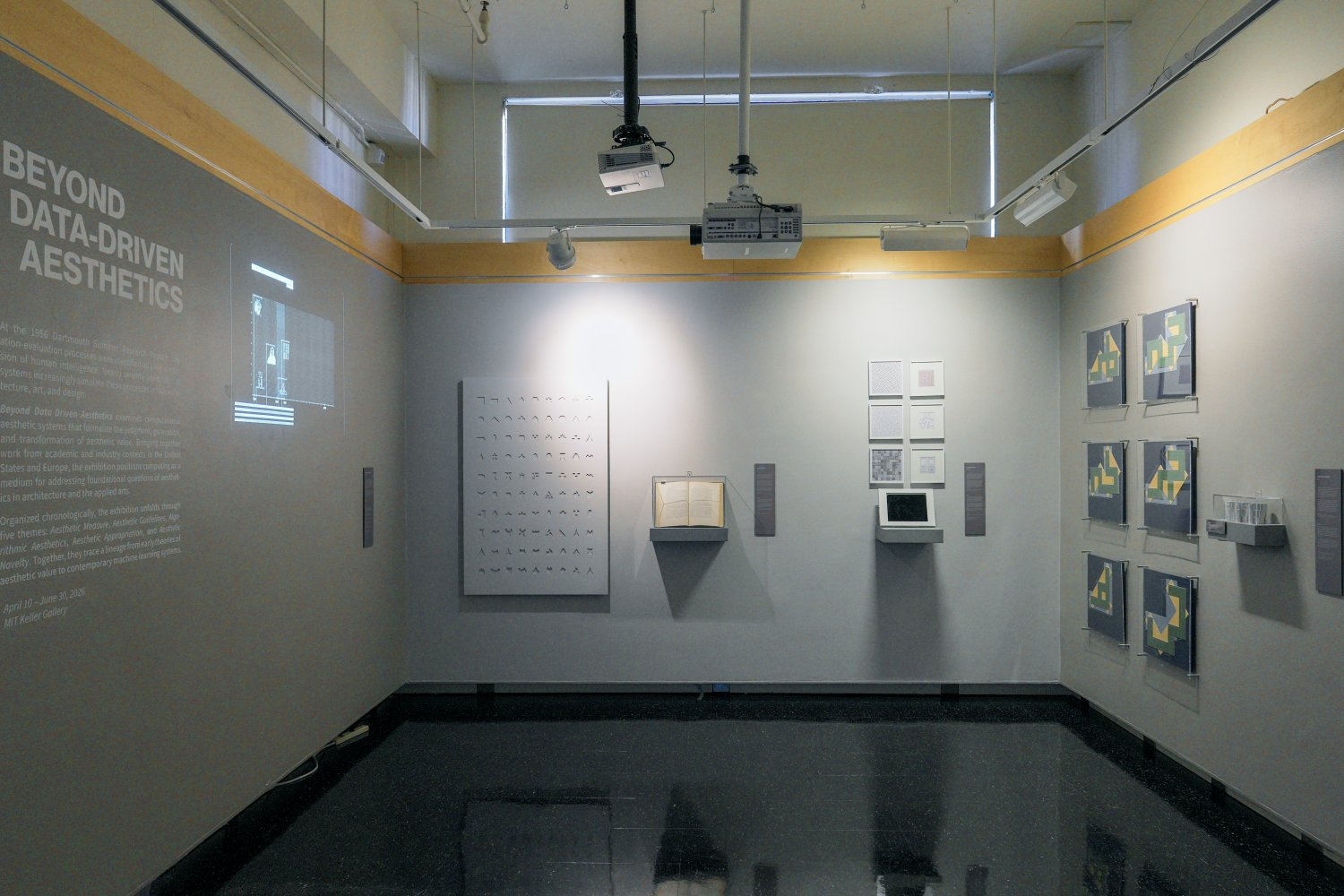
MIT's Keller Gallery presents 'Beyond Data-Driven Aesthetics,' an exhibition by Alexandros Haridis that investigates AI's influence on aesthetic judgment in architecture and the applied arts. The exhibition transforms complex computational theories and machine-learning systems into physical installations and interactive visualizations, challenging the idea that AI's creative role is a recent development. By drawing on both historical and contemporary research, it underscores the deep-rooted connection between computation and creativity. This exhibition invites reflection on how AI can inform and enrich human experience in design, pushing the boundaries of how we perceive and interact with our environments.
MIT News AI
 © The Verge AI
Video & Creative AIwriting
Meta Revives Creator Studio as AI Companion App
Meta has reintroduced its Facebook Creator Studio as a standalone AI companion app, aiming to enhance how creators engage with their audiences. The app's AI Creator Assistant offers performance insights and personalized recommendations, helping users understand how to grow on Facebook. It also features tools for identifying key comments and drafting responses in the user's voice. Currently, the app is in testing with select creators, with a waitlist available for early access. This move marks a shift from the previous Creator Studio, which was integrated into Meta's Business Suite.
The Verge AI
 © TechCrunch AI
Video & Creative AIwriting
Facebook Launches AI Companion App for Creators
Facebook is stepping up its game in the creator economy with a new AI companion app designed to keep creators engaged on its platform. This app, a reimagined version of Creator Studio, integrates an AI assistant that offers personalized recommendations and insights, helping creators optimize their content strategy without relying on third-party tools. By providing quick answers to performance-related questions and drafting comment replies, the app aims to streamline the creative process. This move is part of Meta's broader strategy to leverage AI for building more apps and retaining creator loyalty amidst fierce competition from TikTok and YouTube.
TechCrunch AI
 © TechCrunch AI
Video & Creative AIimage
Figma Enhances Design Tool with AI and Code Layers
Figma's latest update marks a pivotal enhancement in design collaboration by embedding code layers directly into its canvas. This feature empowers designers, product managers, and engineers to experiment and iterate on ideas without the constraints of production-ready code. Designers can now craft animations and 3D transforms within Figma, eliminating the need for external software. The update also broadens AI functionalities, enabling the generation of assets and shader effects, and facilitating the creation of custom plug-ins through text prompts. These advancements make Figma a more comprehensive tool for creative and technical teams, fostering innovation and efficiency.
TechCrunch AI
 © The Verge AI
Video & Creative AIimage
Figma Introduces AI Motion Graphics and Shader Tools
Figma's latest updates enhance its design canvas with AI-driven motion graphics and shader tools, offering new possibilities for creative workflows. Designers can now generate animations and transitions by describing them to Figma's chatbot, making it easier to add dynamic effects. The addition of code layers allows users to integrate coding directly within the design environment, bridging the gap between design and development. These features aim to reduce complexity and foster collaboration, positioning Figma as a more versatile tool for both creatives and developers.
The Verge AI
 © The Verge AI
Video & Creative AIimage
Sony's AI Camera Assistant Disappoints on Xperia 1 VIII
Sony's AI Camera Assistant on the Xperia 1 VIII has been met with criticism for its underwhelming performance. Unlike Google's Camera Coach, which offers guidance on framing and focus, Sony's assistant merely suggests aggressive adjustments to basic image settings like exposure and white balance. The AI's inconsistent suggestions and lack of transparency about the changes it makes leave users without a clear understanding of how to improve their photography skills. Despite the Xperia 1 VIII's strong camera hardware, the AI assistant's performance issues and tendency to overheat the device detract from the overall experience.
The Verge AI
 © TechCrunch AI
Video & Creative AIagents
Karamo Brown Launches AI Wellness App Kē
Karamo Brown, known for his role on 'Queer Eye,' has launched Kē, a wellness app that integrates AI to offer personalized fitness and nutrition plans. The standout feature is 'AI Karamo,' a digital clone that provides real-time advice in Brown's voice, drawing from his extensive media presence. This app reflects a growing trend of celebrities leveraging AI to extend their personal brand into digital wellness. While Kē aims to support personal growth, it emphasizes that it is not a replacement for real human connections. Available on iOS and Android, Kē offers a subscription model after a free trial.
TechCrunch AI
 © The Verge AI
Video & Creative AIvideo
Adobe Adds AI Assistants to Creative Cloud Apps
Adobe is integrating AI assistants into its Creative Cloud suite, enhancing tools like Photoshop and Premiere with prompt-based editing capabilities. These AI assistants, tailored for each app, allow users to automate tasks and streamline workflows through natural language prompts. For instance, Premiere's assistant can reorganize video timelines, while Photoshop's can manage layers and backgrounds. This move marks a significant step in Adobe's strategy to embed AI across its platforms, aiming to simplify creative processes and empower users to focus on their artistic vision.
The Verge AI
 © The Verge AI
Video & Creative AIimage
Adobe's Firefly AI Studio Enhances Design Workflow
Adobe's Firefly AI studio has been revamped to streamline the design process, offering a more cohesive and efficient workflow for creatives. The new features, such as 'Elements' and 'Projects', allow users to save and reuse design components, ensuring consistency across projects. This update also introduces capabilities like generating brand kits and assembling video clips, making it easier for users to transition from ideation to production. By integrating these tools, Adobe aims to position Firefly as a collaborative partner in the creative process, rather than a replacement for human creativity.
The Verge AI
 © The Verge Creator Economy
Video & Creative AIimage
VSCO unveils Studio Pro photo editing app
VSCO is stepping into the professional photo editing arena with its new Studio Pro app, challenging Adobe's dominance. The app, initially available on iOS, offers features like batch editing and style matching, with plans to expand to macOS and introduce RAW support. Priced at $500 annually, the VSCO One subscription aims to streamline a photographer's workflow, integrating editing, client communication, and delivery. This move positions VSCO as a comprehensive alternative to Adobe's Creative Cloud, targeting high-volume editing needs for professionals.
The Verge Creator Economy
 © TechCrunch AI
Video & Creative AIwriting
Pinterest unveils AI shopping app 'Ask Pinterest'
Pinterest is venturing into AI-driven shopping with its new experimental app, 'Ask Pinterest'. This app aims to transform the shopping experience by offering a conversational, chatbot-like interface that leverages Pinterest's 'Taste Graph' to provide personalized recommendations. Unlike traditional search engines, this app allows users to ask complex, multi-step questions, enhancing the visual discovery experience Pinterest is known for. By launching it as a standalone app, Pinterest can experiment with AI technology without altering its main platform. This move signals Pinterest's commitment to integrating AI into its shopping and advertising strategies.
TechCrunch AI
 © The Verge AI
Video & Creative AIimage
Apple's AI Photo Editing Tools in iOS 27
Apple's iOS 27 introduces new AI photo editing features that mark a significant shift for iPhone users. The updated Clean Up tool now effectively removes unwanted elements from photos by leveraging cloud-based AI models, aligning with Google's long-standing capabilities. Extend allows users to expand photo edges, adding plausible filler, while Spatial Reframing offers a 3D-like re-composition of images. These tools, though not as advanced as some competitors, represent a notable enhancement in Apple's native photo editing capabilities, potentially altering how users perceive and trust digital images.
The Verge AI
 © The Verge AI
Video & Creative AIvideo
AI in Film: Tribeca Shows Human-AI Collaboration
The Tribeca Film Festival highlighted a new direction for AI in filmmaking, showcasing projects where human creativity and AI technology work hand in hand. Films like 'Dear Upstairs Neighbors' demonstrated how custom AI models can enhance artistic vision, rather than replace it, by integrating AI-generated visuals with traditional animation techniques. This approach contrasts with the less polished outputs from generic AI models, suggesting that the future of AI in Hollywood lies in bespoke, artist-driven workflows. The festival underscored that while AI can be a powerful tool, it requires human guidance to produce compelling cinema.
The Verge AI
 © TechCrunch AI
Video & Creative AIvideo
Avataar AI Launches Culturally Aware Video Model Varya
Avataar AI has launched Varya, a video model designed to cater to India's unique cultural context, offering a cost-effective solution for video generation. Built on Alibaba's Wan 2.2 model, Varya uses distillation to operate faster and cheaper, producing video 10 times quicker than its predecessor. With a price of ₹0.48 per second, it significantly undercuts competitors, making video AI more accessible for India's vast market. This launch is part of India's broader AI strategy to foster local innovation and reduce reliance on expensive foreign models.
TechCrunch AI
.jpg) © WIRED AI
© WIRED AIVideo & Creative AIimage
Apple Adds AI Features to iPhone Photos App
Apple is set to enhance its Photos app with AI-driven features in iOS 27, offering users the ability to subtly improve their images while maintaining authenticity. The new tools, Extend and Spatial Reframe, allow for expanding and adjusting photo perspectives by generating additional pixels, but with restrictions to keep the main subject intact. Unlike competitors such as Google, Apple's approach focuses on subtle enhancements rather than extensive alterations. This development reflects Apple's dedication to preserving the genuine nature of captured moments while using AI to address common compositional challenges.
WIRED AI
Video & Creative AIwriting
Preply Integrates AI for Personalized Learning
Preply is enhancing its language learning platform by integrating AI-generated lesson summaries, thanks to a collaboration with OpenAI. This move aims to provide personalized feedback and tailored exercises, blending AI capabilities with human tutor expertise. By leveraging AI, Preply seeks to offer a more customized learning experience, potentially increasing engagement and effectiveness for learners. This integration marks a step forward in combining technology with traditional teaching methods, making personalized education more accessible.
OpenAI
 © TechCrunch AI
Video & Creative AIimage
Apple Enhances Image Playground AI Tool
Apple has significantly upgraded its Image Playground app, making it a more competitive AI image-generation tool. Previously criticized for its lackluster performance, the app now promises higher-quality imagery and enhanced functionality. Users can create personalized images using natural language prompts, with the assurance that their photos remain private. This update integrates seamlessly across Apple devices, allowing users to generate images for various applications like lock screens and iMessage backgrounds. The improvements mark a notable step in Apple's AI capabilities, aligning it more closely with industry standards.
TechCrunch AI
 © TechCrunch AI
Video & Creative AIimage
Apple Photos app adds AI editing features
Apple is enhancing its Photos app with new AI-driven editing tools, unveiled at WWDC 2026. The standout feature, 'Reframe', allows users to adjust image perspectives as if they had repositioned the camera, using AI to fill in gaps seamlessly. This means users can correct composition issues like off-center subjects or missed eye contact without losing the original scene's integrity. Additionally, the 'Extend' tool offers more flexibility in expanding images, while an upgraded 'Cleanup' tool promises more realistic removal of distractions. These updates make photo editing more intuitive and powerful for users.
TechCrunch AI
 © TechCrunch AI
Video & Creative AIimage
Amazon Launches AI-Powered Custom Merch Design
Amazon has introduced a new feature in its Shopping app that allows users to design custom merchandise using AI. This move integrates AI-generated designs directly into the app, making it easier for consumers to create personalized products without needing design skills. The service, available in the U.S., lets users describe their ideas to Alexa, which then generates a design that can be printed on various items like T-shirts and tumblers. By handling production and delivery through Prime, Amazon lowers the barrier for custom merch creation, potentially challenging existing platforms like Redbubble and Bonfire.
TechCrunch AI
 © Hugging Face Blog
Video & Creative AIagents
Multi-Model Finance Game Uses Diverse AI Agents
Thousand Token Wood's second version transforms a simple simulation into an interactive finance game, where players act as shadow financiers in a woodland economy. The game now employs four distinct small models from different labs, each representing a unique creature with its own economic behavior. This diversity in models creates a dynamic and unpredictable market environment, enhancing the game's complexity and realism. The engineering challenge was primarily in the serving layer, not the modeling, highlighting the importance of infrastructure in multi-model systems. This approach demonstrates how small models can be leveraged for complex simulations without requiring massive computational resources.
Hugging Face Blog
 © The Verge AI
Video & Creative AIwriting
Meta Tests AI-Generated Clickbait News Feed
Meta's experiment with an AI-generated clickbait news feed raises questions about the role of AI in content creation. The feature, part of the standalone Meta AI app, generated stories based on user interests but often resulted in nonsensical or inaccurate content. Despite the lack of clear labeling indicating AI involvement, the app produced articles with AI-generated images, some depicting real people with errors. Meta has since decided to discontinue the feature, leaving uncertainties about its purpose and compliance with AI content policies.
The Verge AI
 © The Verge AI
Video & Creative AIvideo
AI Startup Quilty Predicts Film Success from Scripts
Quilty, an AI startup, claims it can predict a film's success by analyzing its script, offering a score that reflects narrative quality and commercial viability. Despite its ambitious promise, the tool has faced skepticism after inaccurately predicting the success of certain films. Quilty's approach combines various AI models to provide detailed script analyses, but it doesn't train its own models, relying instead on existing technologies. This modularity allows Quilty to quickly integrate new AI advancements, though it raises questions about the reliability of its predictions. The startup aims to assist creatives in making informed decisions, but its effectiveness remains unproven.
The Verge AI
 © TechCrunch AI
Video & Creative AIwriting
Google Launches Dreambeans AI App for Lifestyle Suggestions
Google Labs has introduced Dreambeans, an AI-driven app designed to animate users' lives by generating personalized lifestyle suggestions. By leveraging data from Google services like Gmail, Calendar, and Photos, Dreambeans curates daily stories that inspire users with new ideas and activities. The app aims to combat doomscrolling by limiting the number of stories to 10-14 per day, encouraging users to engage with the world beyond their screens. Available to U.S.-based Google AI Ultra subscribers, Dreambeans represents a novel approach to integrating AI into everyday life, offering a unique blend of personal intelligence and creativity.
TechCrunch AI
 © TechCrunch AI
Video & Creative AIimage
Martin Scorsese Partners with AI Startup for Storyboarding
Martin Scorsese, a renowned director, has teamed up with Black Forest Labs, an AI image-generation startup, to enhance his storyboarding process. This collaboration marks a notable change in Hollywood's approach to AI, as Scorsese leverages the technology to improve communication with his cinematographers and production designers. Black Forest Labs, which operates out of Germany, is a significant player in the AI industry, providing technology for companies like Adobe and Microsoft. With a valuation of $3.25 billion, the startup's involvement with Scorsese suggests a growing acceptance of AI tools in creative fields. This partnership illustrates how even traditional filmmakers are beginning to embrace AI for its efficiency and potential to streamline creative processes.
TechCrunch AI
 © Google AI Blog
Video & Creative AIvideo
Google I/O 2026 Showcases AI in Event Creation
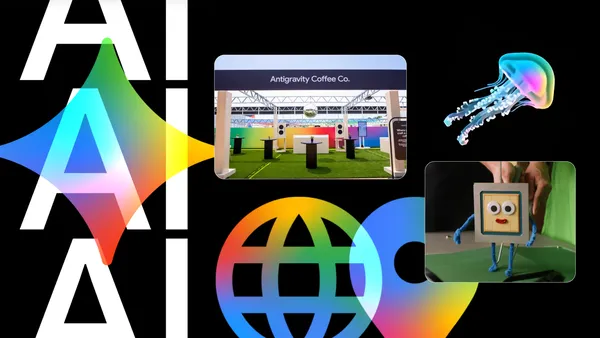
Google I/O 2026 was not just a showcase of AI innovations but a demonstration of AI's potential in event creation. By using tools like Gemini Omni and Nano Banana, Google crafted a unique experience, including an animated film and a dynamic visual brand identity. The event highlighted how AI can enhance creativity and efficiency, allowing teams to focus on more meaningful tasks. This approach illustrates AI's capability to transform traditional processes, making them more engaging and efficient.
Google AI Blog
Video & Creative AIvideo
AI Reshapes Video Game Development Industry
AI is fundamentally transforming video game development, moving beyond experimental phases to become integral in the production pipeline. Developers are leveraging AI for smarter NPCs, dynamic gameplay, and efficient asset creation, significantly reducing time and effort. Tools like Ubisoft's Ghostwriter and Tencent's Hunyuan3D-PolyGen are revolutionizing dialogue and 3D asset generation, respectively. However, the rapid adoption raises concerns about quality and labor implications, as seen with the influx of AI-generated titles on platforms like Steam. The industry is navigating these challenges while embracing AI's potential to streamline creative processes.
AI News
 © WIRED AI
Video & Creative AIvideo
Amazon's AI-Animated Show Sparks IP Dispute
Amazon's decision to develop an AI-animated series based on Loryn Brantz's 'Good Advice Cupcake' has led to a significant intellectual property conflict. Brantz, who originally created the character, is dismayed that BuzzFeed, her former employer, has licensed it to Amazon without her participation. The series, which is part of Amazon's GenAI Creators' Fund, will incorporate AI tools in its production, a move Brantz vehemently opposes. This situation underscores the growing friction between creators and corporations regarding AI's role in creative endeavors, raising critical questions about ownership and artistic integrity in the evolving digital landscape.
WIRED AI
 © The Verge AI
Video & Creative AIimage
Adobe's Firefly AI Assistant: A Novice Design Tool
Adobe's Firefly AI Assistant is an intriguing addition to the world of AI design tools, offering a conversational interface that guides users through the editing process. While it doesn't match the skill of a professional designer, it provides a unique learning opportunity by explaining its actions and suggesting alternatives when it encounters limitations. This makes it a potentially valuable tool for those looking to understand design basics while completing tasks. However, its current capabilities may not satisfy experienced designers seeking high-quality results, as it often produces work that resembles that of a novice.
The Verge AI
 © The Verge AI
Video & Creative AIvideo
AI-generated film debuts at Tribeca Festival
The Tribeca Festival will feature 'Dreams of Violets,' a pioneering AI-generated film that dramatizes the Iranian government's mass killing of protestors. Created by brothers Ash and Pooya Koosha, the film stands out for its remarkably low production cost of $2,000, achieved through the use of AI tools like Google's Nano Banana and Anthropic's Claude. This event marks a significant moment as it's the first full-length AI-generated film to gain acceptance at a major festival. The film's presence at Tribeca signals a shift in the film industry, where AI is opening new creative possibilities and challenging traditional filmmaking norms.
The Verge AI
 © TechCrunch AI
Video & Creative AImusic
YouTube Enhances Podcast Experience with AI Features
YouTube is stepping up its podcast game by introducing AI-driven features for Premium users, aiming to enhance the listening experience and compete with platforms like Spotify and Apple Podcasts. The new AI recommendation tool offers personalized podcast suggestions based on user preferences and moods, while the 'Auto speed' feature intelligently adjusts playback speed for a smoother listening experience. Additionally, the on-the-go mode provides user-friendly controls for multitasking listeners. These updates reflect YouTube's strategy to retain and expand its podcast audience, leveraging AI to offer a more tailored and efficient experience.
TechCrunch AI
 © The Verge AI
Video & Creative AIvideo
YouTube Introduces AI-Powered Custom Video Feeds
YouTube is rolling out a new AI feature that allows users to create personalized video feeds based on their interests and moods. By simply describing the type of content they want, users can receive a curated feed tailored to their preferences, such as workout guides or tech podcasts. This feature is available to English-speaking users in the US on both mobile and desktop platforms. It represents a shift towards more personalized content delivery, similar to Spotify's AI-driven playlists, enhancing user engagement by making it easier to access desired content.
The Verge AI
 © The Verge AI
Video & Creative AIvideo
Google's Omni AI Model Enhances Video Generation
Google's new Omni AI model is pushing the boundaries of video generation, allowing users to transform any input into creative video content. The model, part of Google's AI video platform Flow, offers improved consistency and real-world knowledge integration compared to its predecessor, Veo. Users can now create videos with minimal effort, though the results can still be unpredictable, with occasional AI glitches. While not perfect, Omni represents a significant step forward in making realistic video generation more accessible, albeit at a cost in terms of credits and potential editing iterations.
The Verge AI
 © The Verge AI
Video & Creative AImusic
Spotify's AI Remix Tool Faces Criticism
Spotify's new AI remix tool, developed in partnership with Universal Music Group, aims to let superfans create remixes and covers from UMG's catalog. However, critics argue that this tool undermines the essence of human creativity and genuine artistic engagement. While Spotify positions it as a premium service to deepen fan relationships, skeptics believe it caters more to those seeking novelty rather than meaningful interaction with music. The tool's impact on the music landscape remains uncertain, as it could either democratize remixing or dilute the artistry involved in music creation.
The Verge AI
 © The Verge AI
Video & Creative AImusic
Polyend's AI Guitar Pedal Offers Custom Effects
Polyend's new AI-powered guitar pedal, Endless, allows musicians to create custom effects through text prompts, offering a unique twist on traditional pedalboards. The pedal uses a custom-trained language model to generate effects, which can be loaded onto the pedal via a web app called Playground. While the concept is innovative, the execution has its quirks, such as slow code generation and the need for manual power cycling. Despite these challenges, Endless provides a novel way for musicians to experiment with sounds that aren't readily available in the market.
The Verge AI
 © WIRED AI
Video & Creative AIvideo
Google's Gemini App Introduces AI Avatar Tool
Google's Gemini app has rolled out an innovative AI avatar feature, enabling users to create digital versions of themselves for video content. This tool, driven by the Omni video model, allows users to seamlessly integrate their likeness into AI-generated videos, although it comes with some quirks and limitations. Users can craft avatars by scanning their faces, and the app produces videos with remarkably realistic settings, despite some imperfections. While the technology is undeniably impressive, it also prompts discussions about privacy and the potential for deepfake misuse. This advancement represents a significant step in personalizing AI-generated content, but it also underscores the importance of addressing ethical considerations.
WIRED AI
 © The Verge AI
Video & Creative AImusic
Spotify Launches AI-Generated Personal Podcasts
Spotify is stepping into the AI-generated content space with its new Studio app, designed to create personalized daily podcasts and playlists. This AI-driven tool uses your Spotify listening history and connected apps like email and calendar to tailor content specifically for you. While Spotify isn't the first to offer AI-generated podcasts, its existing user base for audio content gives it a unique advantage. The app, launching soon as a research preview, aims to integrate seamlessly into users' daily routines, offering a new way to consume personalized audio content.
The Verge AI
 © The Verge AI
Video & Creative AIvideo
AI Video Tools Evolve Beyond Simple Clip Generation
AI video technology is evolving from generating short clips to offering comprehensive production solutions for Hollywood. Companies like Luma and Google are developing AI agents that assist with the entire filmmaking process, from concept to final video, aiming to streamline production and maintain consistency. This shift could significantly reduce production times, as seen with Luma's collaboration with Amazon, which cut production time from weeks to days. The real test will be whether these advancements lead to content that audiences want to watch, amidst concerns about job losses in the industry.
The Verge AI
 © TechCrunch AI
Video & Creative AImusic
Spotify Introduces AI-Powered Podcast Creation Features
Spotify is transforming how users interact with podcasts by introducing AI-driven features that allow for personalized podcast creation. Users can now generate podcasts based on custom prompts, such as daily updates or specific topics, directly within the Spotify app. This move aims to deepen user engagement by enabling personalized content creation and interaction, similar to features seen in NotebookLM and ElevenLabs. Additionally, Spotify is rolling out an AI-powered Q&A feature for Premium users, enhancing the interactive experience by allowing questions about podcast content. These innovations mark a shift towards more personalized and interactive podcast consumption on the platform.
TechCrunch AI
 © TechCrunch AI
Video & Creative AImusic
Spotify unveils AI audiobook creation tool
Spotify is making a significant move into the audiobook space with the launch of an AI-powered tool for self-publishing audiobooks, leveraging ElevenLabs' technology. This new feature, set to debut in beta this June, allows authors to create audiobooks without exclusive contracts, offering them the freedom to distribute their work widely. This initiative builds on Spotify's existing partnerships and aims to provide more expressive and human-like voice models. By expanding its platform to support multiple languages and enhancing its Audiobook+ plans, Spotify is positioning itself as a major player in the audiobook market, aiming to increase its catalog and user engagement.
TechCrunch AI
 © Replicate Blog
Video & Creative AIvideo
Grok Imagine Video 1.5 Enhances Video Prompting
Grok Imagine Video 1.5 marks a significant leap in video generation, offering improved aesthetic precision and adherence to physics. The model excels in creating detailed soundscapes and dynamic visuals, responding well to specific and granular prompts. By focusing on precise descriptions, users can achieve more cinematic results, whether it's the subtle movement of a camera or the intricate sound of rain on metal. This update empowers creators to craft more immersive and visually compelling videos, expanding the possibilities of AI-driven video content.
Replicate Blog
 © The Verge AI
Video & Creative AIvideo
YouTube Shorts Introduces AI-Powered Remix Feature
YouTube Shorts is taking creativity to a new level with its latest AI-powered remix feature, allowing users to transform videos using Gemini Omni. This tool enables creators to reimagine clips in various styles, from pixel art to anime, or even add whimsical elements like giant heads or pirate costumes. Importantly, creators have control over whether their content can be remixed, ensuring privacy and consent. This feature not only enhances user engagement but also opens up new avenues for creative expression on the platform.
The Verge AI
 © TechCrunch AI
Video & Creative AIimage
Figma Integrates AI Assistant into Design Canvas
Figma is enhancing its design platform by integrating an AI assistant directly into its collaborative canvas. This new feature allows users to employ natural language prompts to generate and edit designs, as well as automate repetitive tasks. The AI assistant is designed to understand design contexts, making it a valuable tool for teams to explore ideas and refine concepts without getting bogged down by tedious details. This move positions Figma to better compete with other design tools by bringing design and code closer together, enhancing the collaborative experience for its users.
TechCrunch AI
 © TechCrunch AI
Video & Creative AIimage
Google launches AI design app Pics at I/O 2026
Google's new AI-powered design app, Pics, marks its entry into the competitive world of AI design tools. Announced at Google I/O 2026, Pics aims to simplify image generation and editing for users of all skill levels, from teachers to small business owners. By integrating with Google Workspace, Pics allows users to create and modify visuals using simple text prompts or direct edits, challenging established players like Canva. The app is powered by Nano Banana 2 and Gemini, ensuring precise text rendering and easy adjustability of design elements. This move highlights Google's strategic push into the AI design space, emphasizing the increasing role of AI in visual content creation.
TechCrunch AI
 © WIRED AI
Video & Creative AIvideo
Google Introduces Avatar Feature for AI Video Creation
Google's latest addition to its Flow tool allows users to create digital avatars of themselves for AI-generated videos, offering a new dimension in personalized content creation. The Omni Flash model powers this feature, enhancing video detail and ensuring consistency, which addresses previous issues of character distortion. Users can scan their likeness and voice to produce lifelike avatars, enabling them to appear in videos without the need for physical filming. Announced at Google's I/O developer conference, this tool aims to provide creators with sophisticated AI capabilities. However, it also raises questions about the authenticity of digital content, as audiences may struggle to distinguish AI-generated videos from real ones. This development signifies Google's commitment to equipping creators with cutting-edge tools, potentially transforming the landscape of digital content production.
WIRED AI
 © The Verge AI
Video & Creative AImusic
Amazon Alexa Plus introduces AI-generated podcasts
Amazon's Alexa Plus has enhanced its capabilities by allowing users to create AI-generated podcasts on almost any subject. Users can now direct the conversation and determine the podcast's duration before it is generated, providing a tailored audio experience. These podcasts feature AI-generated hosts and utilize information from numerous sources, including prominent news outlets like Reuters and the Washington Post. This innovation transforms Alexa Plus into a more dynamic tool for content creation, extending its use beyond typical voice assistant tasks. Users can conveniently access these podcasts via their Echo Show devices or the Alexa app, integrating seamlessly into Amazon's ecosystem.
The Verge AI
 © TechCrunch AI
Video & Creative AImusic
Amazon Alexa+ Can Now Generate Podcasts
Amazon's Alexa+ is stepping into the realm of content creation with its new feature, Alexa Podcasts, which allows users to generate podcast episodes on demand. This feature transforms Alexa+ from a mere voice assistant into a personalized AI content creator, capable of crafting podcasts on any topic with AI-generated host voices. Users can customize the length, tone, and focus of their episodes, which are then saved for replay. While this innovation broadens Alexa+'s capabilities, it also raises questions about the ethics and accuracy of AI-generated content, especially in news and complex topics.
TechCrunch AI
 © The Rundown AI
Video & Creative AIimage
AI Bias Exposed in Monet Art Experiment
Conceptual artist SHL0MS cleverly revealed biases against AI by posting a real Monet painting on X, claiming it was AI-generated. The post drew thousands of critiques, with users labeling the artwork as lacking emotion and depth, only to later learn it was an authentic Monet. This incident highlights the deep-seated skepticism towards AI in the art world, where the mere suggestion of AI involvement can provoke negative reactions. The experiment illustrates the ongoing tension between traditional art appreciation and the increasing role of AI technologies in creative processes.
The Rundown AI
 © Google DeepMind
Video & Creative AIvideo
Google DeepMind Integrates Street View with Project Genie
Google DeepMind's Project Genie takes a significant step forward by integrating real-world imagery from Google Street View. This enhancement allows users to create virtual environments grounded in reality, offering a new dimension for AI agents to navigate and interact with complex settings. By anchoring virtual worlds in real places, users can explore and reimagine locations with creative styles, such as turning the Golden Gate Bridge into an underwater scene. This development not only enriches the virtual experience but also expands the potential for research and simulation in AI environments.
Google DeepMind
 © Google DeepMind
Video & Creative AIvideo
Google DeepMind Launches Gemini Omni for Video Creation
Google DeepMind has unveiled Gemini Omni, a new AI model that combines reasoning with creative capabilities, starting with video creation. This model allows users to generate high-quality videos from any combination of images, audio, video, and text inputs, and edit them through natural language conversation. Gemini Omni Flash, the first model in this family, is now available to Google AI Plus, Pro, and Ultra subscribers, as well as users of YouTube Shorts and the YouTube Create App. This launch marks a significant step in AI-driven video editing, offering a seamless blend of creativity and real-world knowledge.
Google DeepMind
 © TechCrunch AI
Video & Creative AIvideo
Runway Aims to Lead in AI World Models
Runway, a video-generation startup, is making a bold move into AI world models, aiming to surpass traditional language-based AI approaches. Founded by NYU Tisch School of the Arts alumni, Runway has built a reputation with its video-generation tools, now used by major media companies. The company believes that training AI on observational data from the world, rather than just language, is the future. This shift could revolutionize fields from filmmaking to drug discovery, but Runway faces stiff competition from tech giants like Google. The success of this venture could redefine AI's role in understanding and simulating the world.
TechCrunch AI
 © MIT Technology Review AI
Video & Creative AIvideo
AI Revolutionizes Chinese Short Drama Production
The Chinese short drama industry is undergoing a significant transformation with the integration of AI, allowing for faster and cheaper production of content. This shift has enabled companies to produce an average of 470 AI-generated short dramas daily, drastically reducing costs and production timelines. The use of AI has not only streamlined the creation process but also allowed for rapid experimentation with new genres and themes. As a result, the industry is expanding globally, with the United States emerging as a major market. This AI-driven approach is reshaping the roles within the industry, reducing the need for traditional production teams.
MIT Technology Review AI
 © Together AI Blog
Video & Creative AIvideo
Violin: Open-Source Video Translation Tool Launched
Violin is a newly launched open-source tool designed to enhance the accessibility of video content by overcoming language barriers. It utilizes advanced AI technologies, such as speech recognition, language models, and text-to-speech synthesis, to translate videos into multiple languages. The tool includes a multimodal chat assistant, enabling users to interact with video content by posing questions and receiving contextually grounded answers. Violin is available as a web app, command-line interface, and agent skill, catering to content creators and developers alike. This release represents a significant advancement in making video content globally inclusive and accessible.
Together AI Blog
.png) © Together AI Blog
© Together AI BlogVideo & Creative AImusic
Together AI Launches Voice Finder Tool
Together AI has introduced Voice Finder, a tool designed to streamline the process of selecting the right voice for applications. With access to over 600 voices from various models, developers can search by prompt or audio sample to find voices that match specific attributes like pitch, accent, and emotion. This tool addresses the challenge of manually sifting through extensive voice catalogs, offering a more efficient way to match voices to specific use cases. By simplifying voice selection, developers can focus more on building and less on searching.
Together AI Blog
 © The Verge AI
Video & Creative AIvideo
Sony Embraces AI for Game Development
Sony is integrating AI into its PlayStation game development process, viewing it as a powerful tool to enhance, not replace, human creativity. Studios like Naughty Dog and Santa Monica Studio are using AI-powered tools like Mockingbird to automate and accelerate tasks such as 3D animation, significantly reducing time spent on these processes. This approach allows developers to focus more on the creative aspects of game design while AI handles repetitive tasks. Sony's collaboration with Bandai Namco further explores AI's potential in video production, though challenges like consistency remain. This marks a shift towards more efficient game development without compromising artistic vision.
The Verge AI
 © Google AI Blog
Video & Creative AIvideo
Google AI Empowers Small Businesses with Creative Ads
Google's new initiative, The Small Brief, pairs renowned advertising professionals with local businesses to craft AI-enhanced ad campaigns. By utilizing Flow, Google's AI creative studio, these campaigns aim to transform the advertising landscape for small businesses, enabling them to achieve a big-brand impact. This project showcases the potential of AI in storytelling, encouraging creatives and small businesses to integrate AI into their advertising strategies. The final campaigns, set to be revealed in June, will provide a glimpse into the creative process and demonstrate AI's transformative role in modern advertising.
Google AI Blog
 © TechCrunch AI
Video & Creative AImusic
Spotify Integrates AI-Generated Personal Podcasts
Spotify is stepping into the realm of AI-generated audio by allowing users to create personalized podcasts using programming tools like OpenAI's Codex. This new feature, currently in beta, lets users generate audio content based on their own prompts and import it directly into their Spotify library. While these podcasts are private and not accessible to other users, they offer a new way for individuals to consume personalized audio content alongside their regular playlists. This move positions Spotify as a potential hub for AI-driven personal audio experiences, expanding its role beyond traditional music streaming.
TechCrunch AI
 © TechCrunch AI
Video & Creative AImusic
Spotify AI DJ Expands Language Support
Spotify's AI DJ feature is now more accessible with support for French, German, Italian, and Brazilian Portuguese, expanding its reach beyond English and Spanish. This move not only broadens the feature's availability to more countries, including Austria and Brazil, but also enhances user interaction by allowing requests and mood changes in multiple languages. The AI DJ, with distinct personalities like Maia and Ben, offers a personalized experience, making Spotify's service more engaging. This expansion signifies Spotify's commitment to integrating AI into its platform, enhancing user experience across diverse linguistic backgrounds.
TechCrunch AI
 © The Verge AI
Video & Creative AIvideo
Viral Creator Launches Hit Camera App
Derrick Downey Jr., known for his viral wildlife videos, has unexpectedly created a hit camera app, DualShot Recorder, which quickly topped the App Store charts. The app allows users to capture both vertical and horizontal footage simultaneously without losing resolution, a common challenge for content creators. Downey, not a developer by trade, leveraged AI tools like Claude to build the app, overcoming the limitations of traditional methods. This development marks a significant shift for Downey, who is now navigating the tech world while maintaining his connection with his beloved squirrel community.
The Verge AI
 © Google Research Blog
Video & Creative AIimage
New AI Tool for Photo Re-composition
Google Research has introduced a generative AI tool that allows users to re-compose their photos by adjusting angles. This development aims to enhance the creative possibilities for photographers and content creators.
Google Research Blog
 © The Rundown AI
Video & Creative AIvideo
Canva Launches AI 2.0 for Editable Designs
Canva has introduced AI 2.0, enhancing its platform to allow users to edit AI-generated designs interactively. This update aims to improve the creative process by understanding user intent and the sequence of design actions.
The Rundown AI
 © The Verge Creator Economy
Video & Creative AIother
Kinetic Sculptures Blend Art and Technology
Artist Rachel Youn creates kinetic sculptures using secondhand machines and artificial flowers, exploring themes of humanlike presence and sexuality. One piece, Slow Burn, features a motorized neck massager animating an artificial orchid.
The Verge Creator Economy
 © NVIDIA Blog
Video & Creative AIvideo
Adobe Premiere Introduces New Color Grading Mode
Adobe has announced a new Color Grading Mode for Premiere, optimized for NVIDIA GPUs, enhancing the editing workflow with a dedicated grading environment. This mode operates in 32-bit color depth and aims to improve performance and quality for video editors.
NVIDIA Blog
 © Replicate Blog
Video & Creative AIvideo
Creating Videos with Seedance 2.0
The Replicate Blog introduces Seedance 2.0, a video model for users new to video generation. It encourages readers to explore this tool for creating videos.
Replicate Blog
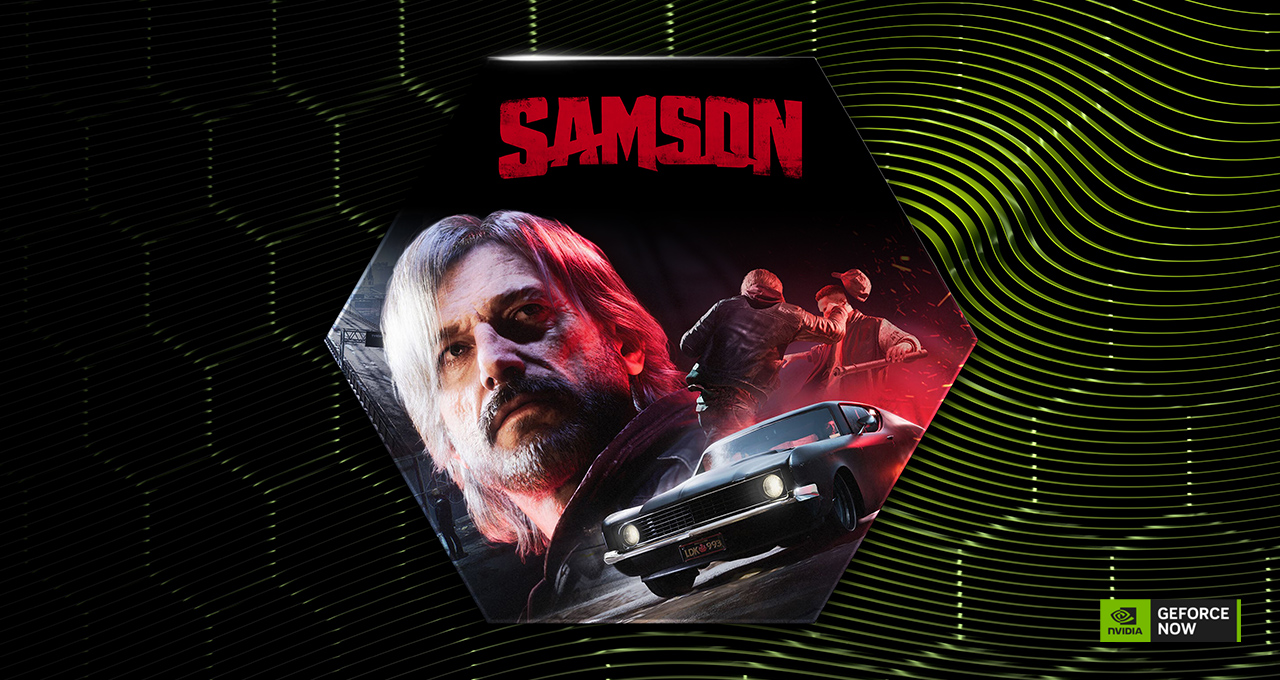 © NVIDIA Blog
Video & Creative AIvideo
Samson: A Tyndalston Story Launches on GeForce NOW
The game 'Samson: A Tyndalston Story' is now available for streaming on GeForce NOW, offering cinematic gameplay and narrative-driven action. It features advanced graphics technologies like ray tracing and NVIDIA DLSS 3.5 for enhanced performance.
NVIDIA Blog
 © Together AI Blog
Video & Creative AIvideo
Wan 2.7 Video Model Suite Released
Together AI has launched the Wan 2.7 video model suite, which includes four models for video generation, continuation, reference-driven workflows, and editing, beginning with text-to-video capabilities.
Together AI Blog
 © MIT News AI
Video & Creative AIvideo
MIT Student Merges AI with Music Visuals
Mariano Salcedo, a graduate student at MIT, is researching neural cellular automata to create visuals that respond to music. His work aims to enhance the listening experience by allowing users to generate music-driven visuals through a web interface.
MIT News AI
 © Replicate Blog
Video & Creative AIvideo
New Features in Google's Veo 3.1
Google's Veo 3.1 introduces new video generation features such as reference images, first/last frame control, and enhanced image-to-video capabilities.
Replicate Blog
 © Google Research Blog
Video & Creative AIimage
Snapseed Introduces On-Device Segmentation Feature
Snapseed has launched an interactive on-device segmentation feature, enhancing user experience in photo editing. This development focuses on improving human-computer interaction and visualization.
Google Research Blog
 © Google Research Blog
Video & Creative AIvideo
YouTube Introduces Real-Time Generative AI Effects
YouTube has unveiled new real-time generative AI effects powered by advanced models. This technology aims to enhance user experience by allowing dynamic content creation during video streaming.
Google Research Blog
 © Replicate Blog
Video & Creative AIvideo
Prompting Veo 3 with Images
The article discusses how to effectively use images to prompt the AI video tool Veo 3. It highlights the capabilities of AI in video generation.
Replicate Blog
 © Replicate Blog
Video & Creative AIvideo
Guide to Comparing AI Video Models
The Replicate Blog provides a comparison of various AI video models to assist users in selecting the most suitable option for their needs.
Replicate Blog
 © Replicate Blog
Video & Creative AIvideo
Expert Prompting Techniques for Veo 3
The article discusses techniques for effectively prompting Google's Veo 3 to generate high-quality videos.
Replicate Blog
 © Replicate Blog
Video & Creative AIimage
Easel AI Launches on Replicate
Easel AI's advanced face swap and AI avatars are now available on the Replicate platform.
Replicate Blog
 © Replicate Blog
Video & Creative AIvideo
Stylized Video Creation with Wan2.1
The Replicate Blog discusses the use of Wan2.1 for video style transfer, highlighting its fun applications. The article provides insights on how to utilize this feature.
Replicate Blog
 © Replicate Blog
Video & Creative AIother
Latest Creative Models and Community Projects Overview
The Replicate Blog highlights recent developments in creative models, including avatars, lightsabers, and LoRA tricks, along with community experiments.
Replicate Blog
 © Replicate Blog
Video & Creative AIvideo
Wan2.1 API for Video Generation Released
Wan2.1 is an open-source video generation model that produces coherent and high-quality outputs, and it can be run in the cloud with a single line of code.
Replicate Blog
 © Replicate Blog
Video & Creative AIvideo
Generate Short Videos with Replicate Playground
Replicate has introduced a new feature that allows users to create AI-generated videos using a streamlined workflow in their playground. This tool aims to simplify the video creation process for users.
Replicate Blog
 © Replicate Blog
Video & Creative AIimage
Best Practices for Stable Diffusion 3
The article provides guidance on using Stable Diffusion 3 effectively, including new prompting techniques to enhance image generation results.
Replicate Blog
 © Replicate Blog
Video & Creative AIimage
Run Stable Diffusion 3 on Apple Silicon Macs
A guide has been released detailing how to generate images using Stable Diffusion 3 on M-series Macs with MPS acceleration.
Replicate Blog
 © Replicate Blog
Video & Creative AIvideo
Create Smooth AI Videos with AnimateDiff
The Replicate Blog discusses how to combine AnimateDiff with the ST-MFNet frame interpolator to generate smooth and realistic videos from text prompts.
Replicate Blog