Video & Creative AI
RoseBerry repackages Neighbours as AI microdrama
The Verge Creator Economyhigh confidence
Why it matters
- →Demonstrates how legacy media companies are using AI to repurpose archival content for new vertical-first platforms.
- →Highlights the tension between genuine microdrama storytelling and simple content clipping by major studios.
- →Signals a shift in monetization strategies where existing IP is adapted for mobile consumption rather than producing new original short-form series.

RoseBerry Media is recutting episodes of the Australian soap opera Neighbours into vertical 'microdramas' for the Epis streaming platform. The company utilizes a proprietary AI-powered production workflow to adapt the content, aiming to position premium vertical television as a new entertainment category. While microdramas originated in China as low-budget, high-narrative mobile-first series, this project repurposes existing 1980s-2000s footage rather than creating original short-form stories. The initiative highlights a growing trend among studios to use AI and vertical formats to extend the lifecycle of legacy intellectual property.
Read originalThe story around this
Earlier coverage that leads up to this article, and what followed. Lines connect each piece to the closest one after it, converging here.
How we got here
- 1Character.AI Launches Interactive Microdrama Series
The Verge Creator Economy · July 9, 2026 · Background
More from The Verge Creator Economy

More in Video & Creative AI
 © MIT News AI
Video & Creative AIother
InstructMesh repairs AI 3D models for real-world use
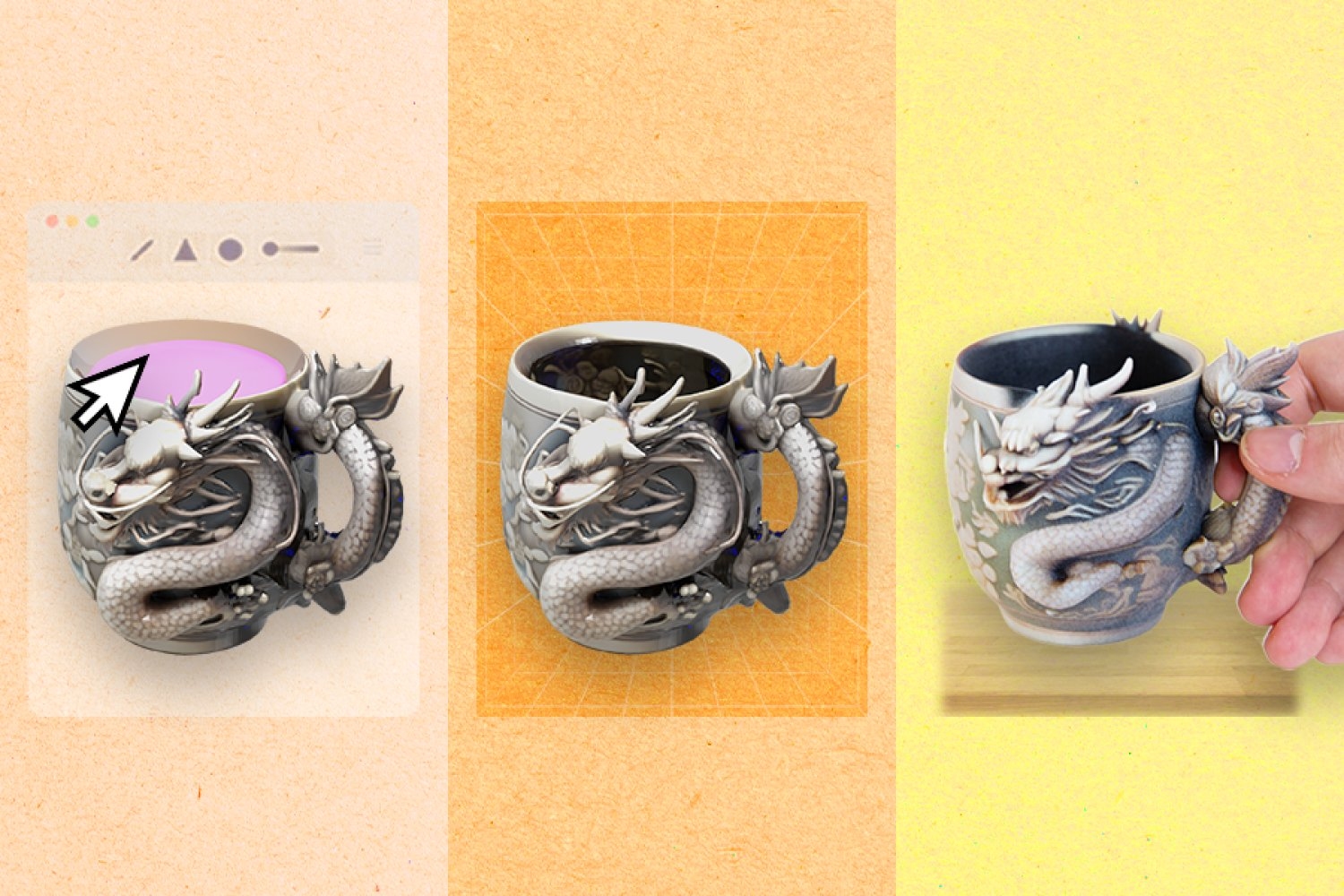
Most generative 3D models look good but fail structurally, leaving novices unable to fix them. InstructMesh solves this by combining Microsoft’s TRELLIS generator with GPT-4 reasoning, allowing users to describe flaws in natural language and get corrected geometry instantly. MIT researchers proved that non-experts could identify and repair nearly 90% of structural errors in existing models using the tool. This shifts 3D fabrication from a technical hurdle to an intuitive design process where visual intent matches physical function.
MIT News AI
 © TechCrunch AI
Video & Creative AIimage
ChatGPT launches global virtual try-on and favorites
OpenAI is pushing ChatGPT deeper into e-commerce with a global virtual try-on feature powered by its new Images 2.5 model. Users can now upload selfies or product screenshots to visualize clothing on themselves, moving beyond simple text-based recommendations. This update also introduces a Favorites library for saving discoveries, directly challenging Pinterest and Google’s dominance in visual fashion search. While the underlying image generation improvements are notable, the real shift is ChatGPT becoming a proactive shopping assistant rather than just an information retriever.
TechCrunch AI
 © TechCrunch AI
Video & Creative AIvideo
Synthesia launches interactive AI avatars for enterprise roleplay
Synthesia is moving beyond static video generation into agentic interaction with its new Roleplay Sessions product. This feature allows enterprises to train digital twins on specific knowledge bases, enabling employees to practice sales pitches or surveys against an avatar that listens and responds in real-time. By combining voice-to-text, LLM reasoning, and Synthesia’s proprietary video rendering, the company is bridging the gap between passive content creation and active simulation. This marks a significant shift for the $4 billion valuation startup, positioning it as a platform for immersive training rather than just marketing asset production.
TechCrunch AI