Research
MIT's human-in-the-loop topology optimization copilot
MIT News AIhigh confidence
Why it matters
- →Solves the 'black box' trust issue in topology optimization by allowing real-time human intervention.
- →Achieves 39% higher structural performance with negligible time overhead compared to fully automated methods.
- →Makes complex generative design accessible to engineers who require control over manufacturability and aesthetics.

MIT researchers have developed a 'copilot' system for topology optimization that integrates human feedback during the design process rather than waiting for completion. By using machine learning to predict regions requiring modification, the system allows engineers to adjust structural thickness in real-time, addressing common issues like unmanufacturable beam connections. In tests, this human-in-the-loop approach improved linear buckling loads by 39 percent and enhanced manufacturability while adding just 15 seconds to the design cycle. The method aims to bridge the gap between algorithmic efficiency and engineering trust, making advanced generative design viable for broader industrial applications.
Read originalThe story around this
Earlier coverage that leads up to this article, and what followed. Lines connect each piece to the closest one after it, converging here.
How we got here
- 1MindTopo Benchmark Tests AI's Spatial Reasoning
Microsoft Research · August 12, 2026 · Background
- 2MIT Develops System to Predict Self-Driving Car Errors
MIT News AI · September 2, 2026 · Related
- 3Motional and MIT enhance self-driving car transparency
AI News · September 2, 2026 · Background
- 4MIT research solves RL sensitivity in transportation
MIT News AI · October 2, 2026 · Related
- 5ML-Intern: Autonomous AI Agent for Model Training
Hugging Face Blog · October 8, 2026 · Background
- 6MIT: AI Robotics Hype Outpaces Physical Reality
MIT Technology Review AI · October 8, 2026 · Background
- 7AI Solving Theoretical Science Problems
WIRED AI · October 14, 2026 · Background
- 8ToyBlocks: Controlled simulation for robot learning research
Hugging Face Blog · November 6, 2026 · Background
More from MIT News AI
 © MIT News AI
Agentsother
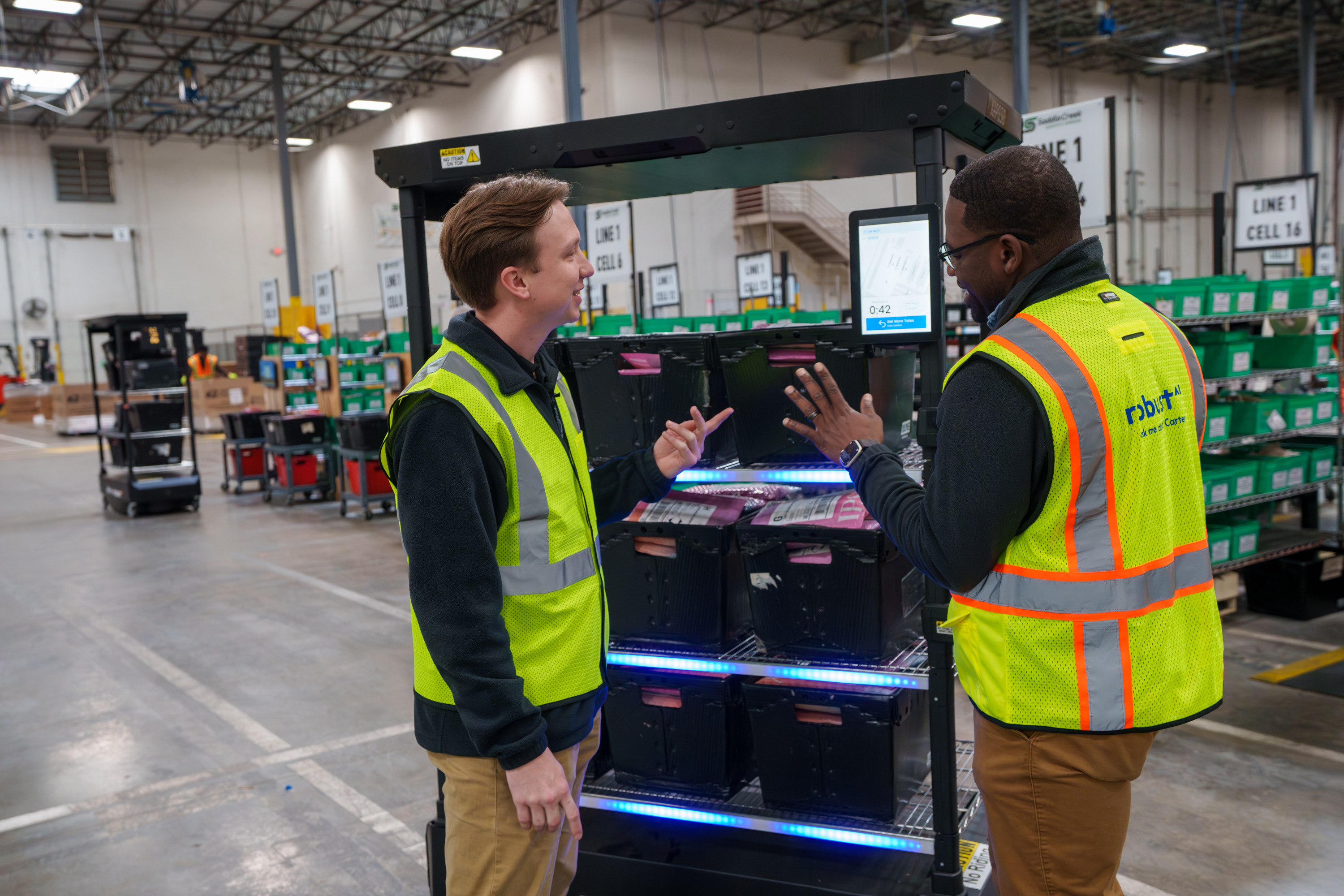
Robust AI's Carter robot complements human warehouse workers
Robust AI is betting that the future of warehouse automation isn't replacing humans, but physically collaborating with them. Their new mobile robot, Carter, uses holonomic wheels and force-sensitive handles to let workers push, pull, and guide it like a utility cart, effectively turning heavy lifting into a shared task. This approach sidesteps the failure mode of rigid industrial robots that block narrow aisles or stop dead when humans rush past. By targeting the vast majority of factories that lack expensive conveyor systems, they are offering a phased automation path for logistics environments where human agility still matters.
MIT News AI
 © MIT News AI
Researchother
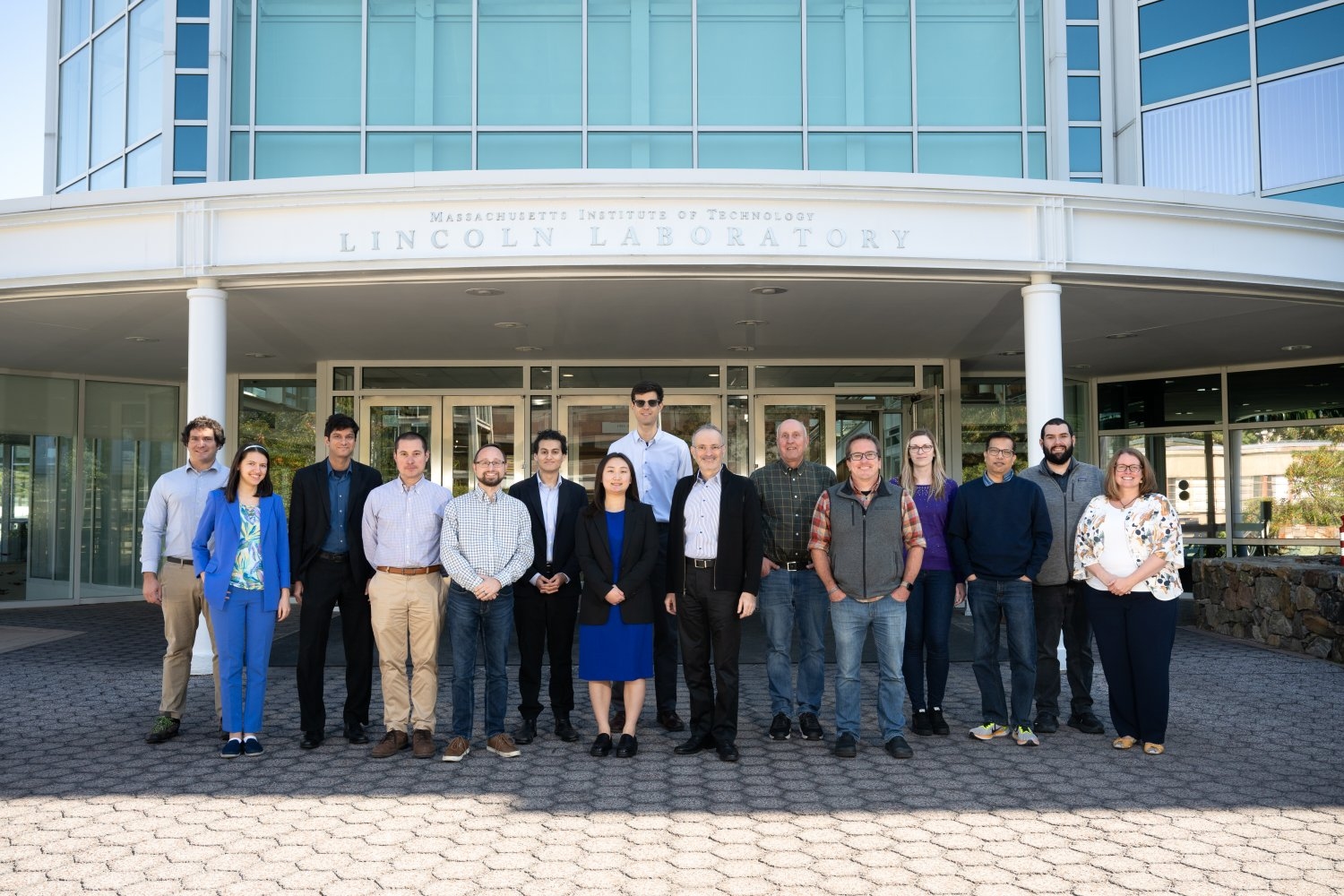
MIT Lincoln Lab wins R&D 100 for secure OS and quantum platform
MIT Lincoln Laboratory’s Magnetite operating system stands out as a serious contender for securing embedded systems against AI-driven cyberattacks. By combining a formally verified seL4 microkernel with Rust-based services, it offers a mathematically grounded alternative to legacy OS architectures in critical infrastructure. The lab also secured recognition for its Quantum Microsystems platform, which uses AI-optimized routing to integrate superconductor and semiconductor chips on a single wafer, addressing the interconnection bottlenecks that plague quantum scaling. These awards highlight a shift toward hardware-level security and system-level integration rather than just algorithmic improvements.
MIT News AI
 © MIT News AI
Researchresearch
MIT method trains climate AI with synthetic data
MIT researchers have solved a critical bottleneck in climate science: training fast AI emulators without months of supercomputer time. By generating optimized synthetic scenarios—complete with artificial high-frequency oscillations—they train models to generalize better than those fed realistic historical data. This approach cuts production time from years to days, allowing scientists to rapidly test novel policy interventions that traditional emulators fail to predict. It shifts climate modeling from static snapshots to dynamic, adaptable tools for immediate decision-making.
MIT News AI
More in Research
 © Hugging Face Blog
Researchresearch
Pooling-Aware Training for Multi-Vector Embeddings
Multi-vector models like ColBERT are powerful but storage-heavy, often requiring hundreds of vectors per document. This technique teaches the encoder to preserve retrieval quality even when token vectors are aggressively merged via hierarchical clustering. By training on both full and pooled representations simultaneously, the model learns to compress information without losing critical distinctions. The result is a 4x reduction in vector count with only a marginal drop in accuracy, making large-scale semantic search significantly more efficient.
Hugging Face Blog
 © AI Explained
Researchresearch
New Benchmarks: ExploitGym, BenchCAD, and IntegrityBench
Several new evaluation benchmarks have been released, including ExploitGym for security vulnerabilities and BenchCAD for design robustness.
AI Explained
© AI ExplainedResearchresearch
METR Report: AI R&D Acceleration at Anthropic
A new METR report assesses the acceleration of AI research and development within Anthropic, analyzing internal model improvements.
AI Explained