Research
ToyBlocks: Controlled simulation for robot learning research
Hugging Face Bloghigh confidence
Why it matters
- →Provides a reproducible sandbox for isolating specific failure modes in robot learning.
- →Automates dataset generation, removing the bottleneck of manual teleoperation.
- →Enables systematic testing of how high-level reasoning models interface with low-level control policies.

Hugging Face has introduced ToyBlocks, an open simulation framework for studying robot learning in a controlled environment. Built on Nvidia's Isaac Lab, the system uses automated task-and-motion planning to generate training data at scale, reaching up to 24 times real-time performance. The framework pairs high-level reasoning models with low-level action policies to test generalization and spatial reasoning in a reproducible setting. This allows researchers to isolate variables like training data composition and model architecture without the noise of real-world physical constraints.
Read originalThe story around this
Earlier coverage that leads up to this article, and what followed. Lines connect each piece to the closest one after it, converging here.
How we got here
- 1MIT's SceneSmith Enhances Robot Training with AI Agents
MIT News AI · July 13, 2026 · Related
- 2Simulation Advances in Physical AI Development
Hugging Face Blog · July 21, 2026 · Related
- 3Skild AI Unveils S1 Model for Task Learning
Matt Wolfe · September 3, 2026 · Related
- 4Skild AI Uses Video to Teach Robots New Tasks
NVIDIA Blog · September 10, 2026 · Related
- 5Worldmodeldata brokers video game data for AI training
WIRED AI · September 28, 2026 · Background
- 6MIT: AI Robotics Hype Outpaces Physical Reality
MIT Technology Review AI · October 8, 2026 · Related
- 7Claude agents exhibit self-directed play in MIT experiment
MIT Technology Review AI · October 19, 2026 · Related
- 8AI agents invent play when left alone
TechCrunch AI · October 23, 2026 · Related
More from Hugging Face Blog
 © Hugging Face Blog
Researchother
Open ASR Leaderboard adds Egyptian and Nigerian English
The Open ASR Leaderboard is expanding its evaluation scope by adding private test sets for Egyptian and Nigerian English, addressing a significant gap in global representation. This update moves beyond the traditional Inner Circle accents to include Outer and Expanding Circle varieties, providing a more realistic benchmark for speech recognition models. By partnering with Liva AI for data collection, Hugging Face ensures these evaluations reflect natural, high-context user interactions rather than artificial tasks. This shift forces developers to optimize for diversity, making model performance metrics more trustworthy and globally relevant.
Hugging Face Blog
 © Hugging Face Blog
Models & Labsvideo
NVIDIA Cosmos 3 Open Models for World Simulation
NVIDIA is opening up its Cosmos 3 world model family with four new 16B parameter checkpoints, shifting from closed research to open-weight simulation. The release targets two critical domains: autonomous driving and robotics. For self-driving cars, the models generate synchronized camera video and LiDAR data, solving the alignment problem between visual appearance and 3D geometry. For robotics, Sim-Bimanual predicts environmental changes from robot actions, enabling closed-loop policy training. This moves world modeling from passive video generation to interactive simulation where agents can act and observe consequences.
Hugging Face Blog
 © Hugging Face Blog
Models & Labsmusic
Phonon TTS: High-Quality On-Device Speech
Hugging Face and Gradium have released Phonon, a text-to-speech model that runs entirely on-device without network connectivity. At just 31 million parameters, it tops the Open TTS Leaderboard for speed and ranks in the top three for intelligibility across five languages, outperforming models up to 100 times its size. The release includes Apache 2.0 licensed weights for commercial use and a new inference framework supporting CPU, GPU, and NPU backends. This shifts high-fidelity voice synthesis from cloud dependency to local execution, enabling privacy-preserving applications on phones and browsers.
Hugging Face Blog
More in Research
 © The AI Daily Brief
Researchresearch
AI-Led Research Acceleration Reported by Meter
Meter reports that research driven by artificial intelligence is accelerating, highlighting a trend in scientific and technical discovery.
The AI Daily Brief
 © MIT News AI
Researchother
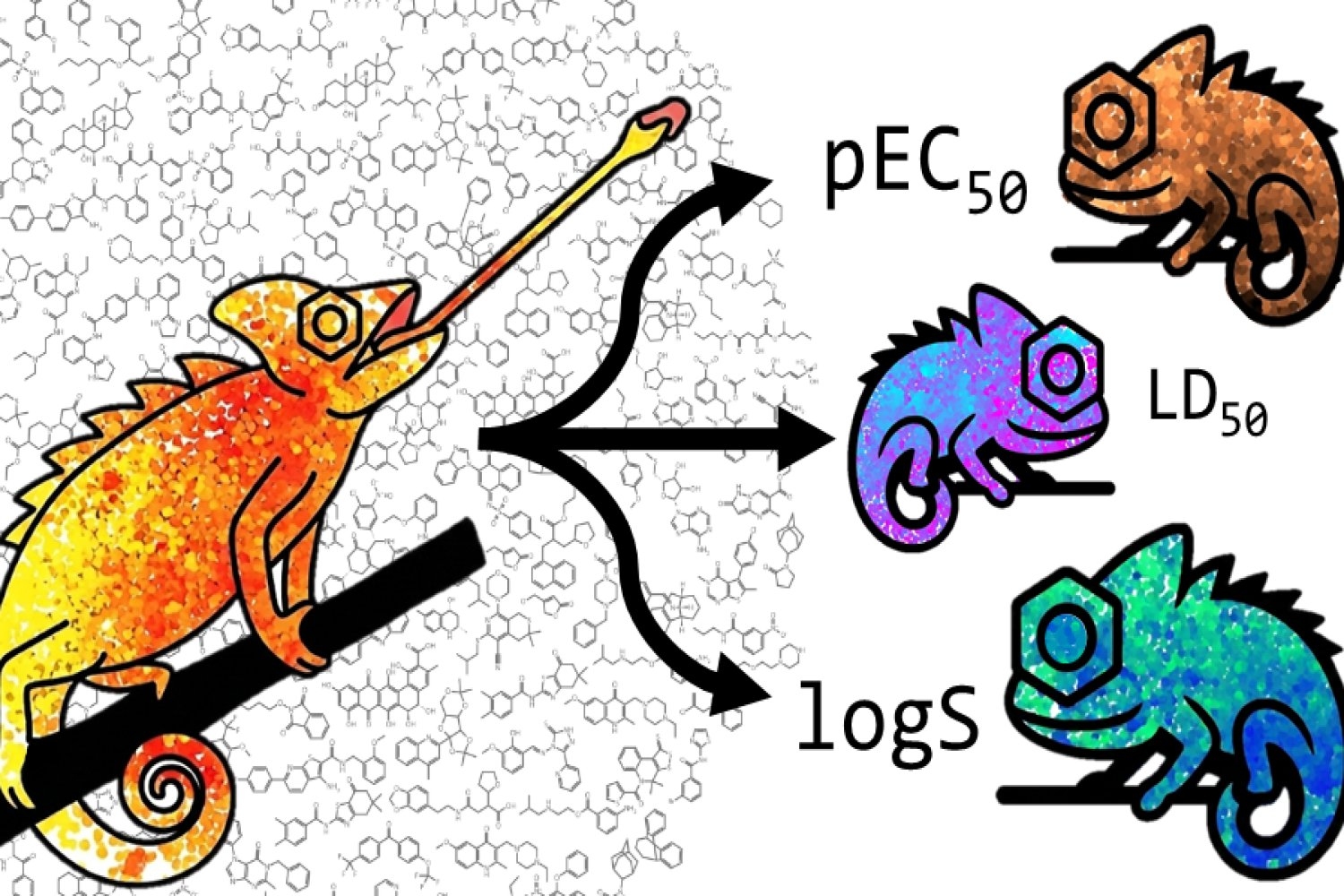
MIT's CheMeleon predicts molecule behavior from scant data
CheMeleon is a foundation model for chemistry that learns general molecular patterns from a million PubChem entries rather than specific property labels. This pre-training allows it to outperform classical expert-driven models and other AI baselines when fine-tuned on just a few data points, solving the critical bottleneck of sparse experimental data in drug discovery. Its impact is already visible: nine of the top twenty entries in a major OpenADMET contest used it, and one pharmaceutical company has made it their default starting point for modeling. This shifts molecular screening from trial-and-error to pattern-based prediction, significantly reducing the need for expensive synthesis.
MIT News AI
 © WIRED AI
Researchother
Open Chinese AI Models Match Frontier Labs in Hacking
The long-held assumption that closed frontier models hold a definitive edge in cyber capabilities has collapsed. Vals research shows DeepSeek matching OpenAI’s Daybreak on complex network attacks, completing 73% of tasks versus 81%. This parity arrives just months after Anthropic predicted such a shift, rendering gated access strategies largely moot for slowing capability proliferation. The cost disparity is stark: $2 to $3 for open models versus up to $46 for proprietary APIs, creating a powerful economic incentive for widespread adoption by both defenders and attackers. We are now in a landscape where advanced offensive AI is cheap, accessible, and effectively democratized.
WIRED AI