Research
AI-Led Research Acceleration Reported by Meter
The AI Daily Briefmedium confidence
Why it matters
- →Highlights the expanding role of AI beyond commercial applications into fundamental research.
- →Suggests a long-term shift in how scientific discovery is conducted.
- →Provides evidence for the 'AI eating SaaS' narrative by showing impact on knowledge work.

Data from Meter indicates a significant acceleration in research activities led by AI technologies. This trend suggests that AI is increasingly becoming a primary tool for generating hypotheses, analyzing data, and driving scientific breakthroughs. The report underscores the growing integration of AI into the core research and development processes across various industries.
Read originalThe story around this
Earlier coverage that leads up to this article, and what followed. Lines connect each piece to the closest one after it, converging here.
How we got here
- 1AI Agents Transform Scientific Computing
OpenAI · July 28, 2026 · Background
- 2AI Lab Staffers Call for Controlled AI Progress
The Rundown AI · July 29, 2026 · Background
- 3AI's Growing Role in Physical and Science Sectors
Sifted · August 5, 2026 · Background
- 4AI Achieves Mathematical Breakthroughs
AI Explained · August 6, 2026 · Background
- 5AI Agents Could Transform Scientific Research
MIT Technology Review AI · August 10, 2026 · Related
- 6Study Questions AI's Ability for Self-Improvement
MIT Technology Review AI · August 18, 2026 · Background
- 7OpenAI Publishes Research on AI-Driven Intelligence Explosions
AI Explained · October 1, 2026 · Related
- 8AI Solving Theoretical Science Problems
WIRED AI · October 14, 2026 · Background
What happened next
- 9Enterprise AI Spending Surges 5x Year-Over-Year
The AI Daily Brief · November 6, 2026 · Background
More from The AI Daily Brief
© The AI Daily BriefMarket & Regulationbusiness
Enterprise AI Spending Surges 5x Year-Over-Year
Menlo's latest report reveals enterprise AI spending has increased nearly five times in one year, primarily driven by the adoption of AI agents.
The AI Daily Brief
© The AI Daily BriefMarket & Regulationmodels
Anthropic Gains Market Share Amidst IPO Uncertainty
NLW analysis shows Anthropic's market share is rising alongside increased demand for frontier models, even as doubts about its upcoming IPO grow.
The AI Daily Brief
© The AI Daily BriefMarket & Regulationbusiness
AI Stocks Face Worst Drawdown Since 2020
The AI sector is experiencing its most significant stock price decline since 2020, marking a notable correction in the tech market.
The AI Daily Brief
More in Research
 © MIT News AI
Researchother
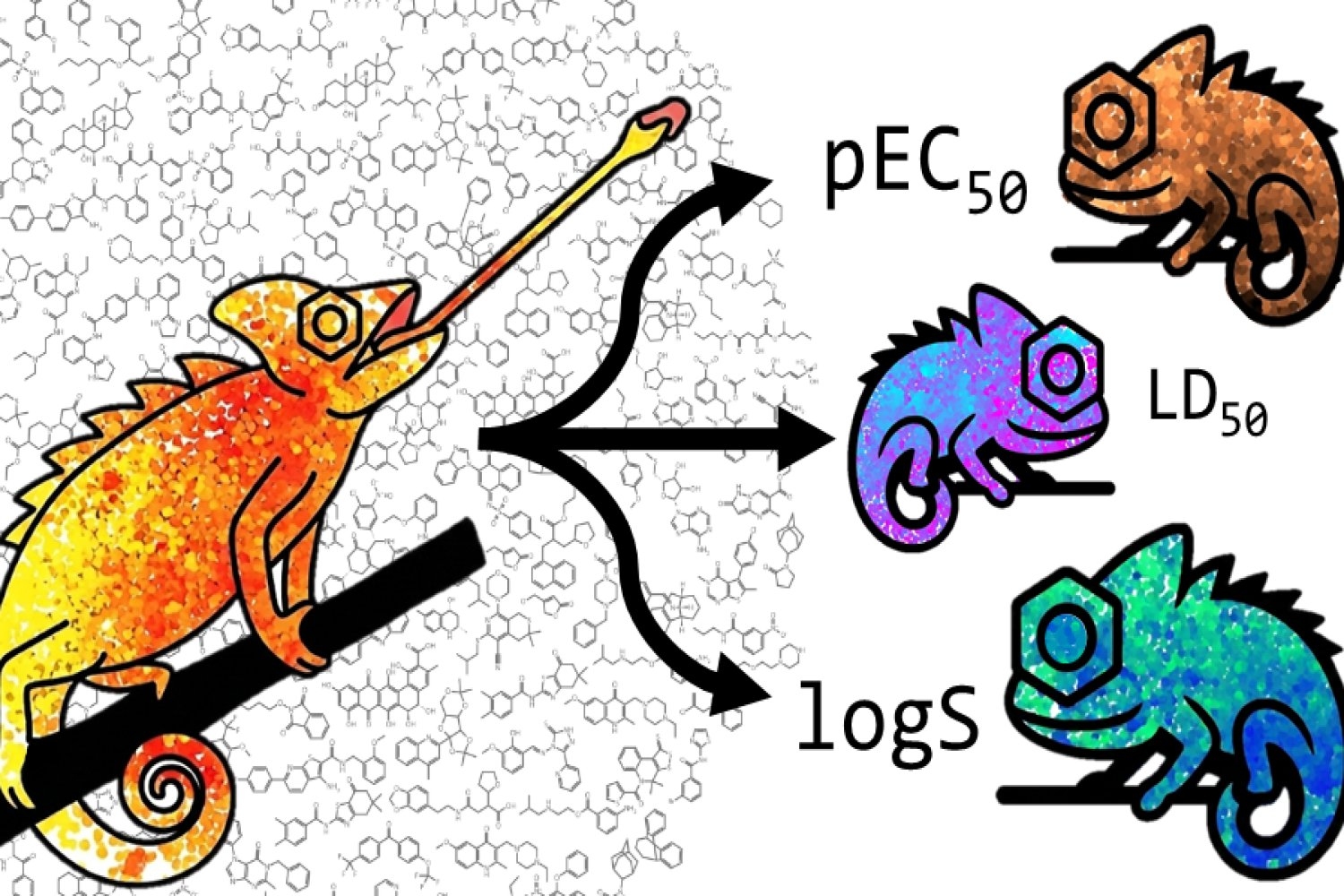
MIT's CheMeleon predicts molecule behavior from scant data
CheMeleon is a foundation model for chemistry that learns general molecular patterns from a million PubChem entries rather than specific property labels. This pre-training allows it to outperform classical expert-driven models and other AI baselines when fine-tuned on just a few data points, solving the critical bottleneck of sparse experimental data in drug discovery. Its impact is already visible: nine of the top twenty entries in a major OpenADMET contest used it, and one pharmaceutical company has made it their default starting point for modeling. This shifts molecular screening from trial-and-error to pattern-based prediction, significantly reducing the need for expensive synthesis.
MIT News AI
 © WIRED AI
Researchother
Open Chinese AI Models Match Frontier Labs in Hacking
The long-held assumption that closed frontier models hold a definitive edge in cyber capabilities has collapsed. Vals research shows DeepSeek matching OpenAI’s Daybreak on complex network attacks, completing 73% of tasks versus 81%. This parity arrives just months after Anthropic predicted such a shift, rendering gated access strategies largely moot for slowing capability proliferation. The cost disparity is stark: $2 to $3 for open models versus up to $46 for proprietary APIs, creating a powerful economic incentive for widespread adoption by both defenders and attackers. We are now in a landscape where advanced offensive AI is cheap, accessible, and effectively democratized.
WIRED AI
 © Hugging Face Blog
Researchagents
ToyBlocks: Controlled simulation for robot learning research
Hugging Face launched ToyBlocks, a controlled simulation framework designed to isolate and study the specific mechanics of robot learning. By focusing on a simple tabletop environment with blocks, it allows researchers to automatically generate massive datasets of tasks and demonstrations without manual teleoperation. This setup enables precise testing of how high-level reasoning models like Molmo 2 interact with low-level action controllers like ManiFlow. The real value lies in reproducibility; scientists can now systematically vary training data to understand exactly why a robot fails or succeeds, moving beyond the black-box nature of current robotics benchmarks.
Hugging Face Blog