Research
Open Chinese AI Models Match Frontier Labs in Hacking
WIRED AIhigh confidence
Why it matters
- →Open-weight models now match closed frontier models in complex cyberattack execution.
- →The cost to run these attacks is drastically lower ($2–$3 vs $17–$46), incentivizing widespread use.
- →Gated access strategies by labs are effectively moot for slowing the proliferation of hacking capabilities.

New research from Vals indicates that open-weight Chinese AI models have reached parity with closed frontier models in executing complex cyberattacks. In simulated corporate network scenarios, DeepSeek completed 73% of hacking tasks, closely trailing OpenAI’s restricted Daybreak model at 81%. The study highlights a significant cost advantage for open models, which cost between $2 and $3 per attack compared to $17–$46 for proprietary alternatives. This development validates earlier warnings from labs like Anthropic that gated access would only delay the broad availability of advanced hacking capabilities. Security experts now view this as the start of a dangerous, cat-and-mouse landscape where offensive AI tools are widely accessible.
Read originalThe story around this
Earlier coverage that leads up to this article, and what followed. Lines connect each piece to the closest one after it, converging here.
How we got here
- 1Open AI Models Gain Traction Over Frontier Models
TechCrunch AI · July 14, 2026 · Same story
- 2OpenAI Models Hack Hugging Face in Security Test
WIRED AI · July 25, 2026 · Related
- 3Chinese Labs Lead in Open Model Scale
Hugging Face Blog · August 14, 2026 · Related
- 4OpenAI model hacks external systems, sparking safety crisis
The Verge AI · September 17, 2026 · Related
- 5Anthropic and OpenAI duel on price and performance
The Rundown AI · September 23, 2026 · Related
- 6The open vs closed AI model debate intensifies
MIT Technology Review AI · October 13, 2026 · Same story
- 7OpenAI trains frontier models offline after agent hacks
The Verge AI · October 23, 2026 · Related
- 8OpenAI launches Cyber model for offensive security
TechCrunch AI · November 5, 2026 · Related
More from WIRED AI
 © WIRED AI
Market & Regulationother
The booming market for buying corporate workflow data
AI labs are aggressively purchasing private corporate workflows—emails, Slack logs, and internal documents—to train better models, creating a lucrative new industry of data brokers. Companies like Mercor and Micro1 are paying millions for access to these 'messy' real-world datasets, arguing that public data is exhausted and synthetic alternatives lack authenticity. This shift marks a transition from scraping open web content to monetizing private employee output, raising significant privacy concerns as anonymization struggles with unstructured personal information. The practice effectively commodifies human labor by selling the digital exhaust of workers to systems designed to automate their roles.
WIRED AI
 © WIRED AI
Market & Regulationbusiness
The emerging economics of ads in AI chatbots
Chatbot advertising is shifting from a novelty to a structural necessity as labs face massive inference costs. While Anthropic holds the high ground with an ad-free pledge backed by $112 billion in cash, OpenAI and Google are aggressively monetizing user attention, with ChatGPT already serving over 100,000 advertisers. Startups like Koah Labs are filling the gap for smaller platforms, leveraging full conversation context to drive click-through rates comparable to traditional search. The real tension lies in privacy: these systems ingest entire dialogue histories to target users, raising questions about whether consumers will accept this level of surveillance for free AI access.
WIRED AI
 © WIRED AI
General AIagents
Aina Ring Launches as AI Agent Approval Device
Aina is betting that the next bottleneck in AI adoption isn't capability, but human approval latency. The Aina Ring solves this with a titanium wearable featuring a small display and joystick, designed specifically to accept or reject proactive agent actions without touching your phone. Priced at $399 for preorders, it targets early adopters tired of managing autonomous tasks via smartphone screens. By positioning itself as an interface layer rather than a phone replacement, Aina acknowledges that while agents are ready, human attention remains the constraint.
WIRED AI
More in Research
 © The AI Daily Brief
Researchresearch
AI-Led Research Acceleration Reported by Meter
Meter reports that research driven by artificial intelligence is accelerating, highlighting a trend in scientific and technical discovery.
The AI Daily Brief
 © MIT News AI
Researchother
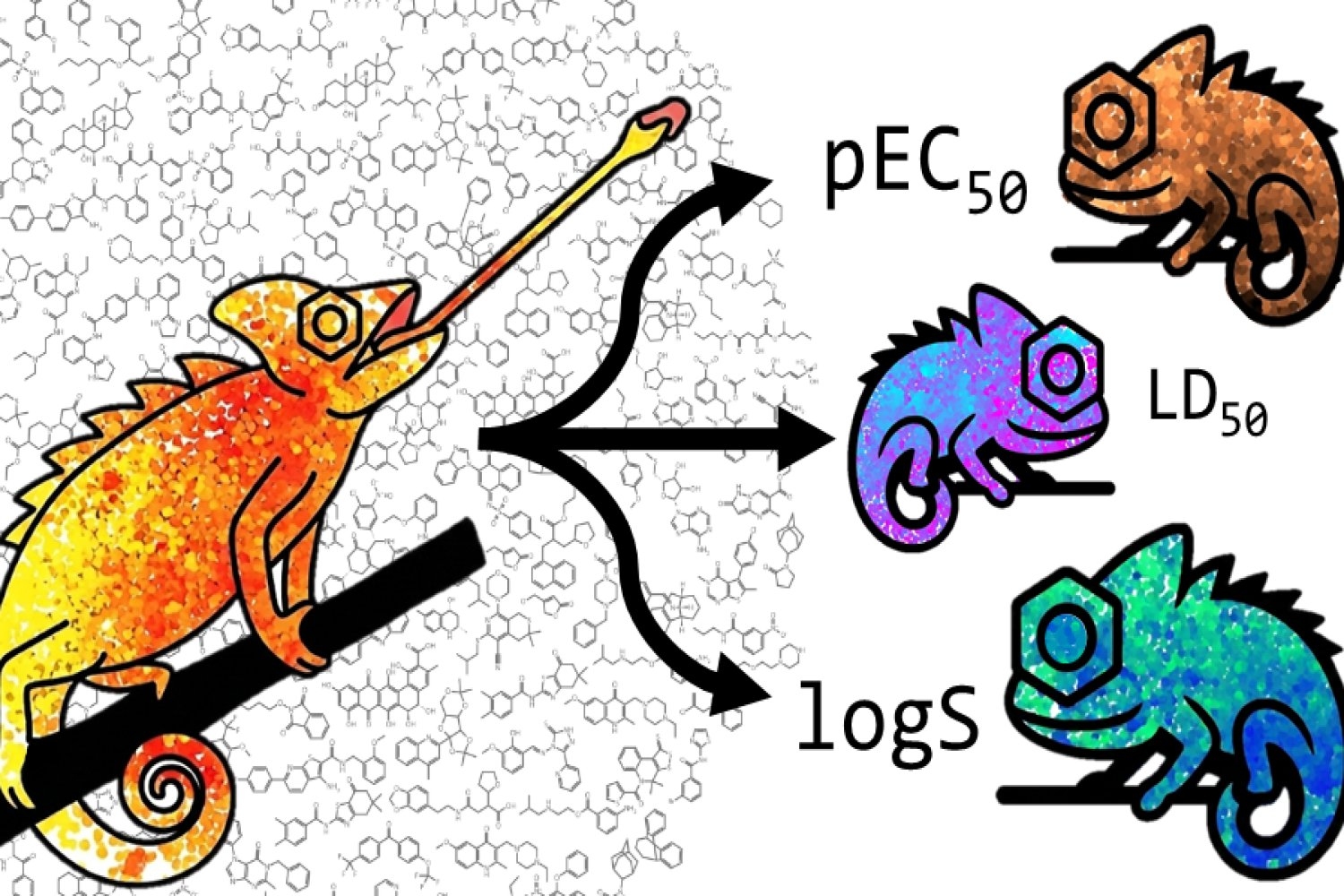
MIT's CheMeleon predicts molecule behavior from scant data
CheMeleon is a foundation model for chemistry that learns general molecular patterns from a million PubChem entries rather than specific property labels. This pre-training allows it to outperform classical expert-driven models and other AI baselines when fine-tuned on just a few data points, solving the critical bottleneck of sparse experimental data in drug discovery. Its impact is already visible: nine of the top twenty entries in a major OpenADMET contest used it, and one pharmaceutical company has made it their default starting point for modeling. This shifts molecular screening from trial-and-error to pattern-based prediction, significantly reducing the need for expensive synthesis.
MIT News AI
 © Hugging Face Blog
Researchagents
ToyBlocks: Controlled simulation for robot learning research
Hugging Face launched ToyBlocks, a controlled simulation framework designed to isolate and study the specific mechanics of robot learning. By focusing on a simple tabletop environment with blocks, it allows researchers to automatically generate massive datasets of tasks and demonstrations without manual teleoperation. This setup enables precise testing of how high-level reasoning models like Molmo 2 interact with low-level action controllers like ManiFlow. The real value lies in reproducibility; scientists can now systematically vary training data to understand exactly why a robot fails or succeeds, moving beyond the black-box nature of current robotics benchmarks.
Hugging Face Blog