Research
Pooling-Aware Training for Multi-Vector Embeddings
Hugging Face Bloghigh confidence
Why it matters
- →Reduces storage requirements for multi-vector retrieval systems by up to 75%.
- →Maintains high retrieval accuracy (97.8% retention) after aggressive vector compression.
- →Enables deployment of more expressive embedding models on constrained hardware.

Hugging Face researchers have demonstrated a method to reduce storage costs for multi-vector embedding models by up to 75% without significant loss in retrieval performance. The approach, called pooling-aware training, integrates hierarchical token pooling directly into the model's optimization loop, teaching the encoder that its representations must remain effective even after compression. In tests using the NanoBEIR benchmark, this method retained 97.8% of the original model's nDCG@10 score while reducing document vectors by a factor of four. This allows practitioners to deploy more expressive search models within tighter memory and infrastructure budgets.
Read originalThe story around this
Earlier coverage that leads up to this article, and what followed. Lines connect each piece to the closest one after it, converging here.
How we got here
- 1Recall Bottleneck in LLMs: New Google Research Insights
Google Research Blog · August 12, 2026 · Background
- 2Hugging Face Introduces Multi-Vector Embedding Models
Hugging Face Blog · August 18, 2026 · Related
- 3Exploring AI Semantic Search with Vector Databases
Lev Selector · August 21, 2026 · Related
- 4Finetuning Multi-Vector Models with Sentence Transformers
Hugging Face Blog · August 26, 2026 · Same story
- 5llama.cpp enables chunked prefill for causal rerankers
llama.cpp Releases · September 28, 2026 · Background
- 6llama.cpp adds ModernBERT reranker support
llama.cpp Releases · September 30, 2026 · Background
More from Hugging Face Blog
 © Hugging Face Blog
Models & Labscoding
IBM releases LLMON markup to fix prompt injection
IBM is tackling the brittleness of small language models by introducing LLMON, a structured markup language that explicitly separates instructions from data. By using reserved special tokens instead of ambiguous characters like JSON brackets, these new Granite 4.1 preview models drastically reduce indirect prompt injection attacks while maintaining standard performance. This approach forces the model to bind specific constraints to specific data payloads, eliminating the confusion that often leads to hallucinations or security breaches in long contexts.
Hugging Face Blog
 © Hugging Face Blog
Models & Labsother
Hugging Face releases TRELLIS.2 fine-tuning guide
Hugging Face finally provides a concrete path to adapt the powerful TRELLIS.2 model for specific domains like footwear or furniture, solving the 'generalist' problem in 3D generation. By targeting only the structure and shape DiTs with LoRA adapters while freezing the texture flow, they prevent catastrophic forgetting of material priors—a common pitfall when fine-tuning large generative models. This approach allows practitioners to achieve high geometric accuracy on small datasets (188 samples) without retraining the entire pipeline. It transforms TRELLIS.2 from a demo toy into a usable tool for production-grade 3D asset creation.
Hugging Face Blog
 © Hugging Face Blog
Open Sourceagents
Tether AI launches BotPsy, a sub-billion agentic model
Tether AI Research has released BotPsy, an 0.8B-parameter model built on Qwen3.5 that specializes in tool-use and agentic workflows for on-device deployment. It achieves state-of-the-art performance in its size class, outperforming larger models like Qwen3.5-2B-Think on benchmarks such as BFCL v4 and ACEBench while maintaining strict privacy by keeping data local. The model is designed to handle routine tasks like calendar management and web search without relying on expensive cloud APIs, offering a viable path for private, self-hosted personal assistants. With open weights under Apache 2.0 and GGUF support, it provides immediate utility for developers building lightweight, autonomous agents.
Hugging Face Blog
More in Research
 © MIT News AI
Researchother
MIT's human-in-the-loop topology optimization copilot
Topology optimization has long been a black box that engineers distrust because they can't steer the design as it evolves. MIT researchers solved this by training an ML model to predict where humans would intervene, pausing the algorithm to ask for feedback on manufacturability and aesthetics. This collaborative approach yielded structures with 39% higher buckling loads and better buildability, adding only 15 seconds to the total computation time. It shifts topology optimization from a theoretical exercise into a practical tool by restoring human agency without sacrificing performance.
MIT News AI
 © MIT News AI
Researchother
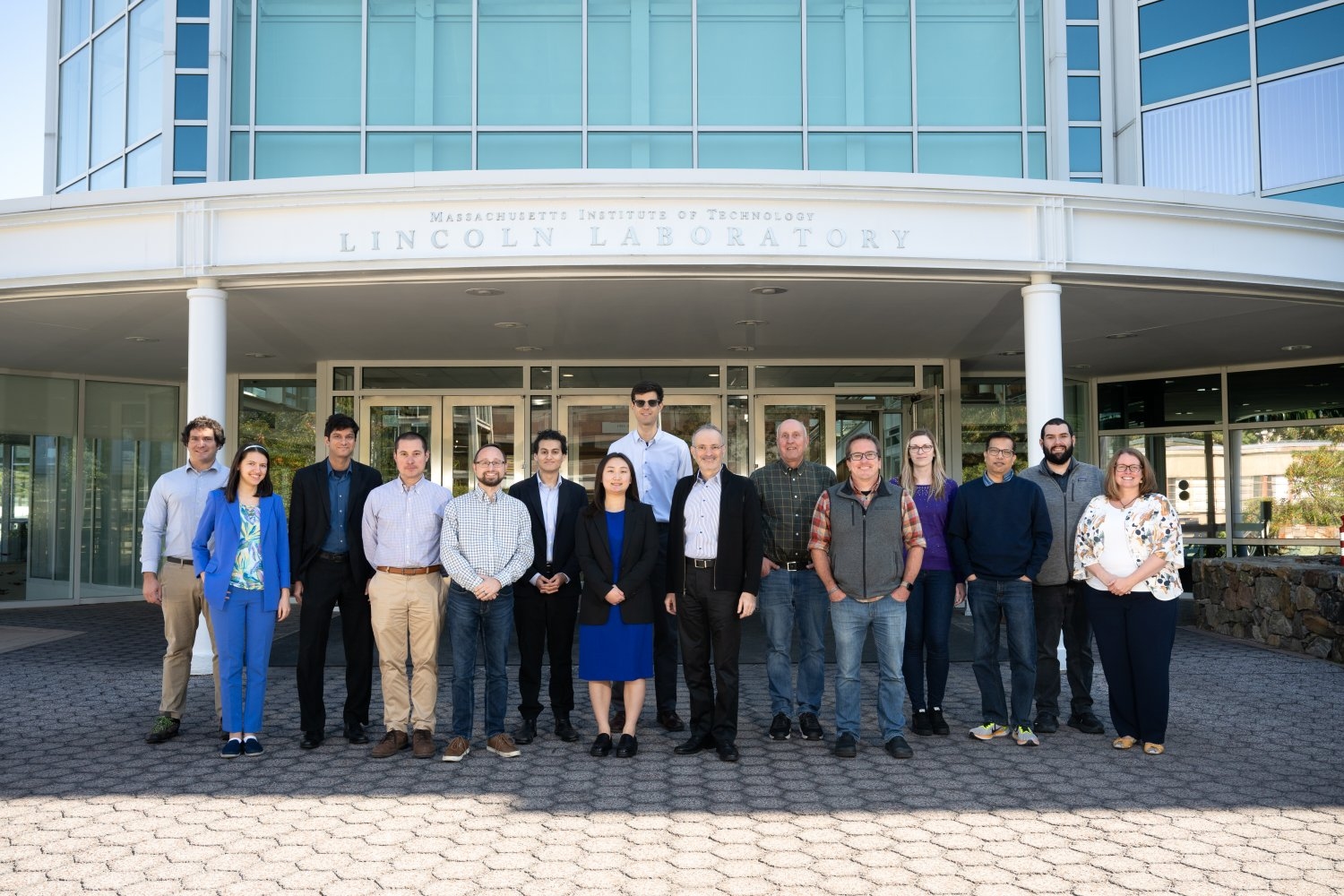
MIT Lincoln Lab wins R&D 100 for secure OS and quantum platform
MIT Lincoln Laboratory’s Magnetite operating system stands out as a serious contender for securing embedded systems against AI-driven cyberattacks. By combining a formally verified seL4 microkernel with Rust-based services, it offers a mathematically grounded alternative to legacy OS architectures in critical infrastructure. The lab also secured recognition for its Quantum Microsystems platform, which uses AI-optimized routing to integrate superconductor and semiconductor chips on a single wafer, addressing the interconnection bottlenecks that plague quantum scaling. These awards highlight a shift toward hardware-level security and system-level integration rather than just algorithmic improvements.
MIT News AI
 © MIT News AI
Researchresearch
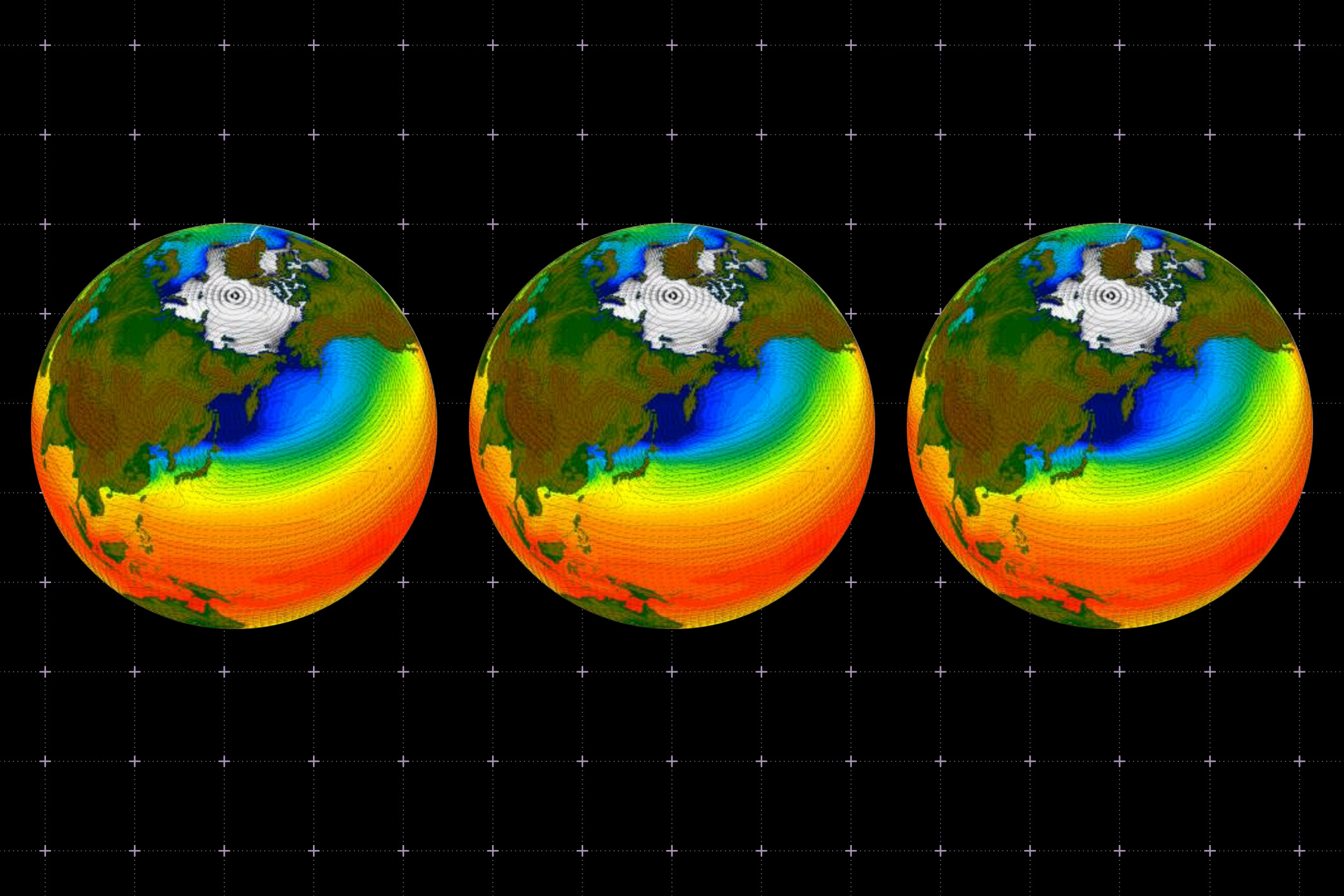
MIT method trains climate AI with synthetic data
MIT researchers have solved a critical bottleneck in climate science: training fast AI emulators without months of supercomputer time. By generating optimized synthetic scenarios—complete with artificial high-frequency oscillations—they train models to generalize better than those fed realistic historical data. This approach cuts production time from years to days, allowing scientists to rapidly test novel policy interventions that traditional emulators fail to predict. It shifts climate modeling from static snapshots to dynamic, adaptable tools for immediate decision-making.
MIT News AI