Research
MIT Lincoln Lab wins R&D 100 for secure OS and quantum platform
MIT News AIhigh confidence
Why it matters
- →Magnetite provides a formally verified OS foundation for embedded systems, addressing security flaws in legacy code.
- →The Quantum Microsystems platform offers a scalable approach to integrating superconductor and semiconductor chips on wafers.
- →The 5G interference cancellation algorithm preserves antenna resources by removing signal noise without spatial separation.
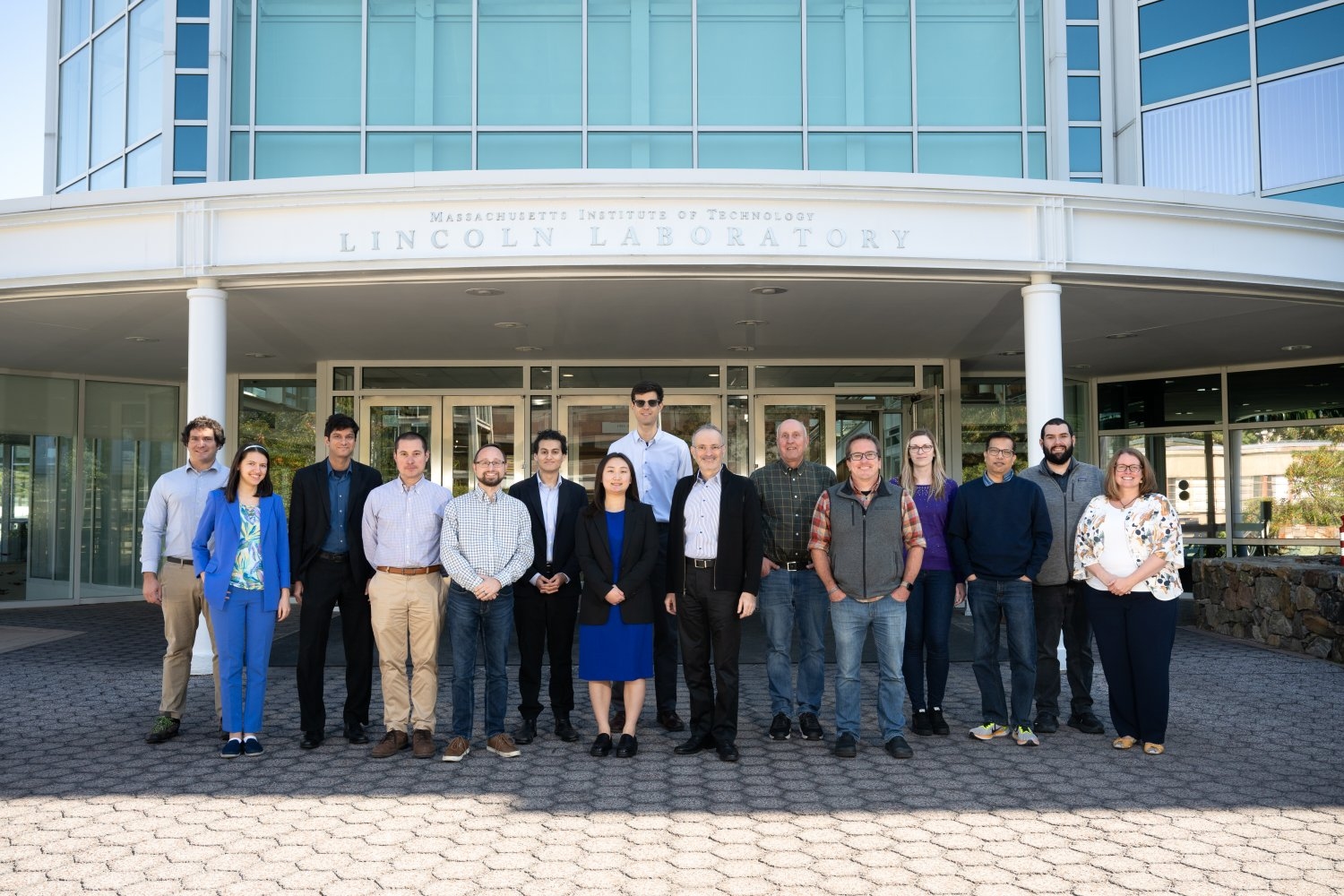
MIT Lincoln Laboratory has received three 2026 R&D 100 Awards for technologies transitioning to government and commercial use. The winners include Magnetite, a secure operating system built on the formally verified seL4 microkernel and Rust, designed to protect embedded systems in satellites and drones from cyberattacks. Another award recognizes the Quantum Microsystems platform, which integrates superconductor and semiconductor chips into wafer-scale systems using AI-driven routing to overcome interconnection bottlenecks. The third winner is an algorithm that cancels 5G interference on co-channel radio frequency devices by reconstructing and subtracting the interfering signal. These technologies address critical gaps in cybersecurity, quantum computing infrastructure, and communications resilience.
Read originalThe story around this
Earlier coverage that leads up to this article, and what followed. Lines connect each piece to the closest one after it, converging here.
How we got here
- 1MIT's AI Framework Boosts Material Stability
MIT News AI · August 26, 2026 · Background
- 2GPT-5.6 Sol Powers Quantum Computing Experiments
OpenAI · September 8, 2026 · Background
- 3
More from MIT News AI


More in Research
 © Hugging Face Blog
Researchresearch
Pooling-Aware Training for Multi-Vector Embeddings
Multi-vector models like ColBERT are powerful but storage-heavy, often requiring hundreds of vectors per document. This technique teaches the encoder to preserve retrieval quality even when token vectors are aggressively merged via hierarchical clustering. By training on both full and pooled representations simultaneously, the model learns to compress information without losing critical distinctions. The result is a 4x reduction in vector count with only a marginal drop in accuracy, making large-scale semantic search significantly more efficient.
Hugging Face Blog
 © AI Explained