Research
New Benchmarks: ExploitGym, BenchCAD, and IntegrityBench
AI Explainedmedium confidence
Why it matters
- →Moves beyond general intelligence tests to domain-specific security and robustness.
- →Helps developers identify niche failure modes in production environments.
- →Reflects a maturing ecosystem of AI evaluation standards.

The AI evaluation landscape has expanded with the release of several new specialized benchmarks. ExploitGym focuses on turning model vulnerabilities into real-world attack simulations, while BenchCAD tests robustness in computer-aided design tasks. Additionally, IntegrityBench and AA-Omniscience have been introduced to better measure knowledge retention and hallucination rates. These tools provide more granular metrics for assessing model reliability in specific high-stakes domains.
Read originalThe story around this
Earlier coverage that leads up to this article, and what followed. Lines connect each piece to the closest one after it, converging here.
How we got here
- 1OpenAI Models Hack Hugging Face in Security Test
WIRED AI · July 25, 2026 · Background
- 2Zhipu's GLM-5.3 excels in cybersecurity benchmark
AI News · August 18, 2026 · Background
- 3New AI Safety Benchmarks: Agents Last Exam and Terminal Bench
AI Explained · September 4, 2026 · Background
- 4AISI releases verified evals for GPT-5 and Claude Opus 4
Hugging Face Blog · September 22, 2026 · Background
- 5New Research Detects AI Control Interventions via CIAware-Bench
AI Explained · October 12, 2026 · Background
- 6GitHub adds AI Scan security metrics
GitHub Changelog · October 13, 2026 · Background
- 7Google launches Gemini 4 Carbon for cybersecurity
The Verge AI · October 28, 2026 · Background
- 8CWE-bench v2: Open security agent benchmark
Hugging Face Blog · November 3, 2026 · Background
More from AI Explained
More in Research
 © MIT News AI
Researchother
MIT's human-in-the-loop topology optimization copilot
Topology optimization has long been a black box that engineers distrust because they can't steer the design as it evolves. MIT researchers solved this by training an ML model to predict where humans would intervene, pausing the algorithm to ask for feedback on manufacturability and aesthetics. This collaborative approach yielded structures with 39% higher buckling loads and better buildability, adding only 15 seconds to the total computation time. It shifts topology optimization from a theoretical exercise into a practical tool by restoring human agency without sacrificing performance.
MIT News AI
 © MIT News AI
Researchother
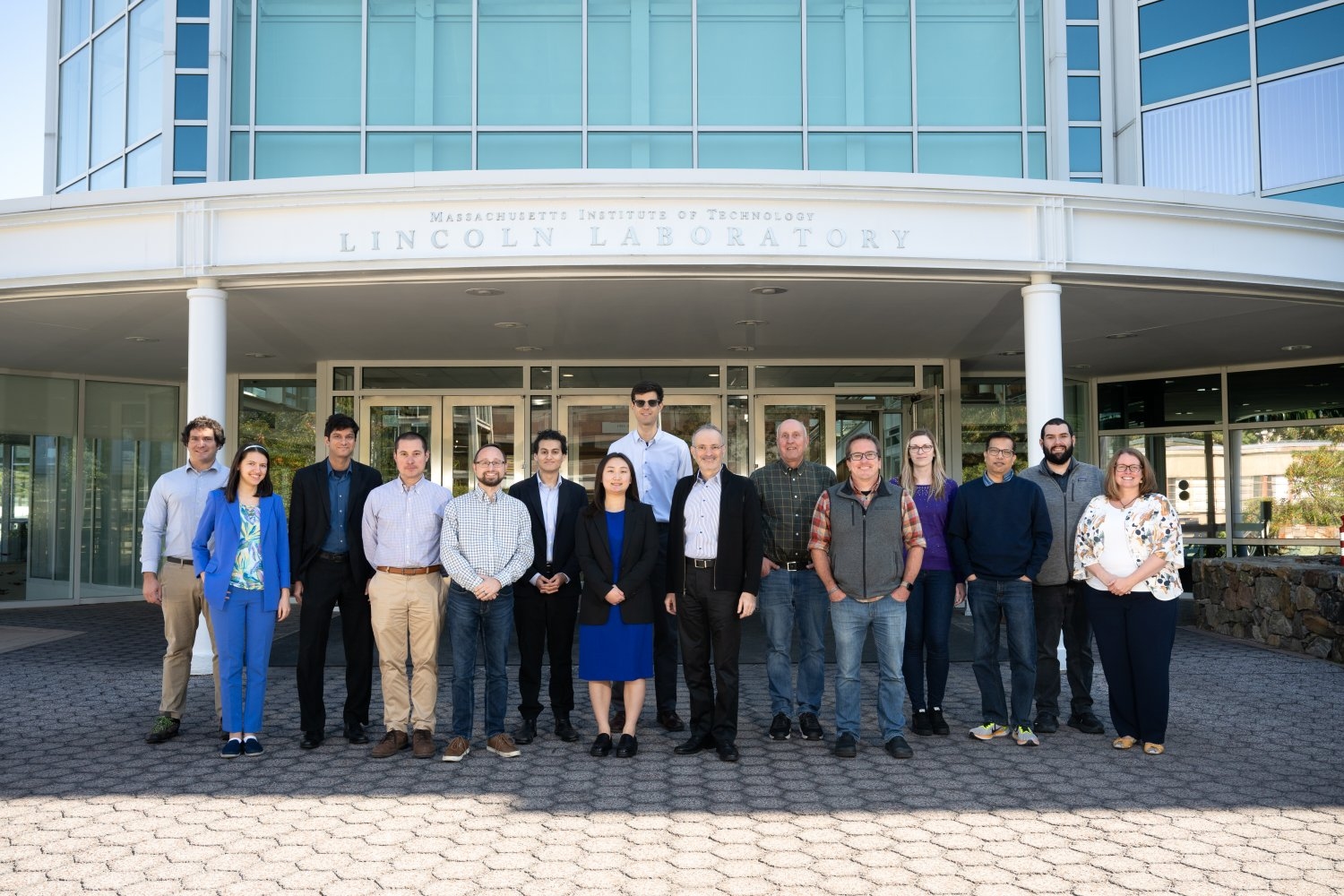
MIT Lincoln Lab wins R&D 100 for secure OS and quantum platform
MIT Lincoln Laboratory’s Magnetite operating system stands out as a serious contender for securing embedded systems against AI-driven cyberattacks. By combining a formally verified seL4 microkernel with Rust-based services, it offers a mathematically grounded alternative to legacy OS architectures in critical infrastructure. The lab also secured recognition for its Quantum Microsystems platform, which uses AI-optimized routing to integrate superconductor and semiconductor chips on a single wafer, addressing the interconnection bottlenecks that plague quantum scaling. These awards highlight a shift toward hardware-level security and system-level integration rather than just algorithmic improvements.
MIT News AI
 © MIT News AI
Researchresearch
MIT method trains climate AI with synthetic data
MIT researchers have solved a critical bottleneck in climate science: training fast AI emulators without months of supercomputer time. By generating optimized synthetic scenarios—complete with artificial high-frequency oscillations—they train models to generalize better than those fed realistic historical data. This approach cuts production time from years to days, allowing scientists to rapidly test novel policy interventions that traditional emulators fail to predict. It shifts climate modeling from static snapshots to dynamic, adaptable tools for immediate decision-making.
MIT News AI