Research
MIT documents AI hardware evolution over eight years
MIT News AIhigh confidence
Why it matters
- →Provides the most comprehensive longitudinal dataset on commercial AI accelerator performance and power efficiency.
- →Helps government and enterprise buyers navigate a fragmented market with over 120 competing hardware designs.
- →Offers unbiased technical analysis independent of vendor marketing claims, crucial for large-scale procurement decisions.
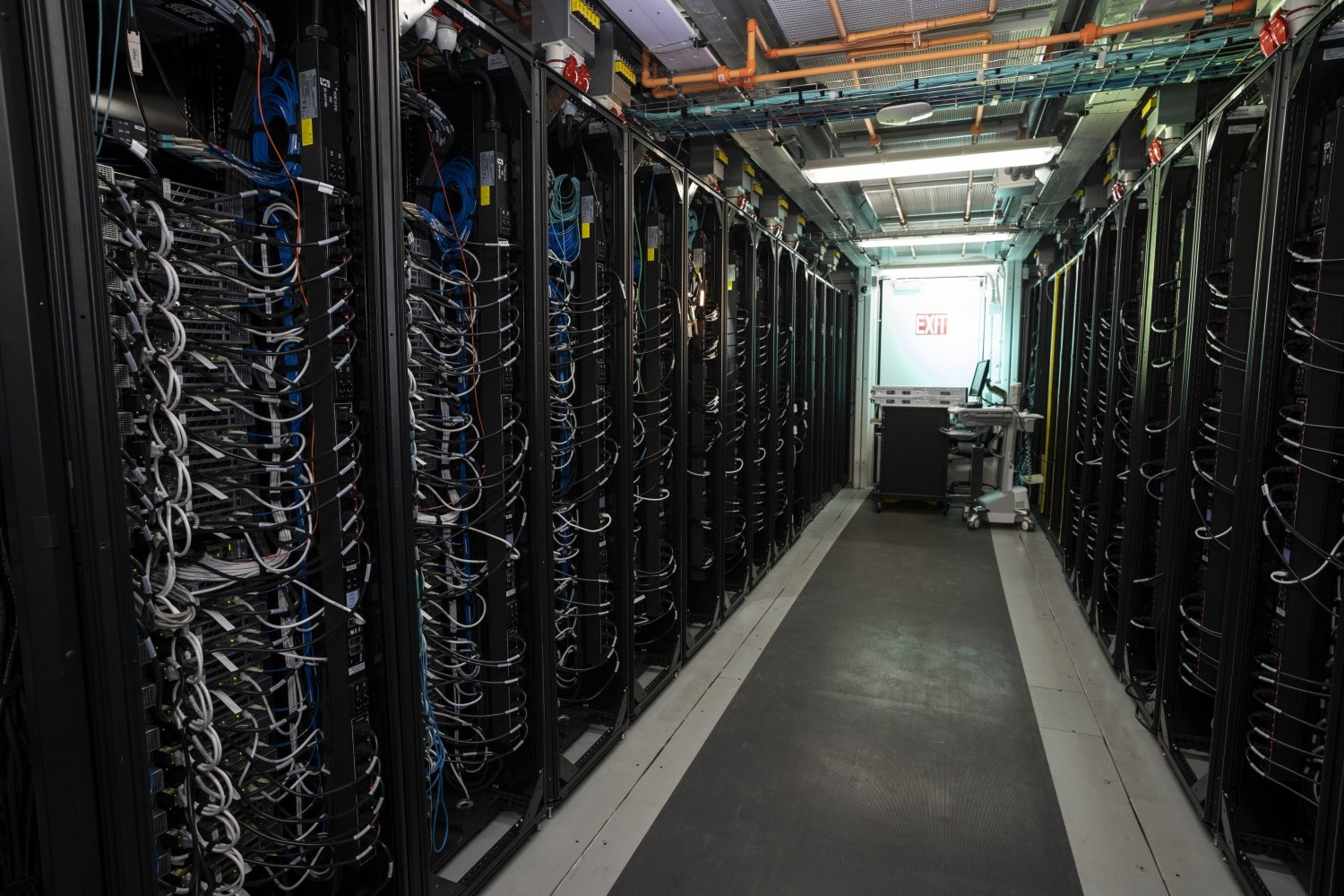
Researchers at MIT's Lincoln Laboratory Supercomputing Center have released the sixth edition of their Lincoln AI Computing Survey (LAICS), documenting the evolution of commercial AI accelerators over eight years. The survey now covers more than 120 devices, up from 57 in the inaugural study, comparing peak performance and power consumption across various hardware types including GPUs, ASICs, and FPGAs. Led by Albert Reuther, the team compiles data from public sources to provide an unbiased technical assessment for government sponsors and laboratory users. The latest paper analyzes architectural choices such as core density and parallel performance, offering a structured view of a market where five to ten new startup accelerators are announced annually.
Read originalThe story around this
Earlier coverage that leads up to this article, and what followed. Lines connect each piece to the closest one after it, converging here.
How we got here
- 1NVIDIA Vera CPU Powers New LANL Supercomputers
NVIDIA Blog · June 22, 2026 · Related
- 2MIT and Microsoft Enhance AI Workflow Efficiency
MIT News AI · June 25, 2026 · Background
- 3Unconventional AI Aims to Slash AI Power Use by 1,000x
TechCrunch AI · June 25, 2026 · Related
- 4NVIDIA Highlights Performance per Watt for AI Efficiency
NVIDIA Blog · July 14, 2026 · Related
- 5Nvidia Unveils Vera Rubin Chip System for AI Data Centers
WIRED AI · July 21, 2026 · Background
- 6Idle GPUs: The New Bottleneck in AI Infrastructure
Hugging Face Blog · July 30, 2026 · Related
- 7Chinese Labs Lead in Open Model Scale
Hugging Face Blog · August 14, 2026 · Related
- 8AI Infrastructure Demands New Architectural Approach
MIT Technology Review AI · September 4, 2026 · Background
What happened next
- 9Microsoft Surface RTX Spark Dev Box Preorders Open
The Verge AI · October 7, 2026 · Background
More in Research
 © WIRED AI
Researchagents
Researchers Drive Car with GPT-6 Astra
Three engineers at Axiom proved that general-purpose language models can control physical hardware without task-specific training. By linking OpenAI’s GPT-6 Astra to a Toyota Corolla’s steering system, they navigated the vehicle through an In-N-Out drive-thru using only prompt engineering and camera input. While the car moved slowly and required a safety driver, the experiment reveals that multimodal models are developing emergent spatial reasoning capabilities previously thought to require dedicated robotics stacks. This blurs the line between digital assistants and physical agents, suggesting that scaling text-and-image training yields unexpected real-world utility.
WIRED AI
 © Hugging Face Blog
Researchresearch
Nemotron Fine-Tuning Hits Gold at IOI and IMO
NVIDIA’s Nemotron models just crossed the gold-medal threshold in both the International Olympiad in Informatics and Mathematics. This isn't a new foundation model; it’s proof that specialized fine-tuning combined with iterative generate-verify-refine inference loops can push existing architectures to world-class levels. The Ultra-CC variant scored 535.4/600 on IOI, while the IMO system solved complex proofs without external tools or formal provers. By releasing the datasets and pipelines, NVIDIA is shifting the narrative from raw parameter count to reproducible specialization recipes.
Hugging Face Blog
 © The Verge AI
Researchresearch
OpenAI releases 722 math manuscripts from frontier model
OpenAI has published 722 manuscripts covering 372 result families, marking a significant escalation in AI-driven mathematical discovery. This release, guided by the AGMAI advisory group's ethical guidelines, includes solutions to hundreds of open questions and details on compute usage, such as an average of three hours of ChatGPT Pro thinking per result. The move shifts the conversation from speculative claims to verifiable data, forcing the academic community to confront the reality of AI-generated proofs. It underscores a growing tension between rapid corporate output and traditional peer review standards. Mathematicians now have concrete artifacts to audit rather than vague promises. The transparency around compute costs sets a precedent for future frontier model releases in scientific domains.
The Verge AI