Agents
Robust AI's Carter robot complements human warehouse workers
MIT News AIhigh confidence
Why it matters
- →Carter's holonomic design allows it to move in any direction without turning, fitting into tight human workflows.
- →Force-sensitive handles enable intuitive physical guidance, reducing the learning curve for warehouse staff.
- →The startup targets non-automated factories, offering a low-barrier entry point for industrial robotics adoption.
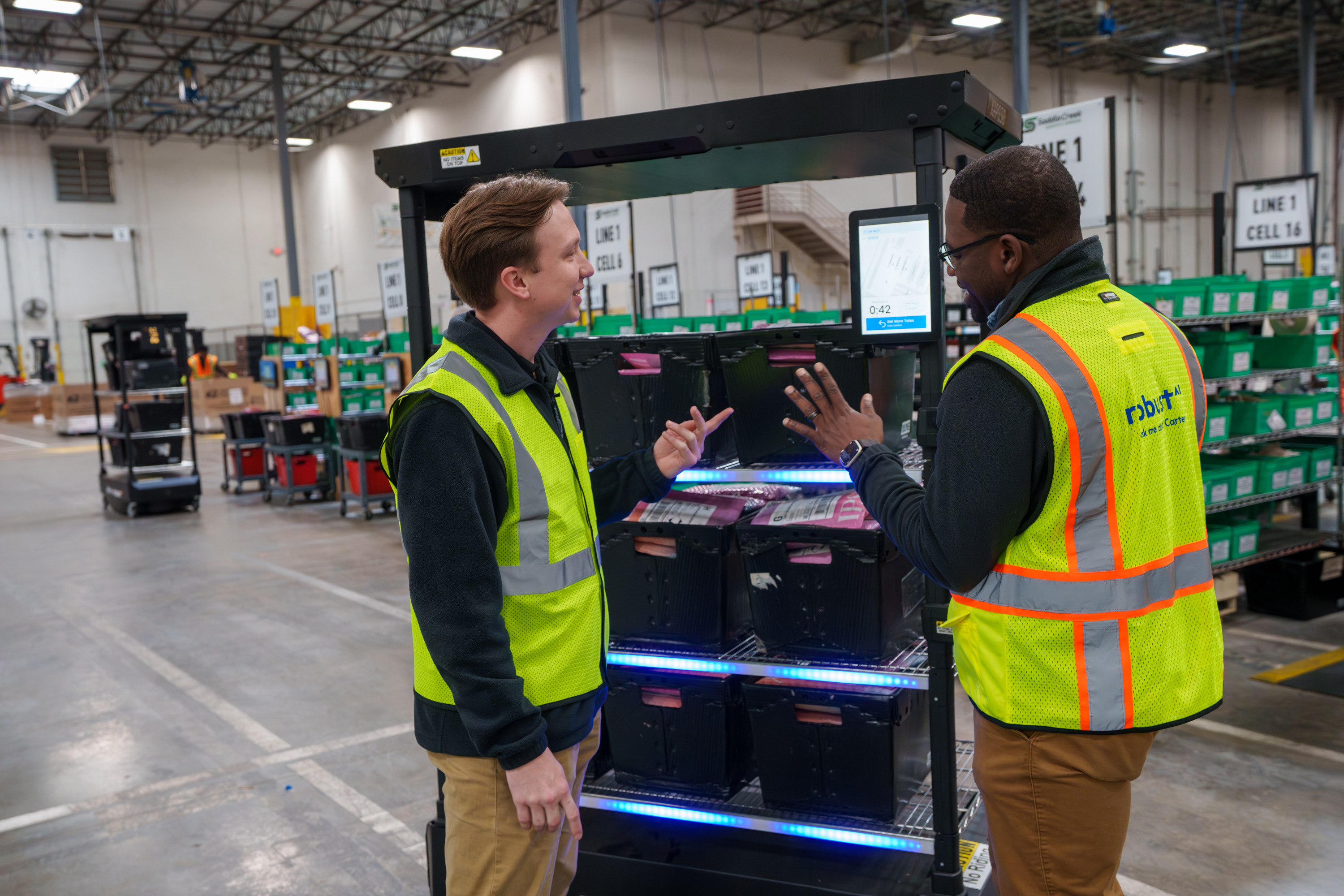
Robust AI, a startup co-founded by MIT Professor Emeritus Rodney Brooks and Anthony Jules, has launched Carter, a mobile robot designed to work alongside humans in warehouses and factories. Unlike traditional industrial robots that operate in isolated zones, Carter features holonomic wheels for omnidirectional movement and a force-sensitive handlebar, allowing workers to physically guide it or use gestures to direct its path. The company reports that the robot is currently deployed in logistics facilities to assist with picking, stocking, and transporting items over distances where human walking fatigue becomes a factor. This hardware-software integration aims to solve the common issue of collaborative robots becoming obstacles rather than aids in dynamic environments.
Read originalThe story around this
TopicAI In Warehouse Automation
Earlier coverage that leads up to this article, and what followed. Lines connect each piece to the closest one after it, converging here.
How we got here
- 1Gemini Robotics 2 Enhances Robot Intelligence
Google DeepMind · July 28, 2026 · Background
- 2Google DeepMind Unveils Gemini Robotics 2
WIRED AI · July 30, 2026 · Background
- 3Google DeepMind's Gemini Robotics 2 Enhances Robot Control
The Verge AI · July 30, 2026 · Background
- 4Perceptron Launches Isaac 0.5 for Industrial AI
TechCrunch AI · August 26, 2026 · Background
- 5MIT Develops AI Method for Safety-Critical Tasks
MIT News AI · September 14, 2026 · Background
- 6Gartner maps four AI tiers in warehouse automation
AI News · September 18, 2026 · Related
- 7Lenovo and others deploy multi-agent AI in supply chains
AI News · September 21, 2026 · Background
- 8MIT report: AI boosts efficiency but raises emissions in warehouses
MIT News AI · October 15, 2026 · Background
More from MIT News AI
 © MIT News AI
Researchother
MIT's human-in-the-loop topology optimization copilot
Topology optimization has long been a black box that engineers distrust because they can't steer the design as it evolves. MIT researchers solved this by training an ML model to predict where humans would intervene, pausing the algorithm to ask for feedback on manufacturability and aesthetics. This collaborative approach yielded structures with 39% higher buckling loads and better buildability, adding only 15 seconds to the total computation time. It shifts topology optimization from a theoretical exercise into a practical tool by restoring human agency without sacrificing performance.
MIT News AI
 © MIT News AI
Researchother
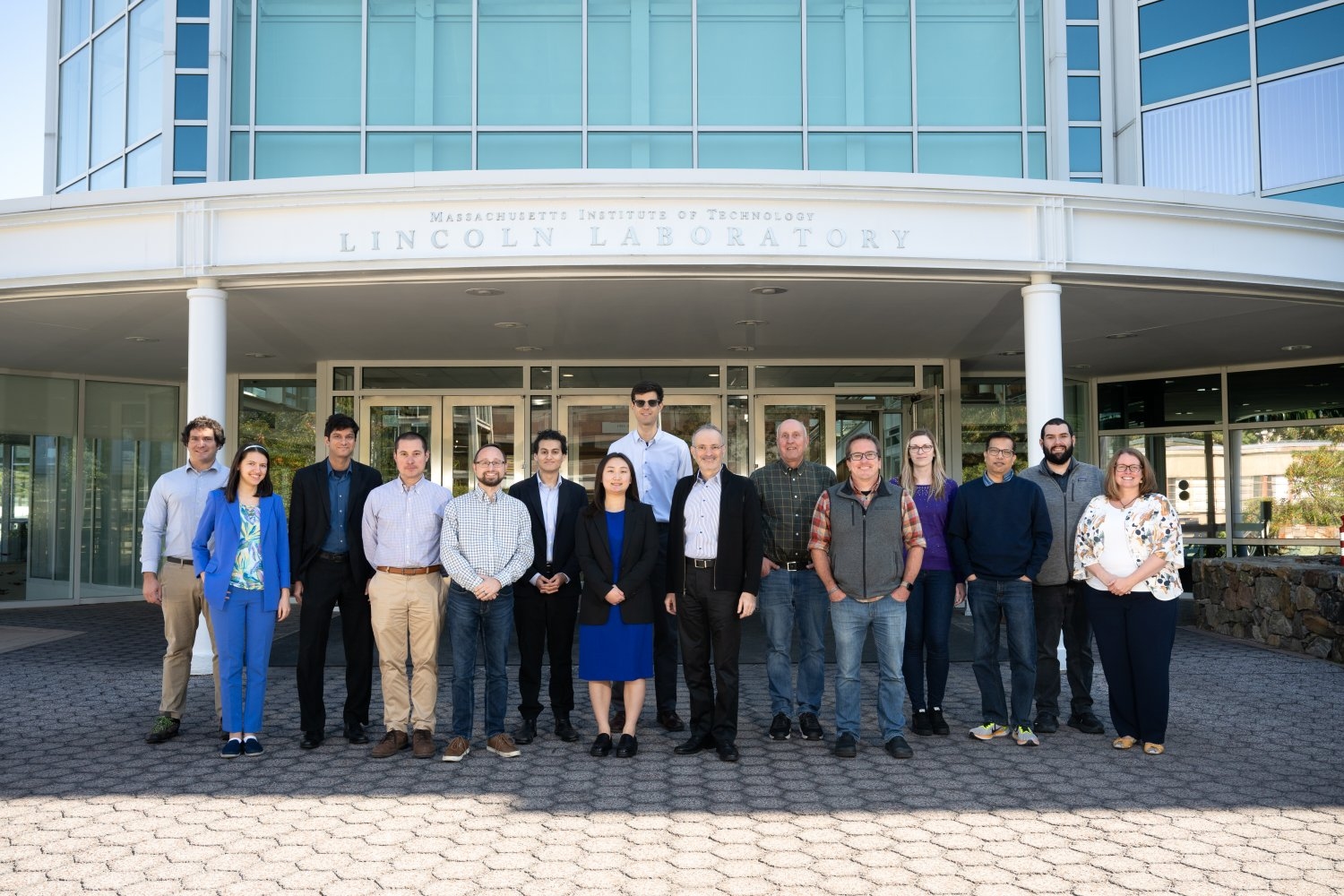
MIT Lincoln Lab wins R&D 100 for secure OS and quantum platform
MIT Lincoln Laboratory’s Magnetite operating system stands out as a serious contender for securing embedded systems against AI-driven cyberattacks. By combining a formally verified seL4 microkernel with Rust-based services, it offers a mathematically grounded alternative to legacy OS architectures in critical infrastructure. The lab also secured recognition for its Quantum Microsystems platform, which uses AI-optimized routing to integrate superconductor and semiconductor chips on a single wafer, addressing the interconnection bottlenecks that plague quantum scaling. These awards highlight a shift toward hardware-level security and system-level integration rather than just algorithmic improvements.
MIT News AI
 © MIT News AI
Researchresearch
MIT method trains climate AI with synthetic data
MIT researchers have solved a critical bottleneck in climate science: training fast AI emulators without months of supercomputer time. By generating optimized synthetic scenarios—complete with artificial high-frequency oscillations—they train models to generalize better than those fed realistic historical data. This approach cuts production time from years to days, allowing scientists to rapidly test novel policy interventions that traditional emulators fail to predict. It shifts climate modeling from static snapshots to dynamic, adaptable tools for immediate decision-making.
MIT News AI
More in Agents
 © TechCrunch AI
Agentsagents
Meta Muse AI Agent Now Places US Business Calls
Meta’s consumer agent Muse is rolling out voice calling to US businesses for paid subscribers, targeting the tedious task of customer service navigation. With over 10 million users, Meta is betting that AI’s infinite patience will replace human frustration with phone trees and hold times. The feature leverages improved voice mimicry to interact with receptionists, though many still hang up upon detecting non-human voices. This moves Muse from text-based assistance into active, autonomous execution of real-world tasks, marking a significant step toward mainstream consumer AI utility.
TechCrunch AI
 © TechCrunch AI
Agentsagents
Nectar launches AI agent for influencer outreach
Nectar’s Creator Agent automates the messy middle of influencer marketing by scanning 300 million profiles to find and vet creators. It goes beyond keyword matching, analyzing video content for brand safety and context rather than relying solely on keywords. The tool drafts personalized messages in a brand's voice, manages contracts, and tracks campaign performance on Instagram and TikTok. This marks a shift toward agentic workflows in marketing ops, though it competes with established players like Aspire. By handling logistics from contracts to gifting, it aims to replace manual spreadsheet management with autonomous relationship building. The system adapts tone for different social environments, ensuring brands sound appropriate whether posting on X or commenting on TikTok. This approach reduces the friction of scaling creator partnerships without losing human nuance.
TechCrunch AI
 © The Verge AI
Agentsagents
ChatGPT launches verified Business Agents for e-commerce
OpenAI is turning ChatGPT into a storefront by letting brands deploy verified AI agents that handle comparison shopping and product inquiries. This moves the platform beyond passive information retrieval into active commercial transactions, with businesses controlling their agent's instructions via a new Business Hub. The feature separates these branded interactions from standard chats to maintain transparency, marking a significant shift toward AI-mediated commerce. It effectively positions ChatGPT as a discovery engine where brand identity and customer service converge directly within the chat interface.
The Verge AI