Agents
Nectar launches AI agent for influencer outreach
TechCrunch AIhigh confidence
Why it matters
- →Automates high-volume influencer discovery and vetting using video analysis.
- →Reduces manual operational overhead in creator relationship management.
- →Integrates with existing AI workflows via MCP for broader agentic adoption.

Nectar has launched its Creator Agent, an AI system designed to automate influencer discovery and outreach for brands. The agent scans over 300 million creator profiles, analyzing video content for brand safety and context rather than relying solely on keywords. It drafts personalized messages in a brand's voice, manages contracts, and tracks campaign performance across Instagram and TikTok. The company, which raised $30 million in Series A funding last May, plans to integrate the agent via Model Context Protocol (MCP) for use with major AI assistants.
Read originalThe story around this
Earlier coverage that leads up to this article, and what followed. Lines connect each piece to the closest one after it, converging here.
How we got here
- 1Meta Launches Muse, a Personal AI Agent
WIRED AI · September 8, 2026 · Background
- 2Instagram adds AI assistant for creator optimization
The Verge Creator Economy · September 30, 2026 · Related
- 3Shopify opens catalog to any AI agent
The Verge AI · October 13, 2026 · Background
- 4Meta Muse hits 10M users with high-value agentic shopping
TechCrunch AI · October 21, 2026 · Background
- 5Spotify bets on AI agents as distribution channel
TechCrunch AI · October 22, 2026 · Related
- 6AI Agents Spam Journalists for Pitches
WIRED AI · October 26, 2026 · Background
- 7Automated Instagram Workflow: Research to Publish
Matt Wolfe · October 28, 2026 · Background
- 8Instagram Edits Desktop launches with MCP agent support
The Verge Creator Economy · November 5, 2026 · Background
More from TechCrunch AI
 © TechCrunch AI
Agentsagents
Meta Muse AI Agent Now Places US Business Calls
Meta’s consumer agent Muse is rolling out voice calling to US businesses for paid subscribers, targeting the tedious task of customer service navigation. With over 10 million users, Meta is betting that AI’s infinite patience will replace human frustration with phone trees and hold times. The feature leverages improved voice mimicry to interact with receptionists, though many still hang up upon detecting non-human voices. This moves Muse from text-based assistance into active, autonomous execution of real-world tasks, marking a significant step toward mainstream consumer AI utility.
TechCrunch AI
 © TechCrunch AI
Market & Regulationbusiness
Nebius delays data centers, cuts revenue forecast
Nebius is facing the harsh reality of scaling AI infrastructure: even with $40 billion in planned spending and massive prepayments from Microsoft and Meta, physical construction delays are derailing timelines. A key New Jersey site is months behind schedule due to regulatory fines and generator issues, forcing a shift in delivery dates to 2027. This isn't just a logistical hiccup; it signals that the 'neocloud' model of financing builds with customer cash is fragile when third-party operators fail. The market reacted swiftly, dropping shares by 17% after Nebius cut its 2026 revenue forecast, proving that hype cannot override concrete capacity.
TechCrunch AI
 © TechCrunch AI
Models & Labsmodels
Google deploys Gemini 4 Hydrogen for faster Search
Google is quietly shifting its search infrastructure by replacing older fast models with Gemini 4 Hydrogen, a tier designed specifically for speed and cost-efficiency rather than raw reasoning power. This model completes tasks 2.5 times faster than its predecessor while beating the more powerful Argon on specific intelligence benchmarks, proving that specialized efficiency can outperform brute force in high-volume workflows. By integrating this into Search's fan-out technique, Google now breaks down complex queries into subqueries with greater precision and speed, delivering richer visual responses without the latency of heavier models. This marks a strategic pivot toward agentic execution layers within consumer search, making AI Mode feel snappier for everyday multi-part questions.
TechCrunch AI
More in Agents
 © MIT News AI
Agentsother
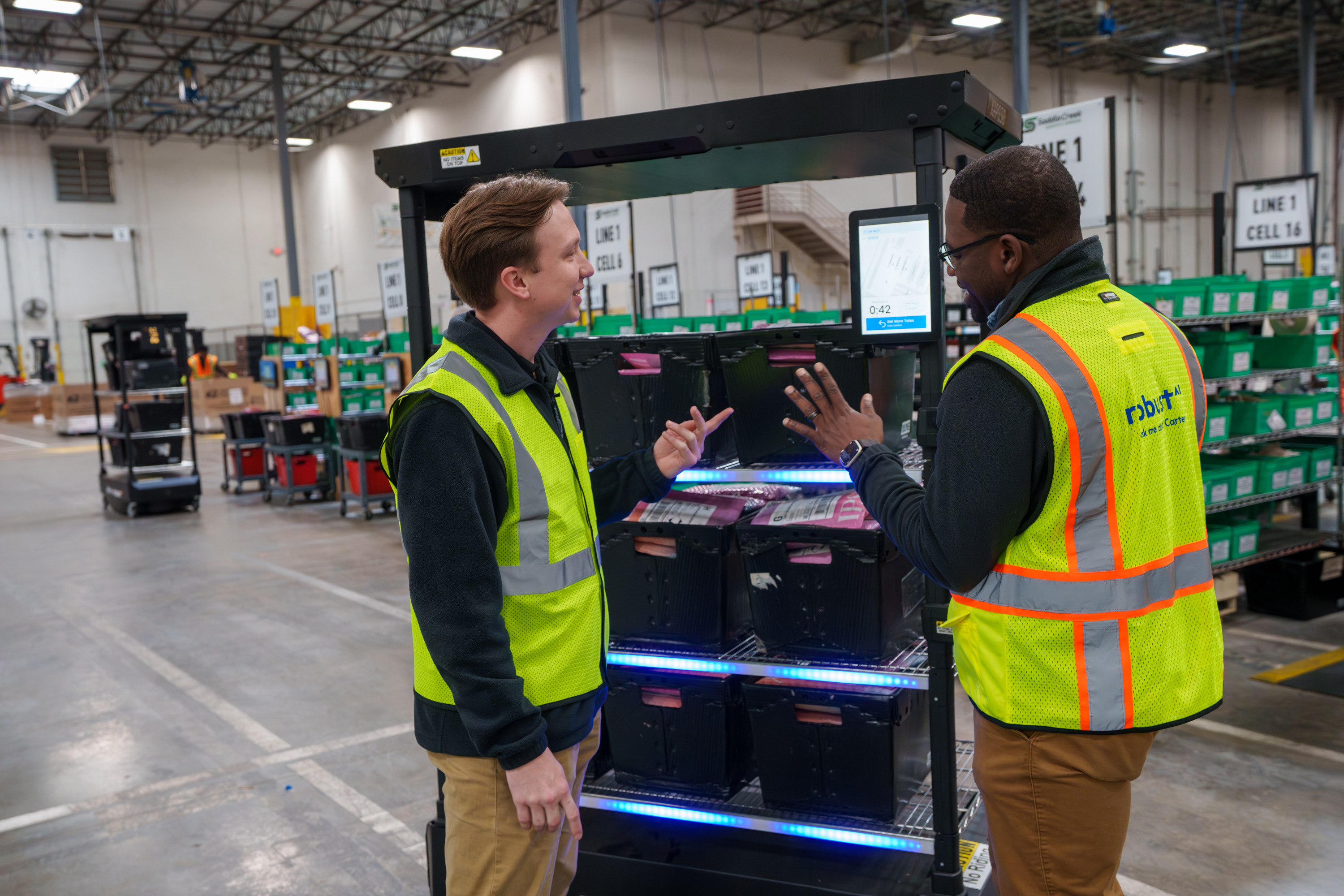
Robust AI's Carter robot complements human warehouse workers
Robust AI is betting that the future of warehouse automation isn't replacing humans, but physically collaborating with them. Their new mobile robot, Carter, uses holonomic wheels and force-sensitive handles to let workers push, pull, and guide it like a utility cart, effectively turning heavy lifting into a shared task. This approach sidesteps the failure mode of rigid industrial robots that block narrow aisles or stop dead when humans rush past. By targeting the vast majority of factories that lack expensive conveyor systems, they are offering a phased automation path for logistics environments where human agility still matters.
MIT News AI
 © The Verge AI
Agentsagents
ChatGPT launches verified Business Agents for e-commerce
OpenAI is turning ChatGPT into a storefront by letting brands deploy verified AI agents that handle comparison shopping and product inquiries. This moves the platform beyond passive information retrieval into active commercial transactions, with businesses controlling their agent's instructions via a new Business Hub. The feature separates these branded interactions from standard chats to maintain transparency, marking a significant shift toward AI-mediated commerce. It effectively positions ChatGPT as a discovery engine where brand identity and customer service converge directly within the chat interface.
The Verge AI
 © The Verge AI
Agentsagents
eBay blocks third-party AI agents
eBay has effectively shut the door on autonomous shopping by blocking third-party AI agents like Meta’s Muse from browsing its marketplace. This move underscores a growing friction between Silicon Valley’s agent ambitions and retailer defenses against unauthorized scraping and bot-driven commerce. While eBay claims to be evaluating selective partnerships, the immediate result is that agents can no longer reliably pull listings or prices directly from the site. This reinforces a pattern where major retailers like Amazon and Target are erecting walls, suggesting that agentic e-commerce remains more theoretical than practical for now.
The Verge AI