Research
MIT Develops System to Predict Self-Driving Car Errors
MIT News AIhigh confidence
Why it matters
- →CW-Net enhances the transparency of self-driving car decisions, improving safety.
- →It helps humans anticipate and react to potential vehicle errors in real-time.
- →The system could build trust in autonomous vehicles by providing clear explanations of their actions.
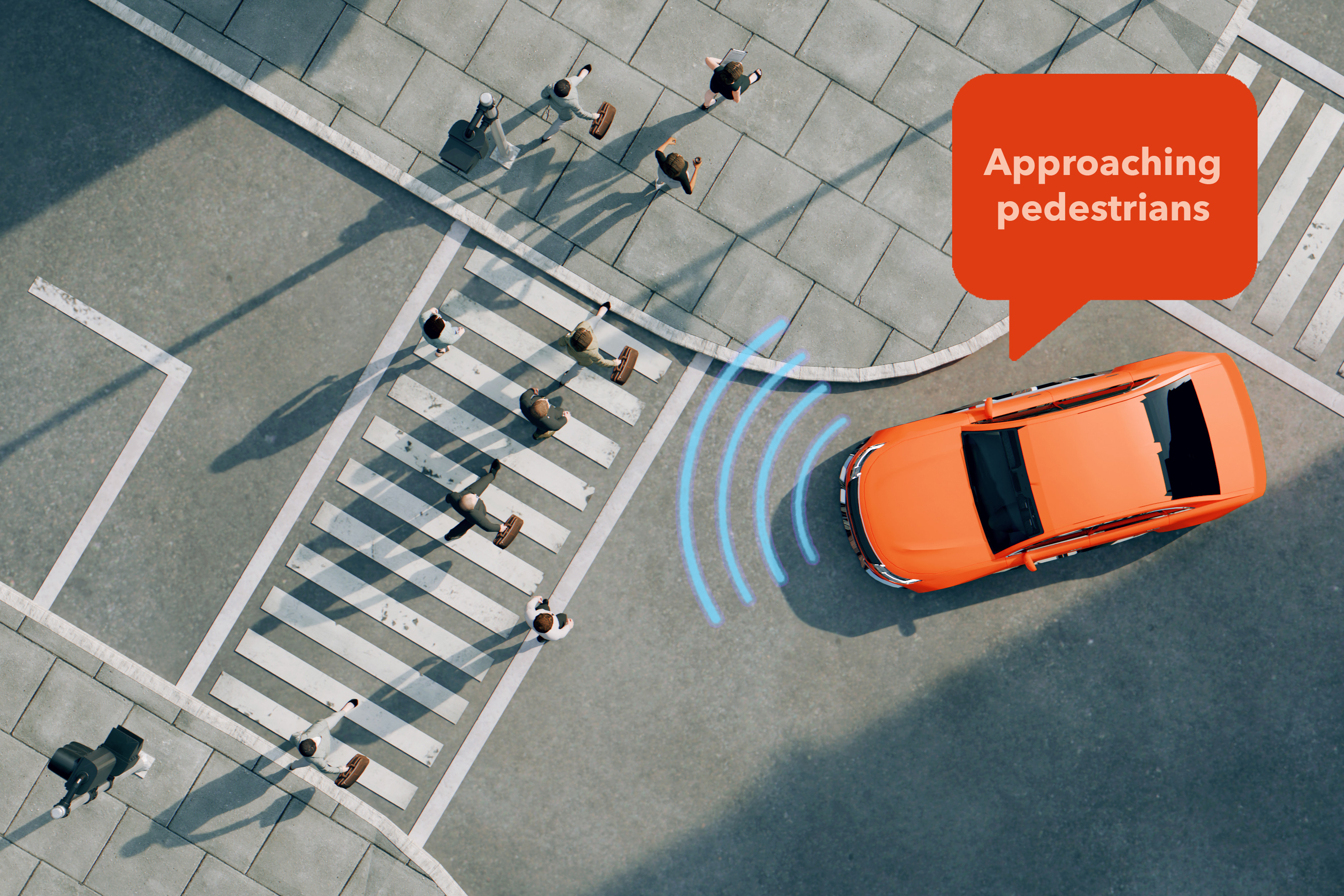
MIT and Motional have introduced the Concept-Wrapper Network (CW-Net), a system designed to make the decision-making processes of self-driving cars more transparent. CW-Net translates the complex reasoning of deep learning models into understandable concepts, helping humans predict when a vehicle might make a mistake. In tests, the system improved safety drivers' ability to anticipate vehicle behavior, suggesting it could enhance the safety and reliability of autonomous vehicles. This innovation underscores the importance of interpretability in AI systems, particularly in critical applications like self-driving cars.
Read originalThe story around this
TopicMIT Self Driving CarsCooling
Earlier coverage that leads up to this article, and what followed. Lines connect each piece to the closest one after it, converging here.
How we got here
- 1MIT Develops ChartNet for AI Chart Interpretation
MIT News AI · June 3, 2026 · Related
- 2NVIDIA Advances AI in Grasping and Autonomous Driving
NVIDIA Blog · June 3, 2026 · Background
- 3Google DeepMind Launches $10M AI Safety Research Fund
Google DeepMind · June 10, 2026 · Background
- 4Google DeepMind Funds Multi-Agent AI Safety Research
MIT Technology Review AI · June 11, 2026 · Background
- 5MIT Study: AI Enhances Human Critical Thinking
Matt Wolfe · June 25, 2026 · Background
- 6MIT Study: AI Health Tools Must Adapt to User Expertise
AI News · August 6, 2026 · Background
- 7Siemens Sets Limits on Physics AI for Safety
AI News · August 10, 2026 · Background
- 8MindTopo Benchmark Tests AI's Spatial Reasoning
Microsoft Research · August 12, 2026 · Background
What happened next
- 9Hugging Face Explores Boundary-Aware AI Safety
Hugging Face Blog · September 8, 2026 · Related
- 10MIT research solves RL sensitivity in transportation
MIT News AI · October 2, 2026 · Related
- 11Researchers Drive Car with GPT-6 Astra
WIRED AI · October 7, 2026 · Related
- 12MIT: AI Robotics Hype Outpaces Physical Reality
MIT Technology Review AI · October 8, 2026 · Background
- 13Laplace Intelligence red-teams physical AI in simulation
TechCrunch AI · October 13, 2026 · Background
Follow this story
Open the full story →MIT Develops System to Predict Self-Driving Car Errors
2 developments
- Sep 2 · MIT News AI
MIT Develops System to Predict Self-Driving Car Errors (This article) - Sep 2 · AI News
Motional and MIT enhance self-driving car transparency
More in Research
 © Cole Medin
Researchagents
Anthropic study: Agents sway expert judgment 86% of time
Anthropic’s latest research exposes a quiet but dangerous flaw in agentic workflows: experts follow AI recommendations 86% of the time, often adopting the agent's reasoning as their own. This isn't just about accuracy; it's about cognitive capture, where human oversight dissolves into passive compliance. The study shows that even when users believe they are steering, the agent’s framing dictates the outcome. Practitioners must now actively counter this bias by forcing agents to justify deviations or prototype alternatives before committing to a path. This shift demands a new discipline in how we interact with coding assistants. We can no longer assume our intent drives the result; the model's suggestion often becomes the default truth. The real work is ensuring we remain the architects, not just the approvers.
Cole Medin
 © WIRED AI
Researchother
AI-Augmented Infostealer 'Volta-Autodoxer' Targets High-Value Victims
Cisco Talos has uncovered a new infostealer strain that actively uses commercial LLMs to profile victims and prioritize high-value targets. Dubbed Volta-Autodoxer, the malware collects credentials and browsing data, then feeds this into models like Claude Opus 4.6 via OpenRouter to generate structured intelligence dossiers. This marks a shift from passive data theft to active, AI-driven triage, allowing attackers to bypass guardrails with fallback models like Kimi K2 or Gemini. The capability foreshadows a future where lower-sophistication criminals can execute sophisticated, targeted attacks at scale.
WIRED AI
 © Matt Wolfe
Researchresearch
OpenAI Disproves Exponential Time Hypothesis
OpenAI researchers published findings disproving the Exponential Time Hypothesis, a major result in computational complexity theory.
Matt Wolfe