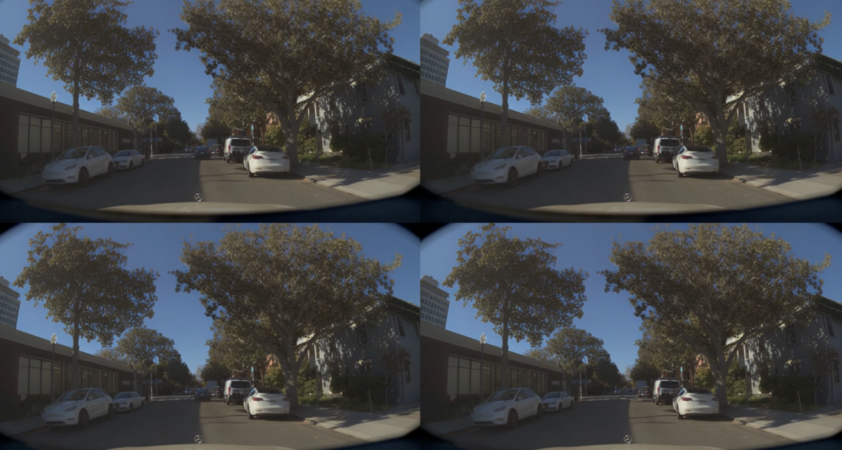
NVIDIA Research has unveiled three significant advancements in AI at the CVPR conference, focusing on scalable training for diverse applications. GraspGen-X is a foundation model for robotic grasping, capable of adapting to any gripper without retraining, thanks to a dataset of 2 billion simulated grasps. LCDrive enhances autonomous vehicle reasoning by using compact latent representations, allowing faster decision-making on embedded hardware. NitroGen trains embodied agents in virtual environments, improving their ability to generalize across various scenarios. These developments aim to accelerate progress in robotics and autonomous systems.
Read original
© NVIDIA BlogNVIDIA is pushing the boundaries of physical AI research with the introduction of new agent skills designed to enhance the development of autonomous vehicles, robotics, and vision AI systems. By integrating these skills with their Cosmos 3 model and simulation frameworks, NVIDIA aims to streamline the fragmented workflows that currently slow down research. This advancement allows researchers to automate complex tasks like scene reconstruction and synthetic scenario generation, making it easier to test and validate AI models. The result is a more efficient path from model development to real-world application, potentially accelerating innovation in these fields.
© NVIDIA BlogNVIDIA's NemoClaw is transforming industrial engineering by enabling the creation of autonomous AI agents that automate complex workflows. By integrating with various orchestration frameworks, NemoClaw allows companies like Cadence, Dassault Systèmes, and Siemens to drastically reduce the time required for tasks such as RTL verification and design simulations. This innovation is not just about speeding up processes; it also enhances security and customization through NVIDIA's OpenShell runtime. The result is a more efficient, secure, and scalable approach to engineering tasks across industries like automotive and aerospace.
© NVIDIA BlogNVIDIA and Microsoft are joining forces to develop a comprehensive AI deployment stack that spans Windows devices, Azure cloud, and local environments. This collaboration introduces NVIDIA RTX Spark and DGX Station for Windows, allowing developers to build and run AI agents directly on Windows PCs. The partnership also integrates NVIDIA's accelerated computing into Microsoft's data infrastructure, significantly enhancing SQL execution speeds. By bridging the gap between cloud and local AI deployments, this initiative aims to make AI agents more accessible and efficient for enterprise applications, offering a seamless experience for developers.
© MIT News AIMIT and Harvard researchers have devised a method to enhance AI agents' questioning skills using the game 'Battleship'. By applying Monte Carlo inference strategies, they improved language models' ability to ask more insightful questions, leading to better performance in the game. This approach enabled smaller models like Llama 4 Scout to surpass larger models such as GPT-5 in terms of efficiency and cost-effectiveness. The research opens up possibilities for AI to navigate complex problem spaces more effectively, indicating potential applications beyond games into scientific research and coding challenges.
Hugging Face's DharmaOCR has demonstrated a novel application of Direct Preference Optimization (DPO) to significantly reduce text degeneration in OCR tasks. Unlike traditional supervised fine-tuning, which often fails to address degeneration directly, DPO uses the model's own degenerate outputs as negative training signals. This approach led to an average reduction in degeneration rates by 59.4%, with some cases seeing reductions as high as 87.6%. By focusing on the structural failure modes of models, DharmaOCR offers a new methodology for improving model performance in structured tasks without relying on subjective human judgments.
© MIT News AIMIT researchers, in collaboration with the MIT-IBM Computing Research Lab, have developed ChartNet, a comprehensive dataset designed to enhance AI models' ability to interpret charts. This dataset includes over a million diverse chart images, complete with visual, linguistic, and numerical components, enabling smaller open-source models to outperform larger commercial counterparts in tasks like data extraction and summarization. By providing a robust resource for training vision-language models, ChartNet could democratize access to advanced AI capabilities for smaller firms. This development marks a significant step in improving AI's ability to handle complex multimodal data, particularly in industries reliant on chart analysis.