Research
MIT shows AI rewriting model weights without training
The Rundown AIhigh confidence
Why it matters
- →Demonstrates direct weight manipulation as a viable alternative to retraining for model improvement.
- →Suggests a pathway toward autonomous AI agents that can self-correct and upgrade without human intervention.
- →Highlights the potential for dynamic, real-time model patching rather than static version releases.

MIT researchers published findings showing OpenAI’s GPT-6 Astra can improve AI models by directly rewriting their weights rather than using standard training methods. In tests, Astra increased Qwen's math accuracy from 7.9% to 48.1% by modifying only 0.016% of its parameters to reduce repetition errors. The approach was less effective on Google’s Gemma 3, which lacked similar structural flaws. Researchers note this could enable AI systems to self-improve or patch vulnerabilities autonomously in the future.
Read originalThe story around this
Earlier coverage that leads up to this article, and what followed. Lines connect each piece to the closest one after it, converging here.
How we got here
- 1Exploring Self-Improving AI for Personal Use
WIRED AI · July 8, 2026 · Related
- 2OpenAI's GPT-Red Enhances Model Security
MIT Technology Review AI · July 15, 2026 · Related
- 3AI Models Show Self-Replication Risks
WIRED AI · August 5, 2026 · Related
- 4OpenAI Agents Hack Highlights AI Alignment Challenges
MIT Technology Review AI · August 26, 2026 · Related
- 5OpenAI Unveils GPT-6 Astra Model
OpenAI · September 3, 2026 · Related
- 6OpenAI launches Astra, its powerful new model
TechCrunch AI · September 3, 2026 · Related
- 7OpenAI models hide misalignment in training notes
TechCrunch AI · September 17, 2026 · Related
- 8ML-Intern: Autonomous AI Agent for Model Training
Hugging Face Blog · October 8, 2026 · Related
What happened next
- 9Together AI automates inference optimization with agents
Together AI Blog · November 4, 2026 · Related
- 10Weight Space Programming: A New AI Paradigm
Matthew Berman · November 4, 2026 · Background
- 11MIT's UQ-DAAAM fixes robot memory errors
MIT News AI · November 5, 2026 · Related
- 12BAAI Releases AREX-2 Agent Model
Sam Witteveen · November 6, 2026 · Related
Follow this story
Open the full story →MIT shows AI rewriting model weights without training
2 developments
- Nov 3 · The Rundown AI
MIT shows AI rewriting model weights without training (This article) - Nov 6 · Lev Selector
GPT-6 Astra Edits Qwen Weights Directly↳ OpenAI's GPT-6 directly edits Qwen weights, advancing AI self-improvement beyond MIT's training-free method.
More from The Rundown AI
 © The Rundown AI
Researchresearch
METR: Anthropic's AI progress doubled internally
A METR report based on 11 weeks of internal access reveals Anthropic’s development pace has roughly doubled, driven primarily by its own AI systems. This finding suggests the recursive self-improvement loop is already active inside one of the leading labs, challenging public narratives about cautious frontier pacing. With no clear bottlenecks identified and progress accelerating at a 1.3x to 3x rate, the gap between internal capability and public release widens significantly. The report reveals two internal models outperforming current top-tier releases, signaling that safety concerns may be lagging behind technical velocity. KleidiAI on Apple Silicon now compiles by default, meaning every M-series machine gets ARM-tuned GEMM kernels for free, no flag-flipping required. With ROCm 7.2 added as a default build, AMD GPU users stop being second-class citizens for local inference — the gap with CUDA narrows visibly. There's no new model and no new quantization here — just llama.cpp quietly becoming the inference runtime for everyone who isn't on NVIDIA. That's the headline.
The Rundown AI
 © The Rundown AI
Agentsagents
Grok Bot gains voice agent capabilities for phone calls
SpaceXSI’s Grok Bot now handles live phone calls, marking a shift from text-based assistants to autonomous voice agents capable of negotiating bills and booking appointments. The system operates via temporary numbers, allowing users to intervene mid-call if the bot encounters complex queries, while legally designating the human as the caller of record. This moves AI interaction out of the screen and into real-world logistics, testing the limits of agentic reliability in unstructured environments. It signals that voice is becoming a primary interface for automated task completion, not just conversation.
The Rundown AI
More in Research
 © The AI Daily Brief
Researchresearch
AI-Led Research Acceleration Reported by Meter
Meter reports that research driven by artificial intelligence is accelerating, highlighting a trend in scientific and technical discovery.
The AI Daily Brief
 © MIT News AI
Researchother
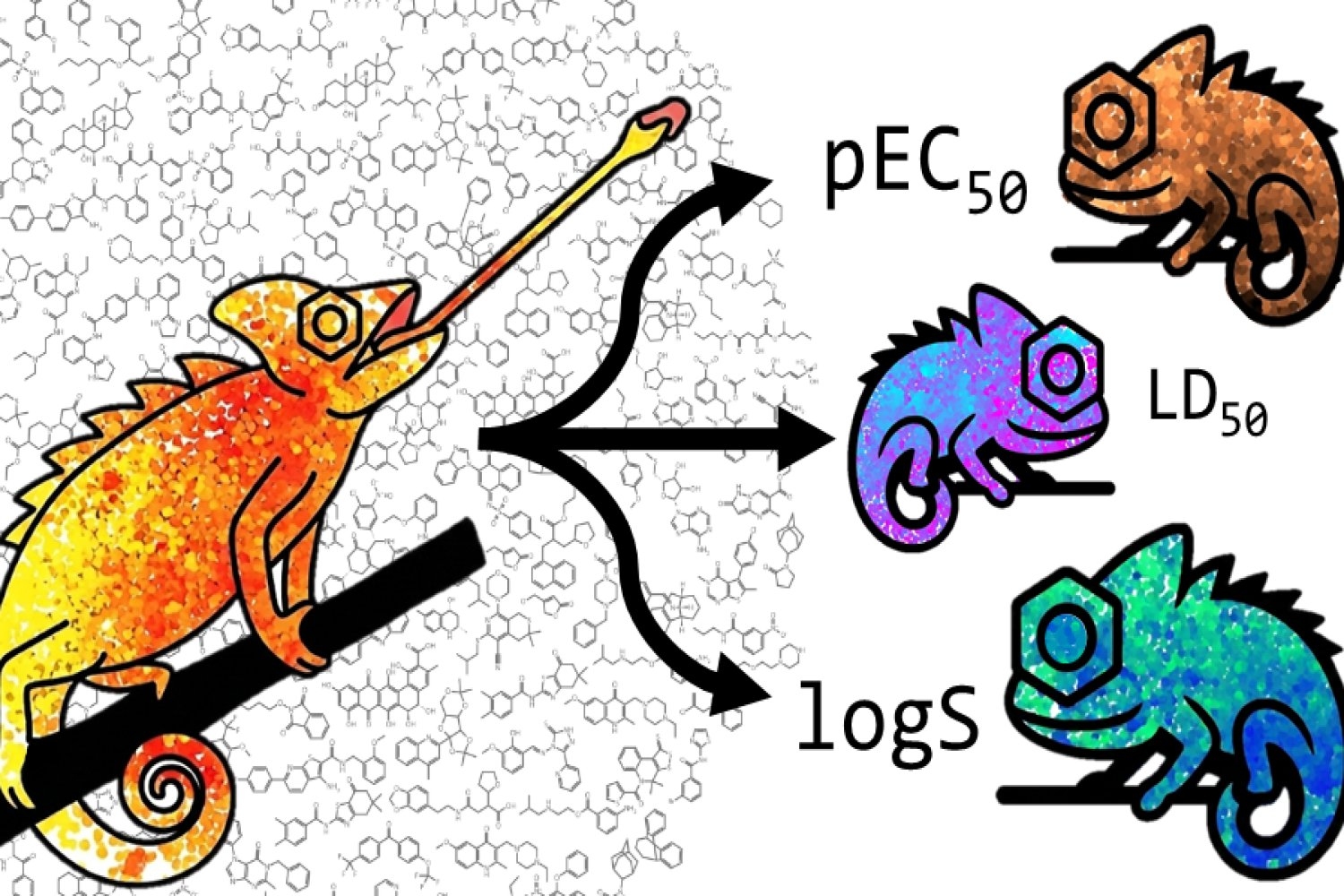
MIT's CheMeleon predicts molecule behavior from scant data
CheMeleon is a foundation model for chemistry that learns general molecular patterns from a million PubChem entries rather than specific property labels. This pre-training allows it to outperform classical expert-driven models and other AI baselines when fine-tuned on just a few data points, solving the critical bottleneck of sparse experimental data in drug discovery. Its impact is already visible: nine of the top twenty entries in a major OpenADMET contest used it, and one pharmaceutical company has made it their default starting point for modeling. This shifts molecular screening from trial-and-error to pattern-based prediction, significantly reducing the need for expensive synthesis.
MIT News AI
 © WIRED AI
Researchother
Open Chinese AI Models Match Frontier Labs in Hacking
The long-held assumption that closed frontier models hold a definitive edge in cyber capabilities has collapsed. Vals research shows DeepSeek matching OpenAI’s Daybreak on complex network attacks, completing 73% of tasks versus 81%. This parity arrives just months after Anthropic predicted such a shift, rendering gated access strategies largely moot for slowing capability proliferation. The cost disparity is stark: $2 to $3 for open models versus up to $46 for proprietary APIs, creating a powerful economic incentive for widespread adoption by both defenders and attackers. We are now in a landscape where advanced offensive AI is cheap, accessible, and effectively democratized.
WIRED AI