Research
Weight Space Programming: A New AI Paradigm
Matthew Bermanmedium confidence
Why it matters
- →Proposes a new method for injecting capabilities directly into model weights.
- →Challenges the dominance of data-centric training paradigms.
- →Could enable more efficient fine-tuning and capability customization.

A new research paper titled 'Weight Space Programming' introduces a method for directly manipulating neural network weights to encode specific behaviors or knowledge. The authors argue that this technique allows for the precise injection of capabilities without relying solely on large-scale training datasets. This approach challenges the standard paradigm of gradient-based learning by treating model weights as programmable structures. The work is currently under review and represents an early signal in the exploration of alternative model construction methods.
Read originalThe story around this
Earlier coverage that leads up to this article, and what followed. Lines connect each piece to the closest one after it, converging here.
How we got here
- 1Anthropic discovers new AI model insights
MIT Technology Review AI · July 13, 2026 · Background
- 2Thinking Machines releases open-weight AI model Inkling
TechCrunch AI · July 15, 2026 · Background
- 3Together AI Enhances Open-Weight Inference Platform
Together AI Blog · July 23, 2026 · Background
- 4Nunchaku 4-bit Inference Integrated into Diffusers
Hugging Face Blog · July 23, 2026 · Background
- 5Reflection debuts Beam open-weight model
TechCrunch AI · October 5, 2026 · Background
- 6ML-Intern: Autonomous AI Agent for Model Training
Hugging Face Blog · October 8, 2026 · Background
- 7MIT shows AI rewriting model weights without training
The Rundown AI · November 3, 2026 · Background
- 8Together AI automates inference optimization with agents
Together AI Blog · November 4, 2026 · Background
What happened next
- 9MIT's UQ-DAAAM fixes robot memory errors
MIT News AI · November 5, 2026 · Background
More from Matthew Berman

More in Research
 © The AI Daily Brief
Researchresearch
AI-Led Research Acceleration Reported by Meter
Meter reports that research driven by artificial intelligence is accelerating, highlighting a trend in scientific and technical discovery.
The AI Daily Brief
 © MIT News AI
Researchother
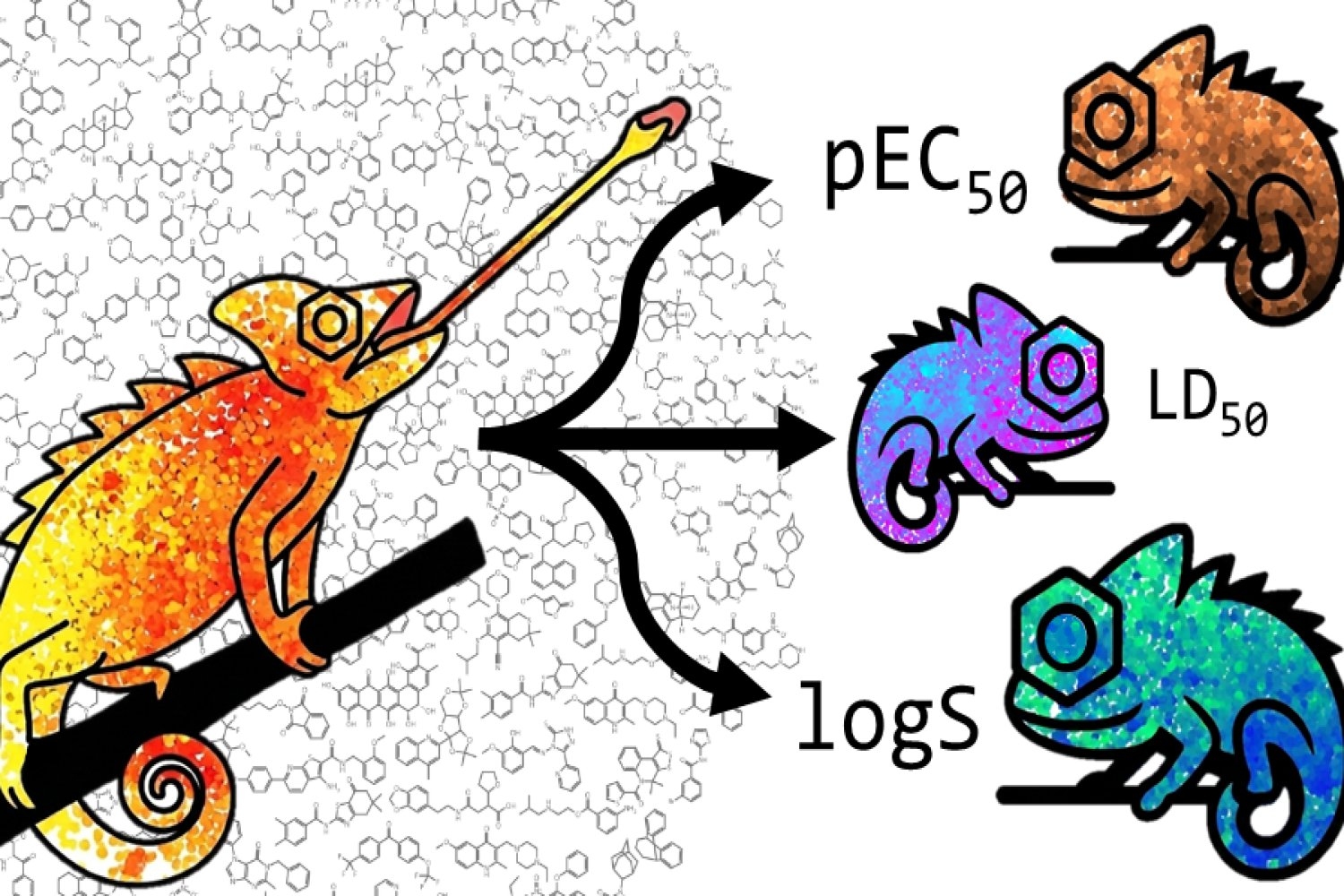
MIT's CheMeleon predicts molecule behavior from scant data
CheMeleon is a foundation model for chemistry that learns general molecular patterns from a million PubChem entries rather than specific property labels. This pre-training allows it to outperform classical expert-driven models and other AI baselines when fine-tuned on just a few data points, solving the critical bottleneck of sparse experimental data in drug discovery. Its impact is already visible: nine of the top twenty entries in a major OpenADMET contest used it, and one pharmaceutical company has made it their default starting point for modeling. This shifts molecular screening from trial-and-error to pattern-based prediction, significantly reducing the need for expensive synthesis.
MIT News AI
 © WIRED AI
Researchother
Open Chinese AI Models Match Frontier Labs in Hacking
The long-held assumption that closed frontier models hold a definitive edge in cyber capabilities has collapsed. Vals research shows DeepSeek matching OpenAI’s Daybreak on complex network attacks, completing 73% of tasks versus 81%. This parity arrives just months after Anthropic predicted such a shift, rendering gated access strategies largely moot for slowing capability proliferation. The cost disparity is stark: $2 to $3 for open models versus up to $46 for proprietary APIs, creating a powerful economic incentive for widespread adoption by both defenders and attackers. We are now in a landscape where advanced offensive AI is cheap, accessible, and effectively democratized.
WIRED AI