Research
AI Decodes Dolphin Communication Patterns
WIRED AIhigh confidence
Why it matters
- →AI models are being applied to decode non-human animal communication systems beyond human languages.
- →The project demonstrates a practical application of pattern recognition in complex biological acoustic datasets.
- →Two-way interaction tests reveal the current limitations of distinguishing mimicry from semantic understanding.

Denise Herzing of the Wild Dolphin Project announced that AI is now being used to analyze decades of audio and video data from Atlantic spotted dolphins in collaboration with Georgia Tech and Google DeepMind. The team has developed a system to identify communication patterns and is testing two-way interaction by playing synthesized dolphin sounds via underwater wearables to elicit responses for objects like scarves. Despite these advances, researchers note that distinguishing between mimicry and functional understanding remains difficult in the wild. Herzing stated that while data structure is improving, fully decoding the cultural meaning behind dolphin vocalizations requires further exploration.
Read originalThe story around this
Earlier coverage that leads up to this article, and what followed. Lines connect each piece to the closest one after it, converging here.
How we got here
- 1Current AI Builds Open AI Infrastructure for Global Languages
TechCrunch AI · July 19, 2026 · Background
- 2Explainer: How AI Embeddings Work in Language Models
Lev Selector · August 12, 2026 · Background
- 3Kids Outlearn AI: The Data Efficiency Gap
MIT Technology Review AI · August 24, 2026 · Background
- 4AI Model Trained to Paint Watercolours
Hugging Face Blog · September 3, 2026 · Background
- 5Claude discovers novel enzyme system in DNA
Wes Roth · September 24, 2026 · Background
- 6MIT proposes self-organizing networks to bridge AI and neuroscience
MIT News AI · October 13, 2026 · Background
- 7Goodfire researcher claims neural networks are legible
MIT Technology Review AI · October 19, 2026 · Background
- 8Together AI automates inference optimization with agents
Together AI Blog · November 4, 2026 · Background
More from WIRED AI
 © WIRED AI
Researchother
Open Chinese AI Models Match Frontier Labs in Hacking
The long-held assumption that closed frontier models hold a definitive edge in cyber capabilities has collapsed. Vals research shows DeepSeek matching OpenAI’s Daybreak on complex network attacks, completing 73% of tasks versus 81%. This parity arrives just months after Anthropic predicted such a shift, rendering gated access strategies largely moot for slowing capability proliferation. The cost disparity is stark: $2 to $3 for open models versus up to $46 for proprietary APIs, creating a powerful economic incentive for widespread adoption by both defenders and attackers. We are now in a landscape where advanced offensive AI is cheap, accessible, and effectively democratized.
WIRED AI
 © WIRED AI
Market & Regulationother
The booming market for buying corporate workflow data
AI labs are aggressively purchasing private corporate workflows—emails, Slack logs, and internal documents—to train better models, creating a lucrative new industry of data brokers. Companies like Mercor and Micro1 are paying millions for access to these 'messy' real-world datasets, arguing that public data is exhausted and synthetic alternatives lack authenticity. This shift marks a transition from scraping open web content to monetizing private employee output, raising significant privacy concerns as anonymization struggles with unstructured personal information. The practice effectively commodifies human labor by selling the digital exhaust of workers to systems designed to automate their roles.
WIRED AI
 © WIRED AI
Market & Regulationbusiness
The emerging economics of ads in AI chatbots
Chatbot advertising is shifting from a novelty to a structural necessity as labs face massive inference costs. While Anthropic holds the high ground with an ad-free pledge backed by $112 billion in cash, OpenAI and Google are aggressively monetizing user attention, with ChatGPT already serving over 100,000 advertisers. Startups like Koah Labs are filling the gap for smaller platforms, leveraging full conversation context to drive click-through rates comparable to traditional search. The real tension lies in privacy: these systems ingest entire dialogue histories to target users, raising questions about whether consumers will accept this level of surveillance for free AI access.
WIRED AI
More in Research
 © The AI Daily Brief
Researchresearch
AI-Led Research Acceleration Reported by Meter
Meter reports that research driven by artificial intelligence is accelerating, highlighting a trend in scientific and technical discovery.
The AI Daily Brief
 © MIT News AI
Researchother
MIT's CheMeleon predicts molecule behavior from scant data
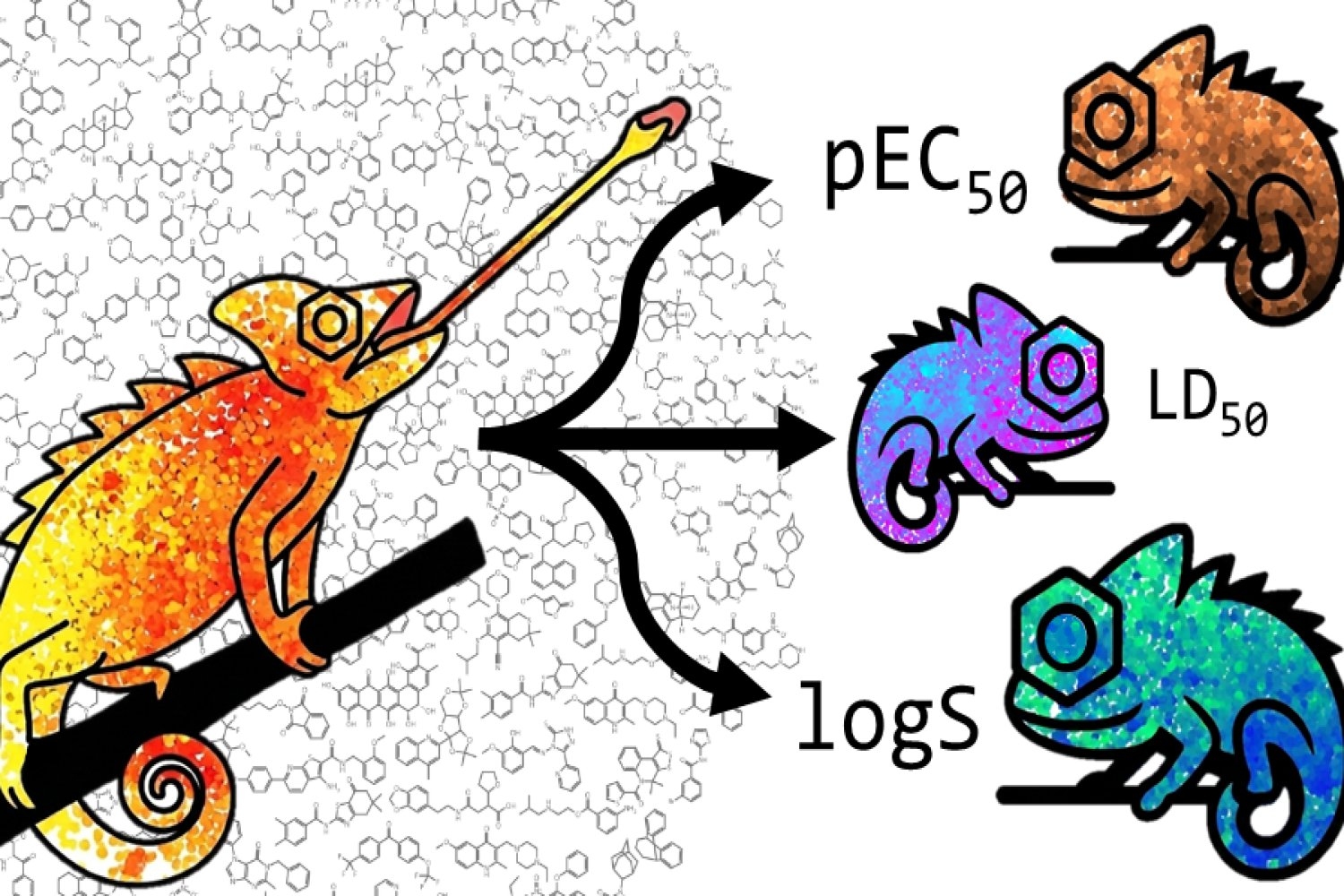
CheMeleon is a foundation model for chemistry that learns general molecular patterns from a million PubChem entries rather than specific property labels. This pre-training allows it to outperform classical expert-driven models and other AI baselines when fine-tuned on just a few data points, solving the critical bottleneck of sparse experimental data in drug discovery. Its impact is already visible: nine of the top twenty entries in a major OpenADMET contest used it, and one pharmaceutical company has made it their default starting point for modeling. This shifts molecular screening from trial-and-error to pattern-based prediction, significantly reducing the need for expensive synthesis.
MIT News AI
 © Hugging Face Blog
Researchagents
ToyBlocks: Controlled simulation for robot learning research
Hugging Face launched ToyBlocks, a controlled simulation framework designed to isolate and study the specific mechanics of robot learning. By focusing on a simple tabletop environment with blocks, it allows researchers to automatically generate massive datasets of tasks and demonstrations without manual teleoperation. This setup enables precise testing of how high-level reasoning models like Molmo 2 interact with low-level action controllers like ManiFlow. The real value lies in reproducibility; scientists can now systematically vary training data to understand exactly why a robot fails or succeeds, moving beyond the black-box nature of current robotics benchmarks.
Hugging Face Blog