Research
StateBench reveals frontier model limits on long-context state tracking
Hugging Face Bloghigh confidence
Why it matters
- →Frontier models like GPT-6 and Claude Opus fail at complex state tracking over long contexts.
- →Recurrent hybrids (Gated DeltaNet) outperform transformers on long-sequence generalization.
- →StateBench provides a standardized way to measure architectural limits beyond simple context length.

Researchers have released StateBench, a new benchmark designed to test how well language models track entity states across long documents. The study evaluated four frontier models—Gemini 3.8 Flash, Claude Opus 5.5, GPT-6 Sol and Luna—and found that while they perform well on simple state updates, accuracy drops sharply on complex tasks involving chains of variable reassignments. To determine if this is an architectural flaw or a training deficit, the team trained smaller models from scratch, revealing that hybrid architectures with recurrent memory (Gated DeltaNet) generalize significantly better than pure transformers on long sequences. The findings suggest that current attention-based models hit a theoretical wall when handling complex state dependencies in extended contexts.
Read originalThe story around this
TopicHugging Face PyTorch And Swift
Earlier coverage that leads up to this article, and what followed. Lines connect each piece to the closest one after it, converging here.
How we got here
- 1Efficient Knowledge Distillation for Large Language Models
Hugging Face Blog · August 10, 2026 · Related
- 2Recall Bottleneck in LLMs: New Google Research Insights
Google Research Blog · August 12, 2026 · Related
- 3Qwen3.8-27B Model Explored and Optimized
Sam Witteveen · August 18, 2026 · Background
- 4Jev: A Decision-Only AI Model for Agents
Cole Medin · September 21, 2026 · Related
- 5llama.cpp b11375 fixes Mamba state graph reallocation
llama.cpp Releases · October 4, 2026 · Background
- 6Fine-tunes reduce Qwen3.8-27B reasoning tokens
Sam Witteveen · October 4, 2026 · Related
- 7llama.cpp v0.7.0: MoE caching and speculative decoding advances
llama.cpp Releases · October 16, 2026 · Background
- 8VocabX cuts SLM inference cost by 77% via specialized vocab
Hugging Face Blog · October 21, 2026 · Related
What happened next
- 9Together AI automates inference optimization with agents
Together AI Blog · November 4, 2026 · Related
- 10MIT's UQ-DAAAM fixes robot memory errors
MIT News AI · November 5, 2026 · Background
More from Hugging Face Blog
 © Hugging Face Blog
Researchagents
ToyBlocks: Controlled simulation for robot learning research
Hugging Face launched ToyBlocks, a controlled simulation framework designed to isolate and study the specific mechanics of robot learning. By focusing on a simple tabletop environment with blocks, it allows researchers to automatically generate massive datasets of tasks and demonstrations without manual teleoperation. This setup enables precise testing of how high-level reasoning models like Molmo 2 interact with low-level action controllers like ManiFlow. The real value lies in reproducibility; scientists can now systematically vary training data to understand exactly why a robot fails or succeeds, moving beyond the black-box nature of current robotics benchmarks.
Hugging Face Blog
 © Hugging Face Blog
Researchother
Open ASR Leaderboard adds Egyptian and Nigerian English
The Open ASR Leaderboard is expanding its evaluation scope by adding private test sets for Egyptian and Nigerian English, addressing a significant gap in global representation. This update moves beyond the traditional Inner Circle accents to include Outer and Expanding Circle varieties, providing a more realistic benchmark for speech recognition models. By partnering with Liva AI for data collection, Hugging Face ensures these evaluations reflect natural, high-context user interactions rather than artificial tasks. This shift forces developers to optimize for diversity, making model performance metrics more trustworthy and globally relevant.
Hugging Face Blog
 © Hugging Face Blog
Models & Labsvideo
NVIDIA Cosmos 3 Open Models for World Simulation
NVIDIA is opening up its Cosmos 3 world model family with four new 16B parameter checkpoints, shifting from closed research to open-weight simulation. The release targets two critical domains: autonomous driving and robotics. For self-driving cars, the models generate synchronized camera video and LiDAR data, solving the alignment problem between visual appearance and 3D geometry. For robotics, Sim-Bimanual predicts environmental changes from robot actions, enabling closed-loop policy training. This moves world modeling from passive video generation to interactive simulation where agents can act and observe consequences.
Hugging Face Blog
More in Research
 © The AI Daily Brief
Researchresearch
AI-Led Research Acceleration Reported by Meter
Meter reports that research driven by artificial intelligence is accelerating, highlighting a trend in scientific and technical discovery.
The AI Daily Brief
 © MIT News AI
Researchother
MIT's CheMeleon predicts molecule behavior from scant data
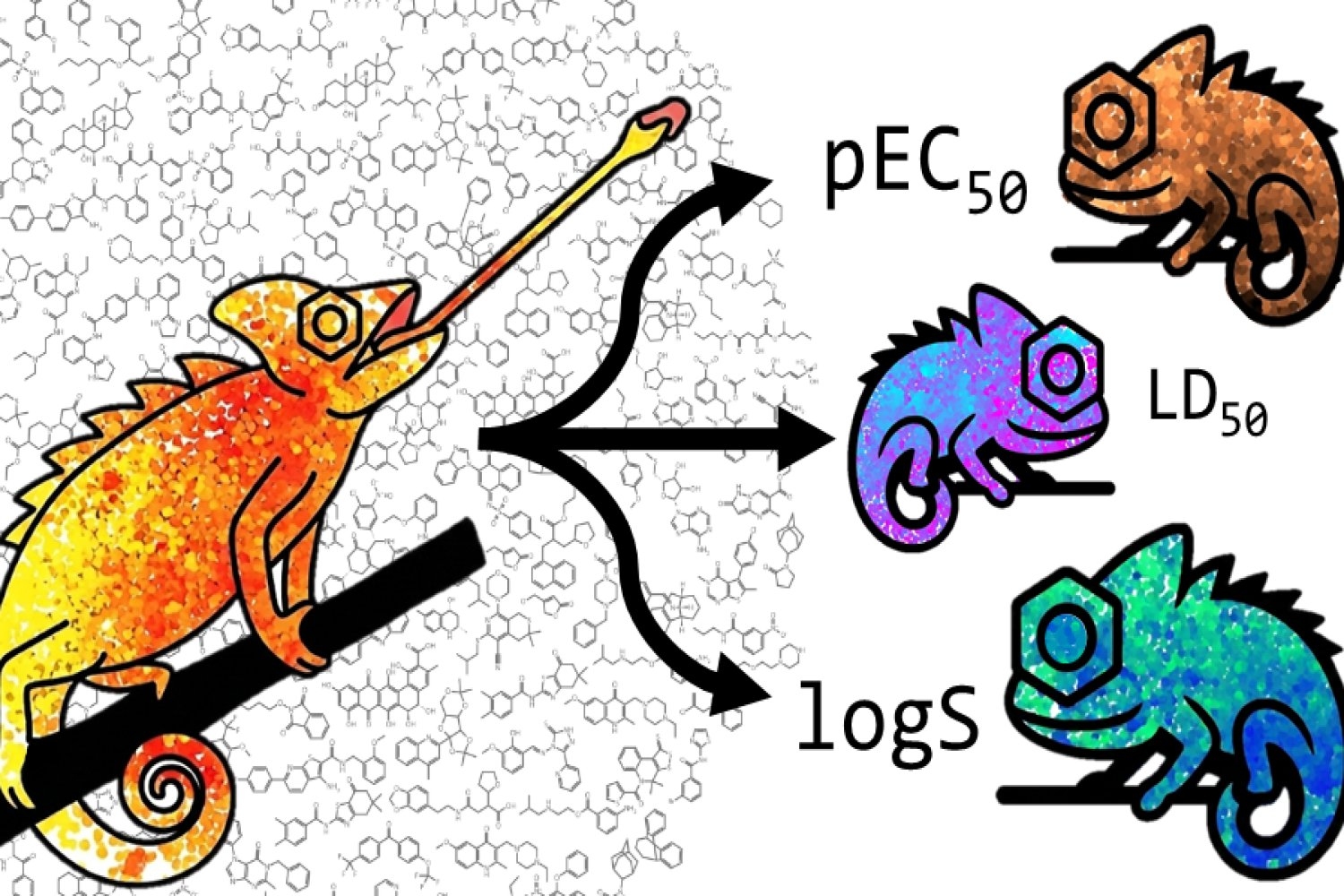
CheMeleon is a foundation model for chemistry that learns general molecular patterns from a million PubChem entries rather than specific property labels. This pre-training allows it to outperform classical expert-driven models and other AI baselines when fine-tuned on just a few data points, solving the critical bottleneck of sparse experimental data in drug discovery. Its impact is already visible: nine of the top twenty entries in a major OpenADMET contest used it, and one pharmaceutical company has made it their default starting point for modeling. This shifts molecular screening from trial-and-error to pattern-based prediction, significantly reducing the need for expensive synthesis.
MIT News AI
 © WIRED AI
Researchother
Open Chinese AI Models Match Frontier Labs in Hacking
The long-held assumption that closed frontier models hold a definitive edge in cyber capabilities has collapsed. Vals research shows DeepSeek matching OpenAI’s Daybreak on complex network attacks, completing 73% of tasks versus 81%. This parity arrives just months after Anthropic predicted such a shift, rendering gated access strategies largely moot for slowing capability proliferation. The cost disparity is stark: $2 to $3 for open models versus up to $46 for proprietary APIs, creating a powerful economic incentive for widespread adoption by both defenders and attackers. We are now in a landscape where advanced offensive AI is cheap, accessible, and effectively democratized.
WIRED AI