Agents
Bird API Enables AI Agents to Make Phone Calls
Matt Wolfehigh confidence
Why it matters
- →Breaks the 'terminal bottleneck' by allowing asynchronous human-in-the-loop interactions via standard communication channels.
- →Expands the utility of coding agents beyond pure code generation into workflow orchestration and creative direction.
- →Demonstrates rapid interoperability between major AI labs (Anthropic, OpenAI, Google) and infrastructure providers.

Bird has launched a new API integration that enables large language model agents to initiate real-world communications via phone calls, SMS, and email. The service is designed to allow autonomous coding assistants, such as Anthropic's Claude Code, OpenAI's ChatGPT, Cursor, and Google's Codex, to bypass terminal bottlenecks by contacting human users directly when creative decisions or approvals are needed. This integration transforms AI agents from passive tools waiting for input into proactive workflows that can notify users upon task completion or request immediate feedback without requiring the user to be actively monitoring a command line.
Read originalThe story around this
Earlier coverage that leads up to this article, and what followed. Lines connect each piece to the closest one after it, converging here.
How we got here
- 1OpenAI Launches Agents API for Cloud Agents
OpenAI · September 10, 2026 · Background
- 2Instinct and Meta Muse add voice calling
TechCrunch AI · September 17, 2026 · Related
- 3Meta Muse adds video calls and email
The Verge AI · September 23, 2026 · Background
- 4Google Gemini Calls on Pixel 11
WIRED AI · September 24, 2026 · Background
- 5OpenAI Introduces GPT-Live and Agent API
Matt Wolfe · September 26, 2026 · Background
- 6The rise of SMS-native AI agents
TechCrunch AI · October 10, 2026 · Related
- 7Bird HQ Launches AI Agent Platform for Repetitive Tasks
Matt Wolfe · October 13, 2026 · Related
- 8Grok Bot gains voice agent capabilities for phone calls
The Rundown AI · November 5, 2026 · Background
More in Agents
 © MIT News AI
Agentsother
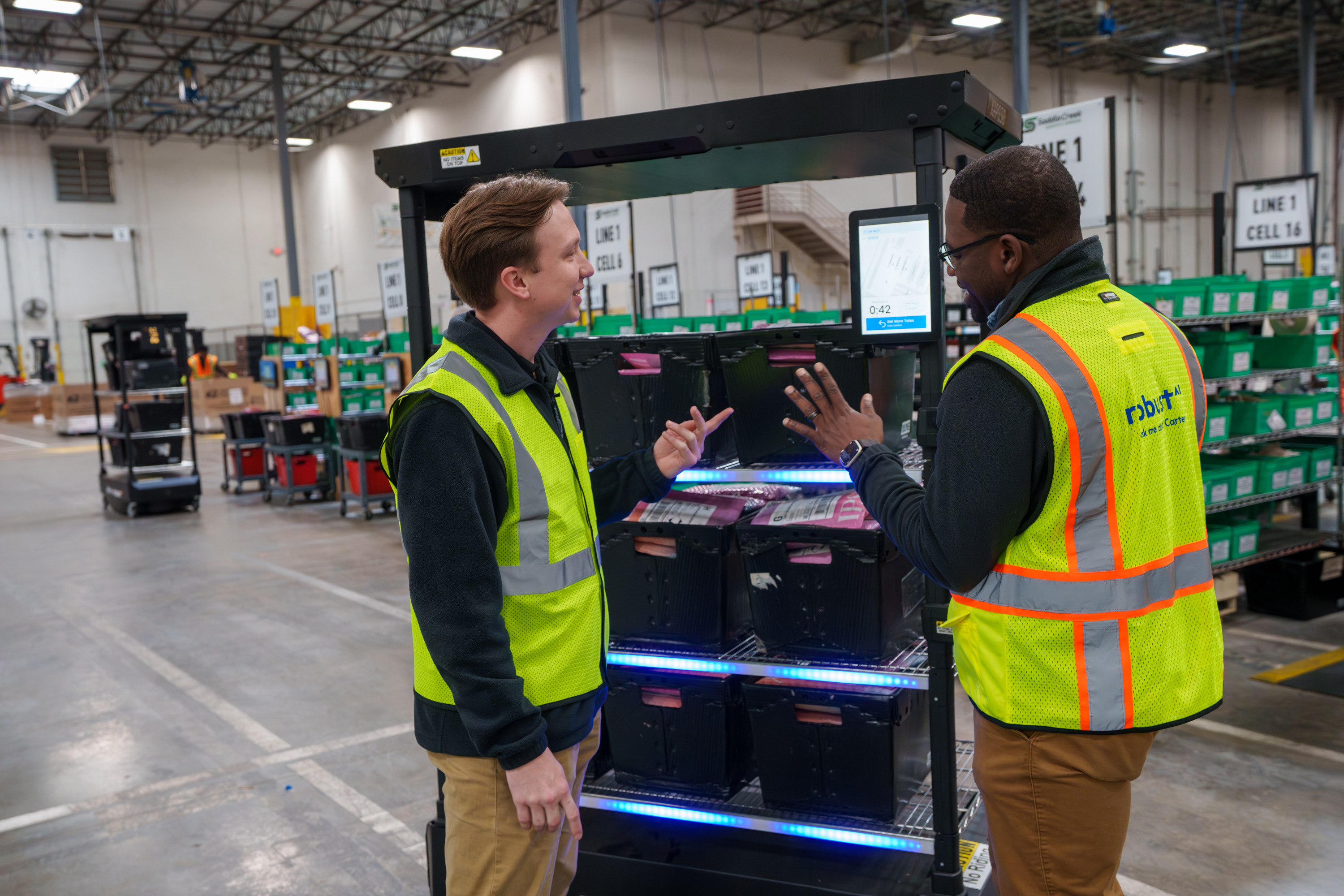
Robust AI's Carter robot complements human warehouse workers
Robust AI is betting that the future of warehouse automation isn't replacing humans, but physically collaborating with them. Their new mobile robot, Carter, uses holonomic wheels and force-sensitive handles to let workers push, pull, and guide it like a utility cart, effectively turning heavy lifting into a shared task. This approach sidesteps the failure mode of rigid industrial robots that block narrow aisles or stop dead when humans rush past. By targeting the vast majority of factories that lack expensive conveyor systems, they are offering a phased automation path for logistics environments where human agility still matters.
MIT News AI
 © TechCrunch AI
Agentsagents
Meta Muse AI Agent Now Places US Business Calls
Meta’s consumer agent Muse is rolling out voice calling to US businesses for paid subscribers, targeting the tedious task of customer service navigation. With over 10 million users, Meta is betting that AI’s infinite patience will replace human frustration with phone trees and hold times. The feature leverages improved voice mimicry to interact with receptionists, though many still hang up upon detecting non-human voices. This moves Muse from text-based assistance into active, autonomous execution of real-world tasks, marking a significant step toward mainstream consumer AI utility.
TechCrunch AI
 © TechCrunch AI
Agentsagents
Nectar launches AI agent for influencer outreach
Nectar’s Creator Agent automates the messy middle of influencer marketing by scanning 300 million profiles to find and vet creators. It goes beyond keyword matching, analyzing video content for brand safety and context rather than relying solely on keywords. The tool drafts personalized messages in a brand's voice, manages contracts, and tracks campaign performance on Instagram and TikTok. This marks a shift toward agentic workflows in marketing ops, though it competes with established players like Aspire. By handling logistics from contracts to gifting, it aims to replace manual spreadsheet management with autonomous relationship building. The system adapts tone for different social environments, ensuring brands sound appropriate whether posting on X or commenting on TikTok. This approach reduces the friction of scaling creator partnerships without losing human nuance.
TechCrunch AI