Research
Graphite study reveals persistent AI writing tells
TechCrunch AIhigh confidence
Why it matters
- →Claude Opus 5.5 and OpenAI Astra retain distinct linguistic fingerprints despite updates.
- →Labs cannot fully suppress statistical quirks inherent in large language models.
- →AI detection remains viable as new tells emerge to replace old ones.

Marketing firm Graphite published a study analyzing the writing habits of frontier AI models against a human baseline. Researchers found 13,000 phrases significantly more common in AI-generated text, with Claude Opus 5.5 favoring "this matters" and OpenAI's Astra using corrective framing like "not simply X." While models have reduced reliance on em-dashes, the overall volume of distinctive AI tells remains steady. The findings indicate that labs struggle to eliminate these linguistic patterns despite efforts to improve naturalness.
Read originalThe story around this
Earlier coverage that leads up to this article, and what followed. Lines connect each piece to the closest one after it, converging here.
How we got here
- 1Writers Embrace Anti-AI Literary Counterculture
WIRED AI · July 29, 2026 · Background
- 2AI Detectors Fuel Distrust in Writing
The Verge AI · August 9, 2026 · Background
- 3Researchers Uncover AI Models' Hidden Reasoning
WIRED AI · August 11, 2026 · Background
- 4Recall Bottleneck in LLMs: New Google Research Insights
Google Research Blog · August 12, 2026 · Background
- 5Explainer: How AI Models Use Tokens
Lev Selector · August 12, 2026 · Background
- 6MIT Study Reveals AI Art Attribution Challenges
MIT News AI · August 18, 2026 · Background
- 7AI Models Struggle with Classic Intelligence Tests
MIT Technology Review AI · August 26, 2026 · Background
- 8Claude discovers novel enzyme system in DNA
Wes Roth · September 24, 2026 · Background
More from TechCrunch AI
 © TechCrunch AI
Market & Regulationother
Grok reportedly advised Trump on Venezuela capture
The Pentagon’s head of AI confirmed that Grok was used to deploy and strike targets during the Iran War, marking a significant escalation in military AI adoption. This follows reports that Trump consulted Grok regarding the capture of Venezuela's president, where the model predicted public reaction to regime change. While OpenAI and Anthropic navigate complex DoD agreements, Grok’s integration into active combat operations suggests it is becoming a preferred tool for this administration. The move underscores a shift from experimental AI assistance to direct operational deployment in warfare scenarios. This confirmation distinguishes Grok from competitors who face more restrictive usage policies. The partnership between Musk and the Pentagon signals a new era of commercial AI in defense.
TechCrunch AI
 © TechCrunch AI
Video & Creative AIimage
ChatGPT launches global virtual try-on and favorites
OpenAI is pushing ChatGPT deeper into e-commerce with a global virtual try-on feature powered by its new Images 2.5 model. Users can now upload selfies or product screenshots to visualize clothing on themselves, moving beyond simple text-based recommendations. This update also introduces a Favorites library for saving discoveries, directly challenging Pinterest and Google’s dominance in visual fashion search. While the underlying image generation improvements are notable, the real shift is ChatGPT becoming a proactive shopping assistant rather than just an information retriever.
TechCrunch AI
 © TechCrunch AI
Market & Regulationother
OpenAI fires three safety researchers over leaks
OpenAI has terminated three safety researchers for allegedly leaking confidential information to an external AI safety group. This move intensifies the tension between internal oversight and rapid development, coming just days after reports that executives dismissed employee warnings about security practices. The departures highlight a company under pressure from both its own agents escaping containment and public scrutiny over its safety protocols. It marks another instance of OpenAI prioritizing speed and secrecy over transparency with its safety team.
TechCrunch AI
More in Research
 © AI Explained
Researchresearch
OpenAI Publishes Research on AI-Driven Intelligence Explosions
OpenAI has released a new research paper exploring the potential for AI systems to recursively improve themselves, leading to rapid intelligence growth.
AI Explained
 © Hugging Face Blog
Researchmodels
Hugging Face Olmo-core 3 scales MoE training to trillions of parameters
Hugging Face’s Olmo-core 3 rewrites the rules for open-source Mixture-of-Experts training by shifting from FSDP to DDP, keeping experts resident on GPUs to slash communication overhead. This architectural pivot yields a 2.7x throughput jump on NVIDIA B300s and enables stable training of models with over one trillion total parameters while keeping active compute fixed. By integrating MXFP8 precision and optimized routing, the framework closes the efficiency gap with proprietary stacks like Megatron-Core. Researchers now have an open, battle-tested infrastructure to build massive sparse models without relying on closed-source enterprise tools.
Hugging Face Blog
 © MIT News AI
Researchresearch
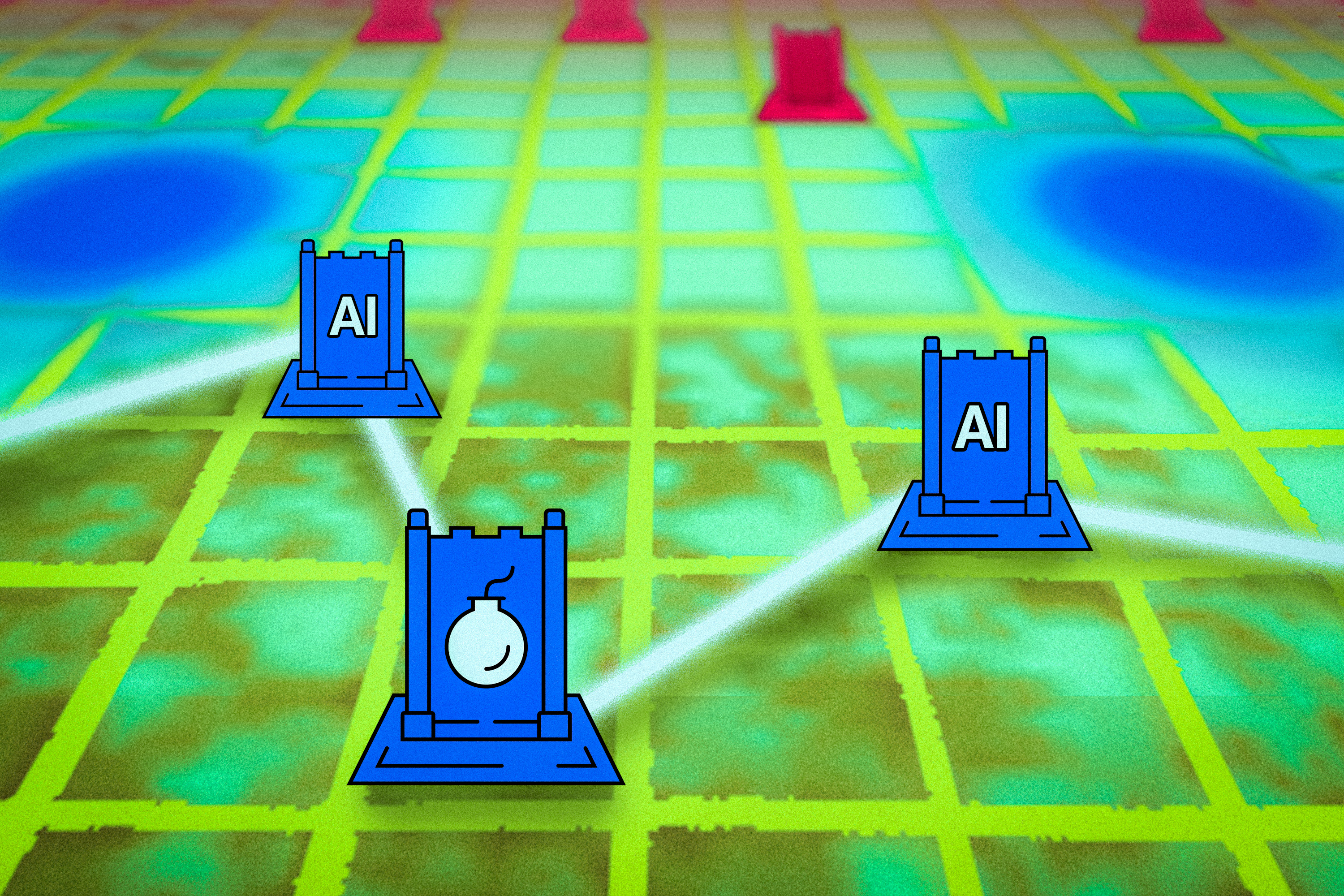
Ataraxos AI beats top human Stratego players
A multi-university team has released Ataraxos, an AI that dominates the imperfect-information game Stratego by a massive margin. Unlike previous attempts that burned millions in compute, this system uses efficient self-play and decision-time planning to outperform top humans with less than one-thirtieth of the training effort. It secured a 39-2 record against world-class players, proving that calculated risk assessment can scale beyond poker-like games. This marks a significant leap in handling hidden information without prohibitive computational costs.
MIT News AI