Coding Tools
GitHub Code Quality now rejects invalid coverage reports
GitHub Changeloghigh confidence
Why it matters
- →Eliminates silent failures where invalid coverage reports appeared successful but showed no data.
- →Forces developers to standardize on Cobertura XML, improving consistency across CI/CD pipelines.
- →Improves robustness by skipping bad lines instead of rejecting entire valid reports due to minor structural issues.
GitHub has updated its `upload-code-coverage` action within the Code Quality feature to strictly validate input formats. The system now requires reports to be in Cobertura XML format; non-compliant uploads will fail with a specific error message instead of silently succeeding without displaying data. Additionally, processing logic has been improved to handle minor structural issues and skip lines with missing data rather than discarding entire reports. This change is currently available on GitHub Enterprise Cloud and GitHub Team.
Read originalThe story around this
Earlier coverage that leads up to this article, and what followed. Lines connect each piece to the closest one after it, converging here.
How we got here
- 1GitHub REST API now manages code coverage rulesets
GitHub Changelog · September 18, 2026 · Related
- 2GitHub fixes CI failures for new branch coverage uploads
GitHub Changelog · October 1, 2026 · Related
More from GitHub Changelog
 © GitHub Changelog
Coding Toolscoding
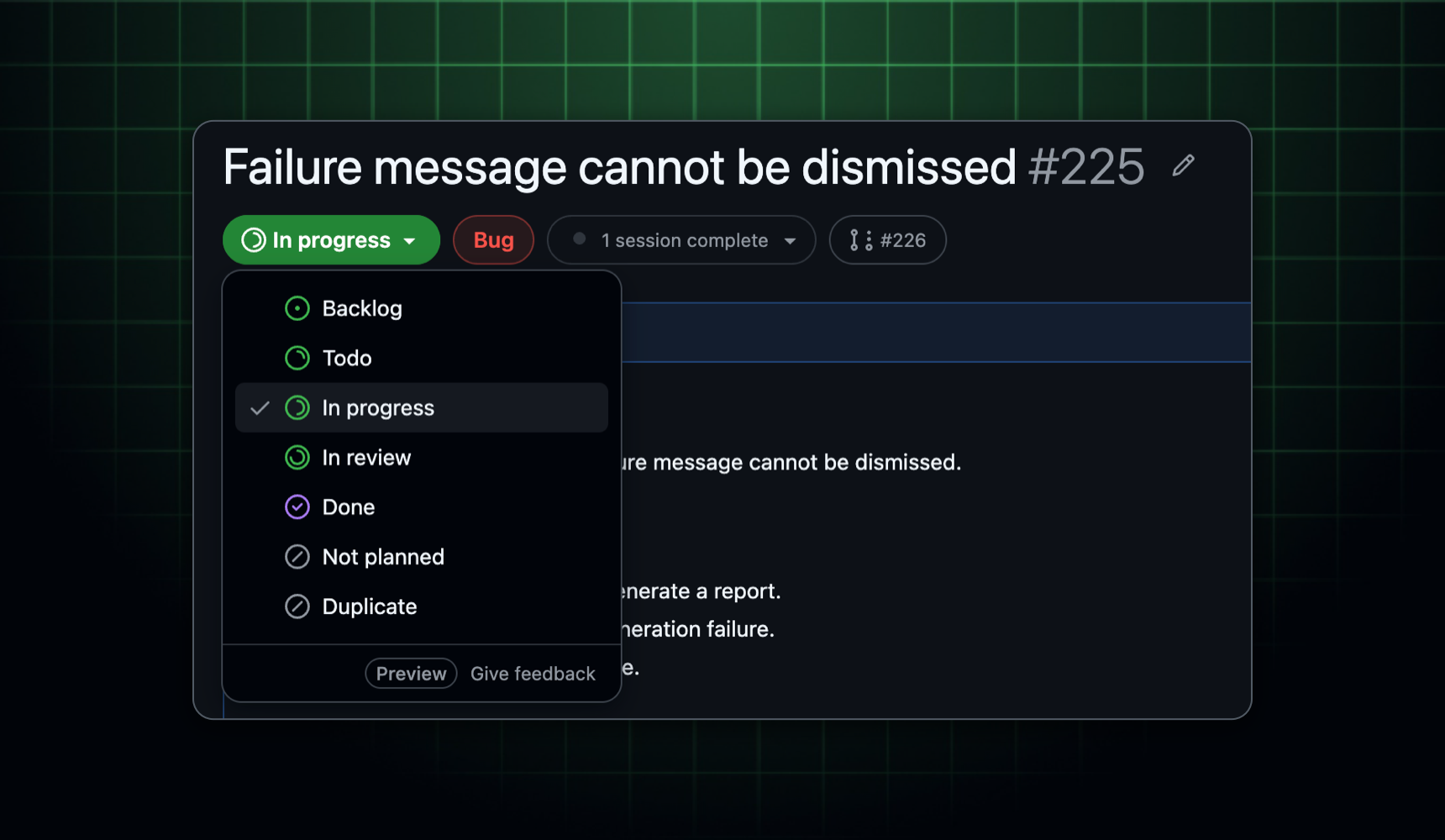
GitHub adds issue statuses and board views
GitHub is finally giving issues more granularity than just open or closed. The new public preview introduces specific statuses like In Review and Not Planned, which automatically update based on pull request states and agent assignments. This isn't just UI polish; it creates a structured data layer that agents and Copilot automations can now read and write to directly via API. Repository boards let teams visualize this workflow without leaving the issue tracker, bridging the gap between simple task lists and complex project management.
GitHub Changelog
 © GitHub Changelog
Coding Toolscoding
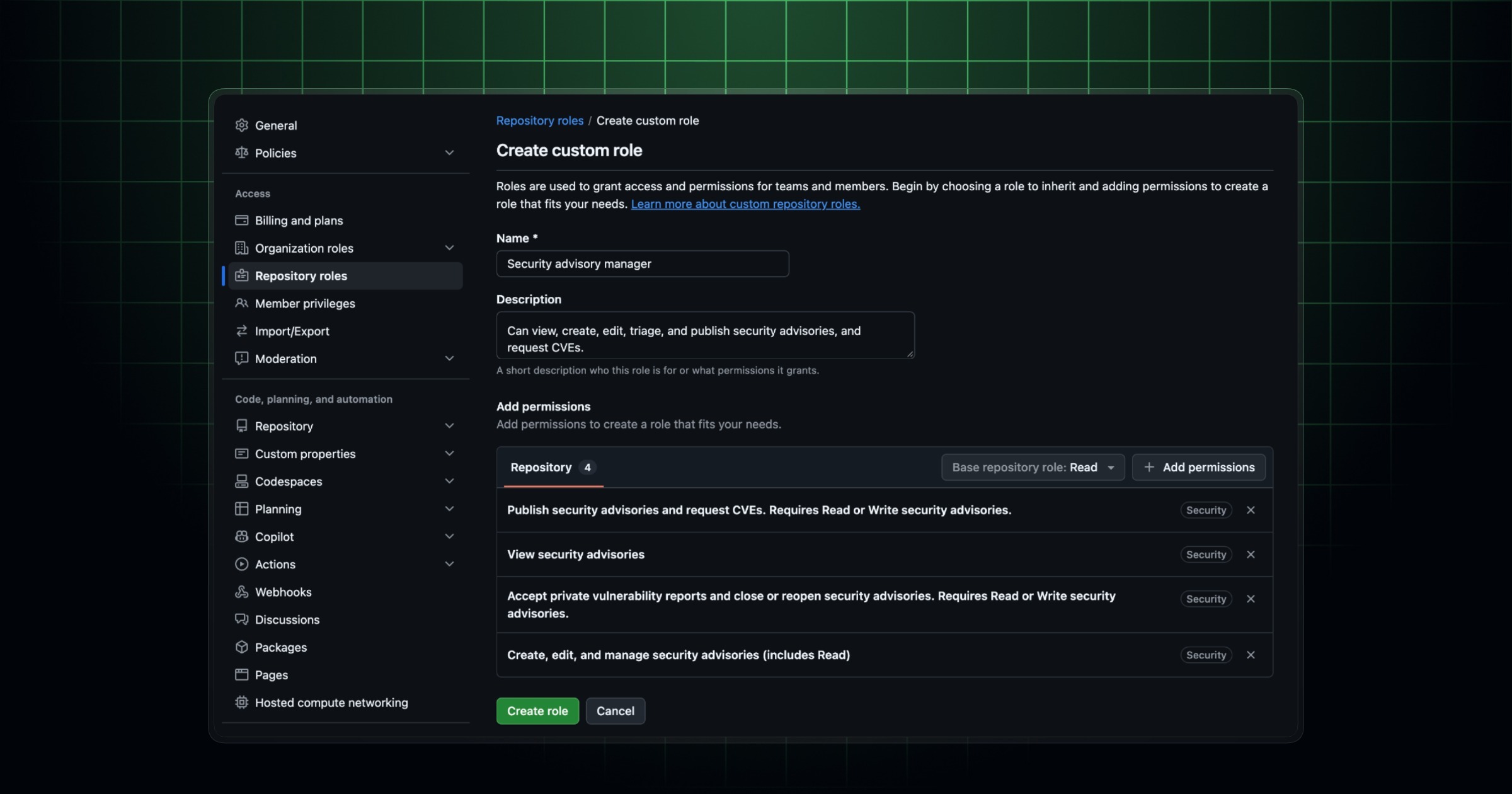
GitHub expands security advisory permissions
GitHub finally decouples security advisory management from full admin rights. By introducing granular custom repository roles, organizations can now grant specific teams access to private vulnerability reports without handing over the keys to the entire repo. This shift addresses a major friction point in secure software development, allowing for precise least-privilege access control. It moves GitHub closer to enterprise-grade security hygiene by separating code ownership from security oversight.
GitHub Changelog
 © GitHub Changelog
Coding Toolscoding
GHES 3.23 RC: On-device AI secret detection
GitHub Enterprise Server 3.23’s release candidate brings a critical security upgrade for air-gapped enterprises: on-device AI secret detection. Unlike cloud-based scanners, this self-contained model runs entirely on the appliance’s CPU, requiring no GPU or outbound connection to detect unstructured secrets. This capability effectively closes the gap between connected and isolated environments, allowing organizations with strict data sovereignty rules to maintain automated security hygiene. The update also expands Dependabot’s advisory coverage to six additional package ecosystems and introduces stricter OAuth token expiration defaults.
GitHub Changelog
More in Coding Tools
 © Hugging Face Blog
Coding Toolsagents
Microduck Sim2Real Obstacle Avoidance Tutorial
This tutorial bridges the gap between simulation and reality for quadruped navigation by decoupling balance from steering. By freezing a pre-trained walking policy in Isaac Lab and training a separate PPO controller on simulated Time-of-Flight sensor data, developers can achieve robust obstacle avoidance without retraining locomotion. The workflow leverages Newton’s raycasting for realistic depth sensing and supports deployment on real hardware with minimal code changes. It provides a practical blueprint for adding high-level navigation to existing low-level control policies.
Hugging Face Blog
Coding Toolscoding
llama.cpp b12642 fixes MoE weight copying bug
This release patches a critical correctness bug in multi-node Mixture-of-Experts inference where shared expert weights were copied partially, leading to stale data and incorrect outputs. The fix ensures all experts are properly replicated across nodes before graph execution, stabilizing large-scale distributed runs. While the binary lineup remains consistent with previous versions—supporting CUDA 13, ROCm 10.0, and various CPU/GPU backends—the underlying logic correction is vital for anyone running complex MoE models like Inkling2 on multi-node setups. It’s a quiet but necessary fix for reliability in advanced deployment scenarios.
llama.cpp Releases
Coding Toolscoding
llama.cpp b12643 fixes Qwen3 audio tail
This release quietly patches a critical inference bug in llama.cpp’s multimodal handling of Qwen3-Omni and Qwen3-ASR models. Previously, zero-padding artifacts introduced extra tokens that corrupted audio output, a subtle but fatal flaw for speech recognition tasks. The fix replaces magic numbers with explicit token mapping logic, ensuring the model processes only valid audio frames. While not a new feature, it stabilizes one of the most popular open-source multimodal pipelines for developers relying on Qwen’s audio capabilities.
llama.cpp Releases