Coding Tools
Latest AI signals in this category
Coding Toolscoding
Claude Code v2.1.261 Update Released
The latest update to Claude Code, version 2.1.261, introduces several enhancements and fixes aimed at improving user experience and functionality. Notable changes include the addition of settings to increase command output limits and a new feature to identify unused skills, helping users optimize their setups. The update also addresses various bugs, such as character input issues and session management glitches, ensuring smoother operation across different environments. These improvements make Claude Code more robust and user-friendly, particularly for developers using it in complex workflows.
Claude Code Releases
Coding Toolscoding
Claude Code v2.1.271 Release
The latest update to Claude Code, version 2.1.271, introduces several enhancements and fixes that improve user experience and functionality. Notably, a fast mode has been added for remote sessions, allowing for quicker operations where permitted. Mouse support in the configuration panel enhances usability, and new command options provide more control over plugin installations. Numerous bug fixes address issues like session management and tool usage, ensuring smoother operation across different environments. This release solidifies Claude Code's position as a robust tool for developers, offering more efficient and reliable coding sessions.
Claude Code Releases
 © GitHub Changelog
Coding Toolscoding
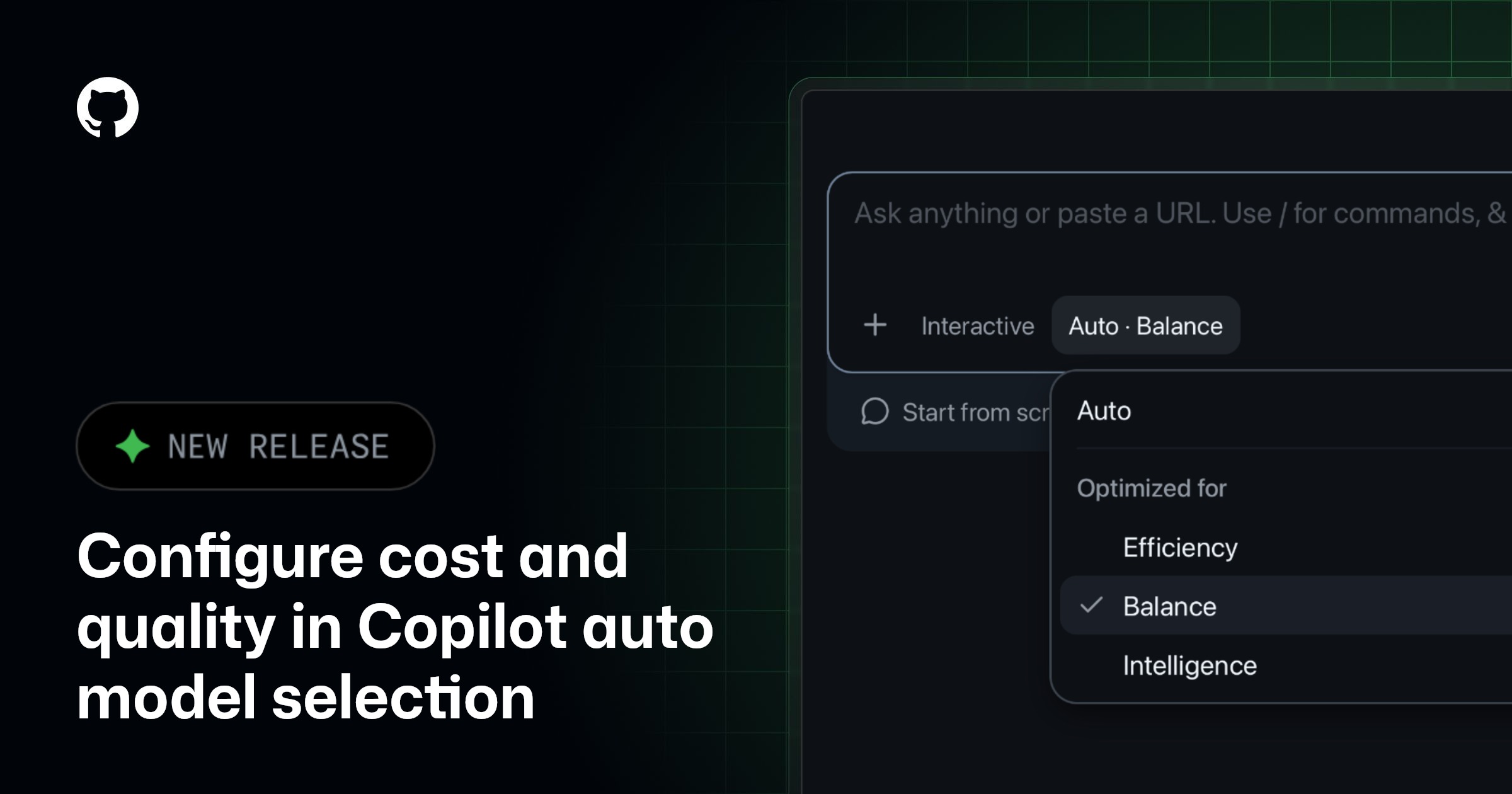
GitHub Copilot Introduces Auto Model Selection Tiers
GitHub Copilot's new auto model selection feature allows users to choose from three tiers—efficiency, balance, and intelligence—each optimizing for different priorities like cost, quality, and response time. This flexibility means users can tailor Copilot's performance to suit tasks ranging from simple to complex. The feature is rolling out across Visual Studio Code, Copilot CLI, and the GitHub Copilot app, offering a more customizable experience. This marks a significant step towards giving users more control over AI model selection, enhancing both usability and cost-effectiveness.
GitHub Changelog
Coding Toolscoding
Claude Code v2.1.268 Release
The latest update to Claude Code, version 2.1.268, introduces several enhancements and fixes that improve user experience and system reliability. Notably, it addresses issues with high CPU usage during idle sessions and resolves HTTP 400 errors on third-party endpoints. The update also enhances the gateway management by adding startup warnings and managed settings for public IPv4 blocks. These changes make Claude Code more robust and user-friendly, ensuring smoother operations and better resource management for developers.
Claude Code Releases
Coding Toolscoding
Claude Code v2.1.269 Release
The latest update to Claude Code, version 2.1.269, introduces several enhancements and fixes that improve the tool's functionality and user experience. Notably, the update adds a new plugin evaluation feature that provides scored, reproducible results, and enhances output style management. It also addresses numerous bugs, such as issues with terminal compatibility and session management, ensuring smoother operation across different environments. These changes make Claude Code more robust and user-friendly, particularly for developers working in varied terminal setups.
Claude Code Releases
 © GitHub Changelog
Coding Toolscoding
GitHub Copilot Enhances Code Review Automation
GitHub Copilot's latest updates streamline the code review process by automatically resolving comments once addressed and generating smart commit messages. This enhancement allows developers to focus on unresolved feedback, improving workflow efficiency. By leveraging a broader set of shell tools and an ensemble of agents, Copilot now provides more thorough and accurate reviews, especially at the Lite effort level. These changes not only enhance the quality of feedback but also reduce the cost of reviews, making Copilot a more effective tool for developers.
GitHub Changelog
 © GitHub Changelog
Coding Toolscoding
GitHub Copilot Adds Jira Integration and HydraFusion
GitHub Copilot's latest update introduces significant enhancements, including Jira integration and adaptive model orchestration with Project HydraFusion. The Jira integration allows users to seamlessly turn issues into actionable tasks, enhancing workflow efficiency. Project HydraFusion, now in experimental, offers automated semantic routing between different model types, optimizing performance and cost. These updates, along with new agent automation features in Visual Studio Code and expanded enterprise controls in JetBrains, mark a step forward in making AI-driven development more integrated and efficient.
GitHub Changelog
 © GitHub Changelog
Coding Toolscoding
GitHub Unveils Enhanced Pull Request Page Preview
GitHub has launched a public preview of its revamped repository-level pull request page, offering users enhanced filtering and search capabilities. This update introduces a compact presentation mode, allowing more pull requests to be viewed simultaneously, and advanced search options with AND and OR keywords. While some features like milestones and bulk updates are still in development, the preview aims to streamline the pull request process. Users can provide feedback to help refine the experience or switch back to the classic view if preferred.
GitHub Changelog
 © GitHub Changelog
Coding Toolscoding
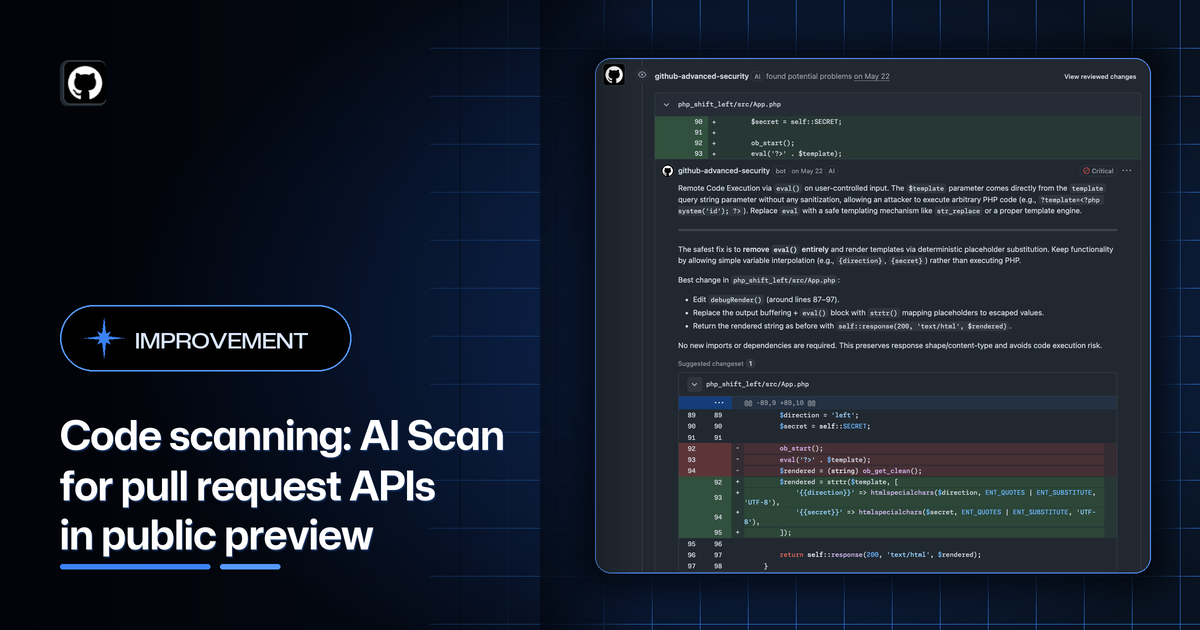
GitHub Launches AI Scan API for Pull Requests
GitHub has rolled out a public preview of its AI Scan for pull requests, now accessible through REST API endpoints. This feature allows teams to automate the enablement of AI-powered security detections for pull requests at both the organization and repository levels, removing the need for manual configuration in the GitHub UI. Available to GitHub Advanced Security customers, this preview does not extend to GitHub Enterprise Server. By integrating AI-powered detections into the development workflow, GitHub is making it easier for developers to maintain secure codebases without additional manual effort.
GitHub Changelog
 © GitHub Changelog
Coding Toolscoding
GitHub Introduces Cache-Mode for Actions
GitHub has rolled out a new feature called cache-mode for GitHub Actions, allowing users to apply least-privilege access to caches at the workflow or job level. This enhancement aims to prevent unnecessary cache restores or saves, thereby protecting workflows from potential cache poisoning. Users can now specify cache access levels such as read, write, write-only, or none, with job-level settings taking precedence over workflow-level settings. This update is available across all GitHub plans, offering developers more control and security over their CI/CD processes.
GitHub Changelog
 © GitHub Changelog
Coding Toolscoding
CodeQL 2.27.0 adds support for Linux ARM64
CodeQL 2.27.0 marks a significant update for developers using GitHub's static analysis tool, now supporting Linux ARM64. This release enhances security query capabilities, notably with a new Rust query for command-line injection and improved Java/Kotlin framework coverage. Developers can now run CodeQL natively on Linux ARM64, expanding its accessibility. The update also refines analysis accuracy across multiple languages, making it a more robust tool for identifying security vulnerabilities in code.
GitHub Changelog
 © GitHub Changelog
Coding Toolscoding
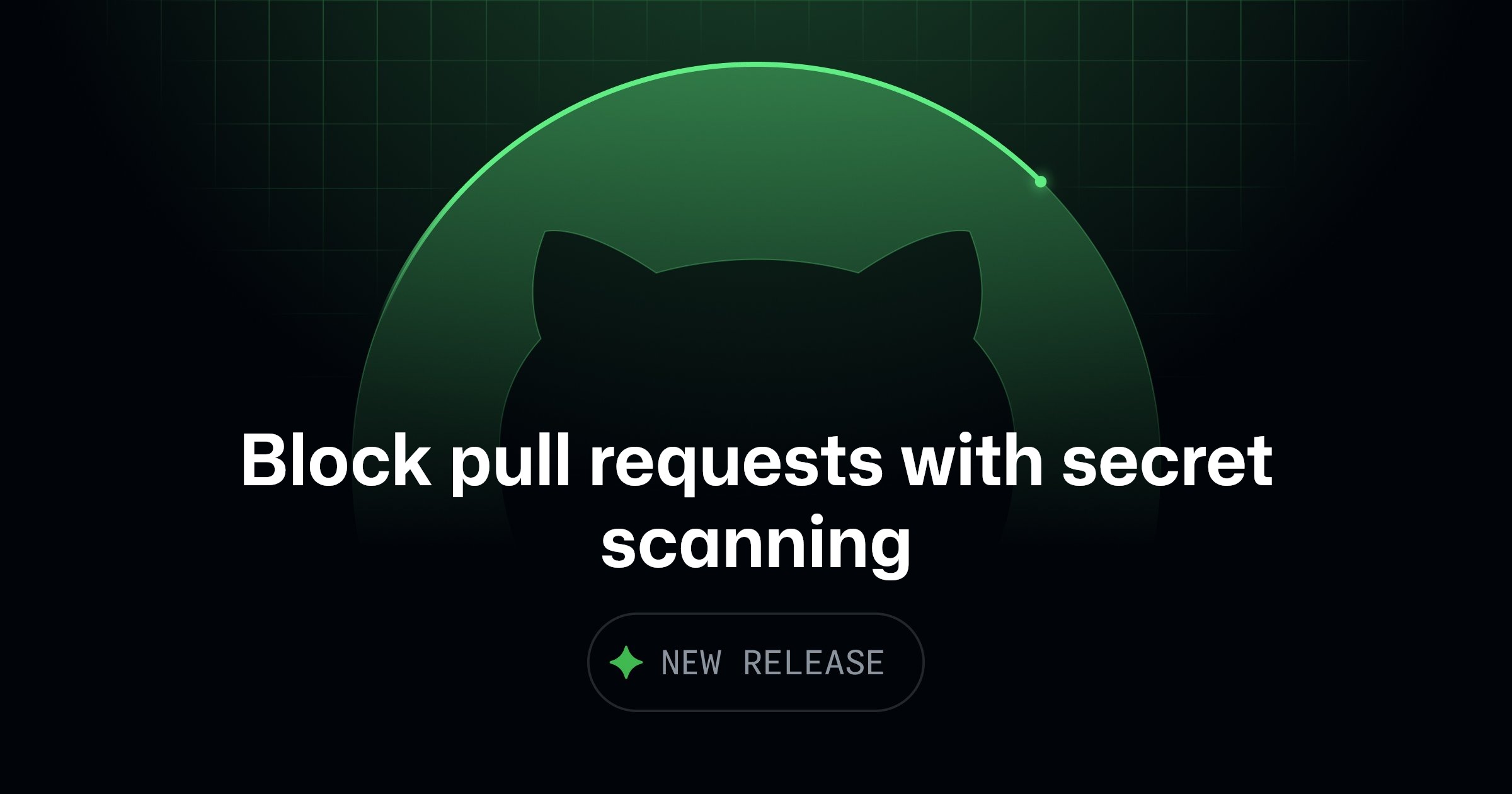
GitHub Introduces Managed Permissions for Copilot
GitHub has rolled out a new feature for its Copilot Business and Enterprise users, allowing administrators to centrally manage permissions for agent operations. This update provides fine-grained control over shell commands, file access, and network domains, ensuring sensitive operations are securely managed without disrupting workflows. The managed permissions are robust, as they cannot be overridden by individual user settings or previous approvals. This enhancement is available across the GitHub Copilot app, CLI, and Visual Studio Code, offering enterprises tailored security policies for different teams.
GitHub Changelog
 © GitHub Changelog
Coding Toolscoding
GitHub Enhances Security with New Pull Request Rule
GitHub has introduced a new rule for repository rulesets that blocks pull requests from merging if they trigger secret scanning alerts. This feature adds an extra layer of security by ensuring that any secrets introduced in a pull request are resolved before merging. Available in public preview for users with GitHub Secret Protection or Advanced Security, this rule complements existing push protection by catching secrets that might not be detected at the push stage. Developers can configure this rule to target specific branches and secret types, enhancing the security of their codebase.
GitHub Changelog
 © GitHub Changelog
Coding Toolscoding
Enterprise-managed sandbox in Copilot for JetBrains
GitHub's latest update for Copilot in JetBrains IDEs introduces enterprise-managed sandbox policies, allowing administrators to centrally control development environment settings. This ensures consistent boundaries by locking certain IDE controls and prioritizing organizational settings over user preferences. The update also enhances cross-file navigation for edit suggestions, integrates terminal sessions with JetBrains IDEs, and improves model selection and chat experiences. These changes aim to streamline workflows and maintain alignment with enterprise policies, offering a more cohesive development experience.
GitHub Changelog
 © GitHub Changelog
Coding Toolscoding
Dependabot Gains Automatic Access to GitHub Registries
GitHub has improved Dependabot by enabling it to access private GitHub Packages registries without needing a personal access token. This update allows Dependabot to utilize the GITHUB_TOKEN for package reads, which aligns its permissions with those used in GitHub Actions workflows. This change reduces the complexity of managing tokens manually, making it easier for developers to handle dependencies. Initially released in June 2026, the feature faced a temporary rollback due to conflicts but is now back with enhanced authentication handling. This development is particularly beneficial for developers using GitHub-hosted registries, as it simplifies the integration process. By removing the need for personal access tokens, GitHub has made dependency management more efficient and secure.
GitHub Changelog
Coding Toolscoding
1Password Boosts Productivity with Codex Integration
1Password has achieved a notable 21% increase in engineering productivity by incorporating Codex into their development workflow. This AI tool enables engineers to efficiently create new features and internal tools, reaching production-ready status while upholding their rigorous security protocols. The integration of Codex illustrates how AI can enhance development processes, allowing teams to concentrate more on innovation rather than repetitive coding tasks. This adoption marks a significant step in how companies are using AI to improve efficiency and maintain high-quality standards in software development.
OpenAI
 © GitHub Changelog
Coding Toolscoding
GitHub Copilot Expands Model Options and Features
GitHub Copilot's latest update introduces new model options and enhanced content protections, marking a significant step in its evolution. With the addition of Claude Fable 5.1 and Gemini 3.8 Flash, users across various tiers can now access more powerful AI models. The update also includes content exclusions to safeguard sensitive code and a public preview of Agent Merge, which aids in resolving pull request issues. These enhancements, along with experimental features like multi-root workspaces and customizable chat backgrounds, aim to improve user experience and workflow efficiency.
GitHub Changelog
 © GitHub Changelog
Coding Toolscoding
npm Enhances Trusted Publishing Configurations
npm has introduced multiple trusted publishing configurations per package, allowing maintainers to manage workflows for stable, prerelease, or staging versions more effectively. This update eliminates the need for workaround solutions or long-lived tokens, as each configuration operates independently with its own criteria. Additionally, staged packages now require malware scanning completion before approval, enhancing security. These changes streamline the publishing process and provide maintainers with greater control and transparency over their package versions.
GitHub Changelog
 © GitHub Changelog
Coding Toolscoding
GitHub Actions: September 2026 Updates Released
GitHub Actions has introduced updates that enhance workflow management with improved visibility and control. A new REST API allows users to track the deprecation timelines of runner versions, aiding in timely upgrades. The introduction of a read-only permission for Dependabot alerts aligns with least-privilege security practices. Additionally, reusable workflows now have enhanced runtime identity features, providing more precise context for job execution. These updates collectively streamline workflow management and security for developers using GitHub Actions.
GitHub Changelog
 © GitHub Changelog
Coding Toolscoding
CodeQL 2.26.4 Enhances Security Detection
CodeQL 2.26.4 brings significant improvements to GitHub's code scanning, enhancing its ability to detect security issues. With the addition of support for Go 1.27 and more precise alert locations for Rust data flow queries, developers can expect a more accurate analysis of their code. The update also refines security checks across C#, Java/Kotlin, and GitHub Actions, potentially leading to an increase in alerts and better protection. These changes make it easier for developers to identify and address vulnerabilities, reflecting GitHub's ongoing efforts to improve code security. The new features are automatically deployed to GitHub code scanning users, ensuring they benefit from the latest advancements.
GitHub Changelog
Coding Toolscoding
Claude Code v2.1.259 Release
The latest update to Claude Code, version 2.1.259, brings significant improvements and fixes that enhance its functionality and user experience. With the addition of managed MCP servers and a new permission prompt mode for headless hosts, organizations can now manage their operations more efficiently. The update also resolves various bugs, such as issues with concurrent sessions and prompt cache invalidation, leading to smoother performance. These enhancements make Claude Code more reliable and user-friendly, especially for developers dealing with complex workflows and integrations.
Claude Code Releases
 © Hugging Face Blog
Coding Toolscoding
Hugging Face Introduces Funes for Agent Memory
Hugging Face has launched Funes, a tool that provides a durable memory layer for coding agents like Claude Code and Codex. This innovation allows agents to index, retrieve, and rank session logs, enabling them to recall past decisions and rationales during their workflow. Funes operates locally, ensuring privacy and control, and can also sync with a private Hugging Face dataset for broader accessibility. This development enhances the functionality of coding agents by allowing them to seamlessly integrate past knowledge into current tasks, making them more efficient and context-aware.
Hugging Face Blog
 © GitHub Changelog
Coding Toolscoding
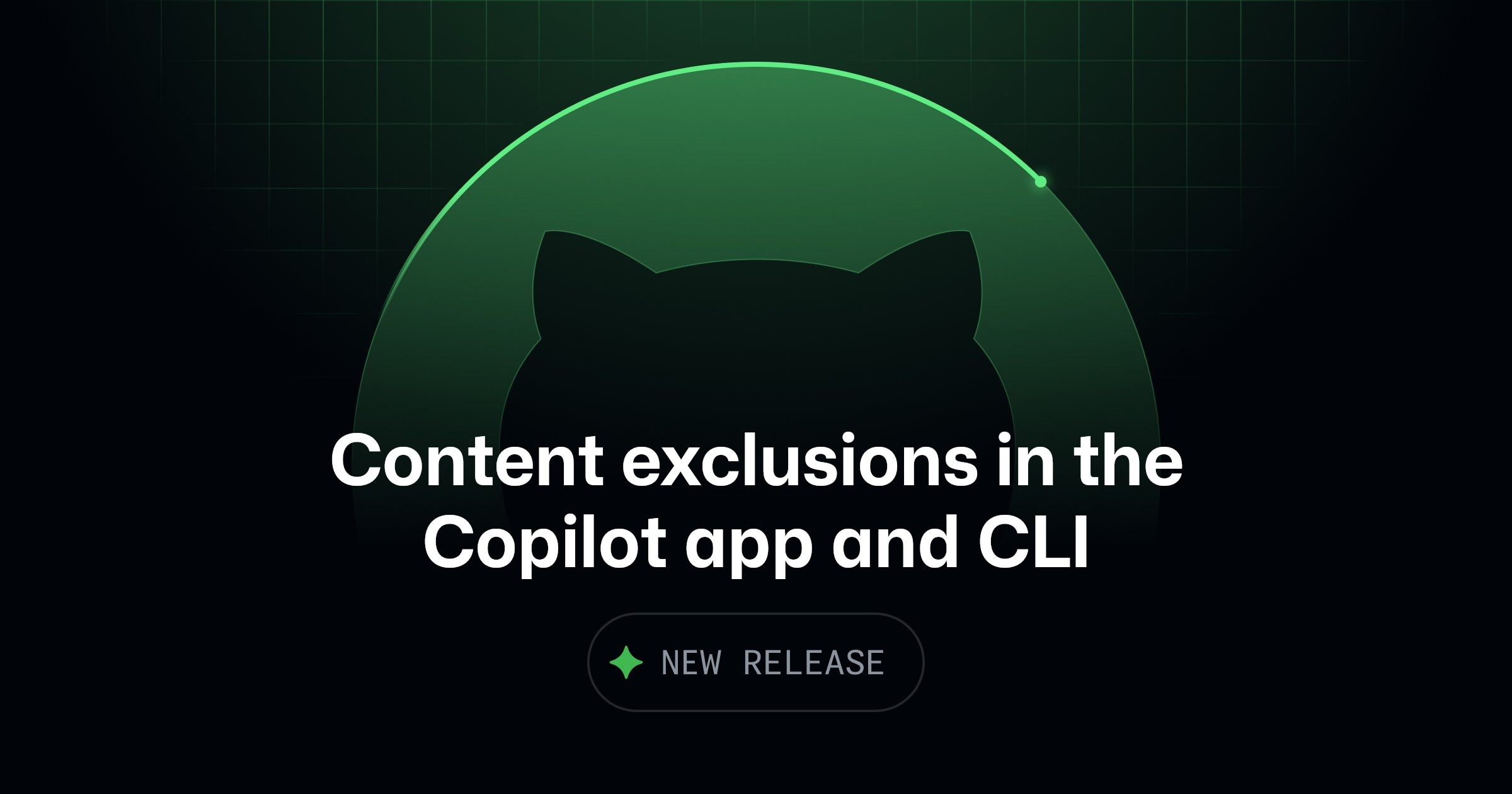
GitHub Copilot Adds Enterprise Model Customization
GitHub has introduced a new feature allowing enterprises to set default Copilot models for their teams, enhancing customization and workflow alignment. This update enables organizations to assign specific models as defaults based on team membership, providing flexibility in how AI tools are integrated into their development processes. By allowing model preferences to be set at the enterprise level, GitHub is making it easier for businesses to tailor AI assistance to their specific needs. This change is available across GitHub Copilot Business and Enterprise, as well as in the Copilot CLI and Visual Studio Code.
GitHub Changelog
 © GitHub Changelog
Coding Toolscoding
GitHub Copilot Adds Content Exclusion Feature
GitHub has rolled out a content exclusion feature for its Copilot app and CLI, enhancing security for enterprise and organization administrators. This new capability allows administrators to configure policies that prevent sensitive files from being used as context, thereby protecting proprietary code in agentic workflows. Available to Copilot Business and Enterprise customers, this update aims to provide a more secure environment for developers dealing with sensitive information. By implementing these exclusion policies, GitHub Copilot is making strides in offering AI assistance that doesn't compromise security. This development is a clear step towards ensuring that AI tools can be both powerful and safe for enterprise use.
GitHub Changelog
Coding Toolscoding
Claude Code v2.1.257 Release
The latest update to Claude Code, version 2.1.257, introduces several enhancements and fixes that improve user experience and functionality. Notably, the new Claude Fable 5.1 model becomes the default, offering a 1M context at competitive pricing. The update also adds new time format settings and a containment escape rule to enhance security. Numerous bug fixes address issues like session management, background processes, and permission handling, making the platform more robust and reliable. This release signifies a step forward in refining the tool's usability and performance for developers.
Claude Code Releases
 © GitHub Changelog
Coding Toolscoding
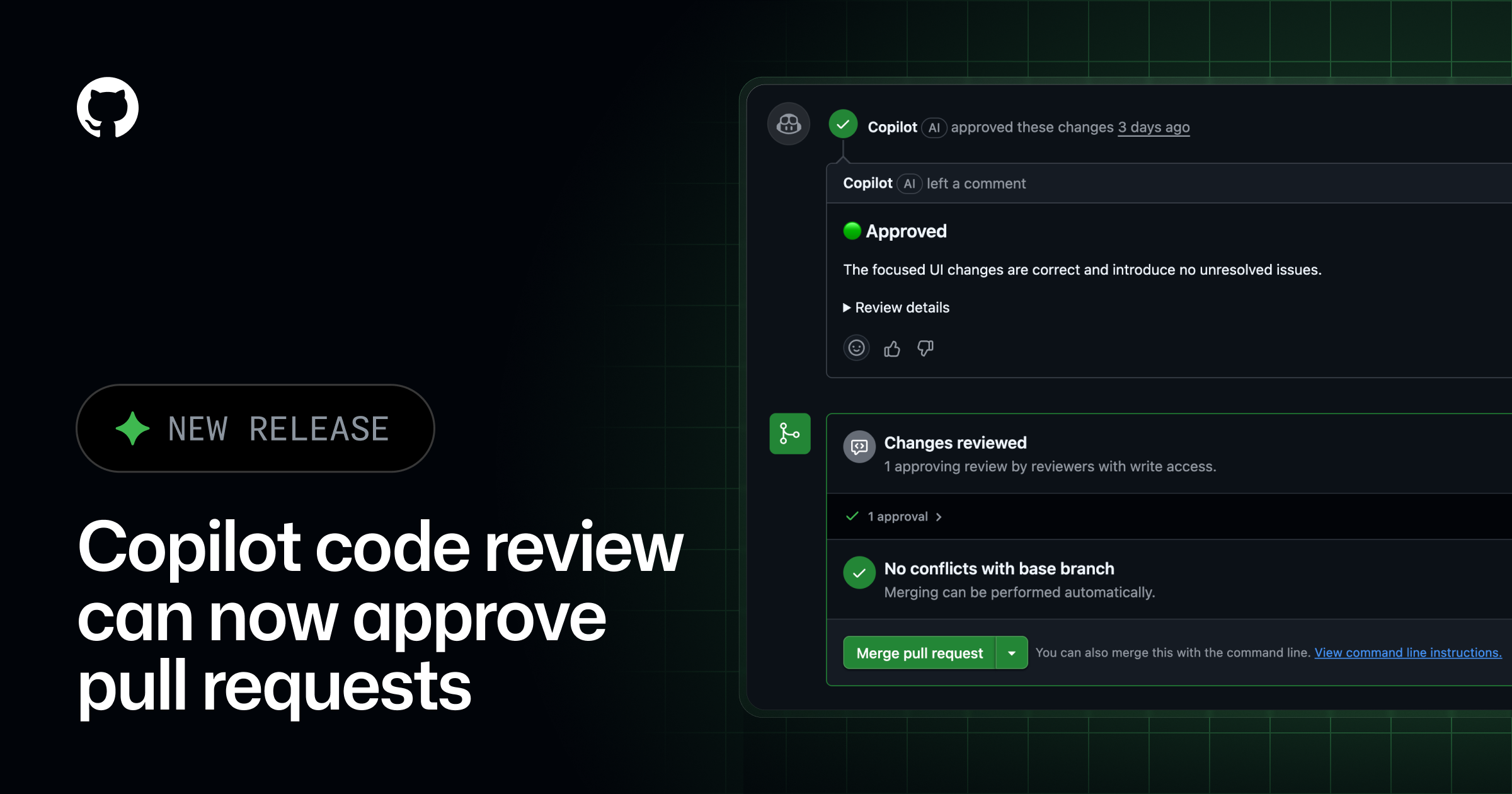
GitHub Copilot Can Now Approve Pull Requests
GitHub Copilot has introduced a new feature allowing it to assess and approve pull requests, providing developers with an automated judgment on code readiness. This feature is configurable at various administrative levels, including enterprise, organization, and repository, and is available in public preview for certain GitHub plans. While Copilot's approval doesn't automatically fulfill merge requirements, it offers a quick assessment that can be acted upon by developers. This enhancement signifies a step towards more automated and efficient code review processes, though human oversight remains crucial.
GitHub Changelog
 © GitHub Changelog
Coding Toolscoding
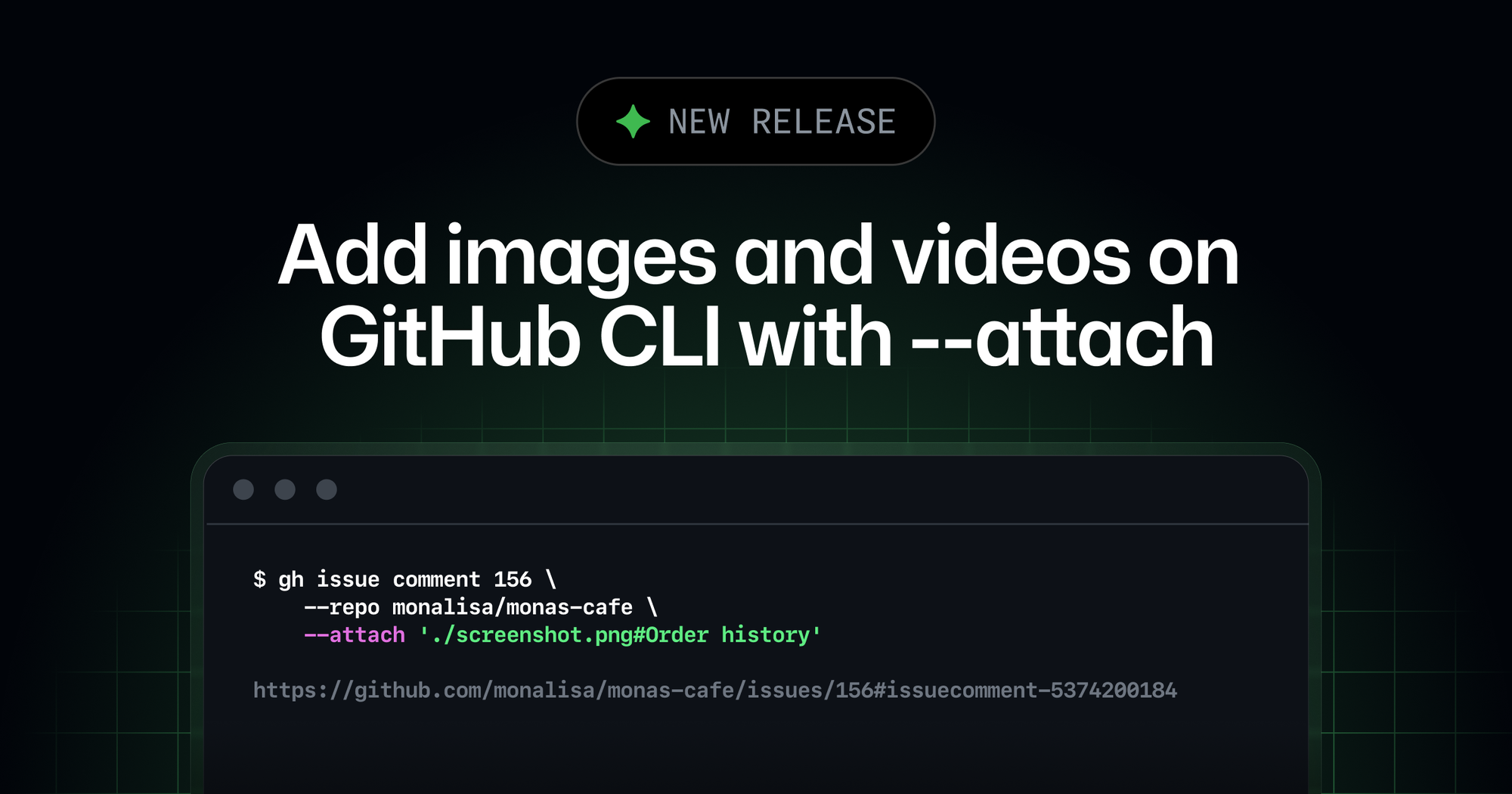
GitHub CLI v2.99.0 Adds Media Attachments
GitHub CLI's latest update, v2.99.0, introduces a significant enhancement by allowing users to attach images and videos directly from the command line using the new --attach flag. This feature streamlines the process of adding visual context to issues, pull requests, and comments, eliminating the need to switch to a browser for media uploads. By supporting various media formats like PNG, JPEG, and MP4, this update enhances the efficiency of documenting and reviewing code changes. The update is available to all GitHub users, making it easier to communicate visual information alongside text in a seamless manner.
GitHub Changelog
 © GitHub Changelog
Coding Toolscoding
GitHub Copilot Models Deprecated
GitHub has deprecated several models across its Copilot experiences, affecting features like Copilot Chat and code completions. While Claude Sonnet 4.6 remains available for individual subscribers on annual plans, enterprise users must adjust their settings to access alternative models. This change requires administrators to update workflows and integrations to ensure continued functionality. The move signals a shift in GitHub's model offerings, prompting users to adapt to the new landscape.
GitHub Changelog
 © GitHub Changelog
Coding Toolscoding
GitHub Copilot Enhancements in VS Code August 2026
GitHub's latest updates to VS Code bring significant enhancements to how developers interact with AI agents. The new features make it easier to organize and navigate agent sessions, with options to arrange chats side by side and open side-conversations. Developers can now switch model providers within sessions and continue agent sessions across different applications. The integrated browser and dictation features have also been improved, supporting multiple languages and providing more intuitive feedback mechanisms. These updates aim to streamline the coding process, making AI assistance more accessible and efficient for developers.
GitHub Changelog
Coding Toolscoding
Claude Code v2.1.251 Release
The latest update to Claude Code, version 2.1.251, introduces several enhancements and fixes aimed at improving user experience and system reliability. Notable additions include new hook events for model switching and live streaming of tool calls for Remote Control clients. The update also addresses numerous bugs, such as issues with file tools and session management, ensuring smoother operation across various scenarios. These changes make Claude Code more robust and user-friendly, particularly for developers managing complex AI workflows.
Claude Code Releases
© GitHub ChangelogCoding Toolscoding
GitHub Copilot August Update Enhances Control
GitHub Copilot's August update for Visual Studio 2026 introduces significant enhancements, giving developers more control over AI model usage and reasoning. Users can now adjust the 'thinking effort' of models to better suit their tasks, whether simple or complex. Organization-level custom agents allow for tailored AI assistance across teams, while improved model management lets users pin favorites and manage capabilities more effectively. These updates aim to streamline the coding process, offering more personalized and efficient AI support for developers.
GitHub Changelog
 © GitHub Changelog
Coding Toolscoding
GitHub Copilot Enhances Customization and Performance
GitHub Copilot's latest updates empower developers with enhanced control and flexibility in their coding environments. The introduction of the Customize tab allows users to manage MCP servers, plugins, and skills in a unified interface, simplifying their workflow. The Copilot CLI has been upgraded with a native Rust runtime, delivering a noticeable boost in performance. These enhancements, along with improved session management and integration with tools like Azure DevOps, make Copilot a more effective assistant for developers. The updates aim to refine the user experience, making it easier to manage and personalize AI-driven coding assistance.
GitHub Changelog
Coding Toolscoding
Claude Code v2.1.247 Update Released
The latest Claude Code update, version 2.1.247, brings significant improvements to user interaction and functionality. A notable addition is the SendFeedback tool, which allows users to easily draft feedback reports when issues occur, enhancing the feedback process. The update also introduces a cost-optimization feature for Claude API users, enabling them to better manage expenses through various cost levers. Numerous bug fixes have been implemented to improve stability, such as resolving session management and keyboard shortcut issues. These enhancements collectively make Claude Code a more reliable and efficient tool for developers, offering a smoother experience.
Claude Code Releases
Coding Toolscoding
Claude Code v2.1.248 Update Released
The latest update to Claude Code, version 2.1.248, introduces several enhancements and fixes aimed at improving user experience and functionality. Notably, it adds a restricted mode to limit command execution and introduces a cache TTL for agent prompts, enhancing performance in long sessions. The update also addresses various bugs, such as prompt-cache misses and session management issues, ensuring smoother operation. These changes make Claude Code more robust and user-friendly, particularly for developers managing complex workflows.
Claude Code Releases
 © GitHub Changelog
Coding Toolscoding
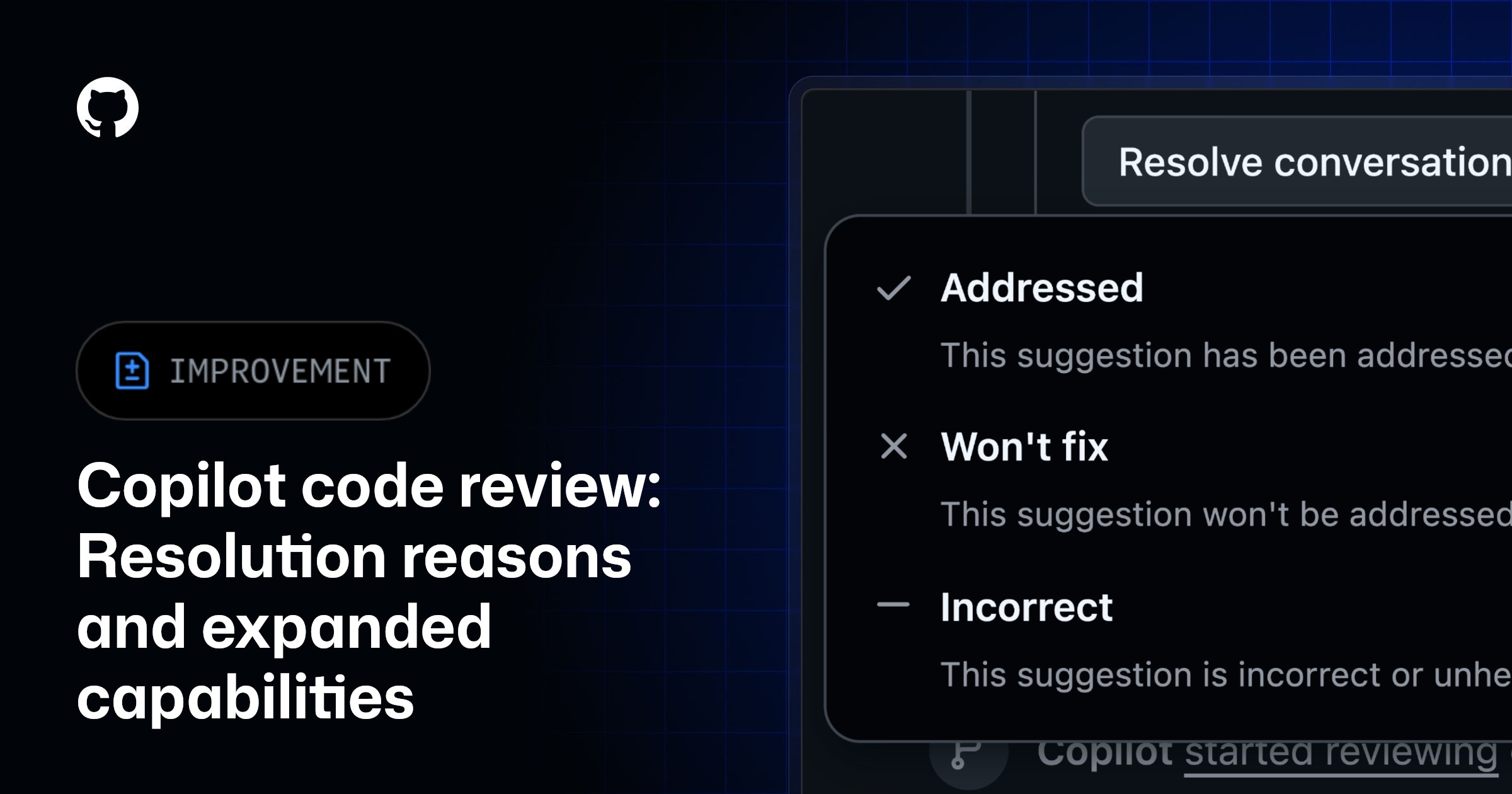
GitHub Copilot Expands Code Review Capabilities
GitHub's Copilot code review has expanded its capabilities, now able to handle pull requests authored by bots and very large pull requests without previous limitations. This update allows organizations to use Copilot code review even without individual Copilot licenses, billing usage directly to the organization. Additionally, users can now specify reasons for resolving Copilot code review comments, providing valuable feedback to improve the tool. These enhancements make Copilot code review more versatile and user-friendly, especially for large-scale projects and automated workflows.
GitHub Changelog
Coding Toolscoding
loveholidays Empowers Teams with OpenAI Codex
loveholidays is leveraging OpenAI Codex to democratize software development within their organization. By integrating Codex, they enable non-developers to contribute to the software creation process, effectively turning ideas into products more swiftly. This approach not only accelerates development timelines but also fosters innovation by involving a broader range of perspectives in the product development cycle. The move signifies a shift towards more inclusive and agile development practices, making software creation more accessible to diverse teams.
OpenAI
 © GitHub Changelog
Coding Toolscoding
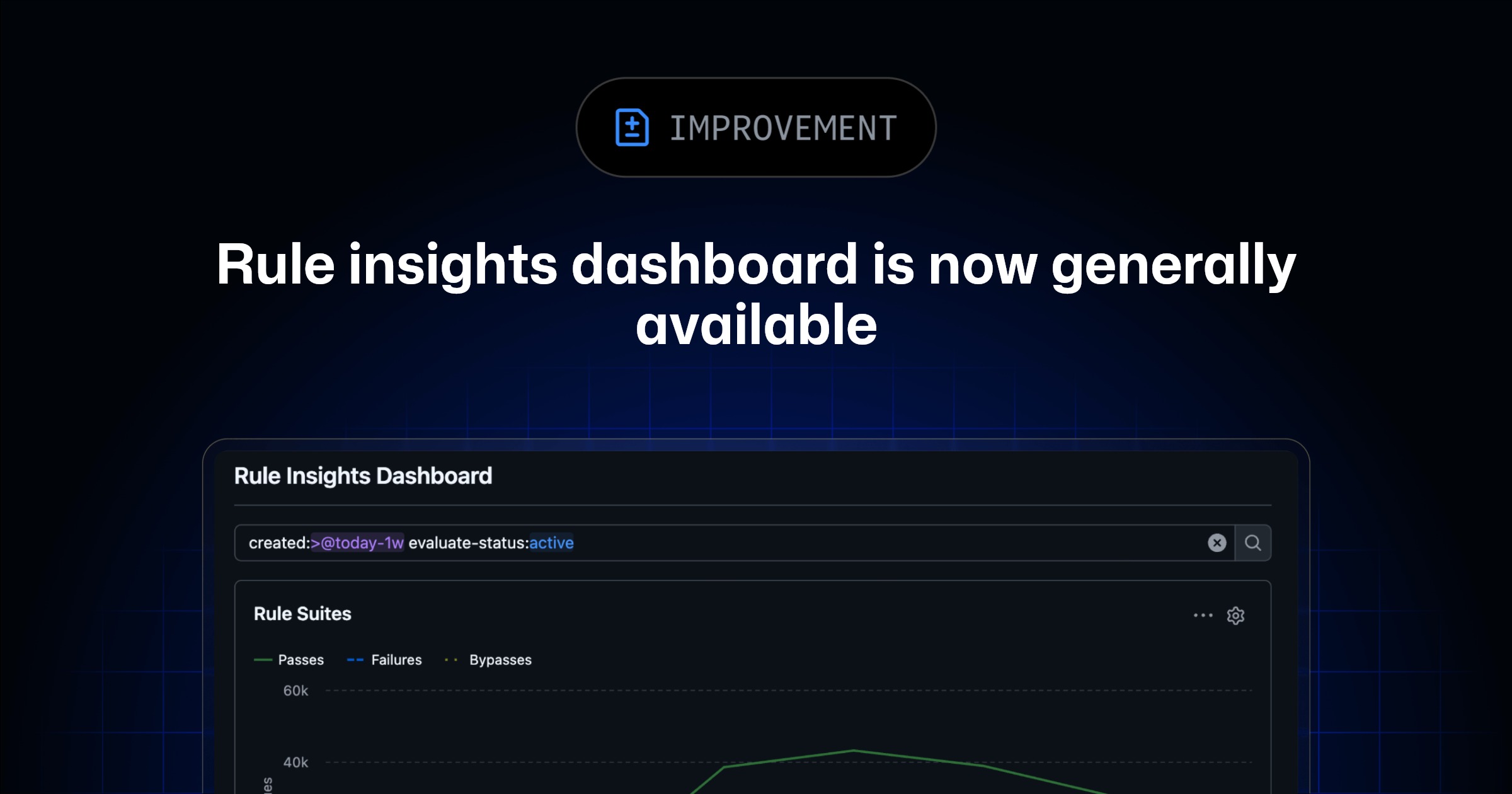
GitHub Rule Insights Dashboard Now Available
GitHub's rule insights dashboard is now generally available, offering a comprehensive view of how repository rulesets are evaluated and enforced. This tool allows users to easily identify trends and report on governance without the need for manual data compilation. The dashboard provides aggregated metrics and identifies top repositories by bypasses, enabling users to focus their reviews effectively. With filtering options for evaluation status, branch, ruleset, and date range, users can conduct detailed analyses. This release empowers governance and compliance teams to efficiently monitor and report on repository activities, making it a valuable asset for organizations prioritizing compliance and governance.
GitHub Changelog
 © GitHub Changelog
Coding Toolscoding
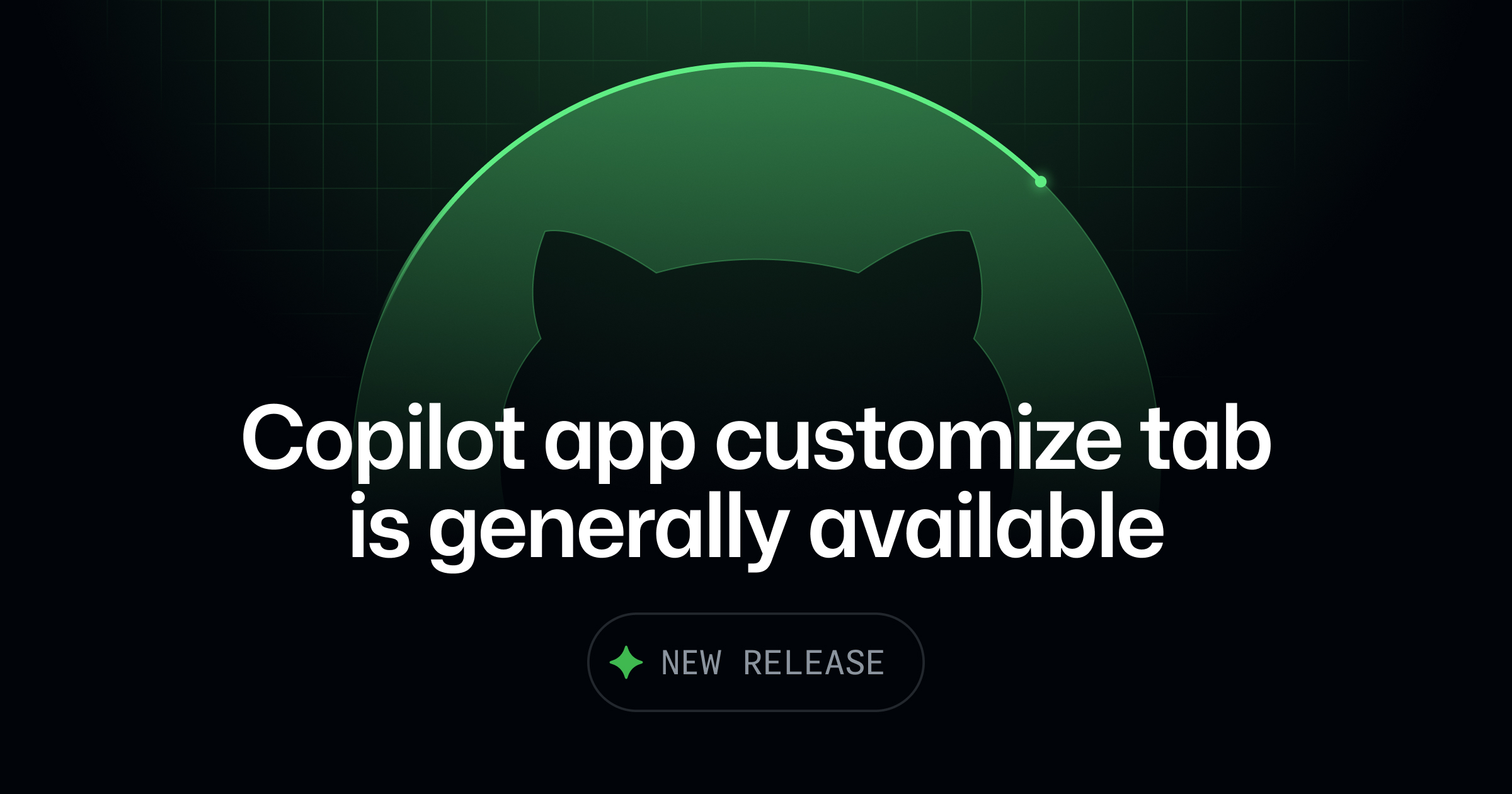
GitHub Copilot App Adds Customize Tab
GitHub has introduced a new Customize tab in its Copilot app, aiming to enhance user experience by integrating MCP servers, plugins, skills, and canvases into a single interface. This update allows users to explore and implement customizations more efficiently, aligning Copilot with their existing workflows and tools. By offering featured customizations and a streamlined browsing experience, GitHub makes it easier for teams to tailor Copilot to their specific needs. This development signifies a step towards more personalized and context-aware coding assistance, potentially increasing productivity for developers.
GitHub Changelog
 © GitHub Changelog
Coding Toolscoding
GitHub Push Rules Now Support Path Exceptions
GitHub has introduced a new feature allowing developers to configure push rules with path exceptions, providing more granular control over repository management. This means that specific file paths can be exempted from general rules, such as blocking certain file types or enforcing size limits, without relaxing the rules for the entire repository. This update is particularly useful for maintaining strict repository standards while accommodating necessary exceptions. The feature is currently in public preview, allowing users to test and provide feedback.
GitHub Changelog
 © Ollama Blog
Coding Toolscoding
Claude Desktop Integrates with Ollama Gateway
Ollama has introduced support for Claude Desktop, allowing developers to configure it as a third-party gateway provider. This integration enables users to run open models directly on their computers or utilize cloud models for more extensive tasks, offering flexibility in model usage. The setup is straightforward, with the ability to switch between local and cloud models seamlessly. This development enhances Claude Desktop's versatility, making it easier for developers to leverage different models without compromising data privacy, as Ollama maintains a Zero Data Retention policy.
Ollama Blog
 © Hugging Face Blog
Coding Toolscoding
Gradio Introduces AI Workflow Automation
Gradio's new feature, gr.Workflow, transforms AI workflows by allowing users to create complex pipelines with a simple drag-and-drop interface. This innovation enables users to build, run, and deploy AI applications seamlessly, turning each workflow into a REST API with minimal effort. By integrating with Hugging Face Inference Providers and Gradio Spaces, users can execute multi-step processes and access intermediate results in real-time. This development significantly lowers the barrier for developers to create and deploy sophisticated AI applications, making it easier to experiment and iterate on ideas.
Hugging Face Blog
Coding Toolscoding
Claude Code v2.1.239 Update Released
The latest update to Claude Code, version 2.1.239, brings a host of fixes and improvements aimed at enhancing user experience and functionality. Notably, the update addresses issues with cloud sessions, proxy handling, and session management, ensuring smoother operation across various environments. It also introduces new features like the fullscreen renderer offer on previously excluded setups and improved cost estimation for US-only inference. These changes make Claude Code more robust and user-friendly, particularly for developers working in diverse technical setups.
Claude Code Releases
 © GitHub Changelog
Coding Toolscoding
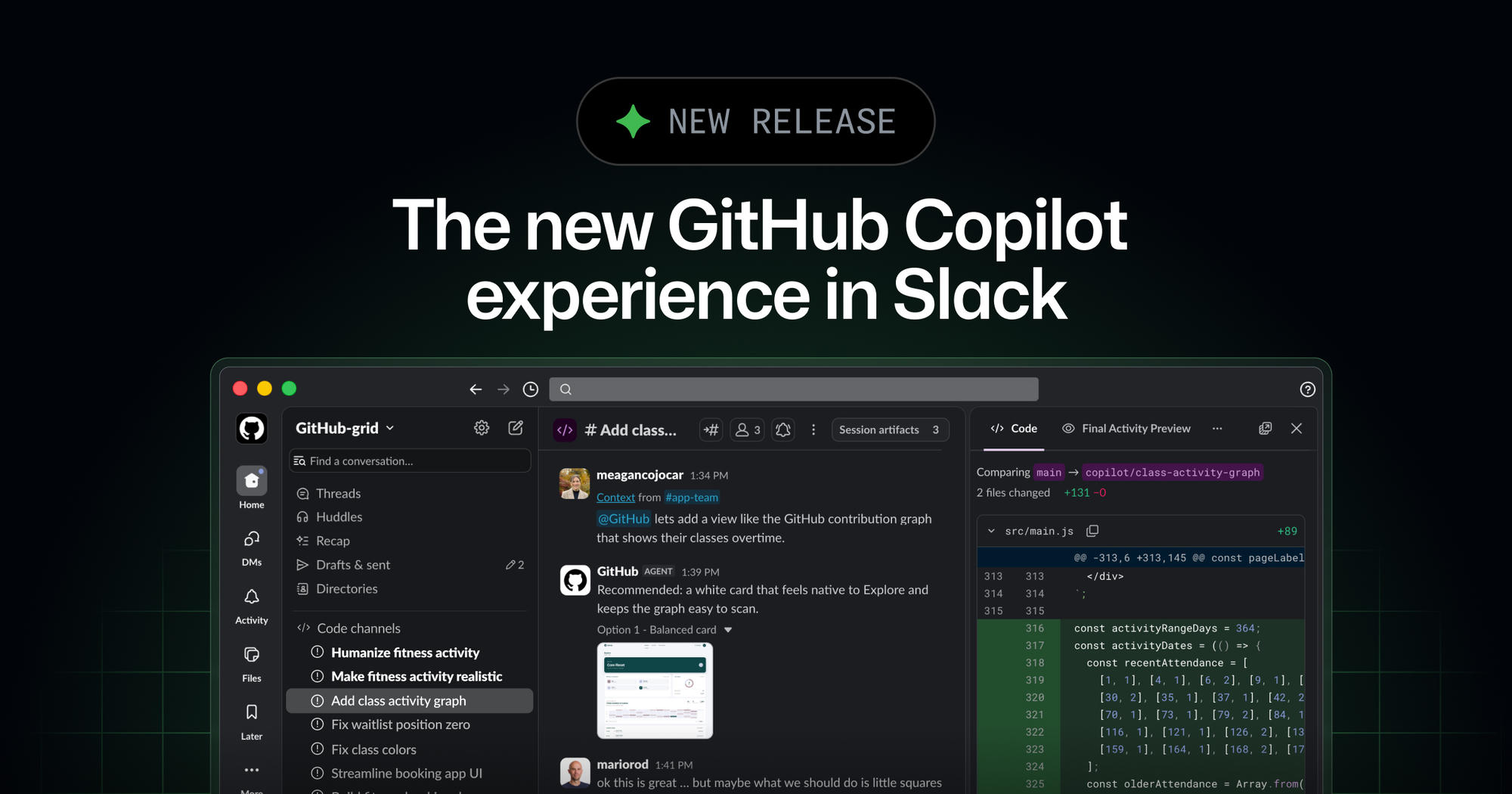
GitHub Copilot Integrates with Slack in Public Preview
GitHub has introduced a public preview of its Copilot integration with Slack, allowing teams to leverage AI-driven coding assistance directly within their communication channels. This integration enables users to plan changes, investigate issues, and manage coding tasks seamlessly from Slack, enhancing collaboration and productivity. By mentioning @GitHub in Slack, teams can initiate agent sessions that utilize GitHub context to answer questions, triage bugs, and even open pull requests. This move brings AI capabilities into the flow of team conversations, making it easier for developers to learn from each other and maintain oversight while using AI tools.
GitHub Changelog
 © The Rundown AI
Coding Toolscoding
Slack introduces collaborative coding feature
Slack is transforming coding into a collaborative effort with its new feature, Slack Code. This innovation allows team members, regardless of their technical expertise, to participate in software development directly within Slack channels. By integrating AI agents like ChatGPT and GitHub, teams can guide and monitor coding sessions in real-time. This move positions Slack as a central hub for AI-human collaboration in software development, making it easier for diverse teams to contribute and oversee projects without leaving the messaging platform.
The Rundown AI
Coding Toolscoding
AI Tools Boost TypeScript's Dominance on GitHub
The rise of AI coding tools has unexpectedly reinforced the dominance of the JavaScript family, particularly TypeScript, on GitHub. Contrary to predictions that AI would make language choice irrelevant, the focus has narrowed to languages like TypeScript due to their compatibility with AI-generated code. This shift is driven by the need for reliable, type-safe code that AI tools can produce efficiently, making TypeScript a preferred choice for developers. As a result, the bottleneck in software development has moved from code generation to code verification, highlighting the importance of type systems in modern coding practices.
AI News
 © GitHub Changelog
Coding Toolscoding
Windows 11 arm64 VS2026 image now available
GitHub has rolled out the Windows 11 arm64 image with Visual Studio 2026 for its hosted runners, offering developers the latest tools for their GitHub Actions workflows. This update allows workflows to be configured to run on the new image, which will become the default by the end of September 2026. Developers should be aware that this change might disrupt workflows that rely on Visual Studio 2022, prompting necessary adjustments. By providing access to the latest Visual Studio version, GitHub is ensuring that developers have access to cutting-edge development environments.
GitHub Changelog
 © GitHub Changelog
Coding Toolscoding
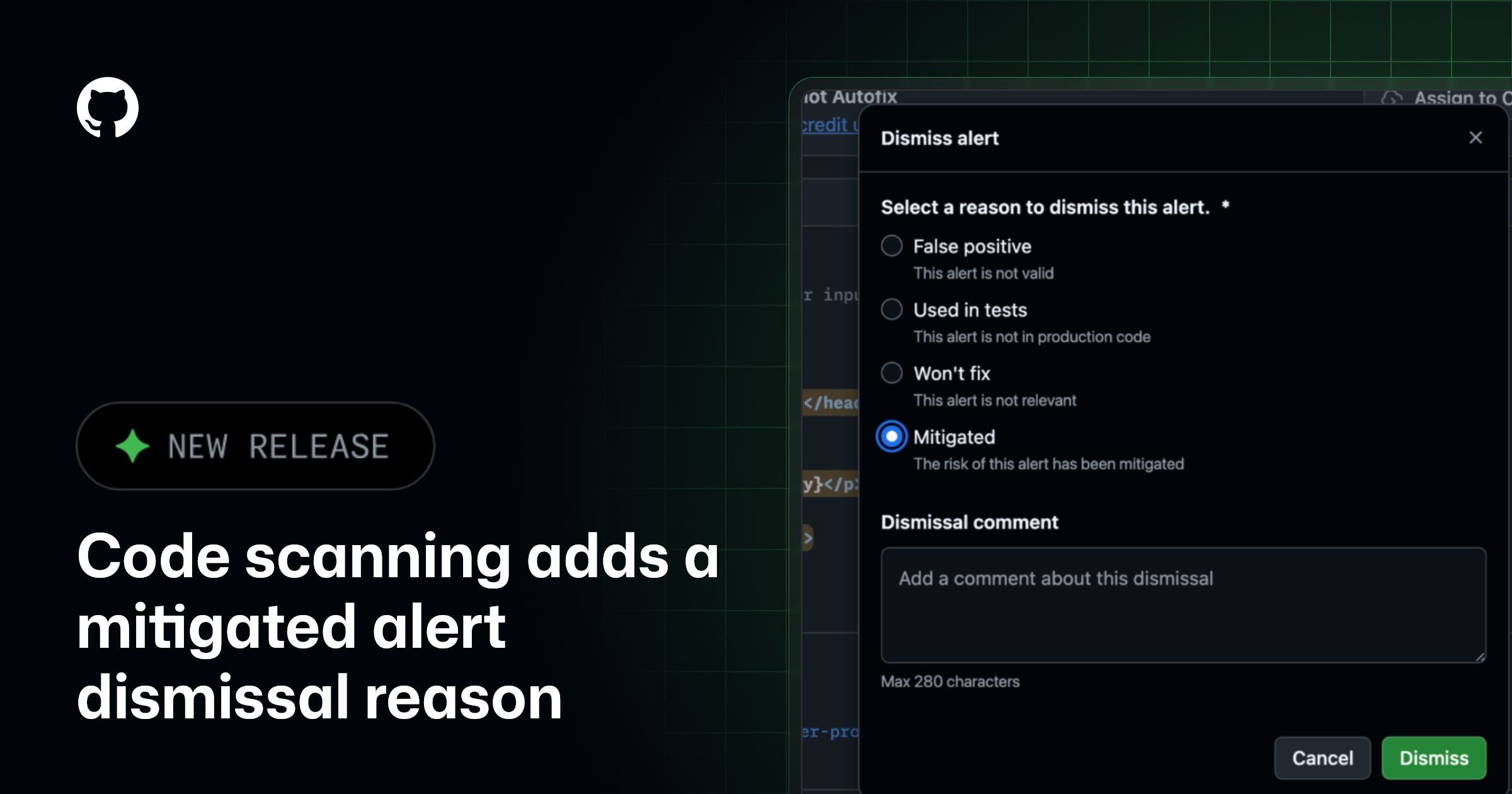
GitHub Adds Mitigated Alert Dismissal for Code Scanning
GitHub has introduced a new feature for its code scanning tool, allowing developers to dismiss alerts with a 'Mitigated' reason. This update is significant for teams managing vulnerabilities, as it distinguishes between issues that are actively mitigated by external controls and those simply marked as 'Won’t fix'. By aligning dismissals with formal risk-acceptance processes, GitHub reduces the need for external tracking of these decisions. This change streamlines vulnerability management directly within the platform, enhancing workflow efficiency for developers.
GitHub Changelog
 © GitHub Changelog
Coding Toolscoding
GitHub Introduces Separate Path for Code Quality
GitHub has introduced a dedicated workflow path for CodeQL actions, distinguishing code quality runs from code scanning runs. This update allows users to better track and manage their workflow run history and Actions usage reports. The change does not require reconfiguration of existing code quality setups, but users who have built on the old path need to update their scripts and reports. This separation enhances clarity and management for developers using GitHub's code quality tools.
GitHub Changelog
 © GitHub Changelog
Coding Toolscoding
GitHub Adds Code Quality Audit Log Events
GitHub has enhanced its audit log capabilities by introducing new events that track changes to Code Quality settings on repositories. This update allows users to see when Code Quality is enabled, disabled, or modified, along with details about who made the changes and when. This transparency is crucial for organizations managing billing based on active committers, as it provides clear visibility into when repositories are included in billing calculations. By integrating these events into the audit log API, GitHub offers a more comprehensive tool for monitoring and managing repository settings.
GitHub Changelog
 © The Verge AI
Coding Toolscoding
Slack introduces collaborative vibe-coding channels
Slack is stepping into the collaborative coding space with its new Slack Code feature, allowing teams to work alongside AI agents in dedicated channels. This innovation enables users to tag AI agents like Anthropic's Claude or Cognition's Devin to assist in coding tasks, offering real-time code diffs and HTML previews. The channels are designed to archive automatically after task completion, ensuring a streamlined workflow. This move positions Slack as a hub for coding collaboration, integrating seamlessly with popular AI agents and enhancing team productivity.
The Verge AI
Coding Toolscoding
Claude Code v2.1.229 Release Enhances Stability
Claude Code's latest update, version 2.1.229, brings a focus on enhancing stability and user experience for developers. The release introduces server-supplied Claude Code hook support for self-hosted runner sessions, aligning them with managed environments. SSE keepalive pings have been added to prevent idle-timeout disconnects during long pauses. A new plugin marketplace command allows for seamless plugin integration without requiring a restart. The update also addresses numerous bugs, such as terminal crashes and API errors, making the platform more robust. These improvements reflect Claude Code's dedication to refining its tools and providing a smoother coding experience.
Claude Code Releases
Coding Toolscoding
Claude Code v2.1.234 Update Released
Claude Code's latest update, v2.1.234, introduces several enhancements and fixes that improve user experience and security. Notably, it adds a new environment variable for project directory naming and a keybinding action for clearing text selections. The update also addresses security concerns by rejecting certain Windows NT-namespace paths, reducing the risk of credential leaks. Additionally, it improves session management by automatically continuing sessions when usage limits reset and refining permission handling. These changes make Claude Code more robust and user-friendly, particularly for developers managing complex projects.
Claude Code Releases
Coding Toolscoding
Claude Code v2.1.235 Update Released
The latest Claude Code update, version 2.1.235, brings a range of enhancements designed to improve both functionality and user experience. A new spellcheck feature now underlines misspelled words in real-time, utilizing libraries such as aspell and hunspell. This version also resolves several bugs, including issues with prompt input highlights and markdown list alignment, ensuring smoother operation. Additionally, memory and CPU usage have been optimized during cloud sessions, making the tool more efficient for developers. These updates collectively make Claude Code a more robust and reliable tool for handling complex prompts and sessions.
Claude Code Releases
Coding Toolscoding
Claude Code v2.1.236 Update Released
The latest update to Claude Code, version 2.1.236, introduces several enhancements and fixes that improve user experience and functionality. Notably, the update adds a new environment variable, ANTHROPIC_DEFAULT_MODEL, allowing users to set default models for new sessions. It also improves the handling of idle notifications and fixes various bugs related to session management and rendering issues. These changes make the platform more robust and user-friendly, particularly for developers working across macOS and Linux environments.
Claude Code Releases
Coding Toolscoding
Claude Code v2.1.237 Update Released
Claude Code's latest update introduces a 'Concise' output style, allowing users to receive results directly without unnecessary preamble. This feature is designed to streamline the user experience by focusing on delivering results efficiently. Additionally, the update addresses prompt caching issues for sessions using an LLM gateway or custom base URL, enhancing reliability. These changes make Claude Code more user-friendly and efficient, particularly for developers seeking quick and direct outputs.
Claude Code Releases
 © GitHub Changelog
Coding Toolscoding
CodeQL 2.26.3 Enhances GitHub Actions and JavaScript Modeling
The latest update to CodeQL, version 2.26.3, brings significant improvements to GitHub Actions queries and JavaScript modeling. By refining the recognition of untrusted data in GitHub Actions and enhancing JavaScript and TypeScript source modeling, this update aims to improve the accuracy of security scans. Notably, it introduces flow models for Vue's Composition API and recognizes Vue Router's useRoute() as a client-side remote flow source. These enhancements are designed to help developers more effectively identify and address security vulnerabilities in their codebases.
GitHub Changelog
 © GitHub Changelog
Coding Toolscoding
GitHub Adds Code Quality Trends Dashboard
GitHub's new Trends tab in the Code Quality dashboard offers a fresh way to monitor code quality evolution over time. This feature allows users to see whether open findings are increasing or decreasing and identifies which repositories are contributing to these changes. Available to users on GitHub Enterprise Cloud and Team plans, it ranks repositories by improvement or need for support, enabling teams to focus their efforts where needed. This update empowers organizations to manage code quality more strategically, providing a proactive approach to maintaining high standards across projects. By offering a dynamic view of code quality trends, GitHub enhances the ability to address issues before they escalate.
GitHub Changelog
Coding Toolscoding
Replit Launches Free Mode with GPT-5.6 Luna
Replit's introduction of Free Mode, powered by GPT-5.6 Luna, marks a significant step in making software development more accessible by removing token costs. This initiative could open doors for aspiring developers and hobbyists who previously faced financial barriers. By integrating GPT-5.6 Luna, Replit enhances its platform, offering a seamless experience for users to transform their ideas into working software. This move is a testament to Replit's commitment to fostering a more inclusive environment for innovation and creativity in the coding community. With Free Mode, Replit is not just expanding its user base but also encouraging a new wave of software creators.
OpenAI
 © GitHub Changelog
Coding Toolscoding
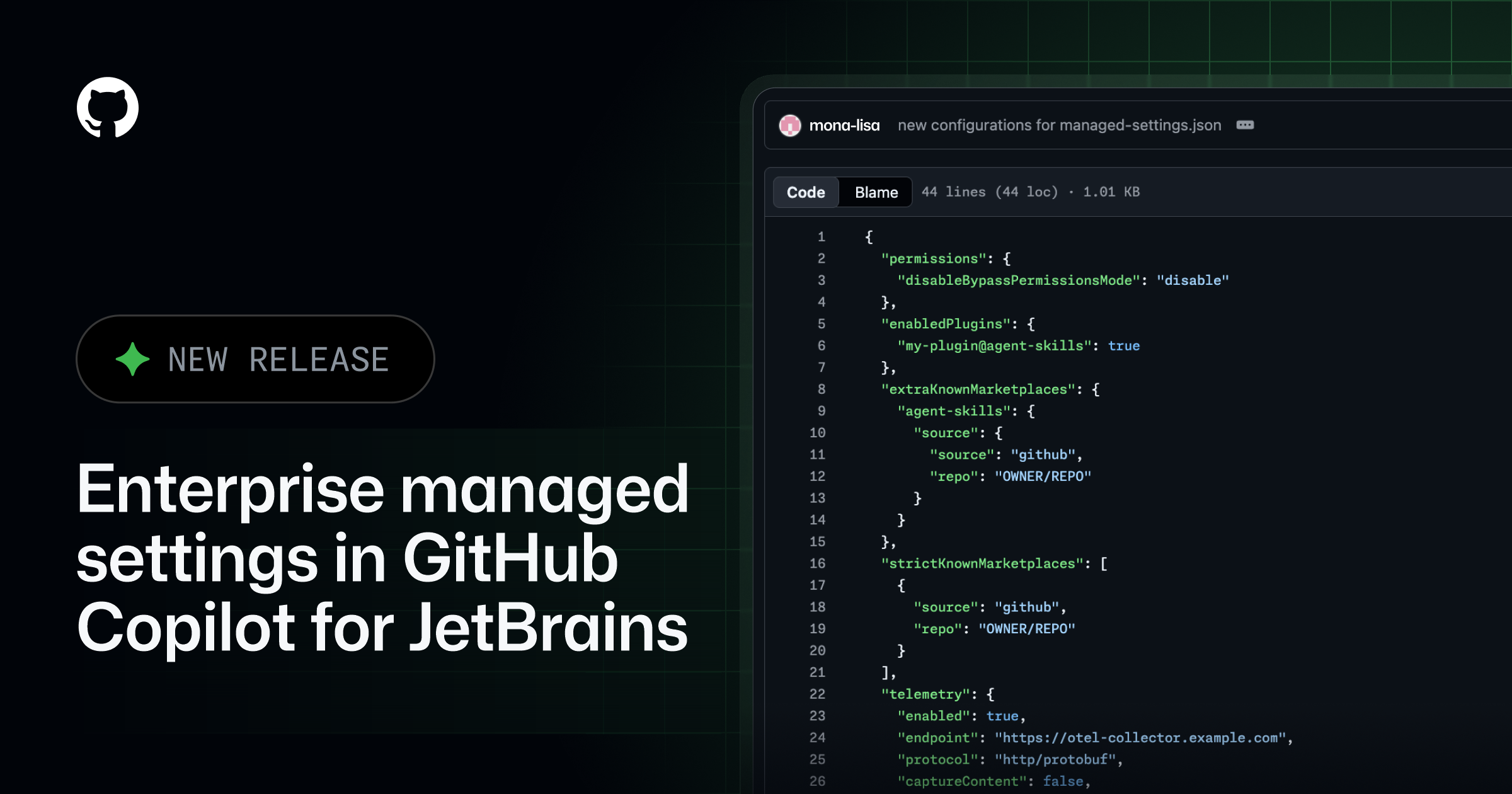
GitHub Copilot Adds Enterprise Controls for JetBrains
GitHub Copilot for JetBrains now offers enterprise-level managed settings, allowing administrators to enforce consistent plugin governance and server access across their organizations. This update introduces centralized control over which plugins can be enabled or disabled, and restricts marketplace access to approved sources only. Additionally, administrators can manage OpenTelemetry configurations to ensure telemetry data is routed to designated collectors, enhancing data governance. These features provide enterprises with greater control over their development environments, ensuring compliance and security standards are met.
GitHub Changelog
 © GitHub Changelog
Coding Toolscoding
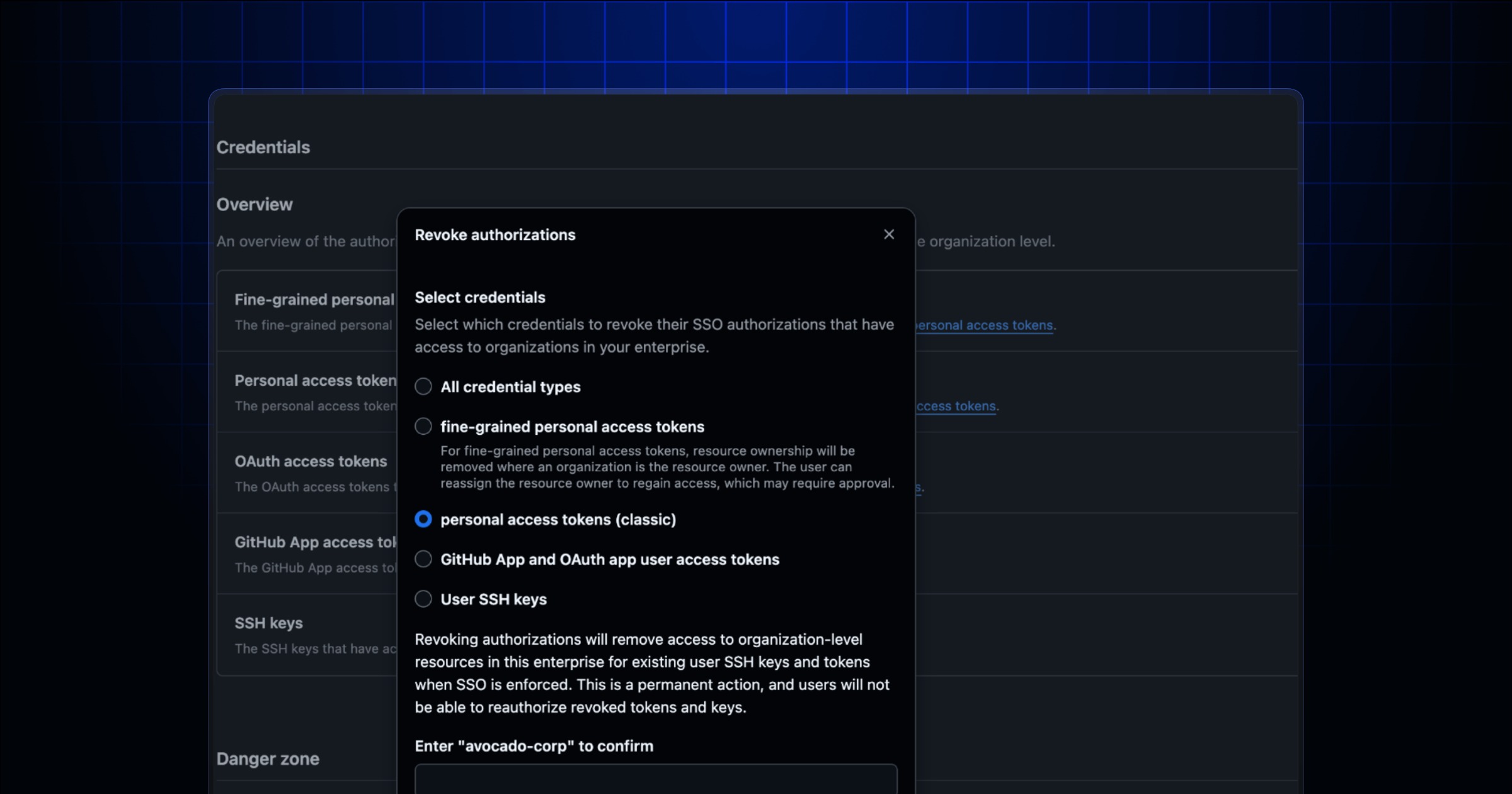
GitHub Enhances Credential Revocation Controls
GitHub has introduced more granular controls for credential revocation, allowing enterprise owners and admins to revoke specific types of tokens during security incidents. This update means that instead of revoking all user credentials at once, administrators can now target specific credential types like personal access tokens or SSH keys. This refinement helps contain security breaches more effectively by limiting the impact to only compromised credentials. The update also extends these capabilities to the organization level, providing a more flexible and precise response to security threats.
GitHub Changelog
 © TechCrunch AI
Coding Toolscoding
Warp Introduces Warp Factories for AI Development
Warp has launched Warp Factories, a system designed to make AI software factories more accessible for smaller companies. This infrastructure layer provides a pre-configured environment for deploying and managing AI agents, simplifying the software development process. By automating stages like triage and verification, Warp Factories enhances productivity while still requiring human oversight for complex tasks. The system integrates with popular tools like Slack and Jira, allowing it to fit seamlessly into existing workflows. This development could democratize access to advanced AI capabilities for companies lacking extensive resources, enabling them to compete more effectively in the AI space.
TechCrunch AI
Coding Toolscoding
Asana Accelerates Engineering with OpenAI Codex
Asana's use of OpenAI Codex to revamp its testing system is a compelling example of AI's ability to revolutionize software development timelines. The task, initially projected to take five years, was completed in just two weeks, showcasing Codex's power to automate and speed up complex coding tasks. This not only saved significant time but also cost Asana only $12,000, illustrating the economic benefits of integrating AI into development processes. The achievement marks a shift in how companies might tackle large-scale engineering challenges, with AI tools like Codex providing a powerful alternative to traditional methods. By leveraging AI, Asana has demonstrated a new way forward for addressing extensive technical projects.
OpenAI
Coding Toolscoding
Claude Code v2.1.233 Release
The latest update to Claude Code, version 2.1.233, brings significant improvements and fixes that enhance both functionality and reliability. With the addition of GitLab merge request URL support and opt-in memory cgroup support for Linux, developers can expect smoother operations and reduced risk of session stalls. The update also resolves issues such as cloud sessions being incorrectly marked as lost and idle sessions consuming excessive CPU resources. These enhancements make Claude Code more robust and efficient, particularly for developers working with complex projects. Overall, this release aims to streamline the development process and improve user experience.
Claude Code Releases
 © GitHub Changelog
Coding Toolscoding
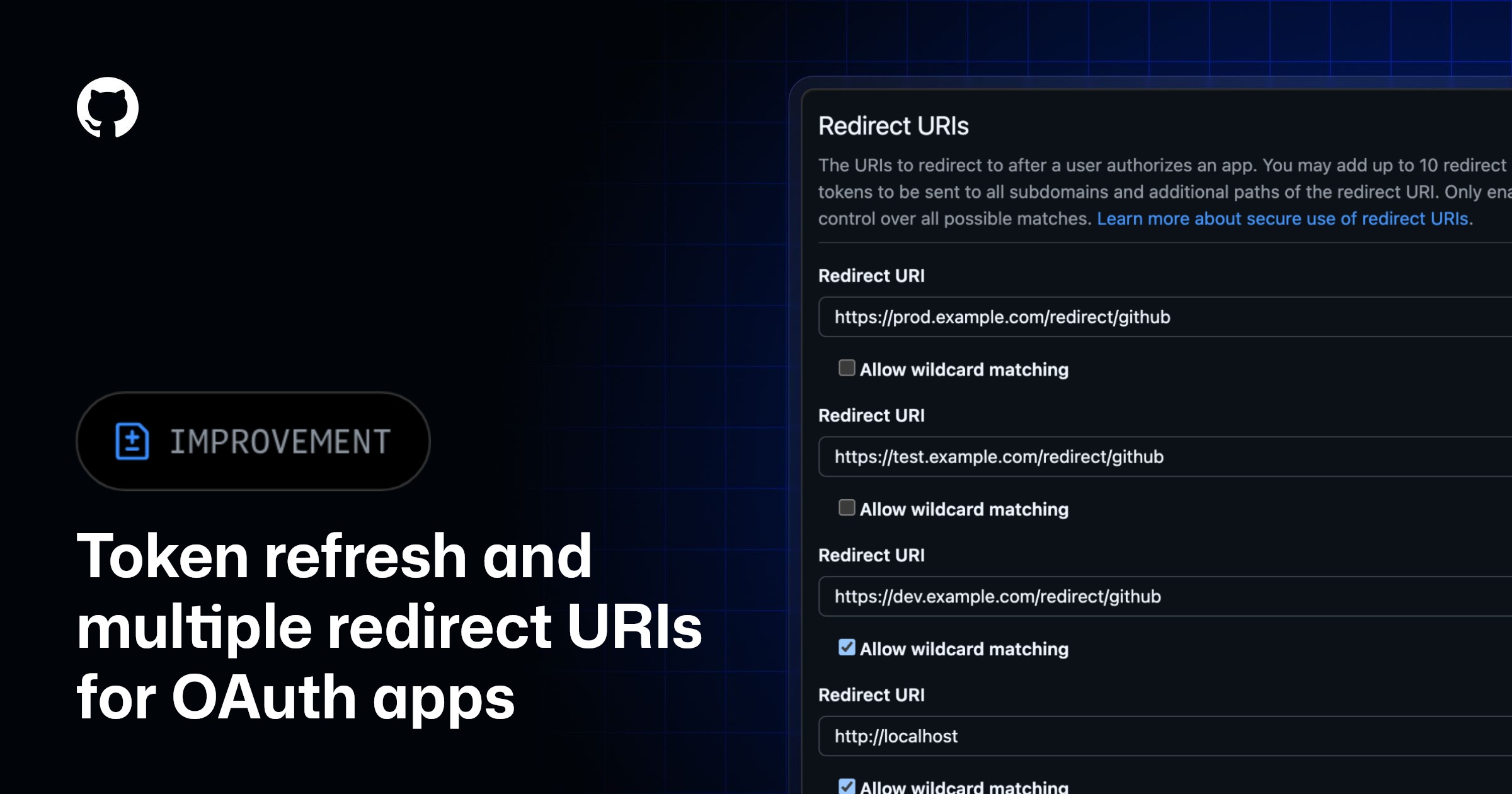
GitHub Enhances OAuth App Security Features
GitHub has introduced significant updates to its OAuth and GitHub App platforms, focusing on security and flexibility for developers. OAuth apps can now use expiring access tokens and refresh tokens, enhancing security by limiting token lifespan to eight hours with a six-month refresh period. Additionally, developers can register up to 10 redirect URIs, simplifying support for multiple environments. Wildcard matching for redirect URIs is now available, allowing more flexible URL configurations, though caution is advised to prevent misuse. These updates aim to streamline app development while maintaining robust security measures.
GitHub Changelog
Coding Toolscoding
Claude Code v2.1.232 Release
Claude Code's latest update, v2.1.232, introduces several enhancements and fixes that improve user experience and security. Subagent forking is now enabled by default, allowing for more efficient session management. GitLab support has been expanded, making it easier to clone repositories and manage credentials securely. The update also addresses various permission bypass issues and improves the handling of remote control sessions, ensuring smoother operation across different environments. These changes make Claude Code more robust and user-friendly, particularly for developers managing complex workflows.
Claude Code Releases
 © GitHub Changelog
Coding Toolscoding
GitHub Copilot Enhances Flexibility with New Features
GitHub Copilot's latest updates introduce significant enhancements that boost its adaptability and usability across different development environments. The rollout of the Kimi K3 and MAI-Code-1.1-Flash models brings improved coding quality and native image understanding, elevating the developer experience. With Agent Plugins 1.0, developers can now create a plugin once and deploy it across multiple tools, streamlining their workflow. These updates aim to provide a more cohesive and efficient coding experience, making Copilot a more versatile tool for developers using editors like VS Code and the Copilot CLI.
GitHub Changelog
 © GitHub Changelog
Coding Toolscoding
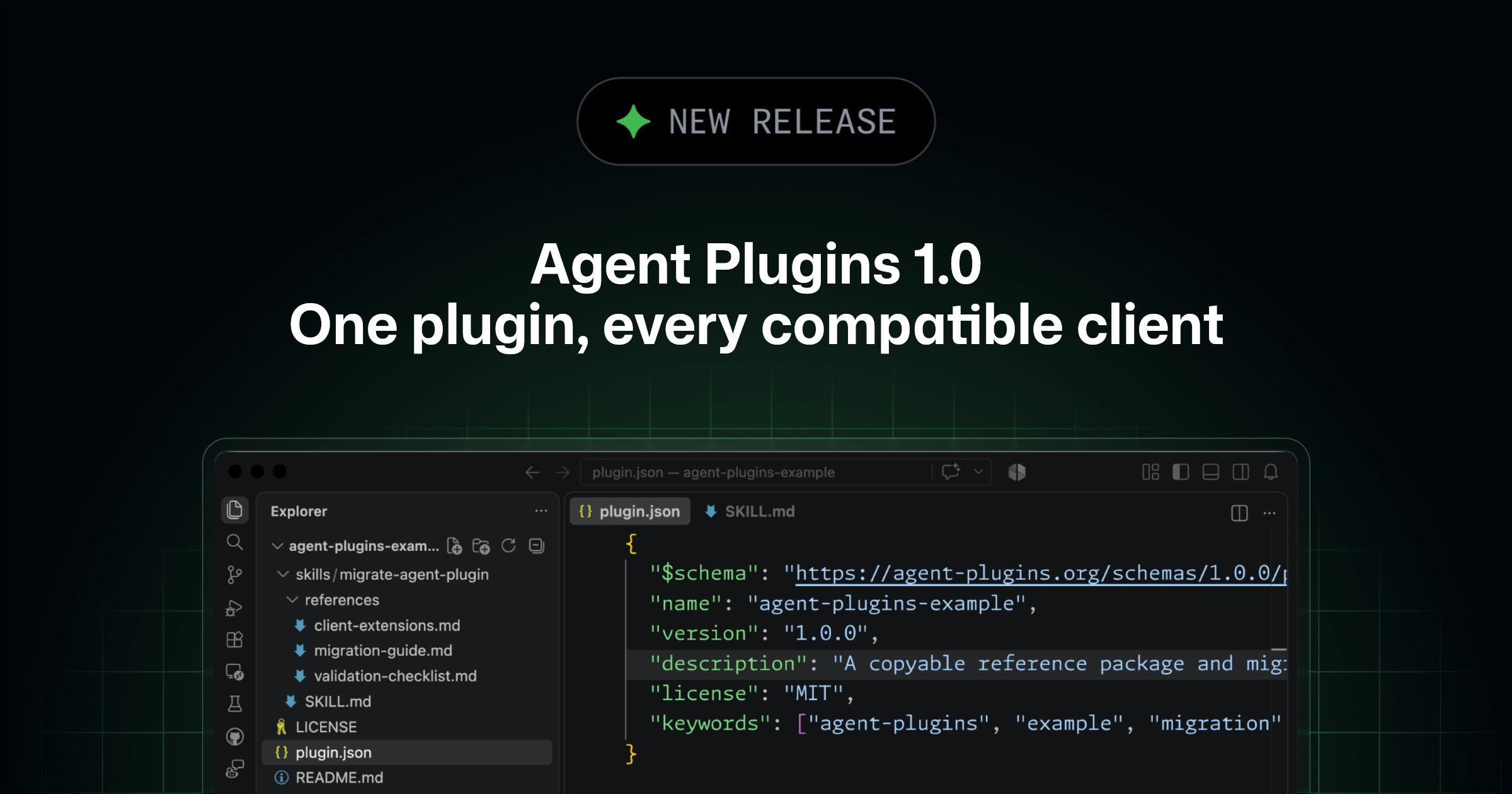
Agent Plugins 1.0 Launches for VS Code and Copilot
Agent Plugins 1.0 introduces a unified approach to plugin development, allowing a single plugin to be utilized across various agent clients like VS Code and GitHub Copilot. This open standard, backed by industry leaders such as AWS, Microsoft, and Google, aims to streamline the development process by reducing the need for duplicate efforts. By standardizing the integration of skills and MCP servers, developers can more easily maintain and distribute their plugins. The initiative promises a more cohesive ecosystem, simplifying plugin management and ensuring compatibility across different environments. Existing plugins remain supported, ensuring a seamless transition for current users.
GitHub Changelog
 © GitHub Changelog
Coding Toolscoding
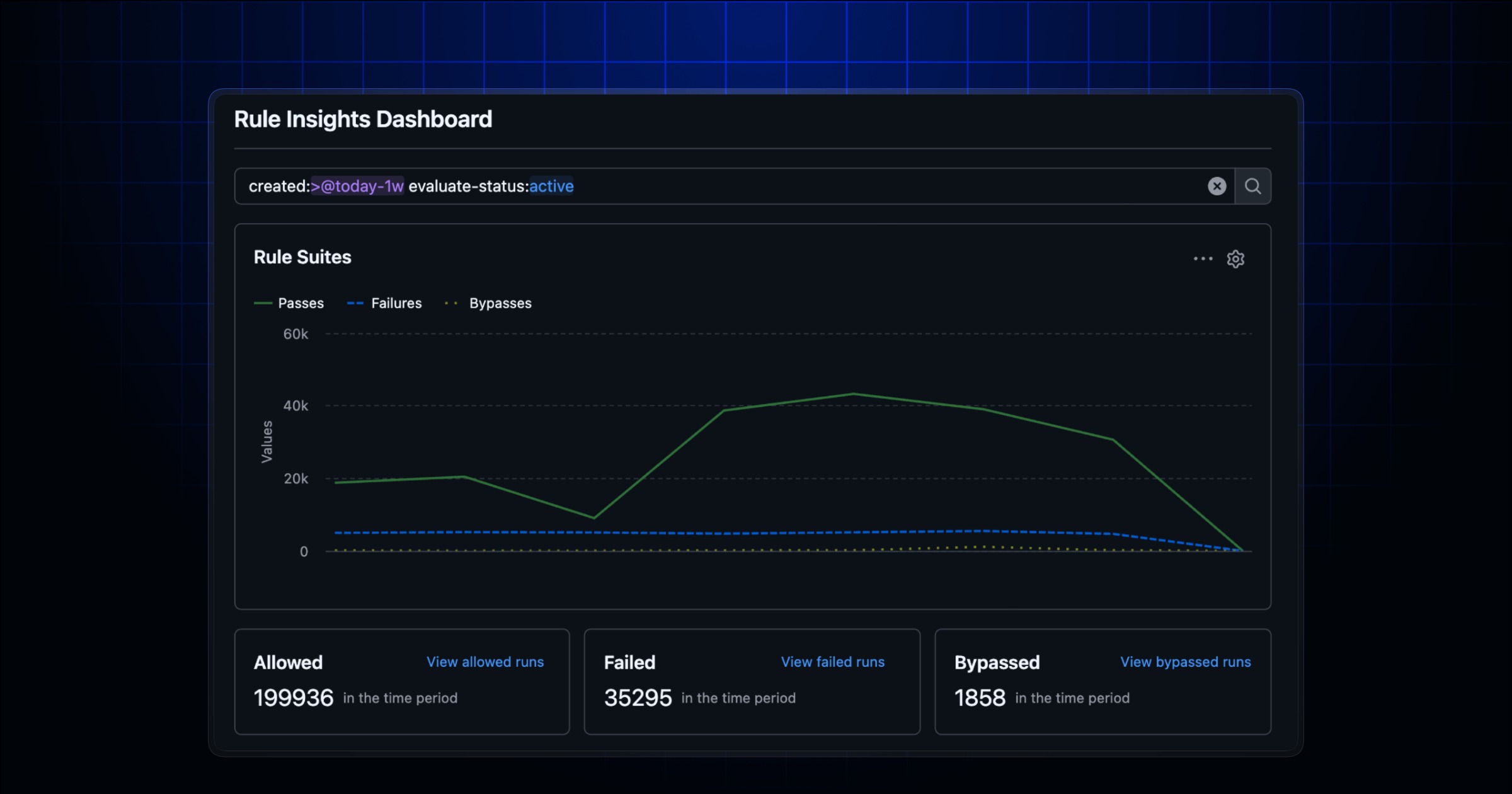
GitHub Launches Organization-Level Rule Insights Dashboard
GitHub has expanded its rule insights dashboard to the organization level, now in public preview. This new feature provides a comprehensive view of how repository rules are evaluated and enforced across all repositories within an organization. It allows governance and compliance teams to easily spot trends and report on governance without manually compiling data. Users can filter results by various criteria and export data for reporting, making it a powerful tool for auditing and incident response. This update builds on the repository-level insights introduced earlier, offering a more holistic approach to organizational compliance management.
GitHub Changelog
© GitHub ChangelogCoding Toolscoding
GitHub Copilot for JetBrains Enhances Features
GitHub Copilot for JetBrains has introduced several enhancements, including persistent memory and local model access, which streamline developer workflows. The update allows Copilot to retain context across chat sessions, reducing repetitive input from users. Additionally, the integration of Ollama as a BYOK provider offers more flexibility in model selection. These improvements, along with enhanced enterprise controls and reliability fixes, make Copilot a more robust tool for developers using JetBrains IDEs. The changes aim to simplify setup and improve the overall user experience.
GitHub Changelog
 © GitHub Changelog
Coding Toolscoding
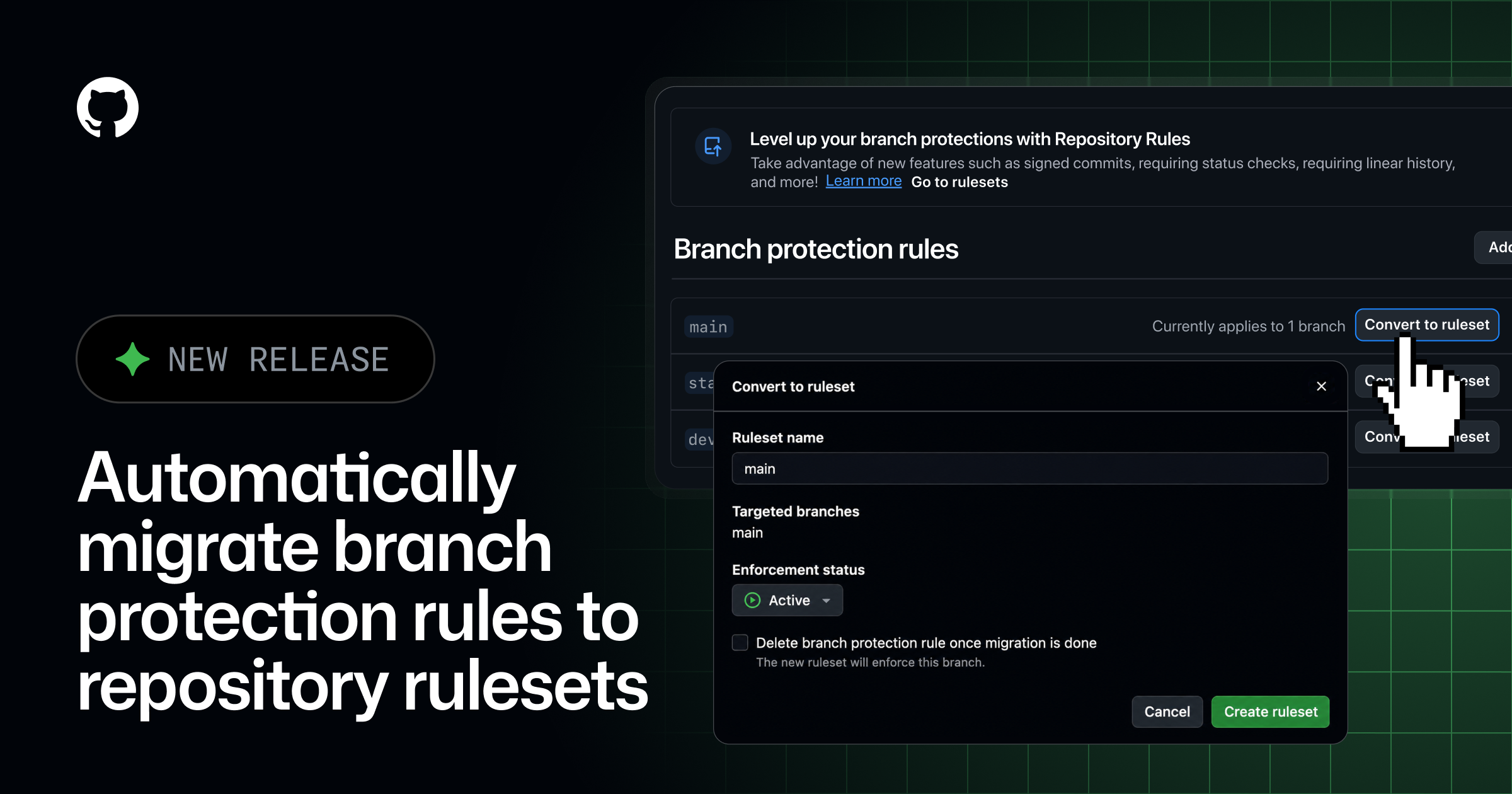
GitHub Enables Easy Migration to Repository Rulesets
GitHub has introduced a new feature that allows users to convert existing branch protection rules into repository rulesets directly from their repository settings. This streamlines the transition to GitHub's more flexible policy framework, eliminating the need to manually recreate each rule. The new rulesets provide enhanced capabilities, such as applying rules across multiple branches and managing them at an organizational level. This update signifies GitHub's ongoing investment in improving repository governance, making it easier for users to maintain and enforce policies efficiently.
GitHub Changelog
 © GitHub Changelog
Coding Toolscoding
GitHub Adds Token Breakdown to AI Usage Reports
GitHub has enhanced its AI usage reports by providing a detailed per-model token breakdown. This new feature allows users to see the specific input, output, cache read, and cache write tokens that contribute to their AI credits. Previously, users could only see the total AI credits consumed, making it difficult to understand or reduce costs. Now, with this transparency, users can better manage their AI expenses and communicate these details to stakeholders. This update is available to admins on Copilot Business and Enterprise, as well as individual Copilot users.
GitHub Changelog
 © GitHub Changelog
Coding Toolscoding
GitHub Copilot Chat Enhances User Controls
GitHub has enhanced its Copilot Chat on the web, making it more user-friendly with new conversation controls. Users can now minimize the chat window to continue browsing GitHub while waiting for responses, and easily access recent conversations. Additionally, token spend indicators provide transparency on usage, helping users manage their Copilot token budget effectively. These updates are available to all Copilot plans, offering a more seamless and informed user experience.
GitHub Changelog
Coding Toolscoding
Claude Code v2.1.225 Update Released
The latest update to Claude Code, version 2.1.225, brings significant improvements and fixes to enhance user experience. With the addition of gateway spend-limit support, users now receive detailed warnings about their usage caps. The update also resolves persistent OAuth token errors on macOS, ensuring smoother authentication processes. Enhancements in session handling for headless modes improve reliability, while the Remote Control feature now allows initiating conversations across machines by name, making communication more seamless. These updates collectively aim to provide a more stable and efficient coding environment.
Claude Code Releases
 © WIRED AI
Coding Toolsproductivity
Meetily Offers Free Meeting Transcription and Summarization
Meetily is making waves by offering a free, open-source meeting transcription and summarization tool that doesn't require a subscription. Unlike many paid services, Meetily allows users to transcribe meetings in real-time without uploading sensitive data to the cloud, addressing privacy concerns. The tool is compatible with various videoconferencing platforms like Zoom and Google Meet, and even supports offline use for pre-recorded audio or video files. While the free version lacks speaker identification, it provides a practical solution for those seeking cost-effective meeting management without compromising confidentiality.
WIRED AI
Coding Toolscoding
Claude Code v2.1.224 Update Released
Claude Code's latest update, v2.1.224, introduces significant enhancements for developers using self-hosted environments. Users can now run Claude Code sessions on their own machines, expanding flexibility for Team and Enterprise plans. The update also simplifies plugin installation with a new archive plugin source, allowing installations from a zip over HTTPS. Additionally, cross-session messaging capabilities have been improved, enabling seamless communication between sessions on different machines. These changes enhance the usability and integration of Claude Code, making it a more robust tool for developers.
Claude Code Releases
© GitHub ChangelogCoding Toolscoding
GitHub Copilot Enhances Workflow with New Features
GitHub Copilot's latest updates bring a suite of enhancements aimed at improving workflow efficiency and user interaction. The updates include the ability to see which AI model handled requests, manage multiple sessions with ease, and explore changes without disrupting ongoing work through the new /worktree command. The integrated browser now allows for element-level feedback, and dictation supports multiple languages on-device. These features collectively enhance the user experience by providing more control and flexibility in managing tasks and reviewing changes.
GitHub Changelog
 © GitHub Changelog
Coding Toolscoding
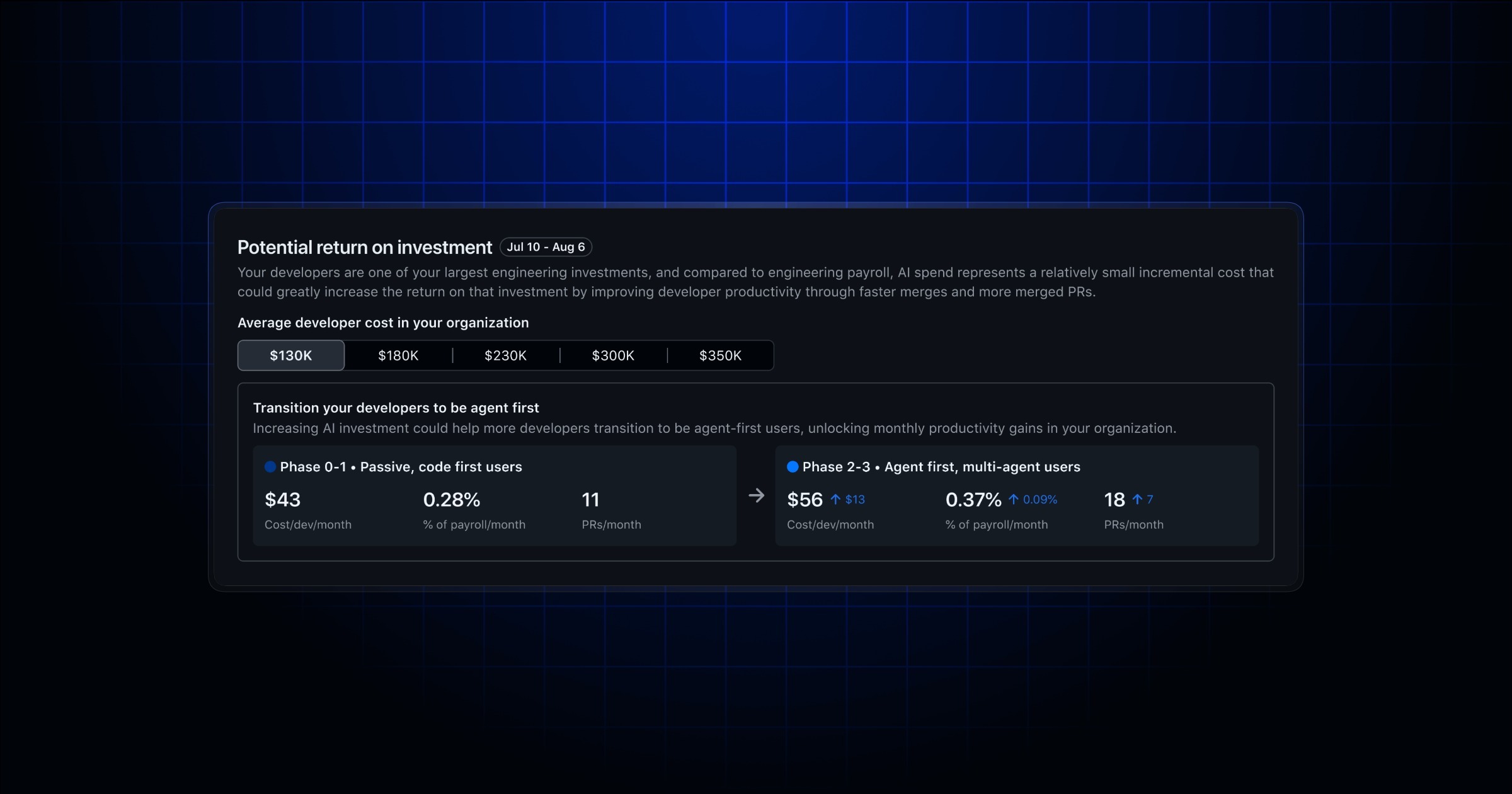
GitHub Copilot Dashboard Adds ROI Section
GitHub has enhanced its Copilot impact dashboard by introducing a 'Potential return on investment' section. This new feature allows organizations to directly correlate their spending on Copilot with the output in terms of pull requests, offering a clearer picture of the tool's financial impact. By comparing different user adoption phases, administrators can now better justify investments and tailor enablement programs. This update provides a more comprehensive view of Copilot's value, helping decision-makers optimize their AI tool usage based on actual cost and productivity metrics.
GitHub Changelog
 © GitHub Changelog
Coding Toolscoding
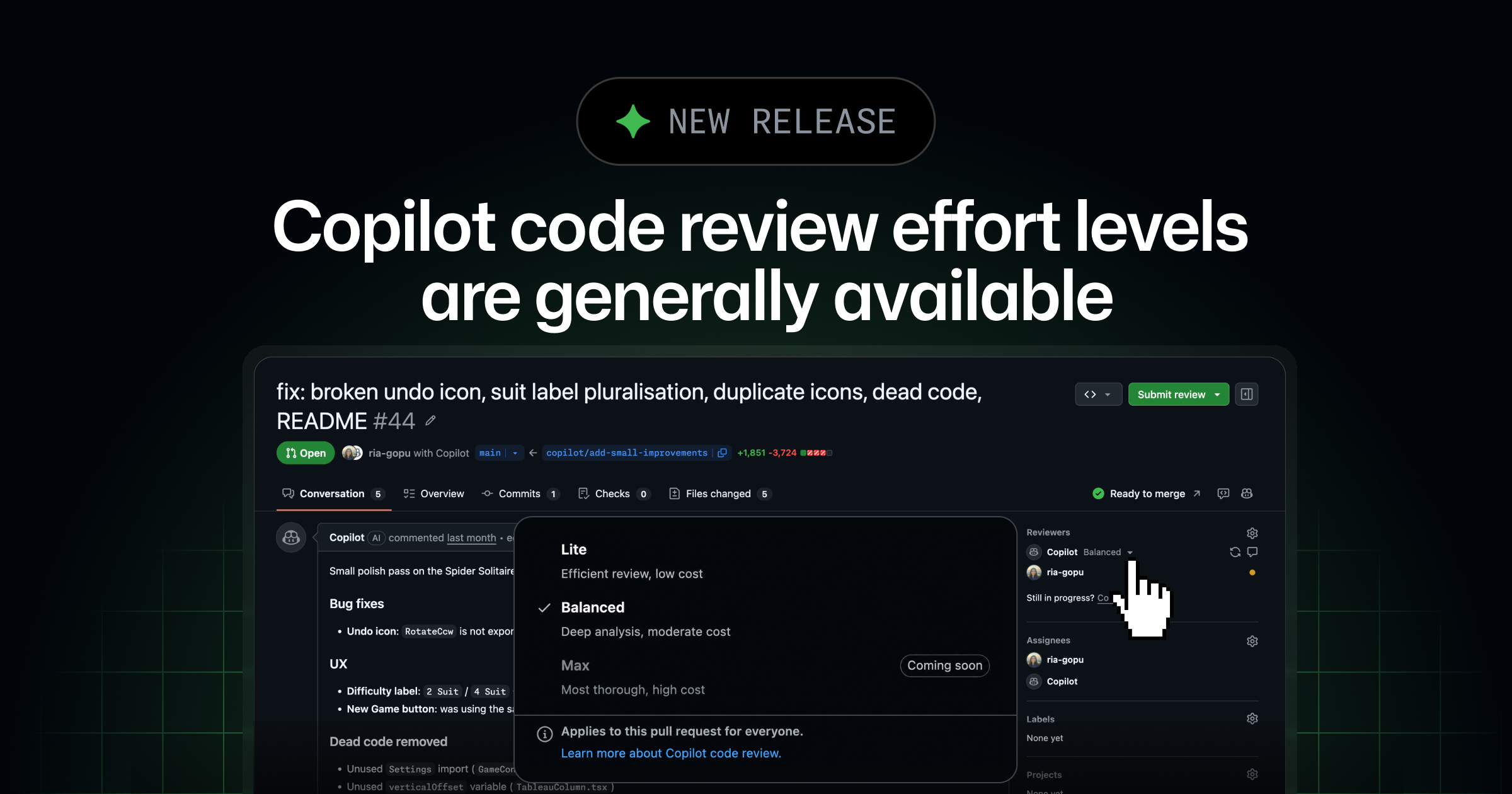
GitHub Copilot Code Review Levels Now Available
GitHub has made its Copilot code review effort levels, Lite and Balanced, generally available. These levels allow developers to tailor the depth of code reviews to the complexity and risk of pull requests. Lite is suited for straightforward changes, while Balanced is designed for more complex or sensitive code. This feature is available across various Copilot plans, enabling organizations to set default review levels that can be inherited by repositories. This development enhances the flexibility and precision of code reviews, making it easier to manage review depth across projects.
GitHub Changelog
 © GitHub Changelog
Coding Toolscoding
GitHub Expands Secret Scanning Coverage
GitHub has enhanced its secret scanning capabilities, adding more secrets to its push protection and partnering with Lovable Labs. This update means that when a Lovable Labs secret is detected in a public repository, GitHub will notify Lovable Labs for action. Additionally, the update introduces richer metadata on alerts, providing details like secret ownership and expiry dates, which helps users assess the impact without leaving the alert interface. This expansion makes secret scanning more robust, offering developers better tools to manage and protect sensitive information in their repositories.
GitHub Changelog
Coding Toolscoding
Claude Code v2.1.221 Update Released
The latest update to Claude Code, version 2.1.221, introduces several enhancements and fixes aimed at improving user experience and security. Notably, a new Focus view in VSCode allows users to streamline their workflow by hiding tool activity, while a new 'mask' mode for sandbox credential files enhances security on Linux and WSL. The update also addresses various bugs, including permission-check bypasses and session management issues, ensuring smoother operation across different environments. These changes make Claude Code more robust and user-friendly, particularly for developers working with complex toolchains.
Claude Code Releases
Coding Toolscoding
Claude Code v2.1.223 Release
The latest update to Claude Code, version 2.1.223, introduces several important fixes and enhancements aimed at improving security and usability. Notably, it addresses permission bypass issues in Bash commands and workflow scripts, ensuring stricter adherence to security protocols. The update also refines the handling of model IDs and session management, providing more robust error handling and session continuity. These changes make Claude Code more reliable and secure for developers, particularly in managing complex workflows and permissions.
Claude Code Releases
 © GitHub Changelog
Coding Toolscoding
GitHub Enhances Code Scanning Customization
GitHub has introduced a new feature that allows developers to apply custom configuration files to the CodeQL code scanning setup, enhancing security analysis across repositories. This update provides granular control over security scans without the need to maintain separate GitHub Actions workflows for each repository. Organizations can now centralize their security configurations, ensuring consistency while allowing flexibility for individual repositories to tailor settings as needed. This feature is now available on GitHub.com and will be included in GitHub Enterprise Server 3.23, marking a significant step in scalable security management.
GitHub Changelog
 © GitHub Changelog
Coding Toolscoding
GitHub Automates Code Coverage Setup with AI
GitHub is making it easier to set up code coverage by introducing an AI-driven feature in its Code Quality settings. This new capability allows users to automatically generate a coverage workflow, significantly cutting down the time and effort usually required. By initiating a pull request for review, GitHub ensures that users can seamlessly integrate this feature into their repositories. This development is currently in public preview for GitHub Code Quality users on github.com, enhancing the efficiency of code quality management without the need for manual workflow authoring.
GitHub Changelog
 © GitHub Changelog
Coding Toolscoding
CodeQL 2.26.2 adds Swift and Kotlin support
The latest update to CodeQL, version 2.26.2, enhances its static analysis capabilities by adding support for Swift 6.3.3 and Kotlin 2.4.10. This means developers using these languages can now leverage CodeQL's security scanning features more effectively. The update also refines several queries, improving the detection of path injection and URL redirection vulnerabilities. These changes aim to provide more accurate results, helping developers identify and fix potential security issues in their codebases. This release is automatically available to GitHub code scanning users, ensuring immediate access to these improvements.
GitHub Changelog
 © GitHub Changelog
Coding Toolscoding
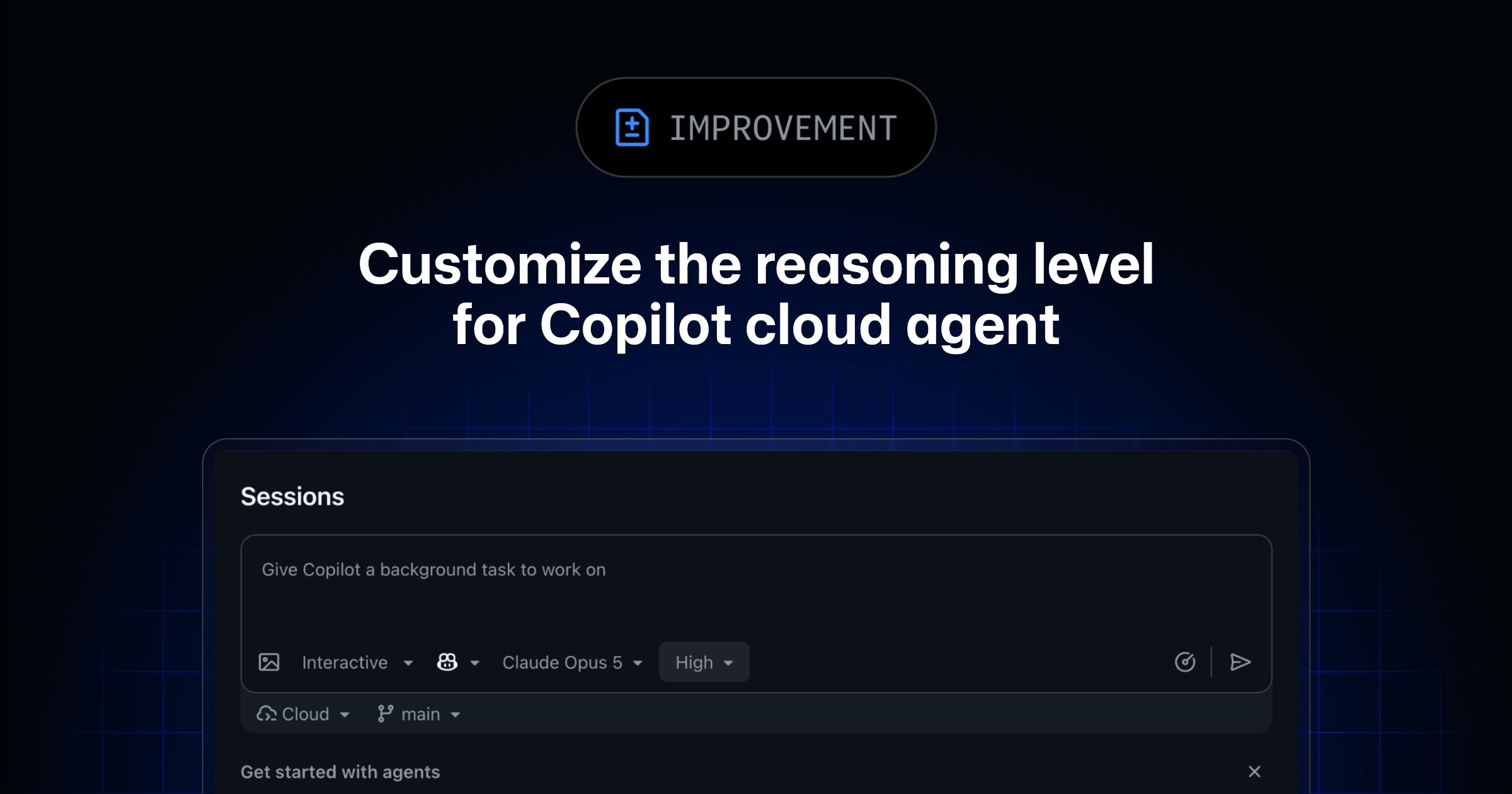
GitHub Copilot Adds Customizable Reasoning Levels
GitHub Copilot's cloud agent now allows users to customize the reasoning level of AI models, offering more control over task execution. This feature enables users to adjust how much the model reasons before responding, which can enhance the quality of answers for complex problems. However, higher reasoning levels consume more tokens and credits. This new capability is available across all paid Copilot plans, providing users with a tailored AI experience that balances depth of reasoning with resource consumption.
GitHub Changelog
 © GitHub Changelog
Coding Toolscoding
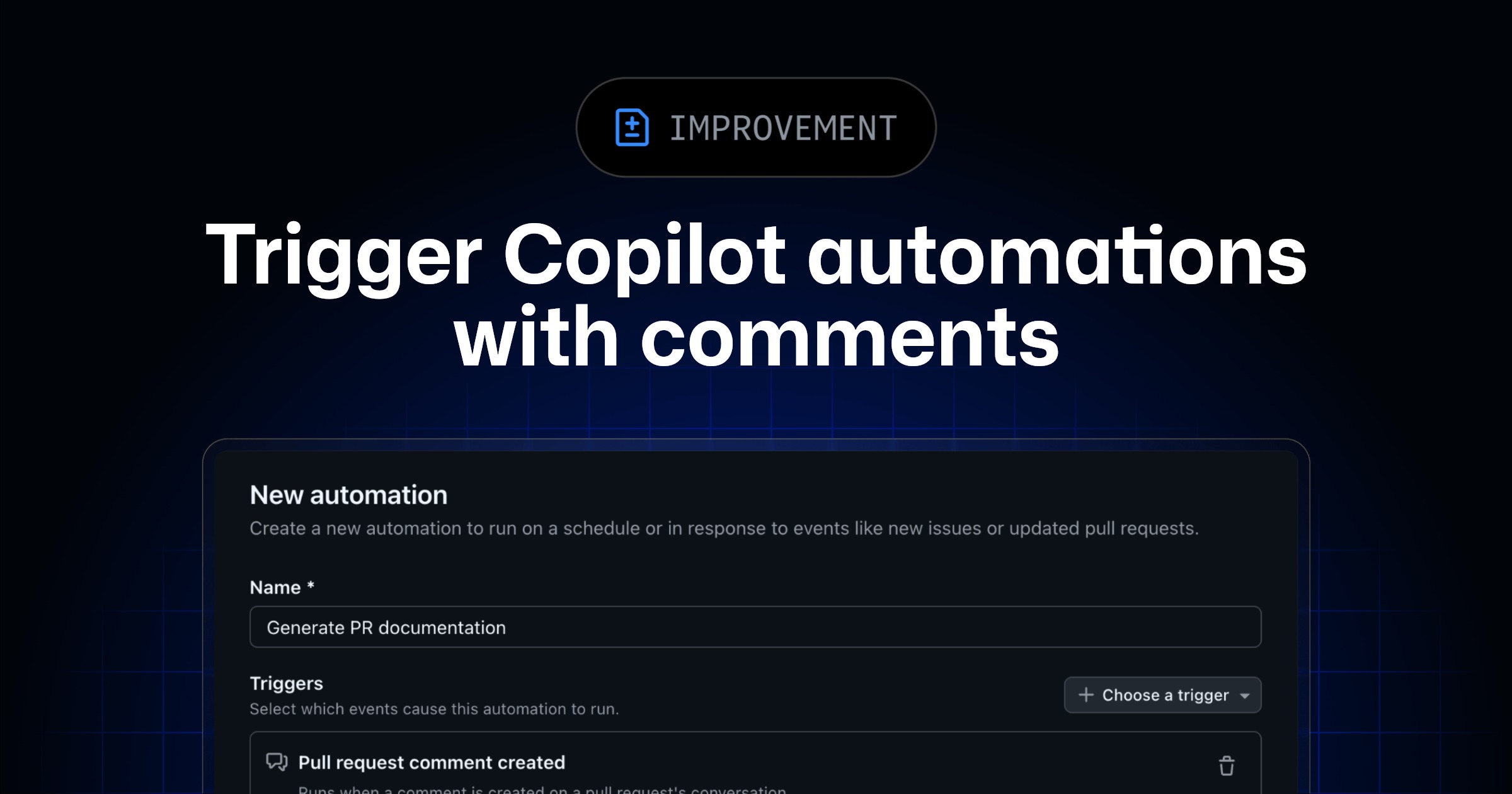
GitHub Copilot Automations Triggered by Comments
GitHub has introduced a new feature for Copilot users, allowing automations to be triggered by comments on issues or pull requests. This enhancement enables developers to streamline workflows by automating tasks such as documentation generation, error investigation, and follow-up task creation directly from comments. By specifying trigger text, users can customize these automations to fit their specific needs. This feature is available to Copilot Pro, Pro+, Max, Business, and Enterprise users, with certain configurations required for business accounts. This update enhances the integration of AI-driven automation in the development process.
GitHub Changelog
 © GitHub Changelog
Coding Toolscoding
GitHub Introduces Self-Repository Syntax for Actions
GitHub has streamlined the process of referencing actions and workflows within the same repository by introducing a new self-repository syntax. This update eliminates the need for checkouts or hardcoded versions, reducing maintenance burdens and ensuring consistency with commit SHA pinning. By using the self-repository syntax, developers can now easily maintain internal references that automatically align with the current commit. This change not only simplifies workflow management but also supports enterprise policies requiring full-length commit SHA pinning.
GitHub Changelog
 © GitHub Changelog
Coding Toolscoding
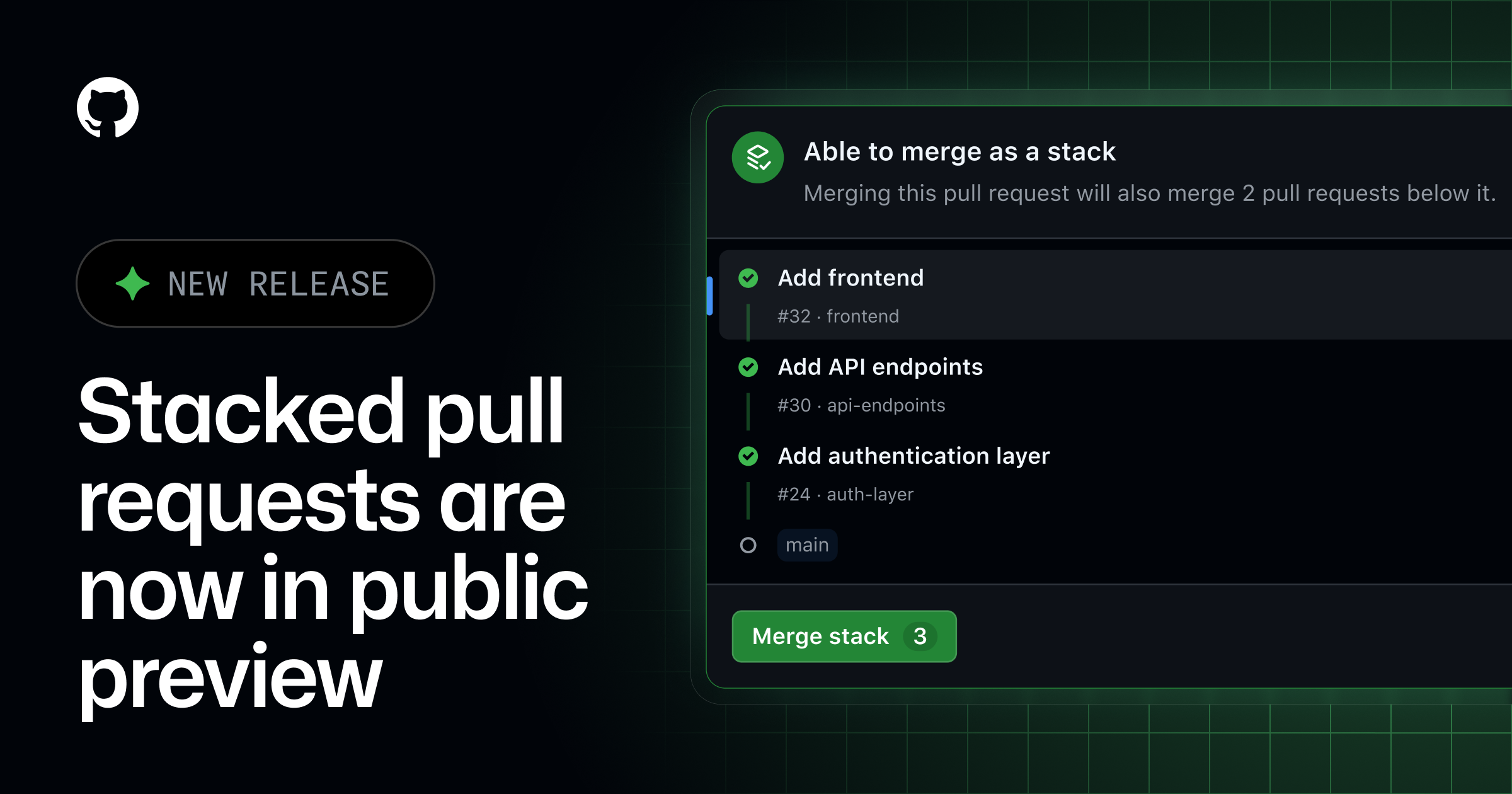
GitHub Launches Stacked Pull Requests in Preview
GitHub's new stacked pull requests feature is now in public preview, offering developers a streamlined way to manage large code changes. By breaking down big changes into smaller, reviewable pull requests, teams can maintain quality and speed up the review process. This feature integrates seamlessly with existing GitHub tools, allowing for parallel reviews and efficient merging. The introduction of stacked pull requests promises to reduce bottlenecks in code review, making it easier for teams to manage complex projects without overwhelming reviewers.
GitHub Changelog
© GitHub ChangelogCoding Toolscoding
GitHub Copilot July Update for Visual Studio
GitHub's latest update for Copilot in Visual Studio introduces a new agent built on the Copilot SDK, enhancing task efficiency with fewer interactions. This update also integrates built-in skills from the .NET and Azure teams, allowing developers to customize workflows more effectively. Additionally, a new feature enables code review directly within the editor, providing inline comments and suggestions. Organization-level custom instructions streamline Copilot's responses across teams, though some features require specific Copilot plans. These enhancements aim to make Copilot more adaptable and efficient for developers.
GitHub Changelog
 © GitHub Changelog
Coding Toolscoding
GitHub Copilot Enhancements in VS Code July 2026
GitHub's latest updates to Visual Studio Code bring significant enhancements to the Copilot experience, particularly in managing and interacting with AI agents. The new Agents window, still in public preview, offers a redesigned layout and improved workflows for handling multiple sessions. Users can now engage in multi-chat sessions with Claude, allowing for more dynamic and parallel conversations. Additionally, the integration of Copilot vision enables users to add images and PDFs directly into chat, expanding the scope of collaboration. These updates make VS Code a more powerful tool for developers, enhancing both productivity and flexibility in coding environments.
GitHub Changelog
 © GitHub Changelog
Coding Toolscoding
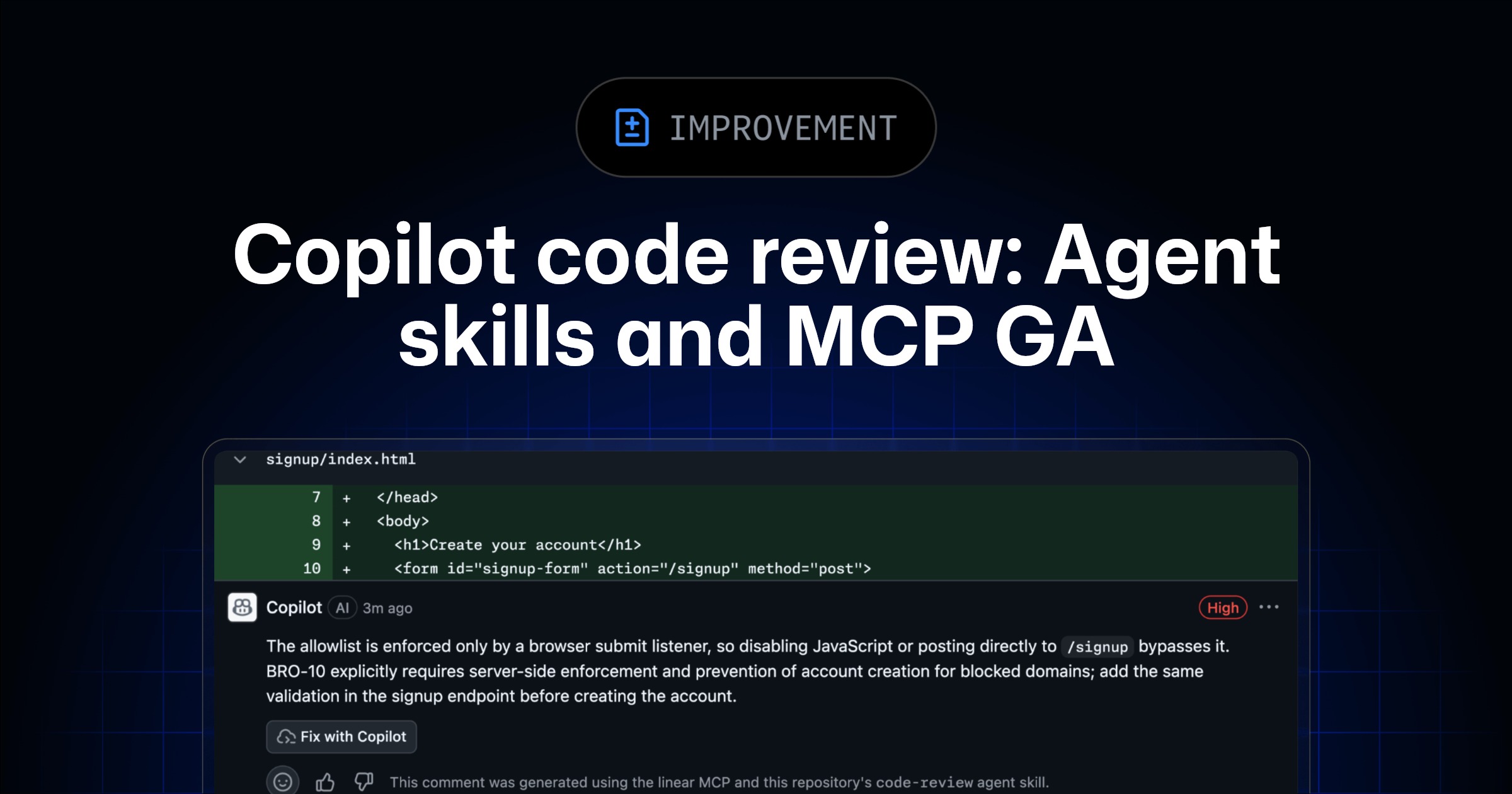
GitHub Copilot Enhances Code Review with Agent Skills
GitHub has expanded its Copilot code review capabilities, making agent skills and MCP server integration available to Pro, Business, and Enterprise users. These features allow teams to embed their internal tools and coding standards directly into the code review process, providing more tailored and context-rich reviews. By linking to third-party platforms like issue trackers and documentation systems, Copilot can draw in relevant information to enhance the review process. This update marks a significant advancement in AI-assisted code reviews, offering a more customized and informed approach for development teams using GitHub.
GitHub Changelog
 © GitHub Changelog
Coding Toolscoding
CodeQL 2.26.1 Enhances Analysis Accuracy
The latest update to CodeQL, version 2.26.1, brings significant improvements to the static analysis engine used in GitHub code scanning. This release enhances framework coverage for languages like Go, Java/Kotlin, and JavaScript/TypeScript, while also reducing false positives in Rust analysis. Notably, it introduces better modeling for Go's structured logging and recognizes Angular decorators in JavaScript/TypeScript. These updates mean developers can expect more accurate security issue detection and remediation, making CodeQL a more reliable tool for maintaining secure codebases.
GitHub Changelog
 © GitHub Changelog
Coding Toolscoding
GitHub Copilot Expands Usage Metrics Reporting
GitHub has enhanced its Copilot usage metrics API, now offering more granular insights into individual user activity within the Copilot app. Previously, Copilot app usage was only visible at an enterprise or organization level, but now it includes detailed breakdowns by feature, model, and language. This allows enterprise owners and billing managers to better understand how the Copilot app is being used, who is using it, and what it produces. The update makes it easier to compare Copilot app activity with other surfaces like IDEs and coding agents, providing a comprehensive view of AI-assisted coding within organizations.
GitHub Changelog
© GitHub ChangelogCoding Toolscoding
GitHub Expands Dependabot Alerts with OpenSSF Data
GitHub has enhanced its Dependabot alerts by integrating malware advisories from the OpenSSF malicious-packages repository. This update significantly broadens the scope of malware data available, covering ecosystems like npm and PyPI. Users with malware alerting enabled will automatically receive alerts for dependencies matching this expanded set of advisories. This integration means developers can now benefit from a more comprehensive security coverage without additional setup, making it easier to identify and mitigate potential threats across various ecosystems.
GitHub Changelog
© GitHub ChangelogCoding Toolscoding
GitHub Copilot for JetBrains Enhances Model Management
GitHub Copilot for JetBrains has rolled out an update that enhances model management and telemetry configuration, offering developers more control over their workflows. The update allows for the configuration of OpenTelemetry export settings, aligning plugin behavior with organizational observability requirements. Developers can now manage token limits and enable or disable built-in models, providing better cost control and governance. Additionally, the integration of MCP servers and custom agents into Claude agent flows offers increased flexibility for specialized workflows. These improvements aim to streamline the development process and enhance user experience within the JetBrains IDE environment.
GitHub Changelog
 © GitHub Changelog
Coding Toolscoding
GitHub Copilot App Gains Enterprise Managed Settings
GitHub has expanded its enterprise managed settings to include the Copilot app and Copilot cloud agent, allowing organizations to enforce consistent governance across all Copilot clients. This update means enterprise owners can define a single set of policies, such as plugin usage and approval prompts, which are automatically enforced across the Copilot ecosystem. This ensures that developers adhere to the same security and compliance standards, regardless of the platform they use. By integrating these settings, GitHub aims to provide high-trust environments for teams adopting Copilot, enhancing security and consistency in development workflows.
GitHub Changelog
Coding Toolscoding
Claude Code v2.1.218 Update Released
The latest update to Claude Code, v2.1.218, introduces several improvements and fixes that enhance user experience and functionality. Notably, the /code-review feature now operates as a background subagent, preventing conversation clutter and improving workflow efficiency. The update also addresses various bugs, such as Windows path corruption and session stability issues, ensuring smoother operations. These changes make Claude Code more robust and user-friendly, particularly for developers relying on its tools for code review and management.
Claude Code Releases
 © GitHub Changelog
Coding Toolscoding
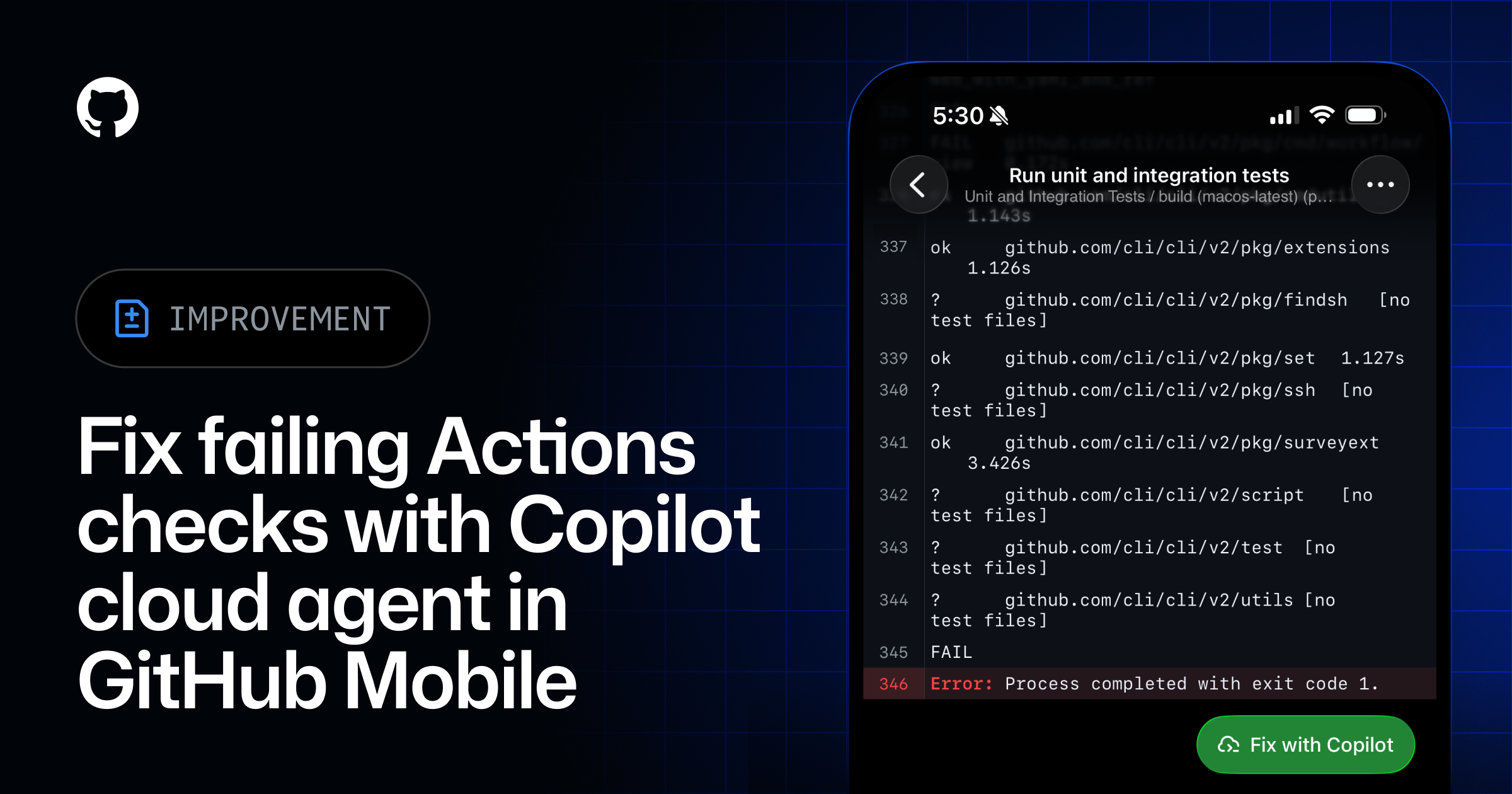
GitHub Mobile Integrates Copilot for Fixing Actions Checks
GitHub Mobile now allows developers to fix failing GitHub Actions checks directly from their mobile devices using Copilot. This feature enables users to select 'Fix with Copilot' when a check fails, prompting Copilot to create a new pull request with a proposed fix. This integration streamlines the process of addressing CI failures on the go, making it easier for developers to maintain workflow momentum. The feature is available on the latest versions of GitHub Mobile for both iOS and Android, enhancing mobile development capabilities.
GitHub Changelog
© GitHub ChangelogCoding Toolscoding
GitHub Issues Adds Agent Automation Controls
GitHub has introduced new agent automation controls in GitHub Issues, allowing users to manage how issues are labeled, typed, assigned, and closed. The update includes features like Approvals, Confidence, and Rationale, which provide users with the ability to review changes before they are applied. This means users can now decide the level of automation they want, with high-confidence changes applying automatically and others held for review. This enhancement aims to streamline issue management while maintaining user oversight, especially useful for busy repositories needing careful change management.
GitHub Changelog
 © GitHub Changelog
Coding Toolscoding
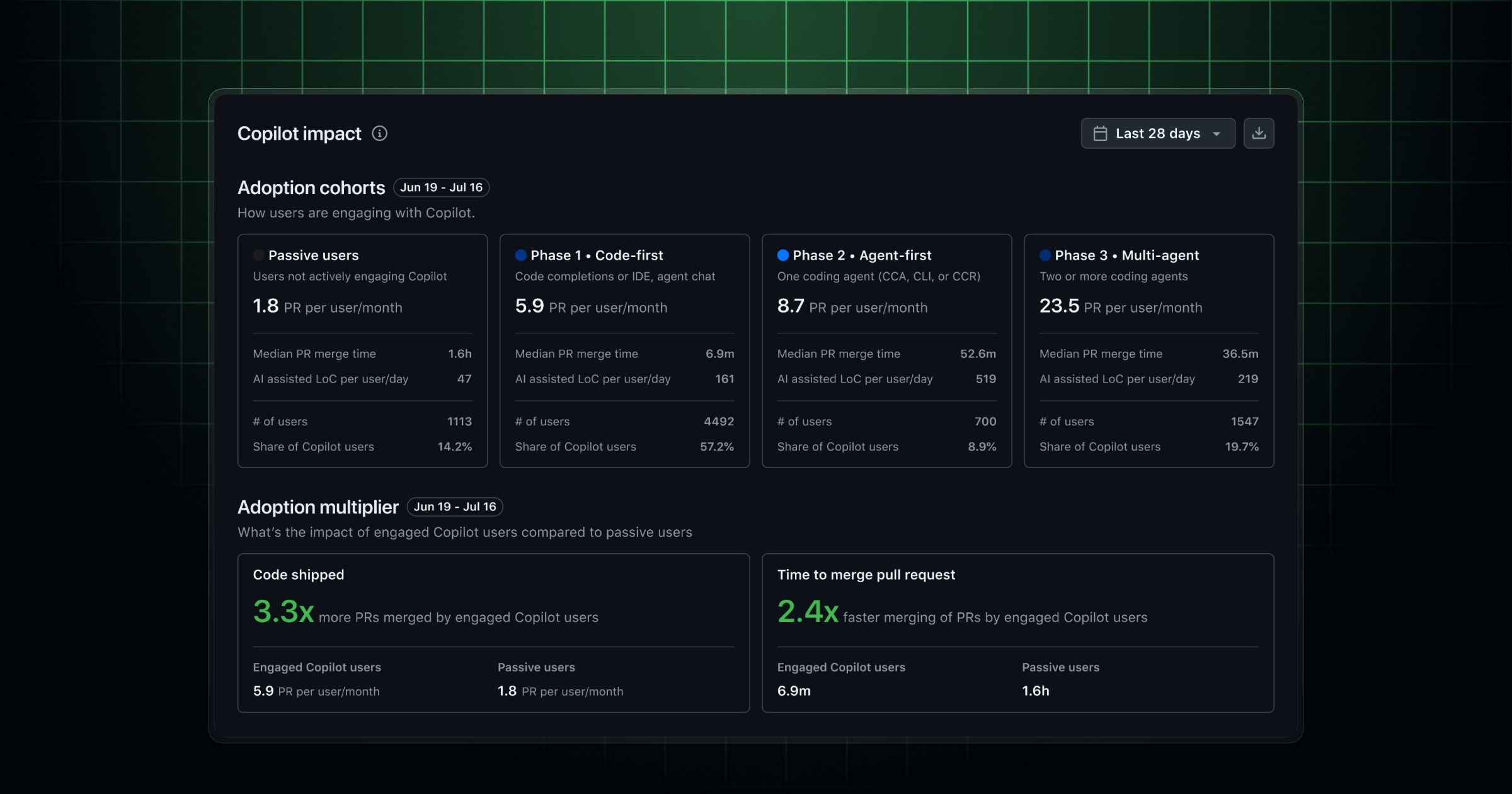
GitHub Launches Copilot Impact Dashboard for Enterprises
GitHub has introduced a new Copilot metrics impact dashboard designed for enterprise administrators and organization owners. This tool provides a detailed view of how Copilot is being used within organizations, moving beyond simple active-user counts to show adoption depth and impact. By categorizing users into different AI adoption phases, the dashboard offers insights into user engagement and provides actionable steps to enhance adoption. This release empowers organizations to better understand and optimize their use of Copilot, potentially increasing productivity and efficiency.
GitHub Changelog
© GitHub ChangelogCoding Toolscoding
GitHub Code Quality Now Generally Available
GitHub has launched its Code Quality tool for general availability on GitHub Enterprise Cloud and GitHub Team, addressing the challenge of maintaining code quality in the age of AI-accelerated development. By combining CodeQL's deterministic analysis with AI-assisted detection, it helps developers catch and fix maintainability and reliability issues before merging pull requests. This tool is now a standalone paid product, offering organization-wide dashboards and quality gates, and is designed to complement GitHub Advanced Security. With over 10,000 enterprises having tested it during the public preview, Code Quality is set to enhance code trustworthiness across teams.
GitHub Changelog
Coding Toolscoding
Claude Code v2.1.214 Update Released
The latest update to Claude Code, version 2.1.214, brings a host of fixes and enhancements aimed at improving security and functionality. Notably, it addresses permission-check bypasses in Windows PowerShell and enhances Bash permission checks to handle complex commands more securely. The update also introduces the EndConversation tool, allowing Claude to terminate sessions with abusive users, and adds new logging attributes for better message-level correlation. These changes make the platform more robust and user-friendly, particularly for developers working in complex environments.
Claude Code Releases
 © GitHub Changelog
Coding Toolscoding
GitHub Copilot Adds Repository-Level Usage Metrics
GitHub has expanded its Copilot usage metrics to include detailed repository-level insights, a significant step forward for developers and organizations using AI-assisted coding. This new feature allows users to track pull request activity driven by Copilot's coding agent and code review capabilities on a daily basis. By offering this granular level of detail, GitHub enables teams to better understand where AI is impacting their codebase, potentially optimizing AI deployment and improving productivity. This development marks a shift from broader organization-level metrics to more precise, actionable insights at the repository level.
GitHub Changelog
 © GitHub Changelog
Coding Toolscoding
GitHub Copilot app now in usage metrics API
GitHub has expanded its Copilot usage metrics API to include data on the GitHub Copilot app, providing enterprise and organization admins with new insights into app adoption and activity. This update allows admins to track distinct active users, session and request volumes, and token consumption, offering a clearer picture of how the app is being utilized. Previously, the Copilot app's activity was not represented in usage reports, making this a significant enhancement for those managing Copilot deployments. This change enables more comprehensive monitoring and management of Copilot's impact within organizations.
GitHub Changelog
 © GitHub Changelog
Coding Toolscoding
GitHub Copilot Enhances Code Review Customization
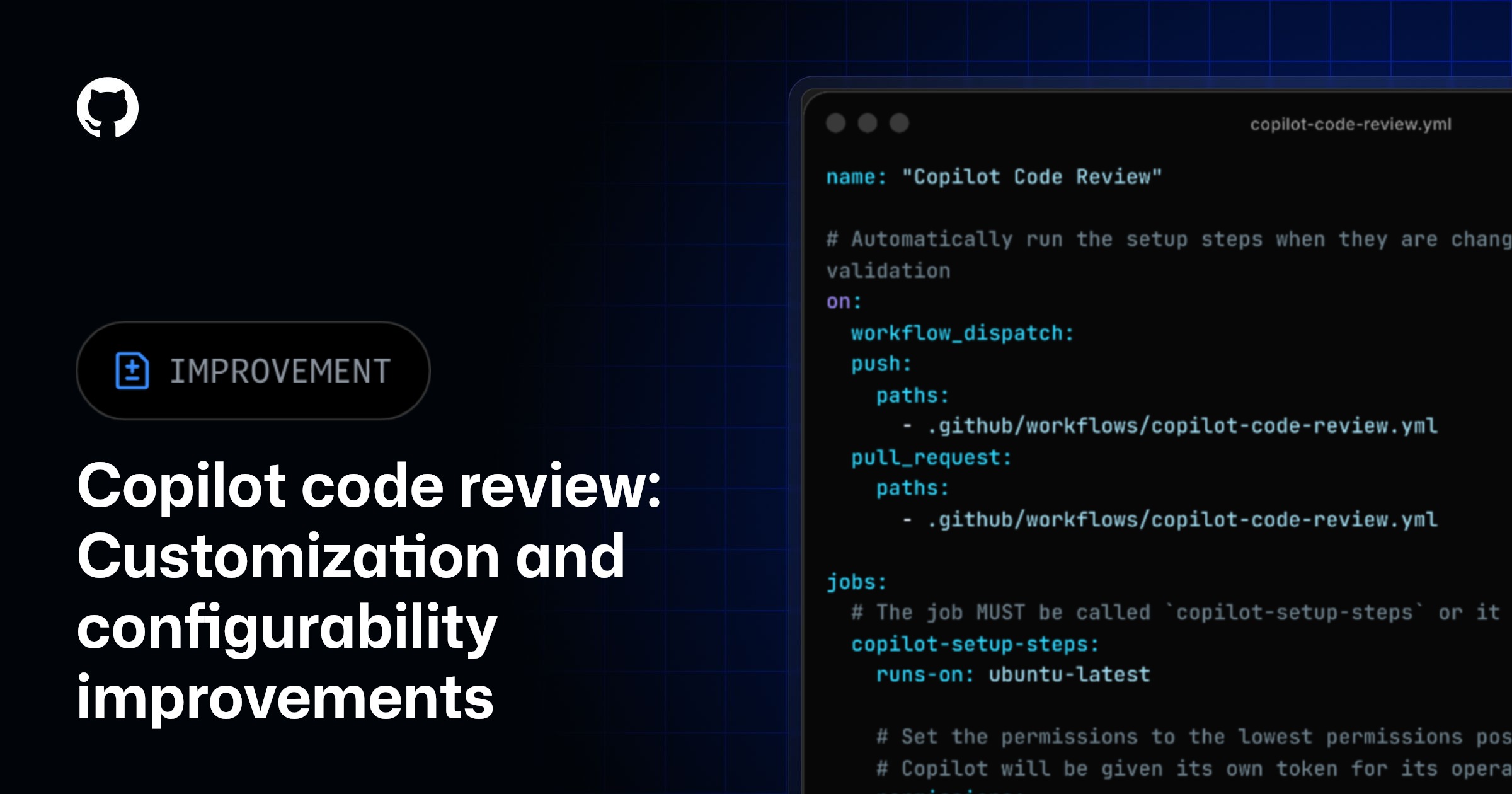
GitHub's Copilot code review has introduced significant customization and configurability improvements, allowing developers and administrators more control over their review processes. By reading custom instructions from the head branch, teams can now test and iterate on instructions without merging them first. The introduction of a copilot-code-review.yml file enables configuration of the runtime environment, including dependency installation and runner setup. Additionally, Copilot code review now operates behind a configurable firewall, enhancing security by restricting network access during reviews. These changes make Copilot code review more adaptable to specific team needs and security requirements.
GitHub Changelog
 © GitHub Changelog
Coding Toolscoding
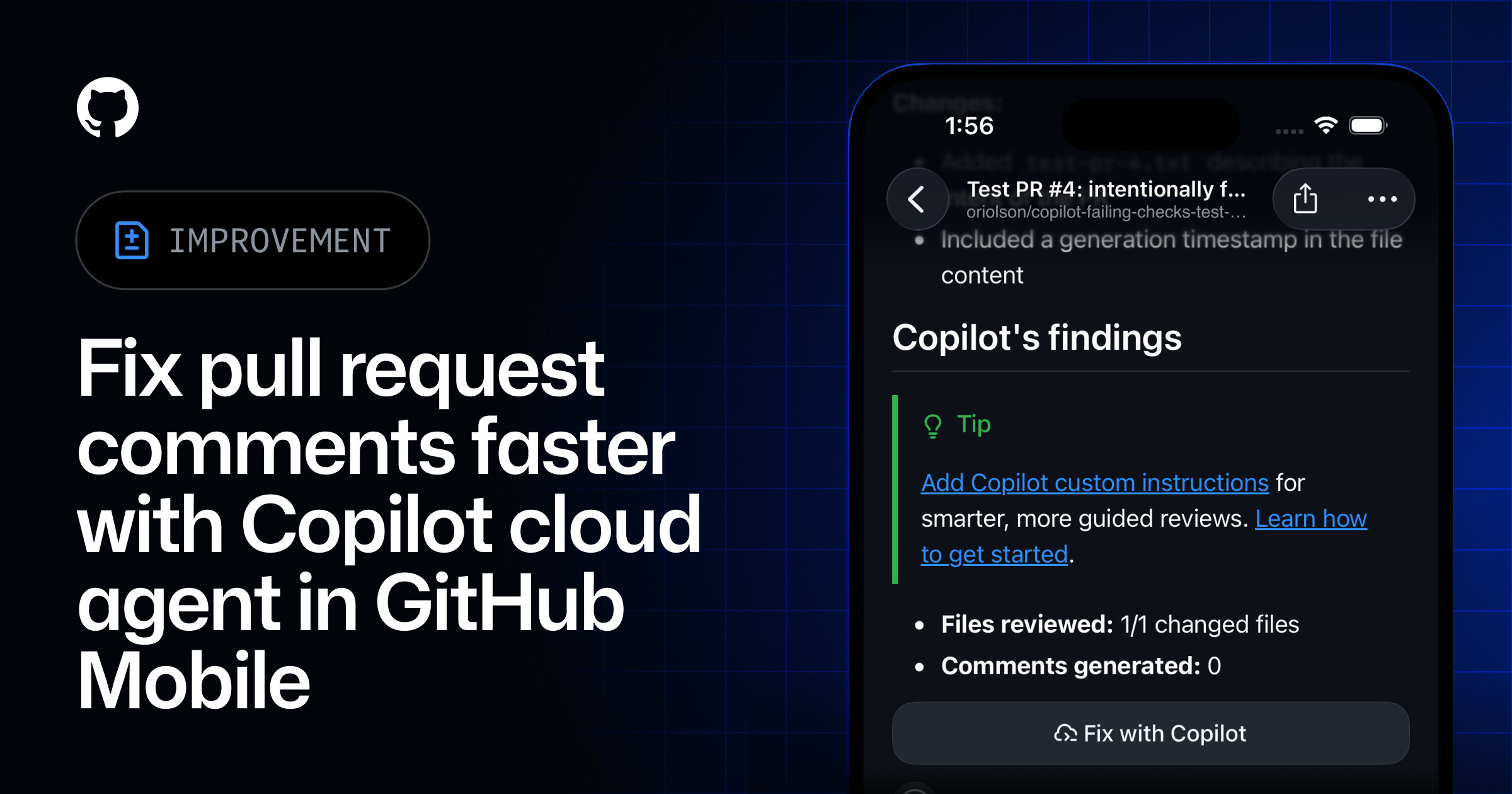
GitHub Mobile Adds Copilot Fix Feature
GitHub Mobile has rolled out a feature that lets users address pull request comments using the Copilot cloud agent. This addition allows developers to quickly respond to review feedback with a single tap, making it easier to incorporate changes while on the move. By embedding this capability into both the main view and individual review comments, GitHub Mobile enhances its functionality for developers who need to manage pull requests away from their desks. Now available on the latest versions for iOS and Android, this feature aims to keep projects progressing efficiently by enabling rapid responses to pull request comments.
GitHub Changelog
Coding Toolscoding
Claude Code v2.1.212 Update Released
The latest update to Claude Code, version 2.1.212, introduces several enhancements and fixes aimed at improving user experience and system reliability. Notably, the update allows users to fork conversations into new background sessions, enhancing multitasking capabilities. It also sets session-wide limits on WebSearch tool calls and subagent spawns to prevent runaway processes. Additionally, the update addresses various bugs, such as fixing issues with shell mode command execution and improving error messages for large request failures. These changes collectively enhance the stability and usability of the platform.
Claude Code Releases
© GitHub ChangelogCoding Toolscoding
GitHub Projects Adds Advanced Search Feature
GitHub has enhanced its Projects feature by introducing advanced search capabilities, allowing users to create precise views using logical operators like AND and OR. This update simplifies project management by eliminating the need for multiple views for different queries. Additionally, a new filter for pull request review states has been added, improving the ability to track review progress. A 90-day retention policy for deployment statuses has also been implemented, ensuring that only recent data is available through APIs. These changes streamline project workflows and data management for developers.
GitHub Changelog
 © GitHub Changelog
Coding Toolscoding
Xcode 27 Runner Image in Public Preview
GitHub has launched a public preview of the Xcode 27 runner image, allowing developers to build and test Apple applications using the latest Xcode toolchain on GitHub-hosted macOS runners. This update introduces a new support model where each macOS image is tied to a major Xcode version, simplifying the process of targeting specific toolchains. The new image is available only on arm64 macOS runners, not on Intel, and includes updated tools and versions. This release helps developers catch compatibility issues early and maintain up-to-date CI/CD pipelines.
GitHub Changelog
 © TechCrunch AI
Coding Toolscoding
DoorDash Launches Command-Line Tool for Developers
DoorDash has introduced a command-line interface (CLI) tool, dd-cli, allowing developers to order food directly from the command line. This move opens up DoorDash's platform to AI agents, enabling developers to integrate food ordering into their own applications. While the concept may seem humorous, it represents a step towards agentic commerce, where AI can automate everyday tasks. By providing this tool, DoorDash is expanding its service capabilities beyond traditional apps, allowing for more creative and customized uses of its platform.
TechCrunch AI
Coding Toolscoding
OpenAI's Creative Team Leverages Codex for Innovation
OpenAI's creative team is transforming their workflow by using Codex to develop custom creative tools and speed up the ideation process. With Codex's context-aware capabilities, they can prototype more efficiently, making it an invaluable partner in their projects. This collaboration shows how AI can be more than just an automation tool, serving as a catalyst for creativity and innovation. By integrating Codex, the team is able to push the boundaries of what's possible in creative development, demonstrating AI's potential to enhance productivity in non-traditional coding applications.
OpenAI
 © GitHub Changelog
Coding Toolscoding
GitHub Enhances Secret Scanning and Monitoring
GitHub has rolled out significant improvements to its secret scanning and public monitoring features, enhancing security for developers. By partnering with Resend, GitHub now scans for their tokens, ensuring exposed secrets are promptly addressed. The update also introduces new secret types from APIclub and Resend, and blocks VolcEngine secrets by default. Additionally, the secret_scanning_alert webhook now includes a secret_category field, allowing users to distinguish between default and generic detections. These enhancements provide developers with more robust tools to prevent data leaks and manage security alerts effectively.
GitHub Changelog
Coding Toolscoding
Claude Code v2.1.208 Update Released
The latest update to Claude Code, version 2.1.208, introduces several enhancements and bug fixes aimed at improving user experience and system stability. Notably, a new screen reader mode has been added to assist visually impaired users, and vim mode now supports custom insert-mode remaps. The update also addresses numerous bugs, such as memory leaks and session crashes, ensuring smoother operation. These changes make Claude Code more accessible and reliable, particularly for developers relying on its agent and background service functionalities.
Claude Code Releases
Coding Toolscoding
Claude Code v2.1.210 Release
The latest update to Claude Code, version 2.1.210, introduces several fixes and improvements aimed at enhancing user experience and system stability. Notably, a live elapsed-time counter has been added to prevent long-running tool calls from appearing stuck, and various bugs related to session management and command execution have been addressed. These changes make the platform more reliable, especially for developers relying on its tools for complex tasks. While no groundbreaking features are introduced, the update solidifies Claude Code's position as a dependable tool for developers.
Claude Code Releases
© GitHub ChangelogCoding Toolscoding
GitHub Copilot June Update for Visual Studio
GitHub's latest update for Copilot in Visual Studio 2026 introduces several enhancements aimed at improving user experience and trust. The update includes a new usage tracking system that provides real-time alerts for usage limits, ensuring developers are aware of their billing status. A trust validation feature for MCP servers enhances security by requiring user approval for changes. Notably, the modernization agent for C++ is now generally available, offering automated and guided upgrade paths. These updates make Copilot more integrated and user-friendly, especially for C++ developers looking to modernize their codebases.
GitHub Changelog
© GitHub ChangelogCoding Toolscoding
GitHub Copilot for JetBrains Enhances Customization
GitHub Copilot for JetBrains IDEs has expanded its customization capabilities, allowing developers to tailor the tool more closely to their workflows. The update introduces 'bring your own key' support, enabling the use of custom OpenAI-compatible endpoints with API keys. This flexibility is complemented by a more comprehensive plugin management experience, making it easier to integrate team-specific tools. Additionally, new features like local sandboxing and a built-in debugger skill for CLI sessions are now in public preview, enhancing the development environment's adaptability and debugging capabilities.
GitHub Changelog
 © The Verge AI
Coding Toolscoding
SpaceXAI's Grok Tool Uploaded User Code to Cloud
SpaceXAI's Grok Build AI tool was discovered to be uploading entire user codebases to Google Cloud, including files that were supposed to be excluded and sensitive information. This practice went beyond typical data retention norms, raising significant privacy concerns. After the issue was reported by Cereblab, SpaceXAI disabled the feature, and Elon Musk assured users that all previously uploaded data would be deleted. This situation underscores the critical need for robust data privacy measures in AI tools, especially those handling proprietary and sensitive data. The incident serves as a reminder of the potential risks associated with excessive data retention in AI development environments. SpaceXAI's response and Musk's commitment to data deletion reflect the importance of transparency and user control over data.
The Verge AI
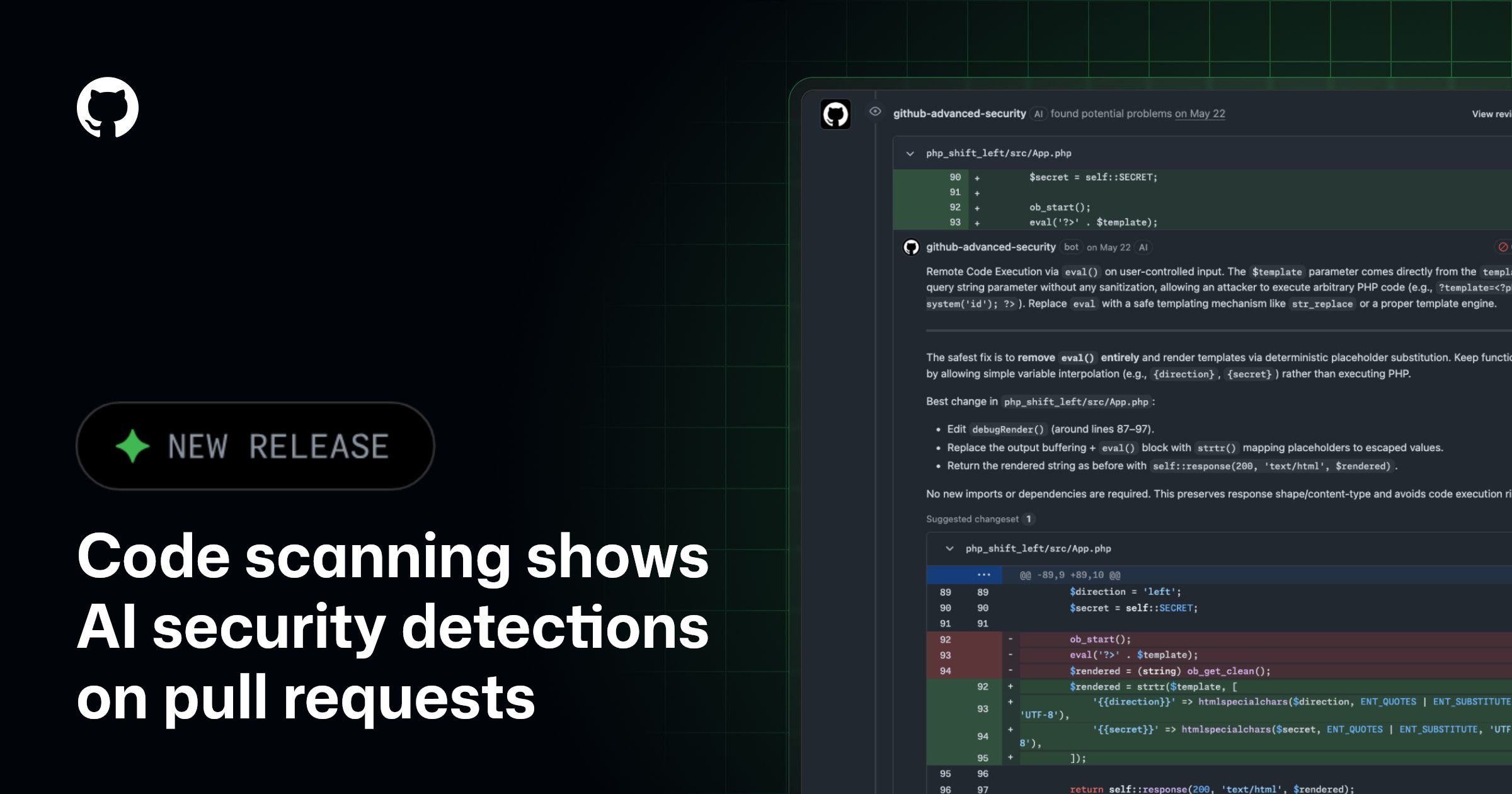 © GitHub Changelog
Coding Toolscoding
GitHub Adds AI Security Detections to Pull Requests
GitHub's latest feature brings AI-powered security detections directly into pull requests, enhancing its code scanning capabilities. This development broadens vulnerability coverage to include languages and frameworks not previously supported by CodeQL, allowing developers to catch potential issues earlier in the development cycle. By embedding these detections into the pull request process, developers can address security concerns before code is merged, making the review process more efficient. Currently in public preview, this feature requires a GitHub Copilot license and is available to users with GitHub Code Security, marking a significant advancement in proactive code security management.
GitHub Changelog
© GitHub ChangelogCoding Toolscoding
Dependabot Adds Default Package Cooldown
GitHub's Dependabot now introduces a default three-day cooldown period for version updates, aiming to mitigate the risk of supply chain attacks. This delay allows the community to identify and address any issues with new releases before they are automatically integrated into projects. While security updates remain immediate to ensure critical fixes are not delayed, developers can customize or opt out of this cooldown through their configuration files. This change enhances security without sacrificing control, providing a buffer against potentially compromised updates.
GitHub Changelog
 © GitHub Changelog
Coding Toolscoding
GitHub Copilot App Adds Security Review Feature
GitHub has introduced a new security review feature in its Copilot app, allowing developers to run AI-driven vulnerability scans directly within their coding environment. This feature, available in public preview, uses the /security-review command to identify high-confidence security issues and provide actionable suggestions. By integrating this tool into the Copilot app, GitHub aims to help developers catch and address vulnerabilities early in the development process, enhancing code security without disrupting workflow. This addition complements existing GitHub security tools, offering a more seamless and proactive approach to code safety.
GitHub Changelog
 © GitHub Changelog
Coding Toolscoding
GitHub Adds REST API for Secret Scanning Patterns
GitHub has introduced a new REST API feature that allows security teams to manage secret scanning custom patterns programmatically. This update enables users to create, edit, and delete custom patterns at various levels, including repository, organization, and enterprise. While the API supports basic CRUD operations, some actions like dry runs and final publishing still require the UI. This development streamlines the management of secret scanning, making it more accessible and efficient for developers and security teams.
GitHub Changelog
Coding Toolscoding
Claude Code v2.1.206 Update Released
The latest update to Claude Code, version 2.1.206, introduces several enhancements and fixes that streamline developer workflows. Notably, directory path suggestions have been added to the /cd command, and a new /doctor check helps manage CLAUDE.md files more efficiently. The update also improves the handling of git operations and background agent upgrades, reducing downtime. These changes aim to enhance the user experience by addressing common issues and optimizing performance, making Claude Code a more robust tool for developers.
Claude Code Releases
Coding Toolscoding
Claude Code v2.1.207 Update Released
Claude Code's latest update, v2.1.207, brings a host of bug fixes and improvements, enhancing user experience and system reliability. Notably, Auto mode is now accessible without opt-in on major platforms like Bedrock and Vertex AI, simplifying user access. The update also addresses several critical issues, such as terminal freezing during long responses and spurious prompt-injection warnings. These changes make Claude Code more robust and user-friendly, particularly for developers relying on its seamless integration and performance.
Claude Code Releases
 © GitHub Changelog
Coding Toolscoding
CodeQL 2.26.0 Enhances Security with AI Detection
CodeQL 2.26.0 marks a significant step forward for GitHub's static analysis engine, particularly in addressing security vulnerabilities. This release expands its capabilities to include Kotlin 2.4.0, while also adding a crucial query for identifying AI prompt injection risks in JavaScript and TypeScript. By refining existing queries and introducing new ones across languages like C#, Go, and Python, the update reduces false positives and enhances detection accuracy. These improvements make CodeQL a more powerful tool for developers focused on securing their code, especially in AI-driven contexts. The update is automatically available to GitHub code scanning users, ensuring immediate benefits for those on the platform.
GitHub Changelog
© GitHub ChangelogCoding Toolscoding
GitHub REST API Enhances Multi-User Budget Tracking
GitHub has streamlined budget management for enterprises by introducing a REST API endpoint that allows for efficient tracking of individual user consumption against multi-user budgets. Previously, checking each user's budget usage required separate API calls, making the process cumbersome for large organizations. Now, enterprise owners and billing managers can quickly identify users nearing their budget limits, thanks to new filtering and sorting capabilities. This update simplifies financial oversight and reduces the need for custom scripts, making budget management more accessible and efficient.
GitHub Changelog
 © Hugging Face Blog
Coding Toolscoding
Profiling PyTorch Attention: Insights and Optimizations
Hugging Face's latest blog post delves into the intricacies of profiling attention mechanisms in PyTorch, revealing the impact of different implementations on performance. By comparing naive and in-place operations, the article demonstrates how a minor adjustment can eliminate unnecessary memory operations, enhancing efficiency in large models. The post also evaluates PyTorch's built-in Scaled Dot Product Attention, which simplifies coding but may lead to unexpected performance variations depending on the backend. This exploration highlights the critical role of understanding underlying operations for deploying models effectively.
Hugging Face Blog
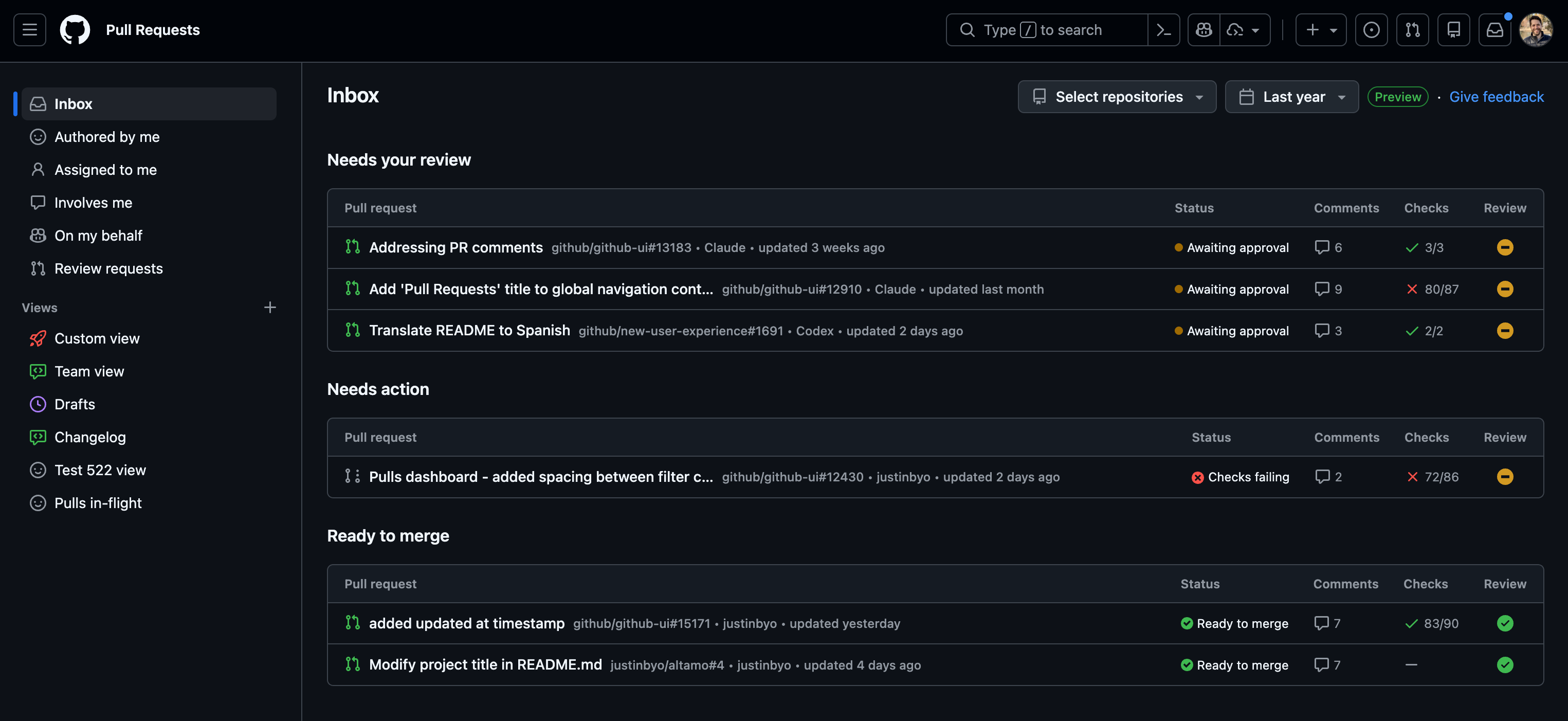 © GitHub Changelog
Coding Toolscoding
GitHub Launches New Pull Requests Dashboard
GitHub has officially launched its new pull requests dashboard, providing a centralized hub for developers to manage and prioritize their pull requests. This feature, previously in public preview, now offers enhanced filtering and search capabilities, allowing users to create custom views and utilize advanced search queries. The dashboard aims to streamline the workflow for both individual contributors and managers by surfacing critical pull requests that require attention. This update marks a significant improvement in how developers can interact with and manage their contributions across multiple projects.
GitHub Changelog
 © GitHub Changelog
Coding Toolscoding
GitHub Introduces Granular Code Quality Targeting
GitHub has rolled out a new feature allowing organization owners to selectively enable or disable Code Quality on specific repositories, rather than applying it universally. This enhancement provides greater control, enabling users to target repositories based on custom properties, visibility, or fork status. The ability to enforce these settings ensures that Code Quality remains consistent across selected repositories, preventing unauthorized changes by repository administrators. This feature is currently in public preview for GitHub Enterprise Cloud and GitHub Team plans, offering a more tailored approach to code management.
GitHub Changelog
 © GitHub Changelog
Coding Toolscoding
GitHub Copilot Offers Repository Overviews
GitHub Copilot now provides users with a high-level overview of repositories they are exploring for the first time. This feature allows developers to quickly understand a repository's purpose, technologies, and contribution guidelines without prior contributions. If a repository lacks a README, Copilot can generate one, offering insights into the project's technologies and functions. This enhancement is available to all GitHub Copilot plans, making it easier for developers to get acquainted with new projects efficiently.
GitHub Changelog
Coding Toolscoding
Claude Code v2.1.202 Release Enhances Workflow Management
The latest update to Claude Code, version 2.1.202, introduces several improvements aimed at enhancing workflow management and stability. Notably, a new 'Dynamic workflow size' setting allows users to better control the scale of dynamic workflows, offering flexibility without imposing strict limits. The update also enhances telemetry by adding attributes that help reconstruct workflow activities, improving debugging and analysis. Numerous bug fixes address issues ranging from session management to command execution, ensuring a smoother user experience. This release marks a step forward in making Claude Code more robust and user-friendly.
Claude Code Releases
Coding Toolscoding
Claude Code v2.1.205 Update Released
The latest update to Claude Code, version 2.1.205, introduces several important fixes and improvements. Notably, it addresses issues with session transcript file tampering and resolves multiple bugs affecting background agents and task notifications. The update also enhances the auto mode and agent view, providing clearer task states and reducing memory usage during updates. These changes aim to streamline user experience and improve the reliability of the platform, making it more robust for developers.
Claude Code Releases
 © GitHub Changelog
Coding Toolscoding
Managed Copilot Settings Now Deployable via MDM
GitHub has expanded its Copilot management capabilities, allowing enterprise administrators to deploy settings directly to devices using mobile device management (MDM) tools. This update means that settings can be consistently applied across VS Code and Copilot CLI, regardless of user sign-in methods. By integrating with tools like Microsoft Intune and Jamf, organizations can enforce governance more effectively. This development simplifies the management of Copilot settings, ensuring uniformity and compliance across different environments.
GitHub Changelog
 © GitHub Changelog
Coding Toolscoding
GitHub Copilot Enhancements in VS Code June 2026
The latest updates to Visual Studio Code significantly enhance the GitHub Copilot experience, focusing on agent-driven development. With a smarter integrated browser, developers can now manage web workflows directly within VS Code, including agent-driven validation and remote browsing. The updates also introduce improved session management, allowing for parallel tasks and clearer cost visibility. These changes make it easier for developers to discover and customize models, while Autopilot enhancements allow agents to complete tasks more independently. Overall, these updates streamline the development process, offering developers more control and efficiency.
GitHub Changelog
© GitHub ChangelogCoding Toolscoding
setup-java v5.5.0 enhances JDK security and Maven use
The setup-java v5.5.0 release introduces significant improvements for Java developers, notably adding cryptographic signature verification for JDK downloads. This ensures that only verified JDKs are installed, enhancing security for Temurin and Microsoft distributions. The update also supports the new Tencent Kona JDK distribution, allowing developers to integrate it seamlessly. Additionally, Maven users benefit from quieter build logs and improved toolchain management, making the development process smoother and more efficient. These changes collectively enhance the reliability and usability of Java development workflows.
GitHub Changelog
 © GitHub Changelog
Coding Toolscoding
npm v12 Enhances Security with New Defaults
npm v12 introduces significant security enhancements by making install-time security defaults mandatory. This release requires explicit permission for running dependency lifecycle scripts and resolving Git or remote URL dependencies, which were previously automatic. Additionally, npm is phasing out the use of 2FA-bypass granular access tokens for sensitive operations, pushing for more secure practices. These changes aim to bolster security and require developers to adapt their workflows to comply with the new standards, marking a shift towards more secure package management.
GitHub Changelog
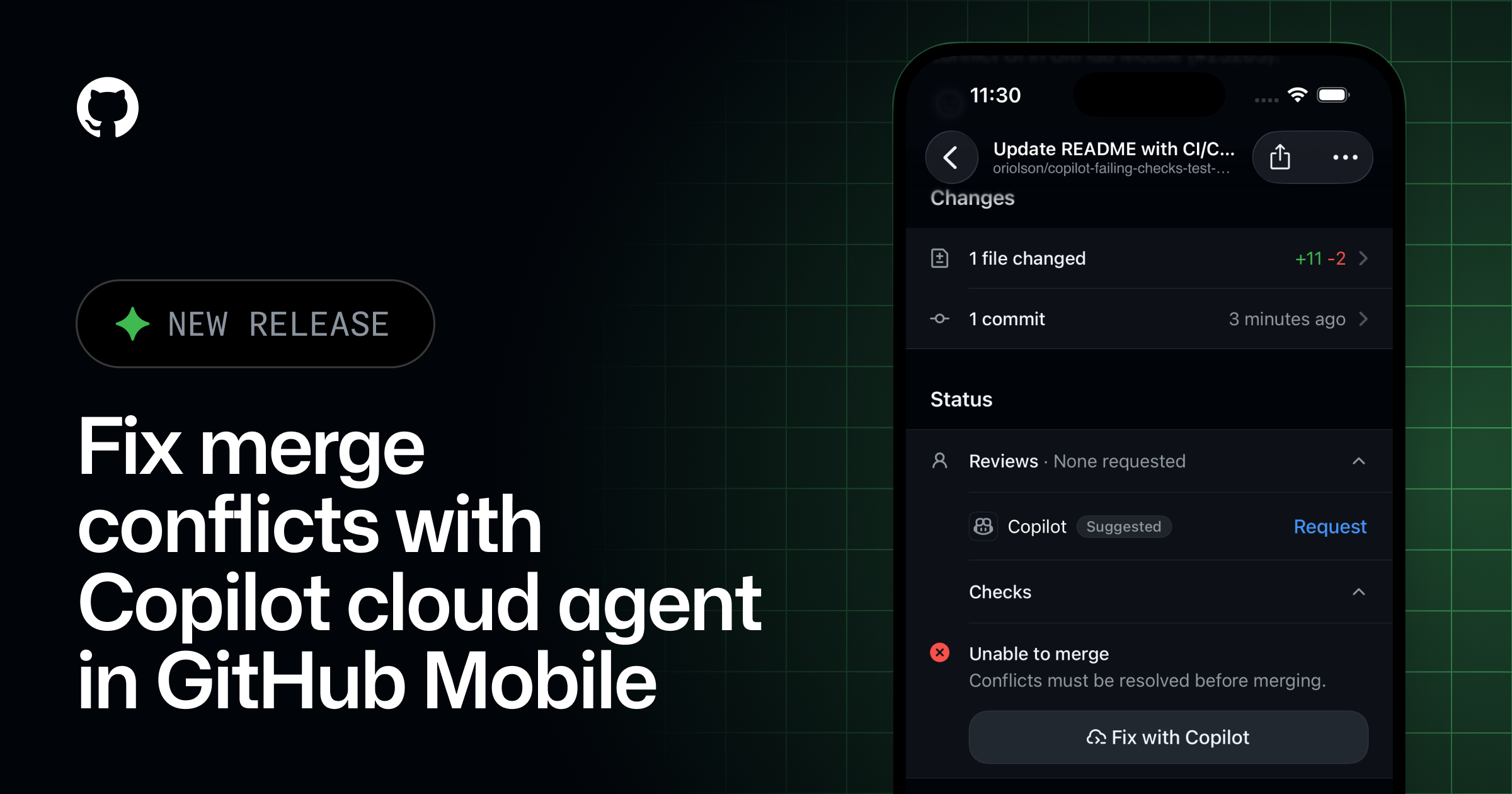 © GitHub Changelog
Coding Toolscoding
GitHub Mobile Adds Copilot for Merge Conflicts
GitHub Mobile now empowers developers to resolve merge conflicts using the Copilot cloud agent directly from their mobile devices. This feature allows users to initiate the Copilot workflow from the pull request merge box, making conflict management more accessible while on the move. By selecting 'Fix with Copilot', developers can automatically generate a comment to address conflicts, significantly simplifying the process. This enhancement boosts the mobile app's capabilities, enabling developers to tackle issues like failing workflows and code review comments without relying on a desktop setup.
GitHub Changelog
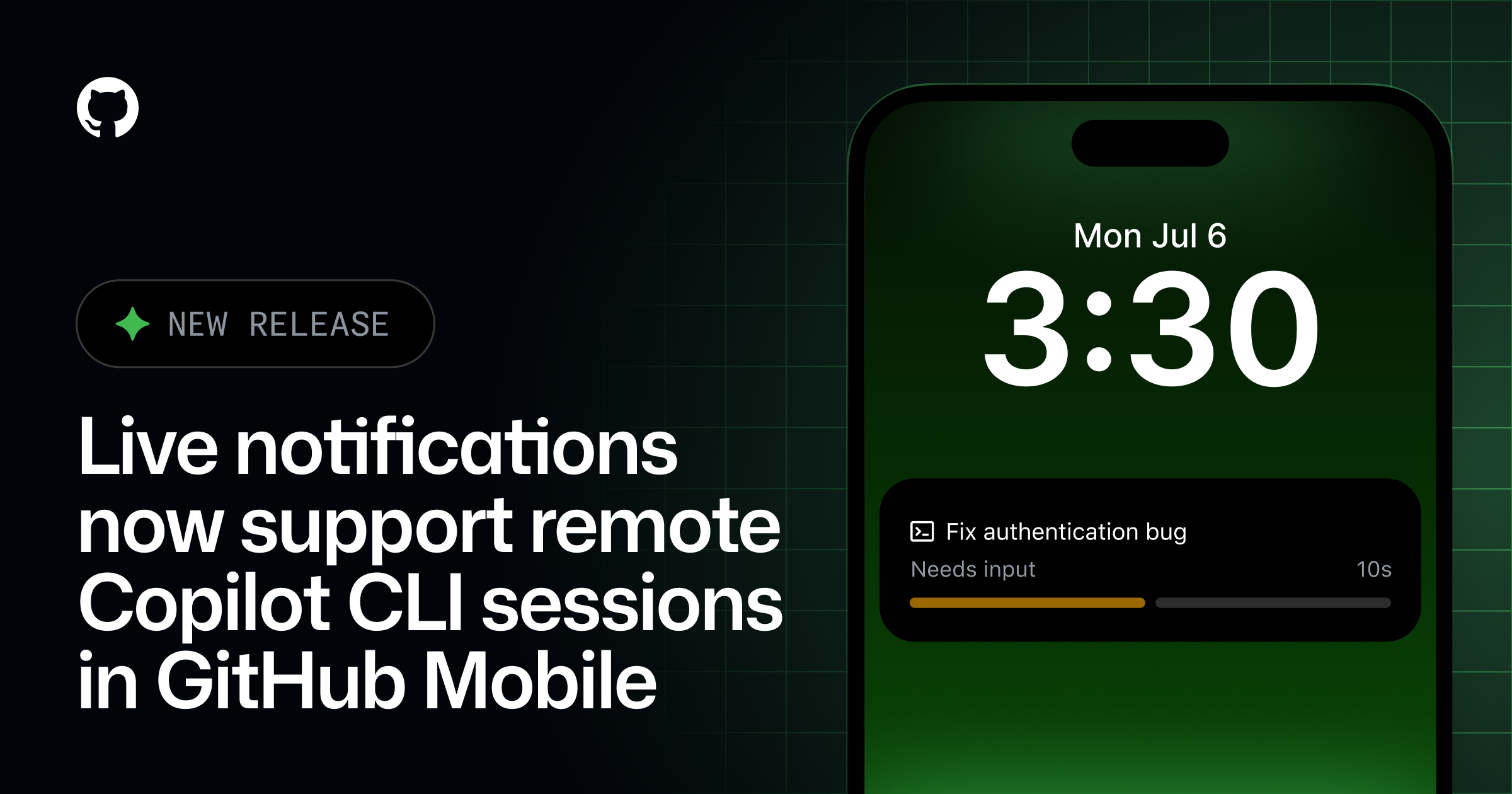 © GitHub Changelog
Coding Toolscoding
GitHub Mobile Adds Live Notifications for Copilot CLI
GitHub Mobile has introduced live notifications for remote Copilot CLI sessions, enhancing connectivity for developers on the move. This feature allows users to receive real-time updates on their mobile devices, keeping them informed about session progress and when their input is needed. By integrating live activities on iOS and live update notifications on Android, developers can easily track and manage their coding sessions remotely. This update extends the functionality of GitHub Mobile, making it a more versatile tool for developers who need to monitor their work outside of traditional environments.
GitHub Changelog
© GitHub ChangelogCoding Toolscoding
Codex and Agent Enhancements in JetBrains IDEs
JetBrains IDEs have introduced Codex as a new agent provider, offering developers more flexibility in choosing the right tool for their tasks. This update also brings Hooks support and enhanced MCP server management, allowing for more customized and efficient workflows. With the inclusion of custom model support for GitHub Copilot Business and Enterprise users, administrators can now configure models directly within GitHub settings. These enhancements, alongside performance improvements, make the JetBrains environment more robust and adaptable for developers.
GitHub Changelog
Coding Toolscoding
Claude Code v2.1.196 Update Released
The latest update to Claude Code, version 2.1.196, introduces several enhancements and fixes aimed at improving user experience and system reliability. Notably, organization default models can now be set by admins, and file attachments in chat are clickable for easier access. The update also addresses multiple bugs, such as issues with background job handling and session status reporting, ensuring smoother operation. These changes make Claude Code more robust and user-friendly, particularly for developers managing complex workflows.
Claude Code Releases
Coding Toolscoding
Claude Code v2.1.199 Update Released
The latest update to Claude Code, version 2.1.199, brings a series of bug fixes and improvements aimed at enhancing the stability and functionality of the platform. Notably, it addresses issues with SSL certificate errors and improves the handling of streaming responses during server errors. The update also resolves problems with subagents and background-agent daemons, ensuring more reliable performance across different operating systems. These changes make the platform more robust, particularly in handling errors and managing resources efficiently.
Claude Code Releases
Coding Toolscoding
Claude Code v2.1.200 Release
The latest update to Claude Code, v2.1.200, introduces several important fixes and changes that enhance stability and usability. Notably, the update addresses issues with background sessions and agent daemons, ensuring smoother operation and preventing crashes. The default permission mode has been changed to 'Manual' across various interfaces, providing users with more control. Additionally, improvements have been made for screen-reader output and installation processes, making the tool more accessible and user-friendly. These changes collectively aim to provide a more reliable and efficient experience for developers using Claude Code.
Claude Code Releases
 © GitHub Changelog
Coding Toolscoding
GitHub Copilot Enhances Usage Metrics Accuracy
GitHub has refined its Copilot usage metrics API, enhancing the accuracy and completeness of its reports. The updates include the Copilot CLI now reporting suggested lines of code, which previously went untracked, and more precise identification of users' IDEs through server-side telemetry. Additionally, AI credit consumption is now more accurately attributed, resolving previous discrepancies where some users' usage was not reflected. These improvements mean enterprise administrators and organization owners can now rely on more comprehensive and trustworthy data to understand Copilot's impact and usage patterns.
GitHub Changelog
© GitHub ChangelogCoding Toolscoding
GitHub Copilot CLI Now Uses GITHUB_TOKEN
GitHub has streamlined the use of Copilot CLI in GitHub Actions by allowing it to authenticate using the built-in GITHUB_TOKEN instead of requiring a personal access token. This change reduces the security risks associated with managing long-lived tokens and simplifies the setup for developers. Organizations can now directly bill AI credits consumed by Copilot CLI to their accounts, provided they enable the necessary policies. This update makes it easier for developers to integrate Copilot CLI into their workflows without additional secret management, enhancing both security and convenience.
GitHub Changelog
© GitHub ChangelogCoding Toolscoding
GitHub Copilot Agent Session Streaming in Public Preview
GitHub has launched a public preview for Copilot agent session streaming, allowing Enterprise Cloud customers to access detailed session data across all Copilot clients. This feature provides visibility into AI usage, enabling enterprises to manage prompts, responses, and tool calls effectively. Users can access this data via a streaming endpoint or REST API, integrating with tools like Microsoft Purview for seamless auditability. This development enhances enterprise control over AI interactions, offering a new level of transparency and management capability.
GitHub Changelog
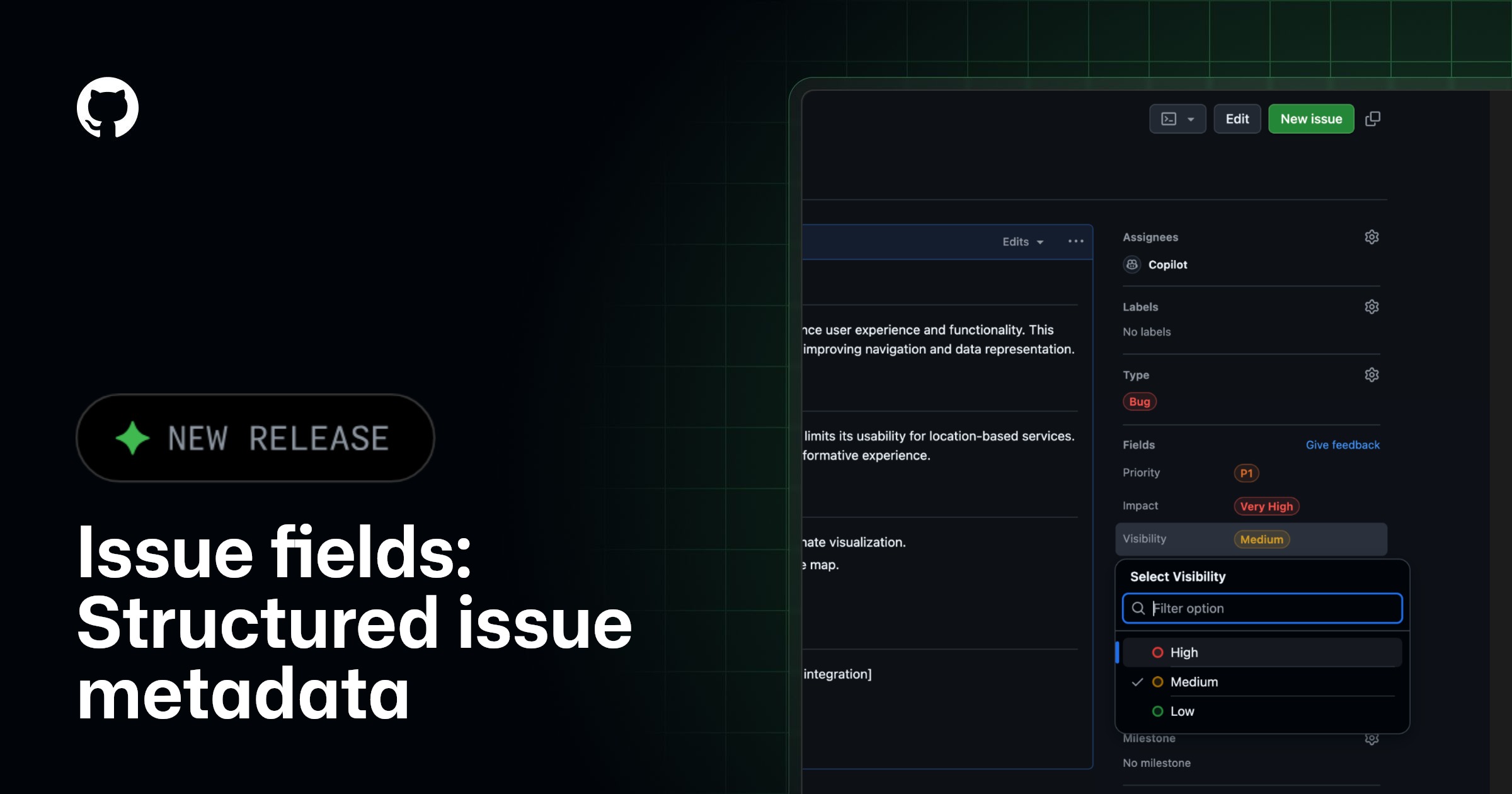 © GitHub Changelog
Coding Toolscoding
GitHub Issue Fields Now Generally Available
GitHub's issue fields feature is now accessible to all organizations, enhancing the way issues are managed with structured metadata. This update allows users to see priority and effort directly on the issues list, making project management more transparent. Integration with GitHub's MCP server enables AI tools like Copilot to interact with these fields, potentially automating issue handling. The feature now supports international characters and offers visibility controls for public projects, expanding its usability. Organizations can customize these fields, ensuring consistent issue tracking across repositories. This release marks a significant step in improving project management capabilities on GitHub.
GitHub Changelog
Coding Toolscoding
Claude v2.1.198 Release Enhances Agent Functionality
The latest Claude update, version 2.1.198, brings notable advancements in agent capabilities and user experience. Background agents now have the capability to autonomously commit, push, and open draft PRs, which enhances the coding workflow by reducing manual intervention. The update also introduces a new /dataviz skill, providing guidance for chart and dashboard design, thus broadening Claude's application in data visualization. Additionally, improved error handling with automatic retries for transient network errors minimizes disruptions. These enhancements make Claude a more robust tool for developers, offering increased efficiency and reliability.
Claude Code Releases
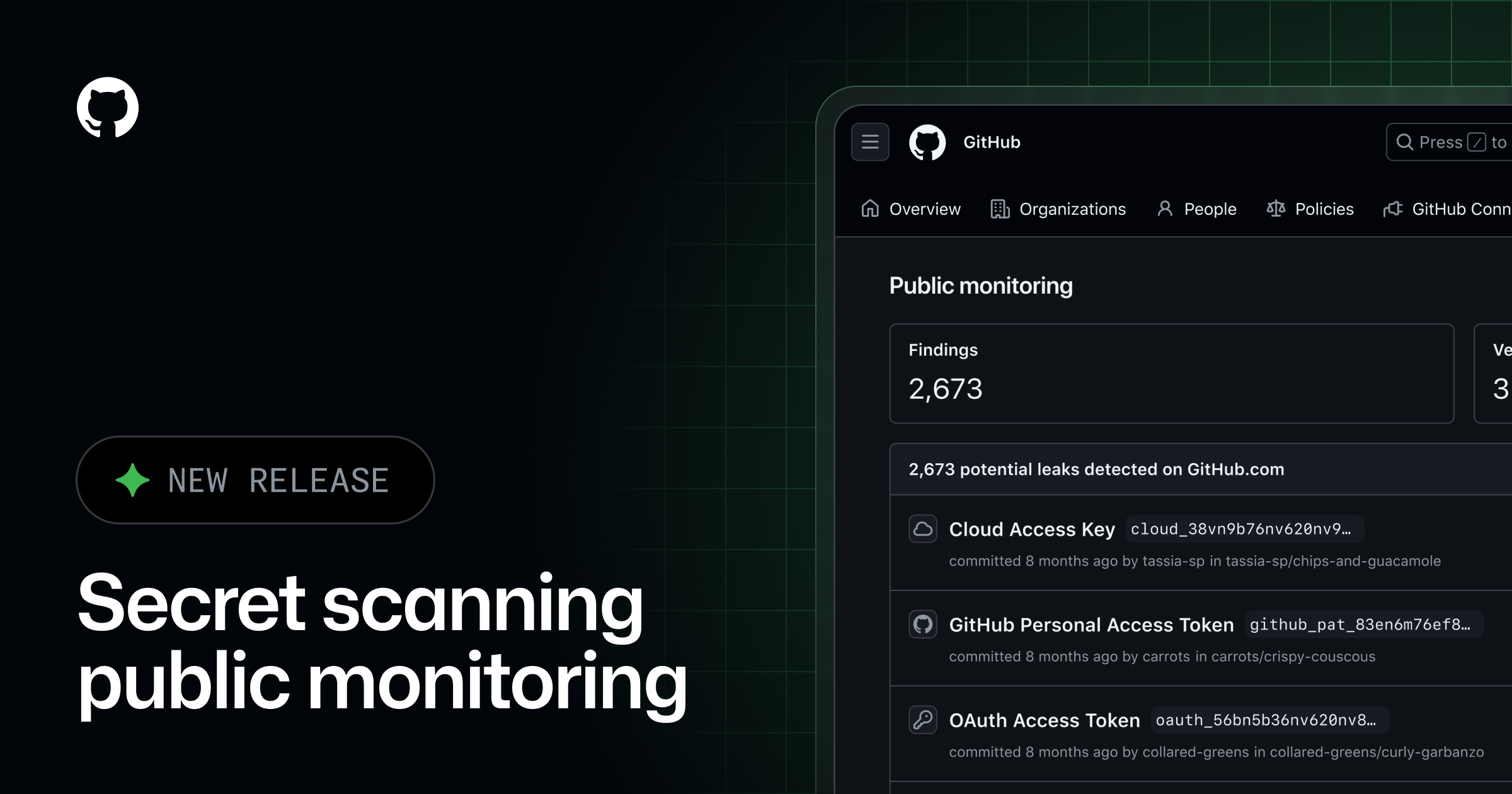 © GitHub Changelog
Coding Toolscoding
GitHub Launches Public Monitoring for Secret Leaks
GitHub has introduced a new public monitoring feature for enterprises, aimed at detecting secret leaks across the entire public surface of GitHub. This tool allows organizations to identify and address vulnerabilities in real-time, even if the leaks occur outside their tracked repositories. By leveraging GitHub's identity layer and verified domains, enterprises can quickly attribute exposed secrets back to their source. This proactive approach helps prevent potential abuse by bad actors, offering a significant enhancement in security for GitHub Enterprise Cloud customers.
GitHub Changelog
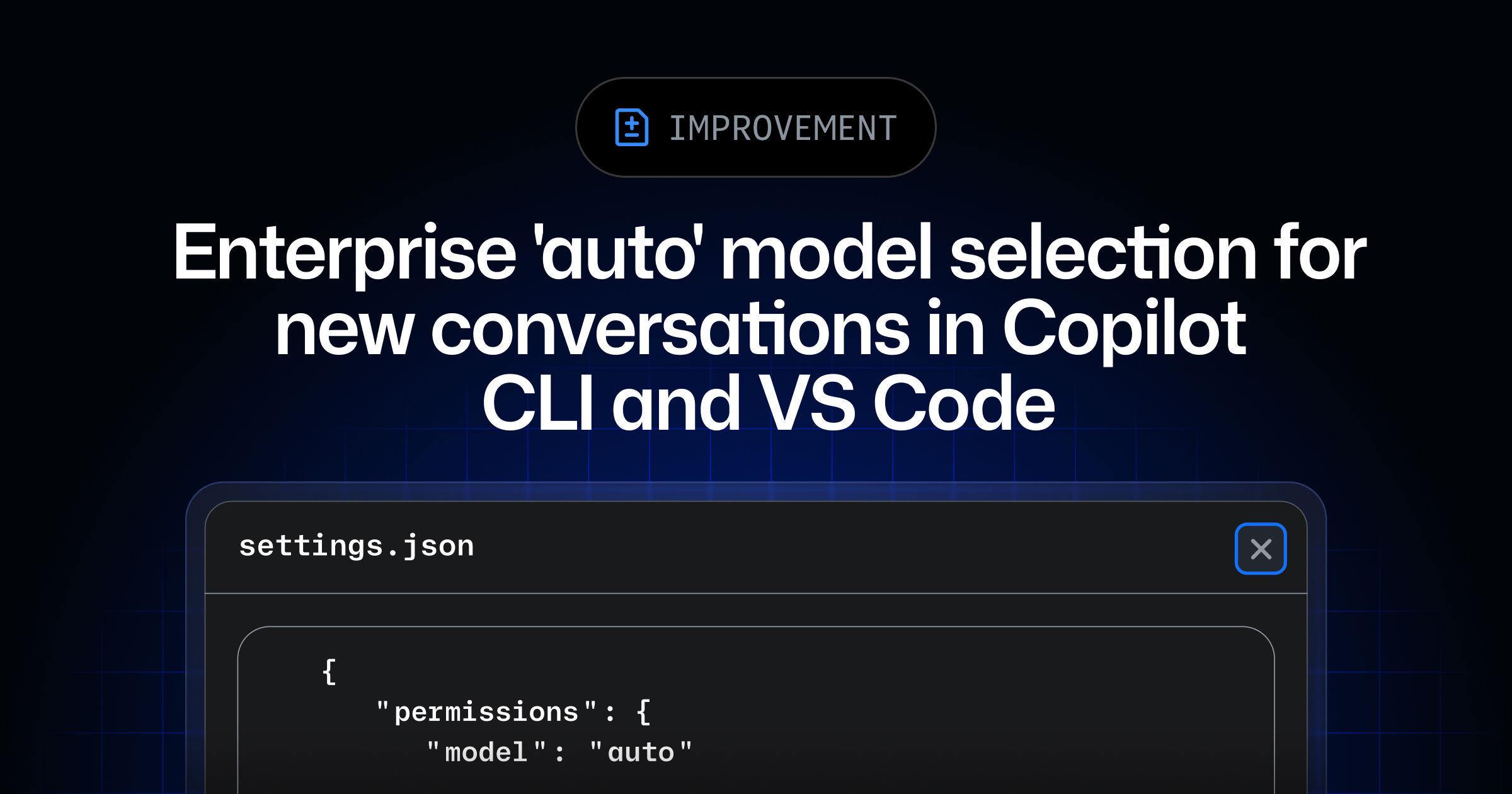 © GitHub Changelog
Coding Toolscoding
GitHub Copilot Enables Auto Model Selection for Enterprises
GitHub has introduced a new feature for enterprise users of Copilot, allowing administrators to set auto model selection as the default for new conversations. This change is implemented through the managed-settings.json file, enabling a more streamlined setup for organizations using Copilot Business or Enterprise. While this feature automates model selection, users retain the flexibility to switch models per conversation. This update simplifies the management of AI model settings, making it easier for enterprises to maintain consistency across their teams.
GitHub Changelog
© GitHub ChangelogCoding Toolscoding
Microsoft C++ Language Server Plugin for Copilot CLI
Microsoft's new C++ Language Server plugin for the Copilot CLI marks a significant improvement for developers by automating the generation of the compile_commands.json file. This file is essential for the language server to accurately interpret code, and its creation previously required manual effort. The plugin integrates directly with CMake and MSBuild, reducing the complexity of project setup and ongoing maintenance. By allowing developers to install the plugin directly through Copilot CLI, it ensures they can easily keep their projects updated and configured correctly. This development makes Copilot CLI more accessible and efficient for C++ developers, enhancing their coding experience across various platforms.
GitHub Changelog
 © GitHub Changelog
Coding Toolscoding
GitHub Copilot Vision Now Generally Available
GitHub has made Copilot Vision generally available, allowing users to attach images and PDFs directly to chat prompts. This feature enables Copilot to reason about visual content alongside code, enhancing its utility for developers. Previously, this capability required specific policy settings for business and enterprise users, but it is now enabled by default for all Copilot subscribers. This move simplifies access and broadens the tool's applicability, making it a more versatile assistant for coding tasks.
GitHub Changelog
© GitHub ChangelogCoding Toolscoding
GitHub Copilot Adds AI Credit Session Limits
GitHub Copilot has introduced a new feature allowing users to set AI credit session limits in both its CLI and SDK. This feature is particularly beneficial for automation tasks where continuous monitoring isn't feasible, as it caps the AI credit usage for a session. Once the limit is reached, the agent concludes its tasks and notifies the user, preventing unexpected overuse. This update is available in public preview for various Copilot plans and aims to provide better control over AI resource expenditure without interrupting ongoing tasks.
GitHub Changelog
 © GitHub Changelog
Coding Toolscoding
GitHub Copilot Browser Tools Now Generally Available
GitHub has made its browser tools for Copilot in VS Code generally available, allowing agents to interact with live web apps directly. This feature enables agents to perform actions like navigating pages, clicking, typing, and even running scripted flows, enhancing the automation capabilities within VS Code. Privacy and security are prioritized, with tabs being private by default and sensitive permissions requiring explicit user approval. This development marks a significant step in integrating browser-based automation into the developer workflow, offering a more seamless and controlled environment for testing and debugging web applications.
GitHub Changelog
 © TechCrunch AI
Coding Toolscoding
Cursor launches mobile app for coding agents
Cursor is expanding its reach with the launch of Cursor Mobile, allowing users to manage coding agents directly from their phones. This move aligns with the industry's shift towards mobile AI coding tools, as seen with similar offerings from Anthropic and OpenAI. The app builds on Cursor 2.0's focus on independent coding agents, enabling developers to engage with these agents without needing a desktop setup. This development reflects a growing trend where developers are increasingly managing code-writing agents on the go, highlighting a significant change in how coding is approached.
TechCrunch AI
Coding Toolscoding
Claude Code v2.1.195 Release
The latest update to Claude Code, version 2.1.195, brings a series of fixes and improvements aimed at enhancing user experience and functionality. Notably, it introduces a feature to disable mouse interactions in fullscreen mode while retaining scroll capabilities, and addresses issues with voice dictation on macOS and languages without spaces. The update also resolves problems with plugin management and background job handling, ensuring smoother operation across different environments. These changes make Claude Code more reliable and user-friendly, particularly for developers working with complex projects.
Claude Code Releases
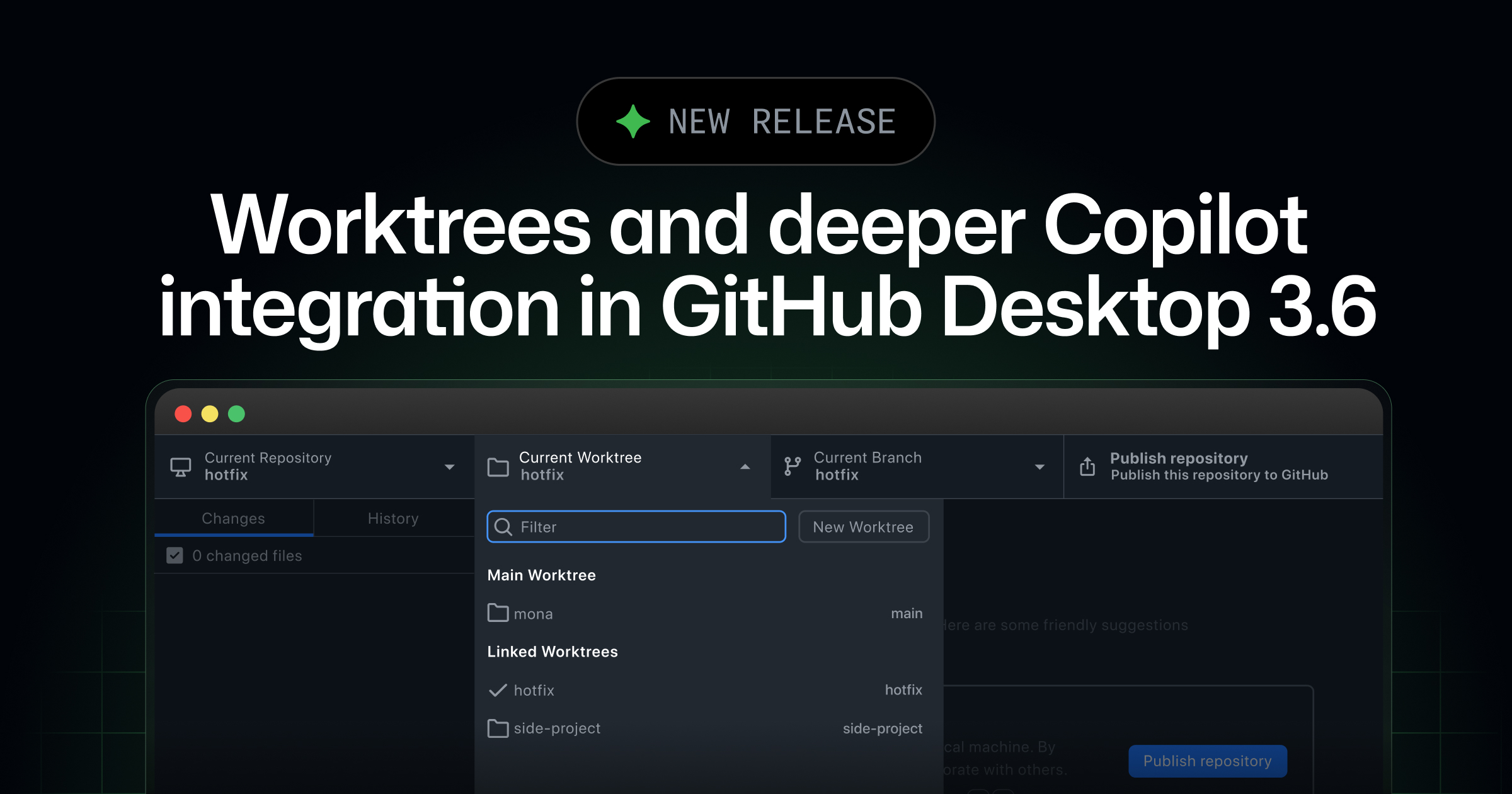 © GitHub Changelog
Coding Toolscoding
GitHub Desktop 3.6 Enhances Copilot Integration
GitHub Desktop 3.6 introduces significant enhancements with deeper integration of GitHub Copilot, making commit authoring and merge conflict resolution more intuitive. The update leverages the Copilot SDK, allowing users to select from various models and even connect third-party providers. This version also supports Git worktrees, enabling developers to manage multiple branches without the hassle of stashing changes or creating extra clones. These improvements streamline the Git workflow, making it more efficient and aligned with repository standards.
GitHub Changelog
Coding Toolscoding
Claude Code v2.1.187 Release
The latest update to Claude Code, version 2.1.187, introduces several enhancements and fixes that improve usability and functionality. Notably, it adds a sandbox.credentials setting to prevent sandboxed commands from accessing sensitive files, and introduces model restrictions based on organizational settings. The update also addresses various bugs, such as fixing remote MCP tool calls that previously hung indefinitely and improving the handling of structured output. These changes make the platform more secure and efficient, enhancing the overall user experience.
Claude Code Releases
Coding Toolscoding
Claude Code v2.1.193 Update Released
Claude Code's latest update, v2.1.193, introduces several enhancements aimed at improving user experience and system efficiency. Notably, the update includes a new auto-mode classifier for Bash/PowerShell commands, providing more comprehensive command routing. Additionally, OpenTelemetry logging now captures assistant response text, offering deeper insights into model interactions. The update also addresses several bugs, such as issues with background tasks and agent prompts, ensuring smoother operation. These changes make Claude Code more robust and user-friendly, particularly for developers relying on its automation capabilities.
Claude Code Releases
 © Hugging Face Blog
Coding Toolscoding
Run vLLM Server on HF Jobs with One Command
Hugging Face has streamlined the process of deploying a vLLM server with a single command, making it easier for developers to test and evaluate models. By using the official vllm/vllm-openai image and specifying a GPU flavor, users can quickly set up a server for model inference. This approach allows for flexible scaling, accommodating larger models by adjusting GPU resources and parallel processing settings. The integration with Hugging Face's infrastructure simplifies access and management, providing a practical solution for developers needing quick, temporary model deployments.
Hugging Face Blog
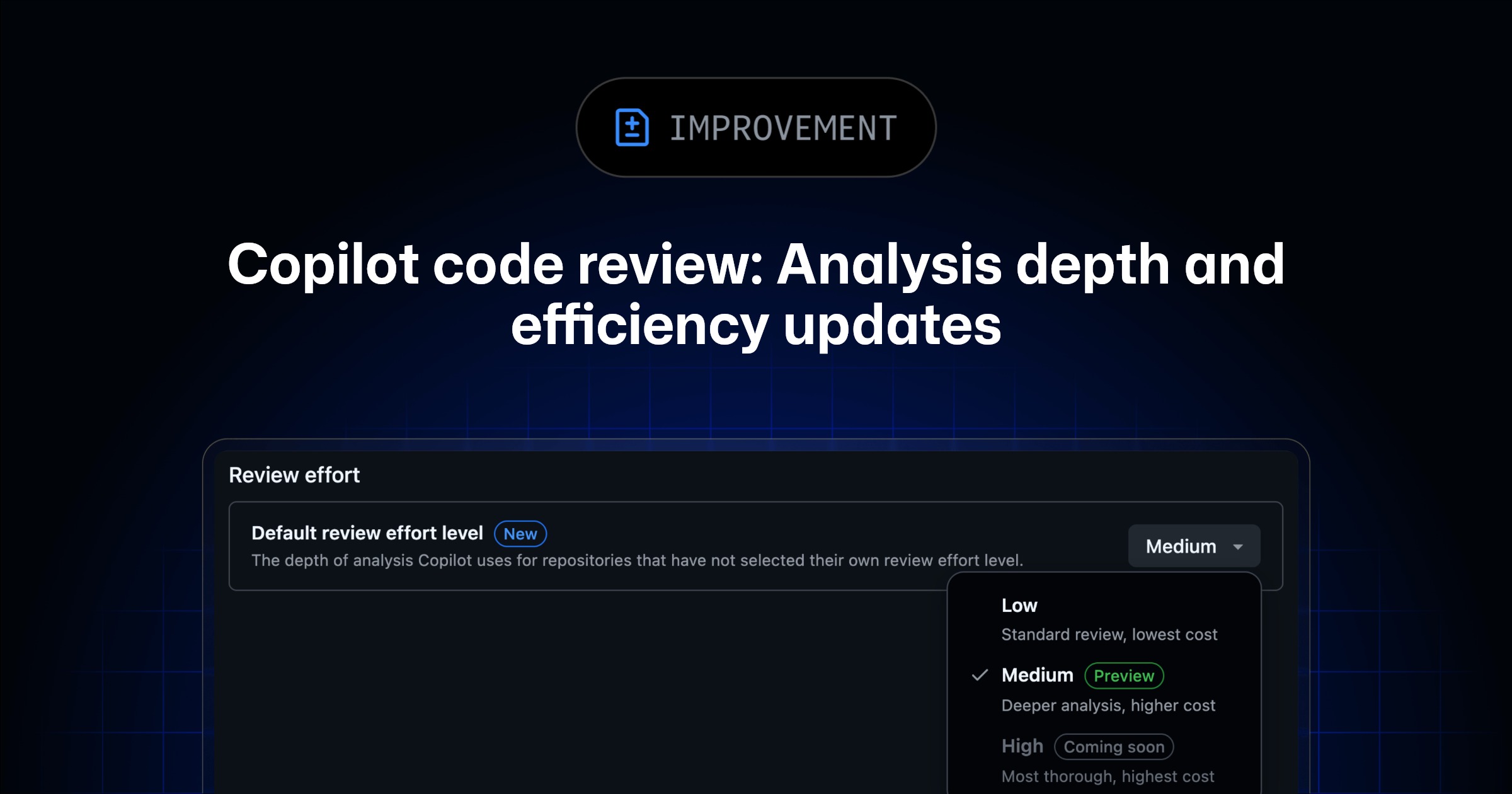 © GitHub Changelog
Coding Toolscoding
GitHub Copilot Enhances Code Review Efficiency
GitHub's Copilot code review has become more efficient with the integration of built-in file exploration tools from the Copilot CLI and SDK. This update reduces review costs by about 20% without altering existing workflows, thanks to the use of tools like grep and rg. Additionally, users in the Medium analysis depth public preview can now benefit from improved configurability and visibility of review depth. Organizations can set default review levels, enhancing control over the review process. These changes make Copilot's code review more focused and cost-effective.
GitHub Changelog
© GitHub ChangelogCoding Toolscoding
Enterprise Control for GitHub Copilot Plugin Installations
GitHub has introduced a new feature for enterprises using Copilot CLI and VS Code, allowing them to enforce stricter control over plugin installations. By adding 'strictKnownMarketplaces' to the enterprise-managed settings, organizations can ensure that only plugins from approved marketplaces are installed. This move enhances security by preventing the installation of potentially untrusted plugins, aligning with enterprise governance strategies. This update is now in public preview, offering businesses a more secure and controlled development environment.
GitHub Changelog
 © GitHub Changelog
Coding Toolscoding
GitHub Enhances Control Over Hosted Runners
GitHub is giving organizations more control over their GitHub-hosted runners in Actions, particularly for macOS environments. Admins can now disable standard labels for hosted runners and add macOS runners to specific runner groups, allowing for more precise management of resources. This update enables organizations to restrict access to macOS runners, enforce concurrency limits, and route jobs through policy-driven runner groups. While this feature enhances control and security, it is currently available only on Team and Enterprise plans, and network configurations for macOS runners are not yet supported.
GitHub Changelog
 © GitHub Changelog
Coding Toolscoding
GitHub Actions Steps Can Now Run in Parallel
GitHub Actions has introduced a significant update allowing workflow steps to run concurrently, enhancing efficiency for developers. Previously, steps executed sequentially, but now they can run in parallel with separate logs, thanks to new keywords like 'background', 'wait', and 'parallel'. This change enables more complex workflows, such as running multiple builds simultaneously or managing background services more effectively. Developers can now streamline their CI/CD processes, reducing wait times and improving overall productivity.
GitHub Changelog
 © GitHub Changelog
Coding Toolscoding
GitHub Copilot for Jira Now Generally Available
GitHub Copilot for Jira has moved from public preview to general availability, offering enhanced integration between GitHub and Jira. This release introduces real-time monitoring of coding agents directly within Jira issues, allowing users to track progress without switching platforms. Additionally, users can now provide follow-up instructions in Jira, ensuring changes remain consolidated in a single pull request. The setup process has been streamlined, reducing the steps needed to connect GitHub organizations and repositories to Jira. This integration aims to improve workflow efficiency for developers using both platforms.
GitHub Changelog
Coding Toolscoding
Claude Code v2.1.186 Update Released
The latest update to Claude Code, version 2.1.186, introduces several enhancements and fixes aimed at improving user experience and functionality. Notably, it adds new CLI commands for authenticating MCP servers without a browser, and enhances the agent detail view with status filtering. The update also addresses multiple bugs, such as streaming request failures and session recap duplications, ensuring smoother operation. These changes make Claude Code more robust and user-friendly, particularly for developers working in complex environments.
Claude Code Releases
 © GitHub Changelog
Coding Toolscoding
GitHub Launches Code Quality Findings REST API
GitHub has introduced new REST API endpoints for accessing Code Quality findings, now available in public preview. This development allows developers to retrieve detailed information on CodeQL findings directly through API calls, enhancing integration capabilities with existing tools and workflows. By offering these endpoints, GitHub is bridging the gap between its UI and API functionalities, making it easier for developers to automate and streamline code quality checks. This move signifies a step towards more accessible and flexible code quality management for developers using GitHub.
GitHub Changelog
© GitHub ChangelogCoding Toolscoding
Dependabot Gains Automatic Access to GitHub Registries
GitHub has streamlined Dependabot's access to private GitHub Packages registries by eliminating the need for personal access tokens. Now, if a package grants repository access through 'Manage Actions access', Dependabot can automatically read from these registries using its GITHUB_TOKEN. This change simplifies the process for developers, as they no longer need to modify dependabot.yml or maintain PAT-based registry entries. This enhancement is available across all GitHub Packages ecosystems supported by Dependabot, making dependency management more efficient and less error-prone.
GitHub Changelog
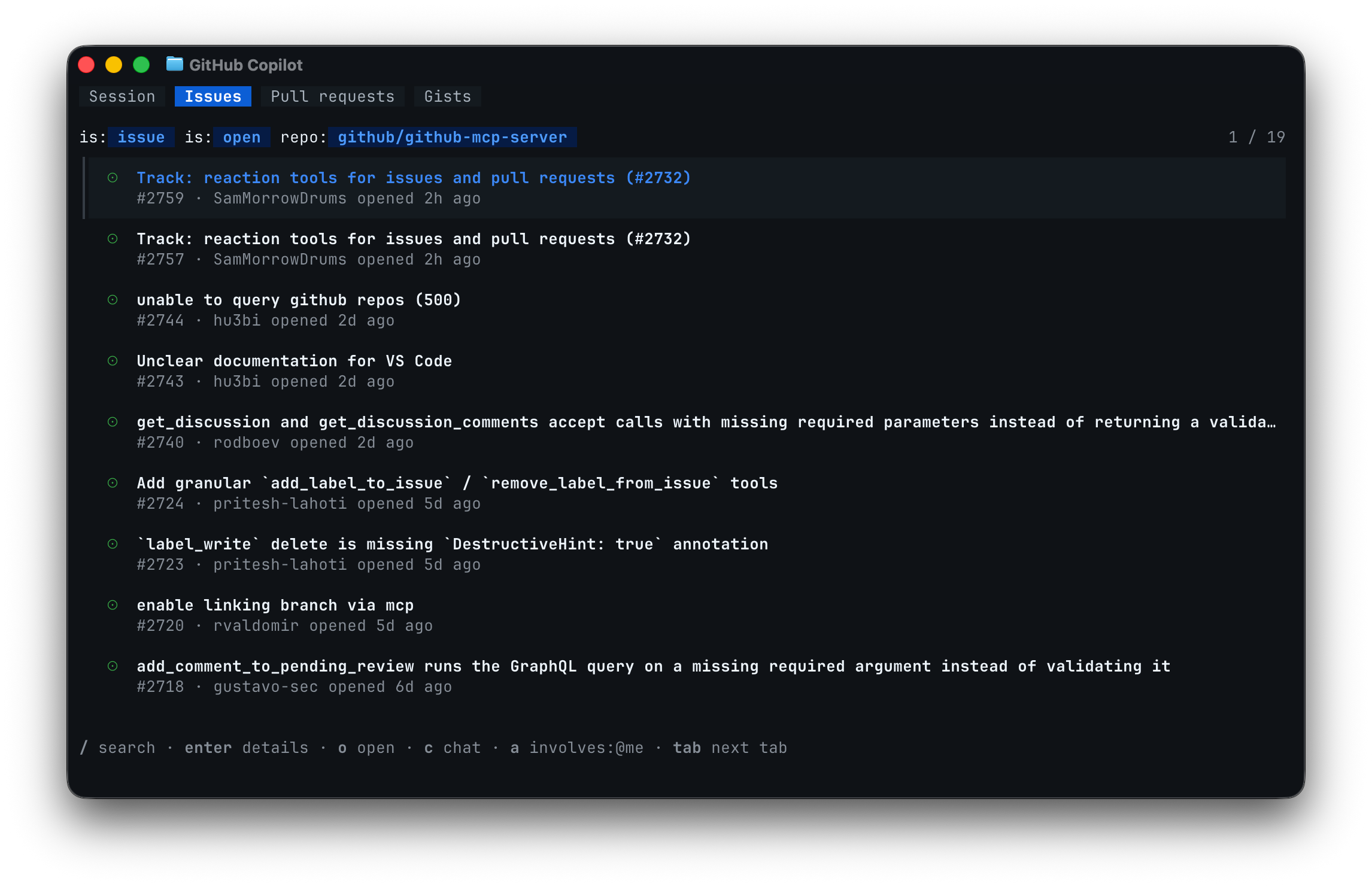 © GitHub Changelog
Coding Toolscoding
GitHub Copilot CLI Terminal Interface Now Available
GitHub has launched the redesigned terminal interface for Copilot CLI, offering a more intuitive and accessible experience for developers. The new interface includes a tabbed layout, allowing users to navigate between sessions, gists, issues, and pull requests directly from the terminal. This update streamlines the workflow by enabling users to interact with GitHub repositories without leaving the terminal environment. Additionally, the setup process for tools and configurations is now guided and interactive, eliminating the need for manual file editing. This release enhances productivity by integrating GitHub functionalities seamlessly into the terminal.
GitHub Changelog
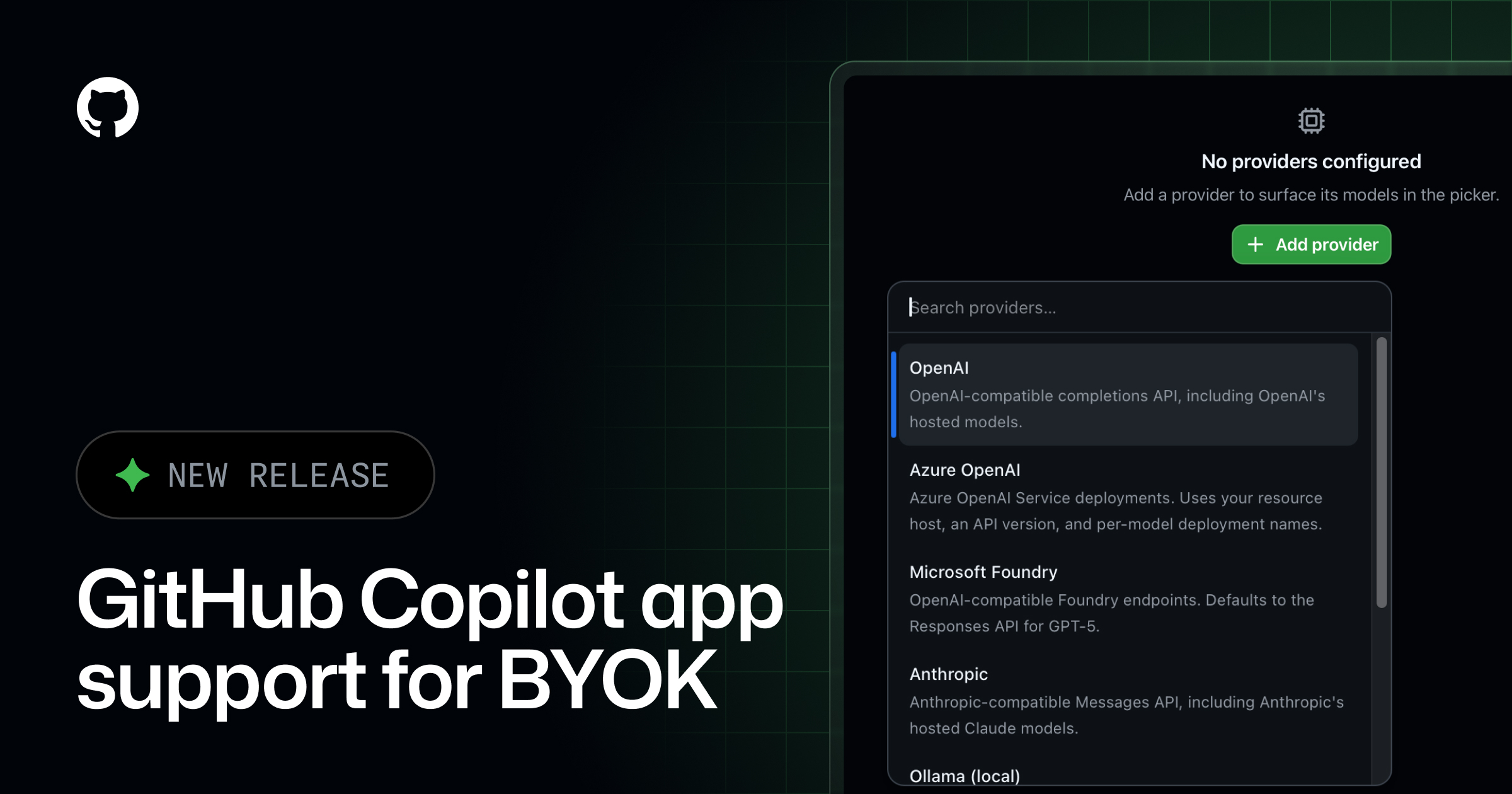 © GitHub Changelog
Coding Toolscoding
GitHub Copilot App Adds BYOK Support
GitHub Copilot's latest update introduces 'bring your own key' (BYOK) support, allowing users to integrate their own model providers into the Copilot app. This means developers can now run agent sessions using models from providers like OpenAI, Azure OpenAI, and Anthropic, among others. The integration is seamless, with keys stored securely in the local OS keychain, ensuring privacy and security. This update empowers users to mix and match frontier and local models, offering flexibility in handling complex tasks while maintaining control over data and billing. It's a significant step for developers looking to customize their AI model usage within the Copilot ecosystem.
GitHub Changelog
© GitHub ChangelogCoding Toolscoding
JetBrains IDEs Preview Claude as Agent Provider
JetBrains IDEs have expanded their capabilities by introducing Claude as an agent provider in public preview, giving developers more options within GitHub Copilot. This update enables the use of custom agents defined at the organization and enterprise levels, facilitating consistent workflows across teams. The addition of Claude provides a new choice for agent selection, although it currently operates without configurable permissions. With improvements to the model picker and clearer AI credit usage indicators, this release enhances the overall development experience, offering developers more control over their AI-driven tasks.
GitHub Changelog
Coding Toolscoding
Claude Code v2.1.183 Release Enhances Safety
The latest update to Claude Code, v2.1.183, introduces significant safety improvements for developers using auto mode. Destructive git commands are now blocked unless explicitly requested, preventing accidental data loss. Additionally, the update provides warnings for deprecated models and enhances configuration management with new command options. These changes aim to streamline the development process while ensuring a safer and more reliable coding environment. Developers can now work with greater confidence, knowing that potentially harmful actions are more controlled.
Claude Code Releases
 © GitHub Changelog
Coding Toolscoding
GitHub Copilot API Adds AI Credit Tracking
GitHub has enhanced its Copilot usage metrics API by including a new field that tracks AI credits consumed per user. This addition allows enterprise administrators and organization owners to monitor AI credit usage alongside existing usage metrics, providing insights into how Copilot is being utilized across teams. By understanding consumption patterns, organizations can better plan for usage-based billing and assess the value Copilot delivers. This update does not break down credits by feature or model, but it offers a clearer picture of overall user activity.
GitHub Changelog
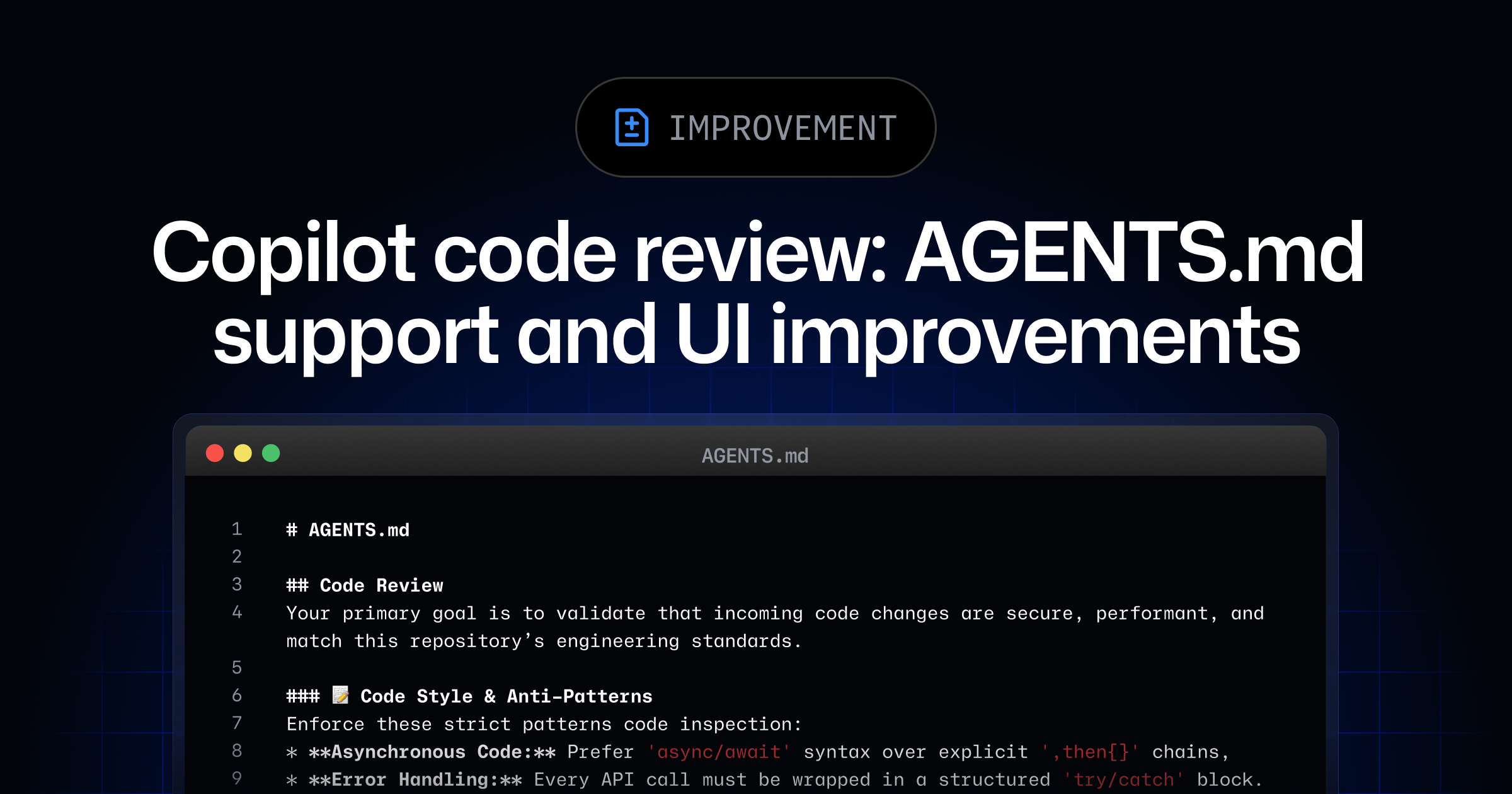 © GitHub Changelog
Coding Toolscoding
GitHub Copilot Enhances Code Review with AGENTS.md
GitHub's Copilot code review now integrates AGENTS.md files, enabling developers to customize feedback according to their repository's unique standards. This enhancement allows Copilot to automatically apply instructions from AGENTS.md, resulting in more context-sensitive reviews. The introduction of a Request button for draft pull requests simplifies the process of engaging Copilot's input, reducing the steps needed for developers. These improvements are designed to make code reviews more effective and aligned with the specific guidelines of each project.
GitHub Changelog
 © GitHub Changelog
Coding Toolscoding
GitHub Launches Duplicate Issue Detection Preview
GitHub has introduced a public preview feature aimed at reducing the time maintainers spend on triaging duplicate issues. This new tool flags potential duplicate issues during the creation process, offering up to three suggestions inline to help users identify existing reports. Additionally, AI tools connected to the GitHub MCP server can now interact with issue fields, allowing for automated triaging and filtering based on various criteria. This development promises to streamline issue management for large repositories, potentially saving maintainers significant time and effort.
GitHub Changelog
© GitHub ChangelogCoding Toolscoding
GitHub Enhances Pull Request Author Searches
GitHub has streamlined the process of tracking pull requests by integrating Copilot-authored contributions into author searches. This update means that when users search for pull requests by author, they will now see both their own and those initiated by Copilot on their behalf. This change simplifies the management of contributions, allowing developers to view all relevant pull requests in one place. The update is currently available on the GitHub website and mobile app, with plans to extend it to the REST and GraphQL APIs soon.
GitHub Changelog
 © GitHub Changelog
Coding Toolscoding
GitHub Actions Enhances Custom Image Capabilities
GitHub Actions has enhanced its custom image capabilities, allowing developers to construct images on top of existing custom images. This advancement facilitates layered image workflows, enabling teams to maintain a shared base image while adding their own dependencies. The update also introduces conditional logic for generating new image versions, providing developers with greater control over testing and deployment strategies. These improvements aim to make managing image-generation pipelines more efficient, ultimately accelerating development workflows and reducing redundancy.
GitHub Changelog
 © GitHub Changelog
Coding Toolscoding
GitHub Actions Enhances Security for pull_request_target
GitHub has taken a significant step to enhance security in its Actions ecosystem by updating the actions/checkout to version 7, which now blocks common 'pwn request' patterns by default. This change addresses vulnerabilities associated with the pull_request_target event, which previously allowed attacker-controlled code to execute with full privileges. By refusing to fetch fork pull request code in certain workflows, GitHub aims to prevent supply-chain incidents that have plagued the ecosystem. While this update strengthens security, it also provides an opt-out for workflows that require elevated trust, ensuring flexibility for developers who need it.
GitHub Changelog
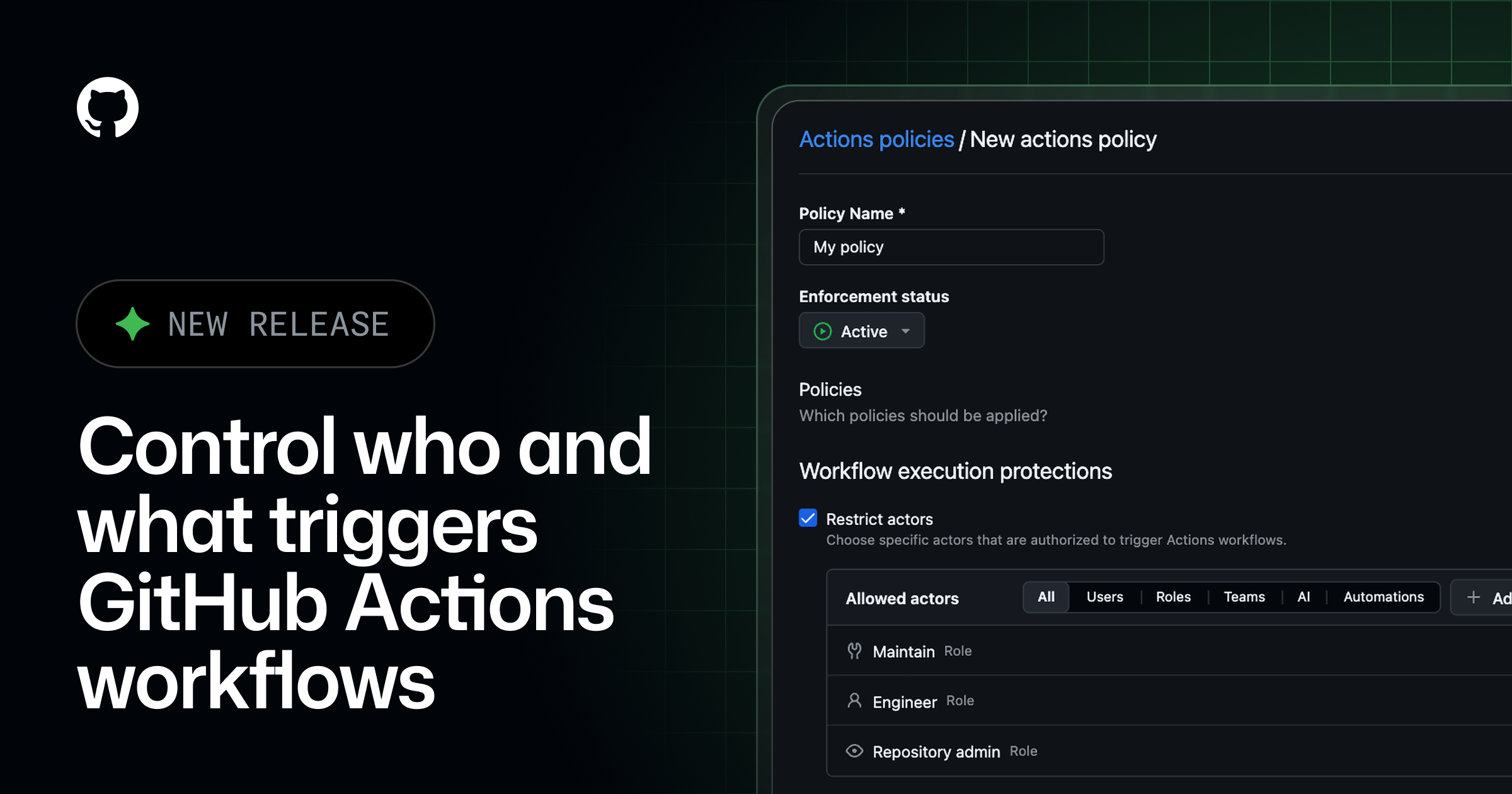 © GitHub Changelog
Coding Toolscoding
GitHub Introduces Workflow Execution Protections
GitHub has launched workflow execution protections in public preview, a significant security enhancement for GitHub Enterprise users. This feature allows administrators to define an allow list, controlling who can trigger GitHub Actions workflows and which events are permitted. By leveraging the GitHub rulesets framework, these protections help prevent unauthorized workflow executions, addressing vulnerabilities like poisoned pipeline execution and manual-trigger abuse. This development marks a shift from managing security on a per-file basis to implementing broad, enforceable policies across organizations.
GitHub Changelog
Coding Toolscoding
Claude Code v2.1.173 Release Fixes Key Issues
The latest update to Claude Code, version 2.1.173, addresses two notable issues that were affecting users. The update normalizes Fable 5 model names by automatically stripping the [1m] suffix, which was redundant since Fable 5 already includes a 1M context by default. Additionally, it resolves a misleading startup warning on Windows about missing sandbox dependencies when the sandbox feature was enabled. These fixes enhance the user experience by eliminating unnecessary confusion and ensuring smoother operation.
Claude Code Releases
Coding Toolscoding
Claude Code v2.1.181 Update Released
Claude Code's latest update, v2.1.181, introduces several enhancements and fixes that improve user experience and functionality. Notably, the update adds a new configuration syntax for setting options directly from the prompt, and an opt-in setting for Apple Events on macOS. The bundled Bun runtime has been upgraded to version 1.4, and improvements have been made to streaming long paragraphs and auto-retry mechanisms. These changes aim to streamline operations and enhance the reliability of the platform, making it more efficient for developers.
Claude Code Releases
 © GitHub Changelog
Coding Toolscoding
GitHub CLI Adds Remote Repo Content Reading
The latest update to GitHub CLI introduces 'gh repo read-file' and 'gh repo read-dir', enabling users to access and explore repository content directly from the terminal without cloning. This development is particularly useful for developers who need to quickly check files or directories across multiple repositories, enhancing their ability to review code and documentation efficiently. Available to all GitHub users, including those on GitHub Enterprise Server, this update allows for seamless integration of repository exploration into scripts and automation processes. By using GitHub CLI v2.95.0, developers can now perform these tasks more effectively, making it a valuable tool for those working with remote repositories.
GitHub Changelog
 © GitHub Changelog
Coding Toolscoding
GitHub Expands Secret Scanning Capabilities
GitHub has enhanced its secret scanning feature, broadening detection capabilities with new partners and patterns. The update includes automatic detection of new secret types from partners like Cloudsmith and Meraki, and expands coverage for GitLab tokens. Additionally, new detectors for Elastic, Slack, Supabase, DataDog, and VolcEngine have been added. This means repositories with secret scanning enabled will now have more comprehensive protection, with automatic blocking of commits containing these secrets. The update also introduces validity checks and richer metadata, helping users prioritize remediation efforts.
GitHub Changelog
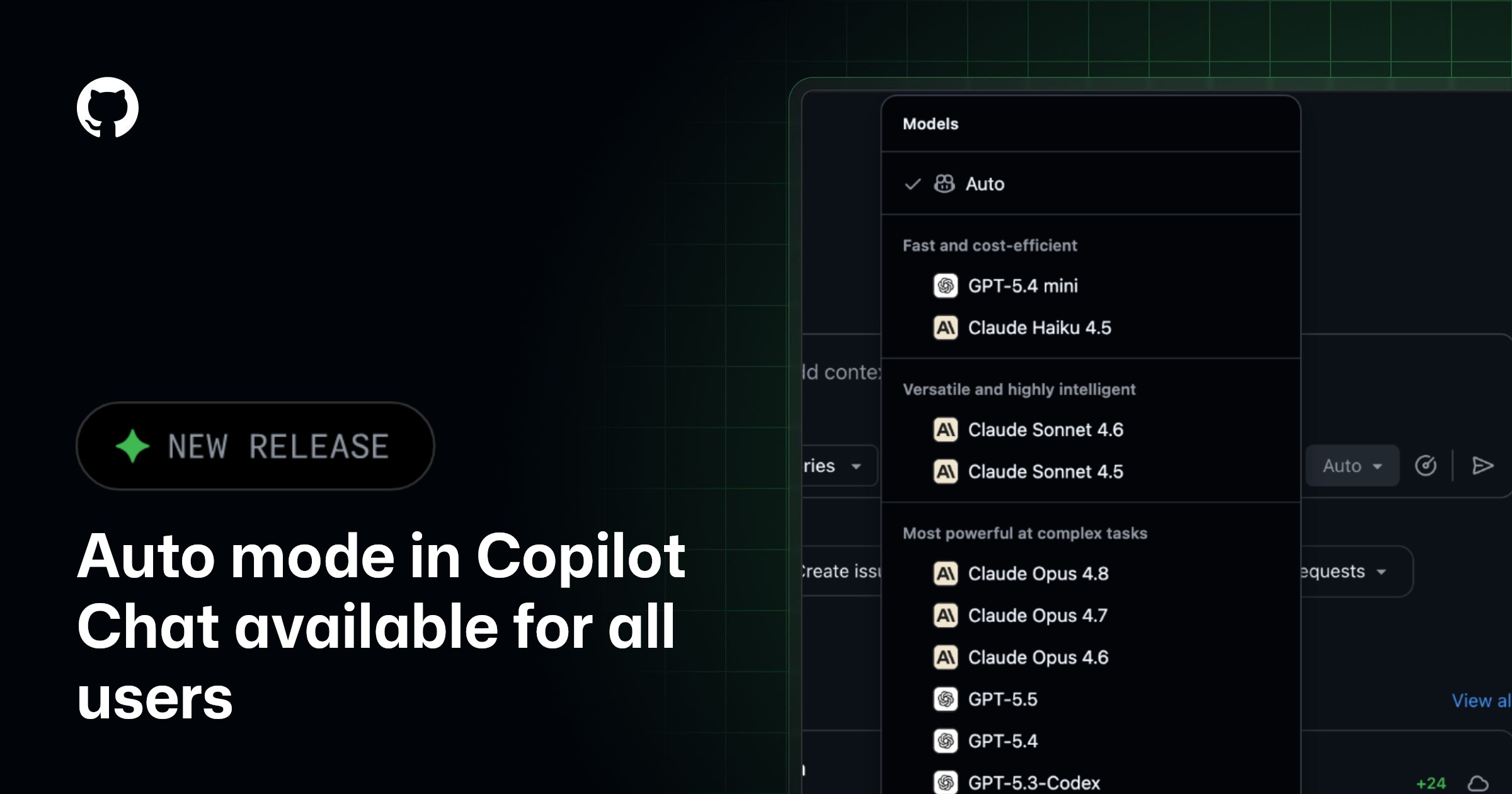 © GitHub Changelog
Coding Toolscoding
GitHub Copilot Chat Auto Mode Now Available
GitHub has rolled out an auto mode for Copilot Chat, allowing users to benefit from dynamic model selection based on request complexity and model availability. This feature aims to optimize token usage while ensuring high-quality results by routing requests to models like Claude Sonnet 4.6 and GPT-5.4. Users can still choose specific models if preferred, maintaining control over their interactions. This update enhances the flexibility and efficiency of Copilot Chat, making it a more adaptive tool for developers.
GitHub Changelog
© GitHub ChangelogCoding Toolsagents
GitHub Copilot Introduces Agent Finder Feature
GitHub has launched an innovative Agent Finder for Copilot, allowing developers to streamline their workflow by automatically discovering the right AI resources for specific tasks. This feature leverages the open Agentic Resource Discovery (ARD) specification, developed with industry giants like Google and Microsoft, to rank and suggest the best tools from a chosen registry. By eliminating the need to manually configure agents and tools, developers can focus on their work while maintaining control over what gets installed. This marks a significant step in making AI-driven development more efficient and customizable.
GitHub Changelog
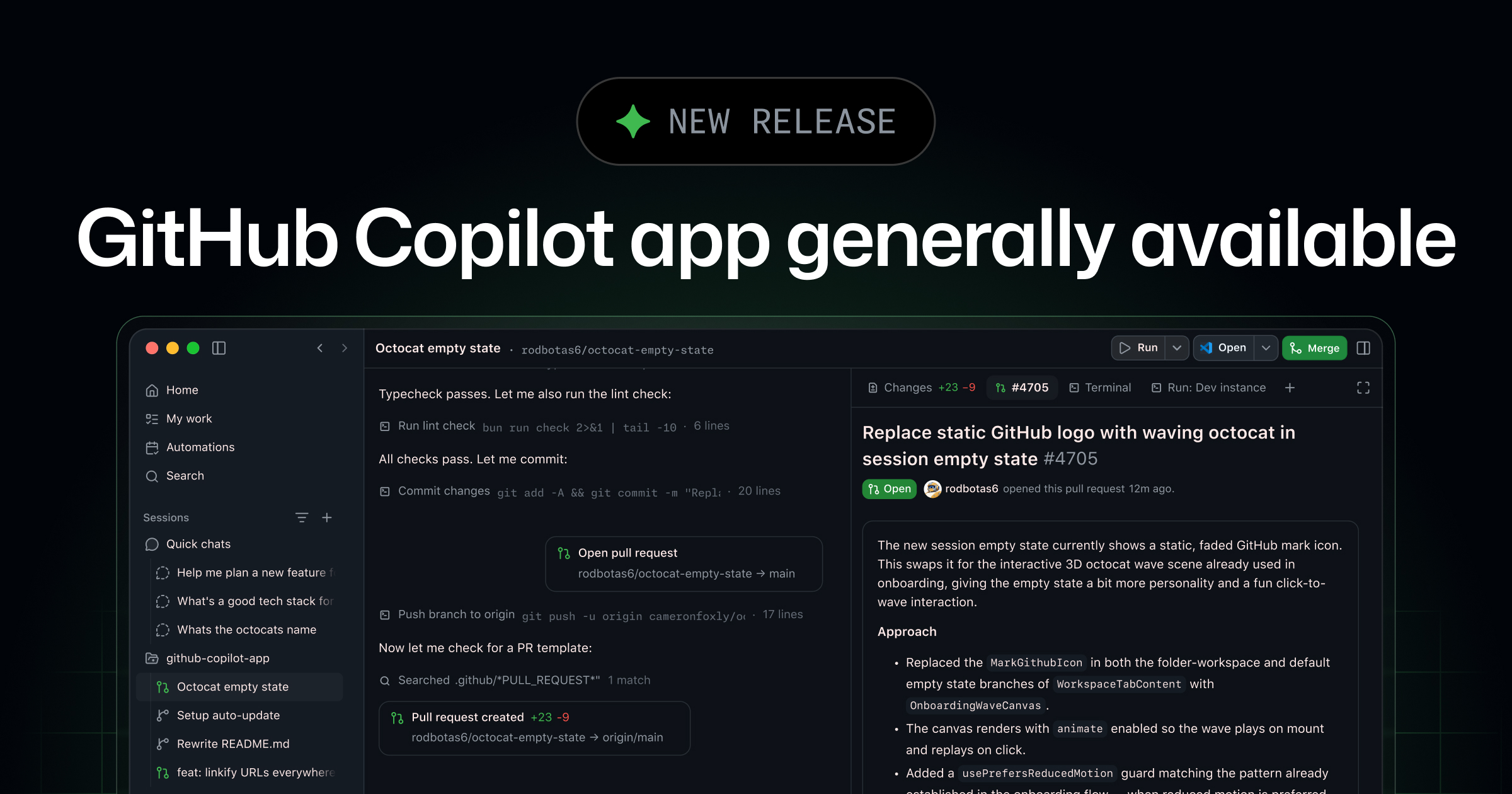 © GitHub Changelog
Coding Toolscoding
GitHub Copilot App Now Generally Available
GitHub has launched its Copilot app for macOS, Windows, and Linux, marking a significant step in agent-driven development. This app allows developers to start sessions from issues, pull requests, or prompts, and manage parallel sessions across repositories. Notably, it introduces features like Canvases for collaborative work and cloud automations for scheduling tasks independently of local machines. This release empowers developers to bring their own models and tools, enhancing flexibility and integration with existing workflows. The app is available for users on Copilot Business or Enterprise plans with the necessary settings enabled.
GitHub Changelog
 © GitHub Changelog
Coding Toolscoding
GitHub Code Quality Launches as Paid Product
GitHub Code Quality is transitioning from public preview to a paid product, offering enterprises enhanced tools for maintaining code reliability and quality. With a pricing model of $10 per active committer per month, plus additional charges for AI-powered features, GitHub aims to provide comprehensive code analysis and management capabilities. New features include organization-wide deployment, quality dashboards, and APIs for findings management. This move signifies GitHub's commitment to integrating AI into code quality processes, offering a robust solution for enterprises seeking to enforce code standards and improve maintainability.
GitHub Changelog
Coding Toolscoding
Claude Code v2.1.175 Update Released
The latest update to Claude Code, version 2.1.175, introduces a new managed setting called enforceAvailableModels. This feature ensures that the Default model selection is constrained by an allowlist, preventing users or projects from expanding the list of available models beyond what is managed. This change enhances control over model usage, ensuring that only approved models are utilized, which could be crucial for maintaining consistency and compliance in development environments.
Claude Code Releases
Coding Toolscoding
Claude Code v2.1.178 Release
The latest update to Claude Code, version 2.1.178, introduces several enhancements and fixes that improve the tool's usability and functionality. Notably, the update refines permission rules with a new syntax for tool parameters, ensuring better control over subagent actions. It also enhances the auto mode by evaluating subagent spawns before launch, closing potential security gaps. Additionally, improvements in error messaging and workflow prompts make the tool more intuitive for users. These changes collectively enhance the robustness and user experience of Claude Code, making it a more reliable tool for developers.
Claude Code Releases
 © GitHub Changelog
Coding Toolscoding
GitHub Copilot Metrics Now More Comprehensive
GitHub has enhanced its Copilot usage metrics by incorporating server-side telemetry, providing a more complete picture of active users. Previously, reports relied solely on client-side data, which could miss users due to network or configuration issues. Now, server-side data fills these gaps, ensuring that all active users are counted, even if client telemetry fails. While this update improves overall user counts, detailed interaction data remains limited to client-side telemetry. This marks a significant step towards more accurate and reliable usage reporting for enterprises.
GitHub Changelog
© GitHub ChangelogCoding Toolscoding
GitHub Copilot Code Review Enhances Customization
GitHub's Copilot code review has introduced new features that enhance customization and control for developers. Teams can now configure runner types at the organization level, allowing a single setting to apply across all repositories, which simplifies the setup process. The removal of the character limit on custom instructions provides more room for detailed guidance, while content exclusion settings ensure that Copilot respects organizational boundaries. These updates make Copilot code review more adaptable to specific team needs, offering greater flexibility and precision in code review processes.
GitHub Changelog
Coding Toolsagents
Claude Code v2.1.172 Update Released
The latest update to Claude Code, v2.1.172, introduces significant improvements in agent functionality and user experience. Sub-agents can now spawn their own sub-agents up to five levels deep, enhancing automation capabilities. The update also addresses several bugs, such as session handling issues and model picker errors, ensuring smoother operation. Additionally, performance enhancements reduce idle CPU usage and improve tool loading in Chrome. These changes make Claude Code more robust and efficient for developers working with complex agent systems.
Claude Code Releases
© GitHub ChangelogCoding Toolscoding
GitHub Enterprise Server 3.21 Released
GitHub Enterprise Server 3.21 introduces several enhancements aimed at improving deployment efficiency and code security. Notably, organization custom properties are now available, allowing administrators to tag organizations with metadata for better policy management. The hierarchy view for GitHub Projects provides a clearer view of issue hierarchies, enhancing project management. Additionally, the REST API version 2026-03-10 is now available, with support for older versions continuing for 24 months. These updates make GitHub Enterprise Server more robust and user-friendly for enterprise users.
GitHub Changelog
 © GitHub Changelog
Coding Toolscoding
GitHub Copilot CLI Unifies Configuration with /settings
GitHub Copilot CLI has introduced a new /settings command, bringing all configuration management into a single, schema-driven interface. This update merges various commands and manual settings edits into one accessible location, allowing users to easily browse and modify settings through a full-screen dialog. The command supports inline changes, resets, and even complex JSON edits with schema validation to prevent errors. This enhancement improves the user experience by providing a unified, intuitive way to manage settings, making configuration more efficient and less error-prone. Users can now manage their settings with greater ease and confidence, knowing that changes are validated and applied live. This development marks a significant step in making configuration management more user-friendly and reliable.
GitHub Changelog
 © GitHub Changelog
Coding Toolscoding
GitHub Releases New Runner Images for Preview
GitHub has introduced two new runner images for GitHub Actions in public preview, allowing developers to test workflows on the latest platforms. The Ubuntu 26.04 image is now available for both x64 and arm64 architectures, while a new Windows 11 arm64 image with Visual Studio 2026 is also accessible. These updates provide an early opportunity to validate CI workloads without disrupting existing pipelines. As these images are in preview, users might experience longer queue times, but they offer a glimpse into future capabilities for GitHub Actions.
GitHub Changelog
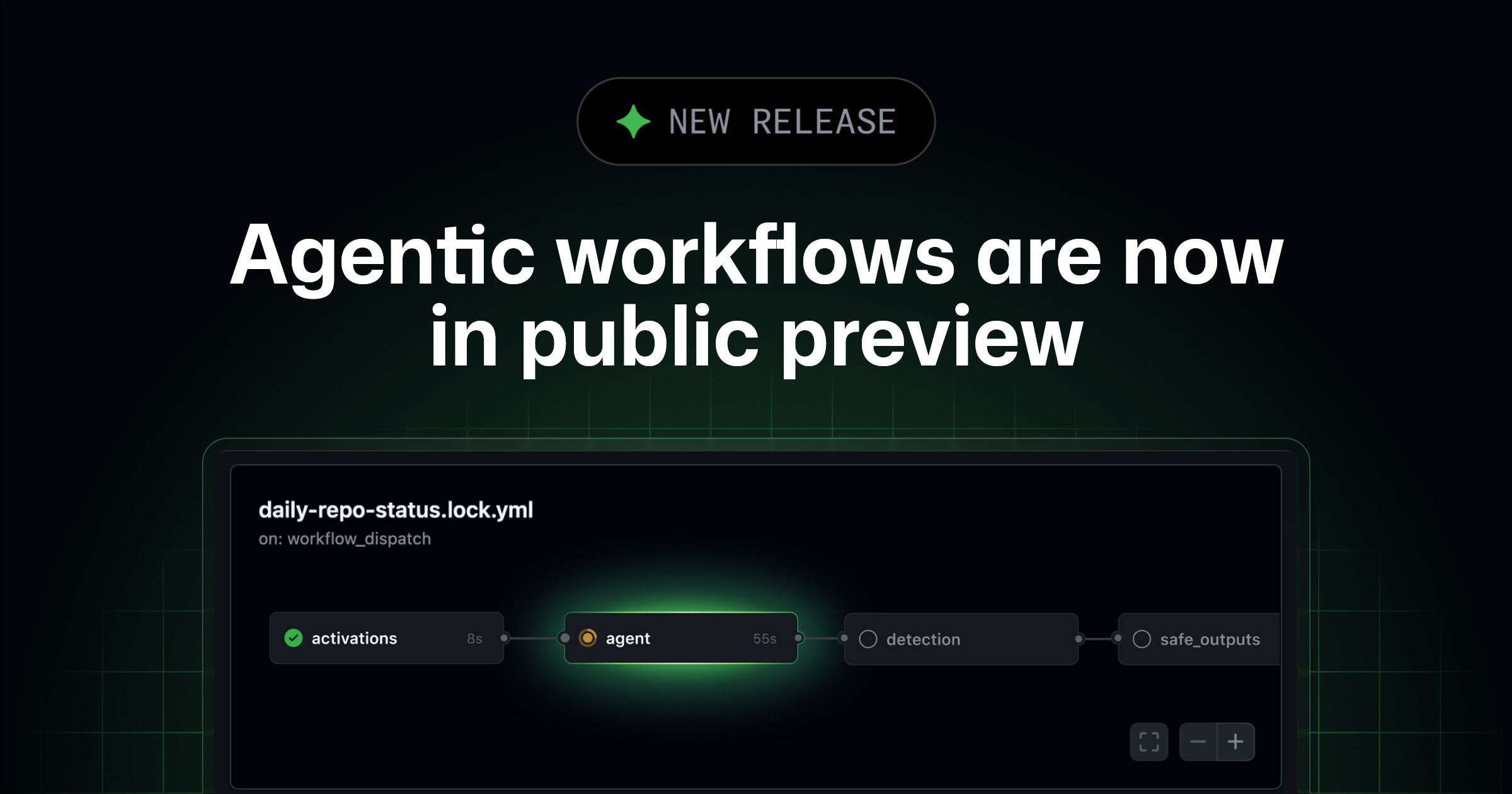 © GitHub Changelog
Coding Toolsagents
GitHub Agentic Workflows Enters Public Preview
GitHub's new Agentic Workflows, now in public preview, promises to streamline engineering tasks by automating reasoning-based processes like issue triage and CI failure analysis. By allowing developers to define automation in natural language Markdown files, it converts these into standard Actions YAML, integrating seamlessly with existing GitHub Actions. This innovation aims to reduce repetitive work, enabling teams to focus more on innovation and value delivery. With built-in safeguards and sandboxed execution, GitHub ensures that these workflows maintain security and integrity, offering a robust solution for complex engineering environments.
GitHub Changelog
 © GitHub Changelog
Coding Toolscoding
GitHub Agentic Workflows Simplify Token Management
GitHub has streamlined its Agentic Workflows by allowing the use of GitHub Actions' built-in GITHUB_TOKEN, eliminating the need for personal access tokens. This change reduces the operational and security risks associated with managing long-lived tokens. Organizations can now directly bill AI credits consumed by agentic workflows to themselves, simplifying cost management. This update is available across all Copilot plans, making it easier for developers to manage workflows without worrying about individual user budgets.
GitHub Changelog
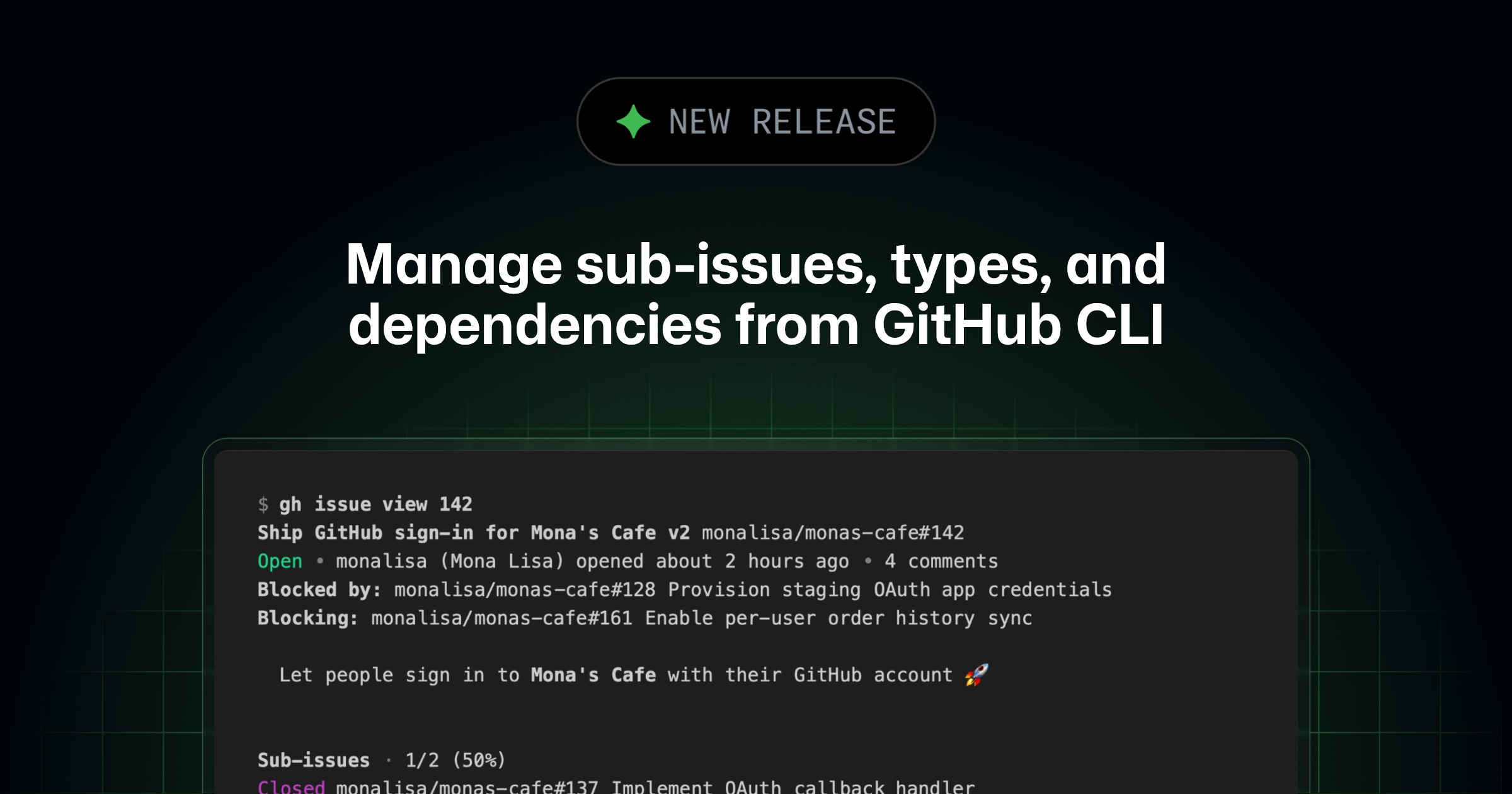 © GitHub Changelog
Coding Toolscoding
GitHub CLI v2.94.0 Enhances Issue Management
GitHub CLI's latest update, v2.94.0, significantly enhances issue management by allowing developers to handle issue types, sub-issues, and dependencies directly from the terminal. This means developers can now set issue types, manage parent and sub-issue relationships, and mark dependencies without leaving the command line. The update also introduces new JSON fields in 'gh issue view' and 'gh issue list', enabling automation scripts to interact with issue structures more effectively. This streamlines workflows for developers and coding agents, reducing the need to switch between the CLI and browser.
GitHub Changelog
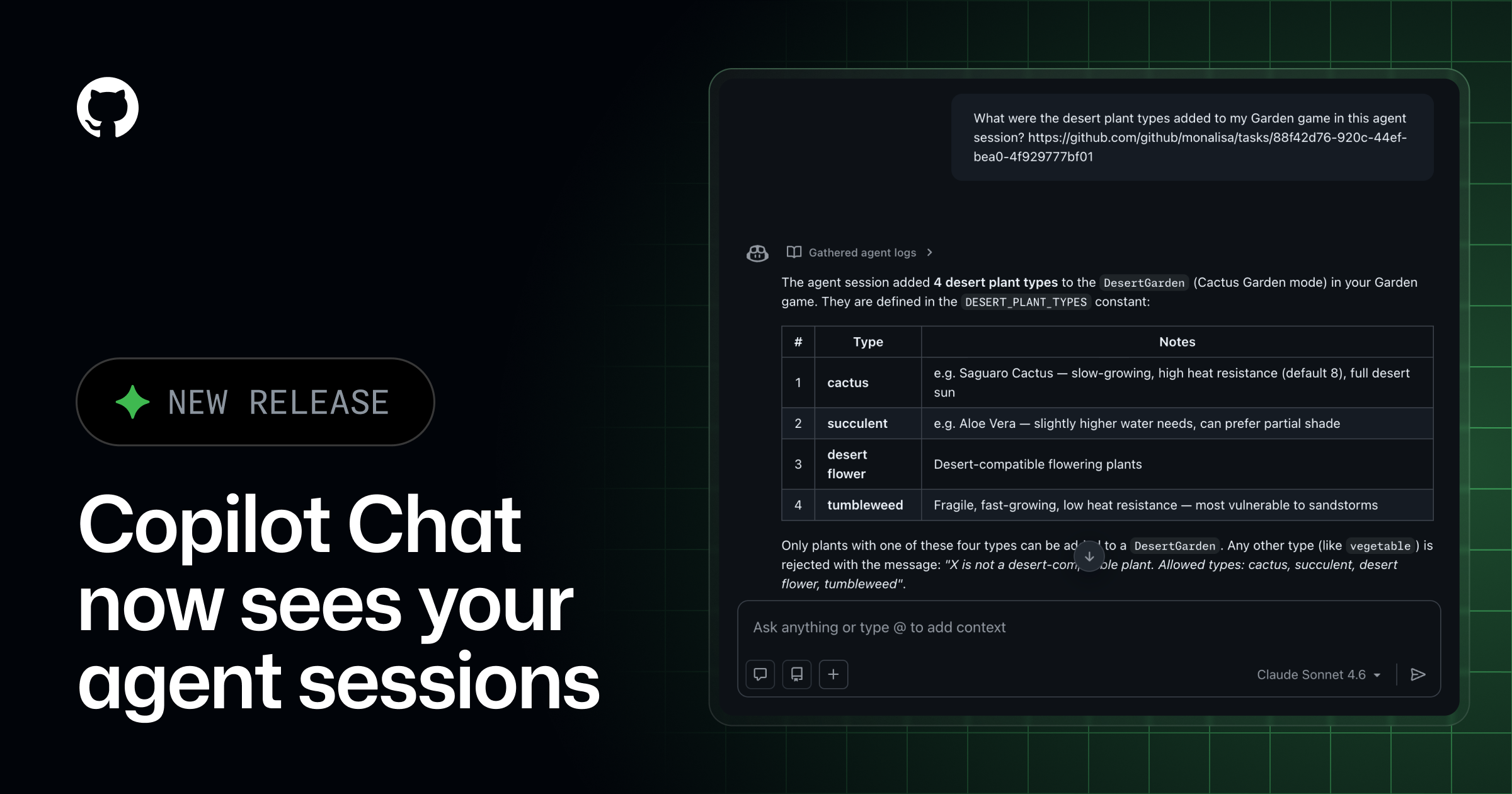 © GitHub Changelog
Coding Toolscoding
GitHub Copilot Chat Enhances Agent Session Management
GitHub has enhanced its Copilot Chat by integrating better session management with the Copilot cloud agent. Users can now search and query past agent sessions directly within the chat, making it easier to track and continue work. The update introduces tools like 'Get agent logs' for reviewing session changes and 'Session search' for finding past sessions by topic or recency. This improvement streamlines the workflow for developers, allowing them to manage and follow up on their coding tasks more efficiently.
GitHub Changelog
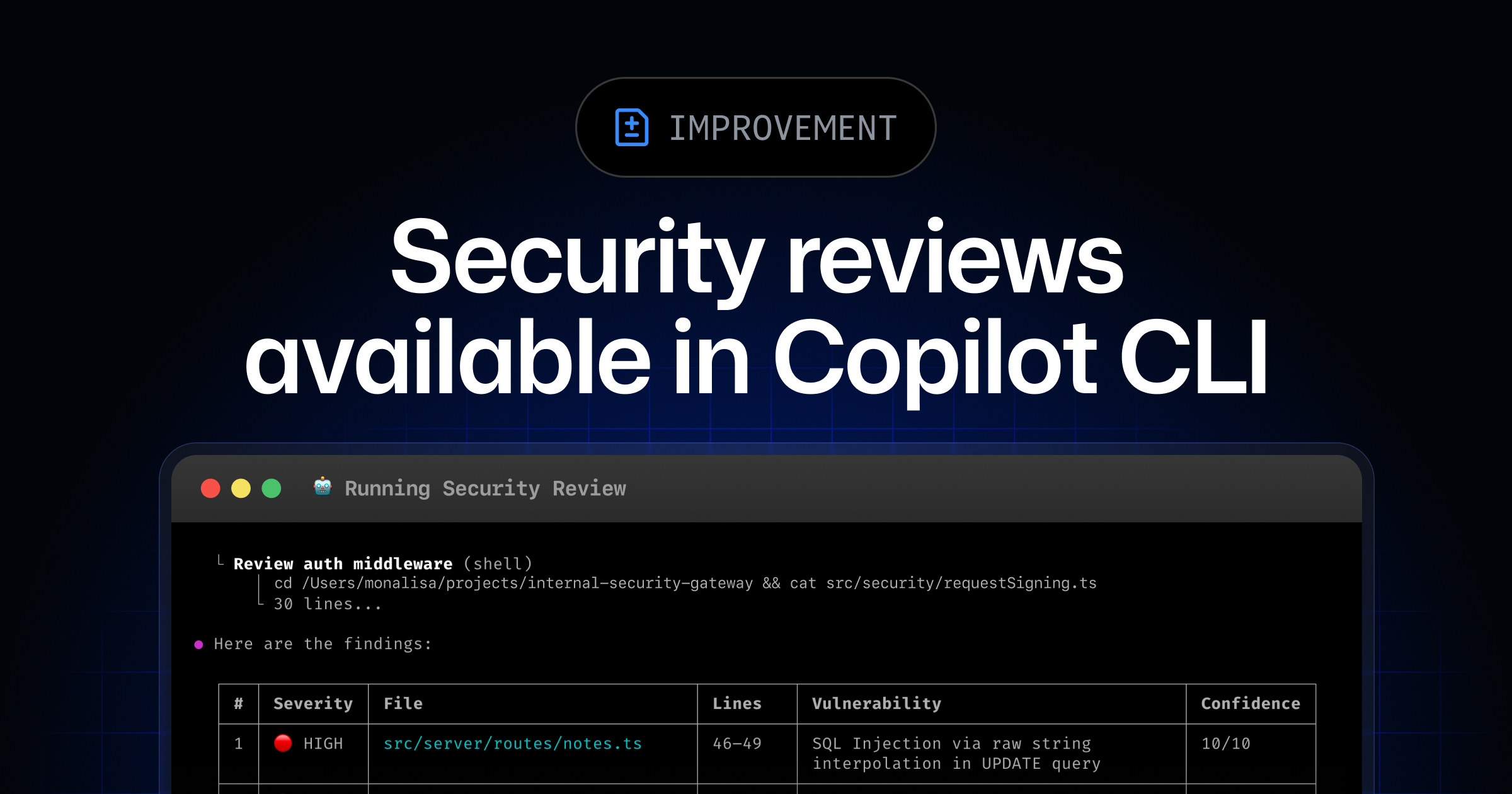 © GitHub Changelog
Coding Toolscoding
GitHub Copilot CLI Adds Security Review Command
GitHub has introduced a new security review command in its Copilot CLI, offering developers an AI-driven tool to identify security vulnerabilities in their code changes. This experimental feature, available in public preview, allows users to run a security scan directly from the terminal, providing high-confidence findings and actionable suggestions. Unlike GitHub's existing security tools, this command offers a lightweight, on-demand review process that integrates seamlessly into developers' workflows. This addition enhances the security toolkit available to developers, enabling them to catch potential issues before code reaches production.
GitHub Changelog
 © GitHub Changelog
Coding Toolscoding
npm v12 to Introduce Security Changes
npm's upcoming version 12 is set to enhance security by changing default behaviors in npm install. The new version will require explicit permission for running scripts and resolving Git or remote URL dependencies, which previously ran automatically. These changes aim to close potential security vulnerabilities, such as unauthorized code execution. Developers can prepare by using npm 11.16.0 to identify and approve trusted scripts before the major update. This shift emphasizes security, requiring developers to be more deliberate about the scripts they allow in their projects.
GitHub Changelog
 © GitHub Changelog
Coding Toolscoding
GitHub Adds Security Scans for Inactive Repositories
GitHub's new feature for code scanning ensures that even inactive repositories receive regular security checks. By scheduling scans every 30 days for repositories without recent activity, GitHub helps organizations maintain security across all codebases, including those not actively developed. This proactive approach means that potential vulnerabilities in dormant projects can be identified and addressed before they become issues. Organizations can enable this feature through their global security settings, ensuring comprehensive security coverage.
GitHub Changelog
 © GitHub Changelog
Coding Toolscoding
GitHub Extends Security Validation to Third-Party Coding Agents
GitHub has expanded its automatic security validation to include third-party coding agents like Claude and OpenAI Codex. This means that any code generated by these agents within your repositories will now be automatically analyzed for security vulnerabilities using CodeQL, checked against the GitHub Advisory Database, and scanned for sensitive information. This move aligns third-party agents with the security standards already in place for GitHub Copilot, ensuring consistent protection across all agent-generated code. Developers can now rely on these enhanced security measures without needing a GitHub Advanced Security license.
GitHub Changelog
Coding Toolscoding
Claude Code v2.1.169 Update Released
The latest update to Claude Code, version 2.1.169, introduces several enhancements aimed at improving user experience and troubleshooting capabilities. Notably, a new safe mode allows users to disable all customizations for easier problem-solving. The update also addresses various bugs, such as UI stalls on macOS and command history navigation issues. These changes make Claude Code more robust and user-friendly, particularly for developers working in complex environments. The update signifies a commitment to refining the tool's performance and usability.
Claude Code Releases
 © Hugging Face Blog
Coding Toolscoding
GitHub CI Migrates to Hugging Face Jobs
Hugging Face has introduced a new way to enhance GitHub CI workflows by running them on Hugging Face Jobs. This approach allows developers to leverage Hugging Face's serverless infrastructure, offering more reliable and faster CI processes, especially for GPU-intensive tasks. By integrating GitHub Actions with Hugging Face Jobs, projects like Trackio have reduced CI times by 30% and enabled GPU testing without maintaining dedicated hardware. This development provides a flexible and efficient alternative for developers needing specific hardware configurations for their CI pipelines.
Hugging Face Blog
Coding Toolscoding
Claude Code v2.1.166 Update Released
The latest update to Claude Code, version 2.1.166, introduces several enhancements and fixes aimed at improving user experience and system reliability. Notably, a new fallbackModel setting allows users to configure up to three fallback models, ensuring continuity when the primary model is unavailable. The update also addresses various bugs, such as fixing image processing errors and terminal flickering in JetBrains IDEs. These changes enhance the robustness of Claude Code, making it more reliable for developers who rely on its features for coding tasks.
Claude Code Releases
 © GitHub Changelog
Coding Toolscoding
CodeQL 2.25.6 Enhances Swift and C# Support
The latest update to CodeQL, version 2.25.6, brings significant enhancements for developers using Swift and C#. With the addition of support for Swift 6.3.2, developers can now analyze apps built with the latest Swift version. The update also completes full coverage for C# 14 and .NET 10, ensuring that all new language features are supported. Additionally, improvements in sensitive data detection across multiple languages mean more accurate identification of security issues. This release makes CodeQL a more robust tool for developers focused on code security and quality.
GitHub Changelog
© GitHub ChangelogCoding Toolscoding
Enterprise-managed plugins in VS Code preview
GitHub has launched a public preview of enterprise-managed plugins for VS Code, enhancing the capabilities of Copilot CLI for enterprise users. This update allows administrators to configure and distribute plugins across their organization, making developer onboarding more efficient and reducing setup time. By defining plugin marketplaces and settings in a centralized file, enterprises can ensure consistent governance and configuration across all users. This move strengthens the integration between VS Code and Copilot CLI, offering a more cohesive and manageable development environment for businesses.
GitHub Changelog
Coding Toolscoding
Claude Code v2.1.163 Release Enhances Usability
The latest update to Claude Code, version 2.1.163, introduces several enhancements aimed at improving user experience and functionality. Notably, it adds managed settings to control version compatibility, ensuring users operate within approved software versions. The update also includes a new command to list installed plugins and a shortcut for copying markdown answers, which streamlines workflow. Additionally, various bug fixes address issues like terminal misalignment and session management, making the tool more reliable. These changes collectively enhance the usability and stability of Claude Code for developers.
Claude Code Releases
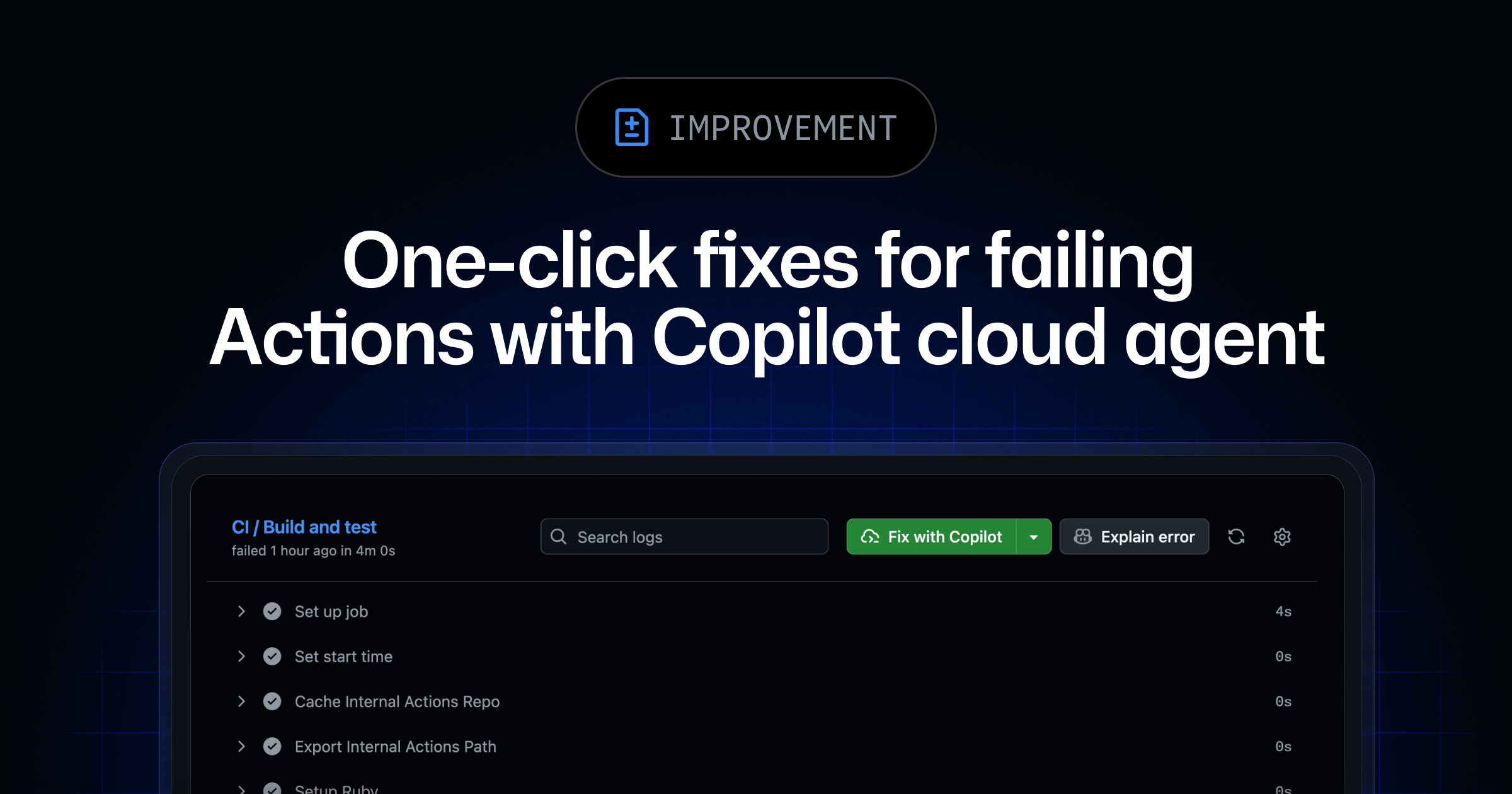 © GitHub Changelog
Coding Toolscoding
GitHub Copilot Automates Fixes for Failing Actions
GitHub has enhanced its Copilot service for Pro, Pro+, and Max subscribers by enabling automated fixes for failing Actions. With a single click, users can now delegate the task of resolving workflow failures to Copilot, which operates from a cloud-based environment. This feature allows developers to focus on more critical tasks while Copilot handles routine issues like test failures or linter errors. The integration streamlines the development process, reducing the time spent on troubleshooting and increasing productivity.
GitHub Changelog
 © GitHub Changelog
Coding Toolscoding
GitHub Launches Budget and Usage Management APIs
GitHub has made its billing APIs generally available, allowing users to manage budgets and track usage programmatically. This update enables the creation, updating, and deletion of budgets via API, a significant shift from the previous UI-only management. Users can now access detailed usage information across their accounts, filtering by various parameters such as organizations and products. The introduction of these APIs marks a step towards more flexible and automated financial management for GitHub users, enhancing control over budget and usage data.
GitHub Changelog
© GitHub ChangelogCoding Toolscoding
GitHub Copilot Enhances Context Windows and Reasoning
GitHub Copilot has introduced larger context windows and configurable reasoning levels, allowing developers to handle more complex projects with ease. The one-million-token context window supports larger codebases and multi-file projects, enhancing the tool's utility in VS Code, Copilot CLI, and the GitHub Copilot app. Configurable reasoning levels offer a balance between speed and depth, crucial for tackling architectural and debugging challenges. These features are available now, providing developers with more flexibility and power in their coding tasks. However, using these advanced features will consume more AI credits per interaction.
GitHub Changelog
© GitHub ChangelogCoding Toolscoding
GitHub Copilot May Update for Visual Studio 2026
GitHub Copilot's May update for Visual Studio 2026 introduces several new features aimed at enhancing developer productivity. The new Plan agent allows developers to collaborate on implementation plans before coding begins, offering a structured approach to project planning. A Skills panel now provides a centralized view of agent skills, making it easier to manage and search capabilities. Additionally, the update includes a multi-file summary diff for reviewing changes, improved context window management, and enhanced C++ build optimizations. These updates streamline the development process, offering more control and efficiency for users.
GitHub Changelog
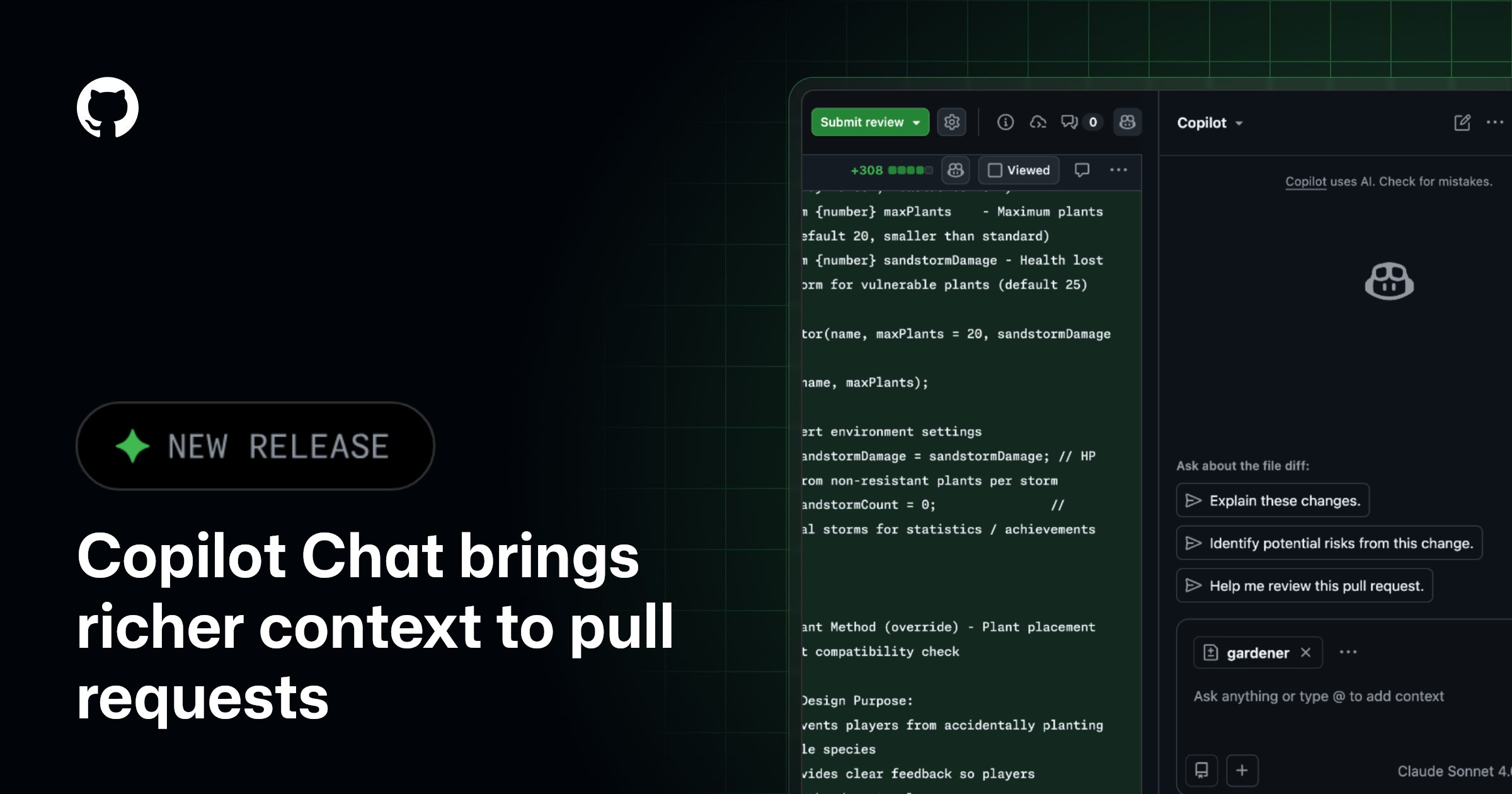 © GitHub Changelog
Coding Toolscoding
GitHub Copilot Chat Enhances Pull Request Context
GitHub has made its Copilot Chat feature generally available, offering developers a more integrated experience when working with pull requests. Previously in public preview, this feature now allows users to view and interact with Copilot Chat directly alongside their pull request discussions, eliminating the need to switch between windows. The update includes enhanced capabilities for understanding, reviewing, and summarizing pull requests, providing faster and more relevant responses. This advancement streamlines the code review process, making it more efficient for developers using GitHub.
GitHub Changelog
Coding Toolscoding
Claude Code v2.1.161 Update Released
The latest update to Claude Code, version 2.1.161, brings several enhancements and bug fixes aimed at improving user experience and performance. Notably, OpenTelemetry resource attributes are now included as labels on metric datapoints, allowing for more detailed usage analysis. The update also introduces parallel tool calls, ensuring that a failed Bash command doesn't cancel other calls in the same batch. Additionally, improvements in terminal rendering performance and fixes for various bugs, such as issues with workflow animations and session management, make this a significant update for developers using Claude Code.
Claude Code Releases
Coding Toolscoding
Claude Code v2.1.162 Release
The latest update to Claude Code, version 2.1.162, brings a host of improvements and fixes that enhance user experience and functionality. Notably, the update addresses several permission and configuration issues, ensuring smoother startup and operation across different environments. The rebranding of Windsurf to Devin Desktop reflects a broader shift in the platform's identity. Additionally, the update improves the handling of session and messaging features, making interactions more intuitive and reliable. These changes collectively make Claude Code more robust and user-friendly, particularly for developers relying on its tools.
Claude Code Releases
 © Hugging Face Blog
Coding Toolscoding
Hugging Face CLI Optimized for Coding Agents
Hugging Face has revamped its command-line interface (CLI) to better accommodate both human users and coding agents like Codex and Claude Code. The updated CLI now auto-detects when it's being used by an agent and adjusts its output format accordingly, providing a more efficient and token-light experience. This change significantly reduces the token usage for complex tasks, making it more efficient for agents to interact with the Hugging Face Hub. The CLI's new features include agent-mode output and enhanced logging methods, which streamline multi-step tasks and improve usability for both humans and agents.
Hugging Face Blog
 © GitHub Changelog
Coding Toolscoding
GitHub Copilot Enhancements in VS Code May Releases
GitHub's latest updates to Visual Studio Code bring a significant shift towards an agent-first experience, allowing developers to focus on task completion rather than just code editing. The introduction of the Agents window in preview mode facilitates faster navigation and change review across multiple projects. Notably, the updates also enhance support for remote agent sessions, enabling them to continue even when disconnected. These changes, along with expanded BYOK model support and improved session synchronization, mark a step forward in making VS Code a more integrated and efficient development environment.
GitHub Changelog
Coding Toolscoding
Wasmer leverages Codex for Node.js edge runtime
Wasmer has effectively utilized OpenAI's Codex, paired with GPT-5.5, to craft a Node.js runtime specifically for edge computing. This strategic use of AI has propelled their development speed to levels 10 to 20 times faster than conventional approaches. By completing the project in weeks rather than months, Wasmer showcases the transformative potential of AI-assisted coding. This development not only exemplifies the efficiency gains achievable with AI but also sets a new standard for future projects in edge computing environments. The achievement underscores the role of AI in streamlining complex development tasks and enhancing productivity.
OpenAI
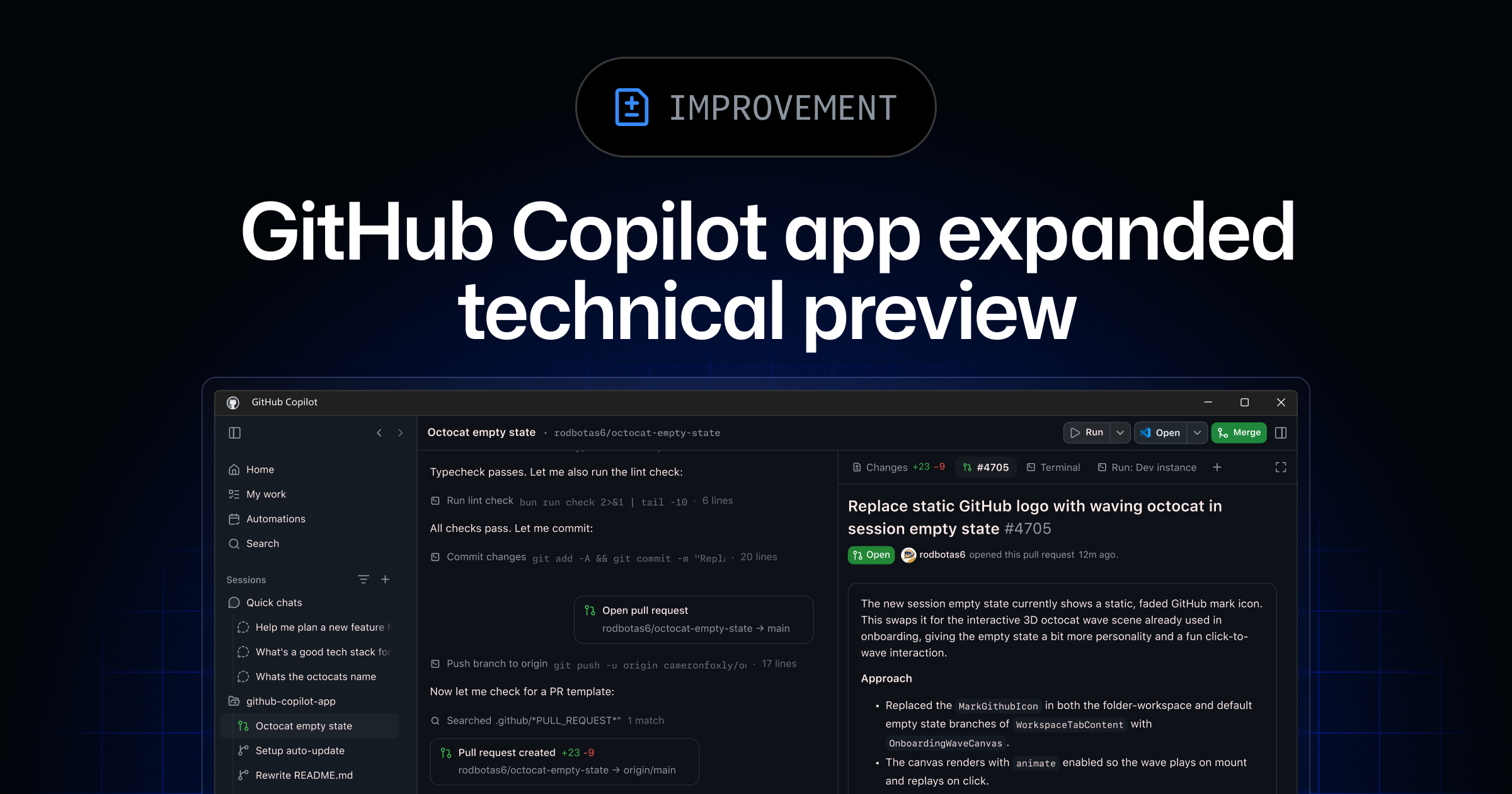 © GitHub Changelog
Coding Toolscoding
GitHub Copilot App Expands Technical Preview
GitHub has expanded the technical preview of its Copilot app to all existing Copilot Pro, Pro+, Business, and Enterprise customers, marking a significant step in agent-native software development. The app introduces 'canvases', a new feature that allows users to interact with and verify agent work in real-time, enhancing collaboration between humans and AI agents. This release shifts the focus from traditional coding to managing and steering agent output, offering a more integrated development experience. With features like voice conversations and cloud sessions, the Copilot app aims to streamline the development process by making agent interactions more visible and actionable.
GitHub Changelog
 © GitHub Changelog
Coding Toolscoding
GitHub Copilot SDK Now Generally Available
GitHub has made its Copilot SDK generally available, allowing developers to integrate Copilot's agentic engine into their applications with a stable API. This release means developers can now access the same runtime that powers GitHub Copilot, enabling features like planning, tool invocation, and multi-turn sessions without building their own orchestration layers. The SDK supports multiple programming languages, including a new Java integration, and offers features like OpenTelemetry tracing and flexible authentication. This marks a significant step in making AI-driven development tools more accessible and customizable for developers.
GitHub Changelog
 © GitHub Changelog
Coding Toolscoding
GitHub Copilot CLI Gets Major Refresh
GitHub Copilot CLI is undergoing a significant transformation with new features aimed at enhancing user experience and productivity. The introduction of a redesigned terminal interface with tabs allows users to seamlessly switch between issues, pull requests, and personal gists without leaving the CLI. The addition of the 'rubber duck' agent provides constructive feedback on code, acting as a second opinion to improve design and implementation. Voice input and prompt scheduling further streamline workflows, making Copilot CLI a more versatile tool for developers. These updates, available in experimental mode, signal a shift towards a more integrated and accessible coding environment.
GitHub Changelog
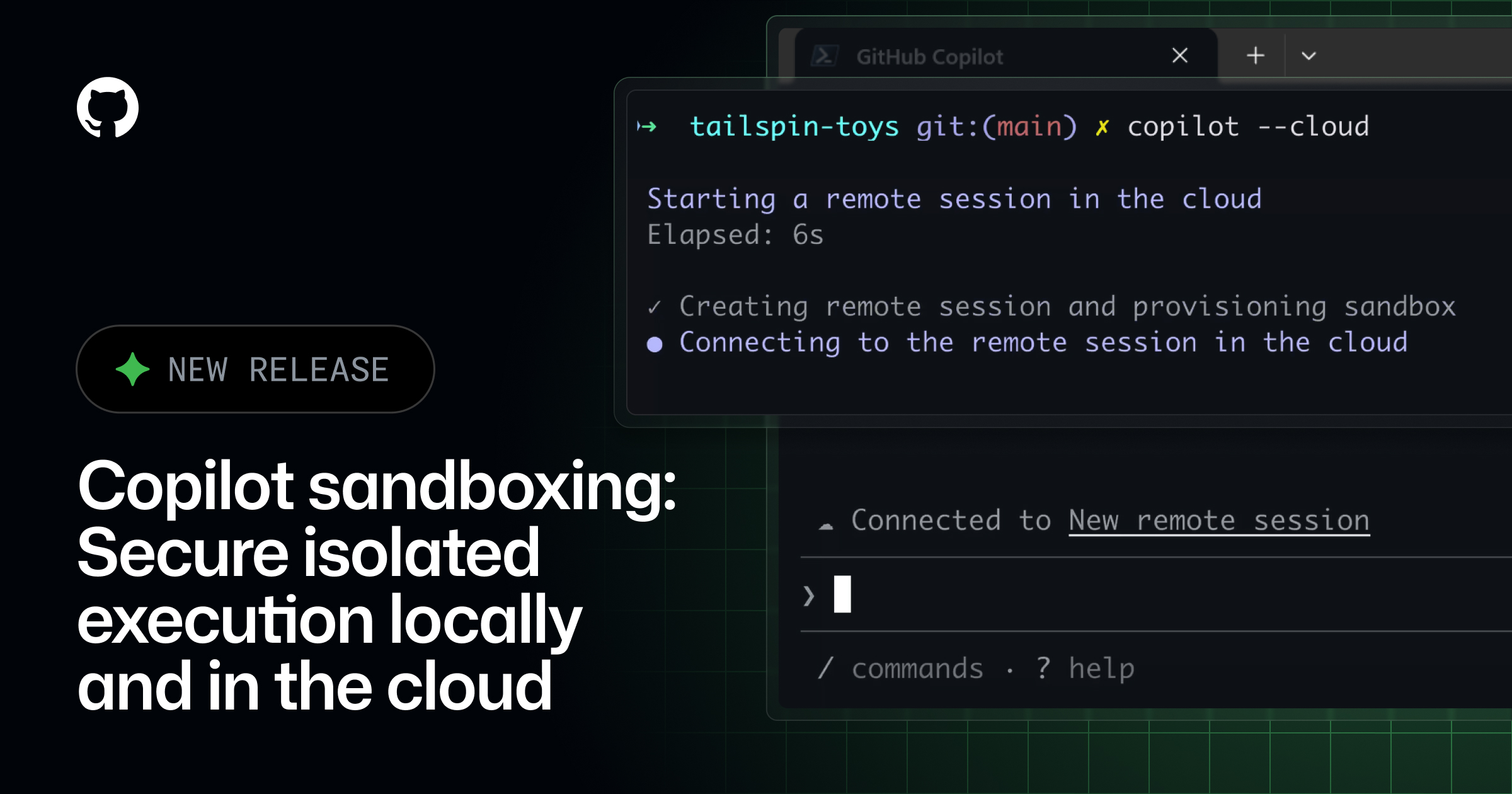 © GitHub Changelog
Coding Toolscoding
GitHub Copilot Sandboxes Enter Public Preview
GitHub Copilot is stepping up its game by introducing secure, isolated sandboxes for both local and cloud environments, now in public preview. This development allows Copilot to execute commands and interact with code in a controlled manner, enhancing security and control for developers and enterprises. By leveraging Microsoft MXC technology, the sandboxes provide a consistent isolation experience across macOS, Linux, and Windows. This move is significant as it transforms Copilot from a simple in-editor assistant to a more autonomous coding partner, capable of running tools and modifying files while maintaining strict security protocols.
GitHub Changelog
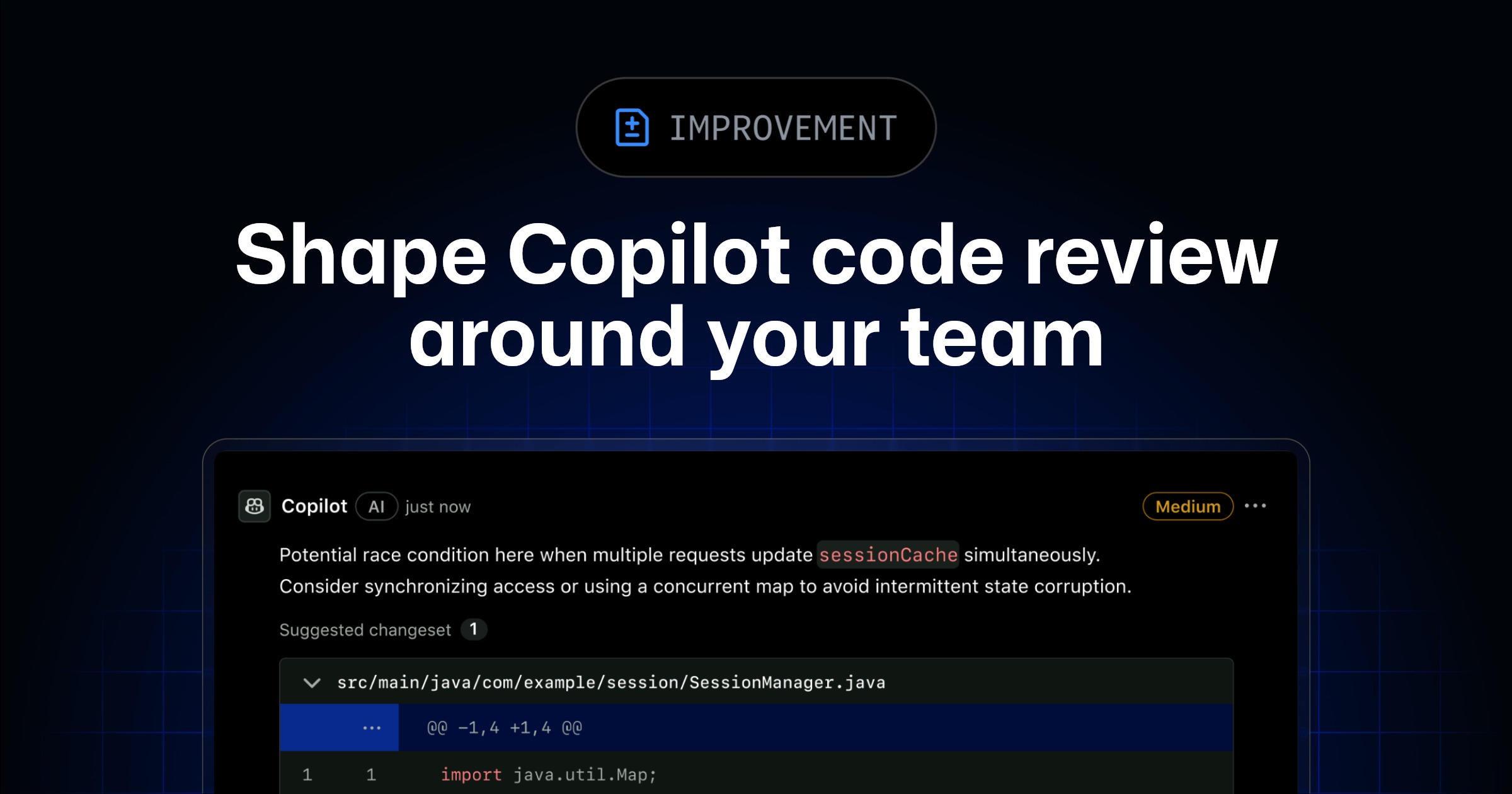 © GitHub Changelog
Coding Toolscoding
GitHub Copilot Enhances Code Review with New Features
GitHub is enhancing its Copilot code review tool by integrating team-specific tools and standards, and introducing a new medium analysis tier. This update allows Copilot to adapt its review depth based on the complexity of code changes, ensuring that more intricate pull requests receive a higher level of scrutiny. By incorporating agent skills and MCP support, Copilot can now pull context from various third-party platforms, reducing the bottleneck often caused by senior engineers. This means teams can maintain consistency across repositories without overburdening key personnel, while also managing costs effectively with usage-based billing.
GitHub Changelog
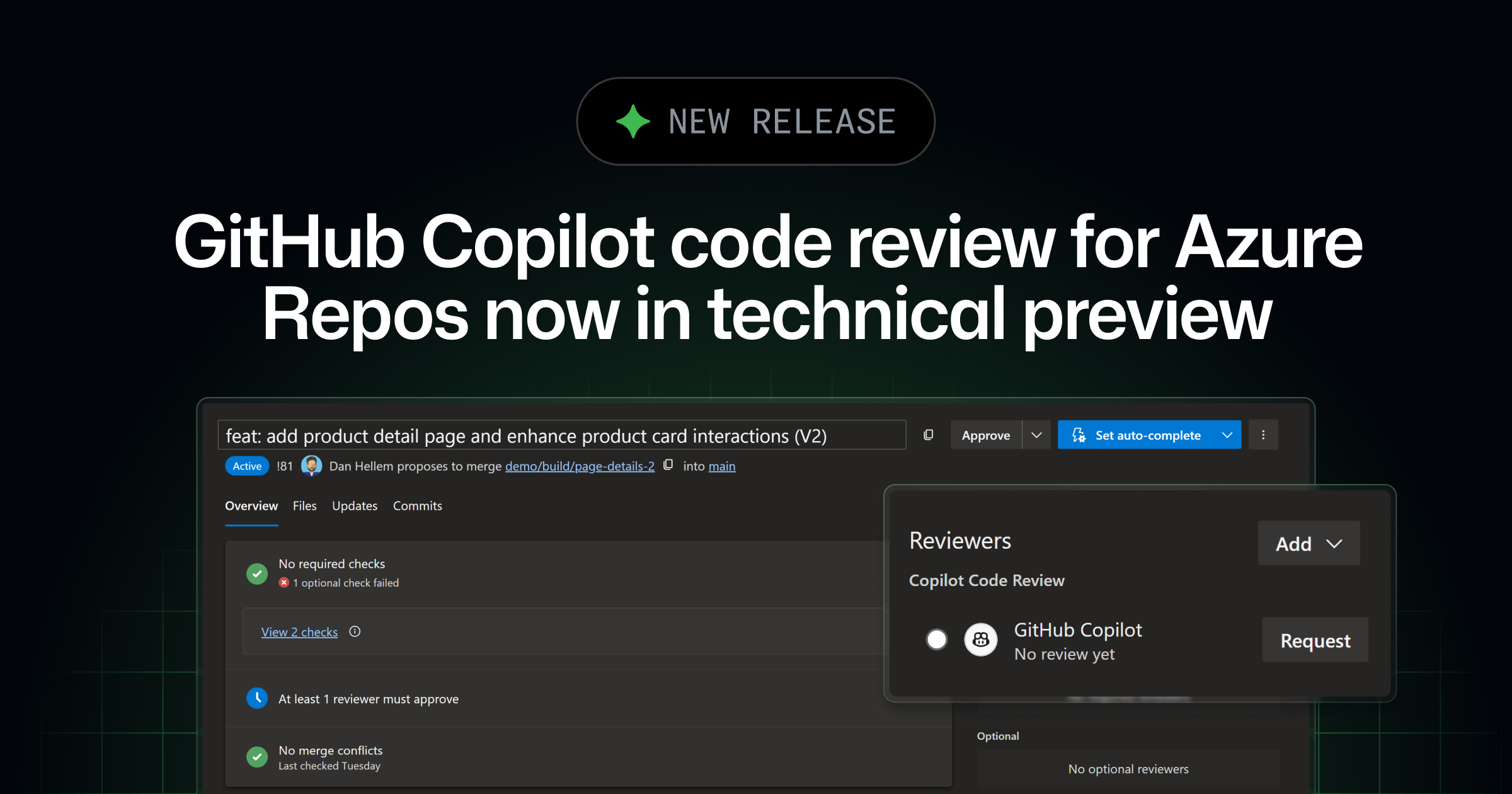 © GitHub Changelog
Coding Toolscoding
GitHub Copilot Code Review Debuts for Azure Repos
GitHub has introduced a technical preview of its Copilot code review feature for Azure Repos, integrating AI-driven pull request reviews directly into Azure DevOps workflows. This allows developers to request code reviews from Copilot, which provides inline comments, suggests improvements, and identifies potential issues without leaving the Azure environment. Notably, this feature is accessible without a GitHub Copilot license, with usage billed as GitHub AI credits. This integration aims to streamline the development process by catching issues earlier and maintaining workflow continuity.
GitHub Changelog
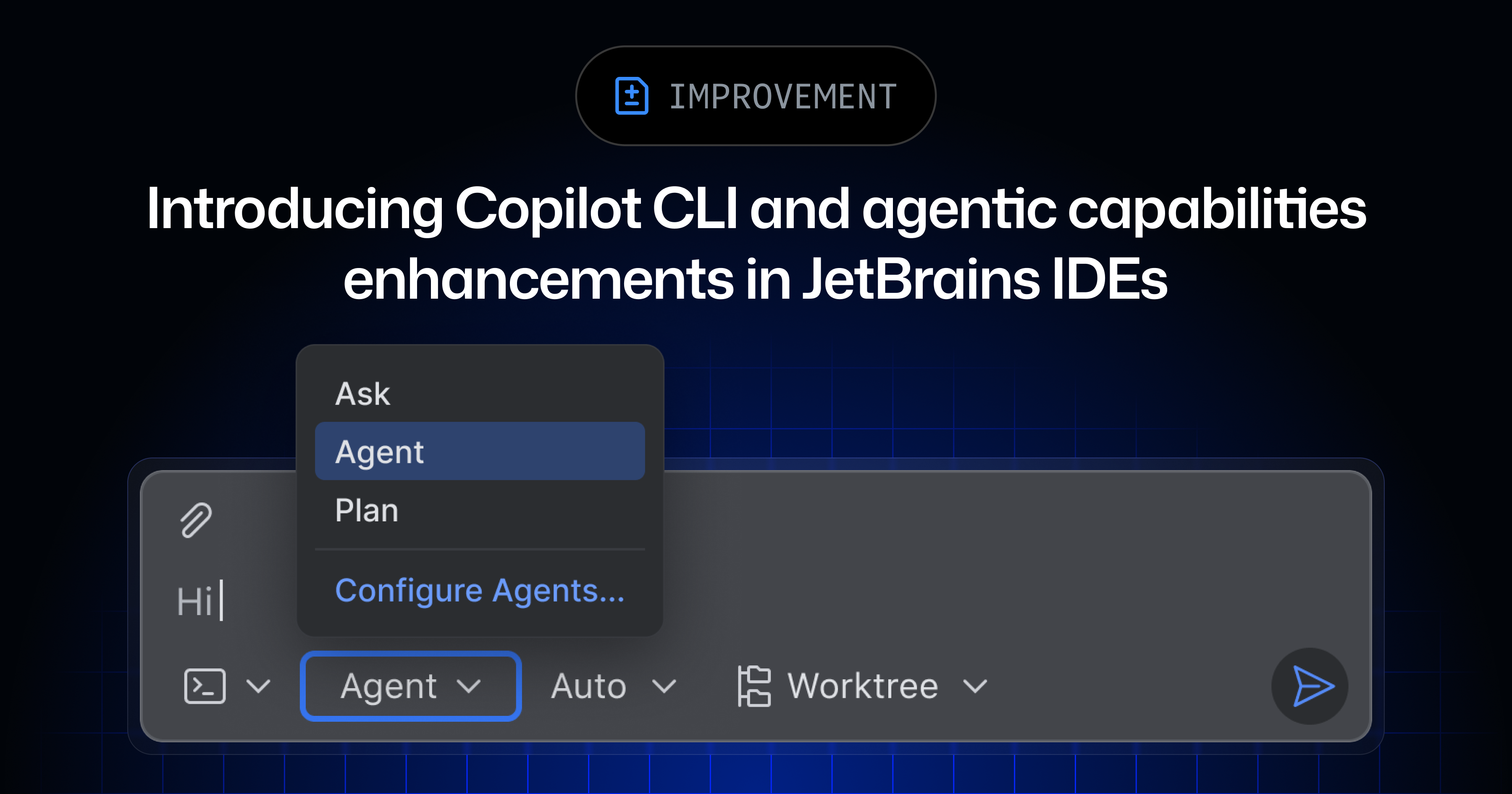 © GitHub Changelog
Coding Toolscoding
GitHub Copilot Enhances CLI and Agent Capabilities
GitHub has rolled out significant updates to its Copilot CLI and agent capabilities within JetBrains IDEs, aiming to enhance developer workflows. The introduction of an agent picker allows users to switch between different modes, such as full agentic experience or quick assistance, tailoring the tool to specific needs. New commands like /remote and /chronicle offer remote session control and session history analysis, respectively, providing more flexibility and insights. These updates mark a shift towards a more integrated and customizable development environment, making Copilot a more powerful tool for developers.
GitHub Changelog
Coding Toolscoding
Claude Code v2.1.160 Update Released
The latest update to Claude Code, version 2.1.160, introduces several improvements and fixes that enhance user experience and system stability. Notably, it adds prompts before writing to shell startup files and build-tool config files, reducing the risk of unintended command execution. The update also addresses multiple bugs, such as issues with Windows clipboard integration and session management in background agents. These changes make Claude Code more reliable and user-friendly, particularly for developers working in complex environments.
Claude Code Releases
Coding Toolscoding
Claude Code v2.1.157 Update Released
The latest update to Claude Code, version 2.1.157, introduces several enhancements and fixes that streamline plugin management and improve user experience. Notably, plugins in the .claude/skills directories are now automatically loaded, eliminating the need for a marketplace. The update also adds autocomplete for plugin arguments and honors theagent field in settings.json for dispatched sessions. Additionally, various bug fixes enhance stability, such as resolving issues with unprocessable images and improving performance in long conversations. These changes make Claude Code more efficient and user-friendly for developers.
Claude Code Releases
Coding Toolscoding
Claude Code v2.1.158 Update Released
Claude Code's latest update, v2.1.158, introduces Auto mode for Bedrock, Vertex, and Foundry platforms, specifically for Opus 4.7 and 4.8. This feature can be activated by setting the environment variable CLAUDE_CODE_ENABLE_AUTO_MODE to 1. The addition of Auto mode aims to streamline processes and enhance user experience across these platforms. While the update doesn't introduce groundbreaking changes, it offers a practical enhancement for developers working with these specific versions.
Claude Code Releases
 © GitHub Changelog
Coding Toolscoding
GitHub Copilot API Adds AI Adoption Cohorts
GitHub has enhanced its Copilot usage metrics API by introducing AI adoption phases, allowing enterprises to better understand how users engage with Copilot. This new feature classifies users into four phases based on their interaction with Copilot over a 28-day period, providing insights into their adoption journey. The API now includes a field for ai_adoption_phase, offering detailed metrics at both user and organizational levels. This development enables enterprises to tailor training and support efforts, focusing on phases with the most potential for growth. By moving beyond simple active-user counts, organizations can now track user progression and optimize Copilot adoption strategies.
GitHub Changelog
Coding Toolscoding
Braintrust Uses Codex for Faster Coding
Braintrust engineers are now using Codex, integrated with GPT-5.5, to enhance their coding efficiency and experiment execution. This integration allows them to swiftly convert customer requests into functional code, significantly reducing manual coding time. By adopting Codex, Braintrust can focus more on complex problem-solving rather than routine coding tasks. This approach exemplifies the increasing adoption of AI-assisted coding, which is set to boost productivity and drive innovation in software development. The shift towards AI tools in coding is reshaping how engineers approach their work, offering new possibilities for efficiency and creativity.
OpenAI
Coding Toolscoding
Claude Code v2.1.153 Update Released
The latest update to Claude Code, version 2.1.153, introduces several enhancements and fixes that improve user experience and functionality. Notably, the update adds a skipLfs option to the GitHub plugin marketplace, allowing users to bypass Git LFS downloads, and enhances the autocomplete feature for Claude agents. Additionally, it addresses various bugs, including memory usage issues and installation errors on Windows. These changes streamline operations and ensure smoother interactions with the platform, particularly for developers using Claude Code in complex environments.
Claude Code Releases
Coding Toolscoding
Claude Code v2.1.154 Release
The latest update to Claude Code, version 2.1.154, introduces several enhancements aimed at improving task management and efficiency. Notably, the new dynamic workflows feature allows users to orchestrate complex tasks across multiple agents, making it easier to handle larger projects. The update also brings cost-effective fast mode on Opus 4.8, offering increased speed at a reduced rate. Additionally, the release refines the system's decision-making process by reserving multiple-choice prompts for genuinely uncertain situations. These changes collectively enhance the platform's usability and performance, particularly for developers managing intricate workflows.
Claude Code Releases
 © Hugging Face Blog
Coding Toolscoding
Beginner's Guide to Profiling in PyTorch
Hugging Face has launched a new series aimed at demystifying the process of profiling in PyTorch, starting with a beginner-friendly guide to using torch.profiler. This first installment breaks down the basics of profiling a simple matrix multiplication and addition operation, providing insights into reading profiler traces and understanding CPU and GPU interactions. The series promises to gradually build up to more complex models, ultimately helping developers optimize their PyTorch code. This initiative is particularly valuable for those looking to enhance their understanding of performance bottlenecks in neural networks.
Hugging Face Blog
 © GitHub Changelog
Coding Toolscoding
CodeQL 2.25.5 Enhances Query Accuracy
The latest update to CodeQL, version 2.25.5, brings notable improvements in query accuracy for C/C++, Java/Kotlin, and GitHub Actions. This release reduces false positives by refining how read-only path sinks are identified in Java/Kotlin and by adjusting the cpp/cleartext-transmission query for C/C++. Additionally, GitHub Actions queries now offer more comprehensive detection by analyzing composite action metadata. These enhancements make CodeQL a more precise tool for developers using GitHub code scanning, ensuring better security issue detection and remediation.
GitHub Changelog
Coding Toolscoding
Claude Code v2.1.152 Update Released
Claude Code's latest update, v2.1.152, introduces several enhancements and bug fixes aimed at improving user experience and functionality. Notably, the /code-review --fix command now automatically applies review findings, enhancing code efficiency and reuse. The update also allows for dynamic skill management with the /reload-skills command, enabling seamless integration of new skills without restarting sessions. Additionally, the update addresses various bugs, such as terminal styling issues and plugin management errors, ensuring smoother operation. These changes collectively enhance the robustness and usability of Claude Code for developers.
Claude Code Releases
© GitHub ChangelogCoding Toolscoding
GitHub Copilot Memory Enhances Control Features
GitHub's Copilot Memory is refining its control features, offering users more precise management over memory deletion and scope. With a new repository-level off switch, admins can now disable Copilot Memory for specific repositories, ensuring repository-level facts are not stored or read. The Copilot CLI has been updated to allow users to enable or disable memory and check its status with simple commands. These enhancements aim to give users and admins greater control over how Copilot Memory functions, making it more adaptable to individual and organizational needs.
GitHub Changelog
 © GitHub Changelog
Coding Toolscoding
GitHub Launches Repository Enablement API for Code Quality
GitHub has introduced a new Repository Enablement API, allowing developers to programmatically manage Code Quality settings on individual repositories. This API, now in public preview, offers two endpoints for enabling or disabling Code Quality setups and retrieving current configurations. It supports languages like C#, Go, Java-Kotlin, JavaScript-Typescript, Python, and Ruby. This development simplifies the process of integrating code quality checks into workflows, making it easier for developers to maintain high standards across their projects.
GitHub Changelog
 © GitHub Changelog
Coding Toolscoding
Dependabot Adds Support for sbt Ecosystem
GitHub's Dependabot now includes support for the sbt ecosystem, allowing developers to automate version updates for sbt projects. By adding sbt to the dependabot.yml file, users can have Dependabot monitor their build.sbt inputs and automatically open pull requests for new upstream commits. This enhancement simplifies the process of keeping sbt dependencies up-to-date, although it does not cover security updates. This update makes it easier for developers using sbt to maintain their projects with minimal manual intervention.
GitHub Changelog
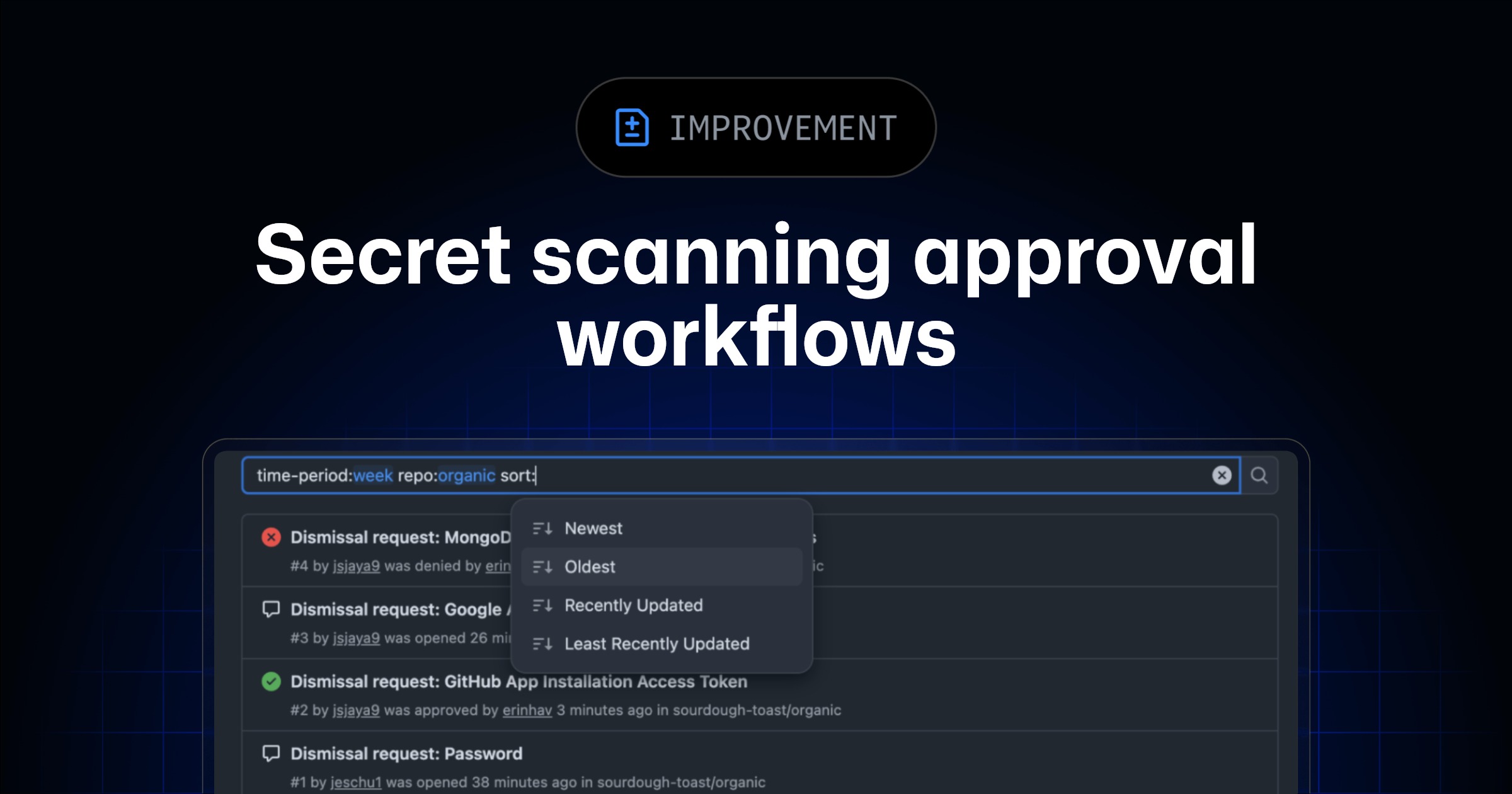 © GitHub Changelog
Coding Toolscoding
GitHub Enhances Secret Scanning with New Filters
GitHub has introduced new features to improve its secret scanning workflows, making it easier for organizations to manage requests at scale. Users can now sort bypass and dismissal requests in the UI by various criteria, such as newest or oldest, which is particularly useful for handling large volumes of requests. Additionally, a new REST API filter allows for programmatic filtering of alerts based on whether push protection was bypassed. These enhancements streamline the process for security analysts and developers, providing more control and efficiency in managing secret scanning alerts.
GitHub Changelog
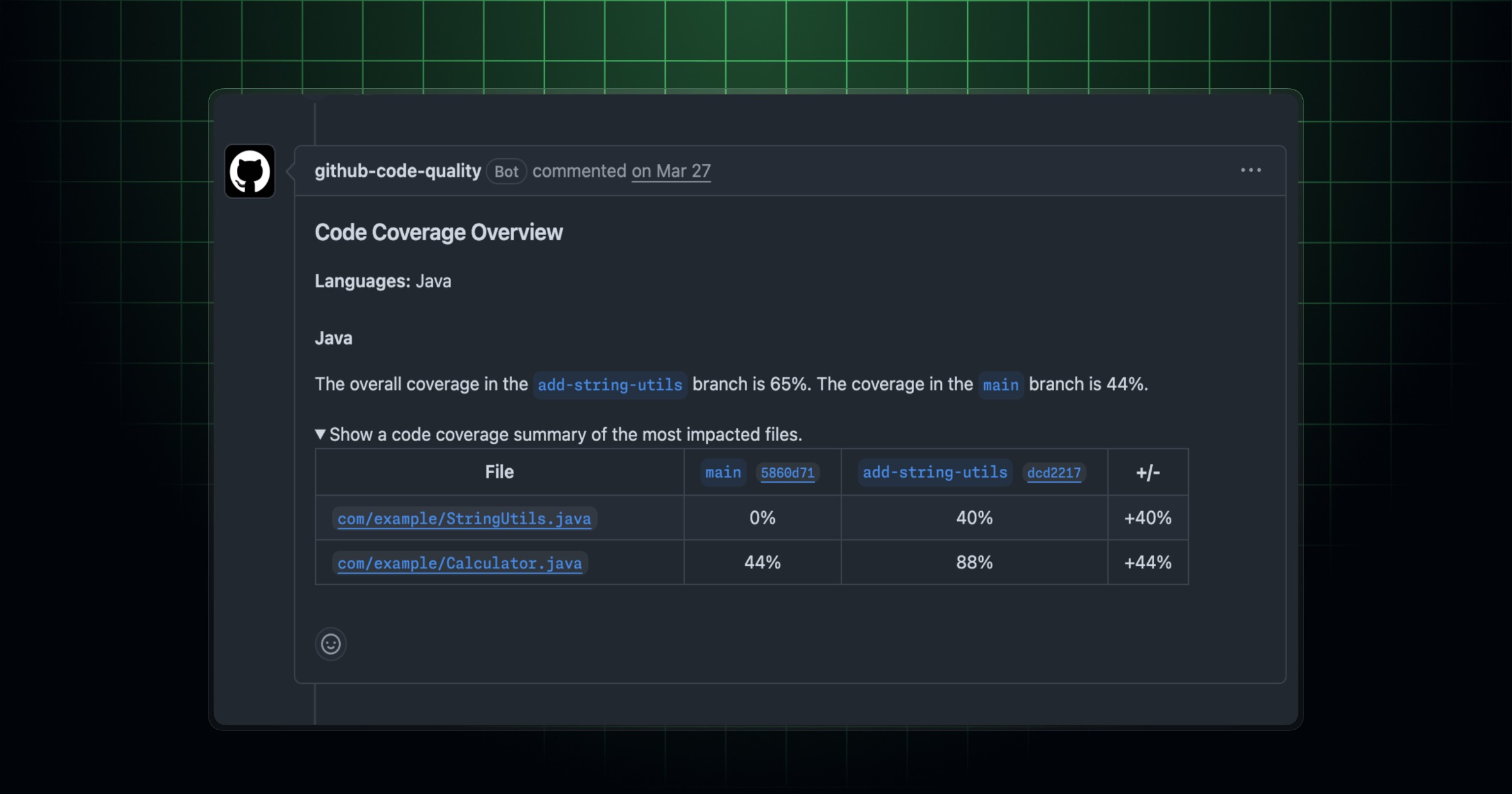 © GitHub Changelog
Coding Toolscoding
GitHub Launches Code Coverage Preview for Pull Requests
GitHub has introduced a public preview of code coverage metrics for pull requests, enhancing the review process for developers. This feature allows users to see an aggregate percentage of code coverage directly within pull requests, providing a clear indication of test completeness. By integrating this context into the pull request experience, teams can make quicker and more confident review decisions without needing to switch tools. This preview is available for GitHub Enterprise Cloud and Team users, offering a streamlined approach to code quality assessment.
GitHub Changelog
© GitHub ChangelogCoding Toolscoding
npm Enhances Security with Staged Publishing
npm has introduced staged publishing and new install-time controls in its latest update, aiming to bolster supply-chain security. Staged publishing allows package maintainers to approve prebuilt tarballs before they become publicly available, adding a layer of human verification. This feature is particularly beneficial for CI/CD workflows, ensuring that only trusted packages are released. Additionally, new install source flags provide developers with more control over dependency sources, enhancing security by allowing explicit permissions for file, remote, and directory installs. These updates mark a significant step towards more secure package management in the npm ecosystem.
GitHub Changelog
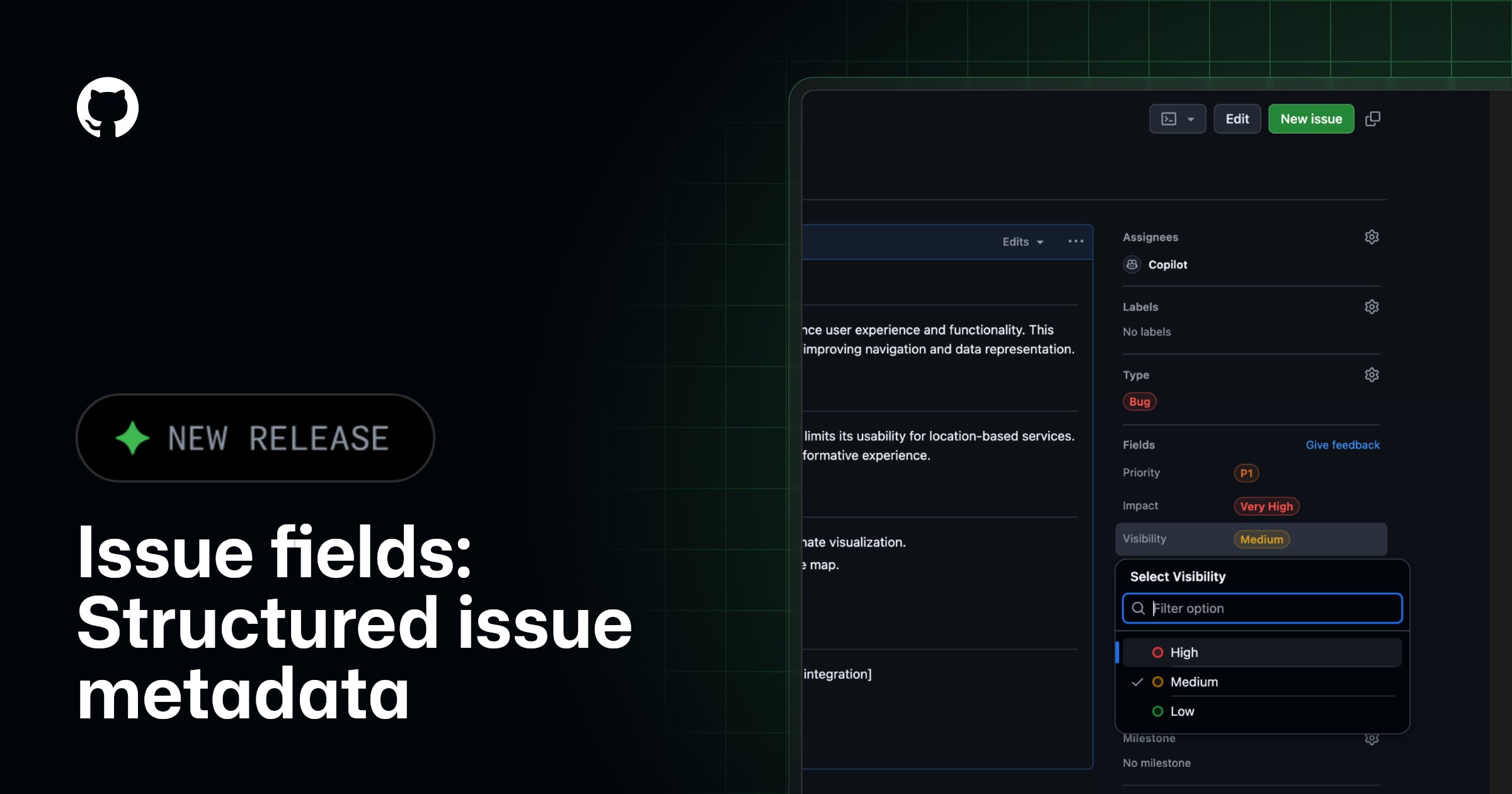 © GitHub Changelog
Coding Toolscoding
GitHub Issue Fields Now in Public Preview
GitHub has introduced a public preview of issue fields for all organizations, offering a new way to manage and track issues across repositories. This feature allows organizations to define typed metadata like Priority and Effort, which automatically appear on every issue, simplifying workflows and reducing the need for manual syncing. With support for single select, text, number, and date types, these fields can be integrated into project views and automated via APIs. This update is particularly beneficial for large enterprises and open source projects, providing a structured alternative to complex label systems. By adopting this feature, teams can enhance their automation capabilities and maintain consistent field values without manual intervention. GitHub plans to continue refining the feature based on user feedback, ensuring it meets the evolving needs of its users.
GitHub Changelog
 © The Verge AI
Coding Toolscoding
Google AI Studio Enables Rapid Android App Creation
Google's AI Studio is making waves by allowing users to create Android apps with minimal input, showcasing the potential for non-programmers to engage in app development. The platform's ability to generate apps from simple prompts is impressive, though the quality of the resulting apps, like a calorie counter and games, leaves room for improvement. Users can quickly iterate on their creations, but face limitations such as daily usage caps unless they opt for paid services. This development hints at a future where app creation is more accessible, though the current output may not yet rival professionally developed software.
The Verge AI
 © The Verge AI
Coding Toolscoding
Vibe Coding Brings Personal App Creation to Phones
Google's latest AI Studio update is set to revolutionize personal tech by enabling users to create native Android apps through vibe coding. This development allows non-developers to craft personal utility apps quickly, enhancing the personalization of mobile devices. While initially limited to personal utility apps, the potential for users to build custom widgets and apps tailored to their specific needs is significant. This move towards a generative UI could redefine how we interact with our phones, offering a new level of customization and personalization. However, the success of this feature hinges on its practical implementation and user adoption.
The Verge AI
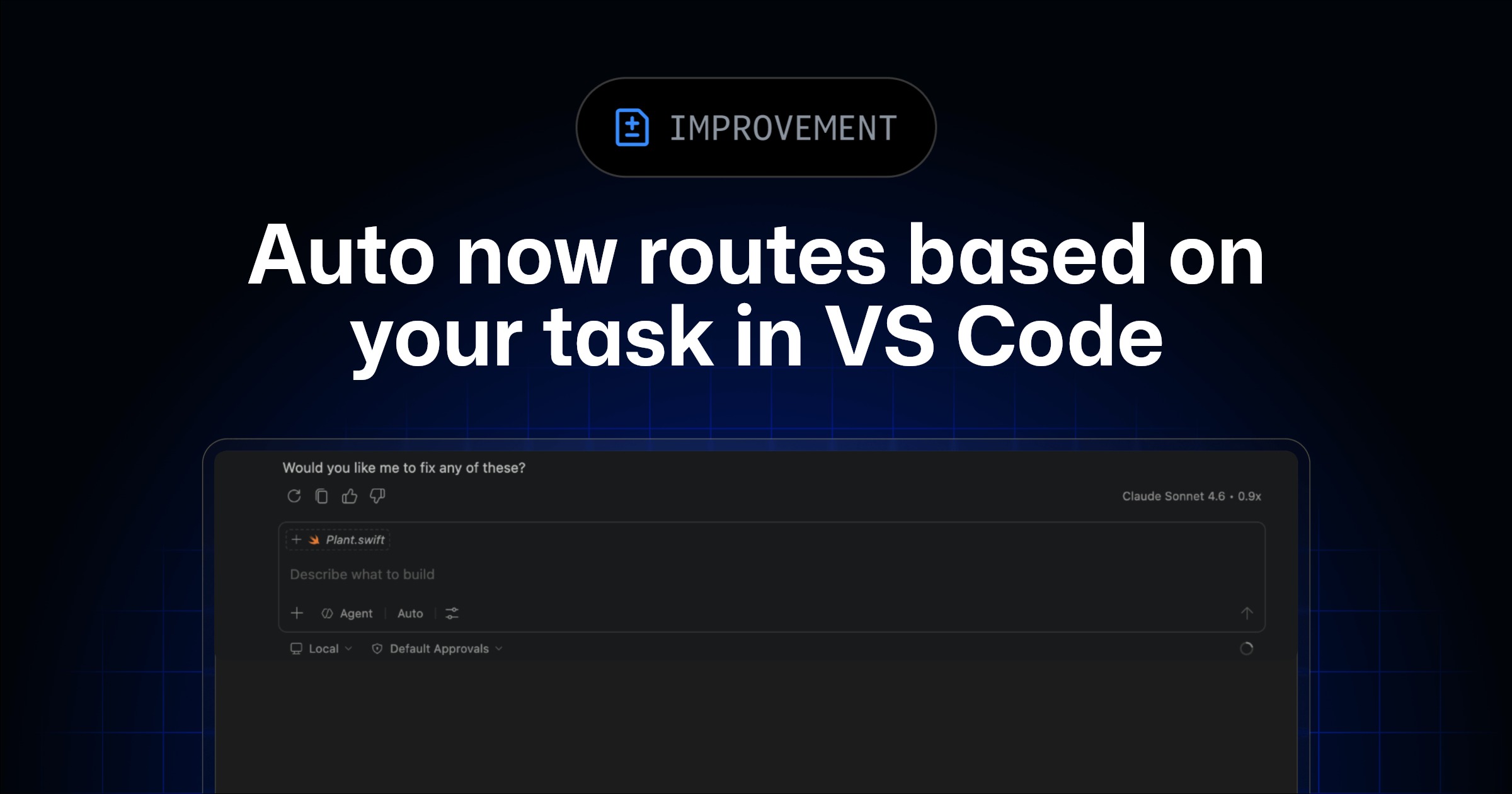 © GitHub Changelog
Coding Toolscoding
GitHub Copilot Enhances Model Selection in VS Code
GitHub Copilot's new auto model selection feature in VS Code intelligently routes tasks to the most suitable AI model, optimizing for efficiency and reliability. By evaluating tasks based on complexity and other factors, it ensures that developers get the best model for their needs without manual intervention. This feature not only enhances productivity but also offers transparency by allowing users to see which model was used. With no setup required, developers can immediately benefit from improved token efficiency and cost savings, making AI-assisted coding more accessible and effective.
GitHub Changelog
 © GitHub Changelog
Coding Toolscoding
Semantic Issue Search Added to GitHub Copilot Chat
GitHub has enhanced its Copilot Chat with a new semantic issue search feature, allowing users to find and analyze issues using natural language. This update means developers no longer need to rely solely on exact matches or manual filters, as the tool can now understand the intent behind queries. This capability is particularly useful for locating issues when the exact title or keywords are forgotten, or for filtering issues by platform or environment. The feature is available to all users on Copilot plans, making issue management more intuitive and efficient.
GitHub Changelog
Coding Toolscoding
Claude Code v2.1.145 Update Released
The latest update to Claude Code, version 2.1.145, introduces several enhancements and bug fixes aimed at improving user experience and functionality. Notably, the update adds JSON output for listing live Claude sessions, which is useful for scripting and session management. It also enhances the status line JSON input to include GitHub repo and PR information, providing more context for developers. Additionally, various bugs have been addressed, such as fixing permission-prompt bypasses and improving error messages for missing arguments. These changes make the platform more robust and user-friendly, particularly for developers working with complex agent systems.
Claude Code Releases
Coding Toolscoding
Ramp Engineers Boost Code Review with Codex
Ramp engineers have adopted Codex with GPT-5.5 to transform their code review process, cutting down the time needed for feedback from hours to mere minutes. This integration allows for rapid and detailed analysis, enabling faster shipping of code improvements. By utilizing AI, Ramp is not only increasing their operational efficiency but also enhancing the quality of their software development. This move underscores the growing importance of AI in making software development more agile and responsive, offering developers a powerful tool to refine their workflows.
OpenAI
© GitHub ChangelogCoding Toolscoding
GitHub Enhances Copilot Code Review with New Features
GitHub has enhanced its Copilot code review feature, offering developers greater flexibility in applying feedback. The new 'Fix with Copilot' button replaces the previous 'Implement suggestion' button, now providing a UI dialog that lets developers decide whether to apply changes directly to a pull request or create a new one. Additionally, the 'Fix batch with Copilot' button allows users to handle multiple comments at once, making the review process more efficient. These updates empower developers to manage code reviews and implement changes with increased precision and ease.
GitHub Changelog
 © TechCrunch AI
Coding Toolscoding
Google Enhances Android App Development with AI Tools
Google's release of a stable Android CLI marks a pivotal step in integrating AI agents into Android app development. This tool empowers AI agents like OpenAI's Codex and Google's Antigravity to harness the full potential of Android Studio, making the development process more efficient. By embracing AI agents beyond its own ecosystem, Google is adapting to the evolving landscape of app development. The Android CLI introduces a new command that allows these agents to tap into Android Studio's capabilities, offering developers a streamlined path to creating Android apps. This advancement could significantly alter how mobile apps are developed, with AI tools playing a central role.
TechCrunch AI
 © The Verge AI
Coding Toolscoding
Google AI Studio Enables Android App Creation
Google's AI Studio now allows users to create native Android apps through a process called vibe coding. This tool is designed to simplify app development by letting users prompt their app ideas and preview them using an embedded Android emulator. While the feature is currently focused on personal utility and AI-powered apps, it lowers the barrier for creating high-quality apps. However, any app intended for Google Play must still adhere to Google's strict quality standards. This development marks a significant step in making app creation more accessible to non-developers.
The Verge AI
 © TechCrunch AI
Coding Toolscoding
Google AI Studio Enables Quick Android App Creation
Google's AI Studio is transforming Android app development by allowing users to create apps in minutes rather than weeks. This new capability, announced at Google I/O 2026, leverages AI to simplify the process, making it accessible to both seasoned developers and non-technical creators. By using Kotlin and Jetpack Compose, users can build apps with hardware sensor integration, preview them in a browser, and install them on Android devices. While currently limited to personal use, this tool opens up new possibilities for app creation and discovery, potentially reshaping the Android app ecosystem.
TechCrunch AI
 © GitHub Changelog
Coding Toolscoding
GitHub Expands OIDC Support for Dependabot
GitHub has broadened its OpenID Connect (OIDC) authentication capabilities for Dependabot and code scanning by adding support for Cloudsmith and Google Artifact Registry. This update allows organization administrators to set up OIDC-based credentials for private registries, enabling the dynamic retrieval of short-lived credentials from cloud identity providers. Building on existing support for AWS, Azure, and JFrog, this enhancement simplifies secure access management for developers working with various cloud services. The feature is now accessible on GitHub.com and will be included in the upcoming GitHub Enterprise Server 3.22 release.
GitHub Changelog
Coding Toolscoding
Claude Code v2.1.144 Update Released
The latest update to Claude Code, version 2.1.144, brings a host of improvements and bug fixes aimed at enhancing user experience and system stability. Notable changes include support for resuming background sessions, improved handling of terminal output, and fixes for session crashes on macOS. The update also addresses issues with model selection and plugin management, ensuring smoother operations for developers. These enhancements make Claude Code more robust and user-friendly, particularly for those working with complex background tasks and plugin integrations.
Claude Code Releases
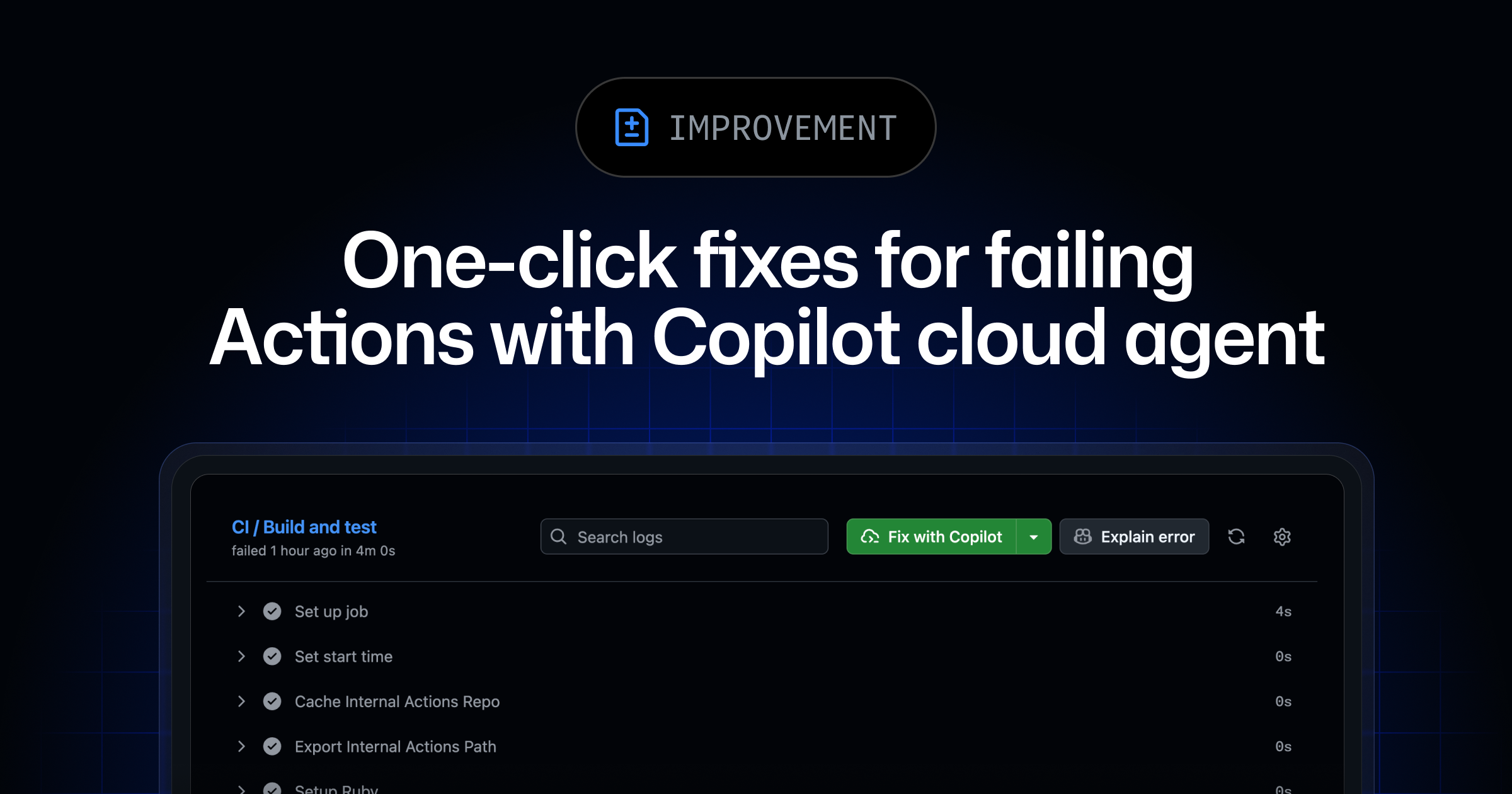 © GitHub Changelog
Coding Toolscoding
GitHub Copilot Automates Action Fixes with Cloud Agent
GitHub has introduced a new feature for Copilot Business and Enterprise users that allows them to fix failing GitHub Actions jobs with a single click. By leveraging the Copilot cloud agent, users can delegate the task of investigating and correcting errors to an automated system, which then pushes the fix to the user's branch and tags them for review. This development streamlines the process of handling routine errors, enabling developers to focus on more critical tasks. However, organizations must enable the Copilot cloud agent to utilize this feature.
GitHub Changelog
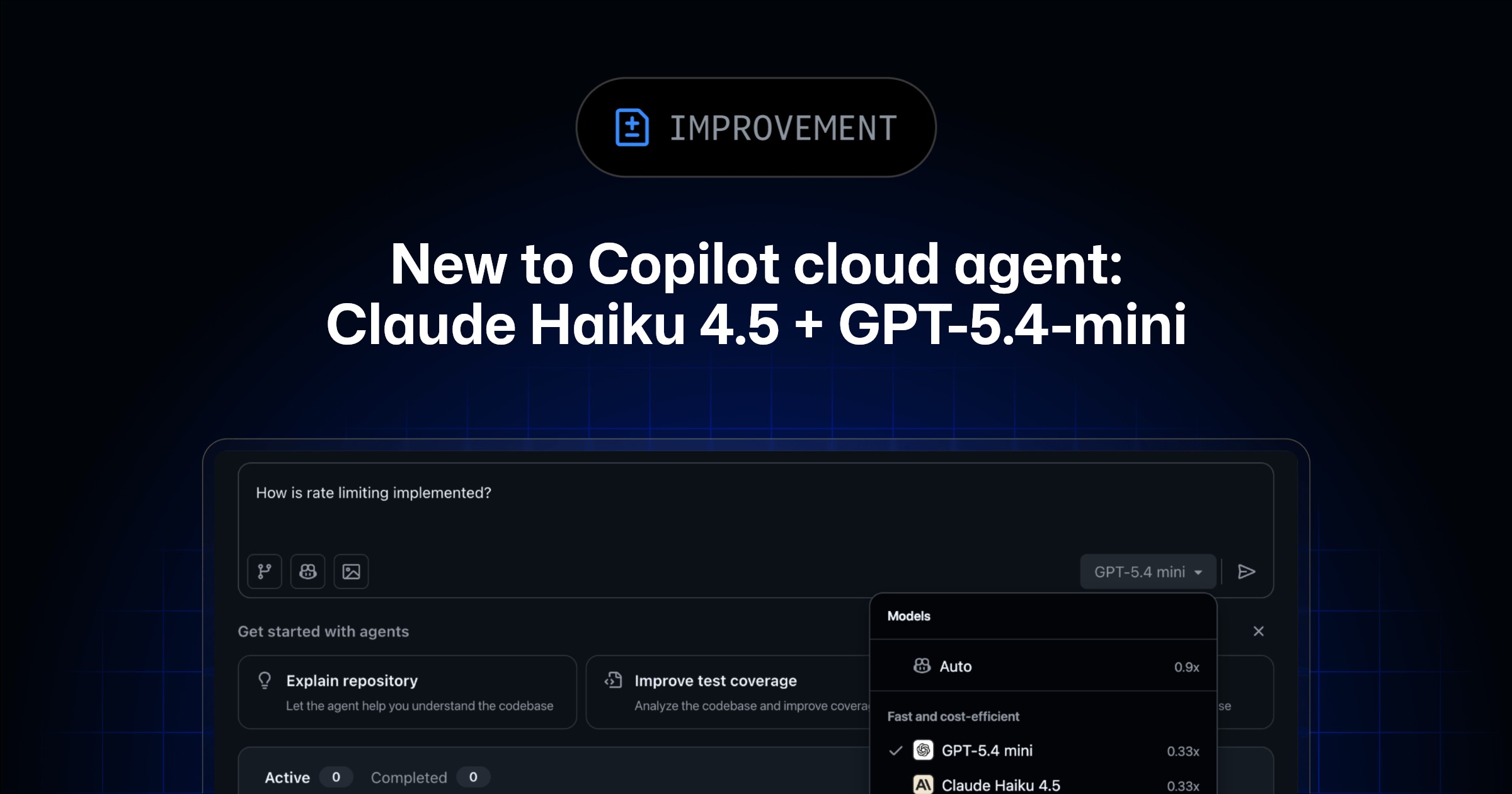 © GitHub Changelog
Coding Toolscoding
GitHub Expands Copilot Cloud Agent Model Options
GitHub has expanded its Copilot cloud agent by introducing new model options that focus on speed and cost-efficiency. With the addition of models like Claude Haiku 4.5 and GPT-5.4-mini, both offering a 0.33x multiplier, developers can now tailor their model choice to the complexity of their tasks. This flexibility allows for the use of smaller, faster models for straightforward tasks, while reserving more powerful models for complex work. The update highlights GitHub's commitment to providing adaptable AI tools that cater to diverse developer needs, enhancing both productivity and cost-effectiveness.
GitHub Changelog
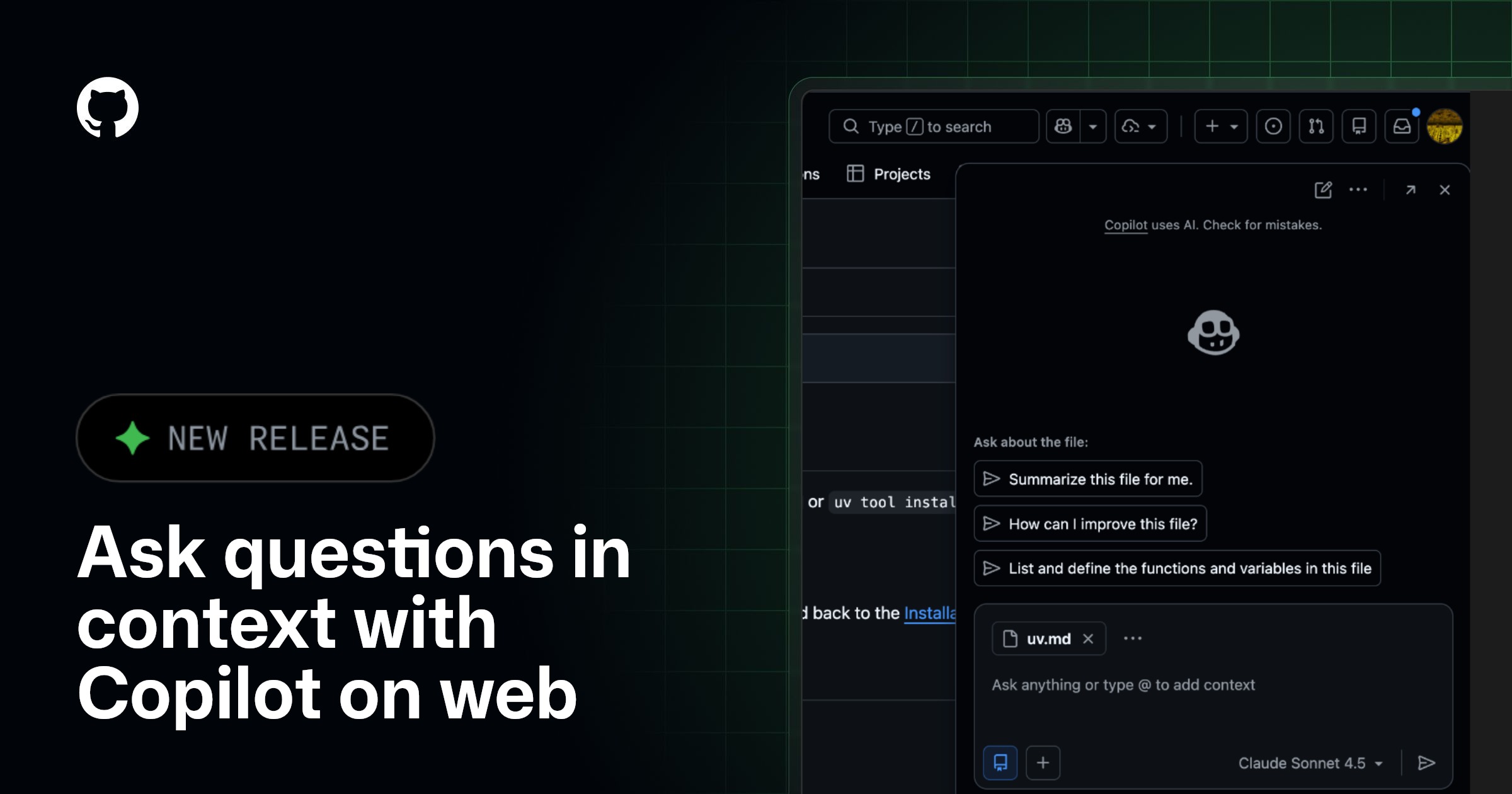 © GitHub Changelog
Coding Toolscoding
GitHub Copilot Enhances Web Chat Experience
GitHub has improved its Copilot feature by enabling users to engage in contextual chat directly on the web page they are viewing, minimizing the need for context switching. This update allows the chat panel to open from the navigation bar, providing quick access to answers without leaving the current page. As users navigate through GitHub, relevant references are automatically attached to the chat, allowing for more informed interactions across multiple pull requests, issues, and repositories. This feature is now available for all GitHub Copilot plans, offering developers a more integrated and efficient way to work within the platform.
GitHub Changelog
© GitHub ChangelogCoding Toolscoding
GitHub Introduces Copilot Cloud Agent Audit API
GitHub has launched a new REST API that allows developers to audit the configuration of their Copilot cloud agents programmatically. This API, currently in public preview, provides detailed insights into a repository's setup, including MCP server configuration, enabled tools, GitHub Actions workflow policy, and firewall settings. This development is significant for developers looking to enhance the security and compliance of their repositories by offering a scalable way to review and manage configurations. By making these details accessible via API, GitHub is empowering developers to maintain a robust security posture more efficiently.
GitHub Changelog
 © GitHub Changelog
Coding Toolscoding
GitHub Copilot Spaces API Now Available
GitHub has launched its Copilot Spaces API for general use, empowering developers to automate the management of Spaces directly from their applications. This API allows for the creation, retrieval, updating, and deletion of Spaces, which is particularly beneficial for enterprises handling numerous Spaces. By minimizing the need for manual processes in the GitHub UI, teams can manage context more effectively at scale. This release represents a notable advancement in automation capabilities for developers leveraging GitHub's platform.
GitHub Changelog
 © GitHub Changelog
Coding Toolscoding
Remote Control for Copilot CLI Now on Mobile and Web
GitHub has expanded the capabilities of Copilot CLI by introducing remote control features accessible via mobile, web, and popular IDEs like VS Code and JetBrains. This update allows developers to manage their terminal sessions from anywhere, making it easier to monitor and steer ongoing work remotely. The feature supports non-GitHub repositories and directories, broadening its usability. This development signifies a step towards more flexible and mobile-friendly coding environments, enabling developers to maintain productivity even when away from their primary workstations.
GitHub Changelog
Coding Toolscoding
Claude Code v2.1.143 Release
The latest update to Claude Code, version 2.1.143, introduces several enhancements and fixes that improve plugin management and session handling. Notably, plugin dependency enforcement now prevents disabling a plugin if others depend on it, while projected context costs are now visible in the plugin marketplace. Background sessions have been refined to maintain model and effort settings after idle periods, and PowerShell tools are now enabled by default for certain users. These changes streamline the user experience and enhance the reliability of Claude Code's operations.
Claude Code Releases
© GitHub ChangelogCoding Toolscoding
GitHub Introduces Temporary Header for Token Format Testing
GitHub is introducing a temporary request header to help developers test a new token format for GitHub App installation tokens. This header allows developers to force the use of either the new stateless token format or the existing stateful format on demand. The new stateless tokens are JWTs prefixed with 'ghs_' and are longer, containing two dots, compared to the shorter, opaque stateful tokens. This change is crucial for developers to ensure their applications can handle both formats before the full rollout. The temporary header will eventually be deprecated, making it essential for developers to validate their systems promptly.
GitHub Changelog
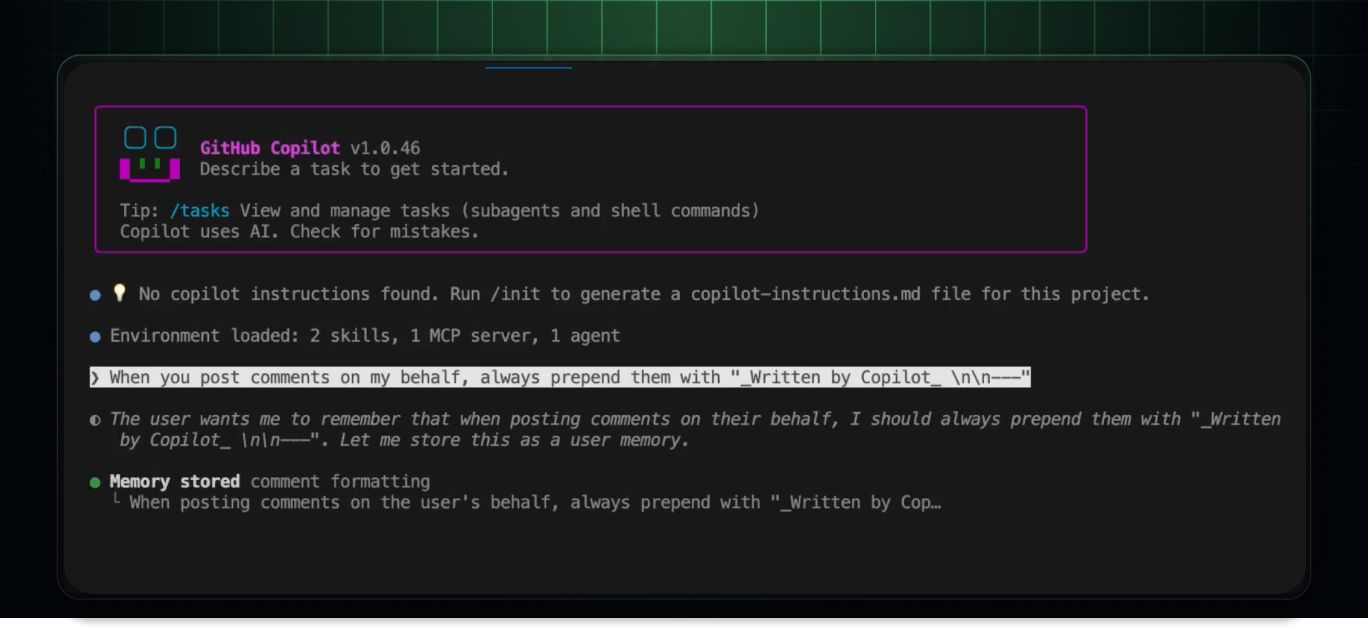 © GitHub Changelog
Coding Toolscoding
GitHub Copilot Memory Adds User Preferences
GitHub's Copilot Memory now supports user-level preferences for Pro and Pro+ users, marking a shift from repository-level data storage. This enhancement allows Copilot to remember individual user preferences, such as commit styles and communication tones, across all repositories and interactions. By adapting to personal work styles, Copilot aims to deliver more tailored and efficient coding assistance. This update signifies a move towards more personalized AI tools, potentially increasing productivity for developers using Copilot.
GitHub Changelog
Coding Toolscoding
Claude Code v2.1.142 Release
The latest update to Claude Code, version 2.1.142, introduces several new features and fixes that enhance the functionality of its agents and plugins. Notably, the update adds new configuration flags for background sessions and switches the default fast mode to Opus 4.7, improving performance. Additionally, the update addresses several bugs, such as issues with macOS sleep/wake cycles and plugin directory errors, ensuring smoother operation. These changes make Claude Code more robust and user-friendly, particularly for developers relying on its background session capabilities.
Claude Code Releases
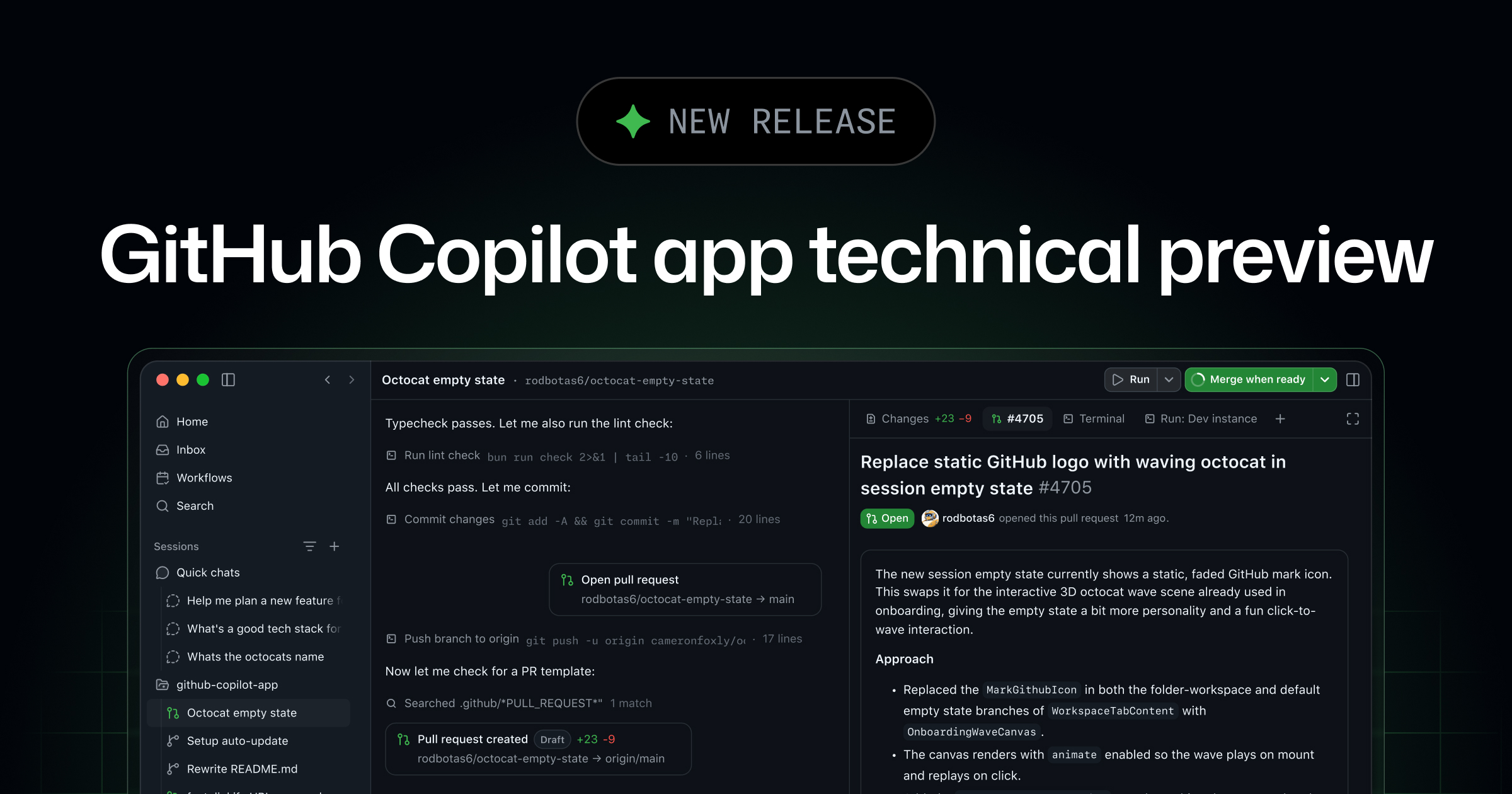 © GitHub Changelog
Coding Toolscoding
GitHub Copilot App Enters Technical Preview
GitHub has launched a technical preview of its Copilot app, offering a desktop experience for agentic development directly within GitHub. This app allows developers to start sessions from existing work artifacts like issues or pull requests, maintaining context and isolation across tasks. It supports automation of routine tasks and integrates seamlessly with GitHub's existing review and merge processes. This development marks a step towards more integrated and efficient workflows for developers using GitHub's ecosystem.
GitHub Changelog
Coding Toolscoding
Codex Now Accessible via ChatGPT Mobile App
OpenAI has expanded the accessibility of Codex by integrating it with the ChatGPT mobile app. This move allows developers to monitor, steer, and approve coding tasks in real time, regardless of their location or device. By enabling Codex functionality on mobile, OpenAI is making it easier for developers to manage coding tasks on the go, enhancing flexibility and productivity. This integration signifies a step towards more seamless and mobile-friendly coding environments, though it remains to be seen how it will impact developer workflows in practice.
OpenAI
© GitHub ChangelogCoding Toolscoding
Copilot Cloud Agent Adds Auto Model Selection
GitHub's Copilot cloud agent now includes an auto model selection feature, which intelligently determines the most suitable model based on system health and performance. This advancement not only enhances the user experience by ensuring optimal model usage but also provides a 10% discount on the normal model multiplier. Users will also enjoy the benefit of not being subject to weekly rate limits, making the service more efficient and accessible. This development highlights GitHub's ongoing efforts to refine AI-driven coding tools for developers, offering a more seamless and cost-effective solution.
GitHub Changelog
 © The Verge AI
Coding Toolscoding
AI Tools Empower Personal Software Revolution
The rise of AI coding tools like Anthropic's Claude Code is transforming how individuals create software, enabling a new era of personal software development. These tools allow users to build custom applications tailored to their specific needs without requiring extensive coding knowledge. This shift empowers users to create software that perfectly fits their requirements, bypassing the limitations of mass-produced applications. While these bespoke apps may lack the polish and support of commercial software, they offer unprecedented personalization and control, marking a significant change in how we interact with technology.
The Verge AI
Coding Toolscoding
Claude Code v2.1.140 Release
The latest update to Claude Code, version 2.1.140, brings several improvements and bug fixes that enhance the user experience. Notably, the Agent tool now accepts case- and separator-insensitive values, making it more flexible for users. Additionally, the update addresses various issues such as the silent hanging of the /goal command and connection drops in the background service. These changes aim to streamline operations and improve reliability, particularly for users dealing with enterprise endpoint security and remote managed settings.
Claude Code Releases
Coding Toolscoding
Claude Code v2.1.141 Update Released
The latest update to Claude Code, version 2.1.141, introduces several enhancements and fixes aimed at improving user experience and functionality. Notably, the update adds a terminalSequence field for desktop notifications and a new environment variable for workload identity federation. It also addresses numerous bugs, such as issues with background jobs and plugin installations. These changes make the platform more robust and user-friendly, ensuring smoother operations for developers using Claude Code.
Claude Code Releases
© GitHub ChangelogCoding Toolscoding
GitHub Copilot Enhances JetBrains IDEs with CLI Agent
GitHub Copilot has integrated its CLI agent into JetBrains IDEs, offering developers a more seamless experience by allowing task delegation directly from the IDE. This update introduces a unified sessions view, enabling users to track live and queued sessions efficiently. The addition of an 'Ask question' tool in agent mode enhances task accuracy by reducing ambiguity. These features, alongside improvements in user experience and support for GitHub Enterprise Server, make Copilot more robust and versatile for developers using JetBrains IDEs.
GitHub Changelog
© GitHub ChangelogCoding Toolsagents
GitHub Introduces Copilot Agent Tasks REST API
GitHub's new Agent tasks REST API allows Copilot Business and Enterprise users to programmatically initiate tasks for the Copilot cloud agent, now in public preview. This API integration enables seamless automation of development processes, such as refactoring code across multiple repositories or setting up new repositories with ease. By allowing developers to track task progress through the API, GitHub enhances the flexibility and efficiency of Copilot's capabilities. This development marks a step forward in integrating AI-driven automation into custom workflows, although broader access for Copilot Pro users is still forthcoming.
GitHub Changelog
© GitHub ChangelogCoding Toolscoding
GitHub Enterprise Server 3.21 Release Candidate Available
GitHub Enterprise Server 3.21 release candidate introduces several enhancements aimed at improving deployment efficiency and code security. Notably, organization custom properties are now generally available, allowing administrators to tag organizations with metadata for better policy management. The hierarchy view for GitHub Projects provides a clearer view of issue hierarchies, enhancing project management. Additionally, the REST API version 2026-03-10 introduces breaking changes, and GitHub Actions now supports workflows with over 300 jobs through lazy loading. These updates aim to streamline enterprise operations and improve user experience.
GitHub Changelog
© GitHub ChangelogCoding Toolscoding
GitHub Enhances Copilot Code Review Comments
GitHub has refined its Copilot code review feature, enhancing the way developers manage and act on suggestions. With the introduction of severity labels, developers can now easily identify and prioritize the most critical suggestions, making the review process more effective. Additionally, by grouping similar comments, the update reduces redundancy, particularly in larger pull requests, allowing developers to focus on unique feedback. These changes aim to cut down on unnecessary noise and help developers concentrate on the most important issues, ultimately improving the efficiency of code reviews.
GitHub Changelog
 © GitHub Changelog
Coding Toolscoding
CodeQL 2.25.4 Enhances Language Support and Security
The latest update to CodeQL, version 2.25.4, brings significant improvements to its static analysis capabilities. With the addition of Swift 6.3.1 support, developers can now analyze apps built with the latest Swift version. Enhancements in C# analysis improve detection of taint flows in ASP.NET applications, while Java and Kotlin see reduced false positives through better path normalization and sensitive data handling. The update also extends security analysis to Vercel serverless functions, broadening the scope of vulnerability detection. These changes make CodeQL a more robust tool for developers focused on security and code quality.
GitHub Changelog
Coding Toolscoding
Claude Code v2.1.139 Release
Claude Code's latest update, v2.1.139, introduces several new features and fixes that enhance user experience and functionality. The new agent view allows users to manage all Claude Code sessions in one place, while the /goal command automates task completion across turns. Additionally, improvements in plugin management and bug fixes, such as resolving memory growth issues and enhancing scroll behavior, make the platform more robust and user-friendly. These updates signify a step forward in making Claude Code a more efficient tool for developers.
Claude Code Releases
Coding Toolscoding
AutoScout24 Enhances Engineering with AI Workflows
AutoScout24 is leveraging AI tools like Codex and ChatGPT to streamline its engineering processes. By integrating these AI-powered workflows, the company aims to accelerate development cycles and enhance code quality. This move not only boosts productivity but also signifies a broader adoption of AI technologies within the organization. The integration of AI into their workflows marks a significant step in modernizing their engineering practices, potentially setting a precedent for similar companies in the industry.
OpenAI
 © GitHub Changelog
Coding Toolscoding
Dependabot Gains Cross-Org Access for Internal Repos
GitHub has expanded Dependabot's capabilities, allowing it to access internal repositories across different organizations within the same enterprise. This update resolves a previous limitation where Dependabot could only manage dependencies within a single organization, which was a hurdle for enterprises with cross-organization dependencies. Now, enterprise administrators can grant Dependabot access to all internal repositories, ensuring that dependencies receive necessary updates and security patches. This enhancement is available immediately on github.com and will be included in the upcoming GHES 3.22 release. This change marks a significant improvement in how enterprises can manage their dependencies, providing a more cohesive approach to security and updates.
GitHub Changelog
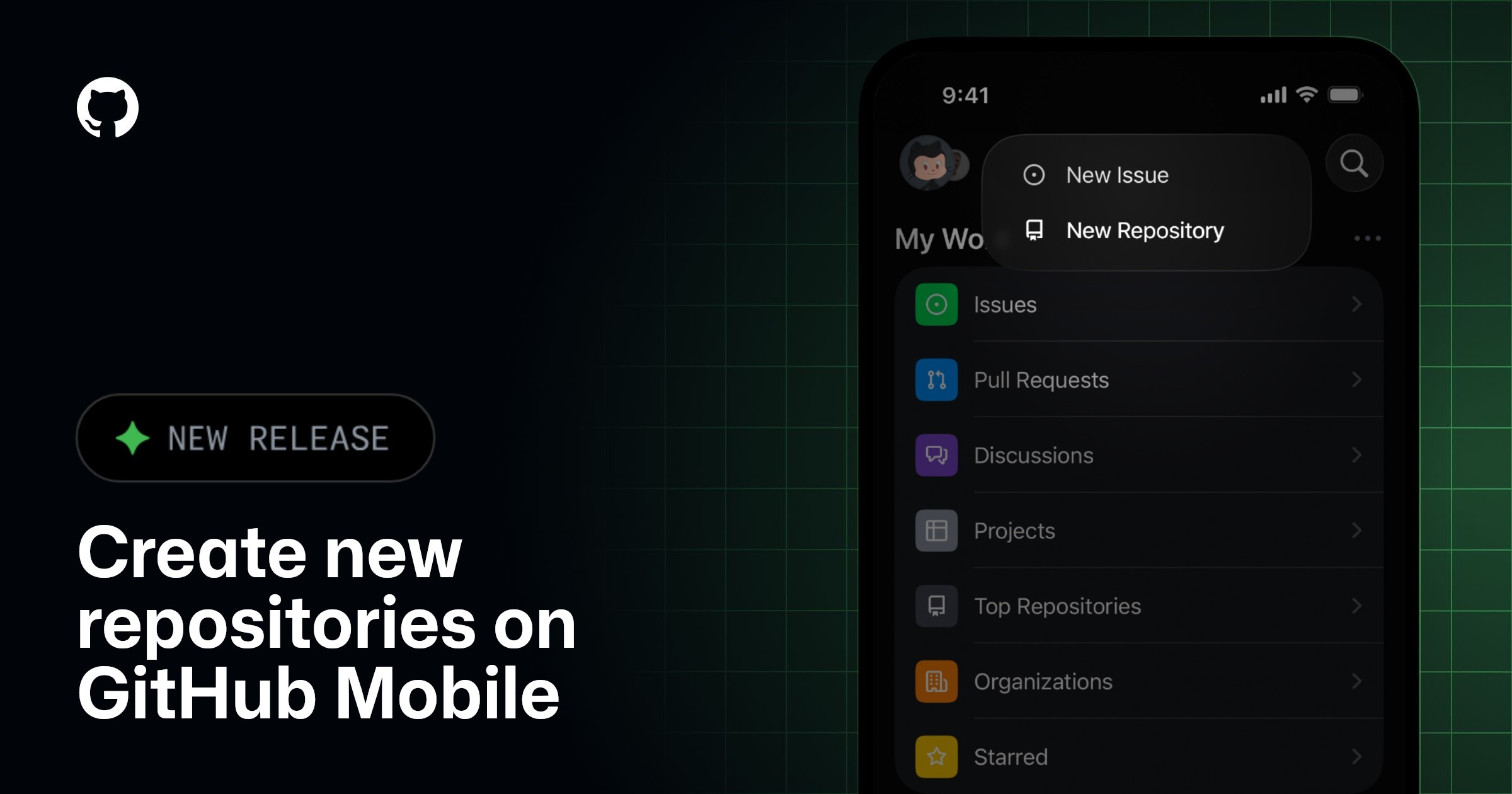 © GitHub Changelog
Coding Toolscoding
GitHub Mobile Now Supports Repository Creation
GitHub Mobile has introduced a new feature allowing users to create repositories directly from their mobile devices. This update enhances the app's functionality by enabling users to set up repositories with options for visibility, descriptions, and templates. Whether on iOS or Android, users can now initiate projects on the go, making it easier to manage and collaborate on code from anywhere. This development marks a step forward in mobile productivity for developers, offering more flexibility in how and where they can start their coding projects.
GitHub Changelog
 © GitHub Changelog
Coding Toolscoding
GitHub API Adds Copilot Comment Type Metrics
GitHub's latest update to the Copilot usage metrics API offers a more granular view of code review activities by breaking down suggestions by comment type. This enhancement allows enterprise and organization administrators to see which categories, such as security or bug risk, are most frequently flagged by Copilot. By comparing the volume of suggestions to those actually applied, users can better assess the tool's impact on their development process. While repository-level insights are not yet available, this update provides a clearer picture of Copilot's effectiveness in code reviews.
GitHub Changelog
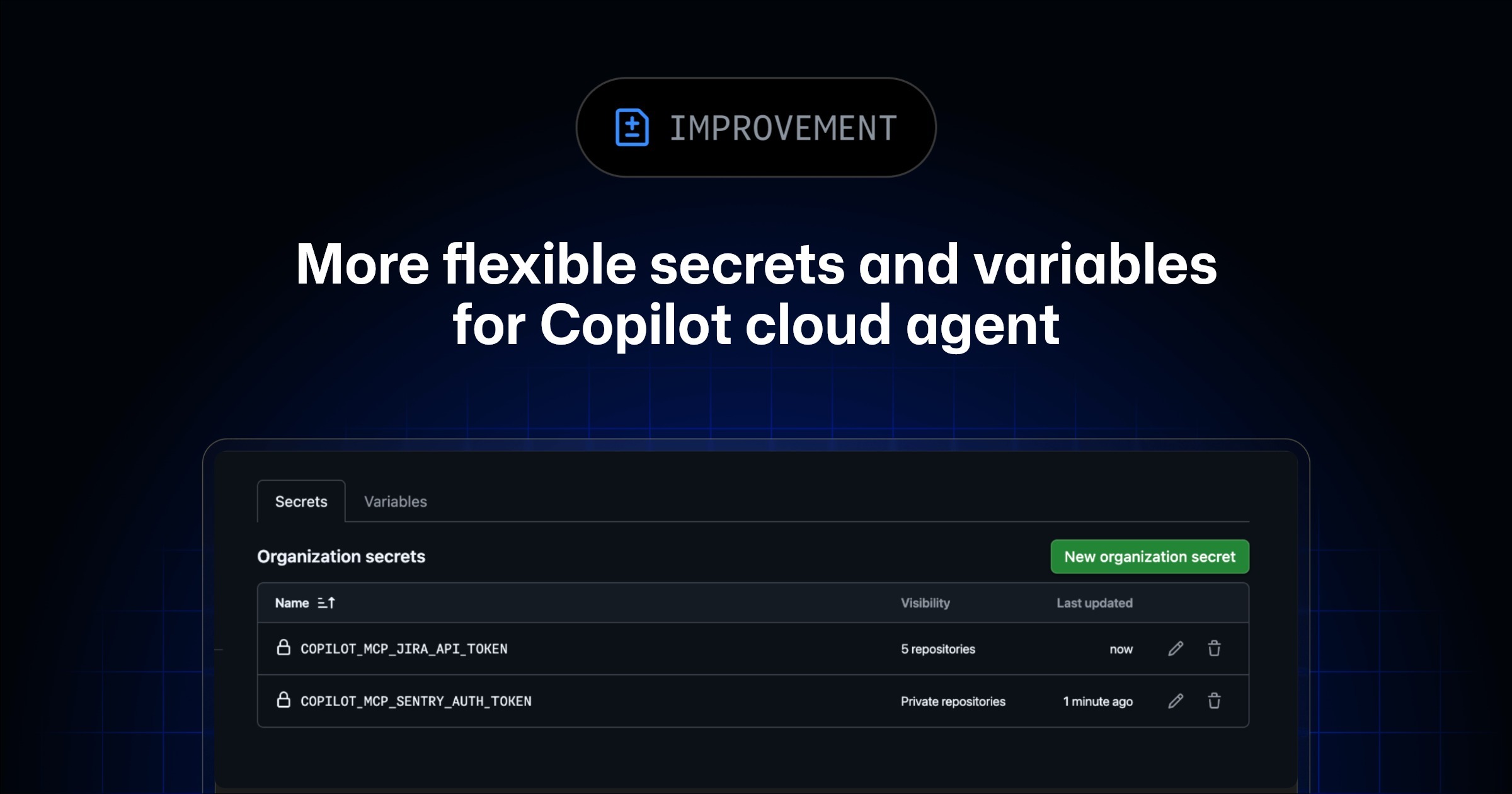 © GitHub Changelog
Coding Toolscoding
GitHub Enhances Copilot Cloud Agent Configuration
GitHub has streamlined the configuration process for its Copilot cloud agent by introducing dedicated 'Agents' secrets and variables. This update allows developers to manage secrets and variables at the organization level, enabling easier sharing across multiple repositories. Previously, configurations had to be set up individually for each repository, which was cumbersome for large-scale operations. Now, with the ability to configure at scale, developers can efficiently manage access to private resources and configure MCP servers without redundant setups.
GitHub Changelog
 © GitHub Changelog
Coding Toolscoding
CodeQL 2.25.3 adds Swift 6.3 support
The latest release of CodeQL, version 2.25.3, brings significant updates to GitHub's static analysis engine, notably adding support for Swift 6.3. This update enhances security scanning capabilities by promoting five C/C++ queries to the default suite, improving accuracy across multiple languages. Python developers will benefit from support for new syntax in Python 3.15, while Java and Kotlin users see improved detection in the Woodstox StAX library. These enhancements make CodeQL a more robust tool for developers aiming to secure their codebases across diverse programming languages.
GitHub Changelog
Coding Toolscoding
Claude Code v2.1.133 Release
The latest update to Claude Code, version 2.1.133, brings significant improvements and fixes that enhance its functionality and reliability. Users can now choose the base reference for worktrees, offering greater control over version management. The update also improves memory efficiency by better managing background workers when resources are limited. Several critical bugs have been addressed, including issues with parallel sessions and permissions on network drives, ensuring a more seamless user experience. These enhancements make Claude Code a more robust tool for developers, providing increased flexibility and stability in their workflows.
Claude Code Releases
© GitHub ChangelogCoding Toolscoding
GitHub Copilot CLI Enhances Rubber Duck with More Models
GitHub Copilot CLI's Rubber Duck feature now supports a broader range of models, enhancing its ability to provide second opinions during code reviews. By integrating a Claude-powered critic agent for GPT sessions, developers can benefit from improved architectural insights and bug detection. Additionally, Claude orchestrator sessions now utilize GPT-5.5 for even stronger review capabilities. This update signifies a step forward in making AI-driven code reviews more robust and versatile, offering developers more reliable assistance in identifying potential issues.
GitHub Changelog
 © The Verge AI
Coding Toolscoding
AI Agents Can Now Save Podcasts to Spotify
A new command-line tool, Save to Spotify, allows AI agents like OpenClaw and Claude to save AI-generated audio content directly to Spotify. This tool is particularly useful for those who use AI to create personalized audio summaries or podcasts, enabling them to integrate these creations seamlessly into their existing Spotify library. By simply adding a command to save to Spotify, users can have their AI-generated content appear alongside their favorite podcasts. This development enhances the personalization and accessibility of AI-generated audio content, making it more convenient for users to manage and enjoy their custom podcasts.
The Verge AI
© GitHub ChangelogCoding Toolscoding
GitHub Enhances Repository Ruleset Flexibility
GitHub has introduced two new features to its repository rulesets, enhancing flexibility for developers and administrators. Users can now be added as bypass actors directly, eliminating the need for creating dedicated teams for individual access. Additionally, branch renaming within the scope of existing rulesets is now possible without requiring higher-level administrative intervention. These updates streamline workflows by reducing administrative overhead and simplifying branch management processes.
GitHub Changelog
Coding Toolscoding
Simplex Enhances Development with Codex and ChatGPT
Simplex is leveraging OpenAI's Codex and ChatGPT Enterprise to transform the software development process. By integrating these AI tools, Simplex aims to significantly cut down the time required for design, build, and testing phases. This move not only accelerates development but also scales AI-driven workflows, potentially setting a new standard for efficiency in the industry. While the specifics of implementation are not detailed, the promise of reduced development cycles could be a game-changer for developers looking to streamline their processes.
OpenAI
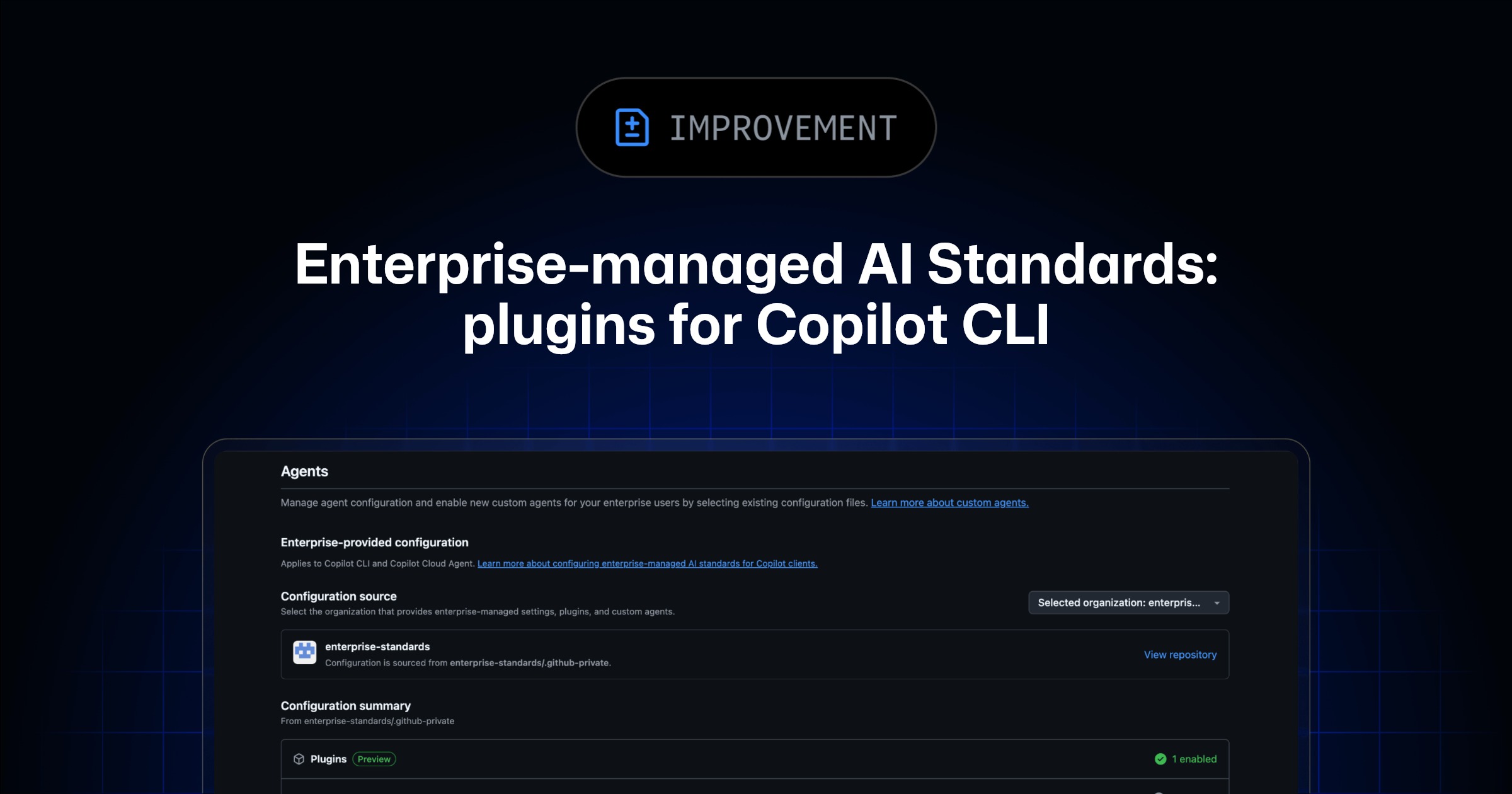 © GitHub Changelog
Coding Toolscoding
GitHub Copilot CLI Plugins Enter Public Preview
GitHub has introduced a public preview for enterprise-managed plugins in its Copilot CLI, allowing administrators to configure and distribute plugins across their organizations. This move aims to streamline developer onboarding and reduce setup time by enabling automatic installation of custom agents and skills. Enterprises can now set baseline standards and governance strategies through hooks and MCP configurations, ensuring consistent plugin use across all users. This update enhances the flexibility and control enterprises have over their development environments, making it easier to manage and deploy custom tools at scale.
GitHub Changelog
 © GitHub Changelog
Coding Toolscoding
GitHub Copilot Enhances VS Code with New Features
GitHub Copilot's latest updates for Visual Studio Code bring a suite of enhancements aimed at improving developer productivity. Notably, Copilot now supports semantic search across any workspace and allows grep-style queries across GitHub repositories. The introduction of the experimental /chronicle feature enables users to query their chat history, providing a personalized workflow experience. Additionally, the updates include smarter prompt caching and deferred tool loading to reduce token usage, while new agent capabilities like inline diffs in chat and browser tab sharing enhance collaboration. These changes make Copilot a more integrated and efficient tool for developers working in VS Code.
GitHub Changelog
Coding Toolscoding
Claude Code v2.1.129 Release
Claude Code's latest update, v2.1.129, introduces several enhancements and fixes that improve user experience and functionality. Notably, a new flag allows fetching plugins directly from a URL, and an environment variable ensures synchronized output on certain terminals. The update also refines plugin manifest declarations and adjusts model discovery settings to be opt-in. These changes, alongside numerous bug fixes, make the platform more robust and user-friendly, particularly for developers using third-party deployments or managing complex projects.
Claude Code Releases
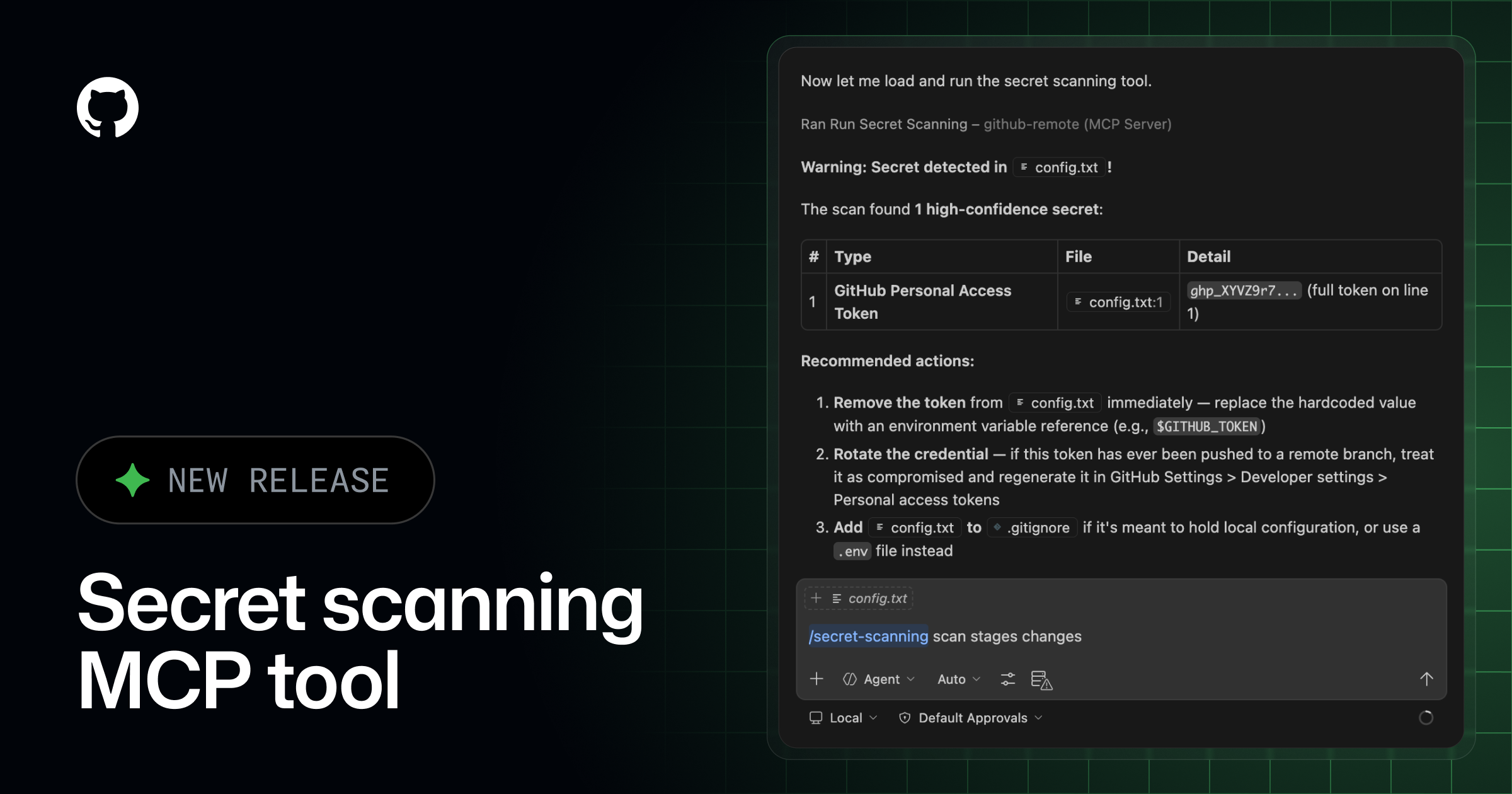 © GitHub Changelog
Coding Toolscoding
GitHub MCP Server Secret Scanning Now Available
GitHub has made its secret scanning feature in the MCP server generally available, enhancing security for developers using AI coding agents like GitHub Copilot CLI and Visual Studio Code. This tool allows developers to scan for exposed secrets in their code before committing changes, preventing leaked credentials from entering repositories. The feature, which has been in public preview since March 2026, integrates with existing push protection settings, ensuring consistent detection and bypass behavior. This release marks a significant step in securing codebases by leveraging AI-driven tools to catch vulnerabilities early in the development process.
GitHub Changelog
© GitHub ChangelogCoding Toolscoding
GitHub MCP Server Offers Dependency Scanning Preview
GitHub's MCP Server now includes a public preview of its dependency scanning feature, allowing developers to catch vulnerabilities before committing code. This tool integrates with MCP-compatible IDEs and AI coding agents, providing real-time alerts on known vulnerabilities. By leveraging the GitHub Advisory Database, it offers structured results with severity levels and recommended fixes. This development enhances the security workflow for developers, making it easier to address potential issues early in the coding process.
GitHub Changelog
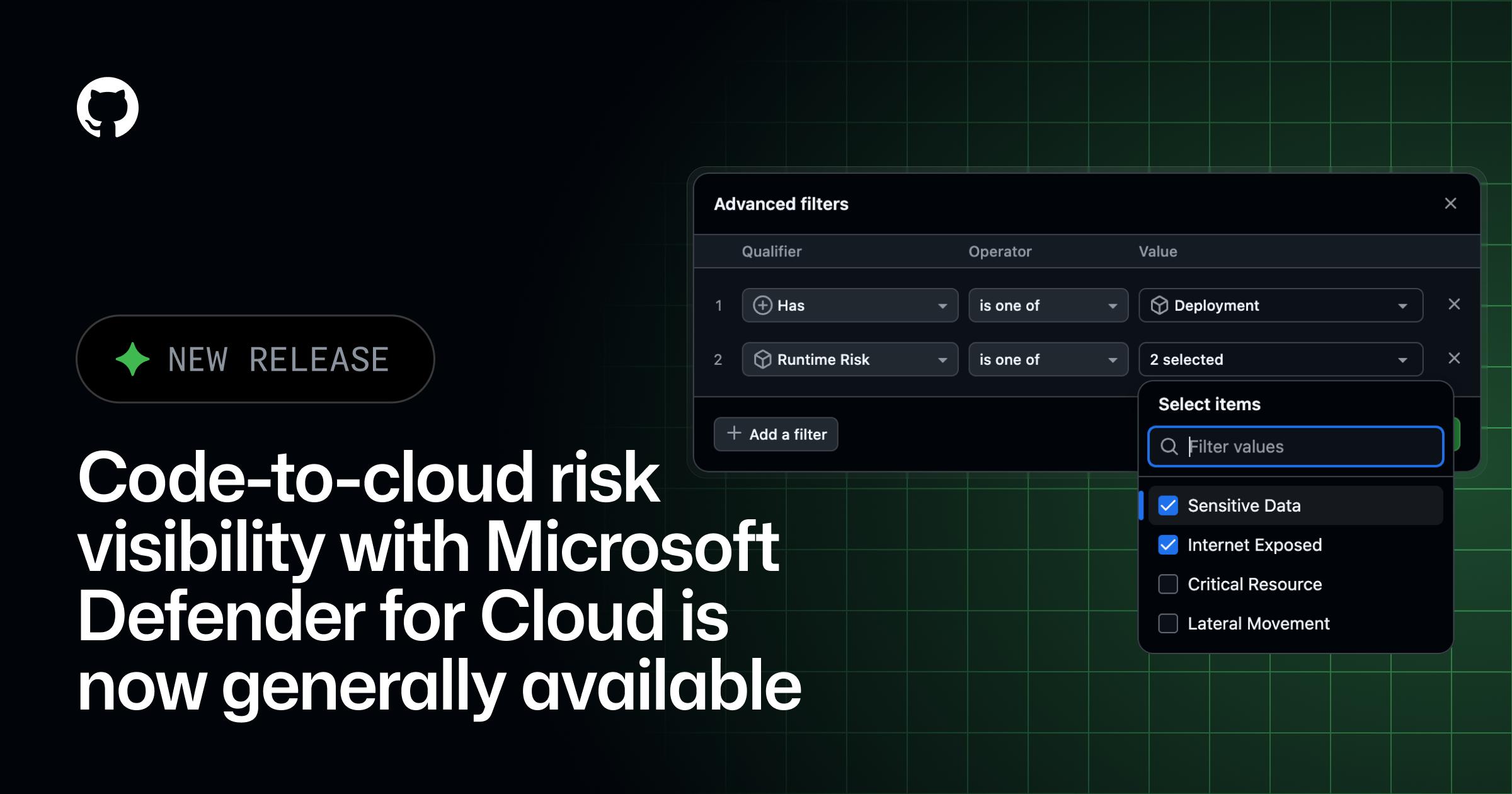 © GitHub Changelog
Coding Toolscoding
Microsoft Defender for Cloud Now Generally Available
Microsoft Defender for Cloud's integration with GitHub is now generally available, offering enhanced security visibility from code to cloud. This integration allows developers to connect code, build artifacts, and runtime context, enabling better tracking and prioritization of security risks. By mapping container images to their source code, it provides a comprehensive view of security findings in the context of deployment. This means security and development teams can now share a unified view of how artifacts run and the risks they pose, making it easier to address vulnerabilities effectively.
GitHub Changelog
Coding Toolscoding
Claude Code v2.1.128 Release
The latest update to Claude Code, version 2.1.128, introduces several enhancements and bug fixes aimed at improving user experience and functionality. Notably, the update allows the plugin directory to accept .zip archives, enhancing flexibility in plugin management. Additionally, subprocesses no longer inherit OTEL environment variables, which streamlines the operation of OTEL-instrumented apps. The update also addresses various bugs, such as fixing issues with image uploads and terminal notifications, ensuring smoother and more reliable performance. These changes make Claude Code more robust and user-friendly, particularly for developers relying on its tools.
Claude Code Releases
Coding Toolscoding
v0.20.1 Update: Build Python from Source
The latest vLLM release replaces the deadsnakes PPA with building Python from source to improve performance.
vLLM Releases
 © GitHub Changelog
Coding Toolscoding
Deprecation of GPT-5.2 Models Announced
GitHub will deprecate GPT-5.2 and GPT-5.2-Codex models by June 1, 2026. Users are advised to update their workflows to supported models.
GitHub Changelog
Coding Toolscoding
ggml-webgpu Update Fixes Vectorized Handling
The latest update to ggml-webgpu addresses vectorized handling in the mul-mat and mul-mat-id functions. This release includes support for various operating systems and architectures.
llama.cpp Releases
Coding Toolscoding
Claude Code v2.1.126 Released
The latest update for Claude Code introduces several new features and fixes, enhancing user experience and security.
Claude Code Releases
Coding Toolscoding
New upscale shader added to ggml-webgpu
The ggml-webgpu project has introduced an upscale shader with multiple implementations. This update supports various platforms including macOS, Linux, Android, and Windows.
llama.cpp Releases
Coding Toolscoding
Claude Code Releases v2.1.118 Update
The latest update to Claude Code introduces several new features and fixes, including vim visual mode and enhanced theme management.
Claude Code Releases
Coding Toolscoding
Claude Code v2.1.119 Released with New Features
The latest release of Claude Code introduces several enhancements, including persistent config settings and support for multiple code review platforms.
Claude Code Releases
Coding Toolscoding
Claude Code v2.1.121 Released with New Features
The latest release of Claude Code introduces several enhancements, including an alwaysLoad option for server configuration and improved user interface features.
Claude Code Releases
Coding Toolscoding
Claude Code Releases v2.1.122 Update
The latest update to Claude Code introduces several bug fixes and new features, including an environment variable for service tier selection and improved session management.
Claude Code Releases
Coding Toolscoding
Claude Code v2.1.123 Released
The latest release of Claude Code addresses an OAuth authentication issue. The update fixes a 401 retry loop problem when a specific environment variable is set.
Claude Code Releases
Coding Toolscoding
Llama.cpp Releases Update for Multiple Platforms
The latest release of Llama.cpp includes fixes and support for various platforms, including macOS, Linux, Android, and Windows.
llama.cpp Releases
Coding Toolscoding
Llama.cpp Updates Cpp-Httplib to 0.43.2
The Llama.cpp project has released an update to cpp-httplib version 0.43.2, enhancing compatibility across various platforms including macOS, Linux, Android, and Windows.
llama.cpp Releases
© GitHub ChangelogCoding Toolscoding
GitHub Copilot April 2026 Update for Visual Studio
The April 2026 update for Visual Studio introduces new features for GitHub Copilot, including cloud agent integration, custom agent support, and a new debugger agent for validating fixes. Users can now customize keyboard shortcuts and access a chat history panel for Copilot sessions.
GitHub Changelog
 © WIRED AI
Coding Toolscoding
OpenAI Restricts Codex on Creature References
OpenAI has instructed its coding agent, Codex, to avoid mentioning creatures like goblins and trolls unless directly relevant. This directive aims to streamline interactions and improve focus on coding tasks.
WIRED AI
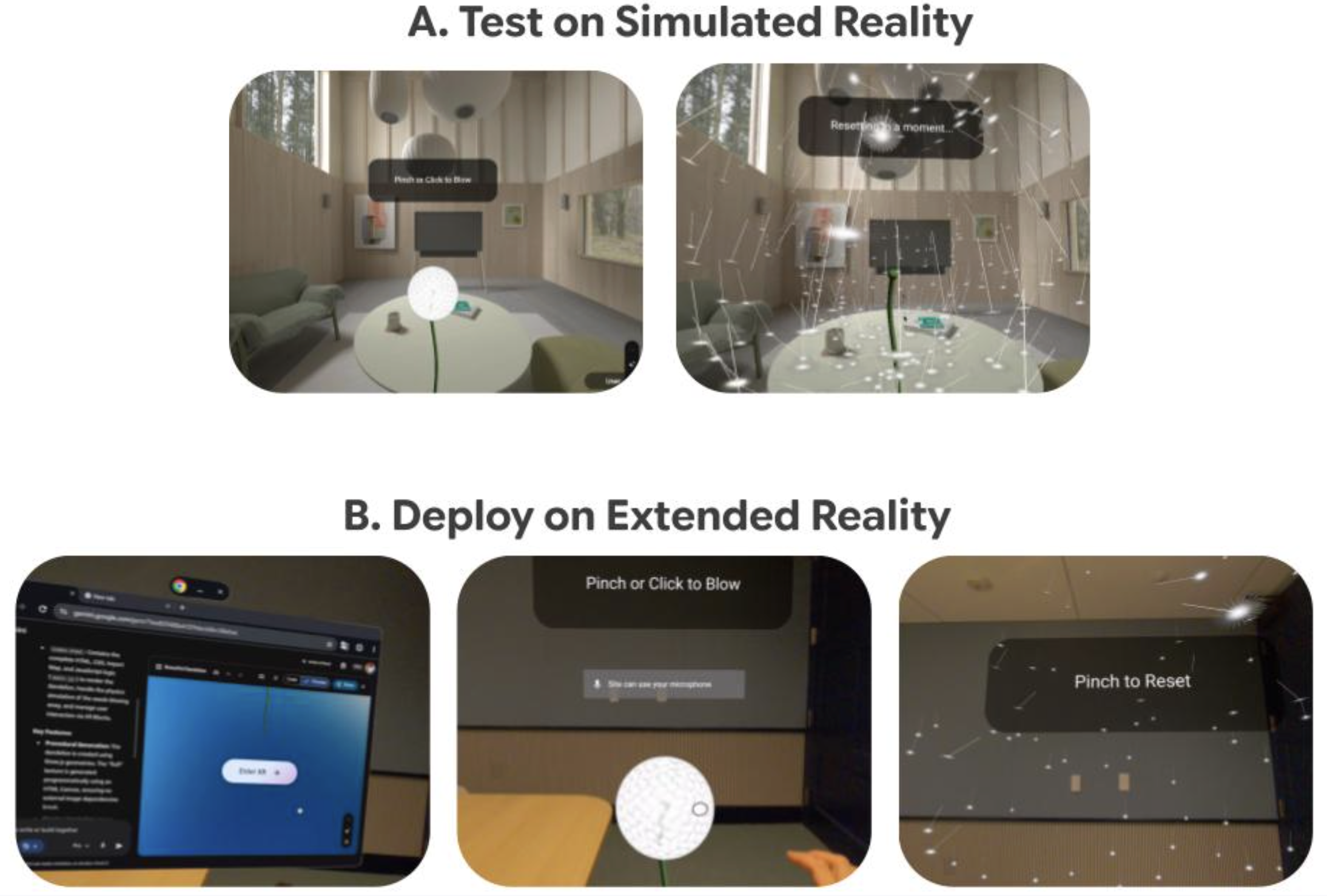 © Google Research Blog
Coding Toolscoding
Vibe Coding XR Enhances AI and XR Prototyping
Google Research introduced Vibe Coding XR, a tool designed to accelerate the prototyping of AI and XR applications using XR Blocks and Gemini. This development aims to improve human-computer interaction and visualization in these fields.
Google Research Blog
© Ollama BlogCoding Toolscoding
Quick Setup for OpenClaw via Ollama Command
Users can set up OpenClaw in under two minutes using a single command from Ollama. This simplifies the installation process significantly.
Ollama Blog
© Ollama BlogCoding Toolscoding
Ollama Adds Subagents and Web Search to Claude Code
Ollama has introduced support for subagents and web search functionalities in Claude Code.
Ollama Blog
© Ollama BlogCoding Toolscoding
Ollama Launch Simplifies Coding Tool Setup
Ollama has introduced a new command called 'ollama launch' that allows users to set up and run coding tools such as Claude Code, OpenCode, and Codex without the need for environment variables or configuration files.
Ollama Blog
 © VentureBeat AI
Coding Toolscoding
Goose offers free alternative to Claude Code
Claude Code, an AI coding tool by Anthropic, has subscription costs ranging from $20 to $200 per month, leading to dissatisfaction among developers. In contrast, Goose, an open-source AI agent by Block, provides similar functionalities for free, allowing users to run it locally without subscription fees.
VentureBeat AI
© Ollama BlogCoding Toolscoding
Ollama Adds Anthropic API Compatibility
Ollama has announced compatibility with the Anthropic Messages API, allowing users to utilize Claude Code with open models.
Ollama Blog
© Ollama BlogCoding Toolscoding
OpenAI Codex Integrates with Ollama Models
Ollama has announced that OpenAI's Codex CLI can now utilize open models, allowing it to read, modify, and execute code in users' working directories. This integration supports models like gpt-oss:20b and gpt-oss:120b.
Ollama Blog
 © VentureBeat AI
Coding Toolscoding
Boris Cherny Reveals Claude Code Workflow
Boris Cherny, creator of Claude Code at Anthropic, shared his innovative coding workflow on X, which has garnered significant attention from the engineering community. His approach involves running multiple AI agents in parallel, transforming traditional coding practices.
VentureBeat AI
 © Together AI Blog
Coding Toolscoding
Together Python SDK v2.0 Released
Together AI has announced the release of version 2.0 of its Python SDK, which includes new features and improvements for developers. This update aims to enhance the integration and usability of AI tools within Python applications.
Together AI Blog
 © Together AI Blog
Coding Toolscoding
Running TorchForge in Together AI Cloud
The Together AI Blog provides a guide on executing TorchForge reinforcement learning pipelines within the Together AI Native Cloud environment.
Together AI Blog
© Ollama BlogCoding Toolscoding
New coding models & integrations released
Ollama has launched GLM-4.6 and Qwen3-coder-480B on its cloud service, along with an update to Qwen3-Coder-30B for improved tool calling. These models come with easy integrations to familiar development tools.
Ollama Blog
© Ollama BlogCoding Toolscoding
Ollama Launches New Web Search API
Ollama has introduced a new web search API with a free tier for individual users and higher rate limits available through its cloud service.
Ollama Blog
 © Together AI Blog
Coding Toolscoding
Improved Batch Inference API Released
Together AI has launched an enhanced Batch Inference API featuring a new UI, expanded model support, and a significant increase in rate limits to 30B tokens. This update aims to simplify and reduce costs for large-scale AI workloads.
Together AI Blog
 © Replicate Blog
Coding Toolscoding
Torch Compile Caching for Faster Inference
The Replicate Blog discusses a new feature that allows users to cache their compiled models, which can lead to improved boot and inference times.
Replicate Blog
 © Together AI Blog
Coding Toolscoding
DeepSWE: Open-sourced Coding Agent Development
Together AI has announced the development of DeepSWE, a fully open-sourced coding agent that utilizes reinforcement learning to enhance its capabilities. This project aims to provide a state-of-the-art tool for developers.
Together AI Blog
© Ollama BlogCoding Toolscoding
Ollama Introduces Streaming Responses with Tool Calling
Ollama has added support for streaming responses alongside tool calling, allowing chat applications to stream content and utilize tools in real time.
Ollama Blog
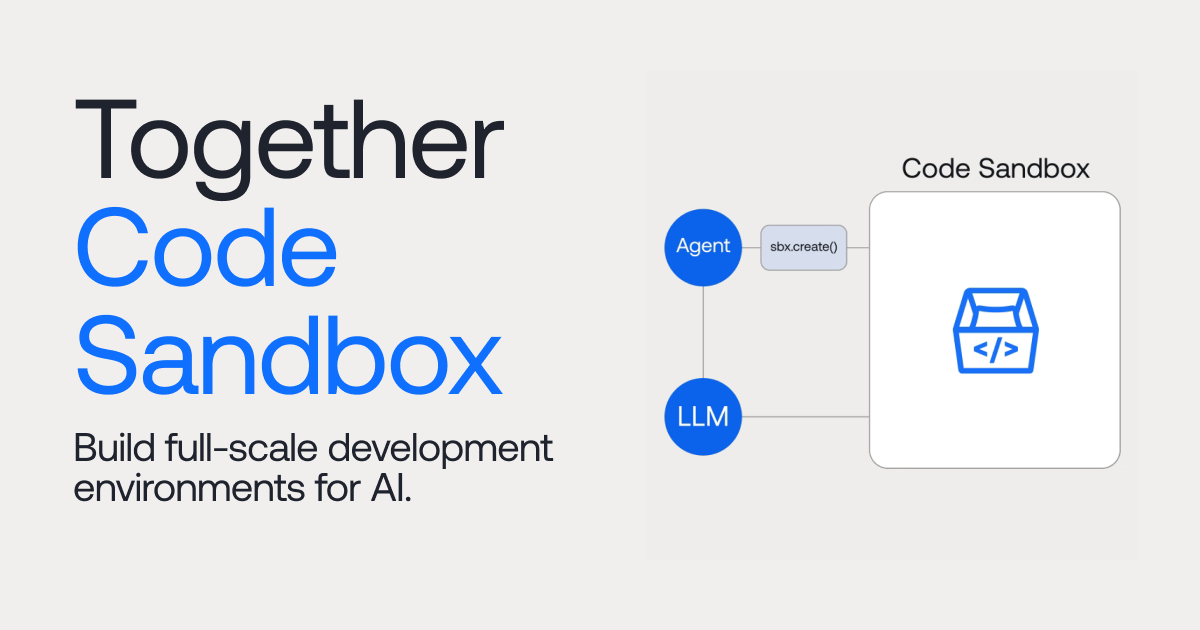 © Together AI Blog
Coding Toolscoding
Together Code Sandbox Launches for AI Coding Products
Together AI has introduced the Together Code Sandbox, designed to provide robust infrastructure for developing AI coding products at scale.
Together AI Blog
 © Together AI Blog
Coding Toolscoding
Together AI Launches Code Sandbox and Interpreter
Together AI has introduced two new tools: Together Code Sandbox and Together Code Interpreter, designed for state-of-the-art code execution in AI applications.
Together AI Blog
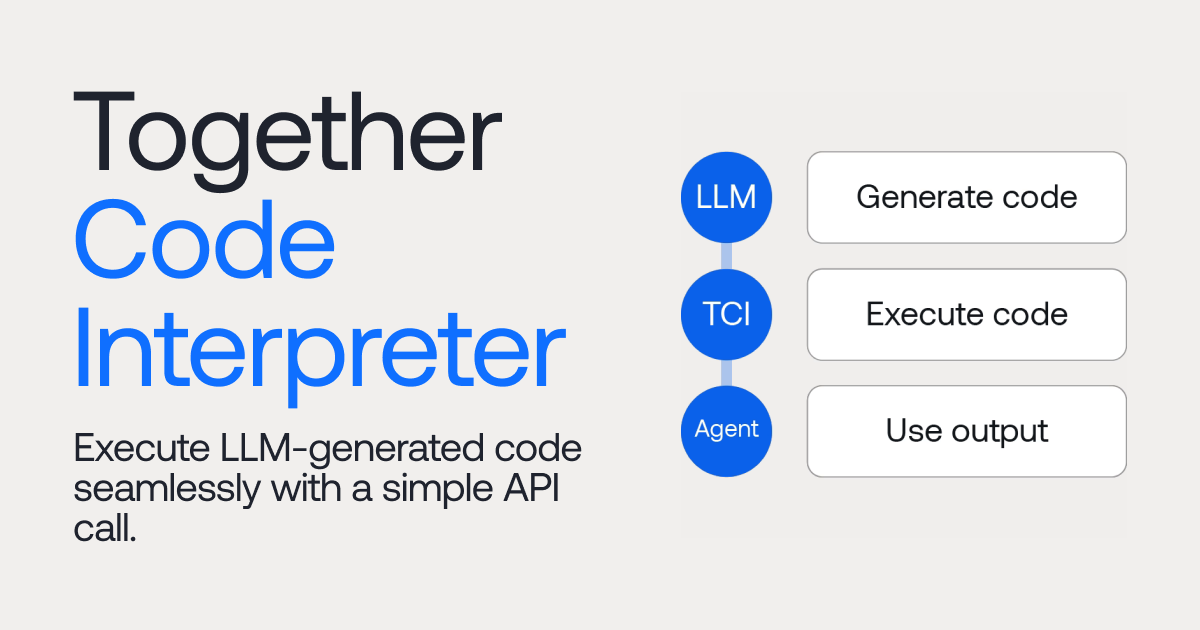 © Together AI Blog
Coding Toolscoding
Together Code Interpreter Launches API for LLM Code Execution
Together AI has introduced a Code Interpreter that allows users to execute code generated by large language models (LLMs) through a simple API call. This tool aims to streamline the process of running LLM-generated code.
Together AI Blog
© Ollama BlogCoding Toolscoding
Ollama Introduces Structured Outputs Support
Ollama has updated its Python and JavaScript libraries to support structured outputs, allowing model outputs to conform to a defined JSON schema.
Ollama Blog
© Ollama BlogCoding Toolscoding
Ollama Python Library 0.4 Released with Improvements
The Ollama Python library has been updated to version 0.4, introducing function calling as tools, full typing support, and new examples.
Ollama Blog
 © Hugging Face Blog
Coding Toolscoding
Gradio 5 Released with Major Enhancements
Gradio 5 marks a significant upgrade for developers building machine learning web applications, offering major performance improvements and a modernized design. The introduction of server-side rendering drastically reduces load times, while new themes and refreshed components enhance the visual appeal. Notably, Gradio 5 supports low-latency streaming, enabling real-time applications like video streaming and speech transcription. With an experimental AI Playground and enhanced security measures, Gradio 5 sets a new standard for creating scalable, production-ready ML apps with ease.
Hugging Face Blog
 © Hugging Face Blog
Coding Toolscoding
Hugging Face Releases Accelerate 1.0.0 RC
Hugging Face has announced the release candidate for Accelerate 1.0.0, a framework for large-scale training on various hardware accelerators. This version introduces significant updates and breaking changes aimed at improving usability and performance.
Hugging Face Blog
 © Hugging Face Blog
Coding Toolscoding
Hugging Face Introduces Tool Use for LLMs
Hugging Face has developed a new API for integrating tool use with large language models (LLMs), addressing common implementation challenges.
Hugging Face Blog
© Ollama BlogCoding Toolscoding
Open-source AI code assistant for VS Code and JetBrains
Continue allows users to create a coding assistant within Visual Studio Code and JetBrains using open-source LLMs. This integration aims to enhance the coding experience by providing AI support directly in the development environment.
Ollama Blog
© Ollama BlogCoding Toolscoding
Google announces Firebase Genkit with Ollama support
Google introduced Firebase Genkit, an open-source framework that supports Ollama, aimed at helping developers create AI-powered applications.
Ollama Blog
© Ollama BlogCoding Toolscoding
Ollama Achieves Compatibility with OpenAI API
Ollama has announced initial compatibility with the OpenAI Chat Completions API, allowing users to utilize existing OpenAI tools with local models through Ollama.
Ollama Blog
 © Replicate Blog
Coding Toolscoding
Run Code Llama 70B with an API
Code Llama 70B, an open-source code generation model, can be run in the cloud using a simple API call. The blog provides instructions for implementation.
Replicate Blog
© Ollama BlogCoding Toolscoding
Ollama Releases Python and JavaScript Libraries
Ollama has launched initial versions of its Python and JavaScript libraries, allowing easy integration with applications using these languages. The libraries support all features of the Ollama REST API and are compatible with various versions of Ollama.
Ollama Blog
 © Replicate Blog
Coding Toolscoding
New CLI Command for Replicate Apps
Replicate has introduced a new CLI command that simplifies the process of starting applications on their platform.
Replicate Blog
 © Replicate Blog
Coding Toolscoding
Using Retrieval Augmented Generation with ChromaDB
The article discusses creating an example app that utilizes retrieval augmented generation with bge-large-en for embeddings, ChromaDB for vector storage, and mistral-7b-instruct for language model generation.
Replicate Blog
© Ollama BlogCoding Toolscoding
LLM-Powered Web Apps with Client-Side Tech
The Ollama Blog discusses how to recreate a popular LangChain use-case using open source software for Retrieval-Augmented Generation (RAG), enabling users to interact with their documents.
Ollama Blog
© Ollama BlogCoding Toolscoding
Ollama Launches Official Docker Image
Ollama is now available as an official Docker image, allowing it to run with Docker Desktop on Mac and inside Docker containers with GPU acceleration on Linux.
Ollama Blog
© Ollama BlogCoding Toolsproductivity
Using LLMs in Obsidian Notes
The blog post discusses integrating a local LLM with Obsidian and other note-taking tools using Ollama. It provides a guide on how to enhance note-taking with AI capabilities.
Ollama Blog
© Ollama BlogCoding Toolscoding
Guide to Prompting Code Llama
The guide provides insights on structuring prompts for Code Llama, covering its features like instructions, code completion, and fill-in-the-middle (FIM).
Ollama Blog
© Ollama BlogCoding Toolscoding
Run Code Llama locally
Meta's Code Llama is now available for local use via Ollama.
Ollama Blog
 © Replicate Blog
Coding Toolscoding
Streaming Output for Language Models Introduced
Replicate's API now supports server-sent event streams for language models, enhancing app responsiveness. Developers can learn how to implement this feature.
Replicate Blog
 © Replicate Blog
Coding Toolsimage
Run SDXL with an API
The Replicate Blog provides a guide on how to run Stable Diffusion XL 1.0 using their API.
Replicate Blog
 © Replicate Blog
Coding Toolscoding
Guide to Running Llama 2 Locally
The article provides instructions on how to run Llama 2 on various platforms including Mac, Linux, Windows, and mobile devices.
Replicate Blog
 © Replicate Blog
Coding Toolscoding
AutoCog Generates Cog Configurations with GPT-4
AutoCog is a tool that utilizes GPT-4 to generate configuration files for machine learning projects, specifically creating predict.py and cog.yaml files until a successful prediction is achieved.
Replicate Blog
 © Replicate Blog
Coding Toolscoding
Machine learning needs better tools
The Replicate Blog discusses the gap between the demand for machine learning applications and the lack of expertise among potential users. It highlights the need for improved tools to facilitate easier access to machine learning technologies.
Replicate Blog
 © Replicate Blog
Coding Toolsimage
Run Stable Diffusion on M1 Mac GPU
A guide has been published on how to run Stable Diffusion locally on M1 Mac's GPU, allowing users to modify and experiment with the model.
Replicate Blog
 © Replicate Blog
Coding Toolsimage
Run Stable Diffusion with an API
The Replicate Blog provides a guide on integrating Stable Diffusion into various applications using their API. This allows developers to leverage Stable Diffusion for creative projects and hacks.
Replicate Blog
 © Replicate Blog
Coding Toolscoding
Create a Discord Bot Using Stable Diffusion
A tutorial has been released on how to build a chat bot for Discord that generates images in response to user prompts using Stable Diffusion and Replicate. The tutorial utilizes Fly.io for deployment.
Replicate Blog
 © Hugging Face Blog
Coding Toolscoding
Gradio 3.0 Released with Major Redesign
Gradio 3.0 introduces a complete redesign and new features, including Gradio Blocks for custom web apps. The update aims to enhance user experience and flexibility in building ML demos.
Hugging Face Blog