General AI
Latest AI signals in this category
 © The Verge AI
General AIproductivity
Slack introduces AI-driven interactive reports in chats
Slack's new feature, Slackforce Surfaces, allows users to create interactive reports and dashboards directly within chat conversations using AI. By simply describing the desired tool to Slackbot, users can generate visualizations and reports that pull data from connected apps like Google Drive and Salesforce. This integration means teams can collaborate on data insights without leaving the chat environment, enhancing productivity and real-time decision-making. The feature is available to all Slack users, including those on the free plan, and supports live data integration starting in October.
The Verge AI
 © WIRED AI
General AIwriting
Apple's Siri AI Gets Major Upgrade with iOS 27
Apple's Siri AI is making a significant comeback with the release of iOS 27, introducing a suite of new features that enhance its functionality on the latest iPhones. Siri AI now offers more personalized responses by indexing on-device data, allowing users to ask natural questions about their texts, emails, and photos. It also gains the ability to interact more deeply with apps, perform tasks, and even customize its voice and expressivity. This update positions Siri AI as a more competitive player in the voice assistant market, offering users a more integrated and intuitive experience.
WIRED AI
 © The Verge AI
General AImusic
Apple Unveils Privacy-Focused Siri Audio Features
Apple's new Siri AI Audio Intelligence features aim to enhance user experience while prioritizing privacy. With innovations like Siri Recap and Live Rewind, Apple uses the Secure Exclave in the S11 chip to ensure audio data is processed securely, preventing storage or access by Apple or third-party apps. Users have the power to decide when these features are active, and any data transferred to an iPhone is encrypted for added security. This development reflects Apple's dedication to maintaining user privacy even as it expands its AI capabilities, offering a balance between functionality and security.
The Verge AI
 © MIT News AI
General AIresearch
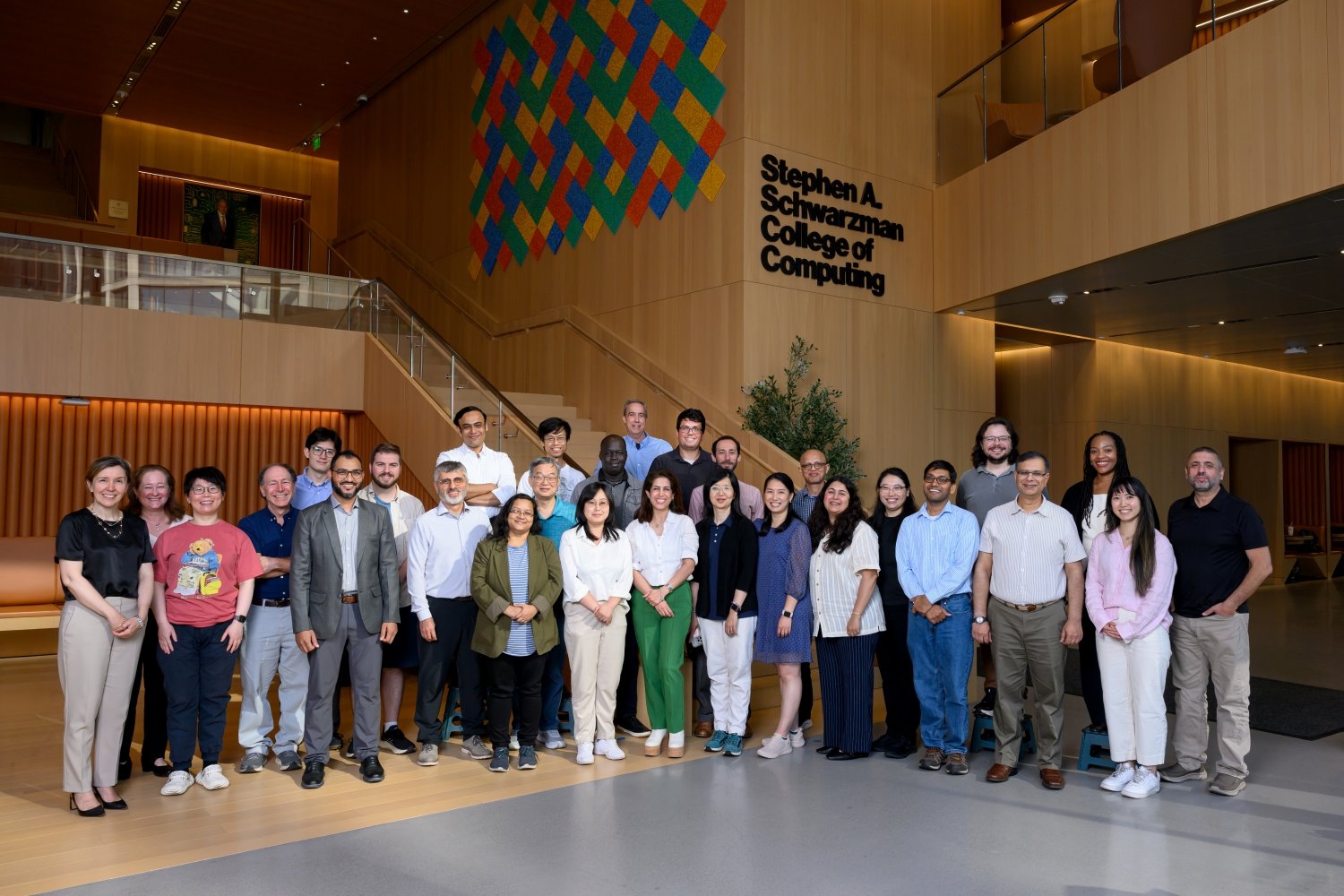
MIT Launches AI Educators Pilot Workshop
MIT's Schwarzman College of Computing has initiated a pioneering AI Educators Pilot workshop, aiming to broaden AI education across various disciplines. This program, inspired by MIT's own AI courses, equips educators with adaptable teaching materials and methods to integrate AI into their curricula. By fostering collaboration among faculty from diverse institutions, the initiative seeks to demystify AI and encourage critical thinking beyond treating it as a mere tool. This effort marks a significant step towards creating a network of educators dedicated to expanding AI literacy and application in diverse academic settings.
MIT News AI
 © TechCrunch AI
General AIother
Apple Watch's AI Features Raise Privacy Concerns
Apple's latest Apple Watch features, including Audio Intelligence, Live Rewind, and Siri Recap, are pushing the boundaries of always-listening technology. While Audio Intelligence offers clear benefits for accessibility, Live Rewind and Siri Recap introduce privacy concerns by allowing users to transcribe conversations with a simple gesture. Apple assures users of strong privacy protections, such as not storing audio and using end-to-end encryption, but the cultural and legal implications of these features remain contentious. This move could redefine consumer expectations of privacy in wearable tech, or it might spark backlash against perceived surveillance.
TechCrunch AI
 © The Verge AI
General AIimage
Apple's iPhone 18 Pro to Authenticate Photos
Apple is introducing a new feature in its iPhone 18 Pro lineup that aims to authenticate photos as non-AI manipulated. The 'Reference Image' mode uses a new camera sensor to sign every pixel, creating an unalterable reference image. This feature is a response to the growing realism of AI-generated images, offering a hardware-based solution to verify authenticity. While not available at launch in the EU, the feature will be accessible through iOS, iPadOS, and macOS updates. This move positions Apple at the forefront of digital image authentication, integrating it directly into consumer devices.
The Verge AI
 © TechCrunch AI
General AIother
Apple's Foldable Phone Uses AI-Designed Hinge
Apple's entry into the foldable phone market, the Duo, features a hinge designed with AI and 3D printing, aiming to address durability issues common in foldables. By using AI algorithms, Apple ensures precise alignment of each hinge with its housing, enhancing the device's longevity. The phone also boasts a custom nano-texture finish to reduce glare and a multilayer lamination for added durability. While these innovations are promising, the true test will be how well the Duo withstands everyday wear and tear over time.
TechCrunch AI
 © TechCrunch AI
General AIimage
Apple Introduces Authenticity Feature for iPhone Photos
Apple's latest feature, Apple Reference Image, aims to tackle the challenge of verifying photo authenticity in the age of AI. By capturing signed sensor data, the iPhone 18 Pro can create an unalterable image that serves as a benchmark for detecting any alterations. This is particularly beneficial for photojournalists and photographers who need to ensure their images remain unmodified. The feature will initially be available in the Photos app, with APIs provided for developers to incorporate it into their own applications. Additionally, Apple's adoption of the SynthID standard will help identify AI-generated or altered images. This initiative reflects Apple's effort to maintain trust in digital photography as AI technology evolves.
TechCrunch AI
 © WIRED AI
General AIwriting
Voicebox Revolutionizes Customer Feedback with Voice Technology
Voicebox is transforming how customers provide feedback by leveraging voice technology, making it easier and more natural for users to share their thoughts. By allowing customers to scan a QR code or tap an NFC chip to give voice feedback, Voicebox simplifies the process and enhances engagement. This approach not only streamlines feedback collection but also integrates sentiment analysis, offering businesses valuable insights. The introduction of a public directory further expands its utility, enabling users to share and discover feedback on various businesses, akin to a voice-driven Google Maps. This shift towards voice feedback could redefine customer interaction and feedback mechanisms.
WIRED AI
 © The Verge AI
General AIwriting
Amazon's Alexa Can Now Spot Fake Emails
Amazon has enhanced its AI assistant, Alexa, to help users identify fake emails, texts, and calls claiming to be from the company. This new feature allows users to ask Alexa for Shopping to verify messages by comparing them against Amazon's official records. If Alexa confirms a message is genuine, it assures the user; otherwise, it advises checking orders in the app or contacting support. This development aims to combat impersonation scams, providing users with a more secure shopping experience. It's a significant step in using AI to enhance consumer protection against fraud.
The Verge AI
 © TechCrunch AI
General AIbusiness
Amazon AI Helps Identify Scam Messages
Amazon is leveraging AI to combat the growing issue of scam messages, allowing customers to verify the authenticity of communications through Alexa for Shopping. This AI can confirm whether a message is genuine by analyzing sender information, content, and metadata against Amazon's vast database of sent messages. As more users report suspicious messages, the system is expected to become even more adept at identifying scams. This development marks a strategic shift in Amazon's use of Alexa, focusing on enhancing shopping-related assistance and security for its users.
TechCrunch AI
General AIproductivity
ATV Big Air Tour Boosts Efficiency with ChatGPT
ATV Big Air Tour has significantly enhanced its operational efficiency by integrating ChatGPT into its workflow. By leveraging ChatGPT Work, the company has managed to condense what used to be three days of work into just three hours. This includes tasks like marketing and merchandising, where ChatGPT was able to transform merchandise photos into a fully functional inventory website in just 15 minutes. This shift not only streamlines their processes but also demonstrates the practical impact of AI in reducing time and effort in business operations.
OpenAI
 © Google AI Blog
General AIproductivity
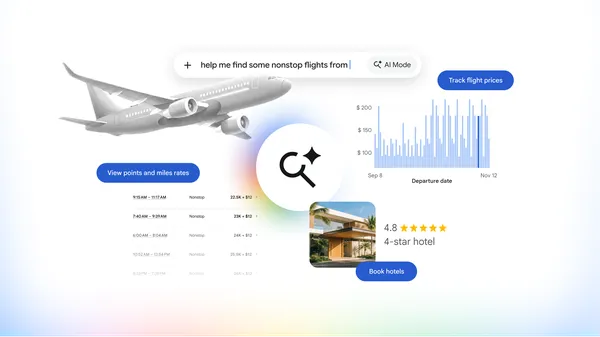
Google AI Mode Enhances Travel Planning Features
Google's AI Mode in Search is transforming travel planning by adding features like flight price tracking, viewing costs in points or miles, and hotel booking. Users can now set up alerts for flight price changes, allowing them to act quickly on deals. The ability to see travel costs in points or miles enables users to make the most of their rewards programs. The new hotel booking capability lets users complete reservations directly within AI Mode, making the process more efficient. These updates position AI Mode as a more comprehensive tool for organizing and booking travel.
Google AI Blog
 © TechCrunch AI
General AIproductivity
Google AI Mode Enhances Travel Booking Features
Google's AI Mode is stepping up as a travel assistant, now capable of tracking flight prices and booking hotels directly through its conversational interface. This update transforms AI Mode from a simple search tool into a more interactive travel planner, allowing users to manage their itineraries and receive notifications on price changes. With integration from over 300 airlines and major hotel chains, users can now book trips using points or miles, making travel planning more seamless. This shift positions Google as a significant player in the AI-driven travel booking space, offering a more comprehensive service to users worldwide.
TechCrunch AI
 © The Verge AI
General AIproductivity
Plaud launches AI-powered earbuds for conversations
Plaud has unveiled its latest innovation, the Plaud One Explorer Edition, a set of AI-powered earbuds designed to record, transcribe, and summarize conversations. Unlike previous models, these earbuds can function independently with a 4G-enabled charging case, eliminating the need for a phone or Wi-Fi connection. With features like noise cancellation, multiple microphones, and integration with tools like Gmail and Slack, Plaud aims to streamline how users manage their conversations and tasks. This launch marks a step forward in wearable AI technology, offering a more seamless and integrated user experience.
The Verge AI
 © WIRED AI
General AIwriting
Relay Debuts AI-Powered Voice-to-Text Microphone
Relay, a new startup founded by former Nothing employees, is making waves with its AI-powered voice-to-text solution. While the software is available now for macOS, the dedicated hardware, Relay Q, is set to launch in early 2027. This portable microphone aims to enhance voice transcription accuracy, addressing common issues like volume control in office settings. The software, powered by Google's Gemini models, offers customizable skills for various apps, though it currently faces some accuracy challenges. Relay's approach could redefine how we interact with computers, minimizing the need for traditional typing.
WIRED AI
 © WIRED AI
General AIother
China's Robot Games Showcase Humanoid Advancements
The World Humanoid Robot Games in China revealed impressive strides in humanoid robotics, with robots achieving feats like running faster than Usain Bolt. The event, featuring over 600 teams and 2,000 robots, demonstrated not only speed but also the ability to perform complex tasks like object manipulation, which remains a challenging area in robotics. Although some robots were remotely operated, their ability to handle tasks requiring fine motor skills, such as tweezer bean picking, marks progress towards practical applications. This event highlights China's ambition to advance robotics technology, aiming for real-world deployment and increased automation in various industries.
WIRED AI
 © TechCrunch AI
General AIagents
Harvard Bootcamp Uses AI Avatars for Feedback
Harvard Business School's Foundry bootcamp is integrating AI avatars to provide personalized feedback to participants. Created by the startup HeyGen, these avatars simulate instructors and offer guidance during practice pitches and board meetings. While some students initially expressed skepticism about AI, the avatars have been well-received for their interactive and engaging nature. This approach represents a novel use of AI in education, offering a more immersive and personalized learning experience. The program's success could signal a shift towards more AI-driven educational tools in the future.
TechCrunch AI
 © TechCrunch AI
General AIwriting
ChatGPT Launches Apple Messages Plug-in
OpenAI has introduced a new Apple Messages plug-in for ChatGPT, allowing users to integrate their messaging inbox with the chatbot. This plug-in enables users to sort, analyze, and edit messages directly through ChatGPT, offering both personal and professional applications. While the feature promises enhanced message management, it raises privacy concerns, as users must grant Full Disk Access for the plug-in to function. OpenAI assures that message data is stored locally and not on their servers, but users are advised to monitor ChatGPT's actions closely to maintain control over message sending.
TechCrunch AI
 © The Verge AI
General AIwriting
Google Discover Adds AI Chatbot for Feed Customization
Google is enhancing its Discover feed with an AI chatbot feature that allows users to customize their content preferences more intuitively. By describing what they want to see, users can now tailor their Discover feed, with the AI remembering these preferences for future visits. This move aligns with a broader trend of AI-driven personalization seen in platforms like YouTube and Instagram. The update signifies a shift towards more user-controlled content curation, making it easier for individuals to manage the information they consume.
The Verge AI
General AIproductivity
Stampli Accelerates Launch with ChatGPT Work
Stampli has dramatically reduced its launch preparation time by 68% by utilizing ChatGPT Work and Codex. Confronted with a tight deadline and limited design resources, the company turned to these AI tools to streamline its production process, transforming what would typically take weeks into just days. This achievement illustrates the potential of AI to enhance efficiency and productivity in project management and execution. By integrating AI into their workflow, Stampli demonstrates how businesses can effectively overcome resource constraints and meet deadlines.
OpenAI
 © The Verge AI
General AIproductivity
Google Gemini Introduces Student Hub for Enhanced Learning
Google is enhancing its Gemini platform with a new student hub, designed to streamline academic tasks like research collection, flashcard creation, and practice quizzes. This hub integrates with Google Calendar to manage test dates and deadlines, and supports graphs and images in study notebooks. Additionally, Google Lens now aids in checking work and understanding complex topics. The introduction of Deep Research allows students to generate detailed reports, with notifications when they're ready. This initiative aims to make academic life more manageable, offering US students a year of Google AI Pro for free, while international students receive Google AI Plus.
The Verge AI
 © TechCrunch AI
General AIwriting
Google Enhances Search and Gemini with AI Study Tools
Google is stepping up its game in the educational tech space by integrating AI-powered study tools into its Search and Gemini platforms. These new features include interactive visuals, 3D simulations, and customized practice quizzes, aiming to make complex topics more accessible to students. The tools allow for personalized learning experiences, such as generating quizzes for SAT prep or creating study documents from uploaded files. This move positions Google as a strong competitor against other educational AI offerings, providing students with a comprehensive suite of learning aids directly within its ecosystem.
TechCrunch AI
 © The Verge AI
General AIwriting
Firefox's Smart Window Enhances AI Browsing Experience
Mozilla's Firefox is enhancing its AI capabilities with the Smart Window feature, which now integrates real-time web information and source links into AI chat responses. This feature, still in beta, allows users to search their browsing history using natural language, offering visual previews and suggesting tab groups. Users can choose from various AI models, including Google's Gemini and OpenAI's oss-gpt-120b, ensuring a customizable and privacy-focused experience. This development marks a shift towards a more user-centric browsing experience, emphasizing digital sovereignty and privacy.
The Verge AI
General AIwriting
OpenAI Launches ChatGPT for Teens
OpenAI has introduced a new version of ChatGPT specifically designed for teenagers, aiming to enhance learning and critical thinking skills while ensuring a safe user experience. This version includes stronger built-in protections and features that promote healthy use, alongside additional parental controls. By tailoring the AI tool to the needs of younger users, OpenAI is addressing concerns about safety and appropriate use, making AI more accessible and beneficial for educational purposes. This move could set a precedent for how AI tools are adapted for different age groups.
OpenAI
 © The Verge AI
General AIproductivity
ChatGPT's Computer History Tracks User Activity
OpenAI's ChatGPT desktop app for macOS introduces a new feature called Computer History, which tracks user actions to enhance productivity. Unlike Microsoft's Windows Recall, this feature does not capture screenshots but instead logs events like clicks and keystrokes. Users can opt in to this feature and have the ability to exclude specific apps and websites, as well as delete entries for privacy control. This development aims to provide personalized automation suggestions and task management, potentially transforming how users interact with their digital workspace.
The Verge AI
 © The Verge AI
General AIother
Google Pixel Watch 5 Enhances AI Health Features
Google's Pixel Watch 5 is making strides in AI-driven health monitoring, with features like Breathing Emergency Detection and insulin resistance trends. These updates aim to provide users with proactive health insights, leveraging AI to interpret data from sensors for non-diagnostic wellness alerts. The watch also promises improved GPS accuracy by using AI to process satellite and environmental data. While the hardware changes are minimal, the software enhancements position the Pixel Watch 5 as a more intelligent health companion, potentially setting a new standard for wearable health tech.
The Verge AI
 © The Verge AI
General AIimage
Apple Develops iPhone Photo Authentication Feature
Apple is working on a new iOS feature that could help users verify the authenticity of their iPhone photos, potentially distinguishing them from AI-generated deepfakes. The 'Apple Reference Image' system, found in iOS 27 beta, embeds provenance metadata into photos at the moment of capture. This metadata can be used to authenticate the photo's origin and integrity through Apple's Private Cloud Compute servers. While not yet live, this feature could set a new standard for photo verification, offering a more robust solution compared to existing systems like C2PA.
The Verge AI
 © The Verge AI
General AIresearch
AI Uncovers Major Zoom Security Flaw
A Security researchers have leveraged AI to uncover a critical vulnerability in Zoom, using fewer than 20 prompts to achieve what typically requires extensive resources. This flaw allowed attackers to control devices during meetings without any user interaction or visible indicators of compromise. By exploiting Zoom's annotation feature, the researchers demonstrated how accessible AI tools can streamline complex cybersecurity tasks. Zoom has responded by issuing a patch to protect users on Windows, macOS, Linux, Android, and iOS. This event highlights the transformative role of AI in rapidly identifying and mitigating security threats, emphasizing the need for ongoing vigilance in software security.
The Verge AI
 © WIRED AI
General AIother
AI Uncovers Zoom Vulnerability Allowing Device Takeover
A critical flaw in Zoom's screen-sharing feature was revealed by researchers using AI models, showcasing the evolving role of AI in cybersecurity. This vulnerability allowed attackers to control devices during a call without the user's awareness. The discovery illustrates how AI tools can now accomplish in minutes what previously required months of effort. Zoom has responded by patching the vulnerability, but the event raises questions about the security of widely trusted platforms in an age where AI-driven bug hunting is becoming more prevalent.
WIRED AI
 © The Verge AI
General AImusic
AI Tool Treblo Allegedly Used in Billboard Hit
The debate over Fenix Flexin's track 'Rubberz' has escalated with assertions that it was crafted using the AI music generator Treblo. Treblo's newly released open-source AI Music Classifier has identified the song as likely being produced with their model, suggesting a milestone as potentially the first AI-generated song to enter the Billboard Hot 100. Despite Fenix's insistence and efforts to demonstrate otherwise, the classifier's results and the company's comments lend credibility to the claims. This scenario underscores the expanding role and scrutiny of AI in the music industry, as well as the challenges in verifying the origins of creative works.
The Verge AI
 © WIRED AI
General AIproductivity
Wispr Flow Launches AI Notetaker for Meetings
Wispr Flow's new AI Notetaker is set to transform how meetings are documented by transcribing and summarizing conversations in real-time. By integrating with calendars, it uses generative AI to produce concise summaries and allows users to interact with the content through a chatbot interface. Initially available for Mac users, the tool will soon be accessible on Windows, offering the ability to record meetings up to six hours long, a significant improvement from its previous six-minute limit. This development reflects the growing reliance on AI tools in professional settings, emphasizing the need for transparency and consent when recording conversations. The Notetaker's ability to accurately capture and retrieve specific quotes makes it a valuable resource for professionals seeking efficient meeting documentation.
WIRED AI
 © TechCrunch AI
General AIwriting
Wrinkles App Turns Locations into Storytelling Experiences
Wrinkles is a new app that transforms your surroundings into a rich tapestry of stories, acting as an AI-powered audio tour guide. By leveraging your location, it reveals hidden histories and local lore without the need to constantly check your phone. Founded by David Stemler and Ryan Hansan, the app offers a global network of 1.3 million points of interest across 177 countries. Users can interact with these stories, ask questions, and even add personal memories, making the experience both educational and personal. Wrinkles aims to be more than just a travel app, offering insights into everyday locations and fostering a deeper connection with the world around us.
TechCrunch AI
 © The Verge AI
General AIother
Hank Green Criticizes 'Unhealthy' AI Use
Hank Green, a well-known YouTuber, has sparked a conversation about the psychological impact of AI tools by describing his use of them as 'not healthy.' While he used AI primarily for research, his comments highlight a broader issue of potential dependency on AI technologies. This discussion parallels concerns about social media's impact on mental health, suggesting that AI could similarly affect users' cognitive skills and well-being. As AI adoption grows, understanding its psychological effects becomes increasingly important, though comprehensive research is still in its early stages.
The Verge AI
 © WIRED AI
General AImusic
AI Music App Flags Popular Songs as AI-Generated
The music world is buzzing with controversy as an AI music app, Treblo, has flagged popular tracks by Fenix Flexin and Tyga as likely AI-generated. This revelation comes after a music producer demonstrated how similar songs could be created using Treblo's generative capabilities. The app's new detection tool suggests that these tracks, which have been debated all summer, may not be entirely human-made. This development raises questions about authenticity in music production and the role of AI in shaping modern hits.
WIRED AI
 © TechCrunch AI
General AIwriting
Apple's Siri AI Finally Delivers on Promises
Apple has finally delivered a functional and impressive AI assistant with the latest Siri update in iOS 27. This version of Siri can understand personal context, engage in natural conversations, and perform a variety of tasks like finding photos or launching apps. Despite these advancements, the update feels anticlimactic as the AI landscape has evolved significantly, with more advanced AI tools now commonplace. While Siri now meets expectations, it feels more like a long-overdue fix than a groundbreaking innovation.
TechCrunch AI
 © Google AI Blog
General AIcoding
Google's Vibe Coding Course Engages 353,000 Participants
Google and Kaggle's '5-Day AI Agents: Intensive Vibe Coding Course' attracted a massive audience of over 353,000 participants, highlighting the increasing interest in programming through natural language. This course provided developers with a comprehensive understanding of AI agent development, from initial design to cloud deployment. Participants actively collaborated on Kaggle's Discord, resulting in over 6,000 capstone project submissions that showcased innovative solutions like Palimpsest and Project ARIES. The event reflects a shift towards more inclusive and collaborative AI learning environments. With all course materials available for self-paced learning, developers can continue to refine their skills and engage with the global AI community.
Google AI Blog
 © TechCrunch AI
General AIother
AI Wearable 'Friend' Relaunches with Voice Feature
The AI wearable 'Friend' has been relaunched with a new voice feature, aiming to enhance its role as a digital companion. Originally designed to combat loneliness, the device now includes a built-in speaker to project a consistent personality, though its practical applications remain vague. The price has jumped from $99 to $249, reflecting the added functionality. Despite its bold marketing, including a viral subway campaign, the product's success in the mainstream market remains uncertain, echoing the challenges faced by similar AI wearables.
TechCrunch AI
 © The Verge AI
General AIother
Friend AI Pendant Relaunches with Speaker Feature
Friend has reintroduced its AI pendant with a new speaker feature, allowing it to verbally interact with users. This update comes with a significant price increase, doubling the original cost to $249. The relaunch follows a previous backlash against the product, which was criticized for promoting artificial companionship. Despite the controversy, Friend is betting on the enhanced functionality and a new subscription model to attract users. The addition of a speaker and memory extension aims to make the AI pendant more engaging and personal.
The Verge AI
 © WIRED AI
General AIwriting
Friend AI Pendant Now Speaks Aloud
The Friend AI pendant, a controversial wearable device, has been updated to include a speaker, allowing it to voice responses aloud. This marks a significant shift from its previous text-only interaction, aiming to enhance its role as a digital companion. The device now runs on OpenAI's latest models, offering users a more advanced AI experience. Despite its dystopian reputation, the pendant's creator, Avi Schiffmann, is pushing for broader acceptance, hoping to sell 50,000 units of this new version. The pendant's unique approach, including a fixed voice and personality, challenges traditional AI interactions, making it a distinct offering in the market.
WIRED AI
 © NVIDIA Blog
General AIother
GeForce NOW Transforms Laptops into Gaming PCs
NVIDIA's GeForce NOW is making it easier for students to balance schoolwork and gaming by turning everyday laptops into powerful gaming machines. With cloud gaming, devices like Chromebooks and Macs can now stream games with GeForce RTX-level performance, eliminating the need for expensive hardware upgrades. This week, GeForce NOW adds popular titles like Halo: Campaign Evolved to its library, allowing users to enjoy high-definition visuals and responsive gameplay. The service offers flexibility with options like day passes, making it accessible for those who want to experience premium gaming without long-term commitments.
NVIDIA Blog
General AIbusiness
AI Enhances Linux VPS Security for Businesses
AI is transforming how businesses secure their Linux VPS by enhancing traditional security measures. While conventional systems rely on fixed rules, AI analyzes multiple signals to detect anomalies, catching threats faster than manual monitoring. This proactive approach helps identify suspicious activities, such as unusual login patterns, before they escalate into major breaches. AI tools also streamline patch management by highlighting critical updates and vulnerabilities. However, AI complements rather than replaces human expertise, serving as a powerful assistant to experienced administrators.
AI News
 © TechCrunch AI
General AIagents
Martha Stewart Co-founds AI Startup Hint for Homeowners
Martha Stewart has co-founded Hint, an AI-driven app designed to assist homeowners with managing home maintenance and energy tasks. The app leverages AI to provide personalized maintenance schedules, track energy usage, and offer insights into soil and air quality. Users can store and query home-related documents through an AI assistant, making it a comprehensive tool for home management. By integrating Stewart's expertise, Hint aims to revolutionize how homeowners interact with their living spaces, offering a proactive approach to home care.
TechCrunch AI
 © WIRED AI
General AIwriting
Writers Embrace Anti-AI Literary Counterculture
In the face of AI-generated prose, writers are crafting a new literary counterculture that emphasizes human quirks and imperfections. This movement is characterized by intentional typos and unique stylistic choices, serving as a testament to the human touch in writing. As AI prose becomes more common, these writers are valuing the distinctiveness that AI cannot easily replicate, leading to a renewed appreciation for individual writing styles. This shift is influencing editorial practices, encouraging more personalized and adventurous writing, and highlighting the limitations of AI in capturing human creativity.
WIRED AI
 © The Verge AI
General AIother
Smart Rings: The Next AI Gadget Revolution
Smart rings like Sandbar's Stream are emerging as a subtle yet powerful AI gadget, offering a seamless way to interact with devices through voice dictation. Unlike cumbersome smartphones, these rings allow users to dictate notes and interact with AI assistants effortlessly, simply by speaking into the ring. The Stream's ability to transcribe speech accurately, even in whisper mode, demonstrates its potential to transform how we capture thoughts and ideas on the go. As more companies explore this space, smart rings could redefine personal tech interaction, making it more intuitive and less intrusive.
The Verge AI
 © TechCrunch AI
General AIagents
Meta AI Chatbot Now in Threads DMs
Meta is expanding its AI chatbot capabilities by integrating Meta AI into Threads' direct messages. This move allows users to engage privately with the AI assistant, enhancing user interaction within the app. By offering this feature, Meta aims to retain users within its ecosystem, reducing reliance on third-party AI tools like ChatGPT. The integration supports sharing of various media types and encourages deeper engagement with topics. This development positions Threads as a more comprehensive platform for information and recommendations, potentially increasing user retention.
TechCrunch AI
 © The Verge AI
General AIagents
Alexa Plus AI Update Enhances Smart Home Integration
Amazon's Alexa Plus is receiving a significant AI update that enhances its ability to handle complex instructions and connect with a broader range of smart home devices. This update, currently in preview, allows Alexa Plus to interact with products from brands like Bosch, Delta, and iRobot, using Amazon's new AI developer toolkit. By adopting the Model Context Protocol, Alexa Plus can now connect to external systems, enabling integrations with companies like Priceline and Lyft. This development marks a step forward in making Alexa Plus a more versatile and capable assistant for managing smart home environments.
The Verge AI
General AIwriting
OpenAI Integrates Health Features in ChatGPT
OpenAI's ChatGPT is taking a significant step into the health sector by allowing eligible U.S. users to connect their medical records and Apple Health data. This integration aims to provide users with personalized health insights, potentially transforming how individuals engage with their health information. By securely linking these data sources, ChatGPT can offer more tailored advice and understanding, marking a shift towards more personalized AI-driven health management. This move could redefine user interaction with health data, making it more accessible and actionable.
OpenAI
 © TechCrunch AI
General AIwriting
Substack Launches AI Writing Detection Tool
Substack has introduced a new feature that reveals which newsletters are written using AI, integrating Pangram's AI detection software. This move could initially challenge Substack by exposing AI-generated content, potentially affecting trust in its platform. However, in the long run, it aims to maintain content quality by distinguishing human-written content from AI-generated material. This feature allows users to better understand the origin of the content they consume, fostering transparency and trust in the platform's ecosystem.
TechCrunch AI
 © TechCrunch AI
General AIagents
AI-Powered Browsers Challenge Chrome and Safari
The browser landscape is shifting as new AI-powered browsers emerge to challenge the dominance of Chrome and Safari. These innovative browsers, like Perplexity's Comet and The Browser Company's Dia, are transforming the browsing experience by integrating AI to perform tasks and enhance user interaction. While some, like Opera's Neon, offer offline capabilities, others focus on privacy and customization, such as Brave and DuckDuckGo. This evolution signifies a move towards browsers acting as personal assistants, reshaping how users interact with the web and manage their digital tasks.
TechCrunch AI
© TechCrunch AIGeneral AIagents
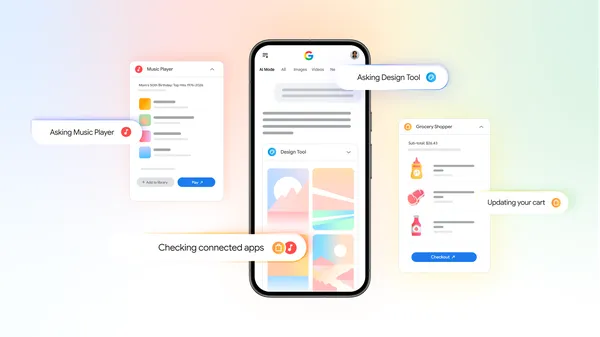
Google AI Mode Integrates with Popular Apps
Google's AI Mode is stepping up its game by allowing users to link and interact with popular apps like Instacart, Canva, and YouTube directly within its conversational search experience. This move transforms AI Mode from a simple Q&A tool into a more versatile assistant capable of completing tasks across various apps. For instance, users can now create grocery lists and add items directly to their Instacart cart or explore design templates on Canva. This integration not only enhances user convenience but also positions Google to better compete with AI platforms like ChatGPT and Claude, which already support app integrations.
TechCrunch AI
 © Google AI Blog
General AIproductivity
Google Search Integrates More Apps with AI Mode
Google is enhancing its Search capabilities by allowing users to connect more apps directly within AI Mode. This new feature, rolling out in the U.S., enables seamless integration with services like Instacart, Canva, and YouTube Music. Users can now add grocery items to their Instacart cart, explore design templates on Canva, or create playlists on YouTube Music, all through Search. This development aims to streamline daily tasks by providing personalized and efficient interactions with connected apps, making Search a more powerful tool for productivity.
Google AI Blog
 © The Verge AI
General AIimage
Google Images to Recommend Photos Before Search
Google is transforming its Images homepage into a dynamic, personalized gallery, marking a significant shift from its traditional search bar interface. This new feature will present users with a curated selection of images tailored to their interests, reminiscent of platforms like Pinterest. Additionally, Google Search will soon leverage its Nano Banana 2 Lite AI model to generate images in AI Overviews, enhancing visualization capabilities for users. These updates aim to make image discovery more intuitive and engaging, offering a more interactive experience for users even before they initiate a search.
The Verge AI
 © TechCrunch AI
General AIwriting
Superhuman's New Auto-Draft Feature Enhances AI Email Replies
Superhuman's latest auto-draft feature marks a significant step in AI-driven email management by crafting replies that sound more natural and personalized. Unlike previous iterations, this version leverages advanced models from Anthropic and OpenAI to generate drafts that align with the user's tone and past interactions. The feature offers multiple draft variations, allowing users to choose the most appropriate response with minimal editing. While not flawless, it represents a meaningful improvement in AI's ability to assist with email overload, making it easier for users to manage their inboxes efficiently.
TechCrunch AI
General AIwriting
Data Science Teams Leverage ChatGPT Work
OpenAI's ChatGPT Work is being utilized by data science teams to streamline their workflow. By transforming real work inputs into root-cause briefs, impact readouts, and KPI memos, the tool enhances efficiency in data analysis and reporting. This integration allows teams to quickly generate scoped analyses and dashboard specifications, potentially reducing the time spent on manual documentation. The development signifies a shift towards more automated and AI-driven processes in data science, offering a glimpse into the future of data management and reporting.
OpenAI
 © WIRED AI
General AIwriting
Apple's Siri AI Revamp Debuts in iOS 27 Beta
Apple's latest iOS 27 beta introduces a significant overhaul of Siri, transforming it into a more integrated and versatile tool across the iPhone ecosystem. The new Siri AI offers a chatbot-style app and enhanced functionality, allowing users to perform tasks like finding photos or sending texts with ease. This update marks a shift in how users can interact with their devices, making Siri a more central part of the iPhone experience. While not flawless, the revamped Siri AI is a promising step forward, potentially changing how iPhone owners engage with their smartphones.
WIRED AI
 © The Verge AI
General AIwriting
Revamped Siri AI Changes iPhone Interaction
Apple's latest iOS 27 beta introduces a revamped Siri AI that significantly alters how users interact with their iPhones. The new Siri AI allows users to perform tasks and retrieve information without opening multiple apps, as demonstrated by its ability to provide concert details directly from a web search. While the update is promising, its full potential hinges on developer support to integrate app entities and intents, which will enable Siri to access and manipulate data across various applications. This shift marks a foundational change in how users might engage with their devices, though it currently remains limited to Apple's ecosystem.
The Verge AI
General AIwriting
Anthropic Introduces Claude Usage Reflection Tool
Anthropic has launched a beta feature that allows users to reflect on their interactions with Claude, their AI assistant. This tool provides a dashboard summarizing usage patterns, helping users understand how AI fits into their daily routines. It encourages users to evaluate when AI is beneficial and when tasks are better handled personally. By offering insights into usage habits and prompting reflection, this feature aims to enhance users' AI fluency and decision-making. This development marks a step towards more mindful and effective AI integration in everyday life.
Anthropic
 © TechCrunch AI
General AIimage
Google's SynthID Debunks McConnell Deepfake
Google's SynthID system has effectively identified a deepfake image of Senator Mitch McConnell, marking a significant achievement for anti-deepfake technology. The image, falsely portraying McConnell in a hospital bed, gained traction online before Snopes confirmed its inauthenticity using SynthID's invisible watermark. This watermark, embedded in images from participating tools, remains detectable even after being shared widely. The system's success underscores its potential in combating misinformation, though its use is limited to images created with tools that have opted into the program, such as Google's Gemini models and OpenAI's tools.
TechCrunch AI
General AIother
OpenAI Academy Empowers K–12 Educators with AI Skills
OpenAI Academy, in collaboration with the Walton Family Foundation, is launching AI Skills Jams aimed at equipping K–12 educators with practical AI skills. This initiative is designed to integrate AI into the classroom, providing teachers with the tools and knowledge to enhance their teaching methods. By focusing on hands-on learning, the program seeks to demystify AI for educators, making it accessible and applicable in educational settings. This move signifies a step towards embedding AI literacy in early education, preparing both teachers and students for a future where AI plays a significant role.
OpenAI
© TechCrunch AIGeneral AIagents
AI-Powered Browsers Challenge Chrome and Safari
The browser landscape is shifting as new AI-powered browsers emerge to challenge the dominance of Chrome and Safari. These new entrants, like Perplexity's Comet and The Browser Company's Dia, are transforming browsers into more than just web portals by integrating AI to perform tasks and enhance user experience. OpenAI's Atlas and Opera's Neon are also part of this wave, offering features like task automation and contextual awareness. This evolution signifies a move towards browsers acting as personal assistants, potentially redefining how users interact with the web.
TechCrunch AI
 © The Verge AI
General AIother
Google's New Smart Speaker Lacks AI Readiness
Google's latest smart speaker, the Google Home Speaker, showcases impressive hardware design and sound quality, yet its AI assistant, Gemini for Home, doesn't meet expectations. Despite being tailored for Gemini, the speaker's command execution is notably slower than rivals like Alexa. While it offers features such as Matter and Thread support and can pair with Google TV Streamer, the AI's delayed responses and paywalled features diminish its attractiveness. This release marks Google's renewed interest in smart home devices, but the AI component requires further refinement to truly elevate the user experience.
The Verge AI
 © WIRED AI
General AIagents
AI Tool Claude Aids in Discovering Major Ticketing Flaw
Security researcher Ian Carroll leveraged the AI tool Claude Opus 4.7 to reveal a critical vulnerability in Front Gate Tickets, a key player in ticketing for US music festivals. This flaw could have allowed unauthorized users to issue tickets at will, showcasing the capability of AI to identify security gaps. Carroll's responsible disclosure led to a swift resolution by Front Gate, emphasizing the importance of proactive security measures. The incident illustrates how AI can autonomously find and potentially exploit vulnerabilities, prompting a reevaluation of digital security strategies. The rapid patching of the flaw by Front Gate reflects the necessity for vigilant security practices in the digital landscape.
WIRED AI
General AIwriting
NLP Transforms Professional Networking Dynamics
Natural language processing is revolutionizing professional networking by making interactions more personalized and relevant. AI-driven systems now comprehend and generate human language with greater nuance, enabling more contextual conversations and efficient introductions. This shift from keyword-based matching to semantic understanding allows for more targeted connection recommendations, reducing irrelevant outreach. However, the rise of AI in networking also brings challenges, such as maintaining authenticity and avoiding inaccuracies, underscoring the need for transparency and trust in digital communications.
AI News
 © The Verge AI
General AIwriting
Fitbit Air: A Smarter AI Health Approach
The Fitbit Air is making waves with its AI-driven health coaching, offering a more personalized approach to fitness tracking. While the hardware remains lightweight and efficient, the real story is the software, particularly the Google Health Coach. This AI coach provides tailored health insights and advice, though it requires significant user input to function optimally. Despite some kinks in the Google Health app, the Fitbit Air represents a step forward in integrating AI into consumer health, offering more than just basic metrics. It's a promising development for those seeking deeper health insights without the usual paywalls.
The Verge AI
 © The Verge AI
General AIcoding
Vibe Coding Raises Security Concerns
The rise of 'vibe coding'—using AI to quickly build personal apps—has introduced significant security risks. While these tools empower amateurs to create software, they often overlook critical security measures, leading to vulnerabilities like SQL injection and data exposure. This trend is particularly concerning when personal apps transition to handling sensitive data, such as financial or medical records. Experts emphasize the need for robust security practices, even in seemingly trivial projects, to prevent potential data breaches. As AI tools proliferate, the challenge is ensuring they are used responsibly and securely.
The Verge AI
 © TechCrunch AI
General AIproductivity
Apple Integrates AI Features in iOS 27
Apple's iOS 27 is set to redefine user experience by embedding AI into everyday tasks, moving beyond just enhancing Siri. The new features include bill splitting through Apple Cash, password updates for compromised credentials, and one-tap suggestions in Messages, all powered by Apple Intelligence. These updates aim to make the iPhone smarter and more intuitive without requiring users to interact with an AI assistant directly. By integrating AI into existing apps, Apple is focusing on practical solutions that enhance user convenience and security, marking a shift towards more seamless and intelligent software interactions.
TechCrunch AI
 © TechCrunch AI
General AIother
In the Weights: AI Vanity Search Tool Launched
In the Weights reimagines vanity searches by leveraging AI models to gauge a person's prominence within AI training data. Developed by Thomas Dimson and Joey Flynn, former OpenAI employees, the tool queries various AI models to produce a 'strength score' based on their ability to accurately describe an individual. This innovative approach underscores the transition from traditional web searches to AI-driven data retrieval, offering a fresh perspective on digital identity. While it doesn't promise eternal recognition, it provides a fascinating look at how AI encodes personal significance. The tool's engaging design and competitive scoring have sparked curiosity, making it a unique way to explore one's digital footprint in AI systems.
TechCrunch AI
 © WIRED AI
General AIagents
Apple's Siri AI Gets Major Overhaul
Apple's revamped Siri AI is a significant leap forward, transforming the voice assistant into a more conversational and helpful tool. Now integrated into the iPhone's search bar, Siri AI offers personalized responses by analyzing user data like messages and photos. This new version, part of iOS 27, is designed to be more intuitive and less intrusive, providing concise answers and seamless app interactions. While still in beta, it promises a more engaging and useful experience, setting a new standard for voice assistants by focusing on user privacy and personalization.
WIRED AI
 © The Verge AI
General AIwriting
Meta's AI Mode Search: Potential and Pitfalls
Meta's new AI Mode in Facebook search aims to enhance user experience by drawing on public posts from Facebook and Instagram to answer complex queries. While it shows promise in suggesting local events and activities, its reliance on user-generated content can lead to inaccuracies and misinformation. The tool's ability to provide practical recommendations is mixed, as it sometimes offers incorrect or irrelevant information. Despite these challenges, AI Mode represents an intriguing step towards more personalized search experiences, though it needs refinement to ensure reliability and accuracy.
The Verge AI
 © WIRED AI
General AIother
Google Launches Gemini-Powered Home Speaker
Google's new Home Speaker, powered by the Gemini assistant, marks a significant upgrade from the previous Google Assistant. This device allows for more natural and flexible interactions, understanding conversational nuances and follow-up questions without needing repeated wake words. With features like Continued Conversation in multiple languages and the ability to handle complex commands, Gemini enhances the smart speaker experience. The speaker also supports the latest smart home standards, making it a versatile hub for connected devices. This launch signifies Google's renewed push in the competitive smart speaker market.
WIRED AI
 © The Verge AI
General AIwriting
Meta Launches AI Mode for Facebook Search
Meta is introducing a new AI Mode for Facebook search that leverages public posts to generate AI-driven results. This feature aims to provide users with more contextual answers by analyzing content shared across Meta's platforms, including Instagram and Threads. Unlike traditional search results that offer links, AI Mode delivers insights based on public discourse, similar to Google's use of Reddit threads. This marks a shift in how social media data can be utilized to enhance search capabilities, potentially transforming user interaction with the platform.
The Verge AI
 © TechCrunch AI
General AIwriting
Meta Introduces 'AI Mode' on Facebook
Meta is enhancing Facebook with 'AI Mode,' a feature that leverages AI to provide synthesized answers from public posts across the platform. This move aims to transform user interaction by allowing questions to be asked in plain language, with responses drawn from discussions in Groups and Reels. While this could make information retrieval more intuitive, it raises concerns about the reliability of user-generated content. Additionally, new AI-powered editing tools and photo presets are being introduced, further integrating AI into user experiences. These updates reflect Meta's strategy to increase engagement and diversify revenue streams through AI innovations.
TechCrunch AI
General AIwriting
OpenAI Launches New Academy Courses
OpenAI is expanding its educational offerings with three new Academy courses designed to equip individuals with practical AI skills. These courses focus on building repeatable workflows and integrating AI agents into everyday work tasks. By providing structured learning paths, OpenAI aims to make AI more accessible and applicable for a broader audience. This initiative could help bridge the gap between AI technology and its practical application in various professional settings.
OpenAI
 © TechCrunch AI
General AIbusiness
DoorDash launches AI chatbot for ordering
DoorDash has introduced 'Ask DoorDash,' an AI chatbot that transforms how users order food and groceries. By allowing users to input text prompts or photos, the chatbot personalizes the shopping experience, making it more conversational and intuitive. This innovation means users can easily find what they're in the mood for without scrolling through endless options. The chatbot can even build grocery carts from photos or suggest meals based on dietary preferences. Currently available on iOS in select regions, this feature is set to expand across the U.S. soon.
TechCrunch AI
 © The Verge AI
General AIagents
Apple's New Siri AI Shows Promising Improvements
Apple's latest iteration of Siri AI marks a significant improvement in functionality, finally delivering on promises made years ago. The upgraded assistant can now effectively manage tasks like adding events from emails to calendars and providing context-aware recommendations. While it may not match the advanced capabilities of Google's Gemini, Siri's ability to handle basic tasks reliably is a notable step forward. This version of Siri, currently in developer beta, aims to rebuild trust with users by actually delivering on its advertised features. Apple's focus on integrating Siri seamlessly into the iPhone experience suggests a commitment to making it a reliable digital assistant.
The Verge AI
 © The Verge AI
General AIwriting
Apple Uses AI to Enhance Safari Extensions
Apple is addressing Safari's extension limitations by leveraging AI to allow users to create their own extensions through a process called 'vibe-coding.' This innovative approach lets users describe the functionality they want, and Safari generates the extension using Apple Intelligence. This could significantly narrow the gap between Safari and its competitors like Chrome and Firefox, which have more extensive extension libraries. Additionally, Apple is introducing AI-powered features such as automatic tab categorization and password management, showing a cautious but strategic integration of AI into Safari. These updates mark a shift in Safari's capabilities, potentially making it more competitive in the browser market.
The Verge AI
 © TechCrunch AI
General AIproductivity
Apple unveils AI updates for iPhone apps
Apple's latest updates bring AI-driven enhancements to its suite of apps, making everyday tasks more intuitive and efficient. Safari now uses AI to manage tabs and monitor web pages for changes, while Messages and Calendar benefit from AI-powered suggestions and natural language processing. The Phone app can pull context from other apps during calls, showcasing Apple's push to integrate AI at the operating system level. These updates not only streamline user interactions but also highlight Apple's commitment to leveraging personal data for a more personalized experience.
TechCrunch AI
 © TechCrunch AI
General AIproductivity
Apple integrates AI into Shortcuts for iOS 27
Apple is making its Shortcuts app more accessible by integrating AI, allowing users to create workflows through natural language prompts. This update, showcased at WWDC 2026, means users no longer need to manually configure app actions or variables. Instead, they can simply describe their desired automation, and Apple's AI will handle the rest. This shift makes the app more user-friendly, especially for those without technical expertise, and could significantly broaden its appeal and utility.
TechCrunch AI
 © WIRED AI
General AIagents
Apple Overhauls Siri with AI and Personalization
Apple is making a significant leap in the AI assistant space by overhauling Siri with a focus on personalization and enhanced capabilities. Partnering with Google Gemini, the new Siri will leverage advanced AI models to offer more dynamic interactions, including a stand-alone app and chatbot-style conversations. This update aims to make Siri more competitive with other AI assistants like ChatGPT by integrating personal data from users' devices to provide contextually relevant responses. While privacy concerns linger, Apple's commitment to on-device processing suggests a cautious approach. This revamp could redefine user expectations for voice assistants on iPhones.
WIRED AI
 © TechCrunch AI
General AIagents
Apple Unveils Overhauled AI-Powered Siri
Apple has finally unveiled its long-awaited overhaul of Siri, transforming it from a simple voice assistant into a sophisticated AI companion. This new version, dubbed 'Siri AI,' is designed to compete with popular conversational AI platforms like ChatGPT and Gemini. It can now access real-time world knowledge and user-specific data to provide more contextual and personalized responses. The update also introduces a new 'Write with Siri' feature, allowing users to draft messages that reflect their usual communication style. This marks a significant shift for Siri, positioning it as a more interactive and capable AI assistant.
TechCrunch AI
 © WIRED AI
General AIother
Momfluencers Promote AI as a Parenting Tool
A new trend among momfluencers involves using AI tools like ChatGPT to assist with parenting, suggesting these technologies can be more dependable than traditional partners. Influencers such as Lilian Schmidt have gained traction by demonstrating how AI helps manage household and childcare duties, claiming it enables them to be more present and emotionally balanced with their children. This movement reflects a shift in how AI is perceived as a tool for empowerment, despite ongoing concerns about its environmental impact and the potential for job displacement. The trend also raises important questions about gender roles and the societal expectation for women to optimize household efficiency. By embracing AI, these women are challenging traditional family dynamics and exploring new ways to balance the mental load. While AI offers potential benefits, it also highlights the persistent issue of unequal distribution of household responsibilities.
WIRED AI
 © WIRED AI
General AIother
Apple Tests Camera-Equipped AirPods for AI Push
Apple is reportedly testing AirPods with built-in cameras to enhance Siri's capabilities by providing visual context. This move could transform AirPods into a tool for navigation and shopping assistance, but it raises significant privacy concerns. While the hardware is ready, Apple's AI isn't yet capable of fully utilizing the visual data, leading to potential delays. The introduction of cameras in AirPods could be a step towards Apple's long-term vision of smart glasses, integrating more AI-driven features into everyday accessories. However, privacy and practical use cases remain critical hurdles for Apple to address.
WIRED AI
 © TechCrunch AI
General AIwriting
Meta launches AI creator assistant on Facebook
Meta's new AI creator assistant on Facebook is a strategic move to enhance creator engagement by offering personalized recommendations and insights. This tool allows creators to ask questions about their content performance and receive tailored advice, such as optimal posting times and audience feedback analysis. By integrating trending content suggestions, Meta aims to keep creators within its ecosystem, reducing reliance on third-party tools like ChatGPT. This initiative not only supports creators in optimizing their content but also aims to boost user engagement on Facebook by encouraging more frequent and relevant posts.
TechCrunch AI
 © WIRED AI
General AIother
Redditors Use AI to Combat World Cup Ticket Prices
In a grassroots movement, Redditors are leveraging AI to challenge FIFA's high ticket prices for the World Cup. The r/WorldCup2026Tickets subreddit, with over 140,000 members, has become a hub for sharing AI-powered tools like SeatSidekick, which provides real-time ticket availability and pricing data. This community-driven effort is not only helping fans find affordable tickets but also undermining scalpers and FIFA's pricing strategies. The initiative reflects a broader resistance against perceived exploitation by FIFA, as fans use technology to level the playing field in ticket purchasing.
WIRED AI
General AIproductivity
Codex Transforms Productivity with AI Tools
OpenAI's Codex is reshaping productivity by embedding AI into daily tasks. The 'Next Era of Knowledge Work' report reveals its impact on research, data analysis, workflow automation, and content creation, marking a shift in knowledge work dynamics. By automating intricate processes and enhancing data-driven decisions, Codex is set to redefine efficiency across professional landscapes. This development indicates a transition towards AI-centric workflows, potentially altering the future of productivity tools.
OpenAI
© TechCrunch AIGeneral AIagents
AI-Powered Browsers Challenge Chrome and Safari
The browser landscape is evolving with new AI-powered alternatives challenging the dominance of Chrome and Safari. Perplexity's Comet, The Browser Company's Dia, and OpenAI's Atlas are among the latest entrants, each offering unique AI-driven features like chatbot-based search and task automation. These browsers aim to enhance user experience by integrating AI capabilities directly into browsing, such as summarizing content and performing tasks autonomously. While some are still in beta or require subscriptions, they represent a shift towards more intelligent and personalized web navigation.
TechCrunch AI
General AIother
Boston Children's Hospital Enhances Diagnoses with AI
Boston Children's Hospital is utilizing OpenAI technology to advance its diagnostic capabilities, successfully identifying over 40 rare disease cases. This partnership is designed to alleviate the workload on healthcare professionals while enhancing the precision of diagnoses. By incorporating AI into their diagnostic processes, the hospital is not only improving efficiency but also potentially influencing other medical institutions to adopt similar technologies. The application of AI in diagnosing rare diseases could lead to quicker and more accurate patient outcomes, marking a significant change in how hospitals handle complex medical cases.
OpenAI
 © The Verge AI
General AIproductivity
Microsoft 365 Copilot Revamped for Speed and Clarity
Microsoft has revamped its 365 Copilot, enhancing its speed and design for a more efficient user experience. The update promises responses that are not only faster but also more structured and easier to digest. A new feature, 'progressive disclosure,' tailors the tools and controls presented based on user prompts, reducing clutter and enhancing usability. This redesign, available on both desktop and mobile, also allows for direct text formatting within the Copilot prompt box. These changes aim to streamline productivity by making interactions with Copilot more intuitive and responsive.
The Verge AI
 © TechCrunch AI
General AIwriting
Google AI Struggles with Basic Spelling
Google's AI is facing challenges with basic spelling tasks, revealing a core limitation of large language models (LLMs). These models, while adept at complex problem-solving, are not inherently designed to handle spelling as humans do. They process text as tokens, leading to errors like misspelling 'journalism' or miscounting letters in 'Google'. This situation highlights the need for human verification of AI outputs, as these models can excel in some areas but falter in others. Google's ongoing efforts to address these spelling issues reflect the complexity of refining AI capabilities. The reliance on token-based architecture means that AI's understanding of language is fundamentally different from human comprehension. This serves as a reminder that AI, despite its advancements, requires careful oversight.
TechCrunch AI
 © The Verge AI
General AIwriting
AI Allegedly Used in Pope's Encyclical on AI
The recent encyclical by Pope Leo XIV, focusing on AI's impact on humanity, has sparked debate over its authorship. Analysis using the AI detector Pangram suggests that significant portions of the document may have been AI-generated, with some sections showing up to 100% AI authorship. However, AI detection tools are not infallible, and some parts of the encyclical were confirmed as human-written. This marks a notable moment as it's the first papal document to address AI, raising questions about the role of AI in crafting messages about its own ethical implications.
The Verge AI
 © TechCrunch AI
General AIagents
Amazon's Bee Wearable: Intriguing Yet Privacy-Concerned
Amazon's Bee wearable is an AI-powered wrist gadget designed to act as a personal assistant by recording, transcribing, and summarizing conversations. While it shows potential in professional settings by helping users keep track of meetings and discussions, its extensive data collection and cloud storage raise privacy concerns. The device requires significant mobile permissions and stores data in the cloud, which might deter privacy-conscious users. Despite its promise, Bee's current iteration may be too invasive for personal use, though it could evolve into a valuable tool for professionals with further development.
TechCrunch AI
 © TechCrunch AI
General AIwriting
Google Adds Conversational AI to Gmail
Google is making Gmail smarter with the introduction of Gmail Live, a conversational AI feature revealed at the IO 2026 conference. This new tool allows users to interact with their inbox using natural language, simplifying the process of finding specific information like flight details or event times without typing search terms. Powered by Gemini AI, Gmail Live can grasp nuanced queries and handle follow-up questions, offering a more intuitive way to manage emails. While traditional search remains available, this addition highlights Google's effort to integrate AI into everyday tasks, aiming to enhance the user experience for millions.
TechCrunch AI
 © The Verge AI
General AIagents
Google's Gemini to Interpret Parking Signs in Volvo Cars
Google's AI assistant, Gemini, is set to enhance Volvo's upcoming EX60 SUV by using the vehicle's external cameras to interpret parking signs and other surroundings. This integration, powered by Android Automotive and Qualcomm's Snapdragon chip, aims to assist drivers by providing real-time information about parking restrictions and nearby landmarks. While the feature promises convenience, its accuracy will be crucial to avoid potential misinterpretations that could lead to parking fines. This development marks a step towards more interactive and informative driving experiences, with Google Maps also offering improved navigation through 3D-rendered routes.
The Verge AI
 © The Verge AI
General AIwriting
Google Search Integrates AI for Enhanced User Experience
Google is transforming its Search experience with AI-driven features, marking a significant shift in how users interact with the platform. The new search box, powered by the Gemini 3.5 Flash model, offers AI Overviews and a chatbot-like AI Mode, making it easier to navigate complex queries. This update allows users to attach documents and media directly to their searches, enhancing the depth of interaction. Additionally, AI information agents will autonomously track topics of interest, providing updates even when users are offline. This evolution positions Google Search as a more intuitive and proactive tool for information retrieval.
The Verge AI
 © Google AI Blog
General AIwriting
AI Mode Transforms U.S. Search Habits
Google's AI Mode is reshaping how people search online, with over a billion monthly active users globally. This feature merges traditional search with conversational AI, leading to a significant increase in search queries. Users are not only searching more but are also engaging differently, with a notable rise in voice and image searches. The average AI Mode query is now three times longer than traditional searches, indicating a shift towards more complex and conversational inquiries. This evolution in search behavior demonstrates AI Mode's impact on expanding the scope of what users consider searchable.
Google AI Blog
 © The Verge AI
General AIwriting
Google Introduces Voice-Activated Gmail Live
Google is enhancing Gmail with a new AI-powered feature called Gmail Live, allowing users to interact with their inbox using voice commands. This feature aims to simplify email searches by letting users ask questions and receive spoken responses, pulling relevant information directly from their emails. The demonstration showed practical applications, such as retrieving event details or travel information, highlighting its potential to streamline tasks. However, the success of Gmail Live hinges on its accuracy and reliability, as users need to trust the AI to deliver precise information. This innovation marks a step towards more intuitive, voice-driven interactions with Google's suite of productivity tools.
The Verge AI
 © Google AI Blog
General AIproductivity
Google Workspace Enhances AI Features for Productivity
Google is enhancing its Workspace suite with new AI-driven features aimed at boosting productivity and creativity. The introduction of voice capabilities in Gmail, Docs, and Keep allows users to brainstorm and organize tasks using just their voice, making it easier to manage digital workflows. Google Pics, a new image creation tool, offers precise editing controls, enabling users to generate and modify visuals with ease. Additionally, the AI Inbox feature is expanding to help users prioritize and manage emails more efficiently. These updates signify a shift towards more integrated and intuitive AI tools within Google's ecosystem, promising to streamline tasks and enhance user experience.
Google AI Blog
 © TechCrunch AI
General AIwriting
Google Integrates Voice Prompts in Docs and Keep
Google is enhancing its Workspace apps like Docs and Keep with voice-based prompting, allowing users to draft documents and take notes using their voice. This feature aims to streamline the process of creating and editing documents by enabling users to input long sentences and multi-step tasks in one go. The integration of voice commands in Gmail further extends this capability, letting users interact with AI to retrieve information like flight details or appointment times. This move reflects Google's commitment to making AI-driven voice interactions a core part of its productivity tools, simplifying complex tasks for users.
TechCrunch AI
General AIother
OpenAI Enhances AI Content Provenance Tools
OpenAI is making strides in improving the transparency and reliability of AI-generated content. With the introduction of Content Credentials and SynthID, along with a new verification tool, OpenAI aims to assist users in identifying and verifying AI-generated media more effectively. This development is crucial as it becomes increasingly difficult to differentiate between human and AI-created content. These tools are poised to become vital for maintaining trust in digital media, ensuring that AI-generated content is clearly marked and verifiable. This initiative reflects OpenAI's dedication to fostering a safer AI ecosystem, where content provenance is prioritized.
OpenAI
 © The Verge AI
General AIagents
Apple's Siri to Feature Auto-Deleting Chats
Apple is positioning privacy as its key differentiator in the AI space with the upcoming release of a more chatbot-like Siri in iOS 27. This new version will allow users to auto-delete chat histories, offering options to save conversations for 30 days, a year, or indefinitely. This move contrasts with other AI chatbots that typically offer only temporary incognito modes. By focusing on privacy, Apple aims to turn its perceived AI weaknesses into strengths, appealing to users increasingly concerned about data security. This shift could redefine user expectations around AI privacy standards.
The Verge AI
General AIproductivity
ChatGPT Work Enhances Operations Workflows
OpenAI's ChatGPT Work is advancing the efficiency of operations workflows by providing practical solutions for tasks such as initiative briefs, strategy updates, and decision packets. This development is particularly valuable for teams aiming to improve their effectiveness in progress reporting and strategic planning. By incorporating AI into these processes, organizations can achieve more consistent and timely updates, potentially reducing the reliance on manual reporting. While this isn't a groundbreaking shift, it represents a meaningful step towards more automated and effective operational management.
OpenAI
General AIwriting
ChatGPT Work Enhances Data Science Team Efficiency
OpenAI's ChatGPT Work is becoming an essential tool for data science teams, enabling them to streamline their workflow by generating root-cause briefs, impact readouts, and KPI memos. By utilizing real work inputs, teams can efficiently produce scoped analyses and dashboard specifications, boosting productivity and accuracy. This development underscores the increasing role of AI in automating and optimizing data-driven tasks, allowing data scientists to concentrate more on strategic decision-making. The integration of ChatGPT Work into data science processes marks a transition towards more efficient and automated analytical practices.
OpenAI
General AIproductivity
ChatGPT Introduces Personal Finance Feature for Pro Users
OpenAI is enhancing ChatGPT with a new personal finance feature for Pro users in the U.S., allowing them to securely connect their financial accounts. This integration offers AI-powered insights and guidance tailored to individual financial contexts, goals, and priorities. By embedding financial management into ChatGPT, OpenAI is expanding its utility beyond general conversation, making it a more versatile tool for users. This move signifies a step towards more personalized and context-aware AI applications, potentially transforming how users manage their finances.
OpenAI
 © The Verge AI
General AIwriting
Microsoft Edge Copilot Enhances AI Tab Interaction
Microsoft Edge is enhancing its Copilot AI with new capabilities that allow it to interact with your open tabs more intelligently. Users can now ask Copilot to summarize articles, compare products, and even create AI-powered podcasts from their browsing content. This update also introduces a 'Study and Learn' mode, transforming articles into interactive quizzes, and an AI writing assistant that aids in text entry. By integrating these features, Microsoft aims to make browsing more interactive and personalized, offering a more seamless experience across desktop and mobile platforms.
The Verge AI
 © The Verge AI
General AIagents
Meta Unveils Encrypted Incognito AI Chat
Meta's new Incognito Chat promises a level of privacy not seen in other AI chatbots, with end-to-end encryption ensuring that no logs of conversations are stored on servers. This move distinguishes Meta from competitors like Google and OpenAI, who retain temporary chat data for days. Built on Meta's Private Processing technology, this feature will soon be available in WhatsApp and the Meta AI app. By eliminating server-stored logs, Meta aims to offer a truly private chat experience, setting a new standard in AI communication privacy.
The Verge AI
 © WIRED AI
General AIagents
WhatsApp Launches Privacy-Focused AI Chat Feature
WhatsApp has introduced Incognito Chat, a new AI chat function designed to maintain user privacy by ensuring that Meta cannot access the content of conversations. This feature leverages WhatsApp's Private Processing scheme, which supports end-to-end encryption, allowing users to interact with AI without compromising their privacy. Unlike other AI platforms, Incognito Chat processes AI inference in a Trusted Execution Environment, ensuring messages remain inaccessible to Meta. This development marks a significant step in offering privacy-preserving AI interactions, potentially setting a new standard for secure AI communication.
WIRED AI
 © TechCrunch AI
General AIagents
WhatsApp Introduces Incognito Mode for Meta AI Chats
Meta is enhancing privacy in AI interactions by introducing an incognito mode for its Meta AI chatbot on WhatsApp. This feature allows users to have secure, private conversations that disappear once the chat is closed, ensuring no data is saved. The move aligns with Meta's ongoing efforts to integrate AI features without compromising end-to-end encryption. By leveraging its latest Muse Spark model, Meta aims to provide a more private and secure AI experience, addressing growing concerns about data privacy in AI interactions.
TechCrunch AI
 © The Verge AI
General AIwriting
Android 17 Unveils AI-Driven Features
Android 17 is set to enhance user experience with a suite of AI-driven features, including Rambler, a smart transcription tool that refines speech by removing filler words and correcting errors. The update also introduces AI-generated widgets, allowing users to create custom homescreen widgets using natural language. These features, part of Google's Gemini Intelligence, aim to make Android devices more intuitive and personalized. With these advancements, Android 17 positions itself as a more intelligent and user-friendly platform, especially for those using Pixel and Samsung Galaxy phones.
The Verge AI
 © The Verge AI
General AIagents
Google Enhances Gemini for Android Automation
Google's latest updates to its Gemini platform aim to make Android phones more autonomous, with features like task automation and multimodal input. Gemini Intelligence, as it's now branded, will allow users to automate tasks across a broader range of apps, moving beyond its initial focus on rideshare and food delivery. The introduction of Create My Widget lets users design custom widgets using natural language, hinting at a future where interfaces are dynamically generated. These updates, initially for premium devices like the Galaxy S26, suggest a shift towards more intuitive and self-operating smartphones.
The Verge AI
© TechCrunch AIGeneral AIagents
Threads Tests Meta AI Integration for Contextual Replies
Threads is experimenting with a new Meta AI integration that allows users to get real-time context and recommendations directly within conversations. This feature, currently in beta in select countries, lets users mention Meta AI in posts to receive informative replies from the @meta.ai account. By embedding AI into its platform, Threads aims to enhance user engagement by providing instant information without leaving the app. While similar to X's Grok, Meta AI is designed with stronger safeguards to mitigate risks associated with AI-generated content.
TechCrunch AI
 © The Verge AI
General AIagents
Rivian Launches AI Voice Assistant for Vehicles
Rivian has introduced its AI-powered voice assistant, now accessible to its vehicle fleet via a software update. This assistant, integrated into Rivian's Unified Intelligence system, offers capabilities ranging from answering vehicle-related queries to managing personal apps like Google Calendar. By embedding the assistant directly with the vehicle's hardware, Rivian enables voice control over essential functions such as HVAC and drive modes. This development marks Rivian's commitment to creating proprietary solutions instead of relying on third-party systems like Android Auto or Apple CarPlay.
The Verge AI
General AIbusiness
Finance Teams Leverage ChatGPT Work for Efficiency
Finance teams are enhancing their operational efficiency by integrating ChatGPT Work into their processes. This tool assists in generating Monthly Business Reviews (MBRs), reporting packs, and variance bridges, reducing the manual effort traditionally required. By automating model checks and planning scenarios, ChatGPT Work allows finance professionals to concentrate more on strategic decision-making rather than routine data handling. This shift not only boosts productivity but also ensures more accurate and timely financial insights, marking a significant step forward in the digital transformation of finance departments.
OpenAI
 © MIT News AI
General AIwriting
MIT Launches Universal Learning Initiative
MIT's Universal Learning initiative is a significant step in democratizing education by leveraging AI and online platforms to reach a global audience. The program, starting with Universal AI, aims to provide learners worldwide with access to MIT's renowned interdisciplinary approach and problem-solving mindset. By using the AskTIM AI assistant, the initiative offers a personalized learning experience that mimics the support of a human teaching assistant. This move not only expands MIT's educational reach but also adapts to the evolving landscape of online learning, making high-quality education more accessible and flexible.
MIT News AI
 © MIT News AI
General AIwriting
MIT Launches Universal AI for Global Learners
MIT's new Universal AI program aims to democratize AI education by offering a comprehensive, self-paced learning experience accessible to anyone, anywhere. This initiative bridges the gap between technical and non-technical audiences, providing foundational courses in AI concepts and industry-specific applications. With the inclusion of an AI assistant, AskTIM, learners receive personalized support, enhancing their understanding and engagement. Universal AI represents a significant step in making AI fluency attainable for a global audience, empowering individuals to leverage AI in their careers and communities.
MIT News AI
 © The Verge AI
General AIother
ChatGPT Adds 'Trusted Contact' for Safety Alerts
OpenAI is taking a significant step in user safety with its new 'Trusted Contact' feature for ChatGPT, allowing adults to designate someone to be alerted if the AI detects discussions of self-harm or suicide. This opt-in feature is designed to connect users in crisis with someone they trust, while ensuring privacy by not sharing chat details. The initiative comes in response to a tragic incident involving a teenager and reflects OpenAI's commitment to responsible AI use. By implementing this feature, OpenAI is setting a precedent for how AI platforms can responsibly manage sensitive mental health issues.
The Verge AI
 © WIRED AI
General AIwriting
ChatGPT's Chinese Phrase Becomes Internet Meme
ChatGPT's repeated use of the phrase 'I will catch you steadily' in Chinese has turned into a meme, capturing both amusement and irritation among users. This phrase, which is more common in psychotherapy, feels out of place in everyday conversation, revealing the difficulties AI models face in capturing cultural subtleties. The situation, known as 'mode collapse,' arises when models excessively repeat certain phrases due to feedback during training. This linguistic quirk highlights the ongoing challenge for AI in maintaining natural language flow across different languages. As other AI models begin to echo similar phrases, the meme's impact is likely to endure.
WIRED AI
General AIother
OpenAI Adds Trusted Contact Feature to ChatGPT
OpenAI has rolled out Trusted Contact, a new feature in ChatGPT aimed at bolstering user safety by notifying a trusted person if the AI detects serious self-harm concerns. This optional feature marks a significant advancement in integrating mental health considerations into AI interactions, providing a mechanism for timely intervention in critical situations. By offering this feature, OpenAI is taking a proactive approach to ethical AI use and user well-being. This development could lead other AI tools to adopt similar safety measures, potentially transforming how AI systems engage with users experiencing distress.
OpenAI
 © The Verge AI
General AIwriting
Google AI Search Now Includes Reddit Quotes
Google is enhancing its AI Search capabilities by integrating perspectives from firsthand sources like Reddit and other social media platforms. This update aims to provide users with more authentic and relatable information by linking search queries to real conversations. By doing so, Google hopes to reduce the need for users to manually append 'Reddit' to their searches for genuine advice. The inclusion of creator names and community identifiers in search results adds a layer of transparency and trust. This shift marks a significant move towards more conversational and community-driven search experiences.
The Verge AI
 © The Verge AI
General AIwriting
Chrome's AI Features Consume 4GB Storage
Google Chrome users are discovering that enabling certain AI features can lead to a significant 4GB storage consumption due to the download of a weights.bin file. This file is part of the Gemini Nano AI model, which powers features like scam detection and writing assistance by running locally on devices. While this approach enhances privacy by avoiding cloud data usage, it can be problematic for users with limited storage. Google has provided a way to disable these features to prevent the file from re-downloading, but clearer upfront communication about storage needs could have mitigated user confusion.
The Verge AI
 © The Verge AI
General AIagents
Google Home's Gemini AI Enhances Task Handling
Google has upgraded its Gemini AI for Home to version 3.1, significantly enhancing its ability to handle complex, multi-step tasks through a single voice command. This update aims to improve the smart home assistant's interpretation and execution of user requests, including managing recurring and all-day events. Additionally, Google introduced new features like Ask Home on Web, allowing users to manage their smart home from a computer, and improved notification capabilities with quick action buttons. These enhancements address previous issues with device identification and natural language understanding, making Google Home more efficient and user-friendly.
The Verge AI
 © The Verge AI
General AIother
Christian Creators Outsource AI Content on Fiverr
Christian content creators are increasingly hiring gig workers on Fiverr to produce AI-generated videos and images based on biblical themes. This trend highlights the growing demand for quick and cost-effective content creation in the religious niche.
The Verge AI
 © The Verge AI
General AIagents
Microsoft launches AI agent for legal teams in Word
Microsoft introduces a new AI agent in Word tailored for legal teams, enhancing document management and review processes. The Legal Agent utilizes structured workflows to assist with contract analysis and risk identification.
The Verge AI
 © WIRED AI
General AIagents
Mac Mini Demand Surges Amid AI Adoption
Apple CEO Tim Cook announced that demand for the Mac Mini is so high that it could take several months to fulfill orders. This surge is attributed to its suitability for agentic AI tasks.
WIRED AI
 © TechCrunch AI
General AIother
Google's Gemini AI Assistant in Millions of Vehicles
Google is integrating its Gemini AI assistant into millions of vehicles, enhancing the driving experience with advanced conversational AI.
TechCrunch AI
 © WIRED AI
General AIother
OpenAI Introduces Advanced Security for ChatGPT Accounts
OpenAI is launching Advanced Account Security for users worried about phishing attacks targeting their ChatGPT and Codex accounts.
WIRED AI
 © The Verge AI
General AIother
Smart Glasses Market Faces Usage Challenges
The article discusses the abundance of smart glasses available, highlighting various brands and models, but notes a lack of practical applications for users. The author expresses frustration over the overwhelming number of options without clear use cases.
The Verge AI
 © NVIDIA Blog
General AIother
16 Games Launch on GeForce NOW This May
NVIDIA announced that 16 new games, including Forza Horizon 6 and 007 First Light, will be available on GeForce NOW this month, enhancing cloud gaming with RTX 5080-class performance. Members can stream their PC libraries instantly across various devices without repurchasing titles.
NVIDIA Blog
 © AI News
General AIother
Understanding APIs and MCPs in AI Systems
The article explains the differences between APIs and Model Context Protocols (MCPs), highlighting their distinct purposes in software applications and large language models. APIs facilitate communication between applications, while MCPs provide structured access to data for AI models.
AI News
 © WIRED AI
General AIother
Hoffman Advocates AI in Medical Opinions
Reid Hoffman, cofounder of LinkedIn, suggests that doctors should consult AI for second opinions in medical cases. He emphasizes that neglecting to use AI tools could be seen as malpractice.
WIRED AI
 © Together AI Blog
General AIother
Together AI addresses Copy Fail vulnerability
Together AI has shut down the vulnerable crypto socket interface Copy Fail across its infrastructure to mitigate risks associated with a logic bug in the Linux kernel.
Together AI Blog
General AIother
OpenAI Introduces Advanced Account Security Features
OpenAI has launched Advanced Account Security, which includes phishing-resistant login, stronger recovery options, and enhanced protections to safeguard sensitive data and prevent account takeovers.
OpenAI
 © Sifted
Investment
General AIother
Boss's Dependence on AI Tools Raises Concerns
An article discusses the increasing reliance of some professionals on AI tools like ChatGPT and Claude, highlighting potential issues in workplace productivity and decision-making. It reflects on the implications of such dependencies in a corporate environment.
Sifted
 © WIRED AI
General AIother
Eka's Robotic Claw Advances Automation
Eka's robotic claw is designed for tasks like sorting food and assembling products, showcasing significant advancements in robotics. This development suggests a potential shift in how physical tasks are automated.
WIRED AI
 © The Verge Creator Economy
General AIother
Shooting at White House Correspondents' Dinner Causes Chaos
A shooting incident occurred at the White House Correspondents' Dinner, leading to chaos but no injuries, with the suspect apprehended. Conspiracy theories have emerged online suggesting the event was staged.
The Verge Creator Economy
 © The Verge Creator Economy
General AIother
Canva's AI tool mistakenly replaces 'Palestine'
Canva's Magic Layers feature inadvertently replaced the word 'Palestine' with 'Ukraine' in user designs, prompting an apology from the company. Canva has since resolved the issue and is implementing measures to prevent future occurrences.
The Verge Creator Economy
 © Sifted
General AIother
Wolt CEO Discusses Superapp Development
Marianne Vikkula, CEO of Wolt and chair of Slush, shares insights on building a superapp and leadership lessons from her experiences. She also discusses the unique aspects that contribute to Slush's success.
Sifted
 © NVIDIA Blog
General AIother
GeForce NOW Enhances Game Discovery Features
NVIDIA's GeForce NOW has introduced new in-app labels for easier game discovery from Xbox Game Pass and Ubisoft+ subscriptions. This update aims to improve the user experience by simplifying the process of identifying available games for streaming.
NVIDIA Blog
 © NVIDIA Blog
General AIother
AI and GPUs Aid Astronomers with Cosmic Data
NVIDIA discusses the role of AI and GPUs in assisting astronomers to analyze large volumes of data related to the early universe. This technology is becoming increasingly important in the field of astronomy.
NVIDIA Blog
 © NVIDIA Blog
General AIother
NVIDIA AI Applications for Environmental Protection
NVIDIA is utilizing its AI technology in various sectors such as climate, conservation, disaster monitoring, and recycling to help protect the planet.
NVIDIA Blog
 © MIT Technology Review AI
General AIbusiness
AI Requires Strong Data Fabric for Business Value
Organizations are increasingly using AI across various business functions, but face challenges related to data quality and context. A well-designed data fabric is essential for AI systems to make informed decisions and deliver value.
MIT Technology Review AI
 © MIT Technology Review AI
General AIresearch
Current Key Trends in AI
MIT Technology Review highlights ten significant trends in AI as of now. These trends reflect ongoing developments and challenges in the field.
MIT Technology Review AI
 © MIT Technology Review AI
General AIother
Concerns Rise Over Weaponized Deepfakes
Experts warn that advancements in deepfake technology have made it easier to create realistic but malicious content, leading to potential societal harm. The prevalence of weaponized deepfakes, particularly those targeting women and marginalized groups, raises significant concerns about trust and critical thinking.
MIT Technology Review AI
 © Together AI Blog
General AIother
Guide to Multi-Tenant GPU Cluster Design
The article discusses how AI-native companies can design multi-tenant GPU clusters that optimize capacity while maintaining team isolation, with practical insights from Together AI.
Together AI Blog
 © The Verge Creator Economy
General AIother
Canva pivots to AI enterprise software
Canva's CEO Melanie Perkins discusses the company's shift towards integrating AI into its design platform, allowing users to create presentations and documents through natural language commands. This update aims to transform Canva from a design tool with AI features to a comprehensive AI platform for design.
The Verge Creator Economy
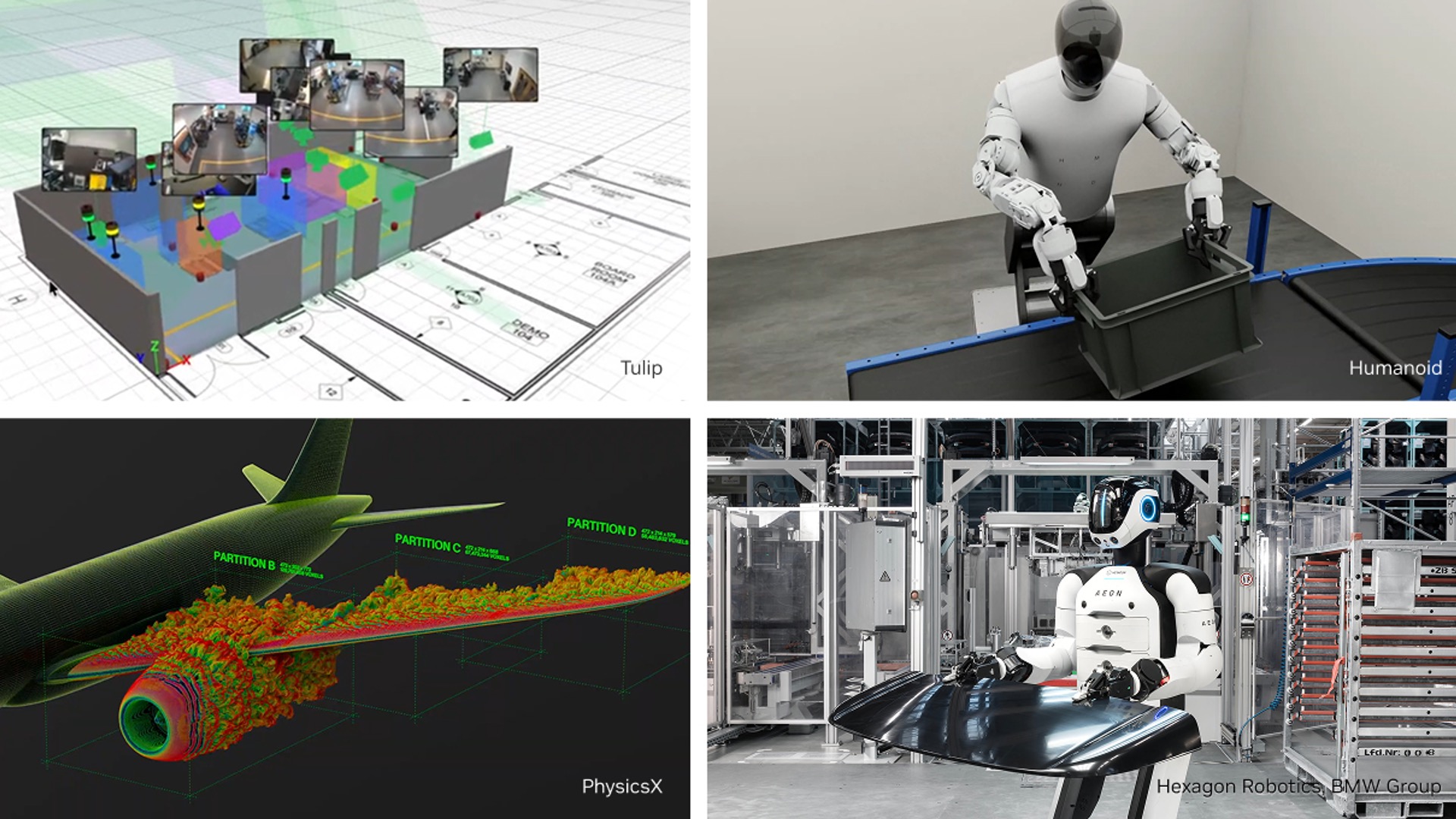 © NVIDIA Blog
General AIother
NVIDIA Showcases AI-Driven Manufacturing at Hannover Messe 2026
NVIDIA and partners are demonstrating AI-driven manufacturing technologies at Hannover Messe 2026, highlighting advancements in AI physics, robotics, and real-time simulation. The event emphasizes the need for a secure and scalable AI infrastructure to support industrial innovation.
NVIDIA Blog
 © NVIDIA Blog
General AIother
Capcom's PRAGMATA Launches on GeForce NOW
Capcom's sci-fi action adventure game PRAGMATA is available on GeForce NOW on its launch day, allowing players to stream it without needing high-end hardware. Additionally, the GeForce NOW Ultimate membership is now in beta in India.
NVIDIA Blog
 © MIT News AI
General AIother
MIT SHASS Discusses Education's Future Amid AI
MIT's SHASS Dean Agustín Rayo emphasizes the need for education that integrates humanistic scholarship with technical skills in response to AI's societal impact. He argues that universities must focus on providing students with valuable tools for financial security and meaningful lives.
MIT News AI
 © Google Research Blog
General AIother
Developing Skills with Generative AI
Google Research discusses the potential of generative AI in enhancing educational practices and preparing students for future challenges. The focus is on integrating AI tools into learning environments.
Google Research Blog
 © The Rundown AI
General AIother
Attack on Sam Altman highlights rising anti-AI sentiment
A 20-year-old was arrested for attempting to set fire to Sam Altman's home, driven by fears that AI could lead to human extinction. This incident follows OpenAI's warning about the rapid societal changes brought by AI.
The Rundown AI
 © Together AI Blog
General AIother
Understanding AI Native Cloud Infrastructure
The article discusses the concept of AI Native Cloud, emphasizing the need for infrastructure tailored for AI models rather than traditional workloads. It outlines the significance of this shift for future platforms.
Together AI Blog
 © NVIDIA Blog
General AIother
GeForce NOW Adds 10 New Games in April
NVIDIA's GeForce NOW cloud gaming service has launched ten new titles, including Capcom's PRAGMATA and Arknights: Endfield. The new games enhance the platform's offerings, allowing players to stream high-quality gaming experiences from various devices.
NVIDIA Blog
 © NVIDIA Blog
General AIother
NVIDIA and Emerald AI Launch Power-Flexible AI Factories
At CERAWeek, NVIDIA and Emerald AI introduced a new approach to AI factories that treats them as flexible grid assets, enhancing efficiency and reliability. This collaboration aims to optimize energy use and support the growing demand for AI deployments.
NVIDIA Blog
 © MIT News AI
General AIother
US-China Relations Impact Energy Transition Efforts
Nicholas Burns discussed the competitive nature of US-China relations and its implications for global energy transition at an MIT seminar. He emphasized the need for cooperation between the two largest carbon emitters to address climate change.
MIT News AI
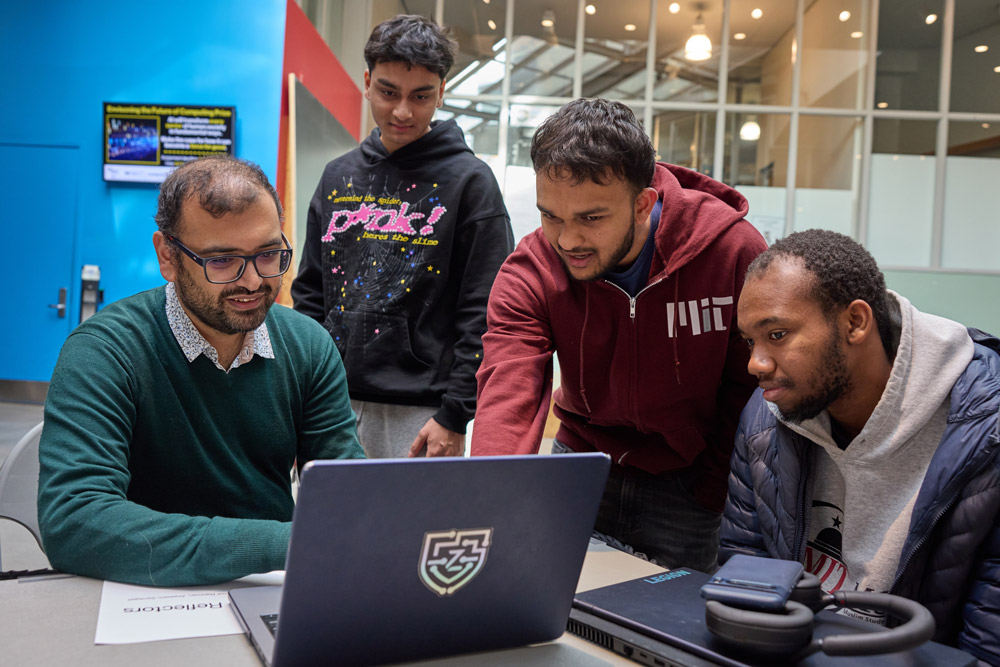 © MIT News AI
General AIother
MIT class combines anthropology and chatbot design
MIT has launched a new undergraduate class that merges anthropology and computer science to design chatbots that serve as humane social guides. The course encourages students to create AI that prioritizes user well-being over addictive engagement.
MIT News AI
 © Together AI Blog
General AIother
Together AI Refreshes Visual Identity
Together AI has unveiled a new visual identity created in collaboration with Pentagram, aimed at reflecting its mission to connect open-source innovation and systems research.
Together AI Blog
 © Google Research Blog
General AIother
AI Tools Enhance Universal Design for Accessibility
A recent article discusses how AI tools can improve universal design principles to make environments more accessible. The focus is on integrating AI technologies to support diverse user needs.
Google Research Blog
 © Google Research Blog
General AIresearch
Google Research 2025 Year in Review
Google Research has outlined its achievements and future goals for 2025, emphasizing bolder breakthroughs and a larger impact in various fields. The review highlights advancements made in AI and other technologies over the past year.
Google Research Blog
 © Google Research Blog
General AIother
Google Hosts Data Science for Health Ideathon in Africa
Google sponsored an Ideathon focused on data science applications in health across Africa. The event aimed to foster innovation and collaboration among participants.
Google Research Blog
 © Google Research Blog
General AIother
Google Research Introduces Generative UI
Google Research has unveiled a new concept called Generative UI, which aims to create rich, custom, and interactive visual user experiences based on user prompts. This development highlights the potential of generative AI in enhancing user interface design.
Google Research Blog
 © Google Research Blog
General AIother
Google Research Develops Personal Health Coach
Google Research is working on a personal health coach utilizing generative AI technologies. This initiative aims to enhance individual health management through AI-driven insights.
Google Research Blog
 © Y Combinator Blog
General AIbusiness
Y Combinator Welcomes New Visiting Partners
Y Combinator has announced the addition of nine new Visiting Partners, all of whom are former founders with diverse backgrounds in technology and entrepreneurship. These partners will provide guidance to startups during the current batch, leveraging their experiences in various sectors including AI infrastructure and edtech.
Y Combinator Blog
 © Google Research Blog
General AIother
XR Blocks Enhances AI and XR Innovation
Google Research has introduced XR Blocks, a framework aimed at accelerating innovation in generative AI and extended reality (XR). This initiative seeks to integrate AI capabilities into XR applications more effectively.
Google Research Blog
 © Google Research Blog
General AIother
Generative AI Reimagines Textbooks
Google Research has introduced a new approach to textbooks using generative AI, aiming to enhance educational materials. This innovation seeks to personalize learning experiences for students.
Google Research Blog
 © Google Research Blog
General AIother
Google AI Aims to Transform Health Education
Google's AI initiatives are focused on enhancing health professions education through innovative technologies. The research highlights potential applications of AI in improving educational outcomes for healthcare professionals.
Google Research Blog
 © Google Research Blog
General AIother
Google Research Introduces AMIE for Physician Oversight
Google Research has announced a new initiative called AMIE, aimed at enhancing physician-centered oversight using generative AI technologies. This initiative seeks to improve the integration of AI in healthcare settings.
Google Research Blog
 © Ollama Blog
General AIother
Ollama Launches New App for macOS and Windows
Ollama has released a new application that is compatible with both macOS and Windows operating systems.
Ollama Blog
 © Google Research Blog
General AIother
Android Launches Global Earthquake Alert System
Google has introduced a global earthquake alert system for Android devices, utilizing data mining and modeling techniques. This system aims to provide early warnings to users in affected areas.
Google Research Blog
 © Replicate Blog
General AIother
FLUX.1 Kontext Hackathon Winners Announced
A hackathon was hosted by Replicate in collaboration with BFL for FLUX.1 Kontext, and the winners have been announced.
Replicate Blog
© Ollama BlogGeneral AIother
Secure Minions Enables Encrypted Collaboration
Ollama has announced the Secure Minions protocol, developed by Stanford's Hazy Research lab, which facilitates encrypted local-remote communication.
Ollama Blog
 © Replicate Blog
General AIother
FLUX.1 Kontext Community Insights
The Replicate Blog highlights various community projects and applications utilizing FLUX.1 Kontext.
Replicate Blog
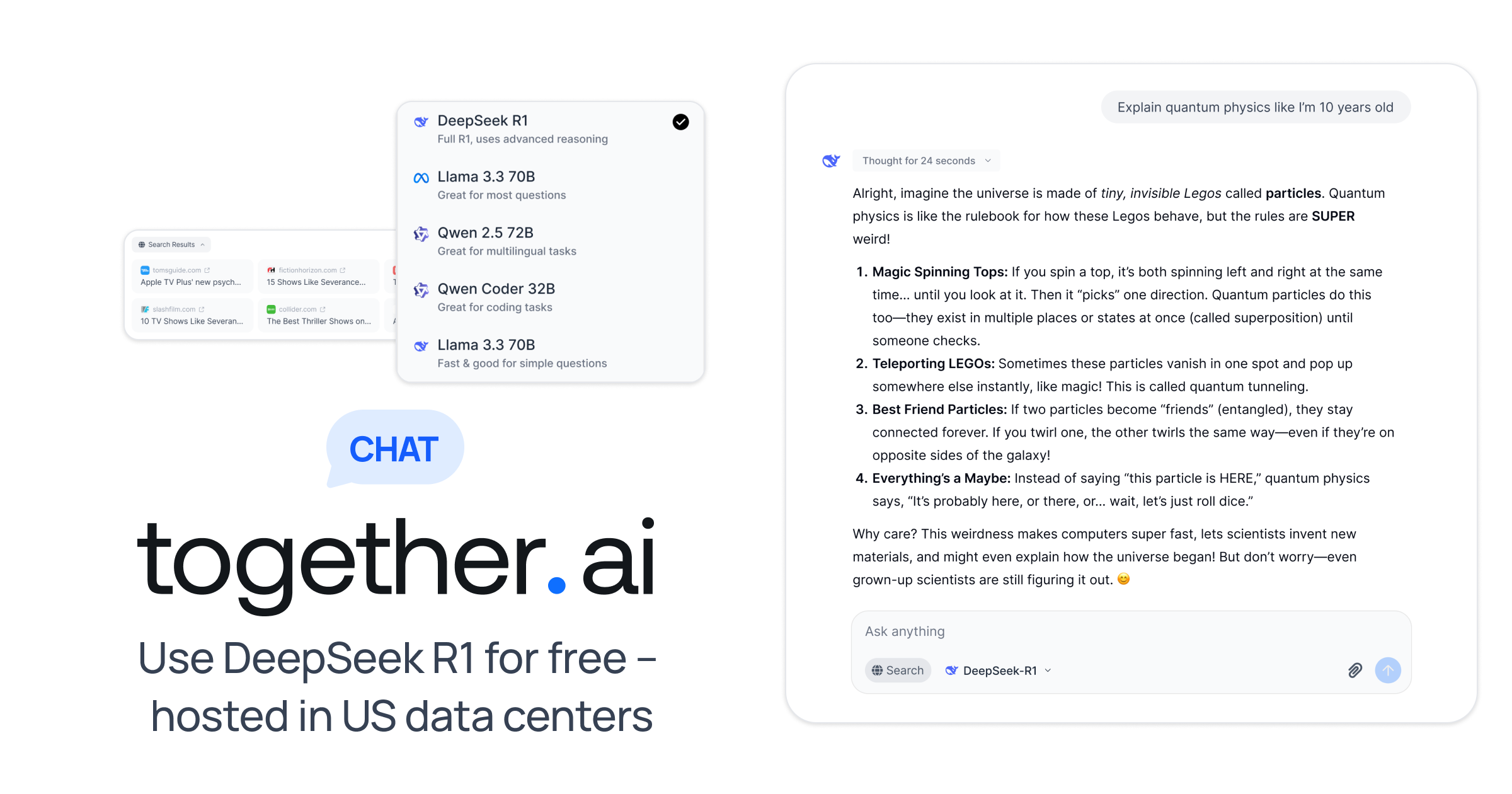 © Together AI Blog
General AIother
Introducing Together Chat: Free DeepSeek R1 Access
Together AI has launched Together Chat, providing free access to the DeepSeek R1 model, hosted in North America. This initiative aims to enhance user interaction with AI tools.
Together AI Blog
General AIbusiness
Michael Seibel Becomes Partner Emeritus at YC
Michael Seibel is transitioning to Partner Emeritus at Y Combinator after over a decade of significant contributions. He will continue to support YC founders through office hours and events.
Y Combinator Blog
 © Replicate Blog
General AIother
Replicate Intelligence #12 Overview
The latest Replicate Intelligence blog post discusses Flux LoRAs, mentions Hot Zuck, and features Replicate's appearance on Lex Fridman's podcast.
Replicate Blog
 © Replicate Blog
General AIother
Replicate Intelligence #11 Released
The latest edition of Replicate Intelligence discusses fine-tuning FLUX.1, generative video games, and a vision for the metaverse.
Replicate Blog
 © Replicate Blog
General AIother
Replicate Intelligence #10 Released
The latest edition of Replicate Intelligence discusses Flux developments, a Minecraft bot, and a Streamlit cookbook featuring Zeke.
Replicate Blog
 © Replicate Blog
General AIcoding
Replicate Intelligence #5 Highlights AI Developments
The latest Replicate Intelligence update discusses advancements in coding models, breakthroughs in AI search, and the introduction of a Discord support bot.
Replicate Blog
 © Replicate Blog
General AIother
Shared Network Vulnerability Disclosure
Replicate Blog discusses a recent shared network vulnerability disclosure affecting multiple systems. The details of the vulnerability and its implications for network security are outlined.
Replicate Blog
 © Replicate Blog
General AIother
Creating an AI Narrator for Your Life
The article discusses the process of developing an AI narrator, likening it to a virtual version of David Attenborough. It explores the potential applications and implications of such technology.
Replicate Blog
 © EleutherAI Blog
General AIother
Contributor Spotlight: Mohammad Aflah Khan
Mohammad Aflah Khan, a final-year BTech student at IIIT Delhi, shares his journey in computer science and deep learning. His passion for programming has driven him to explore various domains within his academic curriculum.
EleutherAI Blog
 © Replicate Blog
General AIother
Replicate Launches Status Page for Updates
Replicate has introduced a status page to offer real-time updates on the health of its services.
Replicate Blog
 © Replicate Blog
General AIother
Join us at Uncanny Spaces
A new initiative is being launched to bring people together to explore machine learning creations.
Replicate Blog
 © Replicate Blog
General AIother
Team Aims to Make ML More Accessible
A small team of engineers and machine learning enthusiasts is working to enhance accessibility in machine learning.
Replicate Blog