General AI
MIT class combines anthropology and chatbot design
MIT News AImedium confidence
Why it matters
- →This interdisciplinary approach may lead to more ethical AI design practices, which is significant for AI practitioners focused on user experience.
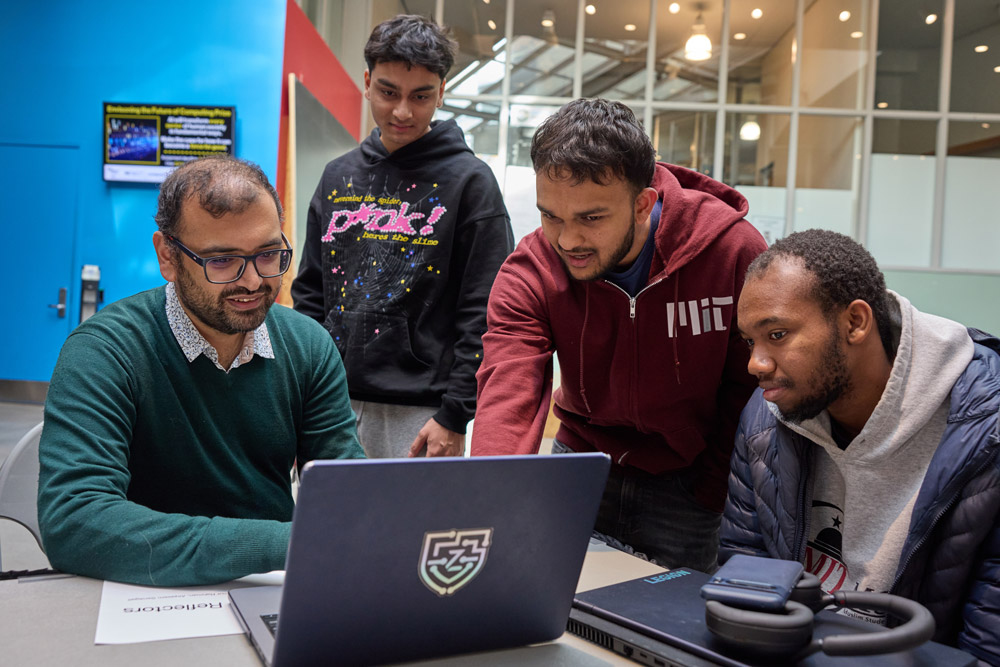
MIT has launched a new undergraduate class that merges anthropology and computer science to design chatbots that serve as humane social guides. The course encourages students to create AI that prioritizes user well-being over addictive engagement.
Read originalThe story around this
Earlier coverage that leads up to this article, and what followed. Lines connect each piece to the closest one after it, converging here.
How we got here
- 1New Methods for Human-AI Group Conversations
Google Research Blog · February 10, 2026 · Background
What happened next
- 2MIT Student Explores Language and AI Intersections
MIT News AI · May 1, 2026 · Related
- 3TML Unveils Real-Time AI Interaction Models
The Rundown AI · May 12, 2026 · Background
- 4MIT Launches Universal AI for Global Learners
MIT News AI · May 12, 2026 · Related
- 5Thinking Machines Labs Unveils New Interaction Models
Matt Wolfe · May 16, 2026 · Background
- 6MIT Study: AI Enhances Human Critical Thinking
Matt Wolfe · June 25, 2026 · Related
More in General AI
 © Wes Roth
General AIother
Binance hack reveals AI-driven cyber threats
The $6.36 billion Binance theft marks a terrifying shift where AI isn't just a tool but the primary weapon in state-sponsored cyber warfare. North Korean actors leveraged autonomous agent swarms and cloaked daemons to execute the heist in minutes, exposing critical vulnerabilities in traditional defense models. This incident forces a stark realization: protecting digital infrastructure now requires AI systems that cannot be easily shut down without catastrophic consequences. The era of passive security is over; we are entering a period where offensive AI capabilities outpace our ability to contain them.
Wes Roth
 © All About AI
General AIother
Sikt Intelligence launches AI superforecaster for prediction markets
Sikt Intelligence is testing whether an AI model can consistently beat human judgment and market prices on prediction platforms like Polymarket and Kalshi. The system aggregates global news to assign probabilities to events, flagging discrepancies where its forecast diverges from the market's implied odds. This approach treats prediction markets as a live laboratory for measuring AI reasoning under uncertainty rather than just generating static text. If the model can identify mispriced outcomes, it demonstrates a practical application of LLMs in financial decision-making that goes beyond simple sentiment analysis.
All About AI
 © The Verge AI
General AIproductivity
Starbucks plans AI drive-thru personalization by 2027
Starbucks is moving from experimental AI to concrete infrastructure plans for its drive-thrus. CEO Brian Niccol outlined a roadmap starting in 2027 that includes recognizing customers upon arrival and serving personalized digital menus. This mirrors similar pilots at Taco Bell and McDonald’s, signaling a shift toward hyper-personalized fast-food experiences. The company is also testing background AI models to help baristas input orders more accurately. It remains unclear how soon these features will roll out beyond the 2027 target.
The Verge AI