Market & Regulation
NVIDIA and Doosan Collaborate on AI and Robotics
NVIDIA Bloghigh confidence
Why it matters
- →The collaboration could lead to more adaptable and specialized industrial robots.
- →It addresses the growing power demands of AI data centers with innovative solutions.
- →Advanced PCB materials will enhance AI server performance and reliability.
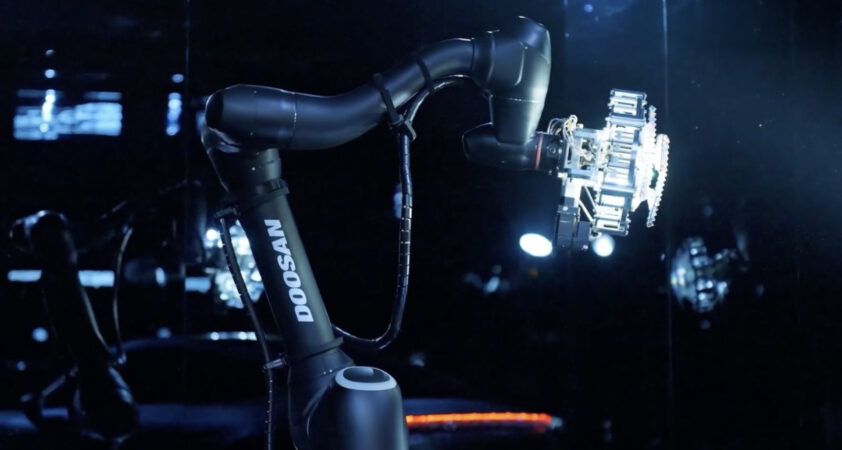
NVIDIA and Doosan Group are expanding their partnership to advance physical AI, robotics, and AI factory infrastructure. The collaboration will integrate NVIDIA's computing platforms with Doosan's industrial capabilities, focusing on robotics, power generation, and electronics materials. Doosan Robotics will use NVIDIA's technologies to enhance its AI-powered robotics platform, while Doosan Enerbility explores power solutions for AI factories. Additionally, Doosan Corporation Electro-Materials will support AI data centers with advanced PCB materials. This partnership aims to create more autonomous and efficient industrial systems.
Read originalThe story around this
Earlier coverage that leads up to this article, and what followed. Lines connect each piece to the closest one after it, converging here.
More in Market & Regulation
 © TechCrunch AI
Market & Regulationother
Judge allows NAACP lawsuit over xAI pollution to proceed
xAI's attempt to dismiss the NAACP's Clean Air Act lawsuit failed after a federal judge ruled that its gas turbines are not exempt mobile sources and that plaintiffs have standing. This legal setback confirms that AI infrastructure operators cannot bypass environmental permitting by classifying heavy industrial equipment as temporary or mobile. The ruling forces xAI to face scrutiny over air quality impacts at its Colossus data center, setting a precedent for how large-scale compute facilities are regulated under existing environmental laws.
TechCrunch AI
 © TechCrunch AI
