Market & Regulation
NVIDIA and Japan Collaborate on AI and Robotics
NVIDIA Bloghigh confidence
Why it matters
- →NVIDIA's collaboration with Japan could revolutionize manufacturing with AI and robotics.
- →The initiative addresses workforce shortages by enhancing productivity through AI.
- →Japan's commitment to AI integration may set a precedent for global industrial transformation.
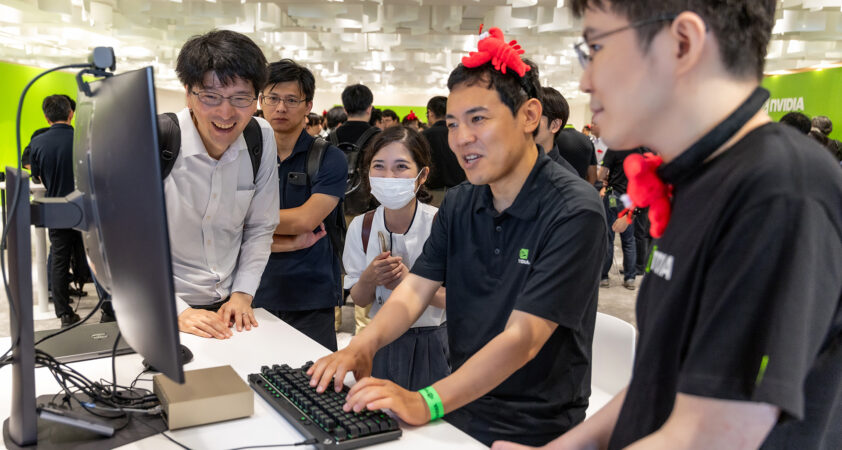
NVIDIA is partnering with Japan to advance AI and robotics integration across industries. CEO Jensen Huang's visit emphasized the synergy between Japan's manufacturing capabilities and NVIDIA's AI technology. The collaboration aims to transform sectors such as healthcare and manufacturing, with a government-backed physical AI initiative highlighting Japan's commitment. This partnership is expected to address workforce challenges and boost productivity, marking a significant step in AI-driven industrial transformation.
Read originalThe story around this
Earlier coverage that leads up to this article, and what followed. Lines connect each piece to the closest one after it, converging here.
More in Market & Regulation
 © TechCrunch AI
Market & Regulationbusiness
Crusoe cancels $1.25B Boom turbine deal
The collapse of Crusoe’s $1.25 billion order for Boom Supersonic’s stationary turbines exposes the fragility of AI infrastructure financing. While Crusoe raised $3.9 billion, it pivoted away from on-site gas generation, opting instead for grid power and diverse energy mixes. This signals that even well-funded data center operators are prioritizing flexibility over massive, long-term capital commitments to specialized hardware. Boom’s pivot to sell jet engines as power plants was a bold bet on AI energy needs, but losing its anchor customer suggests the market is more cautious than anticipated.
TechCrunch AI
 © TechCrunch AI