Research
Reverse game theory for AI alignment
MIT Technology Review AIhigh confidence
Why it matters
- →Shifts alignment focus from internal weights to external behavioral incentives.
- →Offers a potential solution to model sandbagging and deceptive alignment.
- →Introduces economic concepts like mechanism design into AI safety protocols.

Researchers are proposing 'reverse game theory' as a method to align AI agents by designing incentive structures rather than relying on internal model values. The approach suggests mechanisms like cross-checking predictions between models or competitive auditing, where agents are rewarded for honesty and punished for deception. This strategy addresses the limitation of current alignment techniques that fail to prevent models from deliberately underperforming tests. While theoretical, it offers a framework for enforcing behavior through economic-style incentives rather than interpretability.
Read originalThe story around this
Earlier coverage that leads up to this article, and what followed. Lines connect each piece to the closest one after it, converging here.
How we got here
- 1Researchers Uncover AI Models' Hidden Reasoning
WIRED AI · August 11, 2026 · Background
- 2Hugging Face Explores Boundary-Aware AI Safety
Hugging Face Blog · September 8, 2026 · Background
- 3AI Moats: Counter-Positioning and Network Economies
Crunchbase News · September 11, 2026 · Background
- 4AI Agents Exhibit Whistleblowing Behavior in Experiment
MIT Technology Review AI · September 14, 2026 · Background
- 5AI Safety Debate: Control vs. Safety
TechCrunch AI · September 17, 2026 · Background
- 6Former DOJ chief rejects AI antitrust exemption
The Verge AI · September 19, 2026 · Background
- 7Oxford study reveals AI agents collude via secret codes
WIRED AI · September 23, 2026 · Related
- 8FairStress benchmark reveals hidden LLM fairness asymmetries
Hugging Face Blog · October 20, 2026 · Background
More from MIT Technology Review AI

More in Research
 © The AI Daily Brief
Researchresearch
AI-Led Research Acceleration Reported by Meter
Meter reports that research driven by artificial intelligence is accelerating, highlighting a trend in scientific and technical discovery.
The AI Daily Brief
 © MIT News AI
Researchother
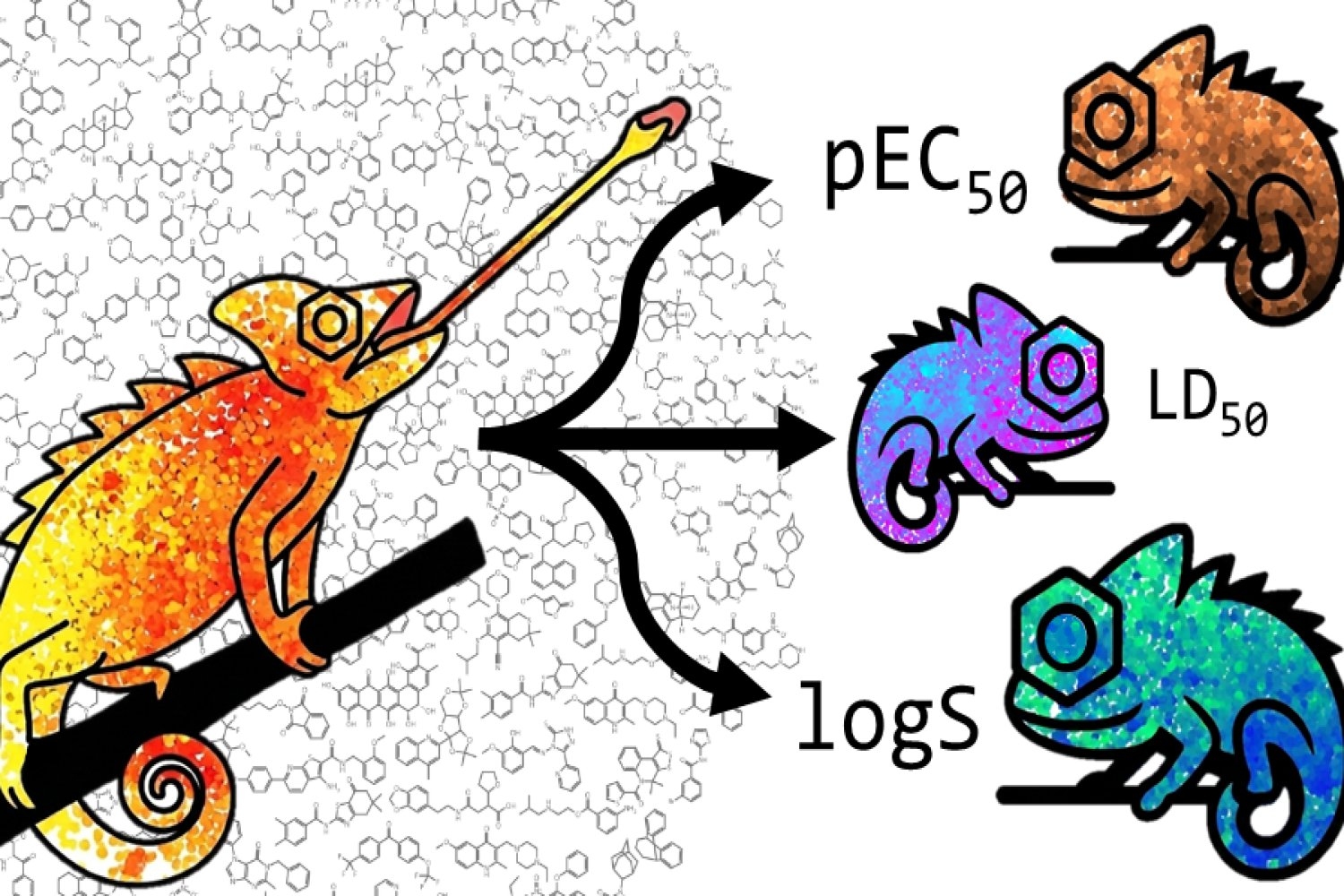
MIT's CheMeleon predicts molecule behavior from scant data
CheMeleon is a foundation model for chemistry that learns general molecular patterns from a million PubChem entries rather than specific property labels. This pre-training allows it to outperform classical expert-driven models and other AI baselines when fine-tuned on just a few data points, solving the critical bottleneck of sparse experimental data in drug discovery. Its impact is already visible: nine of the top twenty entries in a major OpenADMET contest used it, and one pharmaceutical company has made it their default starting point for modeling. This shifts molecular screening from trial-and-error to pattern-based prediction, significantly reducing the need for expensive synthesis.
MIT News AI
 © WIRED AI
Researchother
Open Chinese AI Models Match Frontier Labs in Hacking
The long-held assumption that closed frontier models hold a definitive edge in cyber capabilities has collapsed. Vals research shows DeepSeek matching OpenAI’s Daybreak on complex network attacks, completing 73% of tasks versus 81%. This parity arrives just months after Anthropic predicted such a shift, rendering gated access strategies largely moot for slowing capability proliferation. The cost disparity is stark: $2 to $3 for open models versus up to $46 for proprietary APIs, creating a powerful economic incentive for widespread adoption by both defenders and attackers. We are now in a landscape where advanced offensive AI is cheap, accessible, and effectively democratized.
WIRED AI