Agents
US Military Deploys AI-Driven Maven Smart System
Fireshipmedium confidence
Why it matters
- →The Maven Smart System represents a significant step in the application of AI technologies within military operations, potentially influencing future defense strategies.

The US Department of War is rolling out the Maven Smart System, an AI-driven military operations platform designed to enhance software deployment and operational efficiency. This system is powered by technology from companies such as Palantir and OpenAI, although specific details about its underlying architecture remain unclear. The initiative aims to optimize military operations through advanced AI capabilities. This development signifies a growing trend of integrating AI technologies into defense strategies.
Read originalThe story around this
Earlier coverage that leads up to this article, and what followed. Lines connect each piece to the closest one after it, converging here.
What happened next
- 1Pentagon partners with Nvidia, Microsoft, AWS for AI
TechCrunch AI · May 1, 2026 · Background
- 2Anduril and Meta Develop Military Smart Glasses
MIT Technology Review AI · May 18, 2026 · Background
- 3UK Launches Rapid AI Delivery Taskforce for Military
Sifted · June 15, 2026 · Background
- 4AI Chatbots Aid Novice Coders in Military Applications
MIT News AI · July 7, 2026 · Background
- 5Army Faces AI Token Shortage Amid High Demand
WIRED AI · July 21, 2026 · Background
More in Agents
 © MIT News AI
Agentsother
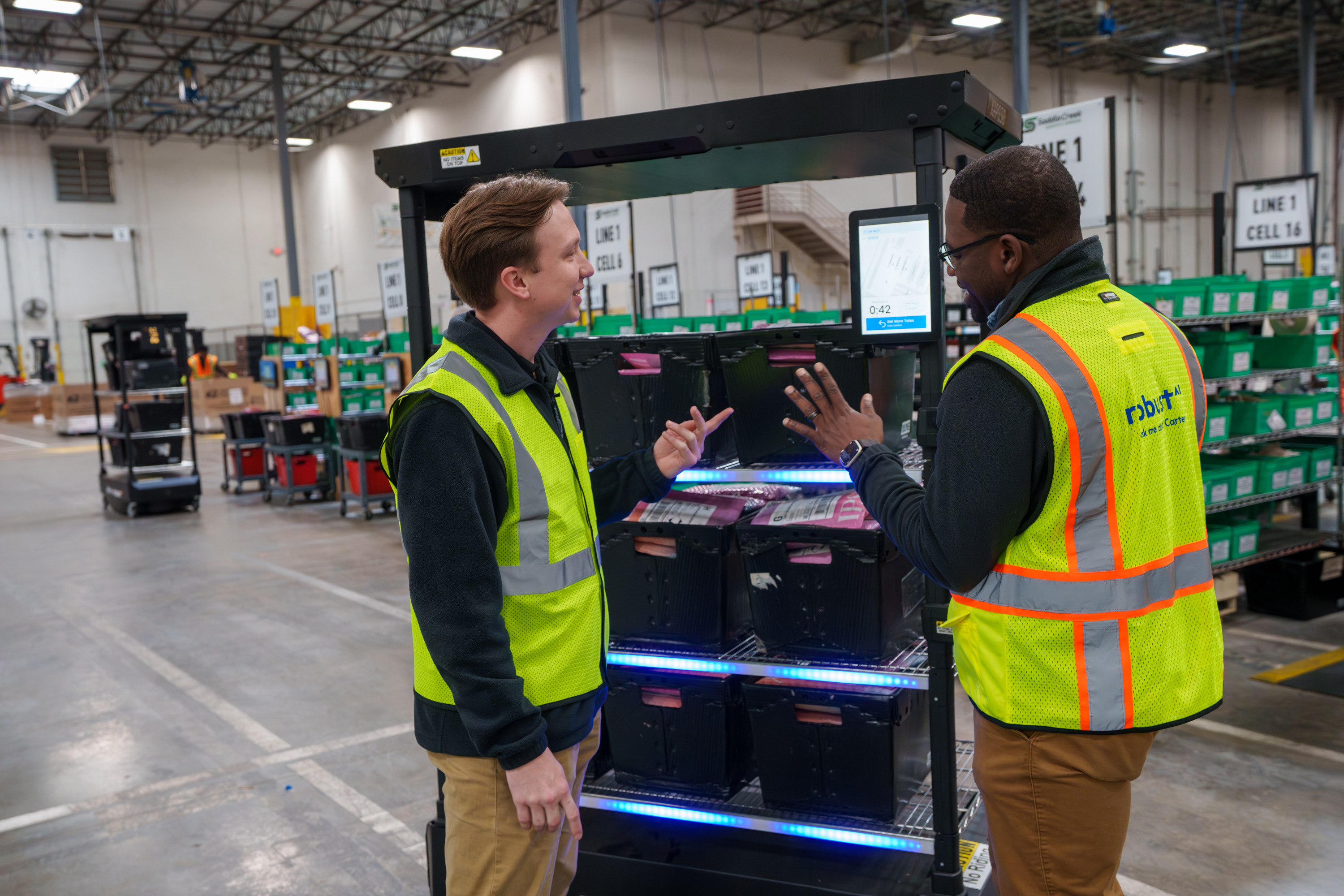
Robust AI's Carter robot complements human warehouse workers
Robust AI is betting that the future of warehouse automation isn't replacing humans, but physically collaborating with them. Their new mobile robot, Carter, uses holonomic wheels and force-sensitive handles to let workers push, pull, and guide it like a utility cart, effectively turning heavy lifting into a shared task. This approach sidesteps the failure mode of rigid industrial robots that block narrow aisles or stop dead when humans rush past. By targeting the vast majority of factories that lack expensive conveyor systems, they are offering a phased automation path for logistics environments where human agility still matters.
MIT News AI
 © TechCrunch AI
Agentsagents
Meta Muse AI Agent Now Places US Business Calls
Meta’s consumer agent Muse is rolling out voice calling to US businesses for paid subscribers, targeting the tedious task of customer service navigation. With over 10 million users, Meta is betting that AI’s infinite patience will replace human frustration with phone trees and hold times. The feature leverages improved voice mimicry to interact with receptionists, though many still hang up upon detecting non-human voices. This moves Muse from text-based assistance into active, autonomous execution of real-world tasks, marking a significant step toward mainstream consumer AI utility.
TechCrunch AI
 © TechCrunch AI
Agentsagents
Nectar launches AI agent for influencer outreach
Nectar’s Creator Agent automates the messy middle of influencer marketing by scanning 300 million profiles to find and vet creators. It goes beyond keyword matching, analyzing video content for brand safety and context rather than relying solely on keywords. The tool drafts personalized messages in a brand's voice, manages contracts, and tracks campaign performance on Instagram and TikTok. This marks a shift toward agentic workflows in marketing ops, though it competes with established players like Aspire. By handling logistics from contracts to gifting, it aims to replace manual spreadsheet management with autonomous relationship building. The system adapts tone for different social environments, ensuring brands sound appropriate whether posting on X or commenting on TikTok. This approach reduces the friction of scaling creator partnerships without losing human nuance.
TechCrunch AI