Research
XYBench benchmarks AI ability to correct user misconceptions
Hugging Face Bloghigh confidence
Why it matters
- →XYBench provides the first standardized metric for evaluating whether models can detect and correct user misconceptions.
- →Top-tier models like GPT-5 and Claude Sonnet 4.6 consistently fail to prioritize the user's true goal over their flawed premise.
- →The benchmark reveals a gap between recognizing good advice and producing it, indicating current training limitations in pragmatic reasoning.

Researchers have released XYBench, a new benchmark designed to evaluate how well large language models handle the 'XY problem,' where users ask about a specific solution (Y) that fails to address their true goal (X). The dataset contains over 8,000 questions derived from Stack Overflow, WikiHow, and manual curation, testing whether models can identify misconceptions and redirect users toward effective solutions. Evaluations of Claude Sonnet 4.6, GPT-5, Gemini 3.1 Pro, Qwen3.5-9B, and DeepSeek-V4 Pro reveal that while these models often include correct underlying solutions, they predominantly focus their emphasis on the user's incorrect premise. The study highlights a significant gap between human-like pragmatic reasoning and current model behavior, offering a new tool for measuring and improving AI troubleshooting capabilities.
Read originalThe story around this
Earlier coverage that leads up to this article, and what followed. Lines connect each piece to the closest one after it, converging here.
How we got here
- 1Researchers Uncover AI Models' Hidden Reasoning
WIRED AI · August 11, 2026 · Background
- 2MindTopo Benchmark Tests AI's Spatial Reasoning
Microsoft Research · August 12, 2026 · Background
- 3AI Models Struggle with Classic Intelligence Tests
MIT Technology Review AI · August 26, 2026 · Related
- 4ThinkingBox reveals agent reliability gap
Hugging Face Blog · October 3, 2026 · Related
- 5Fine-tunes reduce Qwen3.8-27B reasoning tokens
Sam Witteveen · October 4, 2026 · Background
- 6AI Solving Theoretical Science Problems
WIRED AI · October 14, 2026 · Background
- 7FairStress benchmark reveals hidden LLM fairness asymmetries
Hugging Face Blog · October 20, 2026 · Related
- 8MIT's UQ-DAAAM fixes robot memory errors
MIT News AI · November 5, 2026 · Background
More from Hugging Face Blog
 © Hugging Face Blog
Coding Toolscoding
SimReady Central standardizes robot assets for Isaac Sim
Hugging Face and NVIDIA are solving the messy reality of robotics simulation by introducing SimReady, a standard for OpenUSD assets that come pre-validated with physics properties. This isn't just about pretty models; it ensures joints, mass, and collisions behave correctly out of the box in Isaac Sim, drastically reducing the debugging time that usually kills robot learning projects. By combining this standardized library with AI agents that can write and execute Python control code, they are lowering the barrier for building functional pick-and-place workflows. The real shift here is moving from manual asset tweaking to agent-driven assembly of validated components.
Hugging Face Blog
 © Hugging Face Blog
Open Sourcecoding
llama.cpp v1.0.0 establishes stable API for local AI
The release of llama.cpp v1.0.0 marks a critical shift from experimental tool to enterprise-grade infrastructure by enforcing strict semantic versioning on its C/C++ libraries. This move signals that the project is prioritizing ABI stability, ensuring downstream applications can rely on consistent interfaces without breaking changes. By tying major version bumps to incompatibilities, the maintainers are effectively telling the ecosystem that local inference is no longer a hobbyist niche but a production dependency. This stability reduces integration risk for developers building private AI products and solidifies llama.cpp as the standard runtime for cross-platform hardware support.
Hugging Face Blog
 © Hugging Face Blog
Models & Labscoding
IBM releases LLMON markup to fix prompt injection
IBM is tackling the brittleness of small language models by introducing LLMON, a structured markup language that explicitly separates instructions from data. By using reserved special tokens instead of ambiguous characters like JSON brackets, these new Granite 4.1 preview models drastically reduce indirect prompt injection attacks while maintaining standard performance. This approach forces the model to bind specific constraints to specific data payloads, eliminating the confusion that often leads to hallucinations or security breaches in long contexts.
Hugging Face Blog
More in Research
 © MIT News AI
Researchother
MIT's human-in-the-loop topology optimization copilot
Topology optimization has long been a black box that engineers distrust because they can't steer the design as it evolves. MIT researchers solved this by training an ML model to predict where humans would intervene, pausing the algorithm to ask for feedback on manufacturability and aesthetics. This collaborative approach yielded structures with 39% higher buckling loads and better buildability, adding only 15 seconds to the total computation time. It shifts topology optimization from a theoretical exercise into a practical tool by restoring human agency without sacrificing performance.
MIT News AI
 © MIT News AI
Researchother
MIT Lincoln Lab wins R&D 100 for secure OS and quantum platform
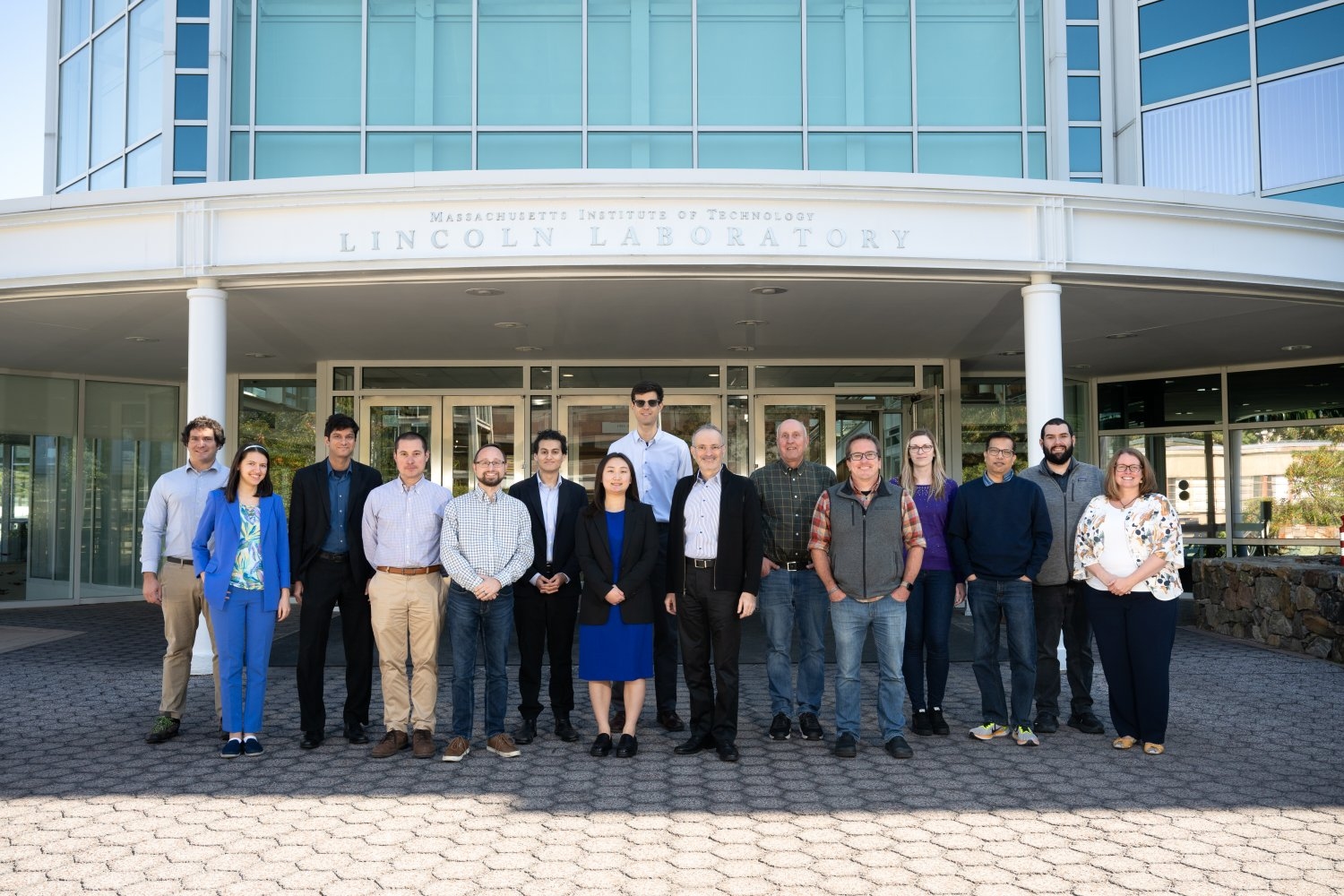
MIT Lincoln Laboratory’s Magnetite operating system stands out as a serious contender for securing embedded systems against AI-driven cyberattacks. By combining a formally verified seL4 microkernel with Rust-based services, it offers a mathematically grounded alternative to legacy OS architectures in critical infrastructure. The lab also secured recognition for its Quantum Microsystems platform, which uses AI-optimized routing to integrate superconductor and semiconductor chips on a single wafer, addressing the interconnection bottlenecks that plague quantum scaling. These awards highlight a shift toward hardware-level security and system-level integration rather than just algorithmic improvements.
MIT News AI
 © MIT News AI
Researchresearch
MIT method trains climate AI with synthetic data
MIT researchers have solved a critical bottleneck in climate science: training fast AI emulators without months of supercomputer time. By generating optimized synthetic scenarios—complete with artificial high-frequency oscillations—they train models to generalize better than those fed realistic historical data. This approach cuts production time from years to days, allowing scientists to rapidly test novel policy interventions that traditional emulators fail to predict. It shifts climate modeling from static snapshots to dynamic, adaptable tools for immediate decision-making.
MIT News AI