Coding Tools
GitHub Copilot Enterprise Default Policy Shift
GitHub Changeloghigh confidence
Why it matters
- →Enterprise admins gain granular control over AI feature rollout without manual per-feature configuration.
- →Standardizes governance for emerging tools like MCP servers and Code Review agents across large teams.
- →Shifts default behavior from opt-in to configurable defaults, impacting adoption rates in regulated industries.
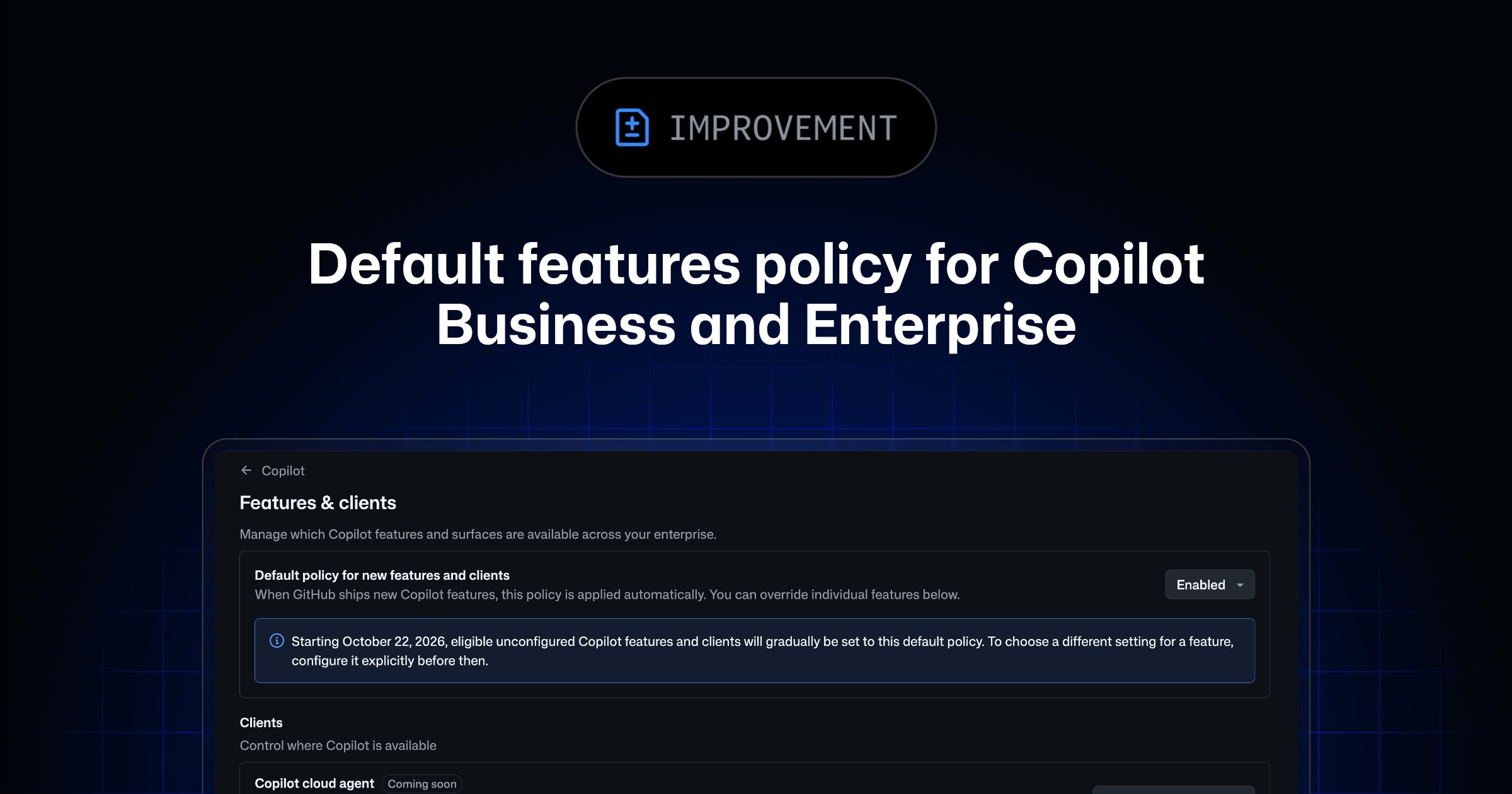
GitHub announced a new global default policy for Copilot features in enterprise and organization accounts, effective October 22. Administrators can now choose to enable eligible generally available features by default, disable them requiring approval, or delegate the decision to individual organizations. The policy applies to Copilot Code Review agents and MCP servers alongside standard coding features. Existing explicit configurations will be preserved during the transition.
Read originalMore from GitHub Changelog
 © GitHub Changelog
Coding Toolscoding
GitHub Copilot adds in-product settings validator
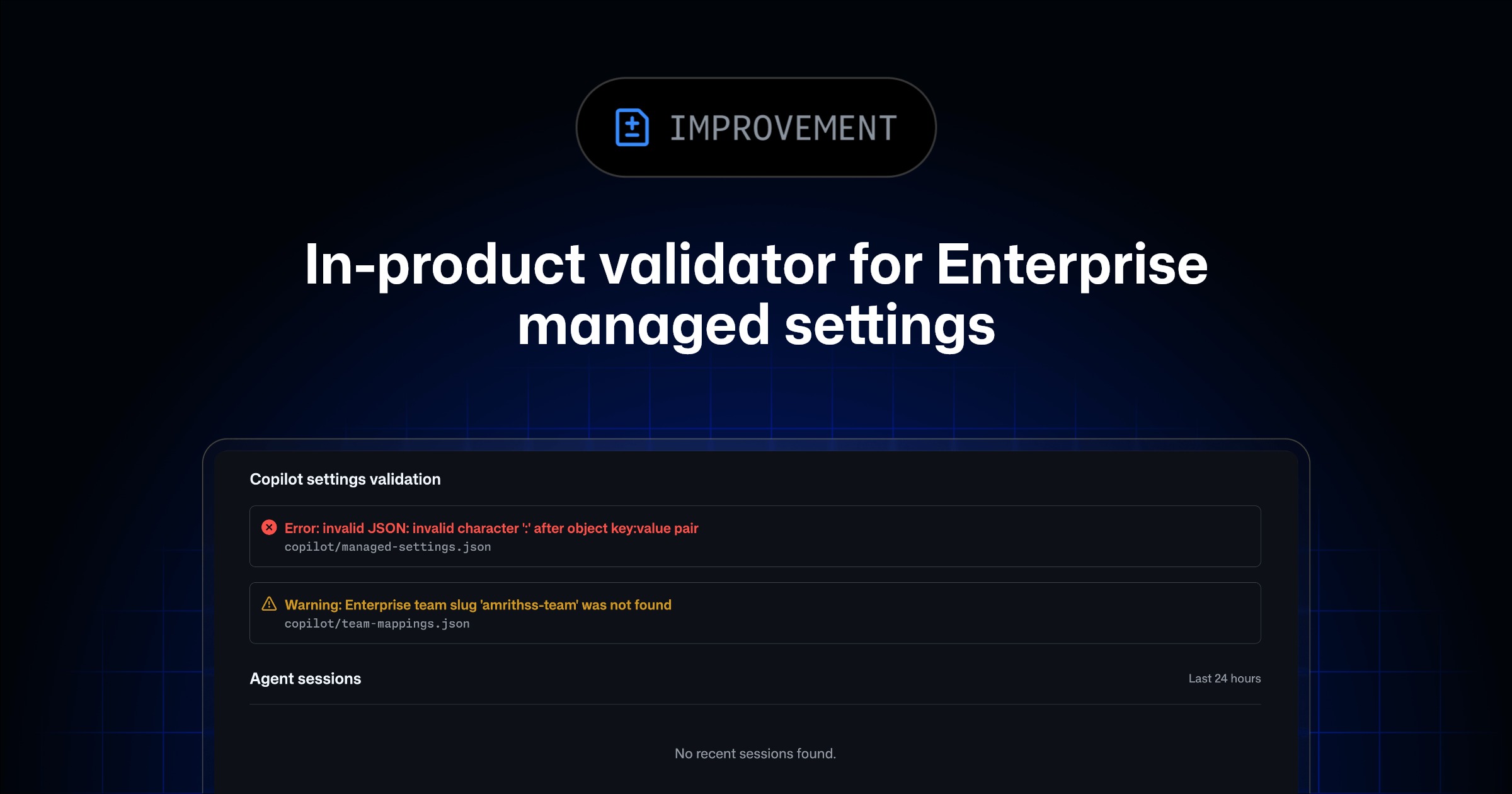
GitHub Copilot now validates enterprise managed settings directly in the UI, catching malformed JSON and invalid team mappings before they break policy enforcement. This shifts validation from a silent failure mode to an explicit feedback loop, saving admins from debugging why their AI controls aren't applying. By pointing to specific files and JSON paths, it reduces the friction of managing .github-private repositories at scale. It’s a pragmatic fix for a common enterprise pain point rather than a new capability.
GitHub Changelog
 © GitHub Changelog
More in Coding Tools
Coding Toolscoding
Claude Code v2.1.282 patches critical session and UX bugs
This release stabilizes Claude Code by fixing a cascade of session-breaking errors that previously caused silent data loss or API drops. The most significant fix addresses resumed conversations re-sending messages in altered forms, which was corrupting reasoning traces and breaking extended thinking workflows. It also resolves persistent login refresh loops and managed setting parsing failures that plagued enterprise deployments. While the changelog is dense with UI tweaks like scrollbar fixes and vim mode corrections, the core value lies in restoring reliability for long-running agent sessions.
Claude Code Releases
Coding Toolscoding
Claude Code v2.1.283: Gateway hints and plugin fixes
This release quietly solves a major pain point for enterprise AI workflows by adding gateway hint headers, allowing LLM gateways to correctly group requests per user prompt instead of treating them as isolated events. The new managed settings for availableModelsMatch and deniedModels give organizations precise control over model access, blocking specific versions even when broader allowances exist. Beyond governance, the update stabilizes the plugin ecosystem with rigorous validation checks that prevent silent failures from broken or misconfigured extensions. These changes shift Claude Code from a developer tool to a manageable enterprise component.