Open Source
Reflection AI Releases Beam Open Model
The AI Daily Briefhigh confidence
Why it matters
- →Expands the pool of high-quality open-source models for developers.
- →Signals a shift towards open weights even from companies typically associated with proprietary tech.
- →Provides alternatives to closed-source giants like OpenAI and Google.

Reflection AI has officially launched Beam, a new open-model release from the company. This move makes the underlying technology accessible to developers and researchers outside of Reflection AI's proprietary ecosystem. The release adds to the growing library of open-weight models available in the current AI landscape.
Read originalThe story around this
Earlier coverage that leads up to this article, and what followed. Lines connect each piece to the closest one after it, converging here.
How we got here
- 1Reflection AI Secures $6.3B Compute Deal with SpaceX
TechCrunch AI · June 22, 2026 · Related
- 2Open Models Propel AI Research at ICML 2026
NVIDIA Blog · July 6, 2026 · Background
- 3Reflection AI secures $1B compute deal with Nebius
TechCrunch AI · July 14, 2026 · Related
- 4Meta Embraces Open Source with Muse Glimmer
The Rundown AI · August 11, 2026 · Background
- 5NVIDIA Boosts Local AI with New Open Models
NVIDIA Blog · August 11, 2026 · Background
- 6Meta Releases Muse Glimmer Model
Fireship · August 12, 2026 · Related
- 7Chinese Labs Lead in Open Model Scale
Hugging Face Blog · August 14, 2026 · Background
- 8Exploring the Open Source AI Stack
Together AI Blog · September 9, 2026 · Background
What happened next
- 9ML-Intern: Autonomous AI Agent for Model Training
Hugging Face Blog · October 8, 2026 · Background
Follow this story
Open the full story →Reflection debuts Beam open-weight model
4 developments
- Oct 5 · TechCrunch AI
Reflection debuts Beam open-weight model - Oct 6 · The Rundown AI
Reflection AI launches Beam open-weight model - Oct 6 · The AI Daily Brief
Reflection AI Launches Open Model to Challenge US Dominance↳ The model aims to restore US leadership in open-source AI. - Oct 7 · The AI Daily Brief
Reflection AI Releases Beam Open Model (This article)
More from The AI Daily Brief
 © The AI Daily Brief
Researchresearch
Anthropic Launches Mythos Cybersecurity Program
Anthropic has opened access to its internal 'Mythos' research through a new cybersecurity initiative.
The AI Daily Brief
© The AI Daily BriefInvestment
Market & Regulationbusiness
Nous Research Valuation Hits $1.5 Billion
Open-source AI developer Nous Research has reached a valuation of $1.5 billion following recent funding rounds.
The AI Daily Brief
© The AI Daily BriefModels & Labsmodels
Anthropic Releases Claude Haiku 5.5 for Cost Efficiency
Anthropic launched Claude Haiku 5.5, aiming to reclaim the frontier of cheap, high-performance AI inference.
The AI Daily Brief
More in Open Source
 © Lev Selector
Open Sourcemodels
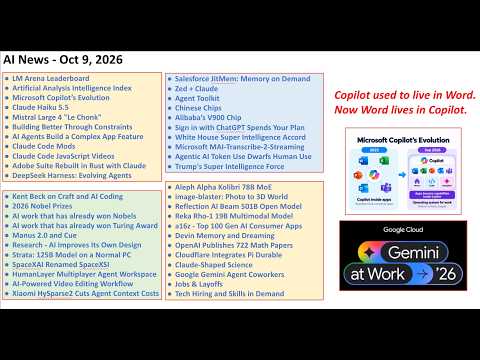
Strata Runs 125B Model on Consumer PC
New optimization technique Strata enables running a 125-billion parameter model locally on standard consumer hardware.
Lev Selector
 © Matt Wolfe
Open Sourceother
Meta Open-Sources Muse AI Gadgets
Meta has open-sourced the code and designs for its Muse AI-powered smart home gadgets.
Matt Wolfe
 © The Verge AI
Open Sourceagents
Meta open sources Muse AI agent SDK for custom hardware
Meta is handing the keys to its Muse AI agent by open-sourcing the software needed to run it on custom hardware. Developers can now hook Muse into ESP32 boards or Raspberry Pi setups, effectively turning workbench scraps into personalized AI terminals. This moves Muse beyond a cloud-only interface into tangible, local devices like E Ink displays or HDMI sticks. It signals a shift toward decentralized, user-owned AI interactions rather than relying solely on proprietary apps.
The Verge AI