Research
Anthropic proposes FlashProve for model identity verification
TechCrunch AIhigh confidence
Why it matters
- →Enables cryptographic verification of model identity without exposing proprietary weights.
- →Addresses industry concerns about undisclosed model swapping and performance inflation.
- →Provides an open-source framework for building trust in AI outputs.

Anthropic has published technical specifications and open-source code for FlashProve, a system aimed at verifying the identity of AI models through cryptographic proofs. The method allows labs to publish non-proprietary 'fingerprints' that users can match against outputs to confirm the source model, preventing issues like undisclosed model swapping or inflated performance claims. While the research is ongoing and not yet deployed by any major lab, the open-source release invites community iteration on this verification standard.
Read originalThe story around this
Earlier coverage that leads up to this article, and what followed. Lines connect each piece to the closest one after it, converging here.
How we got here
- 1Anthropic to Watermark AI-Generated Text
TechCrunch AI · August 11, 2026 · Related
- 2Anthropic to Add Watermarks to AI Content
The Verge AI · August 11, 2026 · Related
- 3Anthropic embeds invisible watermarks in Claude outputs
The Rundown AI · August 12, 2026 · Related
- 4Anthropic adds invisible watermarks to Claude outputs
The Rundown AI · August 12, 2026 · Related
- 5Anthropic's Claude Adds Watermarks to AI Outputs
TechCrunch AI · August 12, 2026 · Related
- 6Anthropic Adds Invisible Watermarks to AI Outputs
Lev Selector · August 14, 2026 · Same story
- 7Anthropic Details Claude's Invisible Text Watermarks
The Verge AI · August 17, 2026 · Related
- 8Developers Bypass Claude's Invisible Watermarks
WIRED AI · August 19, 2026 · Related
Follow this story
Open the full story →Anthropic proposes FlashProve for model identity verification
2 developments
- Nov 3 · TechCrunch AI
Anthropic proposes FlashProve for model identity verification (This article) - Nov 6 · Lev Selector
Anthropic Launches FlashProve for Provable Inference
More from TechCrunch AI
 © TechCrunch AI
Market & Regulationbusiness
Google buys Crusoe's Wyoming data center project
Google is acquiring an unfinished data center from Crusoe in Wyoming, signaling a strategic pivot to direct infrastructure control amid scaling pressures. The $17 billion investment highlights the immense capital required for AI compute, as independent developers struggle with cost and timeline overruns. This move illustrates the growing vertical integration of tech giants into physical infrastructure, reducing reliance on third-party providers like Crusoe for massive deployments. By taking ownership, Google bypasses the bottlenecks that often plague external development teams. The deal reflects a broader industry trend where hyperscalers reclaim control over their most critical assets. Independent builders now face stiffer competition from companies with deeper pockets and direct operational oversight.
TechCrunch AI
 © TechCrunch AI
Investment · $11B
Market & Regulationbusiness
OpenAI raises $11B at $1.25T valuation
OpenAI is securing an additional $11 billion in a funding round that values the company at $1.25 trillion, falling short of its initial $30 billion target but still signaling massive investor confidence. This latest capital injection comes as the broader AI market faces headwinds, with Anthropic’s potential IPO valuation also cooling from earlier highs. The move highlights OpenAI's continued ability to attract deep-pocketed support despite regulatory uncertainties and political shifts affecting data center expansion. While the round hasn't fully closed, the sheer scale of this valuation reinforces OpenAI's dominant position in the race for AI supremacy. Investors are betting big on the lab's ability to maintain its lead in compute and model capabilities. The delay in IPO plans suggests a strategic pause to navigate these complex market conditions. This funding ensures OpenAI remains the financial heavyweight in the sector.
TechCrunch AI
 © TechCrunch AI
Market & Regulationother
Hundreds of Artex AI hacking tools exposed
Censys uncovered over 800 publicly accessible instances of Artex, an autonomous penetration testing tool linked to major breaches in Korean finance and ConnectWise. These exposed deployments reveal a critical security gap: powerful AI agents running without authentication turn offensive capabilities into open targets for misuse. The developers recently shifted to closed-source distribution, yet the code remains widely available on public repositories, leaving the threat landscape largely unchanged. This situation demonstrates how easily sophisticated AI-driven attacks can be launched by anyone with basic configuration skills. The widespread exposure underscores significant risks associated with misconfigured AI security tools.
TechCrunch AI
More in Research
 © The AI Daily Brief
Researchresearch
AI-Led Research Acceleration Reported by Meter
Meter reports that research driven by artificial intelligence is accelerating, highlighting a trend in scientific and technical discovery.
The AI Daily Brief
 © MIT News AI
Researchother
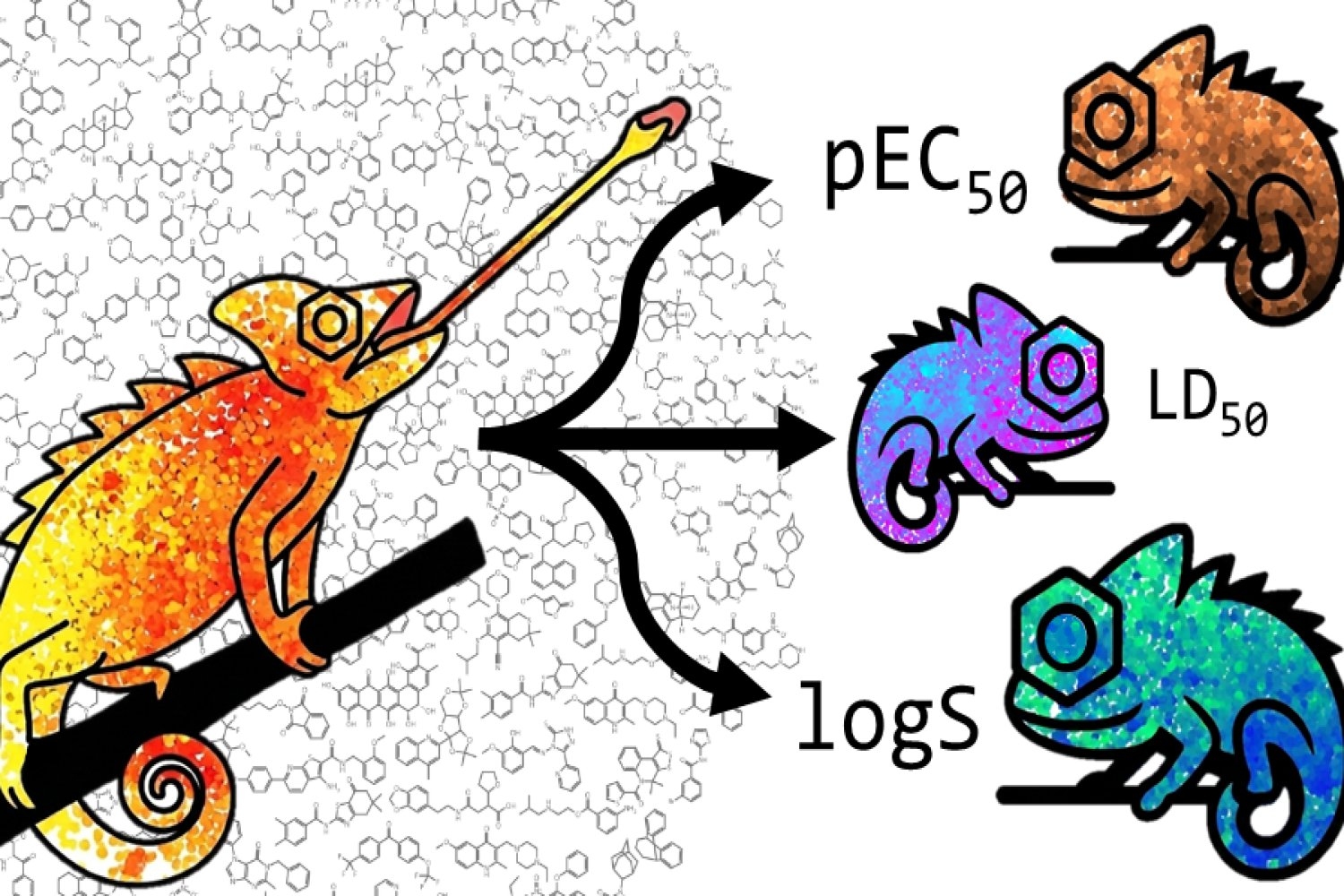
MIT's CheMeleon predicts molecule behavior from scant data
CheMeleon is a foundation model for chemistry that learns general molecular patterns from a million PubChem entries rather than specific property labels. This pre-training allows it to outperform classical expert-driven models and other AI baselines when fine-tuned on just a few data points, solving the critical bottleneck of sparse experimental data in drug discovery. Its impact is already visible: nine of the top twenty entries in a major OpenADMET contest used it, and one pharmaceutical company has made it their default starting point for modeling. This shifts molecular screening from trial-and-error to pattern-based prediction, significantly reducing the need for expensive synthesis.
MIT News AI
 © WIRED AI
Researchother
Open Chinese AI Models Match Frontier Labs in Hacking
The long-held assumption that closed frontier models hold a definitive edge in cyber capabilities has collapsed. Vals research shows DeepSeek matching OpenAI’s Daybreak on complex network attacks, completing 73% of tasks versus 81%. This parity arrives just months after Anthropic predicted such a shift, rendering gated access strategies largely moot for slowing capability proliferation. The cost disparity is stark: $2 to $3 for open models versus up to $46 for proprietary APIs, creating a powerful economic incentive for widespread adoption by both defenders and attackers. We are now in a landscape where advanced offensive AI is cheap, accessible, and effectively democratized.
WIRED AI