Coding Tools
llama.cpp fixes Qwen2 NVFP4 crash
llama.cpp Releaseshigh confidence
Why it matters
- →Fixes a crash in Qwen2 NVFP4 models by applying missing FFN scales.
- →Ensures consistency between attention and feed-forward layer handling.
- →Enables stable local inference for high-efficiency Qwen2 quantizations.
llama.cpp has merged a commit that resolves a crash in Qwen2 models using NVFP4 quantization. The issue stemmed from the feed-forward network (FFN) failing to apply scale parameters, which were previously passed as NULL despite being loaded. This discrepancy caused assertion failures during inference, whereas the attention layer correctly handled its scales. The update ensures consistent scale application across all model components, stabilizing NVFP4 support for Qwen2.
Read originalThe story around this
Earlier coverage that leads up to this article, and what followed. Lines connect each piece to the closest one after it, converging here.
How we got here
- 1Hugging Face Releases LFM2.5 QAD Checkpoints
Hugging Face Blog · August 19, 2026 · Background
- 2vLLM v0.32.0rc1: Humming update and NVFP4 fix
vLLM Releases · October 16, 2026 · Related
- 3llama.cpp fixes Qwen4-exp tensor shape bug
llama.cpp Releases · October 24, 2026 · Same story
- 4llama.cpp fixes 4D tensor quantization for MoE models
llama.cpp Releases · October 26, 2026 · Same story
More from llama.cpp Releases
Coding Toolscoding
llama.cpp b12173 adds OpenCL repeat ops
This release quietly patches a gap in llama.cpp's OpenCL backend by adding support for the 'repeat' operation across f16, i32, i16, and bf16 types. For users relying on AMD or Intel GPUs via OpenCL rather than Vulkan or ROCm, this means fewer fallbacks to slower CPU execution for models that use these tensor operations. It’s a targeted fix that improves stability and performance on non-NVIDIA hardware without changing the core inference engine. The update also includes standard binaries for CUDA 13 and ROCm 10.0, keeping the stack current with latest driver ecosystems.
llama.cpp Releases
Coding Toolscoding
llama.cpp b12174 adds ROCm 10 and CUDA 13
This release quietly closes the hardware gap for non-NVIDIA users by adding default support for ROCm 10.0 on both Linux and Windows, allowing AMD GPU owners to run local models without complex configuration. It also brings CUDA 13.5 builds to Ubuntu and Windows, future-proofing the toolchain for newer NVIDIA architectures while maintaining backward compatibility with CUDA 12. Apple Silicon KleidiAI is disabled in this build, a notable regression for Mac users who rely on that specific optimization. The update solidifies llama.cpp's position as the most versatile inference runtime available, covering everything from Snapdragon NPUs to Intel Arc via SYCL.
llama.cpp Releases
Coding Toolscoding
llama.cpp b12175 fixes CI hangs, adds ROCm 10 and CUDA 13
This release stabilizes the build pipeline by fixing a threading bug that caused test hangs on self-hosted runners, ensuring more reliable binaries for everyone. More importantly, it brings first-class support for ROCm 10.0 and CUDA 13 across Linux and Windows, closing the gap with NVIDIA's latest driver stacks. AMD users finally get parity with CUDA builds without manual configuration tweaks. The update also expands Apple Silicon coverage to include KleidiAI, though it remains disabled by default in this build. It’s a maintenance-heavy release that quietly modernizes the backend support matrix.
llama.cpp Releases
More in Coding Tools
Coding Toolscoding
Claude Code v2.1.319: MCP backgrounding and gateway controls
This release finally brings proper asynchronous handling to Model Context Protocol tasks, allowing Claude Code to offload long-running tool calls to the background instead of blocking the main thread. For enterprise users, the new pooled budget rules and JSON logging make the Claude apps gateway significantly more manageable for large teams. The update also tightens error reporting in auto mode, ensuring developers get clear reasons when actions are denied rather than silent failures. It’s a pragmatic patch that improves reliability for complex agent workflows.
Claude Code Releases
 © GitHub Changelog
Coding Toolscoding
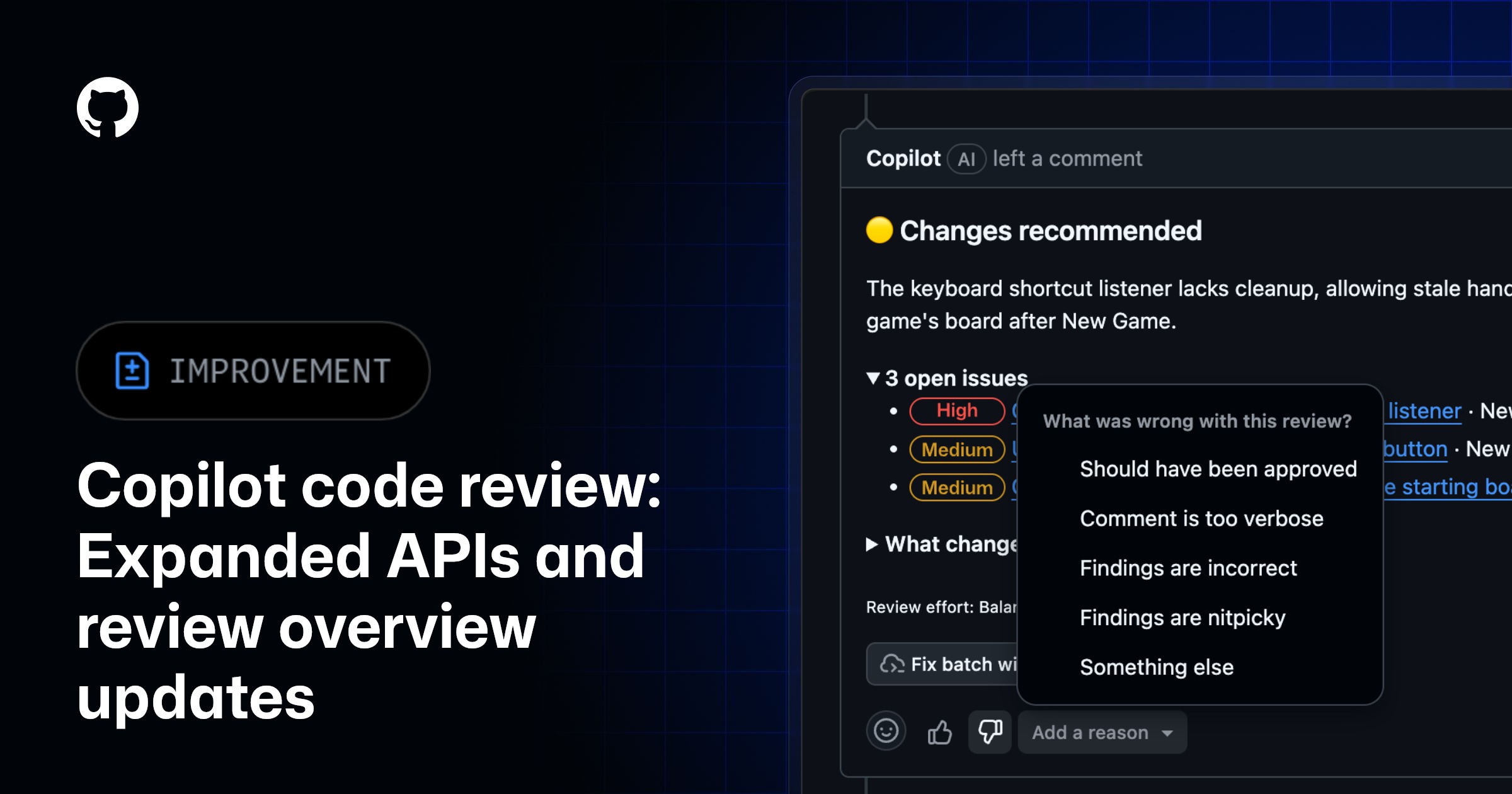
GitHub Copilot Code Review API and UI updates
GitHub is finally exposing Copilot code review configuration to the REST and GraphQL APIs, closing a major gap for enterprise automation. Administrators can now programmatically control review effort, enablement, and custom instructions across organizations and repositories, moving beyond manual web interface tweaks. The update also refines the user experience with compact overviews, explicit attribution of AI sources like MCP servers, and better handling of bot-authored PRs. This shift makes Copilot Review a first-class citizen in CI/CD pipelines rather than just a UI feature.
GitHub Changelog
 © GitHub Changelog
Coding Toolscoding
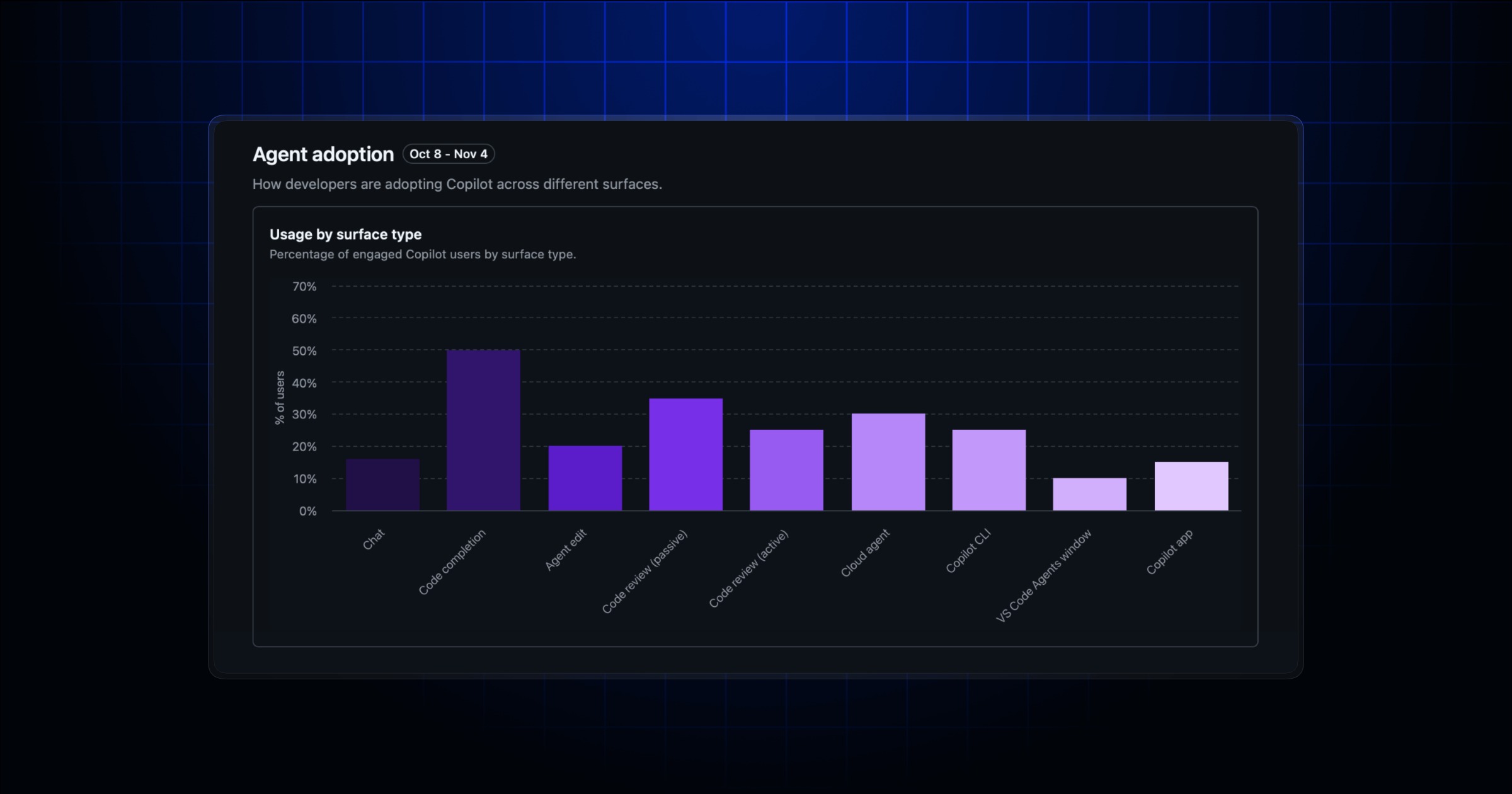
GitHub Copilot Dashboard Adds Chat and Agent Metrics
GitHub finally stops treating chat as a passive afterthought in its enterprise analytics. By adding Copilot Chat and the VS Code Agents window to the impact dashboard, the platform now tracks nine distinct experiences instead of just seven. The rebranding of 'Passive users' to 'Chat-first users' is a semantic correction that aligns metrics with actual developer behavior rather than arbitrary adoption thresholds. This gives engineering leaders a complete picture of how AI is actually being used across their codebases, closing the visibility gap between typing commands and writing code.
GitHub Changelog