Coding Tools
GitHub Copilot Dashboard Adds Chat and Agent Metrics
GitHub Changeloghigh confidence
Why it matters
- →Enterprise admins can now track AI adoption beyond just code completion, including chat and agent interactions.
- →The 'Chat-first users' rebranding provides a more accurate reflection of developer engagement patterns.
- →Visibility into VS Code Agents window usage helps organizations understand the shift toward autonomous coding workflows.
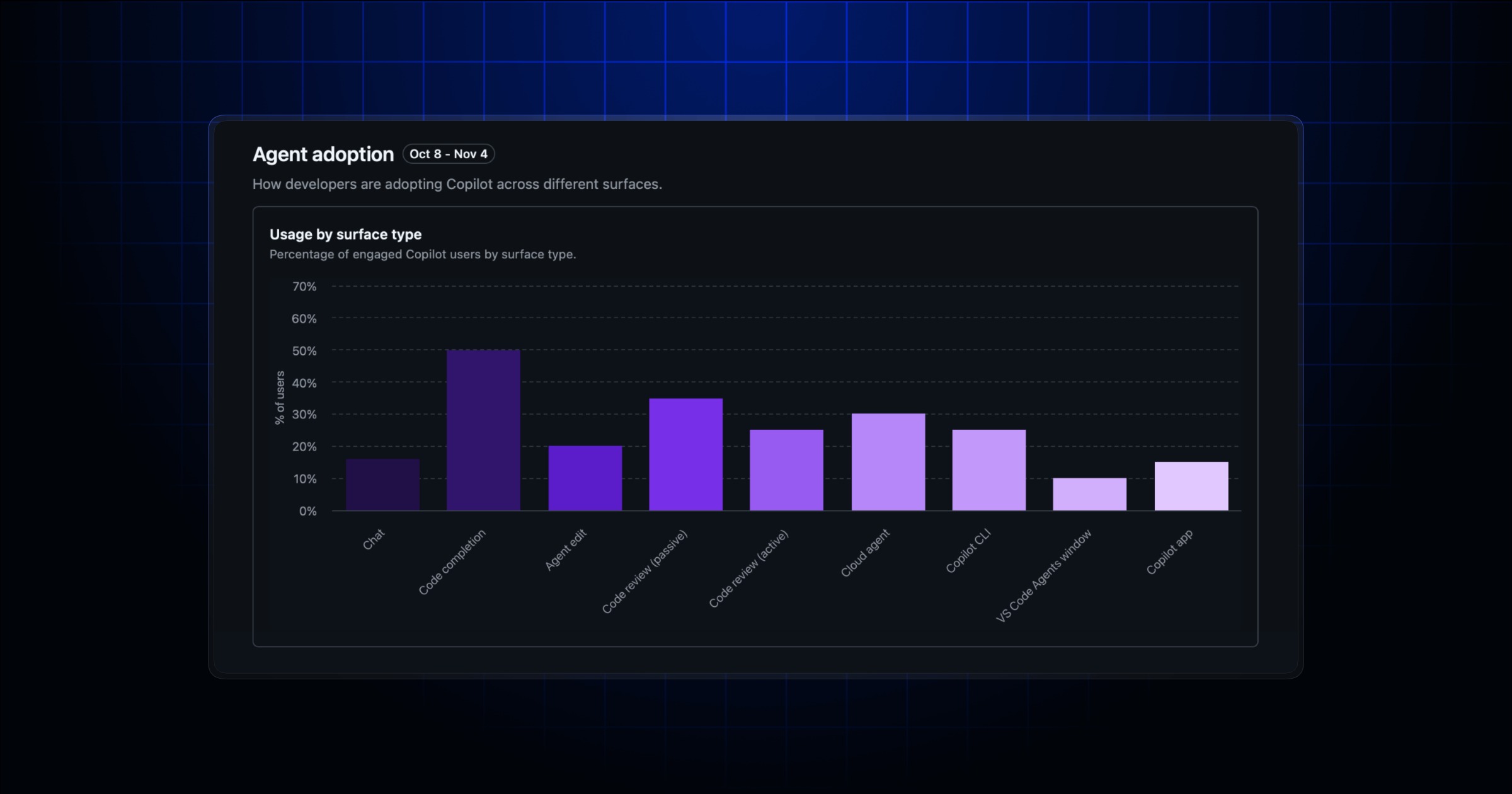
GitHub has updated its Copilot impact dashboard to include usage metrics for Copilot Chat and the VS Code Agents window. These additions bring the total tracked experiences to nine, allowing enterprise owners and organization admins to monitor engagement across a broader range of AI tools. The update also renames the 'Passive users' cohort to 'Chat-first users' to better reflect developers who engage with chat features but do not meet the criteria for higher adoption phases. These metrics are available in 28-day reports for enterprise and organization accounts, provided the usage metrics policy is enabled.
Read originalThe story around this
Earlier coverage that leads up to this article, and what followed. Lines connect each piece to the closest one after it, converging here.
How we got here
- 1GitHub Copilot adds VS Code Agents metrics
GitHub Changelog · September 11, 2026 · Same story
- 2GitHub Copilot Agents Gain Slack and Teams Context
GitHub Changelog · September 25, 2026 · Same story
Follow this story
Open the full story →GitHub Copilot Memory GA and Dreaming Preview
3 developments
- Oct 28 · GitHub Changelog
GitHub Copilot Memory GA and Dreaming Preview - Nov 6 · GitHub Changelog
GitHub Copilot Chat GA in Slack and Teams↳ GitHub Copilot Chat is now GA in Slack and Teams with auto-detecting repos and direct issue creation capabilities. - Nov 6 · GitHub Changelog
GitHub Copilot Dashboard Adds Chat and Agent Metrics (This article)↳ GitHub Copilot Dashboard now tracks nine experiences including Chat and Agents, rebranding passive users to chat-first users.
More from GitHub Changelog
 © GitHub Changelog
Coding Toolscoding
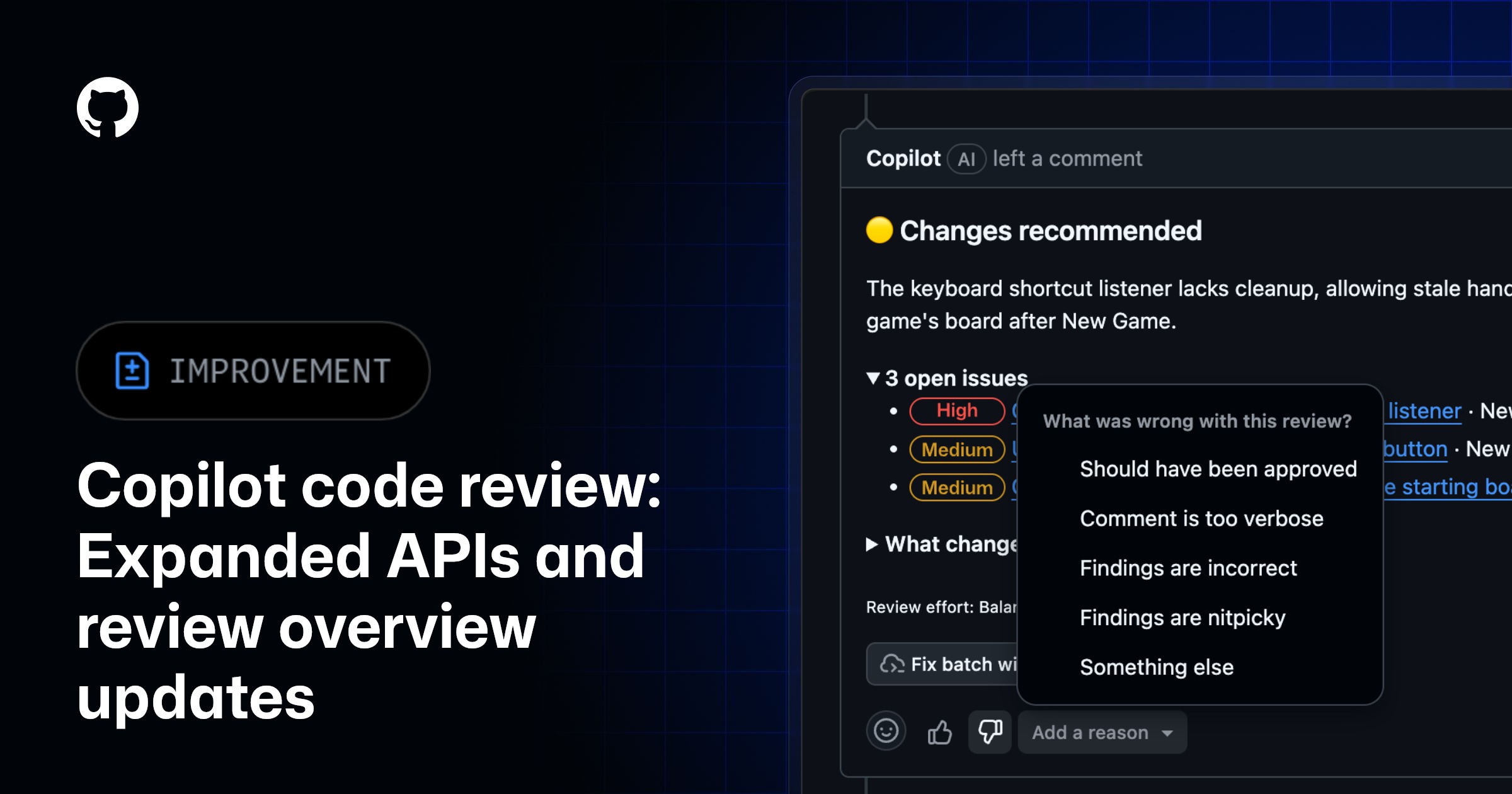
GitHub Copilot Code Review API and UI updates
GitHub is finally exposing Copilot code review configuration to the REST and GraphQL APIs, closing a major gap for enterprise automation. Administrators can now programmatically control review effort, enablement, and custom instructions across organizations and repositories, moving beyond manual web interface tweaks. The update also refines the user experience with compact overviews, explicit attribution of AI sources like MCP servers, and better handling of bot-authored PRs. This shift makes Copilot Review a first-class citizen in CI/CD pipelines rather than just a UI feature.
GitHub Changelog
 © GitHub Changelog
Coding Toolscoding
Copilot expands to JetBrains Air and Xcode
GitHub Copilot is aggressively expanding its footprint beyond VS Code, landing in JetBrains Air and Xcode’s native assistant. This move signals a shift from IDE-specific plugins to a broader platform strategy, allowing developers to use their existing subscription across major ecosystems. The release also refines agent workflows with direct PR merging and remote preview capabilities, reducing context-switching for complex tasks. While the core AI engine remains unchanged, the integration depth in Xcode and JetBrains marks a significant step toward universal coding assistance.
GitHub Changelog
 © GitHub Changelog
Coding Toolscoding
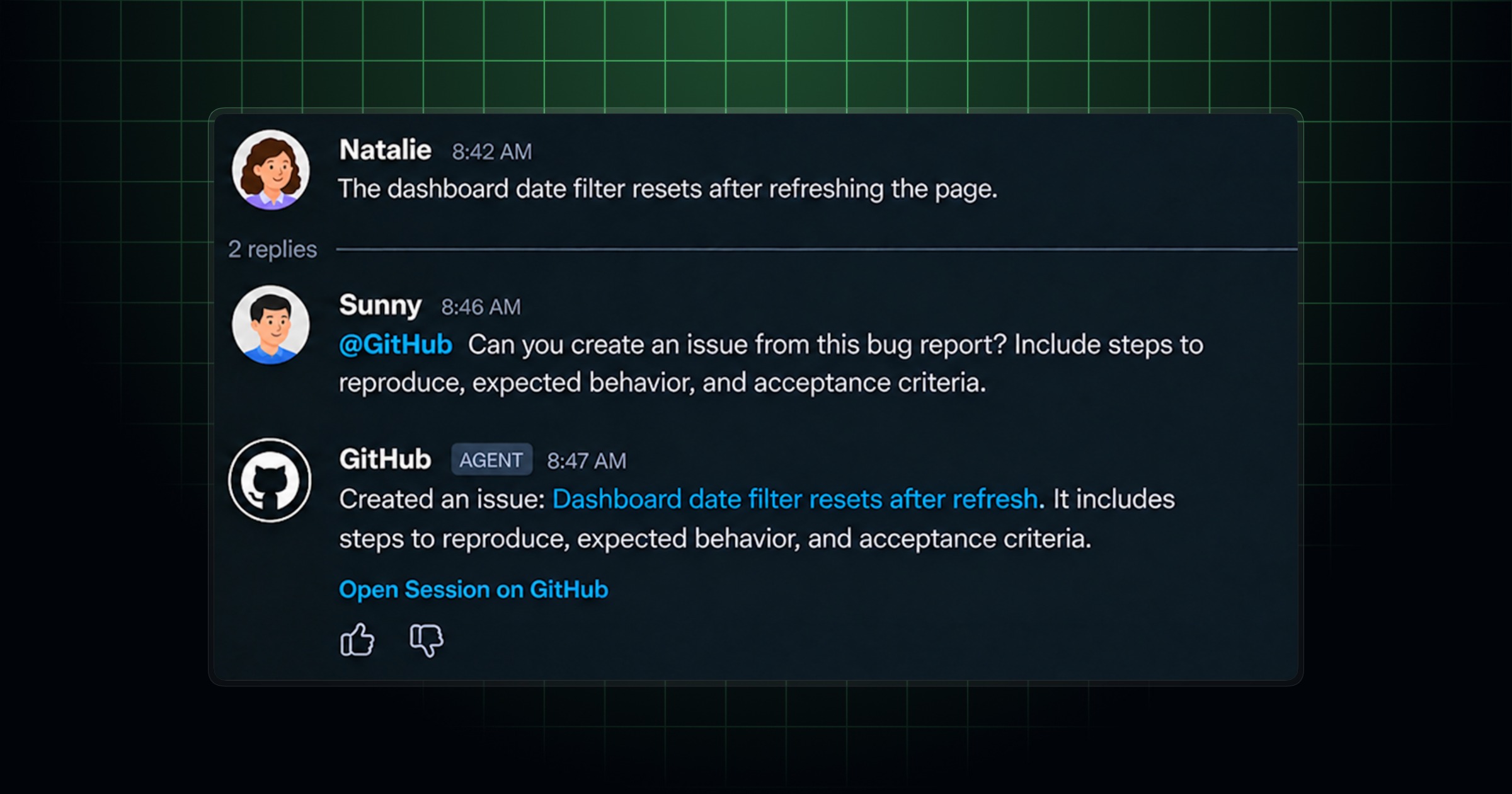
GitHub Copilot Chat GA in Slack and Teams
GitHub has finally moved its conversational AI assistant out of beta for Slack and Microsoft Teams, closing a major gap in developer workflow integration. The update isn't just about presence; it now auto-detects repositories from chat context, removing the friction of manual selection that plagued early versions. Crucially, it bridges the gap between discussion and execution by allowing users to create issues and pull requests directly within the thread, with clear attribution linking back to the conversation. This shifts AI coding assistance from a sidecar tool to an embedded part of daily team communication.
GitHub Changelog
More in Coding Tools
Coding Toolscoding
Claude Code v2.1.319: MCP backgrounding and gateway controls
This release finally brings proper asynchronous handling to Model Context Protocol tasks, allowing Claude Code to offload long-running tool calls to the background instead of blocking the main thread. For enterprise users, the new pooled budget rules and JSON logging make the Claude apps gateway significantly more manageable for large teams. The update also tightens error reporting in auto mode, ensuring developers get clear reasons when actions are denied rather than silent failures. It’s a pragmatic patch that improves reliability for complex agent workflows.
Claude Code Releases
Coding Toolscoding
llama.cpp b12173 adds OpenCL repeat ops
This release quietly patches a gap in llama.cpp's OpenCL backend by adding support for the 'repeat' operation across f16, i32, i16, and bf16 types. For users relying on AMD or Intel GPUs via OpenCL rather than Vulkan or ROCm, this means fewer fallbacks to slower CPU execution for models that use these tensor operations. It’s a targeted fix that improves stability and performance on non-NVIDIA hardware without changing the core inference engine. The update also includes standard binaries for CUDA 13 and ROCm 10.0, keeping the stack current with latest driver ecosystems.
llama.cpp Releases
Coding Toolscoding
llama.cpp b12174 adds ROCm 10 and CUDA 13
This release quietly closes the hardware gap for non-NVIDIA users by adding default support for ROCm 10.0 on both Linux and Windows, allowing AMD GPU owners to run local models without complex configuration. It also brings CUDA 13.5 builds to Ubuntu and Windows, future-proofing the toolchain for newer NVIDIA architectures while maintaining backward compatibility with CUDA 12. Apple Silicon KleidiAI is disabled in this build, a notable regression for Mac users who rely on that specific optimization. The update solidifies llama.cpp's position as the most versatile inference runtime available, covering everything from Snapdragon NPUs to Intel Arc via SYCL.
llama.cpp Releases