Coding Tools
GitHub Copilot deprecates Claude Opus 4.8 and 5
GitHub Changeloghigh confidence
Why it matters
- →Developers lose direct access to Claude Opus 5 for general coding tasks, limiting frontier reasoning options.
- →Enterprise admins must manually configure fallback policies to maintain specific model usage.
- →GitHub is consolidating control over the AI stack by reducing reliance on external providers like Anthropic.
GitHub has deprecated several AI models across its Copilot platform as of November 16, 2026, following an October announcement. The changes affect Copilot Chat, inline edits, and agent modes, with Claude Opus 5 removed from the picker and Claude Opus 4.8 restricted to annual individual subscribers. Enterprise customers must update model policies to ensure access to supported alternatives, as default enablement now points to GitHub-selected models. This deprecation marks a significant reduction in third-party model availability within the standard Copilot workflow.
Read originalThe story around this
Earlier coverage that leads up to this article, and what followed. Lines connect each piece to the closest one after it, converging here.
How we got here
- 1Anthropic Launches Claude Opus 5 Model
Anthropic · July 24, 2026 · Related
- 2Anthropic Launches Opus 5 Model
TechCrunch AI · July 24, 2026 · Related
- 3Anthropic releases Claude Opus 5.5 with tighter security
The Verge AI · September 22, 2026 · Related
- 4Claude Opus 5.5 arrives in GitHub Copilot
GitHub Changelog · September 22, 2026 · Same story
- 5Anthropic releases official Claude Code playbook for Opus 5.5
Duncan Rogoff · September 23, 2026 · Related
- 6GitHub Copilot Deprecates Claude Opus 4.8 in November
GitHub Changelog · October 15, 2026 · Same story
- 7Anthropic ships Claude 3.5 updates and new apps
Duncan Rogoff · October 21, 2026 · Related
What happened next
- 8Claude Code v2.1.328: Opus 4.6 and Hook Fixes
Claude Code Releases · November 19, 2026 · Related
Follow this story
Open the full story →GitHub Copilot deprecates Claude Opus 4.8 and 5
3 developments
- Nov 16 · GitHub Changelog
GitHub Copilot deprecates Claude Opus 4.8 and 5 (This article) - Nov 17 · GitHub Changelog
GitHub Copilot Fusion expands model support and benchmarks↳ Copilot Fusion adds Claude Sonnet 5.5 and GPT-6.1 Terra, claiming an 88% cost advantage over Opus 5.5 on Terminal-Bench 4.1. - Nov 18 · GitHub Changelog
GitHub Copilot adds eight new MCP connectors↳ GitHub Copilot adds eight new MCP connectors including Supabase, Box, and Buildkite to its public preview.
More from GitHub Changelog
 © GitHub Changelog
Coding Toolscoding
GitHub expands security advisory permissions
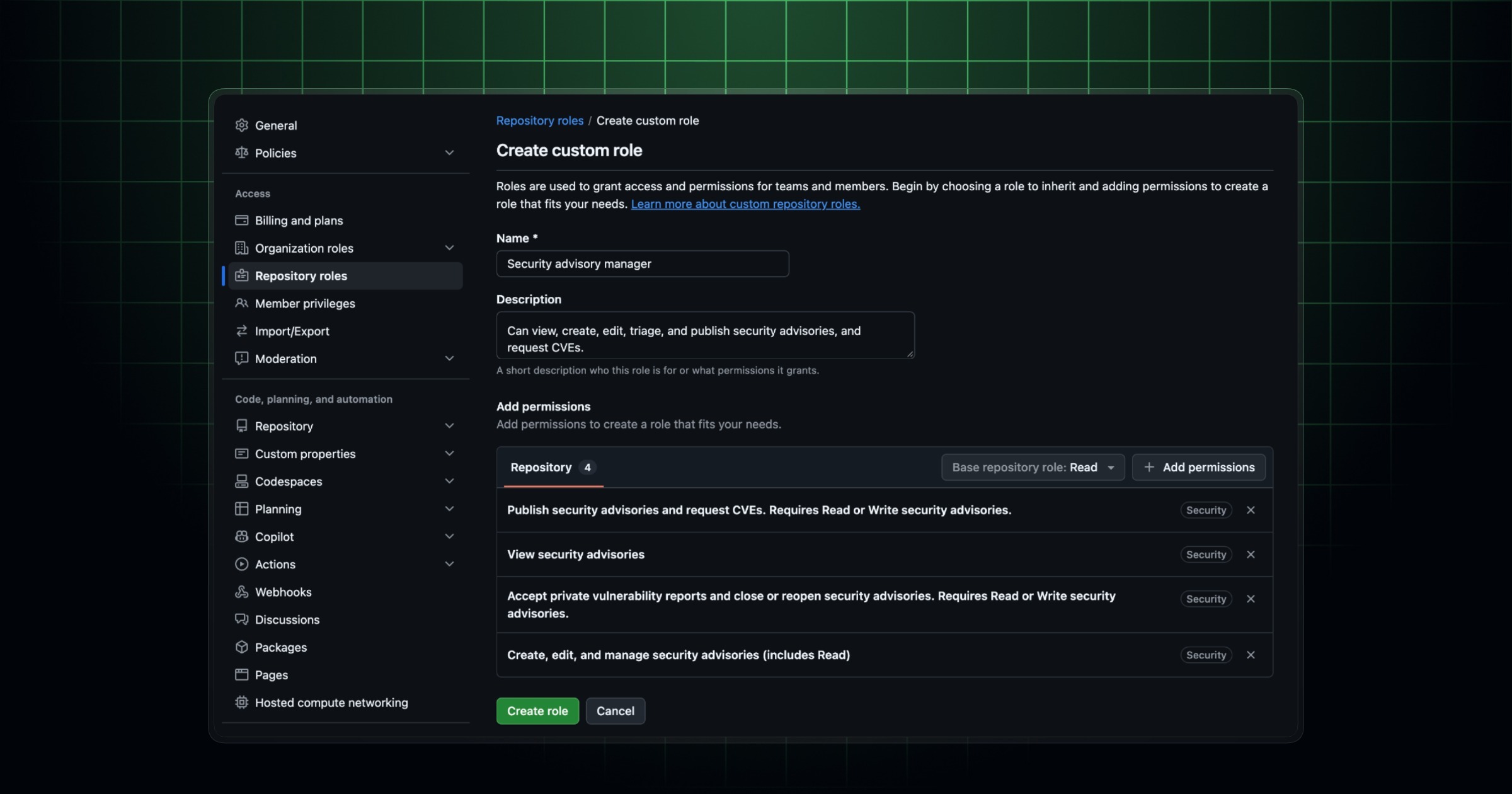
GitHub finally decouples security advisory management from full admin rights. By introducing granular custom repository roles, organizations can now grant specific teams access to private vulnerability reports without handing over the keys to the entire repo. This shift addresses a major friction point in secure software development, allowing for precise least-privilege access control. It moves GitHub closer to enterprise-grade security hygiene by separating code ownership from security oversight.
GitHub Changelog
 © GitHub Changelog
Coding Toolscoding
GHES 3.23 RC: On-device AI secret detection
GitHub Enterprise Server 3.23’s release candidate brings a critical security upgrade for air-gapped enterprises: on-device AI secret detection. Unlike cloud-based scanners, this self-contained model runs entirely on the appliance’s CPU, requiring no GPU or outbound connection to detect unstructured secrets. This capability effectively closes the gap between connected and isolated environments, allowing organizations with strict data sovereignty rules to maintain automated security hygiene. The update also expands Dependabot’s advisory coverage to six additional package ecosystems and introduces stricter OAuth token expiration defaults.
GitHub Changelog
 © GitHub Changelog
Coding Toolscoding
Azure DevOps to GitHub Enterprise Live Migrations GA
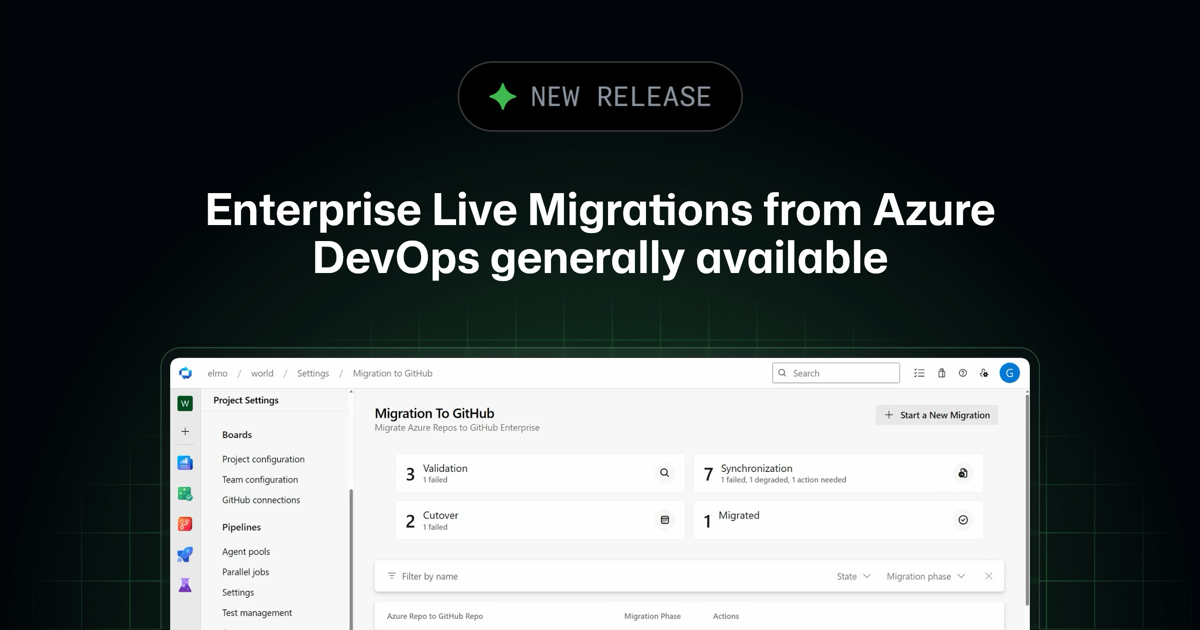
Microsoft finally solves the painful 'big bang' migration problem for enterprises moving from Azure DevOps to GitHub. The new Enterprise Live Migrations tool allows continuous syncing of Git history and pull requests while teams keep working, eliminating the need for a disruptive downtime window. By preserving branch policies and rewiring Azure Pipelines automatically, it drastically reduces the manual overhead that usually stalls these transitions. This shifts migration from a risky project milestone to a manageable operational task.
GitHub Changelog
More in Coding Tools
Coding Toolscoding
llama.cpp b12642 fixes MoE weight copying bug
This release patches a critical correctness bug in multi-node Mixture-of-Experts inference where shared expert weights were copied partially, leading to stale data and incorrect outputs. The fix ensures all experts are properly replicated across nodes before graph execution, stabilizing large-scale distributed runs. While the binary lineup remains consistent with previous versions—supporting CUDA 13, ROCm 10.0, and various CPU/GPU backends—the underlying logic correction is vital for anyone running complex MoE models like Inkling2 on multi-node setups. It’s a quiet but necessary fix for reliability in advanced deployment scenarios.
llama.cpp Releases
Coding Toolscoding
llama.cpp b12643 fixes Qwen3 audio tail
This release quietly patches a critical inference bug in llama.cpp’s multimodal handling of Qwen3-Omni and Qwen3-ASR models. Previously, zero-padding artifacts introduced extra tokens that corrupted audio output, a subtle but fatal flaw for speech recognition tasks. The fix replaces magic numbers with explicit token mapping logic, ensuring the model processes only valid audio frames. While not a new feature, it stabilizes one of the most popular open-source multimodal pipelines for developers relying on Qwen’s audio capabilities.
llama.cpp Releases
Coding Toolscoding
llama.cpp b12644 speeds up audio FFT
This release quietly optimizes the multimodal pipeline by replacing recursive radix-2 splitting with iterative stages for shared audio FFT. The change preserves operation order while reducing input buffer overhead and adding specific tests for forward and inverse transforms. It’s a performance tweak rather than a feature leap, but it tightens the efficiency of audio processing in local inference. Users on supported platforms get faster audio handling without changing their workflow.
llama.cpp Releases