Coding Tools
GitHub Copilot Adds Enterprise Controls for JetBrains
GitHub Changeloghigh confidence
Why it matters
- →Provides enterprises with centralized control over plugin usage and server access in JetBrains IDEs.
- →Enhances data governance by allowing centralized management of OpenTelemetry configurations.
- →Ensures compliance with organizational security and compliance standards.
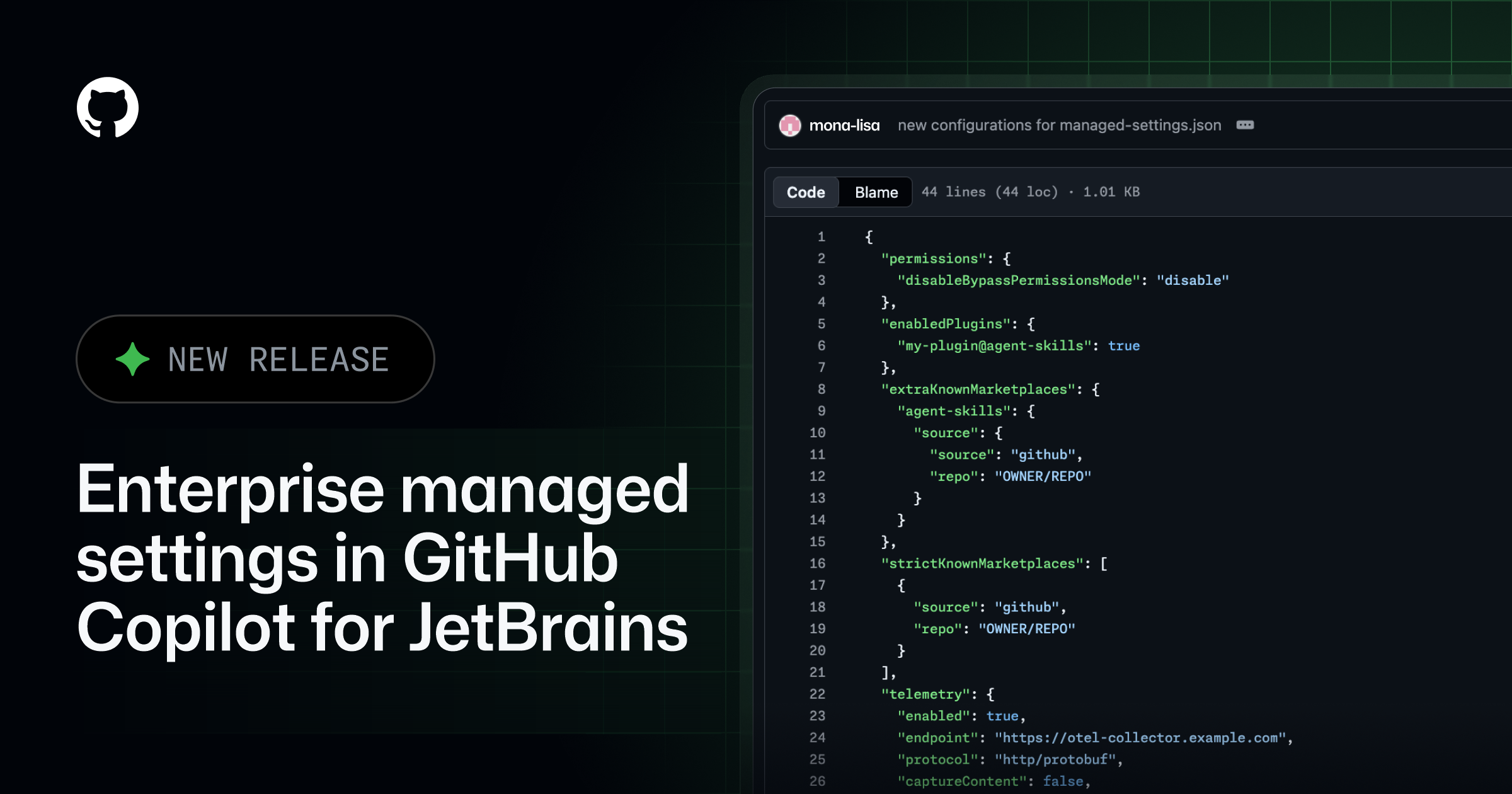
GitHub has introduced enterprise managed settings for its Copilot plugin in JetBrains IDEs, enhancing control over plugin governance and server access. Administrators can now enforce consistent settings across their organizations, including enabling or disabling specific plugins and restricting marketplace access to approved sources. The update also allows centralized management of OpenTelemetry configurations, ensuring telemetry data is routed to designated collectors. This move aims to provide enterprises with greater control and compliance in their development environments.
Read originalThe story around this
Earlier coverage that leads up to this article, and what followed. Lines connect each piece to the closest one after it, converging here.
How we got here
- 1GitHub Copilot for JetBrains Enhances Model Management
GitHub Changelog · July 28, 2026 · Same story
What happened next
- 2Enterprise-managed sandbox in Copilot for JetBrains
GitHub Changelog · September 9, 2026 · Same story
Follow this story
Open the full story →GitHub Copilot for JetBrains Enhances Features
3 developments
- Aug 11 · GitHub Changelog
GitHub Copilot for JetBrains Enhances Features - Aug 18 · GitHub Changelog
GitHub Copilot Adds Enterprise Controls for JetBrains (This article)↳ GitHub Copilot for JetBrains now includes enterprise controls for plugin governance and centralized telemetry management. - Aug 21 · GitHub Changelog
GitHub Copilot Integrates with Microsoft Teams↳ GitHub Copilot integrates with Microsoft Teams for real-time collaborative coding sessions via public preview.
More from GitHub Changelog
 © GitHub Changelog
Models & Labscoding
Claude Haiku 5.5 arrives in GitHub Copilot
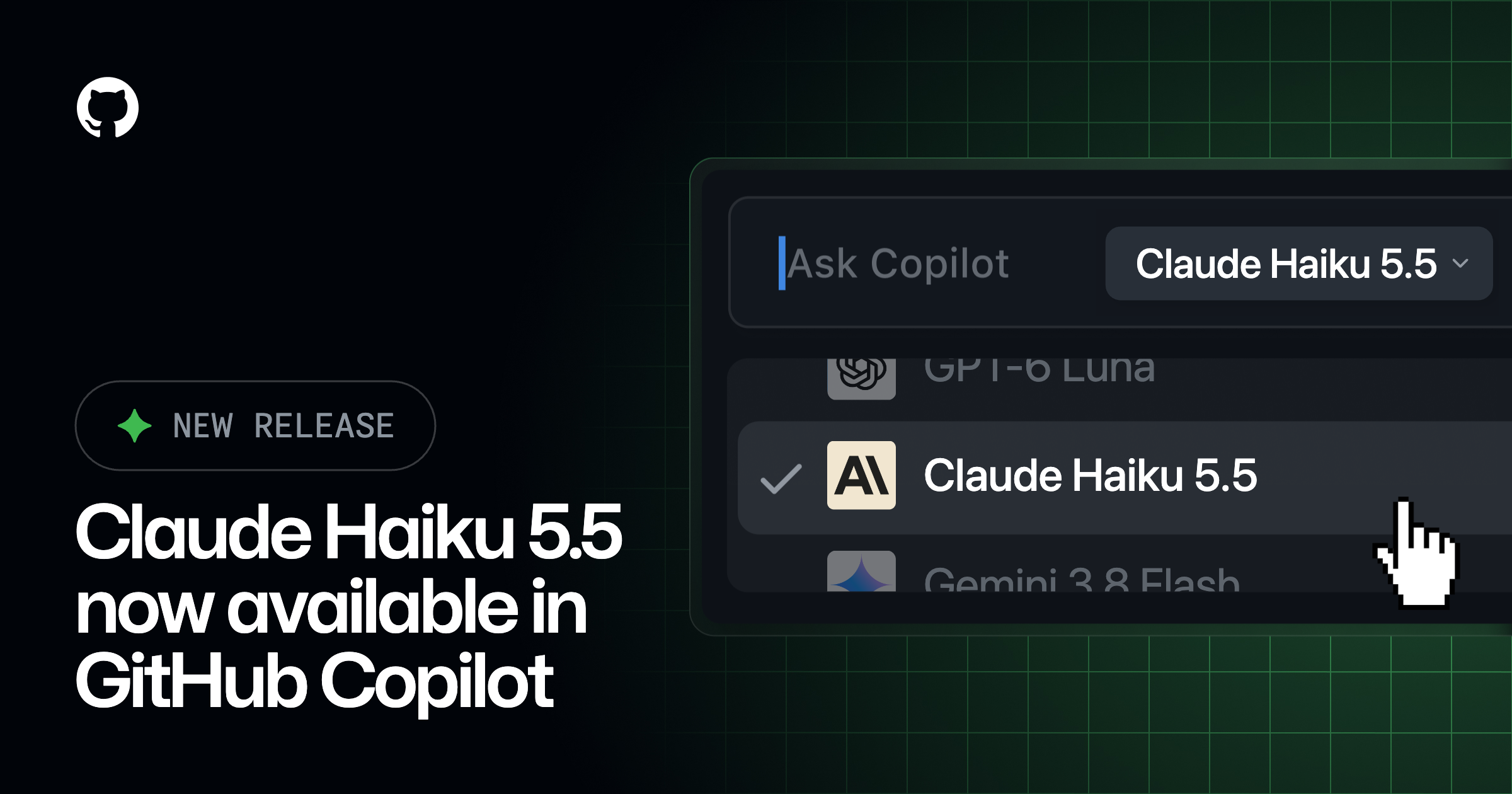
Anthropic’s latest lightweight model is now live inside GitHub Copilot, targeting high-volume coding tasks like subagents and terminal work. Early benchmarks suggest it matches Sonnet 5 on many coding challenges while consuming significantly fewer tokens and steps. This availability across VS Code, JetBrains, and mobile apps gives developers a faster, cheaper option for routine edits without sacrificing quality. The gradual rollout means most users will see it soon, with admin controls allowing enterprises to manage access via model policies.
GitHub Changelog
 © GitHub Changelog
Coding Toolscoding
GitHub deploys fine-tuned model for secret detection
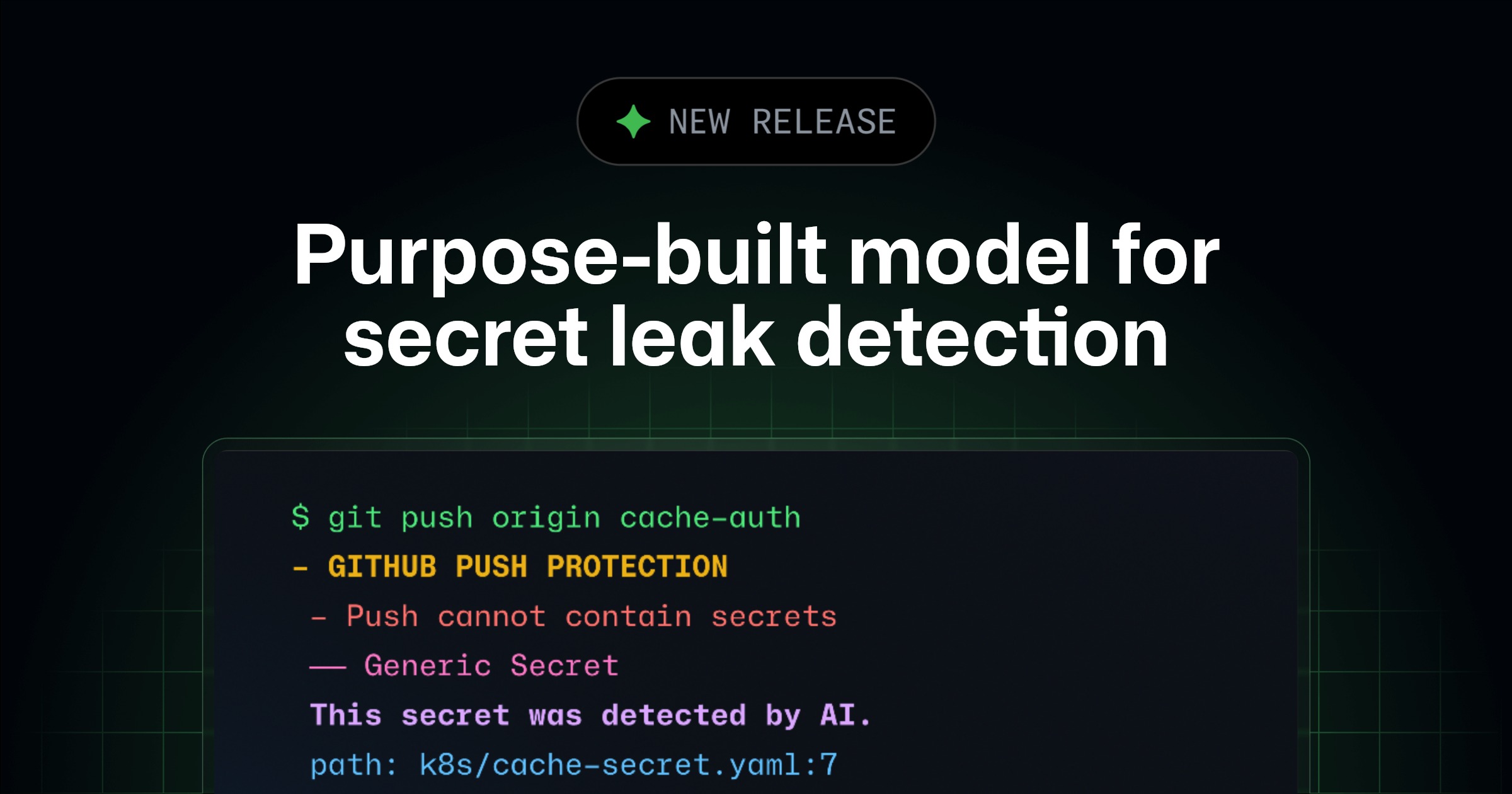
GitHub is replacing its regex-based secret scanning with a purpose-built AI model that understands code context to catch unstructured credentials like passwords without standard token formats. This shift moves security from pattern matching to semantic understanding, catching leaks that traditional tools miss before they hit repository history via push protection. The upgrade is automatic for existing GHSP/GHAS customers, but new opt-in features in Copilot and push protection will consume AI Credits, introducing a usage-based cost layer to what was previously free. This marks a significant pivot in how developers handle security, blending LLM capabilities directly into the CI/CD pipeline.
GitHub Changelog
 © GitHub Changelog
Coding Toolscoding
GitHub Copilot adds local sandboxing for agents
GitHub Copilot finally addresses the security risks of autonomous coding by introducing local sandboxing across its CLI, app, and VS Code extensions. Powered by Microsoft’s MXC technology, this feature creates a strict execution boundary that restricts agent access to files, networks, and credentials based on developer-defined policies. This is a critical step for enterprise adoption, allowing organizations to enforce security controls without blocking the utility of agentic workflows. It shifts Copilot from a passive assistant to a controlled autonomous actor with clear operational limits.
GitHub Changelog
More in Coding Tools
 © The Verge AI
Coding Toolscoding
Microsoft Surface RTX Spark Dev Box Preorders Open
Microsoft is selling a dedicated AI development rig for $5,999, targeting developers who need local inference power without building their own hardware. The device pairs Nvidia’s Arm-based RTX Spark platform with 128GB of unified memory, enabling it to run models exceeding 120B parameters on-device. It ships pre-configured with Windows 11 Pro and essential dev tools like VS Code and GitHub Copilot, effectively bundling the software stack with the silicon. This moves local AI from a DIY enthusiast project to a standardized enterprise-grade appliance, albeit at a premium price point that limits it to professional workflows rather than consumer hobbyists.
The Verge AI
Coding Toolscoding
Claude Code v2.1.290: Plugin hooks and agent stability fixes
This release significantly tightens the security model for Claude Code plugins by exposing server tool IDs and approval ceilings to hook functions, allowing developers to build more granular permission checks. It also stabilizes long-running agent sessions by fixing critical bugs in subagent resume logic and scheduled task persistence after compaction. For plugin authors, the new validation flags ensure gating hooks are properly configured before deployment. These changes make the platform safer for enterprise use while reducing friction for complex automated workflows.
Claude Code Releases
Coding Toolscoding
llama.cpp b11424 adds CUDA 13 and ROCm 10.0
This release quietly closes the hardware gap for local inference by adding default support for CUDA 13 and ROCm 10.0 alongside existing CUDA 12 builds. NVIDIA users can now leverage newer driver stacks without manual configuration, while AMD GPU owners finally get first-class parity with the same ease of use previously reserved for CUDA. Apple Silicon KleidiAI is disabled in this specific build, a notable regression for Mac users who rely on that optimization. The inclusion of Snapdragon and OpenVINO binaries further broadens the reach to edge devices and Intel hardware. It’s less about new features and more about llama.cpp solidifying its position as the universal runtime for every major accelerator.
llama.cpp Releases