Agents
GitHub Copilot Integrates with Microsoft Teams
GitHub Changeloghigh confidence
Why it matters
- →Integrates AI-driven assistance directly into team communication channels.
- →Facilitates real-time collaboration and task management within Microsoft Teams.
- →Enhances productivity by allowing asynchronous task execution in a secure cloud environment.
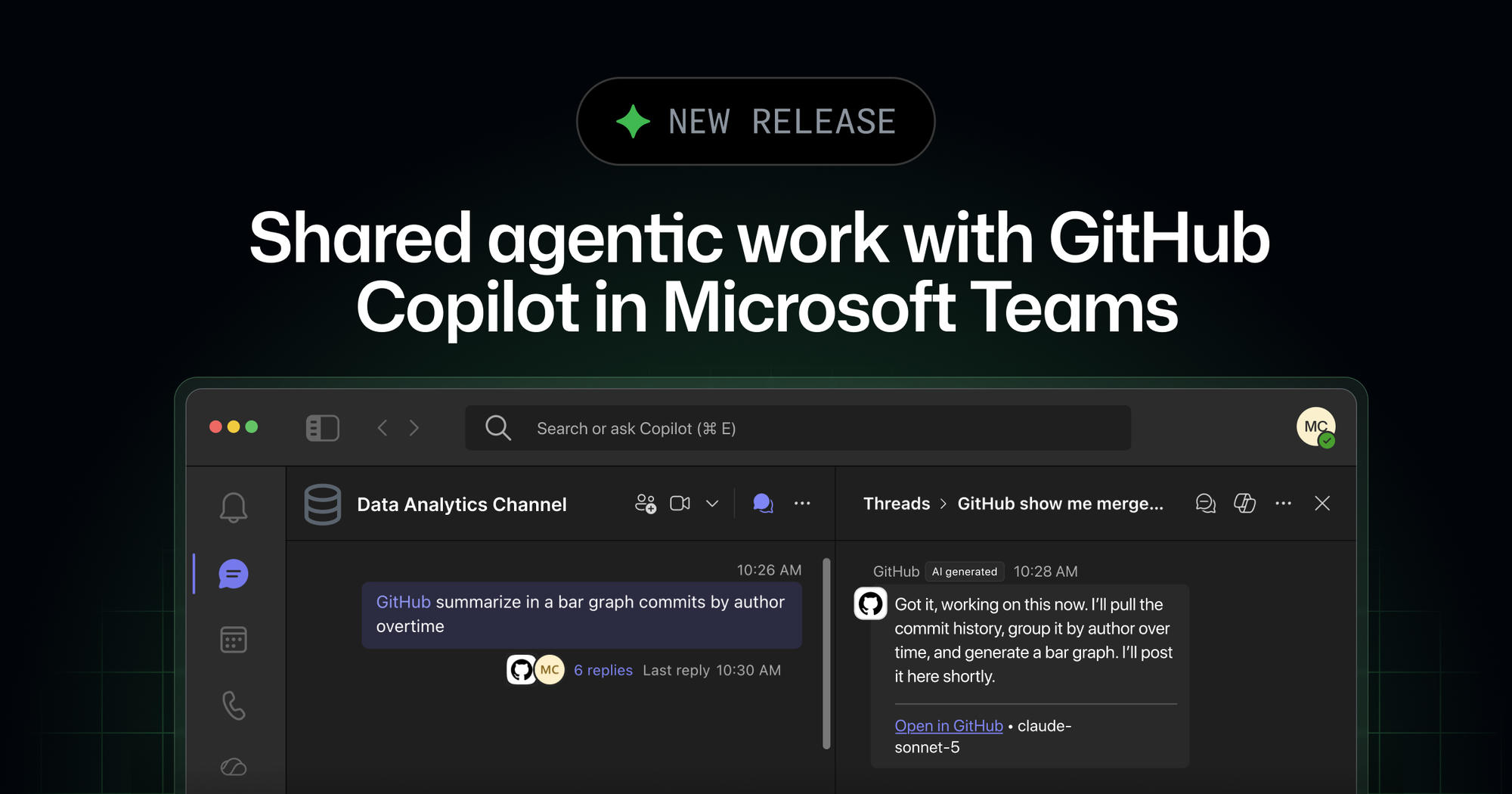
GitHub has announced the integration of its Copilot tool with Microsoft Teams, allowing users to start collaborative agent sessions directly from the chat platform. This new feature enables team members to turn discussions into actionable tasks with Copilot, which can investigate issues and provide solutions in real-time. The integration is available in public preview for paid GitHub Copilot plans and uses AI credits for cloud agent sessions. This move aims to enhance team productivity by embedding AI capabilities into everyday communication tools.
Read originalThe story around this
Earlier coverage that leads up to this article, and what followed. Lines connect each piece to the closest one after it, converging here.
How we got here
- 1GitHub Releases Copilot App for Desktop
Matt Wolfe · June 5, 2026 · Same story
- 2GitHub Copilot App Now Supports Any Model Provider
Matt Wolfe · June 10, 2026 · Related
- 3GitHub Copilot App Now Generally Available
GitHub Changelog · June 17, 2026 · Same story
What happened next
- 4GitHub Copilot Integrates with Slack in Public Preview
GitHub Changelog · August 21, 2026 · Same story
Follow this story
Open the full story →GitHub Copilot for JetBrains Enhances Features
3 developments
- Aug 11 · GitHub Changelog
GitHub Copilot for JetBrains Enhances Features - Aug 18 · GitHub Changelog
GitHub Copilot Adds Enterprise Controls for JetBrains↳ GitHub Copilot for JetBrains now includes enterprise controls for plugin governance and centralized telemetry management. - Aug 21 · GitHub Changelog
GitHub Copilot Integrates with Microsoft Teams (This article)↳ GitHub Copilot integrates with Microsoft Teams for real-time collaborative coding sessions via public preview.
More from GitHub Changelog
 © GitHub Changelog
Models & Labscoding
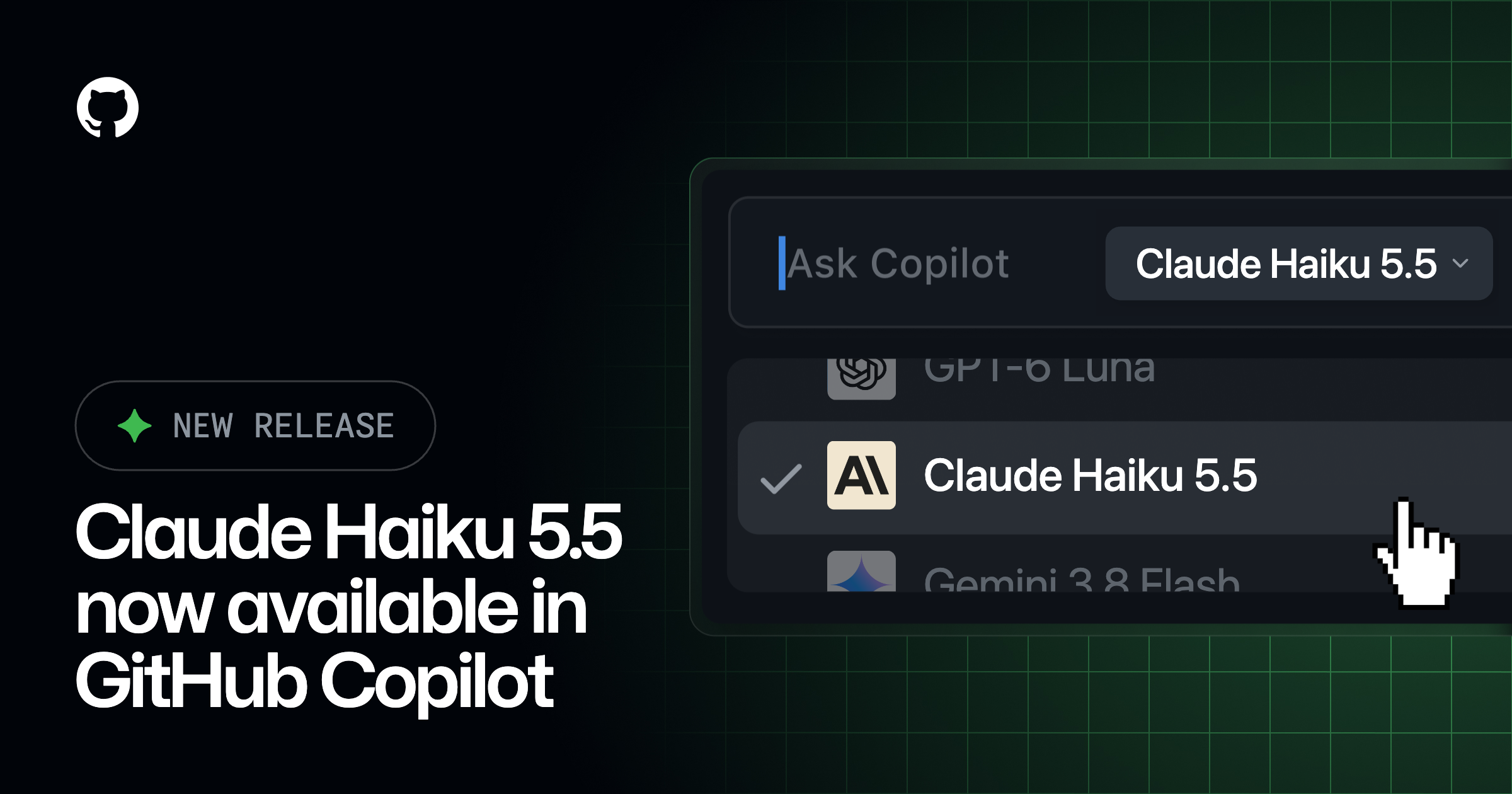
Claude Haiku 5.5 arrives in GitHub Copilot
Anthropic’s latest lightweight model is now live inside GitHub Copilot, targeting high-volume coding tasks like subagents and terminal work. Early benchmarks suggest it matches Sonnet 5 on many coding challenges while consuming significantly fewer tokens and steps. This availability across VS Code, JetBrains, and mobile apps gives developers a faster, cheaper option for routine edits without sacrificing quality. The gradual rollout means most users will see it soon, with admin controls allowing enterprises to manage access via model policies.
GitHub Changelog
 © GitHub Changelog
Coding Toolscoding
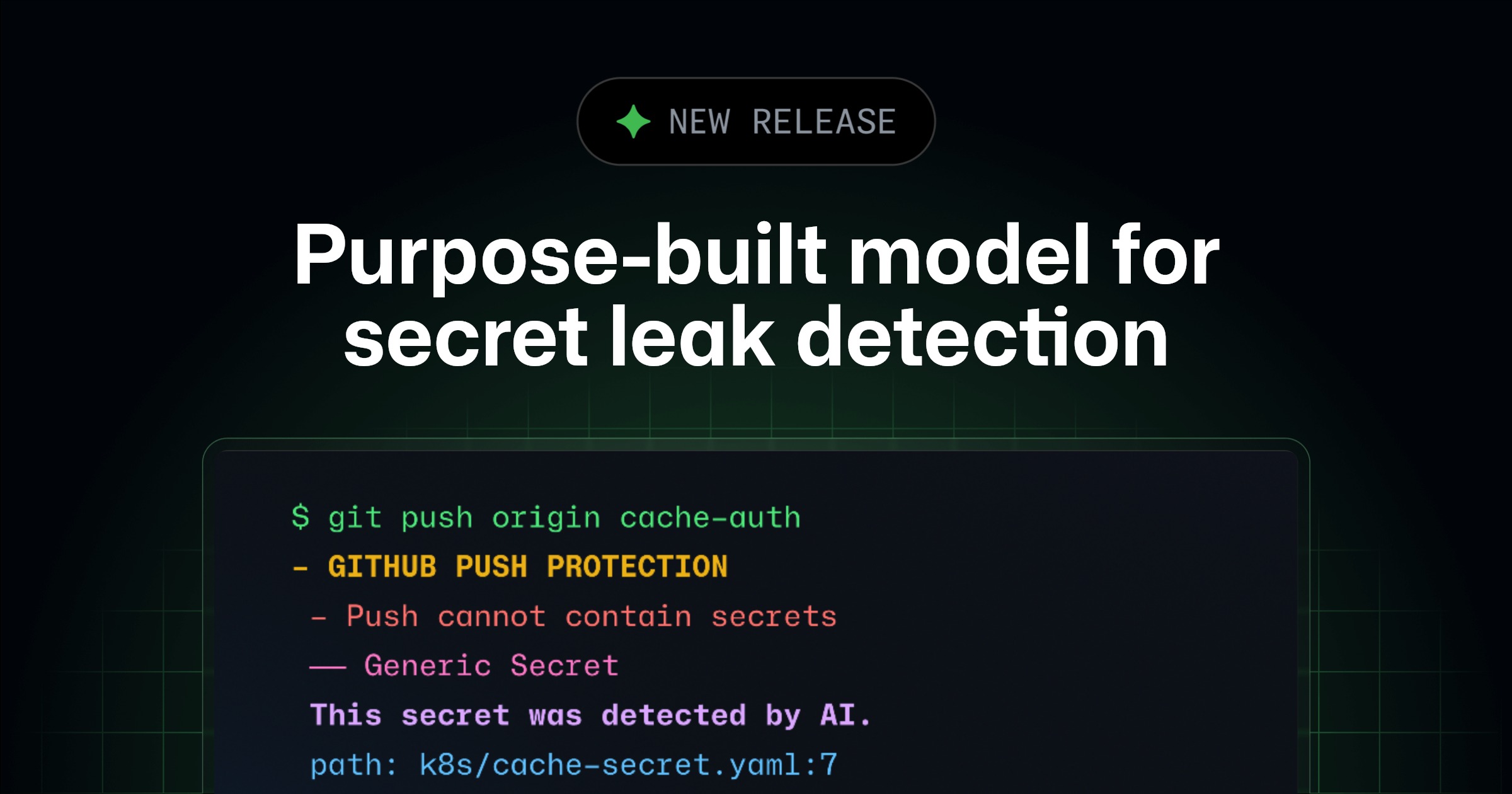
GitHub deploys fine-tuned model for secret detection
GitHub is replacing its regex-based secret scanning with a purpose-built AI model that understands code context to catch unstructured credentials like passwords without standard token formats. This shift moves security from pattern matching to semantic understanding, catching leaks that traditional tools miss before they hit repository history via push protection. The upgrade is automatic for existing GHSP/GHAS customers, but new opt-in features in Copilot and push protection will consume AI Credits, introducing a usage-based cost layer to what was previously free. This marks a significant pivot in how developers handle security, blending LLM capabilities directly into the CI/CD pipeline.
GitHub Changelog
 © GitHub Changelog
Coding Toolscoding
GitHub Copilot adds local sandboxing for agents
GitHub Copilot finally addresses the security risks of autonomous coding by introducing local sandboxing across its CLI, app, and VS Code extensions. Powered by Microsoft’s MXC technology, this feature creates a strict execution boundary that restricts agent access to files, networks, and credentials based on developer-defined policies. This is a critical step for enterprise adoption, allowing organizations to enforce security controls without blocking the utility of agentic workflows. It shifts Copilot from a passive assistant to a controlled autonomous actor with clear operational limits.
GitHub Changelog
More in Agents
 © TechCrunch AI
Agentsagents
Meta Muse expands to iPad with new connectors
Meta’s AI agent Muse hits the iPad just a month after its mobile debut, accelerating its push into personal automation. The update adds critical connectors for small businesses like Asana and QuickBooks, alongside retail partners including Best Buy and Walmart. This rapid expansion signals Meta’s intent to make Muse a central hub for both productivity and commerce. However, the agent still faces friction as websites frequently block these automated interactions. The move highlights the growing competition in the consumer AI agent space.
TechCrunch AI
 © The Verge AI
Agentsagents
Meta Muse AI Agent expands to iPad with new integrations
Meta’s agentic AI tool, Muse, finally lands on the iPad, leveraging larger screens and multitasking for more complex workflows. This update isn't just a port; it adds deep connectors for tools like Figma, GitHub, and QuickBooks, signaling a shift toward autonomous business operations. By allowing users to set high-level goals for marketing or product development, Meta is pushing agents from chatbots into active execution roles. The rapid rollout compared to Instagram’s iPad debut highlights the company's aggressive prioritization of AI infrastructure. Apple Silicon Macs now compile in KleidiAI by default, meaning every M-series machine gets ARM-tuned GEMM kernels for free, no flag-flipping required. With ROCm 7.2 added as a default build, AMD GPU users stop being second-class citizens for local inference — the gap with CUDA narrows visibly. There's no new model and no new quantization here — just llama.cpp quietly becoming the inference runtime for everyone who isn't on NVIDIA. That's the headline.
The Verge AI
 © TechCrunch AI
Agentsagents
AI agents face bot blocks as industry seeks open standard
The friction between autonomous AI agents and existing web infrastructure is becoming a critical bottleneck for consumer adoption. Major retailers like Amazon have actively blocked Meta’s Muse agent, while others like Walmart fail due to incompatible human verification challenges. This isn't just technical noise; it reveals that current anti-bot measures are fundamentally misaligned with the agent-first era of the web. In response, Meta and partners including Stripe and Genesys are drafting an open standard for agent-to-agent commerce communication. Until these protocols mature, users will face a fragmented landscape where their AI assistants are frequently rejected by the very services they aim to use.
TechCrunch AI