Models & Labs
GitHub MCP Server Supports New Stateless Protocol
GitHub Changeloghigh confidence
Why it matters
- →The stateless protocol simplifies scaling and enhances performance for MCP deployments.
- →Backward compatibility ensures a smooth transition for developers using existing SDKs.
- →Early adoption positions GitHub MCP Server as a leader in protocol advancements.
GitHub has announced that its MCP Server now supports the upcoming stateless MCP protocol, which will officially launch in 2026. The new protocol simplifies scaling by eliminating session dependencies and allows for faster connections through parallel handshakes. GitHub has also removed Redis sessions and improved its elicitation implementation to enhance performance. This update ensures backward compatibility with existing SDKs, allowing developers to transition smoothly. GitHub's early adoption of the new protocol highlights its commitment to staying at the forefront of technological advancements.
Read originalThe story around this
Earlier coverage that leads up to this article, and what followed. Lines connect each piece to the closest one after it, converging here.
How we got here
- 1
More from GitHub Changelog
 © GitHub Changelog
Coding Toolscoding
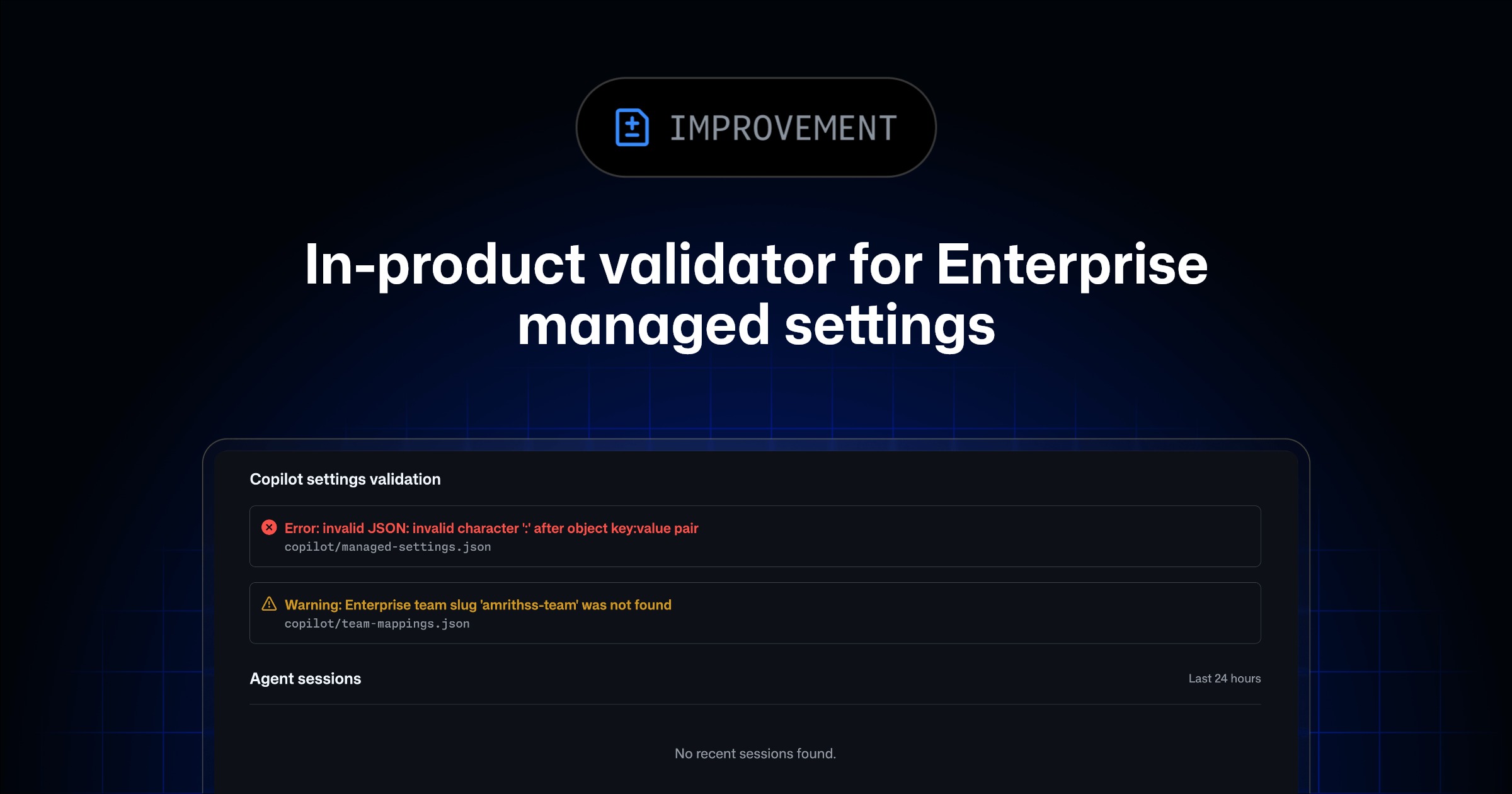
GitHub Copilot adds in-product settings validator
GitHub Copilot now validates enterprise managed settings directly in the UI, catching malformed JSON and invalid team mappings before they break policy enforcement. This shifts validation from a silent failure mode to an explicit feedback loop, saving admins from debugging why their AI controls aren't applying. By pointing to specific files and JSON paths, it reduces the friction of managing .github-private repositories at scale. It’s a pragmatic fix for a common enterprise pain point rather than a new capability.
GitHub Changelog
 © GitHub Changelog
More in Models & Labs
Models & Labsother
llama.cpp b11193 adds Snapdragon Hexagon and ROCm 10
This release quietly expands llama.cpp's hardware support to include Qualcomm's Hexagon NPU on Linux arm64, a significant step for local inference on Snapdragon devices. It also updates CUDA builds to version 13.4 and introduces ROCm 10.0 binaries, keeping the project aligned with the latest NVIDIA and AMD driver ecosystems. KleidiAI on Apple Silicon is temporarily disabled in this build, likely due to stability checks rather than a feature rollback. For developers targeting edge AI or diverse GPU stacks, this update ensures broader compatibility without requiring custom compilation.
llama.cpp Releases
 © Lev Selector
Models & Labsmodels
NVIDIA NVFP4 and SoL-Pi Token Efficiency
NVIDIA introduced the NVFP4 4-bit format and SoL-Pi technology, which uses 2x fewer tokens for improved efficiency.