Coding Tools
GitHub MCP Server Secret Scanning Now Available
GitHub Changeloghigh confidence
Why it matters
- →Enhances code security by preventing credential leaks before code commits.
- →Integrates with existing security settings for consistent protection.
- →Leverages AI tools to catch vulnerabilities early in the development process.
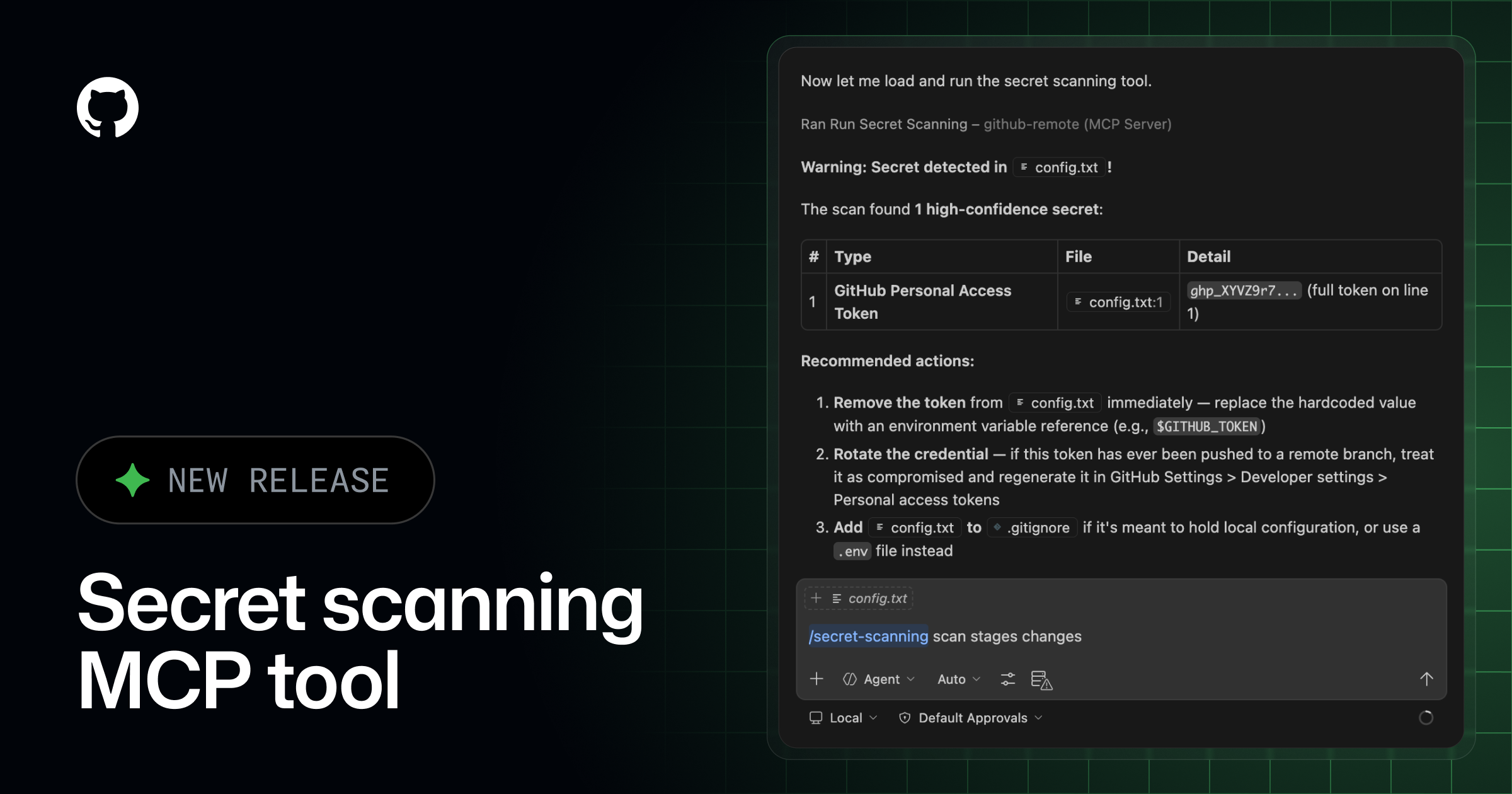
GitHub has announced the general availability of its secret scanning feature within the MCP server, aimed at enhancing code security for developers. This tool allows users of AI coding agents like GitHub Copilot CLI and Visual Studio Code to scan for exposed secrets before committing code, thus preventing credential leaks. The feature, previously in public preview since March 2026, respects existing push protection settings, ensuring consistent security measures. This development underscores GitHub's commitment to integrating AI tools for improved code security.
Read originalMore from GitHub Changelog

More in Coding Tools
Coding Toolscoding
Claude Code v2.1.261 Update Released
The latest update to Claude Code, version 2.1.261, introduces several enhancements and fixes aimed at improving user experience and functionality. Notable changes include the addition of settings to increase command output limits and a new feature to identify unused skills, helping users optimize their setups. The update also addresses various bugs, such as character input issues and session management glitches, ensuring smoother operation across different environments. These improvements make Claude Code more robust and user-friendly, particularly for developers using it in complex workflows.
Claude Code Releases
Coding Toolscoding
Claude Code v2.1.271 Release
The latest update to Claude Code, version 2.1.271, introduces several enhancements and fixes that improve user experience and functionality. Notably, a fast mode has been added for remote sessions, allowing for quicker operations where permitted. Mouse support in the configuration panel enhances usability, and new command options provide more control over plugin installations. Numerous bug fixes address issues like session management and tool usage, ensuring smoother operation across different environments. This release solidifies Claude Code's position as a robust tool for developers, offering more efficient and reliable coding sessions.