Models & Labs
Claude Haiku 5.5 arrives in GitHub Copilot
GitHub Changeloghigh confidence
Why it matters
- →Haiku 5.5 offers a faster, cheaper alternative to Sonnet 5 for routine coding tasks in Copilot.
- →Availability across major IDEs and mobile apps expands its utility for developers.
- →Admin controls allow enterprises to manage model access and costs effectively.
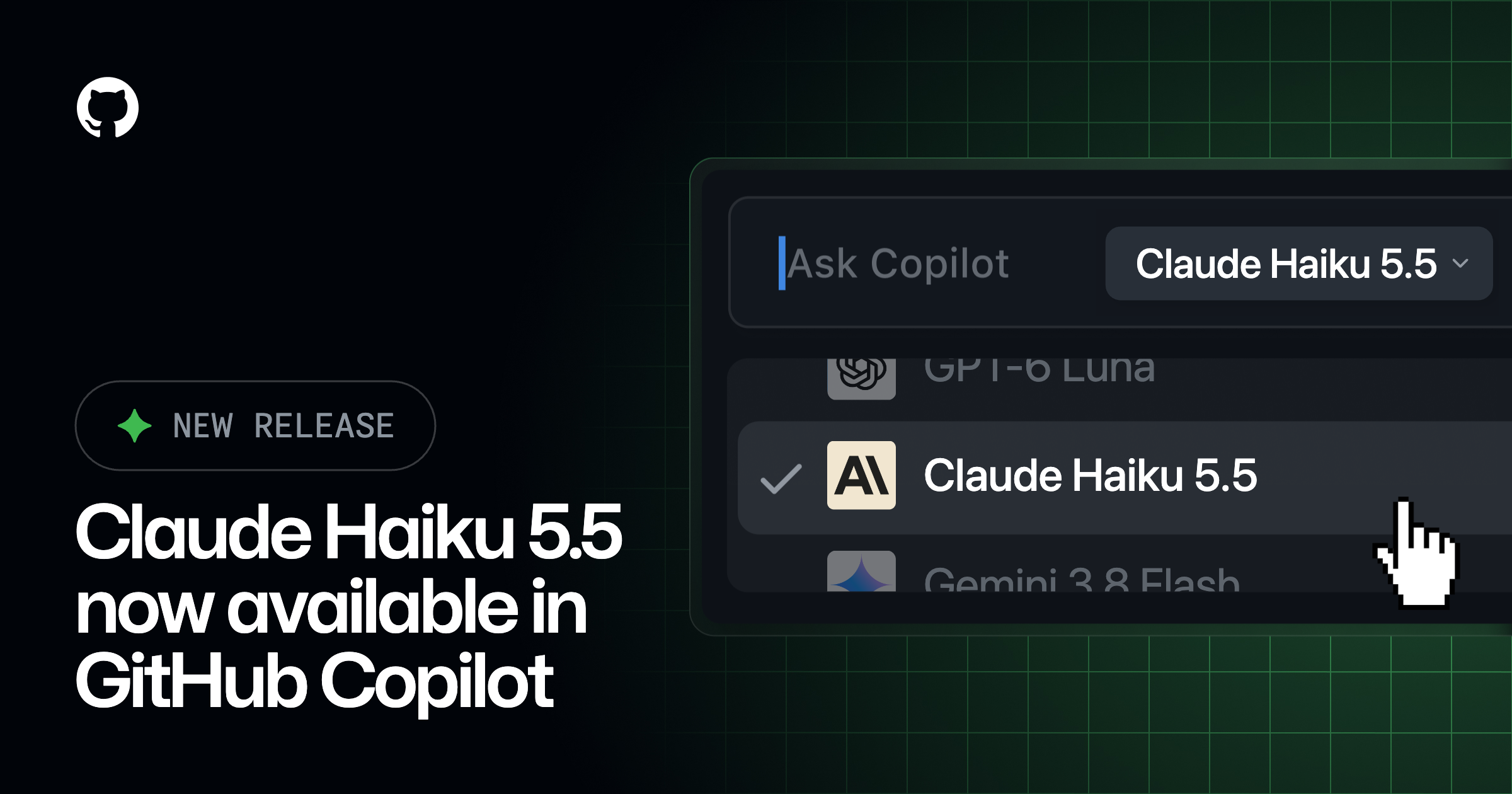
Anthropic has made Claude Haiku 5.5 generally available in GitHub Copilot, positioning the lightweight model for fast, high-volume coding tasks such as subagents and terminal operations. According to early testing, Haiku 5.5 matches the performance of Claude Sonnet 5 on many coding tasks while using fewer tokens and steps. The model is accessible to Pro, Business, and Enterprise users across major IDEs including VS Code, JetBrains, and Xcode, with a gradual rollout beginning now. Administrators can manage access through Copilot settings, where new models are enabled by default unless explicitly disabled.
Read originalThe story around this
Earlier coverage that leads up to this article, and what followed. Lines connect each piece to the closest one after it, converging here.
How we got here
- 1GitHub Copilot App Now Supports Any Model Provider
Matt Wolfe · June 10, 2026 · Related
- 2Anthropic launches Claude Sonnet 5 for affordable AI agents
TechCrunch AI · June 30, 2026 · Related
- 3Claude Opus 5.5 arrives in GitHub Copilot
GitHub Changelog · September 22, 2026 · Same story
- 4Anthropic releases official Claude Code playbook for Opus 5.5
Duncan Rogoff · September 23, 2026 · Related
- 5Claude Sonnet 5.5 arrives in GitHub Copilot
GitHub Changelog · September 28, 2026 · Same story
- 6Anthropic Sonnet 5.5 narrows gap with Opus at half price
The Rundown AI · September 29, 2026 · Related
- 7Claude Code v2.1.284 adds Sonnet 5.5
Claude Code Releases · September 30, 2026 · Same story
- 8Anthropic Releases Claude Sonnet 5.5 and Code Mods
Matt Wolfe · October 2, 2026 · Related
More from GitHub Changelog
 © GitHub Changelog
Coding Toolscoding
GitHub deploys fine-tuned model for secret detection
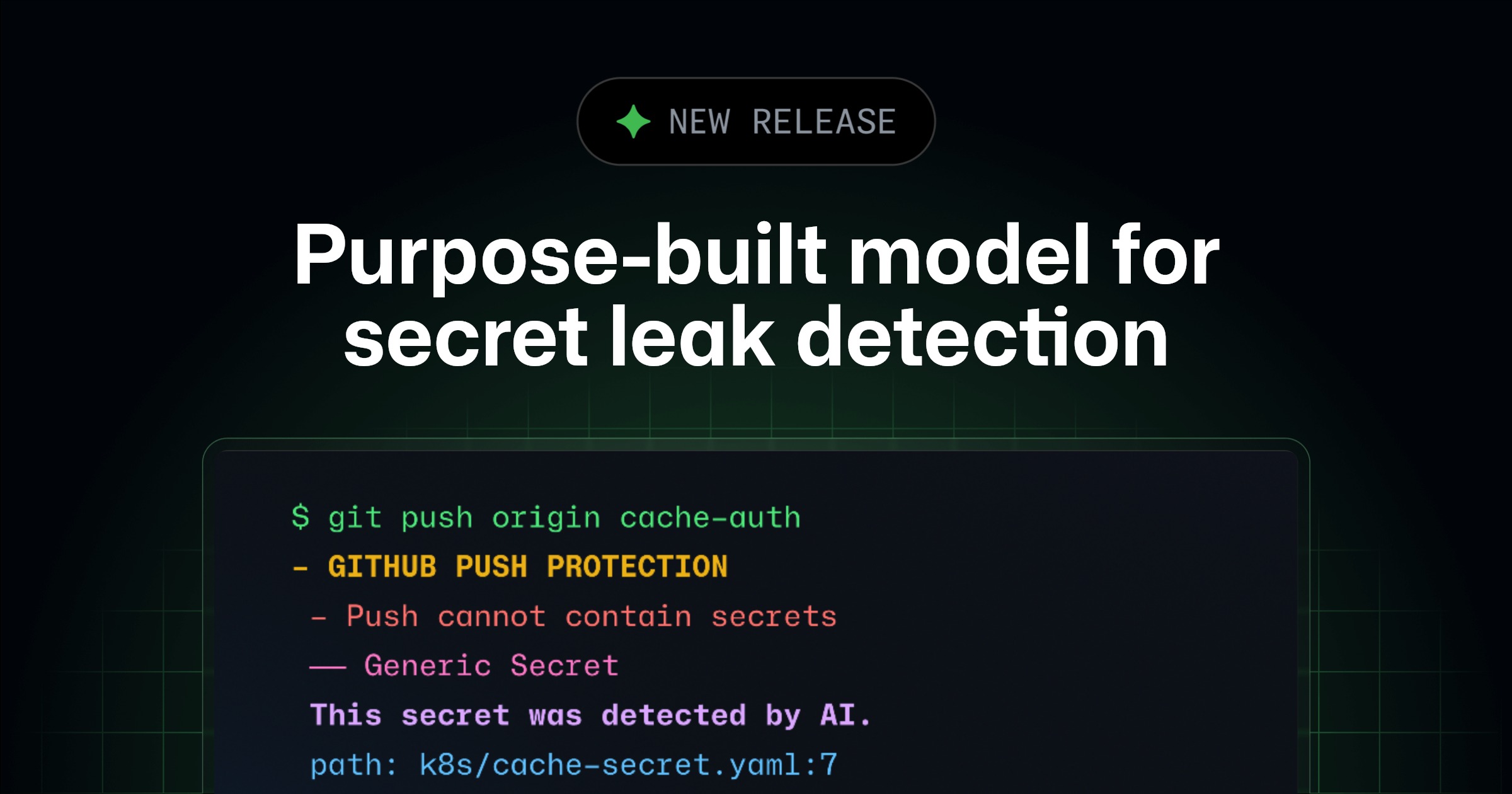
GitHub is replacing its regex-based secret scanning with a purpose-built AI model that understands code context to catch unstructured credentials like passwords without standard token formats. This shift moves security from pattern matching to semantic understanding, catching leaks that traditional tools miss before they hit repository history via push protection. The upgrade is automatic for existing GHSP/GHAS customers, but new opt-in features in Copilot and push protection will consume AI Credits, introducing a usage-based cost layer to what was previously free. This marks a significant pivot in how developers handle security, blending LLM capabilities directly into the CI/CD pipeline.
GitHub Changelog
 © GitHub Changelog
Coding Toolscoding
GitHub Copilot adds local sandboxing for agents
GitHub Copilot finally addresses the security risks of autonomous coding by introducing local sandboxing across its CLI, app, and VS Code extensions. Powered by Microsoft’s MXC technology, this feature creates a strict execution boundary that restricts agent access to files, networks, and credentials based on developer-defined policies. This is a critical step for enterprise adoption, allowing organizations to enforce security controls without blocking the utility of agentic workflows. It shifts Copilot from a passive assistant to a controlled autonomous actor with clear operational limits.
GitHub Changelog
 © GitHub Changelog
Coding Toolscoding
GitHub Copilot CLI v1.0.94 adds local Ollama model discovery
GitHub finally bridges the gap between cloud-heavy Copilot and local inference by letting the CLI discover models from a running Ollama instance. Version 1.0.94-0 introduces a /model command that surfaces supported local weights alongside cloud options, allowing developers to switch contexts without restarting the session. This isn't just a toggle; it requires tool calling and streaming support, forcing a quality baseline for local providers. The move signals GitHub's recognition that enterprise workflows increasingly demand hybrid setups where sensitive code stays on-prem while general assistance remains in the cloud.
GitHub Changelog
More in Models & Labs
 © TechCrunch AI
Models & Labsagents
Microsoft launches Nvidia Spark AI PCs with agent-ready Windows 11
Microsoft is finally shipping the hardware promised alongside Nvidia’s RTX Spark chip, targeting developers who want to run local AI agents without cloud dependency. The Surface Laptop Ultra and Dev Box feature unified memory and specialized cooling designed specifically for on-device model orchestration. More importantly, Windows 11 now includes Execution Containers, a sandboxing layer that lets multiple AI agents operate safely alongside user data. This moves the platform from just hosting models to actively managing agent context and actions locally. It signals a shift where the OS itself becomes the runtime environment for autonomous software.
TechCrunch AI
 © The Verge AI
Models & Labsother
Microsoft Surface Laptop Ultra launches with Nvidia RTX Spark
The Surface Laptop Ultra marks the commercial debut of Nvidia’s RTX Spark, an Arm-based chip designed to bring serious local AI inference to Windows laptops. Starting at $2,599, this device signals a shift toward premium hardware capable of running large models locally, moving beyond cloud dependency for enterprise and creative workflows. Microsoft pairs this with 'Hybrid Intelligence' features in Copilot, allowing the agent to access local files and take OS-level actions like filing taxes or managing emails. This isn't just a new laptop; it's the first concrete proof that Arm-based PC silicon can handle the thermal and memory demands of 120B+ parameter models on-device.
The Verge AI
 © The Verge AI
Models & Labsagents
Microsoft Copilot gains local file access and OS actions
Microsoft is shifting Copilot from a chat interface to an active agent capable of manipulating local files and system settings. The new 'Hybrid Intelligence' approach combines cloud reasoning with local execution, allowing the AI to search folders, rename documents, and draft emails without leaving the desktop environment. This moves beyond simple text generation into tangible OS-level automation, effectively turning Copilot into a personal assistant that can handle multi-step workflows like tax filing preparation. The capability arrives over the next few months, marking a significant step toward autonomous desktop agents.
The Verge AI