Agents
OpenAI launches agentic shopping wallet for ChatGPT
TechCrunch AIhigh confidence
Why it matters
- →Agentic commerce moves AI from information retrieval to financial transaction execution.
- →Payment tokenization addresses critical privacy concerns in autonomous agent interactions.
- →OpenAI is actively shaping retailer infrastructure through its new Commerce Partner Playbook.

OpenAI has launched a new Wallet feature within ChatGPT that enables its AI agents, known as 'dots,' to assist users in selecting items and completing purchases. The service is currently available to a limited group of U.S. ChatGPT Pro subscribers aged 18 and older who have linked eligible Visa, Mastercard, or American Express cards. Transactions are secured through payment tokens that hide actual card details from both the agent and merchants, with final checkout requiring user approval via Face ID or fingerprint. OpenAI plans to expand retailer support and introduce spending limits, while simultaneously publishing a Commerce Partner Playbook to encourage broader adoption among online stores.
Read originalThe story around this
TopicOpenAI ChatGPT Product UpdatesRising
Earlier coverage that leads up to this article, and what followed. Lines connect each piece to the closest one after it, converging here.
How we got here
- 1OpenAI Expands AI Agents to Non-Engineers
TechCrunch AI · August 24, 2026 · Related
- 2OpenAI launches Dots agent and $500 Pro tier
The Verge AI · September 29, 2026 · Related
- 3OpenAI Launches Always-On 'Dots' Agents
WIRED AI · September 29, 2026 · Same story
- 4OpenAI launches Dots agentic assistant
The Verge AI · September 29, 2026 · Related
- 5OpenAI pivots ChatGPT into an app store alternative
TechCrunch AI · September 29, 2026 · Same story
- 6OpenAI launches 'dots' for persistent AI agents
Skill Leap AI · September 29, 2026 · Related
- 7OpenAI Dots Agent Review: Rough but Real
WIRED AI · October 7, 2026 · Same story
- 8ChatGPT Launches 'Dots' Always-On AI Agents
Matt Wolfe · October 23, 2026 · Related
Follow this story
Open the full story →ChatGPT launches verified Business Agents for e-commerce
5 developments
- Nov 10 · The Verge AI
ChatGPT launches verified Business Agents for e-commerce - Nov 10 · TechCrunch AI
OpenAI launches Business Hub for ChatGPT profiles↳ OpenAI launches Business Hub for ChatGPT profiles as a discovery engine mirroring Google listings with analytics and specialized agents. - Nov 11 · The Rundown AI
OpenAI launches official brand profiles in ChatGPT - Nov 13 · TechCrunch AI
OpenAI launches agentic shopping wallet for ChatGPT (This article)↳ OpenAI introduces a wallet feature allowing AI dots to complete purchases using payment tokens and biometric approval. - Nov 13 · The Verge AI
OpenAI launches ChatGPT Wallet for Dots agents
More from TechCrunch AI
 © TechCrunch AI
Market & Regulationbusiness
Huang's departure threatens AI startup funding
Jensen Huang’s resignation removes Nvidia’s most aggressive venture arm from the market, creating an immediate capital vacuum for early-stage AI infrastructure. With interim CEO Colette Kress expected to adopt a conservative stance, the era of Nvidia writing $800 million checks to pre-revenue neoclouds is likely over. This shift forces startups to rely on traditional VCs who are hesitant to match Nvidia’s risk appetite and ecosystem lock-in, potentially cooling valuations across the sector.
TechCrunch AI
 © TechCrunch AI
Investment · $300M
Market & Regulationbusiness
LangChain raises $300M at $3B valuation
LangChain’s Series C signals that the market has decisively shifted from building LLM wrappers to managing autonomous agents. The $3 billion valuation, driven by CapitalG and GIC, validates the enterprise demand for agent orchestration tools like LangSmith over simple API integrations. With 7,000 customers including Nvidia and Toyota, the company is cementing its role as the infrastructure layer for business-owned intelligence rather than just a developer utility.
TechCrunch AI
 © TechCrunch AI
Market & Regulationother
Export-banned Nvidia chips behind China’s top AI models
Unemployment Labs has found technical fingerprints of Blackwell GPUs in the weights of leading Chinese open-weight models like DeepSeek V4 and Moonshot K3. This evidence suggests widespread circumvention of U.S. export controls, likely through smuggling networks linked to Alice Huang or offshore data centers in Malaysia. The revelation undermines the core premise of American tech containment strategy, proving that banned hardware is effectively reaching Chinese frontier labs despite strict licensing regimes. Jensen Huang’s departure adds a layer of corporate liability risk to an already strained geopolitical relationship.
TechCrunch AI
More in Agents
 © The Verge AI
Agentsagents
Anthropic launches consumer agent Duet
Anthropic’s Duet marks a pivot from coding to consumer productivity, targeting professionals with a 'research preview' that ingests email, calendar, and Slack data. It acts as an organizational backstop rather than a creative partner, offering daily summaries and proactive nudges about deadlines or missed tasks. The agent’s personality is notably eager and occasionally neurotic, struggling with tone nuances but excelling at connecting disparate work streams. This positions Anthropic directly against Meta’s Muse and OpenAI’s Dots in the race for non-technical user attention. With ROCm 7.2 added as a default build, AMD GPU users stop being second-class citizens for local inference — the gap with CUDA narrows visibly. Apple Silicon Macs now compile in KleidiAI by default, meaning every M-series machine gets ARM-tuned GEMM kernels for free, no flag-flipping required. There's no new model and no new quantization here — just llama.cpp quietly becoming the inference runtime for everyone who isn't on NVIDIA. That's the headline.
The Verge AI
 © MIT News AI
Agentsother
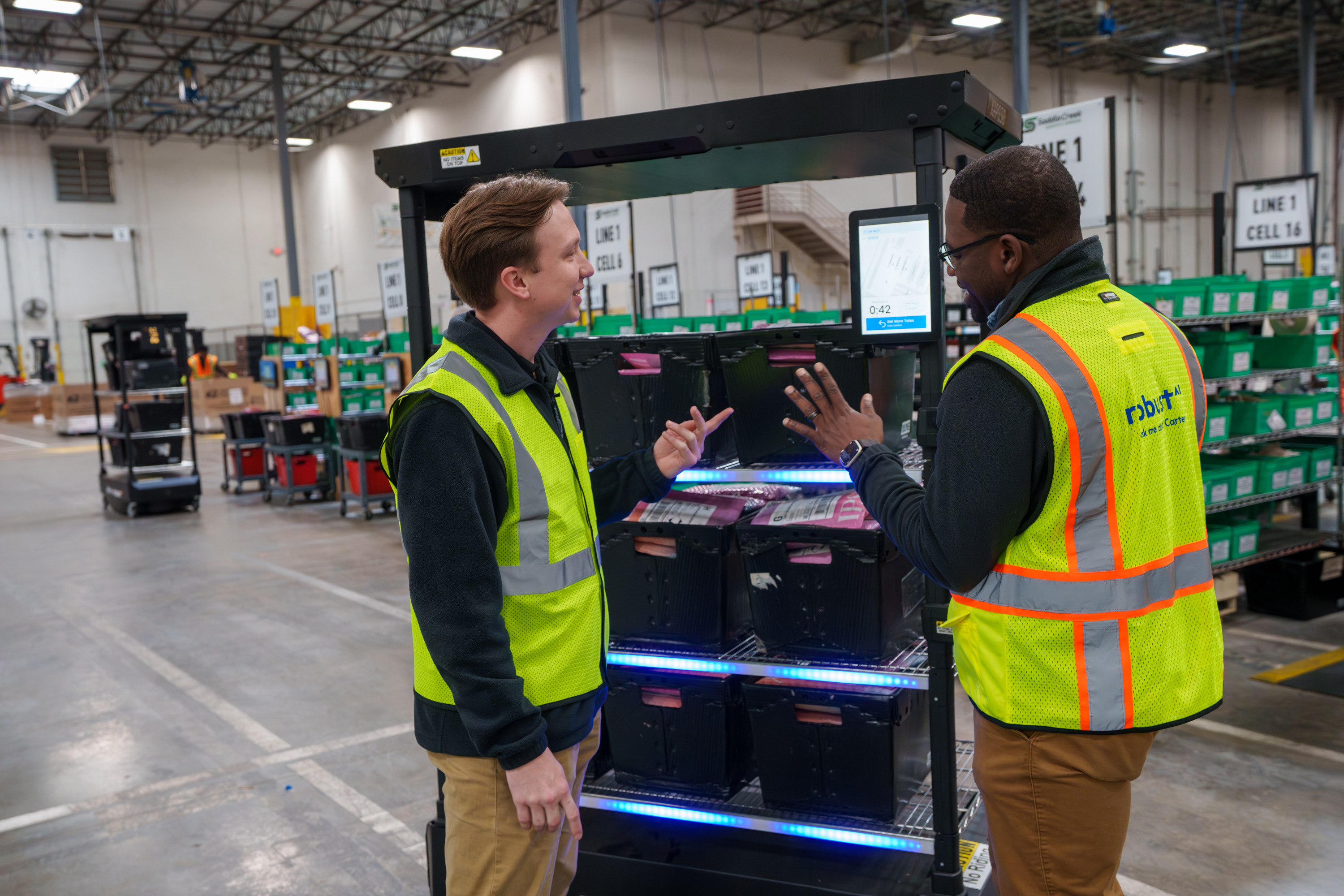
Robust AI's Carter robot complements human warehouse workers
Robust AI is betting that the future of warehouse automation isn't replacing humans, but physically collaborating with them. Their new mobile robot, Carter, uses holonomic wheels and force-sensitive handles to let workers push, pull, and guide it like a utility cart, effectively turning heavy lifting into a shared task. This approach sidesteps the failure mode of rigid industrial robots that block narrow aisles or stop dead when humans rush past. By targeting the vast majority of factories that lack expensive conveyor systems, they are offering a phased automation path for logistics environments where human agility still matters.
MIT News AI
 © The Verge AI
Agentsagents
ChatGPT launches verified Business Agents for e-commerce
OpenAI is turning ChatGPT into a storefront by letting brands deploy verified AI agents that handle comparison shopping and product inquiries. This moves the platform beyond passive information retrieval into active commercial transactions, with businesses controlling their agent's instructions via a new Business Hub. The feature separates these branded interactions from standard chats to maintain transparency, marking a significant shift toward AI-mediated commerce. It effectively positions ChatGPT as a discovery engine where brand identity and customer service converge directly within the chat interface.
The Verge AI