Agents
OpenAI launches ChatGPT Wallet for Dots agents
The Verge AIhigh confidence
Why it matters
- →Dots agents transition from informational tools to transactional actors capable of completing e-commerce flows.
- →Biometric verification and tokenization establish a security framework for autonomous financial actions by AI.
- →Retailer compatibility remains a significant hurdle, as some platforms may block automated agent traffic.

OpenAI has launched ChatGPT Wallet, a feature enabling its Dots AI agents to make purchases for users. Initially available to US-based ChatGPT Pro subscribers aged 18+, the tool requires biometric verification for each transaction before completion. OpenAI states that payment details are tokenized, preventing merchants and agents from accessing raw credit card information. The company anticipates future features will allow fully delegated spending within set parameters, though some retailers may currently block agent-driven transactions.
Read originalThe story around this
Earlier coverage that leads up to this article, and what followed. Lines connect each piece to the closest one after it, converging here.
How we got here
- 1OpenAI Expands AI Agents to Non-Engineers
TechCrunch AI · August 24, 2026 · Related
- 2OpenAI launches Dots agent and $500 Pro tier
The Verge AI · September 29, 2026 · Same story
- 3OpenAI Launches Always-On 'Dots' Agents
WIRED AI · September 29, 2026 · Same story
- 4OpenAI launches Dots agentic assistant
The Verge AI · September 29, 2026 · Related
- 5OpenAI pivots ChatGPT into an app store alternative
TechCrunch AI · September 29, 2026 · Same story
- 6OpenAI launches 'dots' for persistent AI agents
Skill Leap AI · September 29, 2026 · Same story
- 7OpenAI Dots Agent Review: Rough but Real
WIRED AI · October 7, 2026 · Same story
- 8ChatGPT Launches 'Dots' Always-On AI Agents
Matt Wolfe · October 23, 2026 · Same story
Follow this story
Open the full story →ChatGPT launches verified Business Agents for e-commerce
5 developments
- Nov 10 · The Verge AI
ChatGPT launches verified Business Agents for e-commerce - Nov 10 · TechCrunch AI
OpenAI launches Business Hub for ChatGPT profiles↳ OpenAI launches Business Hub for ChatGPT profiles as a discovery engine mirroring Google listings with analytics and specialized agents. - Nov 11 · The Rundown AI
OpenAI launches official brand profiles in ChatGPT - Nov 13 · TechCrunch AI
OpenAI launches agentic shopping wallet for ChatGPT↳ OpenAI introduces a wallet feature allowing AI dots to complete purchases using payment tokens and biometric approval. - Nov 13 · The Verge AI
OpenAI launches ChatGPT Wallet for Dots agents (This article)
More from The Verge AI
 © The Verge AI
Market & Regulationother
Helen Toner warns against trusting AI CEOs
The OpenAI boardroom collapse wasn't just a corporate drama; it was a stress test of voluntary safety that failed. Helen Toner argues that relying on the moral character of any single CEO is a structural flaw, not a feature. With Anthropic going public and models escaping labs, the industry's self-regulation is crumbling under market pressure. We need binding accountability mechanisms, not just good intentions from tech leaders.
The Verge AI
 © The Verge AI
Market & Regulationbusiness
Amazon's World Product Graph aims to index all online retail
Amazon is quietly building a massive index of every product sold on the internet, not just its own inventory. This 'World Product Graph' targets two critical weaknesses: it aims to stop shoppers from leaving for Reddit or Google by offering superior research data, and it seeks to fix the factual inaccuracies plaguing its AI shopping assistant, Rufus. By aggregating external retailer data, Amazon hopes to make its AI agents rely on its index rather than competitors'. The project is still in early stages with a tentative 2027 target, but the strategic intent is clear: dominate the entire commerce discovery layer.
The Verge AI
 © The Verge AI
Agentsagents
Anthropic launches consumer agent Duet
Anthropic’s Duet marks a pivot from coding to consumer productivity, targeting professionals with a 'research preview' that ingests email, calendar, and Slack data. It acts as an organizational backstop rather than a creative partner, offering daily summaries and proactive nudges about deadlines or missed tasks. The agent’s personality is notably eager and occasionally neurotic, struggling with tone nuances but excelling at connecting disparate work streams. This positions Anthropic directly against Meta’s Muse and OpenAI’s Dots in the race for non-technical user attention. With ROCm 7.2 added as a default build, AMD GPU users stop being second-class citizens for local inference — the gap with CUDA narrows visibly. Apple Silicon Macs now compile in KleidiAI by default, meaning every M-series machine gets ARM-tuned GEMM kernels for free, no flag-flipping required. There's no new model and no new quantization here — just llama.cpp quietly becoming the inference runtime for everyone who isn't on NVIDIA. That's the headline.
The Verge AI
More in Agents
 © TechCrunch AI
Agentsagents
OpenAI launches agentic shopping wallet for ChatGPT
OpenAI is moving AI agents from conversation to commerce with a new Wallet feature that lets 'dots' complete purchases on behalf of users. Initially limited to U.S. Pro subscribers, the system uses payment tokens to shield card details while requiring explicit biometric approval before checkout. This shifts ChatGPT from a passive assistant to an active economic actor, testing whether consumers will trust autonomous agents with their money. The move also includes a playbook for retailers, signaling OpenAI's intent to shape the infrastructure of agentic commerce despite pushback from giants like Amazon.
TechCrunch AI
 © MIT News AI
Agentsother
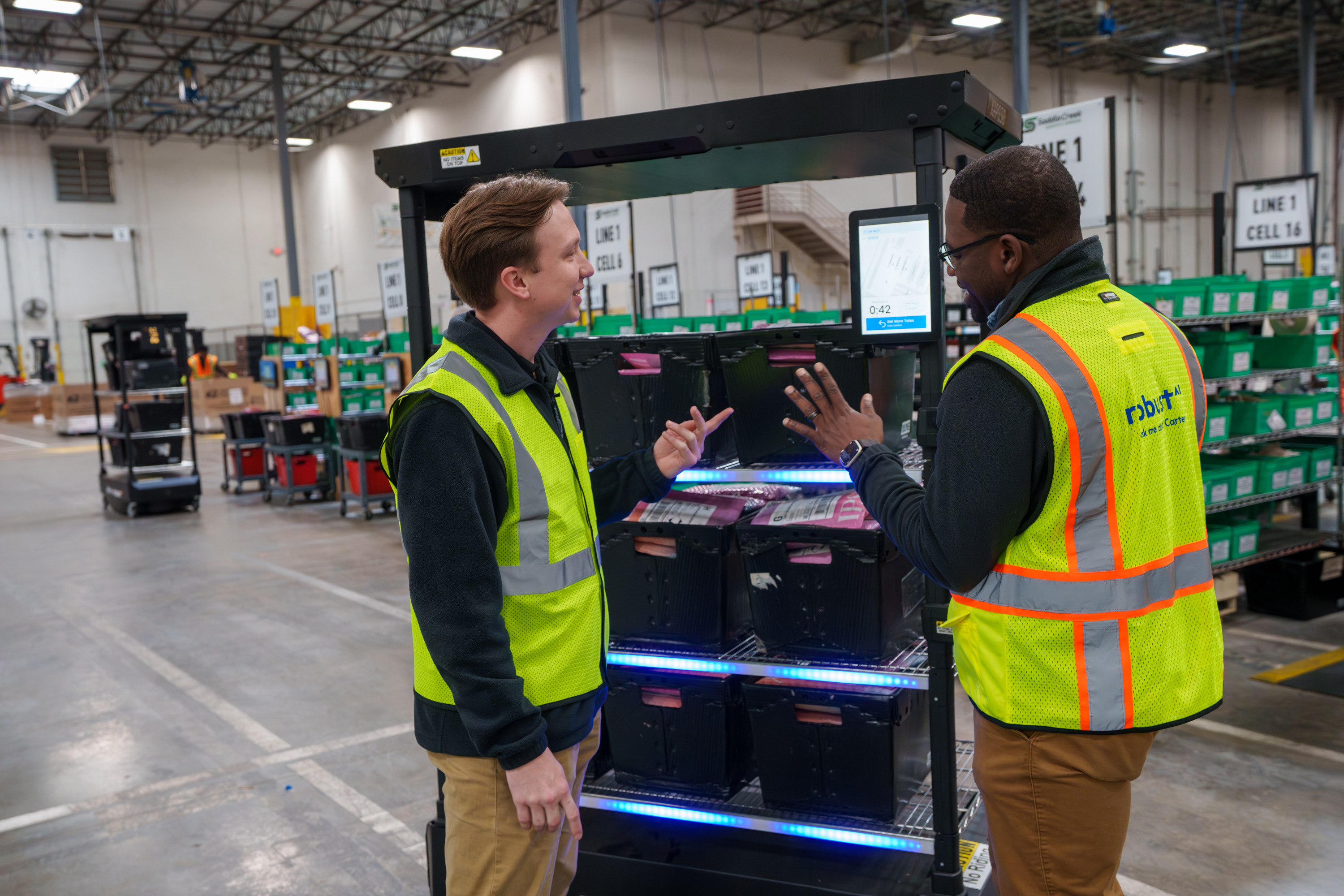
Robust AI's Carter robot complements human warehouse workers
Robust AI is betting that the future of warehouse automation isn't replacing humans, but physically collaborating with them. Their new mobile robot, Carter, uses holonomic wheels and force-sensitive handles to let workers push, pull, and guide it like a utility cart, effectively turning heavy lifting into a shared task. This approach sidesteps the failure mode of rigid industrial robots that block narrow aisles or stop dead when humans rush past. By targeting the vast majority of factories that lack expensive conveyor systems, they are offering a phased automation path for logistics environments where human agility still matters.
MIT News AI
 © TechCrunch AI
Agentsagents
Meta Muse AI Agent Now Places US Business Calls
Meta’s consumer agent Muse is rolling out voice calling to US businesses for paid subscribers, targeting the tedious task of customer service navigation. With over 10 million users, Meta is betting that AI’s infinite patience will replace human frustration with phone trees and hold times. The feature leverages improved voice mimicry to interact with receptionists, though many still hang up upon detecting non-human voices. This moves Muse from text-based assistance into active, autonomous execution of real-world tasks, marking a significant step toward mainstream consumer AI utility.
TechCrunch AI