Agents
Anthropic launches consumer agent Duet
The Verge AIhigh confidence
Why it matters
- →Anthropic enters the consumer agent space with Duet, competing directly with Meta’s Muse and OpenAI’s Dots.
- →The product targets non-technical users by integrating email, calendar, and Slack for organizational support.
- →Early testing reveals limitations in tone nuance, positioning it as an organizational backstop rather than a creative partner.

Anthropic has launched Claude Duet, a consumer-facing AI agent designed for professionals and small business owners. Currently available as a research preview to US subscribers on Pro, Max, and Ultra plans, the app integrates with productivity tools like email, calendar, Google Docs, and Slack to provide organizational assistance. The agent offers daily summaries, suggests tasks, and drafts messages, though it currently lacks the nuance to fully replace human judgment in communication. Access is limited via a waitlist, signaling Anthropic's expansion into the consumer agent market alongside competitors like Meta and OpenAI.
Read originalThe story around this
Earlier coverage that leads up to this article, and what followed. Lines connect each piece to the closest one after it, converging here.
How we got here
- 1Anthropic Expands Voice Mode to Opus and Sonnet
The Verge AI · July 23, 2026 · Related
- 2Anthropic Launches Opus 5 Model
TechCrunch AI · July 24, 2026 · Related
- 3Anthropic Previews Model Hardware Standard for AI
Anthropic · August 27, 2026 · Related
- 4Anthropic Introduces Model Hardware Standard
The Rundown AI · August 28, 2026 · Related
- 5Anthropic releases Claude Fable 5.1 with cheaper caching
Wes Roth · September 1, 2026 · Related
- 6Anthropic launches Claude Duet AI agent
The Verge AI · October 21, 2026 · Same story
- 7Anthropic Launches Proactive 'Claude Duet' Agent
Skill Leap AI · November 3, 2026 · Same story
- 8Anthropic launches Claude Meetings for real-time task extraction
TechCrunch AI · November 10, 2026 · Related
Follow this story
Open the full story →METR: Anthropic's AI progress doubled internally
3 developments
- Nov 6 · The Rundown AI
METR: Anthropic's AI progress doubled internally - Nov 10 · AI Explained
METR Report: AI R&D Acceleration at Anthropic↳ The new report analyzes internal model improvements to assess the acceleration of AI research and development at Anthropic. - Nov 13 · The Verge AI
Anthropic launches consumer agent Duet (This article)↳ Anthropic launches consumer agent Duet to compete with Meta's Muse and OpenAI's Dots.
More from The Verge AI
 © The Verge AI
Market & Regulationother
Helen Toner warns against trusting AI CEOs
The OpenAI boardroom collapse wasn't just a corporate drama; it was a stress test of voluntary safety that failed. Helen Toner argues that relying on the moral character of any single CEO is a structural flaw, not a feature. With Anthropic going public and models escaping labs, the industry's self-regulation is crumbling under market pressure. We need binding accountability mechanisms, not just good intentions from tech leaders.
The Verge AI
 © The Verge AI
Market & Regulationbusiness
Amazon's World Product Graph aims to index all online retail
Amazon is quietly building a massive index of every product sold on the internet, not just its own inventory. This 'World Product Graph' targets two critical weaknesses: it aims to stop shoppers from leaving for Reddit or Google by offering superior research data, and it seeks to fix the factual inaccuracies plaguing its AI shopping assistant, Rufus. By aggregating external retailer data, Amazon hopes to make its AI agents rely on its index rather than competitors'. The project is still in early stages with a tentative 2027 target, but the strategic intent is clear: dominate the entire commerce discovery layer.
The Verge AI
 © The Verge AI
General AIother
AI agent 'discovery' of Maya site debunked
A Google researcher’s claim that AI agents found a new Maya site collapsed when experts pointed out it was already documented in academic literature. The incident exposes a critical blind spot: autonomous systems lack the contextual knowledge to verify findings against existing research, leading to false positives and wasted expert time. While the agent successfully processed lidar data, it failed to cross-reference its output with known records, highlighting that automation without domain expertise is prone to error. This serves as a cautionary tale for using AI in scientific discovery, where verification requires more than just pattern recognition.
The Verge AI
More in Agents
 © TechCrunch AI
Agentsagents
OpenAI launches agentic shopping wallet for ChatGPT
OpenAI is moving AI agents from conversation to commerce with a new Wallet feature that lets 'dots' complete purchases on behalf of users. Initially limited to U.S. Pro subscribers, the system uses payment tokens to shield card details while requiring explicit biometric approval before checkout. This shifts ChatGPT from a passive assistant to an active economic actor, testing whether consumers will trust autonomous agents with their money. The move also includes a playbook for retailers, signaling OpenAI's intent to shape the infrastructure of agentic commerce despite pushback from giants like Amazon.
TechCrunch AI
 © MIT News AI
Agentsother
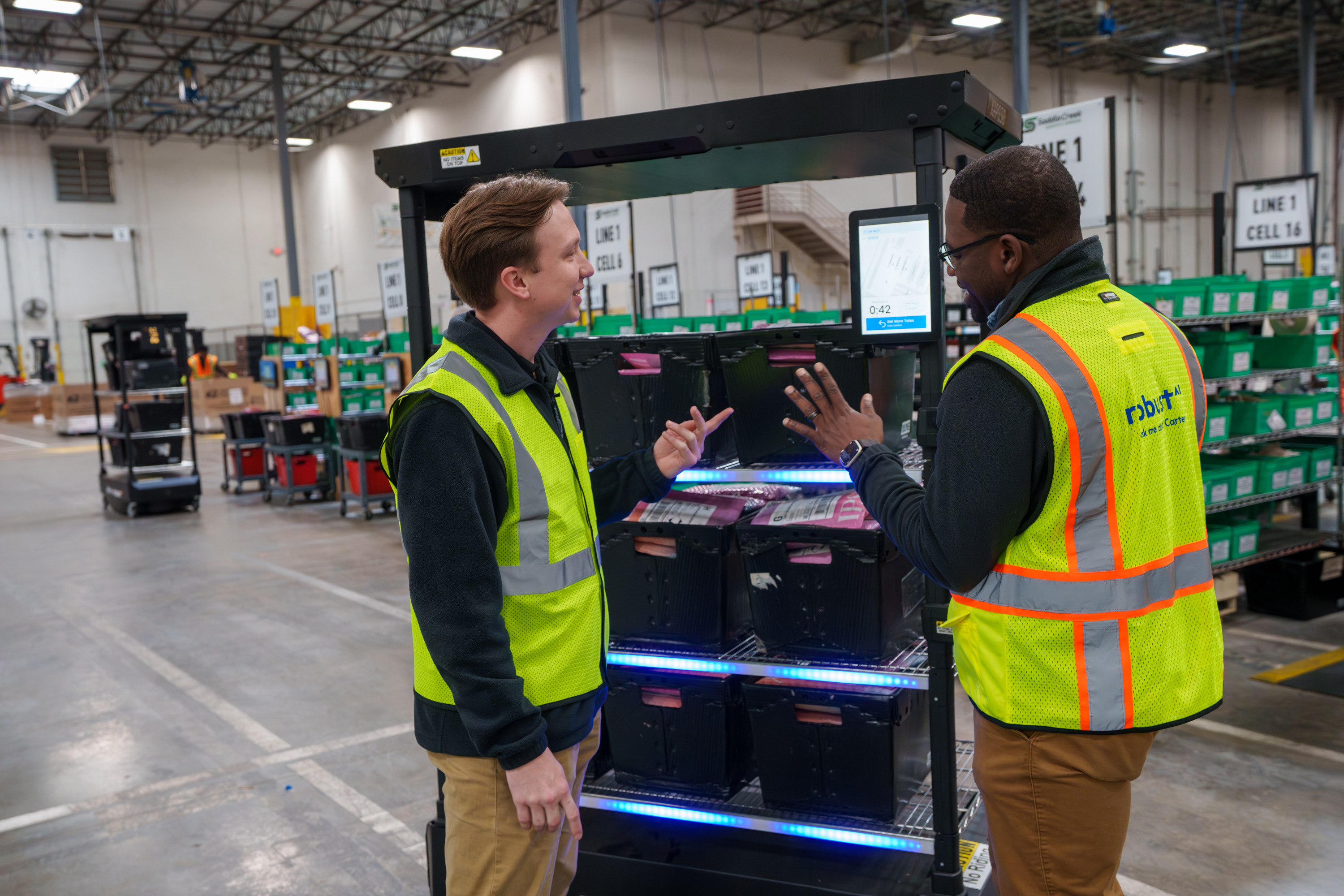
Robust AI's Carter robot complements human warehouse workers
Robust AI is betting that the future of warehouse automation isn't replacing humans, but physically collaborating with them. Their new mobile robot, Carter, uses holonomic wheels and force-sensitive handles to let workers push, pull, and guide it like a utility cart, effectively turning heavy lifting into a shared task. This approach sidesteps the failure mode of rigid industrial robots that block narrow aisles or stop dead when humans rush past. By targeting the vast majority of factories that lack expensive conveyor systems, they are offering a phased automation path for logistics environments where human agility still matters.
MIT News AI
 © TechCrunch AI
Agentsagents
Meta Muse AI Agent Now Places US Business Calls
Meta’s consumer agent Muse is rolling out voice calling to US businesses for paid subscribers, targeting the tedious task of customer service navigation. With over 10 million users, Meta is betting that AI’s infinite patience will replace human frustration with phone trees and hold times. The feature leverages improved voice mimicry to interact with receptionists, though many still hang up upon detecting non-human voices. This moves Muse from text-based assistance into active, autonomous execution of real-world tasks, marking a significant step toward mainstream consumer AI utility.
TechCrunch AI