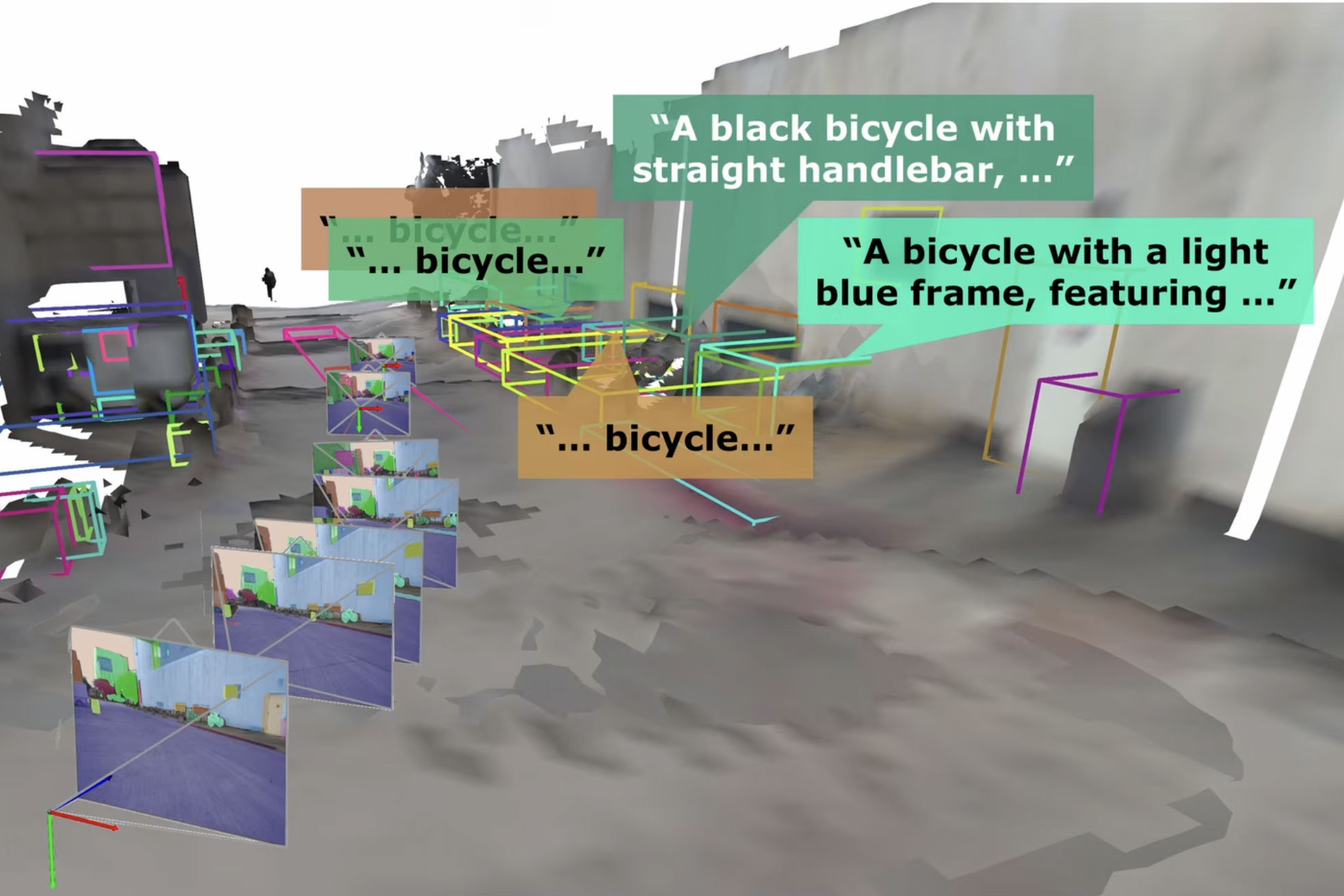
MIT researchers have created a new memory framework that allows robots to form and recall detailed mental models of their environments. This system, called DAAAM, combines computer vision and robotic mapping to enable robots to answer complex questions about their surroundings in real-time. The framework significantly improves the accuracy and speed of robots' responses compared to existing methods. This development could enhance the ability of robots to assist humans in various tasks, making them more effective and intuitive partners.
Read original
© MIT News AIMIT researchers have discovered that general-purpose policy gradient methods can outperform specialized game-theoretic algorithms in imperfect-information games. This finding challenges long-held assumptions in the field, suggesting that these generalist algorithms can be more effective in dynamic, multi-agent environments. The team has developed a benchmarking tool to evaluate algorithm performance, which is accessible and easy to use on standard laptops. This work not only redefines strategic game analysis but also has broader implications for real-world scenarios involving hidden information.
© MIT News AIMIT's Initiative for New Manufacturing (INM) is making significant strides in transforming the manufacturing landscape by integrating AI and fostering entrepreneurship. Celebrating its first anniversary, the initiative has successfully engaged over 800 participants in discussions on AI's role in manufacturing and workforce development. The recent MIT Manufacturing Week highlighted the initiative's impact, featuring a research showcase that awarded innovative projects like modular machine control architectures. INM's efforts are not just about advancing technology but also about creating a robust ecosystem that connects research, industry, and education to address complex manufacturing challenges.
© Google AI BlogGoogle's Articulate Medical Intelligence Explorer (AMIE) is making strides in medical AI by transitioning from diagnostic support to long-term disease management. Leveraging the Gemini models, AMIE can engage in empathetic patient dialogues and perform deep management reasoning by referencing extensive clinical knowledge. In a study published in 'Nature', AMIE matched the management reasoning of primary care doctors and excelled in plan precision and guideline adherence. This development suggests a future where AI could significantly enhance medical care, allowing physicians to focus more on patient interaction. Google is now testing AMIE's application in real-world clinical settings through a nationwide study.
OpenAI and Molecule.one have made a notable advancement in medicinal chemistry by using a near-autonomous AI chemist powered by GPT-5.4. This AI system has successfully refined a challenging drug-making reaction, demonstrating AI's capability to streamline and improve complex chemical processes. The collaboration illustrates how AI can be applied to tackle intricate problems in drug development, potentially accelerating the pace of pharmaceutical innovation. This development represents a step forward in integrating AI into scientific research, offering new possibilities for efficiency and discovery in chemistry.
OpenAI has unveiled LifeSciBench, a new benchmark designed to assess AI systems' capabilities in handling real-world life science research tasks. This benchmark is both expert-authored and expert-reviewed, ensuring that it reflects the complexities and nuances of actual scientific work. By providing a standardized way to evaluate AI in this domain, LifeSciBench aims to bridge the gap between AI development and practical scientific application. This initiative could lead to more reliable and effective AI tools for researchers, enhancing the integration of AI in life sciences.