Market & Regulation
GitHub Launches Team-Level Model Policy Preview
GitHub Changeloghigh confidence
Why it matters
- →Provides more granular control over AI model access within enterprises.
- →Aligns model management with actual team structures and roles.
- →Facilitates early experimentation and tailored access for specific teams.
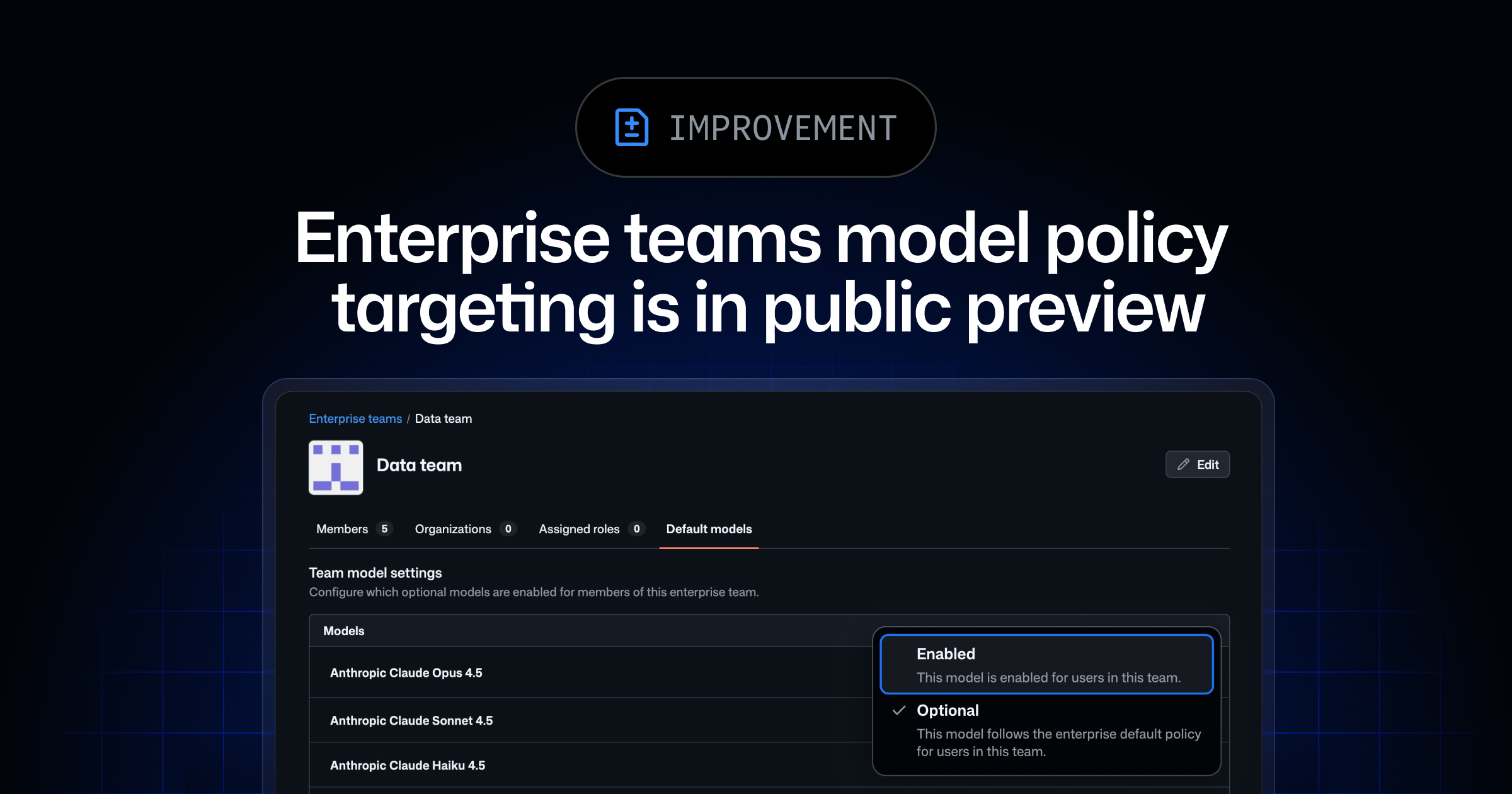
GitHub has announced a public preview of a new feature for its Enterprise customers using Copilot Business or Enterprise licenses. This feature allows administrators to manage AI model access at the team level, rather than just at the organization level. This change enables more precise control over who can access specific models, based on roles or experimental needs. The feature is being rolled out gradually, with most enterprise customers able to opt-in from August 3rd. This marks a shift towards more flexible and granular AI model management within enterprises.
Read originalThe story around this
Earlier coverage that leads up to this article, and what followed. Lines connect each piece to the closest one after it, converging here.
How we got here
- 1GitHub Introduces Targeted Copilot Model Rules
GitHub Changelog · May 26, 2026 · Same story
- 2GitHub Copilot App Now Supports Any Model Provider
Matt Wolfe · June 10, 2026 · Related
More from GitHub Changelog
 © GitHub Changelog
Coding Toolscoding
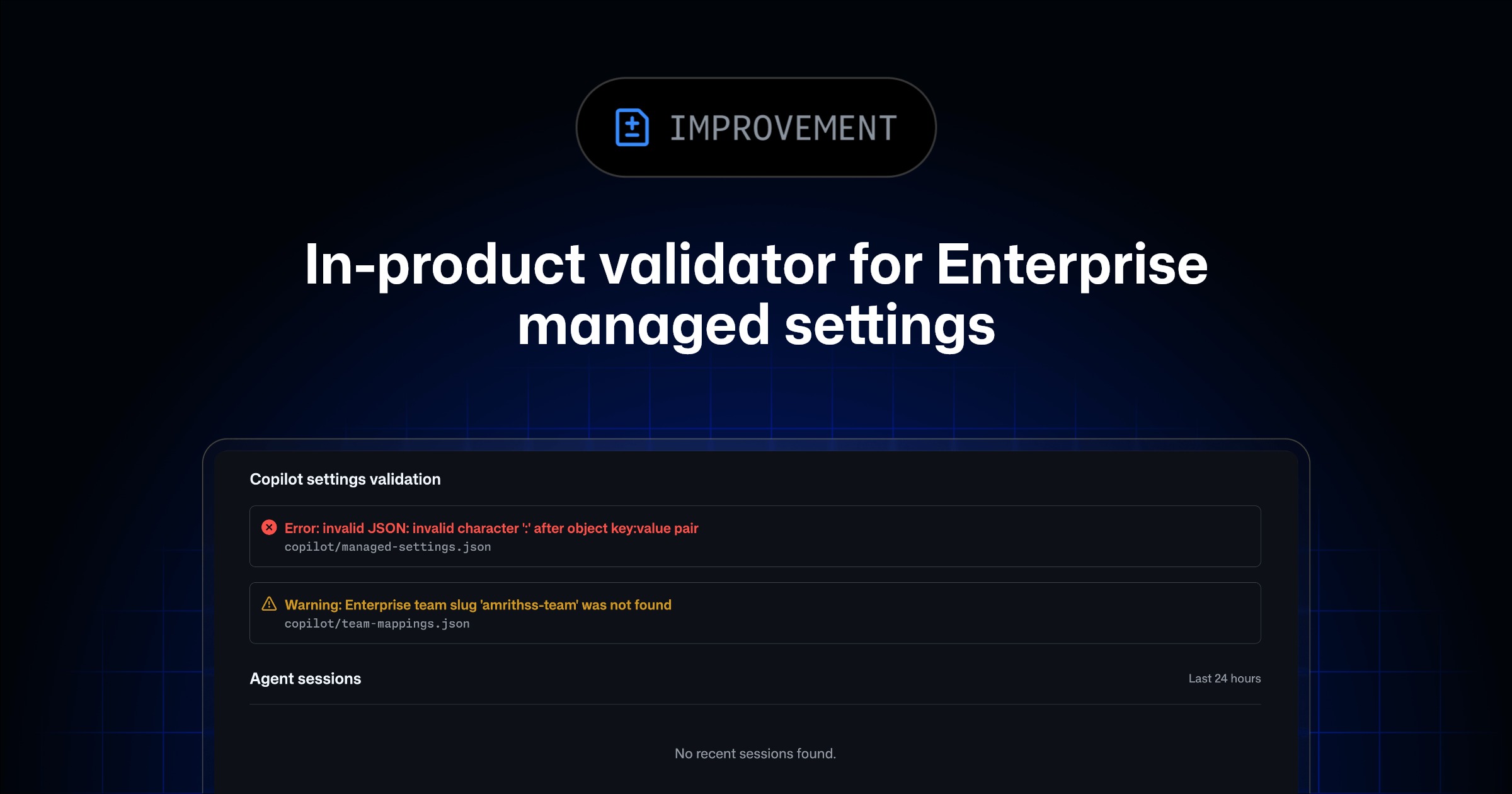
GitHub Copilot adds in-product settings validator
GitHub Copilot now validates enterprise managed settings directly in the UI, catching malformed JSON and invalid team mappings before they break policy enforcement. This shifts validation from a silent failure mode to an explicit feedback loop, saving admins from debugging why their AI controls aren't applying. By pointing to specific files and JSON paths, it reduces the friction of managing .github-private repositories at scale. It’s a pragmatic fix for a common enterprise pain point rather than a new capability.
GitHub Changelog
 © GitHub Changelog
More in Market & Regulation
 © TechCrunch AI
Market & Regulationbusiness
Crusoe cancels $1.25B Boom turbine deal
The collapse of Crusoe’s $1.25 billion order for Boom Supersonic’s stationary turbines exposes the fragility of AI infrastructure financing. While Crusoe raised $3.9 billion, it pivoted away from on-site gas generation, opting instead for grid power and diverse energy mixes. This signals that even well-funded data center operators are prioritizing flexibility over massive, long-term capital commitments to specialized hardware. Boom’s pivot to sell jet engines as power plants was a bold bet on AI energy needs, but losing its anchor customer suggests the market is more cautious than anticipated.
TechCrunch AI
 © TechCrunch AI