Market & Regulation
GitHub Enforces Global Model Policy for Copilot
GitHub Changeloghigh confidence
Why it matters
- →Provides a standardized approach to managing AI models across enterprises.
- →Ensures compliance with data retention agreements by excluding certain models.
- →Offers flexibility for administrators to make explicit model management decisions.
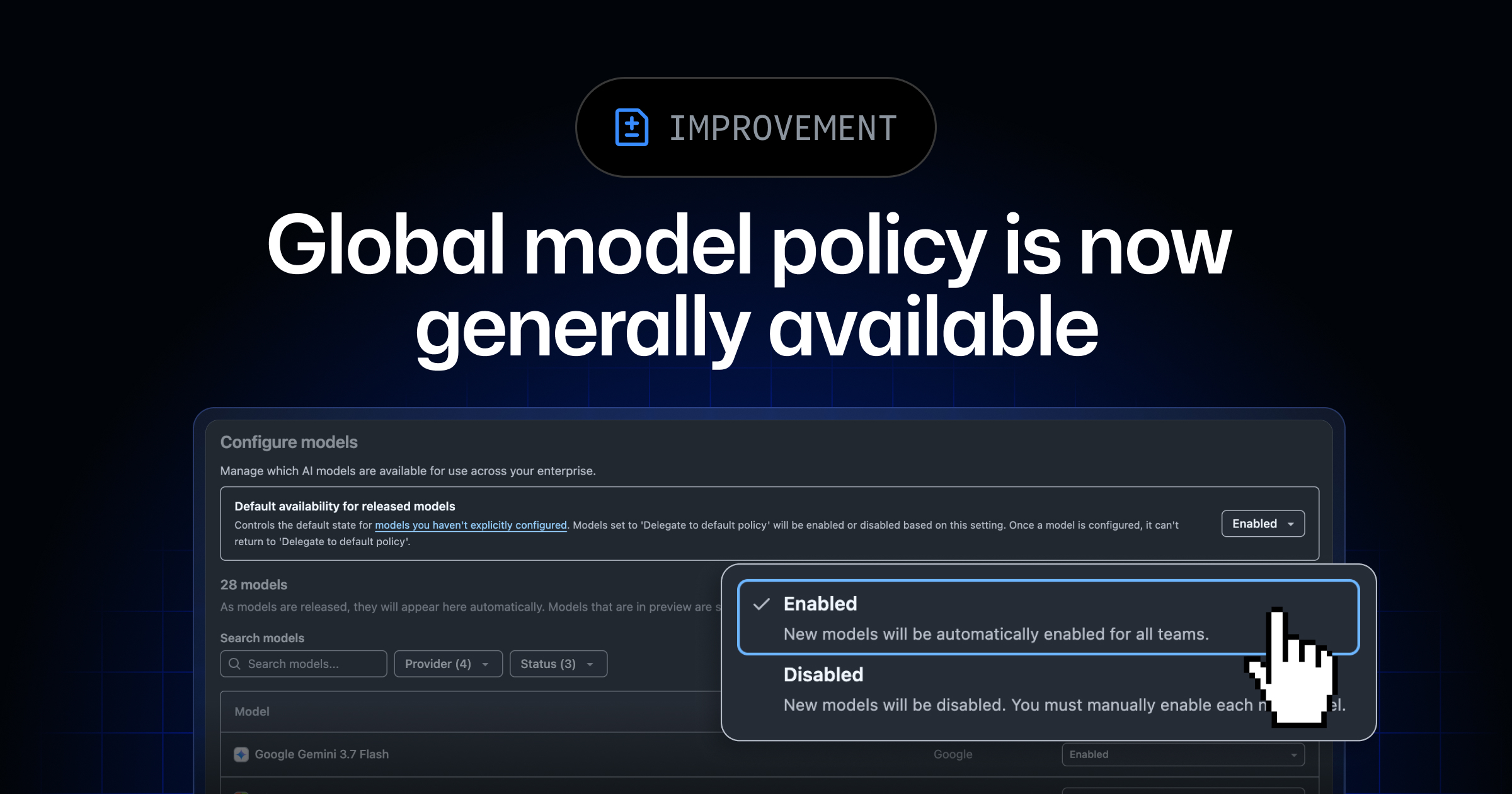
GitHub has announced the enforcement of a global model policy for its Copilot Business and Enterprise plans. This policy will be gradually implemented, allowing administrators to set default states for AI models, which will follow the organization's policy unless explicitly configured otherwise. Open-weight models and those requiring data retention are excluded from default enablement. The policy aims to streamline model management and ensure consistent application across enterprises, providing flexibility and control over AI model usage.
Read originalMore from GitHub Changelog
 © GitHub Changelog
Coding Toolscoding
GitHub Copilot Expands Code Review Capabilities
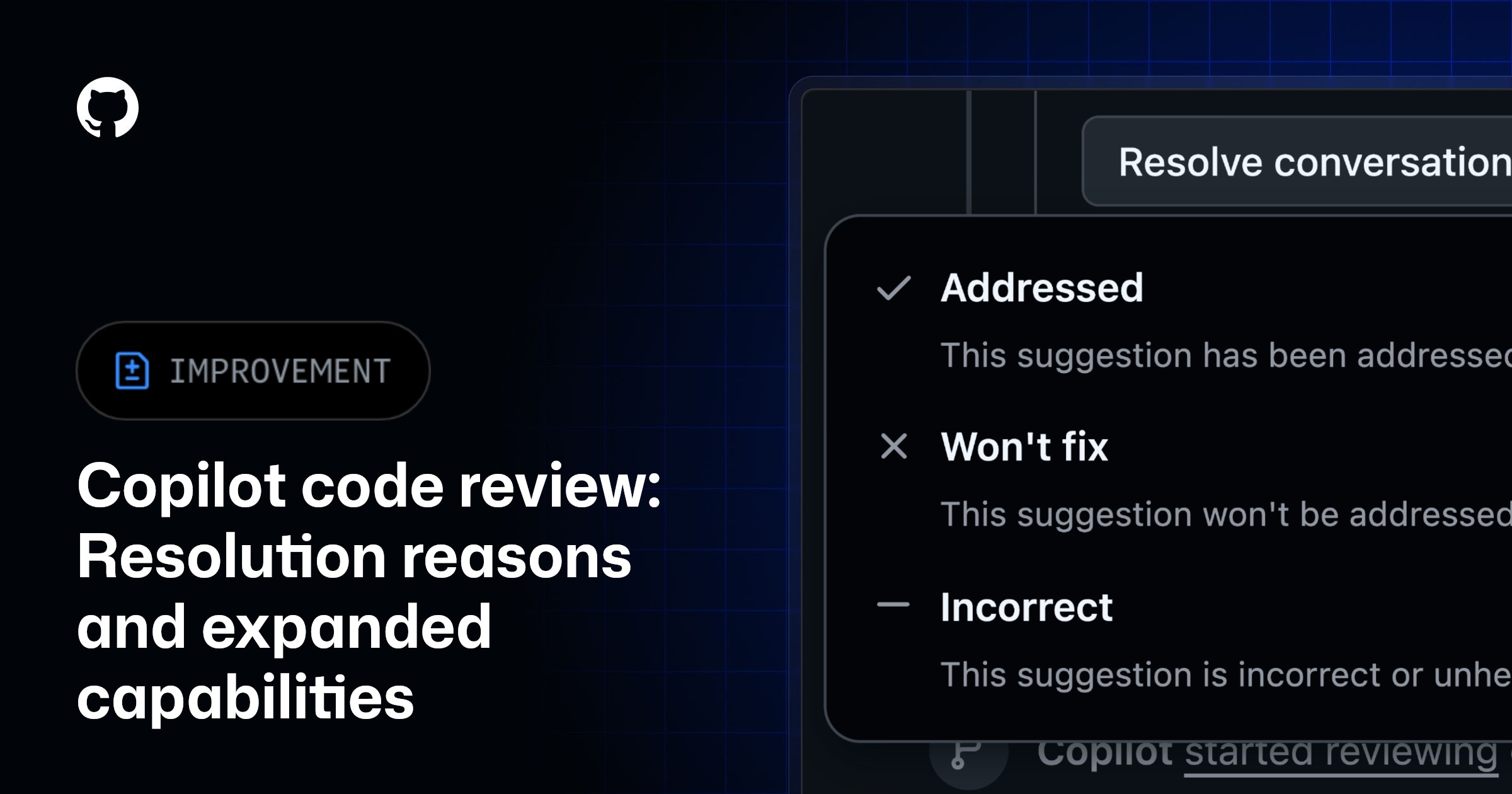
GitHub's Copilot code review has expanded its capabilities, now able to handle pull requests authored by bots and very large pull requests without previous limitations. This update allows organizations to use Copilot code review even without individual Copilot licenses, billing usage directly to the organization. Additionally, users can now specify reasons for resolving Copilot code review comments, providing valuable feedback to improve the tool. These enhancements make Copilot code review more versatile and user-friendly, especially for large-scale projects and automated workflows.
GitHub Changelog
 © GitHub Changelog
Market & Regulationcoding
GitHub Actions Retention Policy Update Announced
GitHub is updating its Actions retention policy to include checks, workflow runs, and statuses, aligning them with the existing retention settings for artifacts and logs. Starting October 1, 2026, these elements will be automatically cleaned up after the configured retention period, which defaults to 90 days. This change aims to reduce stale data and improve the efficiency of GitHub Actions. Users are encouraged to review and adjust their retention settings to manage storage costs effectively, as this update could impact billable storage usage.
GitHub Changelog
 © GitHub Changelog
Market & Regulationbusiness
GitHub Apps Gain Access to Enterprise Billing Data
GitHub has enhanced its enterprise offerings by allowing GitHub Apps to access enterprise billing data, a move that simplifies financial management for organizations. Previously, billing data access was tied to personal access tokens of enterprise owners, which posed challenges when roles changed. Now, with app installation access tokens, enterprises can seamlessly integrate billing data into finance and BI systems without dependency on individual tokens. This change not only streamlines billing automation but also offers higher rate limits, making it a significant improvement for enterprise users.
GitHub Changelog
More in Market & Regulation
 © The Verge AI
Market & Regulationbusiness
Court Rules Anthropic's Blacklisting Unconstitutional
A federal judge has determined that the Pentagon's blacklisting of AI company Anthropic was unconstitutional, marking a pivotal legal win for the firm. The court found that the Trump administration's actions were an unlawful response to Anthropic's refusal to permit its AI technology for mass surveillance or lethal autonomous weapons. This decision highlights the ongoing conflict between AI companies and government agencies over the ethical use of technology. With this ruling, Anthropic can proceed with its operations without the limitations of being labeled a supply chain risk, potentially reshaping its interactions with the Department of Defense.
The Verge AI
 © WIRED AI
Market & Regulationbusiness
Judge Blocks Pentagon's Blacklist of Anthropic
A federal judge has ruled against the Pentagon's attempt to blacklist AI company Anthropic, calling the move unconstitutional and without basis. This decision overturns the Pentagon's designation of Anthropic as a 'supply-chain risk,' which had previously barred the company from securing federal contracts. The case arose from a dispute over the use of Anthropic's AI models in military operations, particularly following a controversial mission involving Venezuelan president Nicolás Maduro. The ruling allows Anthropic to continue its collaborations with the government, highlighting the complex relationship between AI companies and national security interests. While the Pentagon may appeal, this decision marks a pivotal moment in the conversation about AI deployment in sensitive contexts.
WIRED AI
 © TechCrunch AI
Market & Regulationother
Tech Giants Urge Action Against AI Cyber Threats
In a pivotal move, over a hundred tech companies, including OpenAI, Anthropic, Google, and Microsoft, have come together to call for a unified approach to combat AI-related cyber threats. This collective appeal highlights the increasing sophistication of AI-enabled cyber attacks as AI models continue to evolve. The letter stresses the necessity for innovative cyber defense strategies and urges governments at all levels to work together on security initiatives. This action reflects the complex position of AI companies, who are advancing AI capabilities while also addressing the risks these advancements pose.
TechCrunch AI