16 × AIAI signal, amplified
AI newsAboutSources
TelegramFollow on Telegram
AI newsAboutSources
16 × AIAI signal, amplified

An AI news engine that ingests trusted sources, scores with Claude, and posts only what clears the bar.

Follow on Telegram →

Subscribe

  • Telegram
  • RSS
  • All channels

Legal

  • Privacy
  • Imprint
© 2026 16 × AI. All rights reserved.Curated by Claude. Posts every 6 hours. No newsletter, no funnel.
Home/Models & Labs
Models & Labs

GitHub Introduces Targeted Copilot Model Rules

GitHub Changelog·May 26, 2026·high confidence

Why it matters

  • →Provides enterprises with granular control over AI model deployment.
  • →Enhances flexibility in managing AI tools across different organizations.
  • →Simplifies the process of configuring model availability within GitHub.

GitHub Introduces Targeted Copilot Model Rules
©GitHub Changelog

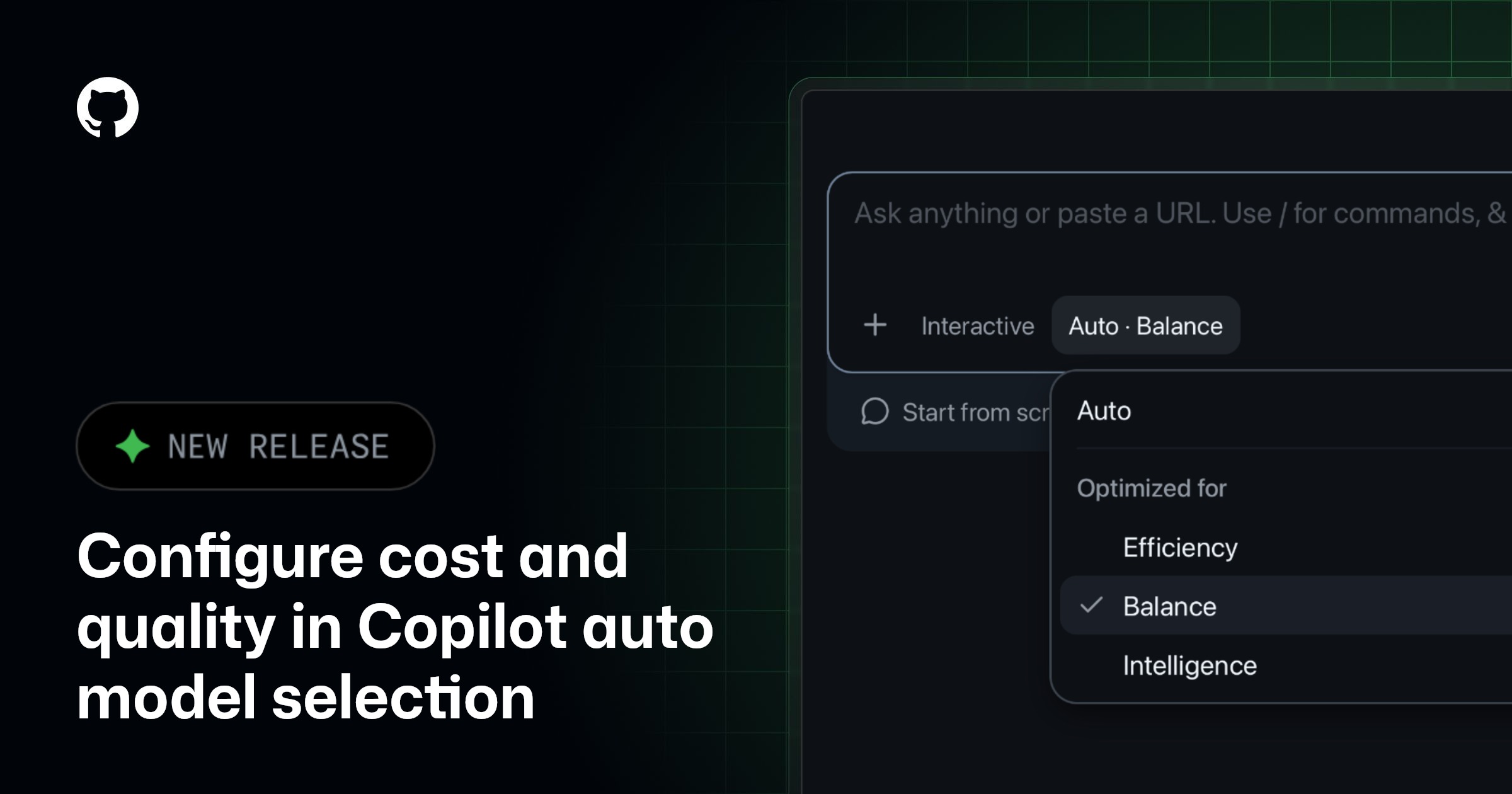
GitHub has launched a new feature for enterprise users, allowing them to control which Copilot models are available to specific organizations. This feature, currently in public preview, introduces targeted model rules, offering more flexibility than the previous enterprise-wide settings. The update also includes a refreshed interface for managing model availability, making it easier for users to configure settings. This change is particularly beneficial for businesses using Copilot Business and Copilot Enterprise plans, as it provides greater control over AI model deployment.

Read original

More from GitHub Changelog

GitHub Copilot Memory Enhances Control Features© GitHub Changelog
Coding Toolscoding

GitHub Copilot Memory Enhances Control Features

GitHub's Copilot Memory is refining its control features, offering users more precise management over memory deletion and scope. With a new repository-level off switch, admins can now disable Copilot Memory for specific repositories, ensuring repository-level facts are not stored or read. The Copilot CLI has been updated to allow users to enable or disable memory and check its status with simple commands. These enhancements aim to give users and admins greater control over how Copilot Memory functions, making it more adaptable to individual and organizational needs.

GitHub Changelog·May 26, 2026
GitHub Launches Repository Enablement API for Code Quality© GitHub Changelog
Coding Toolscoding

GitHub Launches Repository Enablement API for Code Quality

GitHub has introduced a new Repository Enablement API, allowing developers to programmatically manage Code Quality settings on individual repositories. This API, now in public preview, offers two endpoints for enabling or disabling Code Quality setups and retrieving current configurations. It supports languages like C#, Go, Java-Kotlin, JavaScript-Typescript, Python, and Ruby. This development simplifies the process of integrating code quality checks into workflows, making it easier for developers to maintain high standards across their projects.

GitHub Changelog·May 26, 2026
Dependabot Adds Support for sbt Ecosystem© GitHub Changelog
Coding Toolscoding

Dependabot Adds Support for sbt Ecosystem

GitHub's Dependabot now includes support for the sbt ecosystem, allowing developers to automate version updates for sbt projects. By adding sbt to the dependabot.yml file, users can have Dependabot monitor their build.sbt inputs and automatically open pull requests for new upstream commits. This enhancement simplifies the process of keeping sbt dependencies up-to-date, although it does not cover security updates. This update makes it easier for developers using sbt to maintain their projects with minimal manual intervention.

GitHub Changelog·May 26, 2026

More in Models & Labs

Models & Labsmodels

Llama.cpp b9329 Release Enhances CUDA Performance

The b9329 release of llama.cpp brings a notable performance enhancement with the integration of a fast Walsh-Hadamard transform for CUDA, which is set to improve computational efficiency. This update also includes optimizations such as unrolling and changes from size_t to int, aimed at boosting processing speed. The release is compatible with platforms like macOS, Linux, Windows, and openEuler, ensuring developers can leverage these improvements across different environments. While there are no new models introduced, the emphasis on performance optimization makes this update significant for those working with CUDA and other supported systems.

llama.cpp Releases·May 27, 2026
Models & Labsmodels

llama.cpp b9330 release improves model performance

The b9330 release of llama.cpp resolves a key issue by correctly tagging the ffn_latent operation as MUL_MAT, aligning it with the backend's operational expectations. This correction ensures that weights and their matrix multiplications remain on the GPU, avoiding unnecessary CPU fallback and graph splitting. As a result, performance on the Nemotron 3 Super 120B Q5_K_M model has significantly improved, with throughput increasing from 64.9 to 103.22 tokens per second. This update reflects llama.cpp's dedication to enhancing AI model performance across different computing environments, including macOS with KleidiAI and Ubuntu with ROCm 7.2. By maintaining efficient GPU processing, llama.cpp continues to optimize AI model execution, ensuring robust performance on platforms like CUDA 12 and CUDA 13.

llama.cpp Releases·May 27, 2026
Models & Labsmodels

llama.cpp b9334 Release Expands Platform Support

The latest b9334 release of llama.cpp significantly broadens its platform compatibility, making it more accessible to a diverse range of users. With new support for macOS Apple Silicon, Ubuntu with ROCm 7.2, and Windows with CUDA 12 and 13, this update ensures that developers across different systems can leverage llama.cpp's capabilities. The inclusion of Vulkan and SYCL support further enhances its versatility, catering to both CPU and GPU users. This release doesn't introduce new models but focuses on making llama.cpp a more universal tool for AI inference across various hardware configurations.

llama.cpp Releases·May 27, 2026