Coding Tools
Profiling PyTorch Attention: Insights and Optimizations
Hugging Face Bloghigh confidence
Why it matters
- →Understanding profiling helps optimize AI models for better performance.
- →In-place operations can significantly reduce computational overhead.
- →Choosing the right backend for attention mechanisms can impact model efficiency.

Hugging Face's blog series on profiling in PyTorch continues with a focus on attention mechanisms. The article explores how different implementations, such as naive and in-place operations, impact performance by reducing unnecessary memory operations. It also examines PyTorch's Scaled Dot Product Attention, which simplifies implementation but may introduce performance trade-offs depending on the backend. This analysis highlights the importance of understanding the nuances of attention operations for optimizing large models.
Read originalMore in Coding Tools
Coding Toolscoding
Claude Code v2.1.261 Update Released
The latest update to Claude Code, version 2.1.261, introduces several enhancements and fixes aimed at improving user experience and functionality. Notable changes include the addition of settings to increase command output limits and a new feature to identify unused skills, helping users optimize their setups. The update also addresses various bugs, such as character input issues and session management glitches, ensuring smoother operation across different environments. These improvements make Claude Code more robust and user-friendly, particularly for developers using it in complex workflows.
Claude Code Releases
Coding Toolscoding
Claude Code v2.1.271 Release
The latest update to Claude Code, version 2.1.271, introduces several enhancements and fixes that improve user experience and functionality. Notably, a fast mode has been added for remote sessions, allowing for quicker operations where permitted. Mouse support in the configuration panel enhances usability, and new command options provide more control over plugin installations. Numerous bug fixes address issues like session management and tool usage, ensuring smoother operation across different environments. This release solidifies Claude Code's position as a robust tool for developers, offering more efficient and reliable coding sessions.
Claude Code Releases
 © GitHub Changelog
Coding Toolscoding
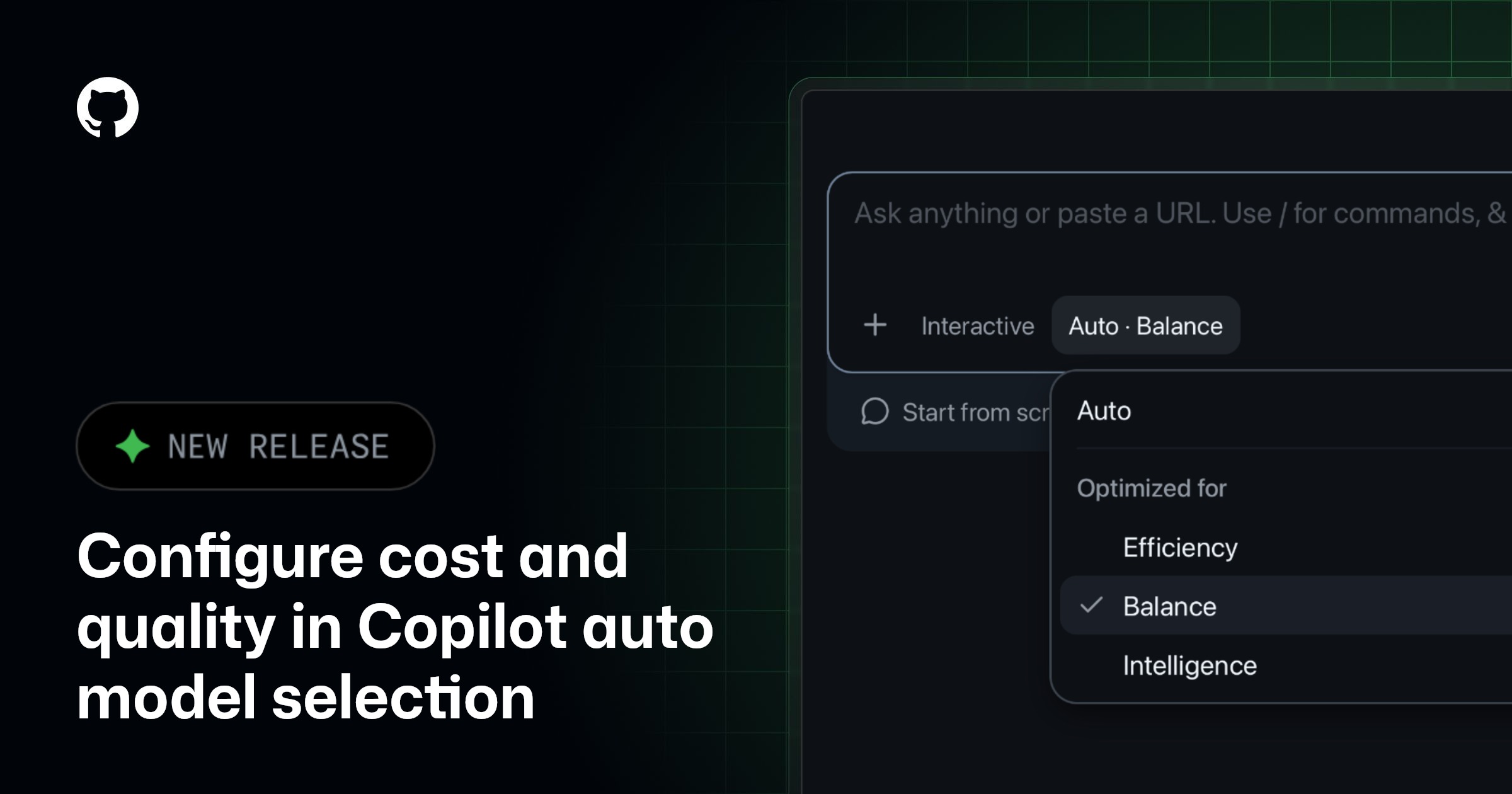
GitHub Copilot Introduces Auto Model Selection Tiers
GitHub Copilot's new auto model selection feature allows users to choose from three tiers—efficiency, balance, and intelligence—each optimizing for different priorities like cost, quality, and response time. This flexibility means users can tailor Copilot's performance to suit tasks ranging from simple to complex. The feature is rolling out across Visual Studio Code, Copilot CLI, and the GitHub Copilot app, offering a more customizable experience. This marks a significant step towards giving users more control over AI model selection, enhancing both usability and cost-effectiveness.
GitHub Changelog