Models & Labs
NVIDIA Open Sources Medical Physics Simulation Framework
NVIDIA Bloghigh confidence
Why it matters
- →Provides a scalable simulation environment for medical robotics development.
- →Enhances transparency and adaptability, crucial for regulatory compliance.
- →Reduces time and resources needed for hardware testing in healthcare robotics.
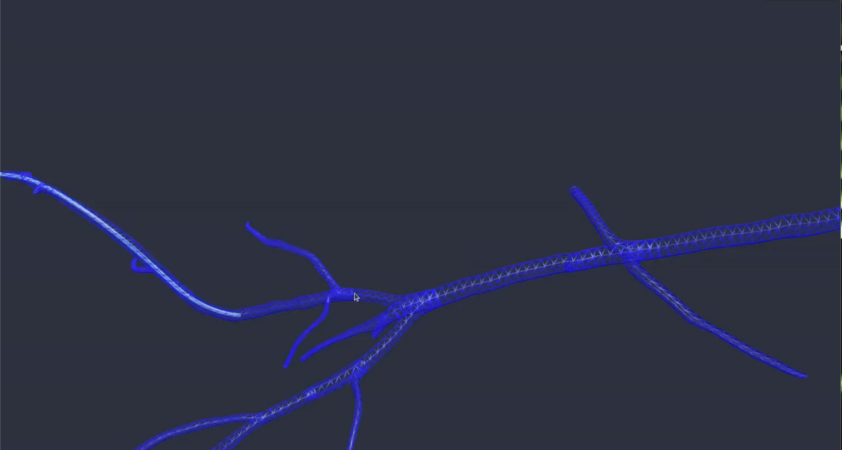
NVIDIA has announced the release of its Medical Physics Simulation framework as an open-source tool within its Isaac for Healthcare platform. This GPU-accelerated framework allows developers to simulate interactions between medical devices and anatomy, facilitating the training and testing of healthcare robots. By offering a scalable simulation environment, it aims to reduce the time required for physical testing and enhance the development of medical robotics. The open-source nature of the framework ensures transparency and adaptability, supporting innovation and regulatory compliance in the healthcare sector.
Read originalMore from NVIDIA Blog
 © NVIDIA Blog
Models & Labsmodels
NVIDIA AI Supercomputer Deployed at Naval School
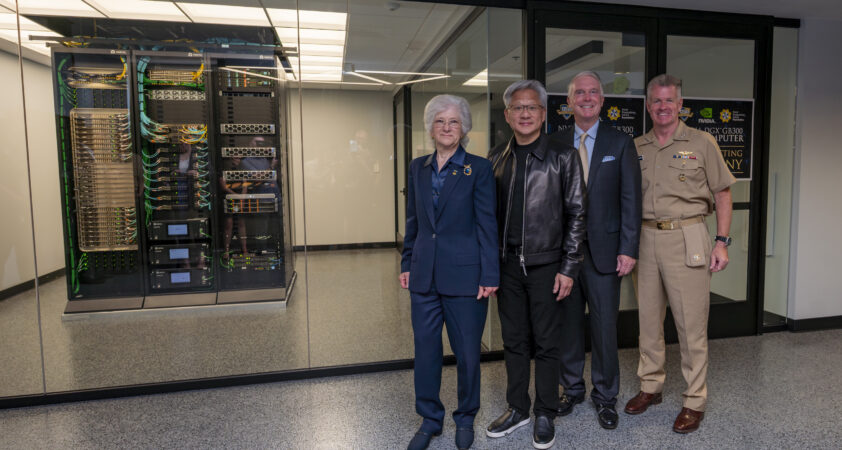
NVIDIA has commissioned its DGX GB300 supercomputer at the Naval Postgraduate School, marking a significant step in integrating advanced AI capabilities into military education. This powerful AI platform will enable students and faculty to engage in large-scale AI computing, enhancing research in areas like weather prediction and cybersecurity. The collaboration aims to modernize military education by providing hands-on experience with cutting-edge AI tools. This deployment not only enriches academic programs but also prepares military leaders to leverage AI in real-world scenarios.
NVIDIA Blog
 © NVIDIA Blog
Market & Regulationbusiness
Wistron Opens AI Manufacturing Plant in Texas
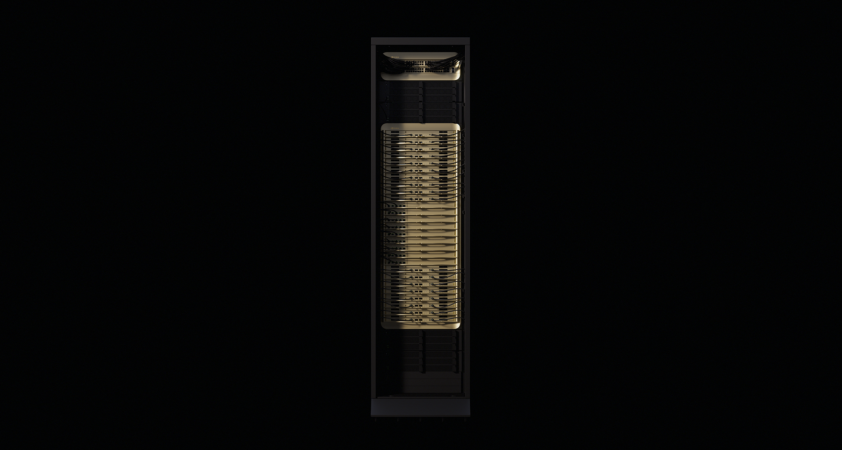
Wistron has launched a new manufacturing facility in Fort Worth, Texas, dedicated to producing NVIDIA's advanced AI systems. This 324,000-square-foot plant marks a significant $700 million investment in U.S. manufacturing, creating over 500 jobs with plans to expand further. The facility will produce NVIDIA's GB300 Grace Blackwell Ultra Superchip and the Vera Rubin Superchip, crucial components for AI infrastructure. By simulating the plant in a digital twin before construction, Wistron optimized production processes and trained workers virtually. This move highlights NVIDIA's commitment to enhancing U.S. supply chains and manufacturing capabilities in the AI era, giving American communities a direct role in building the future with AI.
NVIDIA Blog
 © NVIDIA Blog
Models & Labsmodels
NVIDIA Vera Rubin Boosts AI Efficiency and Scalability
NVIDIA's Vera Rubin platform is setting a new standard for AI infrastructure with its gigascale capabilities and impressive performance metrics. By integrating seven chips into a single system, it offers 10x more throughput per megawatt compared to previous models, making it a game-changer for power-constrained AI factories. The platform's advanced networking and cooling solutions further enhance its efficiency, reducing setup time and water usage significantly. This development not only supports Europe's AI ambitions but also provides a robust foundation for scalable, efficient AI operations worldwide.
NVIDIA Blog
More in Models & Labs
Models & Labsmodels
llama.cpp b10083 Release Expands Platform Support
The latest b10083 release of llama.cpp continues its trend of broadening platform compatibility, making it a versatile choice for developers across different systems. Notably, this update includes support for Ubuntu with ROCm 7.2, enhancing performance for AMD GPU users. Windows users benefit from updated CUDA support, with DLLs for both CUDA 12.4 and 13.3, ensuring compatibility with the latest NVIDIA technologies. While no groundbreaking new features are introduced, the release solidifies llama.cpp's position as a flexible inference runtime across diverse hardware setups.
llama.cpp Releases
Models & Labsmodels
llama.cpp b10085 release updates Qwen3-VL interpolation
The latest b10085 release of llama.cpp addresses a key issue with the Qwen3-VL vision model's position embedding interpolation. By aligning the interpolation method with the transformers reference, the update ensures more accurate grounding coordinates, particularly for larger and non-square images. This change is crucial for developers working with image processing tasks, as it reduces discrepancies in image scaling. While the update doesn't introduce new models, it enhances the precision of existing functionalities, making llama.cpp a more reliable tool for AI developers.
llama.cpp Releases
Models & Labsmodels
Llama.cpp b10089 Release Enhances CUDA Support
The latest b10089 release of llama.cpp significantly enhances CUDA support by adding k-quant and i-quant capabilities to the GET_ROWS function. This update allows for more efficient device-side embedding lookups, reducing the need to fallback to the host and improving performance for single-device graphs. By factoring out super-block dequantizers into shared device functions, the release ensures that all quantized GGML types can now take the direct device path. This marks a notable improvement in CUDA's handling of quantized data, making it more robust and efficient.
llama.cpp Releases