Research
E(3)-Pose uses symmetry to fix fetal MRI motion blur
MIT News AIhigh confidence
Why it matters
- →Baking physical symmetry into neural networks improves reconstruction accuracy in noisy, dynamic environments.
- →Automates fetal MRI analysis, potentially reducing scan time and improving early detection of brain abnormalities.
- →Demonstrates a practical application of equivariant deep learning beyond standard computer vision tasks.
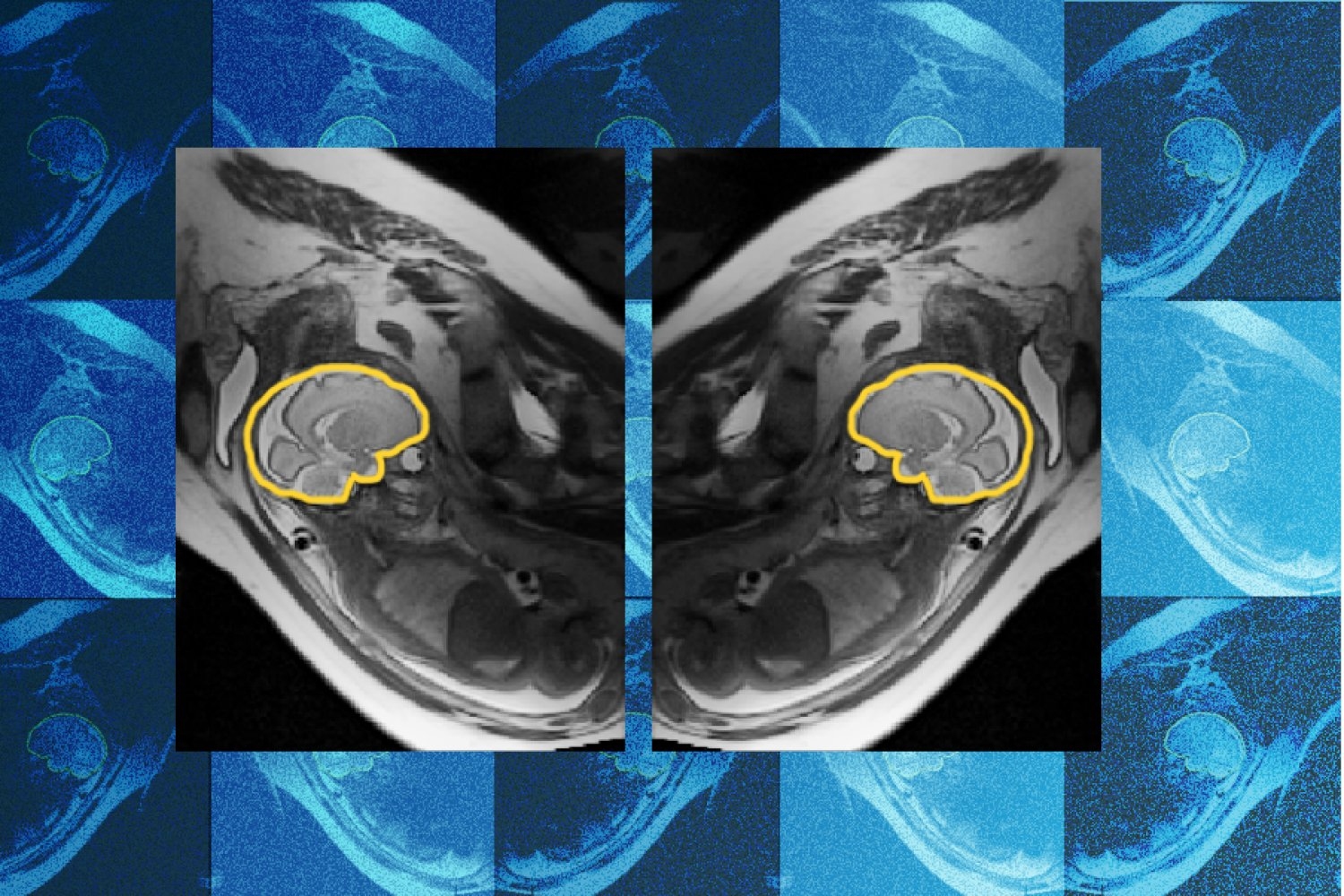
Researchers at MIT and Boston Children’s Hospital have developed E(3)-Pose, a deep learning model that improves fetal brain MRI quality by accounting for motion through geometric symmetry. The model embeds left-right symmetry principles into its architecture, allowing it to reconstruct high-resolution 3D volumes from the fragmented 2D slices typical of moving fetuses. Presented at the 2026 European Conference on Computer Vision, the work aims to automate and accelerate fetal imaging, reducing scan times and improving diagnostic accuracy for brain abnormalities. The technique could also apply to other motion-sensitive medical imaging or autonomous driving sensor fusion.
Read originalThe story around this
Earlier coverage that leads up to this article, and what followed. Lines connect each piece to the closest one after it, converging here.
How we got here
- 1AI Models Struggle to Match Baby Learning Skills
WIRED AI · July 15, 2026 · Background
- 2


